Bitcoin: Rising oil prices keep BTC in check – Long-term holders in limbo

ambcryptoPublicado a 2026-07-21Actualizado a 2026-07-21

Resumen

Bitcoin faces mixed signals as it tests $64,500. While traditional investors added modest inflows, long-term holders (those holding coins for 155+ days) remain a focal point of caution. On-chain data shows this group is still selling at a loss, with their Spent Output Profit Ratio (SOPR) at 0.94, indicating 6% losses—a significant improvement from earlier 27% losses but not yet a sign of full conviction. Market activity is currently dominated by short-term holders, as indicated by the Exchange Coin Days Destroyed (CDD) metric, suggesting a more relaxed selling phase. Exchange reserves have also declined slightly. However, macroeconomic risks pose a headwind. Rising oil prices, driven by Middle East tensions, threaten to reignite inflation concerns. This could dampen the risk-on sentiment crucial for Bitcoin and potentially lead US investors to reduce exposure via spot Bitcoin ETFs. The market's recovery hinges on balancing these improving on-chain dynamics against persistent external economic pressures.

Bitcoin [BTC] has absorbed a run of blows, and although sentiment looks steadier with the asset testing $64,500 again, the market has yet to earn a bullish label.

Traditional investors appear to be circling back, adding $75.76 million in inflows between the 13th and the 17th of July, yet several forces keep the market in a cautious state. Long-term holders remain at the center of that caution.

Bitcoin long-term holders still need watching

Long-term holders are investors who have held their coins for no less than 155 days without moving them, and on-chain data shows this group selling at a loss rather than a profit.

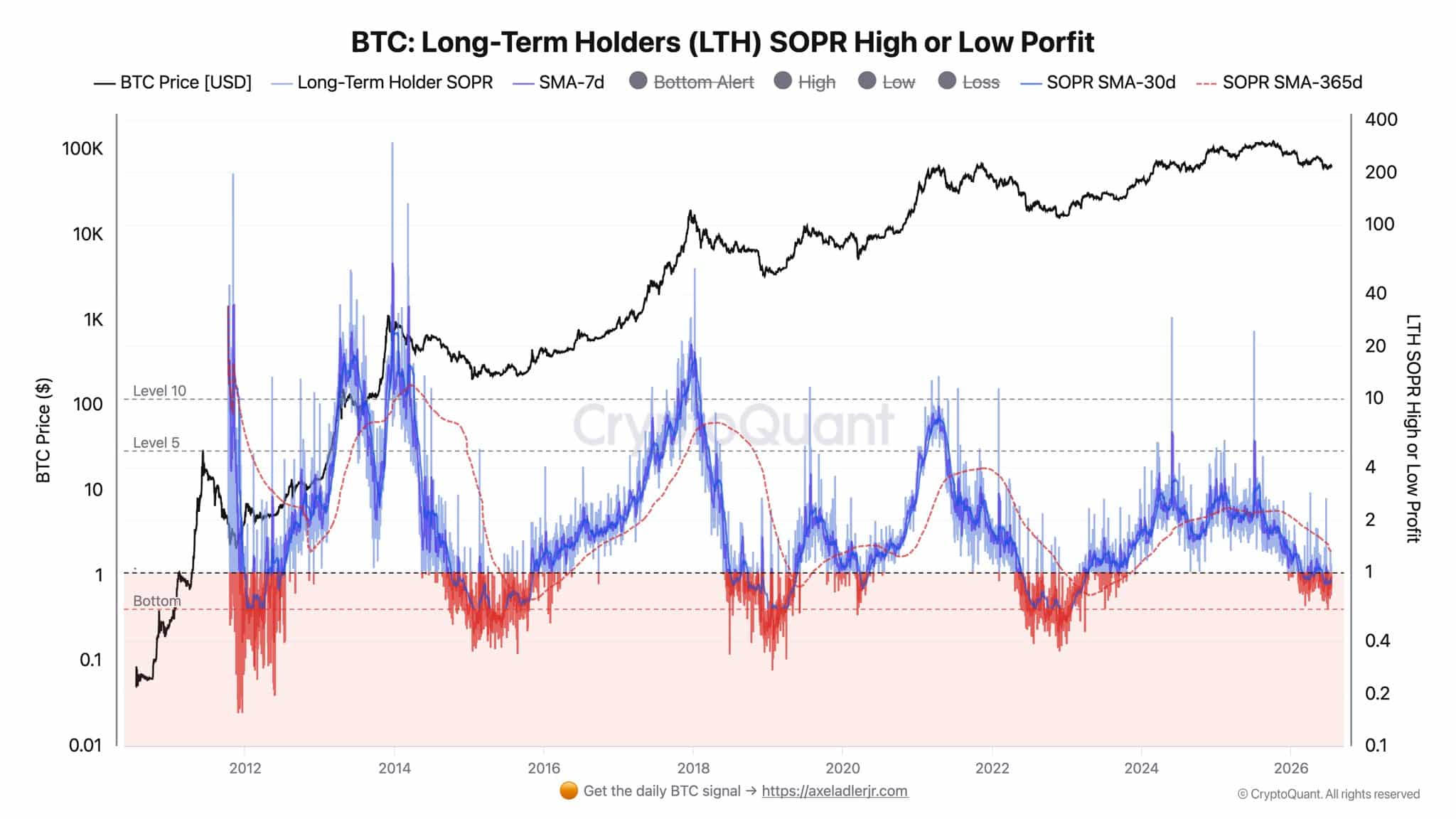
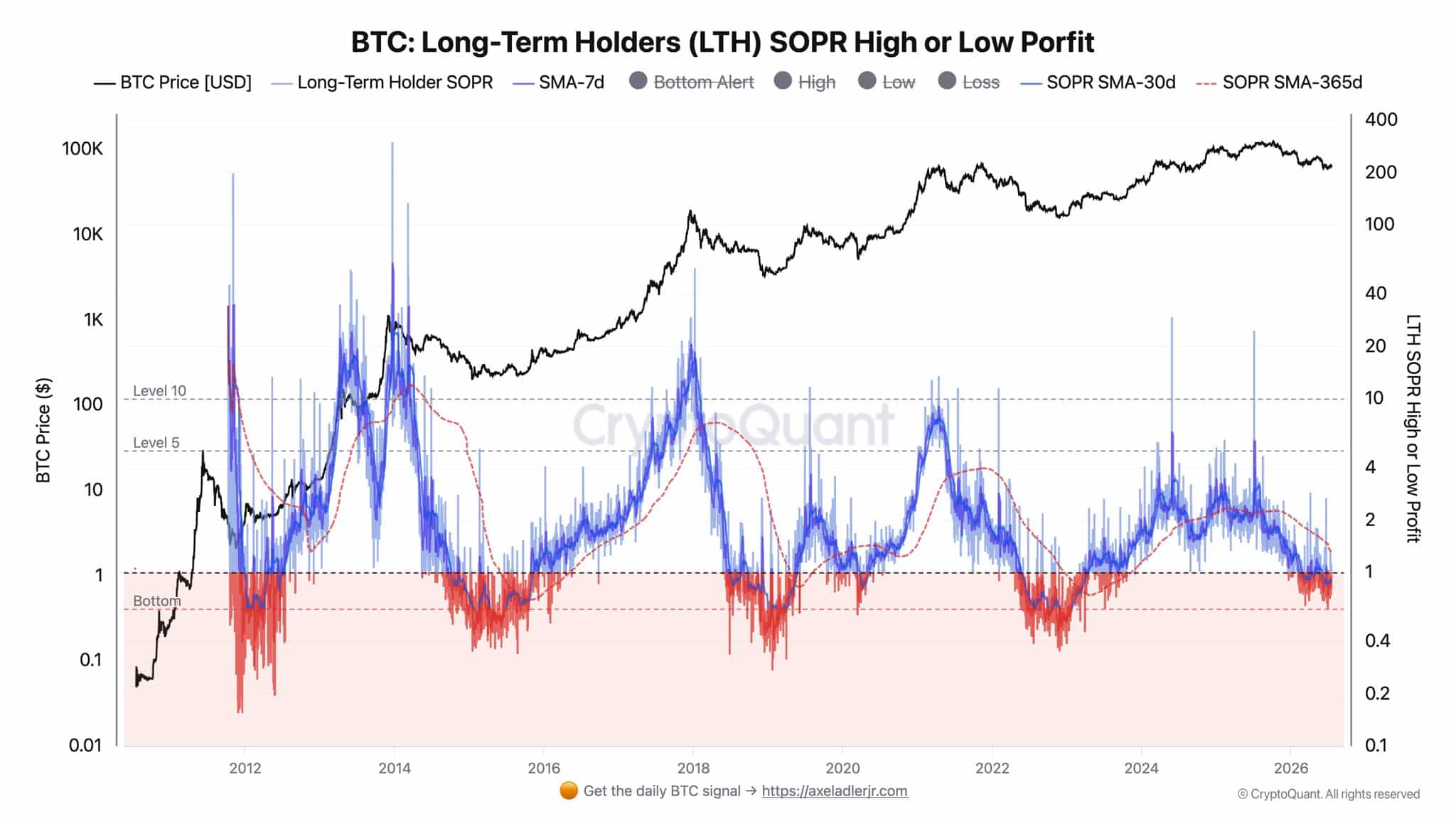
The 7-day moving average of the long-term holder SOPR – the Spent Output Profit Ratio (SOPR), which measures whether coins move at a profit or a loss – sits at 0.94 at press time, below the breakeven mark of 1.

That reading tells us long-term holders have parted with their Bitcoin at roughly a 6% loss so far.
Source: CryptoQuant

The figure marks a sharp improvement from earlier in the cycle, when the group sold at a 27% loss and the LTH SOPR fell to 0.73.

Less selling does not translate to full conviction, and the improvement does not mean the market has locked in a rebound, so long-term holders remain exposed to further price swings.

The monthly picture reinforces that caution, with the LTH SOPR showing these investors selling at a 12% loss since June.

History still offers a counterweight, as prolonged stretches of loss-taking have often preceded Bitcoin rallies, including the 2020 and 2023 runs to fresh all-time highs after the market exited similar phases.

Exchange CDD points to short-term holder dominance

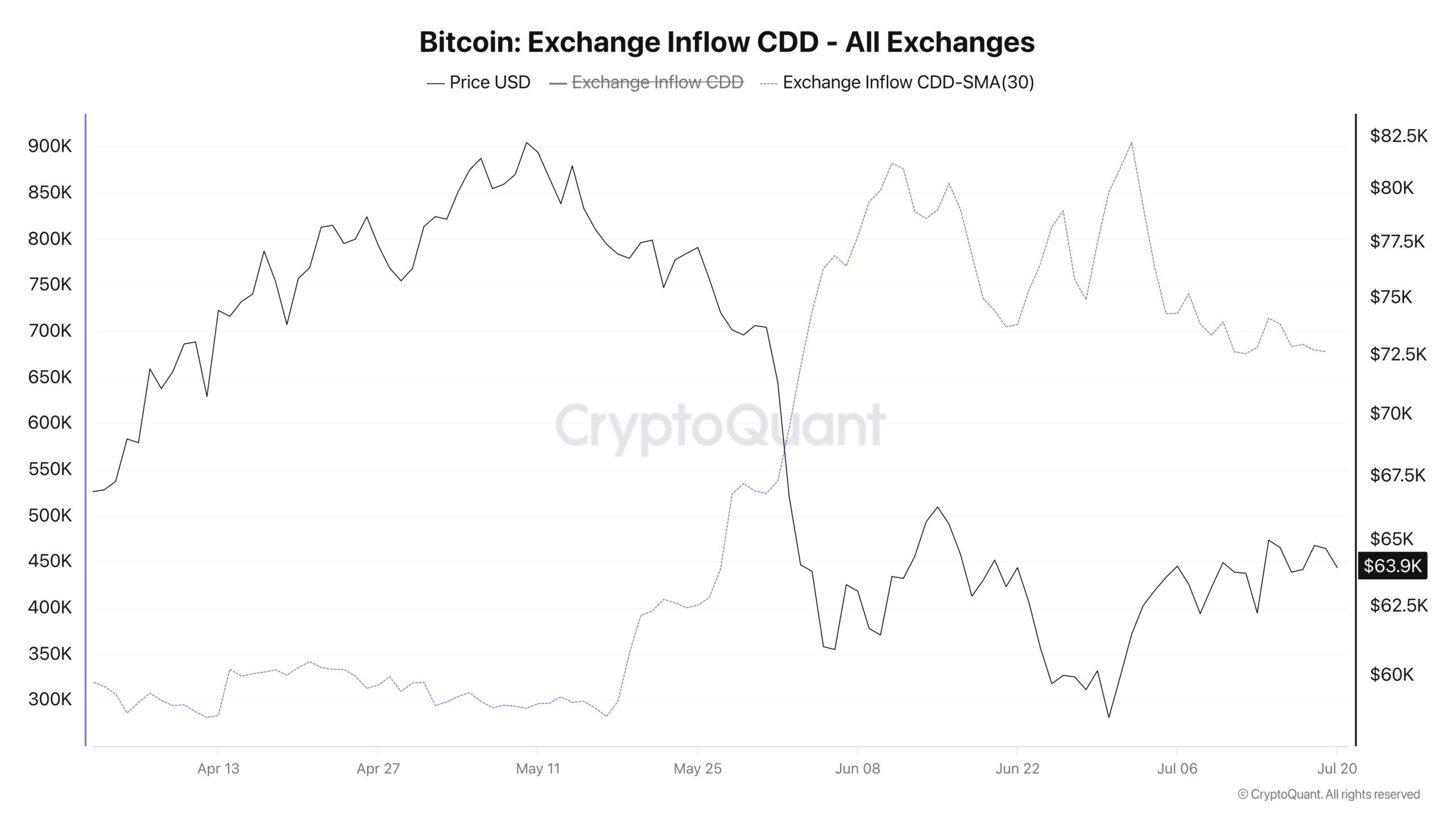
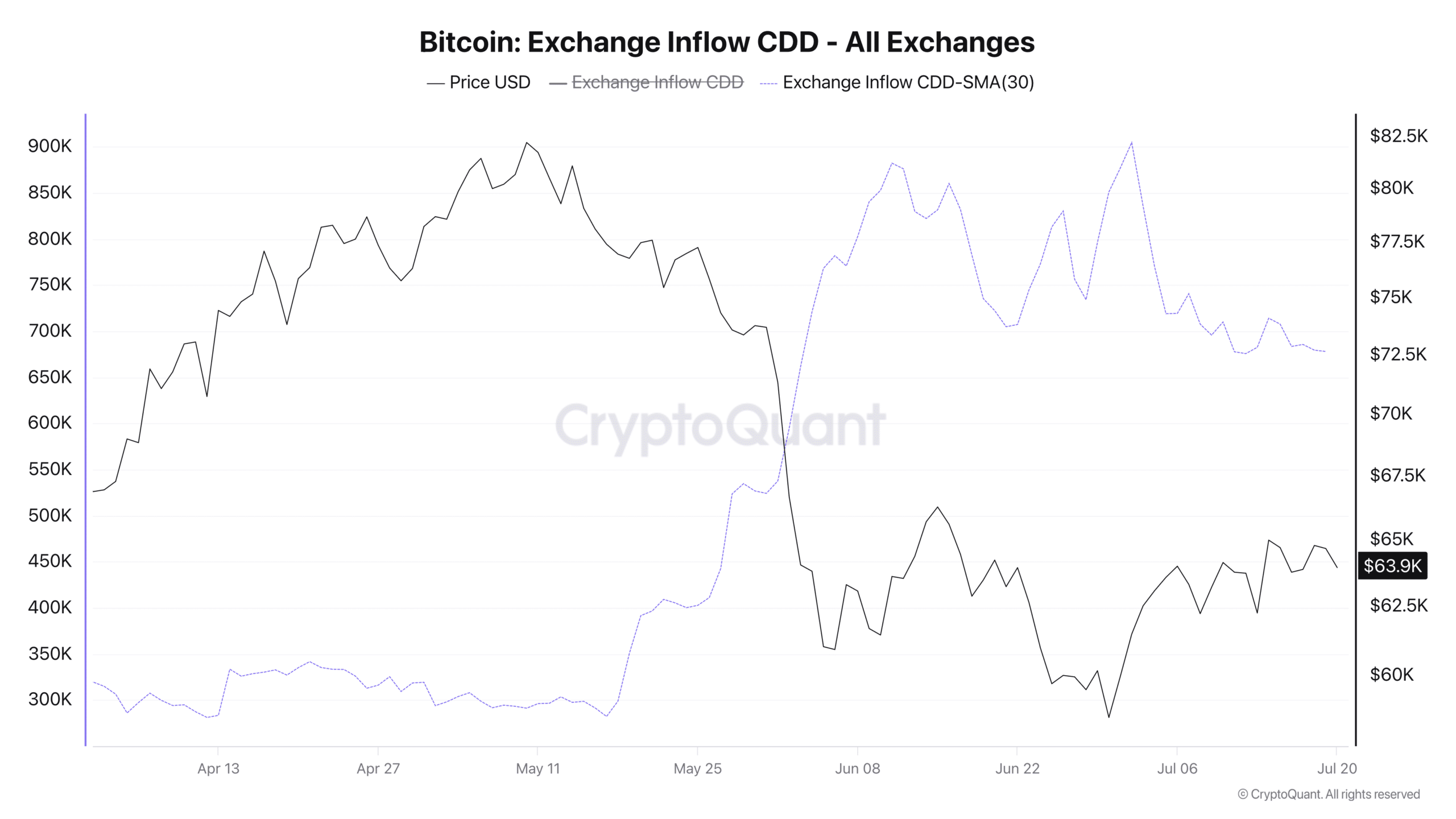
Exchange Coin Days Destroyed (CDD) weights each moving coin by how long it stayed dormant, which lets analysts see whether long-term or short-term holders drive the coins landing on exchanges, and the metric currently marks short-term, active participants as the dominant force.

An elevated Exchange CDD normally signals that sellers control the market as selling pressure builds, a classic bearish read, yet the opposite is playing out here and points to a more relaxed phase.
Source: CryptoQuant

Fewer long-term holders are moving coins, and with that group nursing losses of only about 6%, the setup leans constructive and raises the odds of a faster recovery from current levels.

The exchange reserve reflects that shift, and although long-term holders do not dominate the reserve, they contribute to a decline that has carried it from a high of 2.718 million BTC to 2.704 million BTC.

That drop returns the reserve to its late-June footing, around the 24th of June.

Will US investors keep funding?

Economic pressures and the threat of resurgent inflation still weigh on the market.

Inflation cooled over the past week on official readings, yet concern has climbed as the conflict involving the US, Iran, and Israel has escalated. Oil has answered the tension, with WTI crude climbing to $85.59 at Monday’s open, its highest level since the 12th of June.

The inflation worry runs largely through oil, since rising crude lifts production costs across the economy and increases the risk-off mood—and Bitcoin depends on risk-on appetite. Should oil continue to climb, US investors may reduce their exposure through spot US Bitcoin ETFs.


Final Summary

  • Long-term holders have eased their selling, now offloading at a 6% loss versus 27% earlier.
  • Bitcoin still needs a risk-on appetite, so rising oil and fresh inflation fears could push US investors to trim exposure.


Criptos en tendencia

Preguntas relacionadas

QWhat is the current state of long-term Bitcoin holders' selling behavior according to the LTH SOPR metric?

ALong-term Bitcoin holders are currently selling at a loss, with the 7-day moving average of the LTH SOPR at 0.94, indicating they are parting with their Bitcoin at roughly a 6% loss.

QWhat does a low Exchange Coin Days Destroyed (CDD) reading indicate about the current market participants?

AA low Exchange CDD indicates that short-term, active participants are the dominant force moving coins to exchanges, rather than long-term holders, which points to a more relaxed market phase.

QWhat external economic factor is mentioned as a potential threat to Bitcoin's risk-on appetite and US investor funding?

ARising oil prices are mentioned as a key threat, as they lift production costs and increase a risk-off mood. This could lead US investors to reduce their exposure through spot Bitcoin ETFs.

QHow does the article describe the potential historical significance of long-term holders selling at a loss?

AThe article notes that history shows prolonged periods of long-term holders selling at a loss have often preceded significant Bitcoin rallies, such as the runs to all-time highs in 2020 and 2023.

QWhat is the trend mentioned for Bitcoin's exchange reserves, and what does it signify?

ABitcoin's exchange reserves have declined from a high of 2.718 million BTC to 2.704 million BTC, returning to levels seen in late June. This decline, while long-term holders are not the dominant sellers, is viewed as a constructive, positive sign for the market.

Lecturas Relacionadas

Why Bitcoin Holds Above $64,000 After Fed's Hard Pause

**Bitcoin Stabilizes Near $64,000 Following Hawkish Fed Pause** The cryptocurrency market, led by Bitcoin, remained stable around $64,000 despite a volatile reaction to the latest U.S. Federal Reserve meeting. The Fed paused interest rates but signaled a hawkish stance, with three committee members voting for an increase—the highest dissent since 2016. This limits risk appetite but hasn't triggered panic selling. Key market highlights include Bitcoin ETFs seeing a net inflow of $32.1 million, breaking a streak of outflows, while Ethereum ETFs experienced outflows of $18.65 million. Liquidations affected about 90,000 traders. Technically, Bitcoin finds support around $63,000-$63,500, with major resistance near $66,000. While its price is about 49% below its all-time high, institutional demand via ETFs and the absence of mass capitulation support a potential recovery scenario in the second half of the year. Major altcoins showed mixed movements, with Solana attracting capital while Ethereum faced selling pressure despite strong on-chain metrics like a growing staking queue. Regulatory news took a pause as the U.S. Senate delayed the CLARITY Act vote until at least autumn. For the final trading day of July, U.S. inflation and consumer spending data will be crucial. Bitcoin's key levels to watch are $63,000 support and $66,000 resistance. Sustained ETF inflows and Bitcoin holding above $63,000 are seen as positive signs for a potential market recovery later in the year.

cryptonews.ruHace 1 hora(s)

Why Bitcoin Holds Above $64,000 After Fed's Hard Pause

cryptonews.ruHace 1 hora(s)

Participants in XRP Fraud Scheme That Stole $9 Million from 71 Investors Arrested

South Korean police have arrested three individuals accused of operating a fraudulent investment platform that stole approximately 3.4 million XRP (worth about $9 million) from 71 investors between October 16 and 23. The suspects promoted the site Fxrpntwork.com through blogs, online articles, and YouTube videos, promising guaranteed principal and monthly returns of 1.5% to 1.8%. Investors were instructed to transfer XRP from Korean exchanges to overseas platforms and then to wallets controlled by the group before the site was shut down. The scammers copied the branding of legitimate projects Flare Network and FXRP to appear credible. Authorities warn that such impersonation frauds, which use familiar branding and urgent promises of guaranteed profits, are a common red flag. Legitimate companies do not solicit cryptocurrency transfers through unsolicited promotions. Seoul police have issued an Interpol Red Notice for a fourth suspect abroad and are investigating others involved in creating and promoting the fraudulent website. While investigators froze 17.3 billion won in assets, approximately 10 billion won was moved during the probe, with wallet analysis revealing transfers totaling 27.3 billion won, suggesting there may be additional unidentified victims and accomplices. The case underscores the organized, cross-border nature of crypto investment fraud.

cryptonews.ruHace 1 hora(s)

Participants in XRP Fraud Scheme That Stole $9 Million from 71 Investors Arrested

cryptonews.ruHace 1 hora(s)

Trading

Spot

Artículos destacados

Cómo comprar CHECK

¡Bienvenido a HTX.com! Hemos hecho que comprar Checkmate (CHECK) sea simple y conveniente. Sigue nuestra guía paso a paso para iniciar tu viaje de criptos.Paso 1: crea tu cuenta HTXUtiliza tu correo electrónico o número de teléfono para registrarte y obtener una cuenta gratuita en HTX. Experimenta un proceso de registro sin complicaciones y desbloquea todas las funciones.Obtener mi cuentaPaso 2: ve a Comprar cripto y elige tu método de pagoTarjeta de crédito/débito: usa tu Visa o Mastercard para comprar Checkmate (CHECK) al instante.Saldo: utiliza fondos del saldo de tu cuenta HTX para tradear sin problemas.Terceros: hemos agregado métodos de pago populares como Google Pay y Apple Pay para mejorar la comodidad.P2P: tradear directamente con otros usuarios en HTX.Over-the-Counter (OTC): ofrecemos servicios personalizados y tipos de cambio competitivos para los traders.Paso 3: guarda tu Checkmate (CHECK)Después de comprar tu Checkmate (CHECK), guárdalo en tu cuenta HTX. Alternativamente, puedes enviarlo a otro lugar mediante transferencia blockchain o utilizarlo para tradear otras criptomonedas.Paso 4: tradear Checkmate (CHECK)Tradear fácilmente con Checkmate (CHECK) en HTX's mercado spot. Simplemente accede a tu cuenta, selecciona tu par de trading, ejecuta tus trades y monitorea en tiempo real. Ofrecemos una experiencia fácil de usar tanto para principiantes como para traders experimentados.

668 Vistas totalesPublicado en 2026.01.19Actualizado en 2026.06.02

Cómo comprar CHECK

Discusiones

Bienvenido a la comunidad de HTX. Aquí puedes mantenerte informado sobre los últimos desarrollos de la plataforma y acceder a análisis profesionales del mercado. A continuación se presentan las opiniones de los usuarios sobre el precio de CHECK (CHECK).

活动图片












