Bitcoin Pizza Day 16th Anniversary: 10,000 Bitcoins for Two Pizzas Then, Now Worth $780 Million

marsbitPublicado a 2026-05-22Actualizado a 2026-05-22

Resumen

Sixteen years after the first Bitcoin pizza purchase, the event remains a pivotal moment in cryptocurrency history. In May 2010, programmer Laszlo Hanyecz offered 10,000 BTC on a small forum for two Papa John's pizzas. After four days, a user named Jeremy Sturdivant accepted, completing the first recorded real-world transaction using Bitcoin. Those 10,000 BTC, then worth about $41, are now valued at roughly $780 million. This transaction, recorded in Bitcoin block 57043, marked the asset's first price discovery and its move from a digital experiment to a medium of exchange. Hanyecz, an early developer who created GPU mining code, viewed it not as a loss but as a successful proof-of-concept. He repeated similar trades, spending tens of thousands of mined BTC on pizza throughout 2010. In 2018, Hanyecz commemorated the event by buying two pizzas again, this time for just 0.00649 BTC via the Lightning Network, demonstrating Bitcoin's potential for fast, low-cost microtransactions. Today, Bitcoin is a mainstream financial asset held by millions, with major institutions like MicroStrategy accumulating large treasuries and Wall Street offering Bitcoin ETFs. Yet, the "Pizza Day" story endures as a symbol of Bitcoin's origin—a simple exchange that welded digital code to tangible value, a connection that remains powerfully relevant.

Author: Vernacular Blockchain

In the early morning of May 18, 2010, in Jacksonville, Florida, a 28-year-old programmer posted a message on a forum with only 230 members.

His name was Laszlo Hanyecz. The post said, he was willing to pay 10,000 bitcoins for someone to order two large pizzas delivered to his home. The toppings should be onions, green peppers, and sausage, absolutely no anchovies.

This wasn't an impulse buy. It was the first complete price discovery in Bitcoin's history.

Those two pizzas were a weld rod.

Sixteen years later, the two ends of that rod have moved in completely opposite directions. Back then, those 10,000 bitcoins were worth $41, enough for two Papa John's pizzas. Today they are worth $780 million, enough to buy a medium-sized private jet fleet.

Meanwhile, Papa John's is still Papa John's, and pizzas still cost a few dozen bucks each.

Those two pizzas welded a piece of digital code to the physical world for the first time. From that moment on, Bitcoin was no longer just a toy miners gave to each other.

01. A Forum Post That Sat for 4 Days

The post sat for 4 days with no takers.

The forum's 230 members were mostly scattered outside the U.S., and ordering a pizza remotely had its challenges. Hanyecz himself couldn't resist replying, asking if the offer was too low.

On the fifth day, a 19-year-old student from California saw the post.

His name was Jeremy Sturdivant, forum ID jercos. The two negotiated on IRC. Sturdivant, who also had no way to settle with Bitcoin, simply pulled out his debit card, placed a cross-state order at the Papa John's on Atlantic Boulevard in Jacksonville, and fronted about $41. The pizzas themselves were only worth $25 to $30.

On May 22, the pizzas were delivered to Hanyecz's home. Hanyecz sent 10,000 bitcoins to Sturdivant's wallet, throwing in an extra 1 bitcoin as a miner fee. Bitcoin blockchain block 57043 forever records this 10001 BTC transfer.

Sturdivant didn't hold on to them. When Bitcoin rose to around $400, he converted those coins into fiat currency, used it to travel with his girlfriend, and upgraded his computer parts. At today's price, the opportunity cost of that trip is $780 million.

Interestingly, Sturdivant never said he regretted it. He later said in an interview that no one back then really saw those 10,000 coins as money, just an interesting experiment.

It was the first time a decentralized asset stepped out of the code and landed on a cardboard box containing hot pizza.

02. Hanyecz Was No Fool

Mainstream media loves to paint Hanyecz as the foolish geek who craved pizza and lost hundreds of millions. That narrative simply doesn't hold up.

Hanyecz wasn't just a user; he was a developer. He was one of Bitcoin's early code contributors, and the first person in the industry to successfully run a full node on a Mac system. More importantly, he was the first to write GPU mining code and open-source it to the community for free.

The entry of GPUs into mining multiplied the hashrate several times over through parallelization, kicking open the door to the entire mining arms race that followed.

In the summer of 2010, the block reward was still 50 BTC, and the network's total hashrate was extremely low. Hanyecz set up a few GPU mining rigs and practically mined with his eyes closed. His wallet peaked at 43,900 coins in June 2010.

For him, 10,000 bitcoins was just 200 blocks of output.

So that pizza deal wasn't a loss for him; it was a satisfying case of arbitrage across dimensions. Using digital code he mined at nearly zero cost to exchange for hot, real food that filled his stomach. For a geek, that was more exciting than making money.

He repeated the process several more times. Throughout the summer of 2010, he traded a cumulative total of 80,000 to 100,000 bitcoins for pizzas. That wallet was completely emptied by June 2011, most likely transferred to cold storage.

In August, he voluntarily stopped his pizza offers. The reason wasn't regret; it was that the network's hashrate had increased, changing the marginal cost of mining coins.

Looking back on that transaction later, he only said one thing: If no one had been willing to accept it, Bitcoin wouldn't be where it is today.

03. Eight Years Later, He Bought Pizza Again

On February 25, 2018, Hanyecz made another move.

This time he bought two pizzas, spending only 0.00649 bitcoin, equivalent to about $60. The payment method had changed; he used the Lightning Network. The Lightning Network had just launched its mainnet test at the time, with very few people using it daily. Once again, Hanyecz was the first to try it.

The mainnet's 1MB block size and 10-minute block interval meant it could only handle about 7 transactions per second. That throughput simply couldn't support daily, high-frequency spending; with high fees, buying a cup of coffee wasn't even feasible.

The Lightning Network moves transactions off-chain, allowing for instant settlement with near-zero fees, only interacting with the mainnet when channels open or close.

The symbolic weight of this pizza transaction was as significant as the one in 2010. It showed the world that Bitcoin could actually handle small, high-frequency spending scenarios.

But an old problem remained unsolved: Papa John's itself still didn't accept Bitcoin. In both transactions, the merchant received fiat currency converted by an intermediary.

That last mile, from 2010 to 2018, remained uncrossed.

04. Sixteen Years Later, Pizzas Are Barely Affordable

Fast forward to May 2026, the 16th anniversary of Pizza Day.

Bitcoin's price fluctuates between $77,000 and $78,000. A wave of high CPI data earlier in the year pushed the price down from $82,000 to around $76,800, but it was quickly supported by on-chain buying and Nvidia's earnings report.

This was no longer a game for a small forum of 230 people. Global Bitcoin holders now number in the hundreds of millions.

The most aggressive example is MicroStrategy. This company, transformed by Michael Saylor into a Bitcoin treasury, held 843,700 bitcoins as of May 17, accounting for over 4% of the total supply, with a book value of $65.3 billion.

Just from May 11 to 17 that week, they added another 24,900 coins at an average price of $81,000.

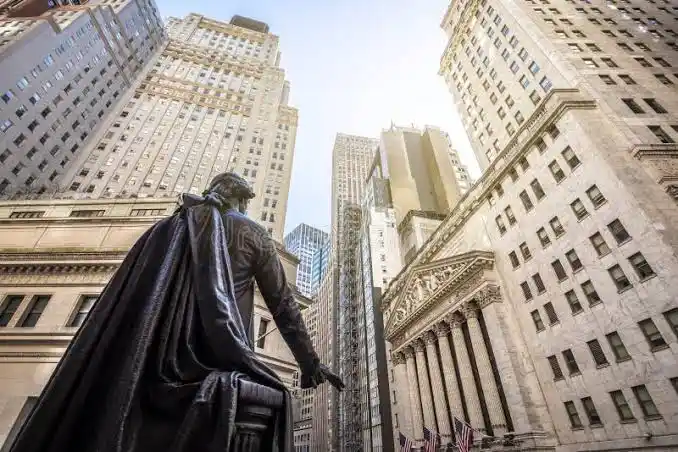
Wall Street's gateway is also wide open. The total assets under management for all US crypto spot ETFs are nearing $120 billion. Bitcoin ETFs alone hold $103.785 billion in net assets, with a cumulative net inflow of $58.718 billion historically.

Morgan Stanley's newly launched MSBT in April slashed its management fee to 14 basis points, directly challenging BlackRock's IBIT at 25 basis points. The asset that once required forum coordination just to order a pizza in Jacksonville now sits in traditional brokerage clearing accounts.

05. Conclusion

The other side of the story is in Africa.

For ordinary people there, Pizza Day isn't a financial anecdote; it's an awakening to escape local currency devaluation and the exploitation of cross-border remittances.

Cold wallet manufacturers repeat the same mantra every Pizza Day: Not your keys, not your coins.

Hanyecz never expressed regret. He himself said that the meaning of that transaction was never about how much the two pizzas were worth.

The Papa John's pizzas, sliced into eight pieces, cooled long ago, and the box probably ended up in a landfill. But the record of that transfer in Block 57043 on the blockchain remains.

And that weld point is still hot.

Criptos en tendencia

Preguntas relacionadas

QWhat was the significance of the first Bitcoin pizza transaction in 2010?

AIt marked the first time Bitcoin was used to purchase a tangible, physical good, effectively establishing its initial market price and demonstrating that the cryptocurrency could function as a medium of exchange beyond being a mere novelty among miners.

QHow did Laszlo Hanyecz obtain the 10,000 Bitcoins he used to buy the pizzas?

ALaszlo Hanyecz was an early Bitcoin developer and the first to create and open-source GPU mining code. In 2010, he mined Bitcoin extensively using GPU rigs when the network difficulty was very low, amassing a peak of 43,900 BTC in his wallet. The 10,000 BTC for the pizzas represented a small fraction of his easily mined holdings.

QWhat technological solution did Hanyecz use for his 2018 pizza purchase, and why was it significant?

AIn 2018, Hanyecz used the Lightning Network to buy two pizzas for only 0.00649 BTC. This was significant because it demonstrated that Bitcoin's scaling solution could enable fast, low-fee, small-value transactions suitable for everyday purchases like coffee or pizza, addressing the limitations of Bitcoin's main blockchain throughput.

QAccording to the article, how has the institutional adoption of Bitcoin evolved since 2010?

AInstitutional adoption has grown massively. Companies like MicroStrategy hold hundreds of thousands of Bitcoin as treasury assets, and Wall Street has embraced it through spot Bitcoin ETFs in the US, which now manage over a trillion dollars in assets. Bitcoin has moved from a niche forum experiment to being integrated into traditional financial systems.

QWhat is the enduring symbolic meaning of the 'Bitcoin Pizza Day' transaction, as implied in the article's conclusion?

AThe transaction created a permanent 'weld point' on the blockchain (Block 57043). Its enduring meaning is not the monetary value lost or gained, but that it was the crucial first step that connected the digital code of Bitcoin to the physical world, proving someone was willing to accept it and paving the way for its future as an asset and medium of exchange.

Lecturas Relacionadas

Unpacking the Truth Behind On-chain Assets: Leverage, Liquidity, and Risk

The article analyzes the concept of "real-world asset" (RWA) tokenization, arguing that while tokenizing assets on-chain is a useful step, it is far from transformative on its own. The author compares it to placing a barcode on a shipping container—it enables identification but does not build the necessary market infrastructure. The core argument is that true value emerges not from tokenization, but from integrating these tokens into DeFi systems where they can be valued, financed, hedged, traded, and liquidated under stress. Key challenges identified include: 1. **Multiple Time Clocks**: A fundamental tension exists between blockchain's 24/7 settlement and the slower, business-hour-dependent processes of traditional markets, custody, and redemption. This "duration mismatch" can create dangerous liquidity gaps during crises. 2. **Liquidity Misconceptions**: True liquidity is not measured by Total Value Locked (TVL) or trading pairs, but by the ability to exit a position within a required timeframe at an acceptable price. It requires analyzing multiple exit paths and stress-testing scenarios. 3. **Leverage and Risk**: Leverage unlocks economic utility (e.g., using tokenized assets as collateral) but also introduces fragility. Risk models must account for more than asset volatility, incorporating factors like legal enforceability, oracle freshness, and market structure. Paradoxically, a "safer" asset like tokenized Treasury bonds could require a higher collateral discount than ETH due to slower, less-proven liquidation mechanisms. 4. **A Risk Graph**: RWA risk should be modeled as a network of interconnected dependencies (e.g., issuers, custodians, oracles, stablecoin pools), not a single score. Failures can propagate through this graph, turning operational issues into systemic liquidity crises. The article states that tokenized government bonds are merely an entry point, while more complex frontiers like computing power and energy assets present greater challenges and opportunities. It also examines the interplay and risks between tokenized stocks and perpetual futures contracts. The conclusion is that the future lies not in "tokenizing everything," but in building robust market layers where tokenized rights become resilient financial primitives within a programmable capital system. The token is just the barcode; the market is the machine.

marsbitHace 11 min(s)

Unpacking the Truth Behind On-chain Assets: Leverage, Liquidity, and Risk

marsbitHace 11 min(s)

The End of Mathematics: 40 Top Mathematicians Gather at Secret OpenAI Meeting

In August 2026, OpenAI hosted a closed-door summit with approximately 40 leading mathematicians, including recent Fields Medalist Jacob Tsimerman and OpenAI researcher Sébastien Bubeck. The meeting, spurred by a series of recent AI breakthroughs in mathematics, grappled with the potential existential threat AI poses to the field. The backdrop includes several high-profile AI achievements: OpenAI models disproving long-standing conjectures like the unit distance problem, generating 10 new mathematical discoveries, and Anthropic's Claude aiding in constructing complex multidimensional objects. These results often bypass traditional academic pipelines, appearing directly on social media. The mathematical community is divided. Over 3000 researchers signed the "Leiden Statement," advocating for responsible AI use and verification. Others resist AI entirely to preserve human-centric mathematics. A key concern is AI's current inability to *explain* proofs, particularly the difficult steps, which is central to mathematical understanding. At the summit, Bubeck outlined four potential futures: mathematics becoming like collaborative software engineering, a compute-driven field like physics, a curatorial exercise where humans interpret AI output, or a mass transition of mathematicians into AI safety. While emphasizing that "mathematics only makes sense when mathematicians learn from it," no consensus was reached. The event highlights a profound moment of reflection. As AI demonstrates increasing competence in solving complex problems, mathematicians are forced to question their future role and the very meaning of their discipline.

marsbitHace 16 min(s)

The End of Mathematics: 40 Top Mathematicians Gather at Secret OpenAI Meeting

marsbitHace 16 min(s)

Anthropic's New Models 'Catch the Gossip', The Strongest Fable 5 Unexpectedly Falls Flat

Anthropic has been discovered working on two new, previously unknown models codenamed "Marshmallow" (claude-marshmallow-eap) and "Melon" (claude-melon-eap), with early tests showing Marshmallow potentially surpassing Claude Opus 5 in conversational naturalness. Their emergence coincides with surprising new data revealing that Anthropic's flagship Fable 5 model, released two months ago as its strongest and most expensive offering, is being largely ignored by the enterprise market. According to spending data from Ramp tracking over 70,000 US companies, Fable 5 accounts for only about 11% of total token spending on Anthropic's models. This pales in comparison to OpenAI's flagship GPT-5.6 Sol, which commands roughly 25% of token spending in the same period. The tepid adoption is largely attributed to Fable 5's extremely high cost—double that of Opus 4.8 and ten times that of Haiku 4.5—without delivering proportionally superior performance for most business applications. Compounding the issue, the later-released Claude Opus 5, priced at half the cost of Fable 5, has achieved comparable or even better results in key benchmarks like programming and knowledge work, quickly surpassing Fable 5 in enterprise spending share. Furthermore, the rapid rise of powerful, low-cost open-source models—whose token usage share surged from 11% in April to 62% in August while costing less than 4% of enterprise AI budgets—applies additional pressure. Analysts suggest the sudden appearance of Marshmallow and Melon may be an urgent move by Anthropic to address this gap in its lineup. The goal is to offer models that are not only powerful but also cost-effective enough for businesses to adopt widely and sustainably, moving beyond a flagship that serves more as a showcase than a workhorse.

marsbitHace 16 min(s)

Anthropic's New Models 'Catch the Gossip', The Strongest Fable 5 Unexpectedly Falls Flat

marsbitHace 16 min(s)

Three Months After the Passing of Little Dog Rosie, Her Medical Records Transformed into an AI Healthcare Company

Three months after the passing of his dog Rosie, AI entrepreneur Paul S. Conyngham secured $4 million in seed funding from Founders Fund for his new startup, Gamgee. The company aims to industrialize the experimental, AI-assisted process he pioneered to create a personalized mRNA cancer vaccine for Rosie, who suffered from mast cell tumors. With no formal biology background, Conyngham used AI tools like ChatGPT and AlphaFold to analyze Rosie's tumor DNA, identify target neoantigens, and design a custom mRNA vaccine sequence. Laboratory partners at UNSW produced the vaccine. Initial treatment showed tumor reduction, but Rosie's cancer later recurred and she was euthanized. Gamgee's goal is to streamline this "N-of-1" approach into a repeatable service for canine cancer patients, handling sequencing, vaccine design, production, and delivery. Clinical trials are planned in Australia in collaboration with research institutions. The company also eyes a longer-term vision of establishing personalized, mRNA-based medicine across species. The story highlights the broader challenge in personalized cancer treatment: compressing the entire timeline from design and regulatory approval to manufacturing and administration to match the patient's prognosis. While AI can accelerate target discovery, the remaining logistical and regulatory hurdles are significant. The article concludes by emphasizing that, for now, consulting qualified veterinary oncologists remains the responsible path for pet owners.

marsbitHace 26 min(s)

Three Months After the Passing of Little Dog Rosie, Her Medical Records Transformed into an AI Healthcare Company

marsbitHace 26 min(s)

Trading

Spot

Artículos destacados

Qué es BITCOIN

Entendiendo HarryPotterObamaSonic10Inu (ERC-20) y Su Posición en el Espacio Cripto En los últimos años, el mercado de criptomonedas ha sido testigo de un aumento en la popularidad de las monedas meme, capturando el interés no solo de los comerciantes, sino también de aquellos que buscan compromiso comunitario y valor de entretenimiento. Entre estos tokens únicos se encuentra HarryPotterObamaSonic10Inu (ERC-20), un proyecto intrigante que mezcla referencias culturales en el tejido de las criptomonedas. Este artículo profundiza en los aspectos clave de HarryPotterObamaSonic10Inu, explorando sus mecanismos, ethos impulsado por la comunidad y su relación con el paisaje cripto más amplio. ¿Qué es HarryPotterObamaSonic10Inu (ERC-20)? Como su nombre sugiere, HarryPotterObamaSonic10Inu es una moneda meme construida sobre la blockchain de Ethereum, clasificada bajo el estándar ERC-20. A diferencia de las criptomonedas tradicionales que pueden enfatizar la utilidad práctica o el potencial de inversión, este token prospera en el valor de entretenimiento y la fuerza de su comunidad. El proyecto tiene como objetivo fomentar un entorno donde los usuarios comprometidos puedan reunirse, compartir ideas y participar en actividades inspiradas por diversos fenómenos culturales. Una característica notable de HarryPotterObamaSonic10Inu es su cero impuestos en las transacciones. Este atractivo elemento tiene como objetivo incentivar el comercio y la participación comunitaria, sin cargos adicionales que puedan disuadir a los comerciantes de pequeña escala. El suministro total de la moneda está establecido en mil millones de tokens, una cifra que marca su intención de mantener una circulación sustancial dentro de la comunidad. Creador de HarryPotterObamaSonic10Inu (ERC-20) Los orígenes de HarryPotterObamaSonic10Inu están algo envueltos en misterio; los detalles sobre el creador siguen siendo desconocidos. El desarrollo de este token carece de un equipo identificable o de un plan explícito, lo cual no es inusual dentro del sector de monedas meme. En cambio, el proyecto ha surgido de manera orgánica, con su progreso muy dependiente del entusiasmo y la participación de su comunidad. Inversores de HarryPotterObamaSonic10Inu (ERC-20) En cuanto a inversiones externas y respaldo, HarryPotterObamaSonic10Inu también sigue siendo ambiguo. El token no lista ninguna fundación de inversión conocida o apoyo organizacional significativo. En cambio, la savia del proyecto es su comunidad de base, que informa su crecimiento y sostenibilidad a través de la acción colectiva y el compromiso en el espacio cripto. ¿Cómo Funciona HarryPotterObamaSonic10Inu (ERC-20)? Como una moneda meme, HarryPotterObamaSonic10Inu opera principalmente fuera de los marcos tradicionales que a menudo rigen el valor de los activos. Hay varios aspectos distintivos que definen cómo funciona el proyecto: Transacciones Sin Impuestos: Sin tarifas impositivas en las transacciones, los usuarios pueden comprar y vender el token libremente sin preocuparse por costos ocultos. Compromiso Comunitario: El proyecto prospera en la interacción comunitaria, aprovechando plataformas de redes sociales para crear entusiasmo y facilitar la participación. Las discusiones, el intercambio de contenido y el compromiso son elementos cruciales que ayudan a expandir su alcance y fomentar la lealtad entre los seguidores. Sin Utilidad Práctica: Cabe señalar que HarryPotterObamaSonic10Inu no ofrece utilidad concreta dentro del ecosistema financiero. Más bien, se clasifica como un token principalmente para actividades de entretenimiento y comunitarias. Referencia Cultural: El token incorpora astutamente elementos de la cultura popular para atraer interés, conectando con entusiastas de los memes y seguidores de las criptomonedas por igual. HarryPotterObamaSonic10Inu ejemplifica cómo las monedas meme operan de manera diferente a los proyectos de criptomonedas más tradicionales, ingresando al mercado como construcciones sociales innovadoras en lugar de activos utilitarios. Cronología de HarryPotterObamaSonic10Inu (ERC-20) La historia de HarryPotterObamaSonic10Inu está marcada por varios hitos notables: Creación: El token surgió de un meme viral, capturando la imaginación de muchos entusiastas de las criptomonedas. Las fechas específicas de creación no están disponibles, subrayando su ascenso orgánico. Listado en Exchanges: HarryPotterObamaSonic10Inu ha llegado a varios exchanges, permitiendo un acceso y comercio más fácil por parte de la comunidad. Iniciativas de Compromiso Comunitario: Actividades continuas destinadas a mejorar la interacción comunitaria, incluyendo concursos, campañas en redes sociales y generación de contenido por parte de fanáticos y defensores. Planes de Expansión Futuros: La hoja de ruta del proyecto incluye el lanzamiento de una colección de NFT, mercancía y un sitio de comercio electrónico relacionado con sus temas culturales, involucrando aún más a la comunidad e intentando añadir más dimensiones a su ecosistema. Puntos Clave Sobre HarryPotterObamaSonic10Inu (ERC-20) Naturaleza Impulsada por la Comunidad: El proyecto prioriza la participación colectiva y la creatividad, asegurando que la involucración de los usuarios esté a la vanguardia de su desarrollo. Clasificación como Moneda Meme: Representa la epítome de las criptomonedas basadas en el entretenimiento, diferenciándose de los vehículos de inversión tradicionales. Sin Afiliación Directa con Bitcoin: A pesar de la similitud en el nombre del ticker, HarryPotterObamaSonic10Inu es distinto y no tiene relación con Bitcoin u otras criptomonedas establecidas. Enfoque en la Colaboración: HarryPotterObamaSonic10Inu está diseñado para crear un espacio para la colaboración y el intercambio de historias entre sus poseedores, proporcionando una vía para la creatividad y el vínculo comunitario. Perspectivas Futuras: La ambición de expandirse más allá de su premisa inicial hacia NFTs y mercancías describe un camino para que el proyecto potencialmente ingrese a avenidas más tradicionales dentro de la cultura digital. A medida que las monedas meme continúan capturando la imaginación de la comunidad de criptomonedas, HarryPotterObamaSonic10Inu (ERC-20) se destaca debido a sus lazos culturales y su enfoque centrado en la comunidad. Si bien puede no encajar en el molde típico de un token impulsado por la utilidad, su esencia radica en la alegría y la camaradería fomentadas entre sus seguidores, destacando la naturaleza en evolución de las criptomonedas en una era cada vez más digital. A medida que el proyecto continúa desarrollándose, será importante observar cómo las dinámicas comunitarias influyen en su trayectoria en el cambiante paisaje de la tecnología blockchain.

3.0k Vistas totalesPublicado en 2024.04.01Actualizado en 2024.12.03

Qué es BITCOIN

Cómo comprar BTC

¡Bienvenido a HTX.com! Hemos hecho que comprar Bitcoin (BTC) sea simple y conveniente. Sigue nuestra guía paso a paso para iniciar tu viaje de criptos.Paso 1: crea tu cuenta HTXUtiliza tu correo electrónico o número de teléfono para registrarte y obtener una cuenta gratuita en HTX. Experimenta un proceso de registro sin complicaciones y desbloquea todas las funciones.Obtener mi cuentaPaso 2: ve a Comprar cripto y elige tu método de pagoTarjeta de crédito/débito: usa tu Visa o Mastercard para comprar Bitcoin (BTC) al instante.Saldo: utiliza fondos del saldo de tu cuenta HTX para tradear sin problemas.Terceros: hemos agregado métodos de pago populares como Google Pay y Apple Pay para mejorar la comodidad.P2P: tradear directamente con otros usuarios en HTX.Over-the-Counter (OTC): ofrecemos servicios personalizados y tipos de cambio competitivos para los traders.Paso 3: guarda tu Bitcoin (BTC)Después de comprar tu Bitcoin (BTC), guárdalo en tu cuenta HTX. Alternativamente, puedes enviarlo a otro lugar mediante transferencia blockchain o utilizarlo para tradear otras criptomonedas.Paso 4: tradear Bitcoin (BTC)Tradear fácilmente con Bitcoin (BTC) en HTX's mercado spot. Simplemente accede a tu cuenta, selecciona tu par de trading, ejecuta tus trades y monitorea en tiempo real. Ofrecemos una experiencia fácil de usar tanto para principiantes como para traders experimentados.

6.2k Vistas totalesPublicado en 2024.12.12Actualizado en 2026.06.02

Cómo comprar BTC

Qué es $BITCOIN

ORO DIGITAL ($BITCOIN): Un Análisis Integral Introducción al ORO DIGITAL ($BITCOIN) ORO DIGITAL ($BITCOIN) es un proyecto basado en blockchain que opera en la red Solana, cuyo objetivo es combinar las características de los metales preciosos tradicionales con la innovación de las tecnologías descentralizadas. Aunque comparte un nombre con Bitcoin, a menudo referido como “oro digital” debido a su percepción como un refugio de valor, ORO DIGITAL es un token separado diseñado para crear un ecosistema único dentro del paisaje Web3. Su meta es posicionarse como un activo digital alternativo viable, aunque los detalles sobre sus aplicaciones y funcionalidades aún están en desarrollo. ¿Qué es ORO DIGITAL ($BITCOIN)? ORO DIGITAL ($BITCOIN) es un token de criptomoneda diseñado explícitamente para su uso en la blockchain de Solana. A diferencia de Bitcoin, que proporciona un papel de almacenamiento de valor ampliamente reconocido, este token parece centrarse en aplicaciones y características más amplias. Aspectos notables incluyen: Infraestructura Blockchain: El token está construido sobre la blockchain de Solana, conocida por su capacidad para manejar transacciones de alta velocidad y bajo costo. Dinámicas de Suministro: ORO DIGITAL tiene un suministro máximo limitado a 100 cuatrillones de tokens (100P $BITCOIN), aunque los detalles sobre su suministro circulante no se han divulgado actualmente. Utilidad: Si bien las funcionalidades precisas no están delineadas explícitamente, hay indicios de que el token podría ser utilizado para diversas aplicaciones, potencialmente involucrando aplicaciones descentralizadas (dApps) o estrategias de tokenización de activos. ¿Quién es el Creador de ORO DIGITAL ($BITCOIN)? En la actualidad, la identidad de los creadores y el equipo de desarrollo detrás de ORO DIGITAL ($BITCOIN) sigue siendo desconocida. Esta situación es típica entre muchos proyectos innovadores dentro del espacio blockchain, particularmente aquellos alineados con las finanzas descentralizadas y fenómenos de monedas meme. Si bien tal anonimato puede fomentar una cultura impulsada por la comunidad, intensifica las preocupaciones sobre la gobernanza y la responsabilidad. ¿Quiénes son los Inversores de ORO DIGITAL ($BITCOIN)? La información disponible indica que ORO DIGITAL ($BITCOIN) no tiene patrocinadores institucionales conocidos ni inversiones destacadas de capital de riesgo. El proyecto parece operar en un modelo de peer-to-peer centrado en el apoyo y la adopción de la comunidad en lugar de rutas de financiamiento tradicionales. Su actividad y liquidez se sitúan principalmente en intercambios descentralizados (DEX), como PumpSwap, en lugar de plataformas de trading centralizadas establecidas, lo que resalta aún más su enfoque de base. Cómo Funciona ORO DIGITAL ($BITCOIN) Los mecanismos operativos de ORO DIGITAL ($BITCOIN) pueden elaborarse en función de su diseño blockchain y atributos de red: Mecanismo de Consenso: Al aprovechar el único proof-of-history (PoH) de Solana combinado con un modelo de proof-of-stake (PoS), el proyecto asegura una validación de transacciones eficiente que contribuye al alto rendimiento de la red. Tokenómica: Si bien los mecanismos deflacionarios específicos no se han detallado extensamente, el vasto suministro máximo de tokens implica que podría atender microtransacciones o casos de uso nicho que aún están por definirse. Interoperabilidad: Existe el potencial de integración con el ecosistema más amplio de Solana, incluyendo varias plataformas de finanzas descentralizadas (DeFi). Sin embargo, los detalles sobre integraciones específicas permanecen no especificados. Cronología de Eventos Clave Aquí hay una cronología que destaca hitos significativos relacionados con ORO DIGITAL ($BITCOIN): 2023: El despliegue inicial del token ocurre en la blockchain de Solana, marcado por su dirección de contrato. 2024: ORO DIGITAL gana visibilidad al estar disponible para trading en intercambios descentralizados como PumpSwap, permitiendo a los usuarios comerciar contra SOL. 2025: El proyecto presencia actividad de trading esporádica y potencial interés en compromisos liderados por la comunidad, aunque no se han documentado asociaciones notables o avances técnicos hasta el momento. Análisis Crítico Fortalezas Escalabilidad: La infraestructura subyacente de Solana soporta altos volúmenes de transacciones, lo que podría mejorar la utilidad de $BITCOIN en varios escenarios de transacción. Accesibilidad: El potencial bajo precio de trading por token podría atraer a inversores minoristas, facilitando una participación más amplia debido a oportunidades de propiedad fraccionada. Riesgos Falta de Transparencia: La ausencia de patrocinadores, desarrolladores o un proceso de auditoría conocidos públicamente puede generar escepticismo sobre la sostenibilidad y confiabilidad del proyecto. Volatilidad del Mercado: La actividad de trading depende en gran medida del comportamiento especulativo, lo que puede resultar en una volatilidad de precios significativa y en incertidumbre para los inversores. Conclusión ORO DIGITAL ($BITCOIN) surge como un proyecto intrigante pero ambiguo dentro del ecosistema de Solana en rápida evolución. Si bien intenta aprovechar la narrativa del “oro digital”, su alejamiento del papel establecido de Bitcoin como refugio de valor subraya la necesidad de una diferenciación más clara de su utilidad y estructura de gobernanza previstas. La aceptación y adopción futura dependerán probablemente de abordar la actual opacidad y de definir sus estrategias operativas y económicas de manera más explícita. Nota: Este informe abarca información sintetizada disponible hasta octubre de 2023, y pueden haber ocurrido desarrollos más allá del período de investigación.

610 Vistas totalesPublicado en 2025.05.13Actualizado en 2025.05.13

Qué es $BITCOIN

Discusiones

Bienvenido a la comunidad de HTX. Aquí puedes mantenerte informado sobre los últimos desarrollos de la plataforma y acceder a análisis profesionales del mercado. A continuación se presentan las opiniones de los usuarios sobre el precio de BTC (BTC).

活动图片