Bitcoin & Ethereum ETF Outflows Persist: Monthly Netflows Remain Red

bitcoinistPublicado a 2025-12-31Actualizado a 2025-12-31

Resumen

Bitcoin and Ethereum spot ETFs have continued to experience net outflows over the past 30 days, with current netflows at -$656 million for BTC and -$422 million for ETH. This indicates sustained capital withdrawal from these digital assets, resembling outflows seen in early 2025. Despite a slight recent improvement, demand remains weak. Historically, such periods were followed by strong price rallies, but it's uncertain if a recovery will occur this time. Meanwhile, cryptocurrency treasury holdings have grown significantly, now exceeding $185 billion across 368 entities, with companies holding 73% of these assets. Bitcoin's price is currently consolidating around $88,100.

Data shows the 30-day ETF netflow is still negative for both Bitcoin and Ethereum, suggesting capital has been flowing away from the digital assets.

Bitcoin & Ethereum ETF Netflows Have Been Negative Recently

As explained by CryptoQuant community analyst Maartunn in a new post on X, Bitcoin and Ethereum spot exchange-traded funds (ETFs) have faced a negative netflow over the past month.

Spot ETFs are investment vehicles that allow investors to gain indirect exposure to an underlying asset’s price movements. In the context of cryptocurrencies, this means that an ETF investor never has to interact on-chain; the fund buys and custodies the tokens on their behalf.

US spot ETFs are a relatively new phenomenon in the digital asset sector, only getting approval by the Securities and Exchange Commission (SEC) in January 2024 for Bitcoin and July 2024 for Ethereum.

Spot ETFs can look like a convenient mode of investing for traders unfamiliar with cryptocurrency wallets and exchanges. Institutional entities, in particular, prefer to gain exposure through them.

Since their arrival, these investment vehicles have quickly gained popularity by tapping into this demand from the traditional investors and established themselves as one of the cornerstones of the sector.

Below is a chart that shows how the 30-day netflows related to the Bitcoin and Ethereum spot ETFs have changed during their existence so far.
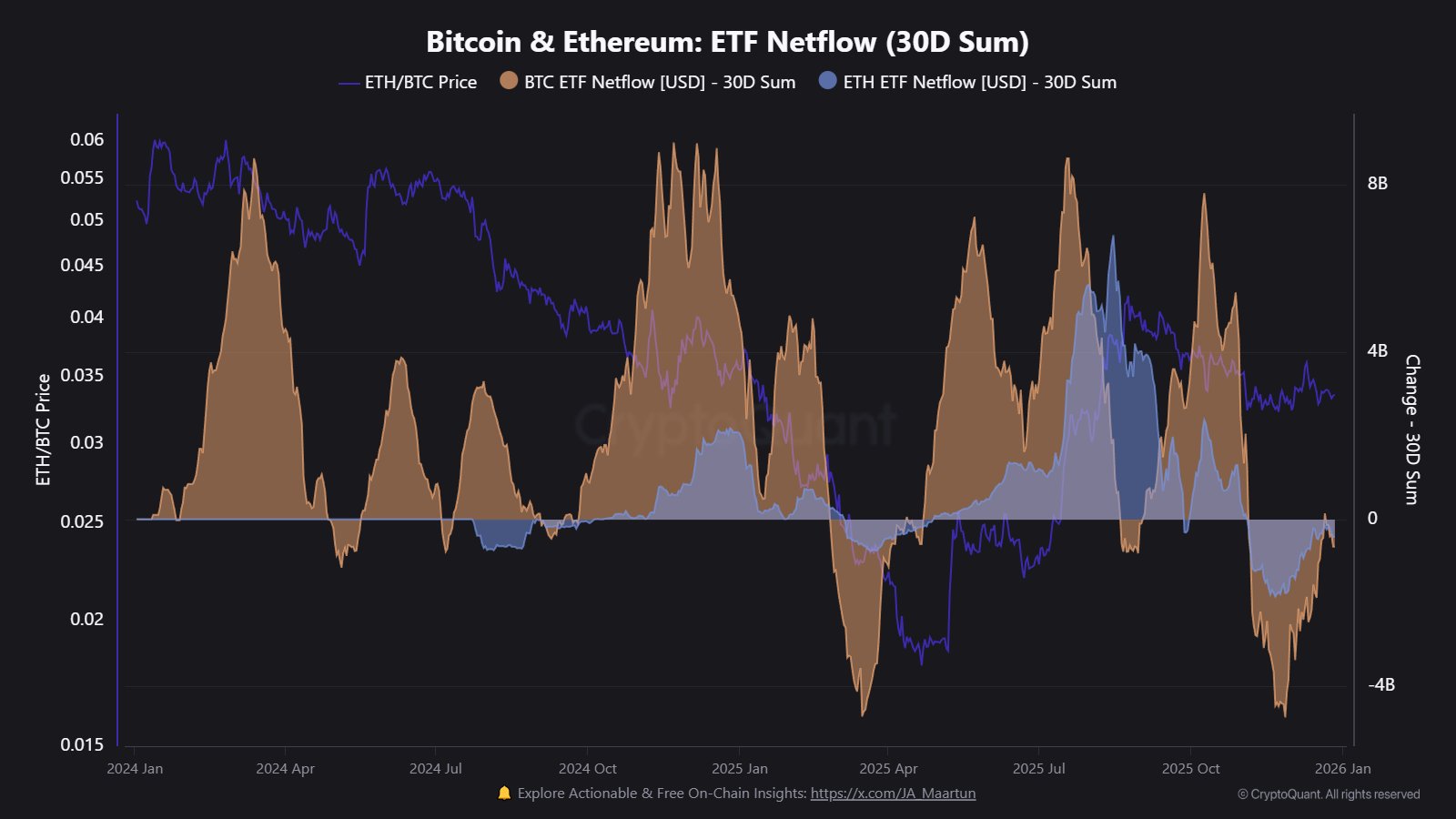
Looks like the value of the metric has been negative for both of these assets in recent weeks | Source: @JA_Maartun on X

As is visible in the graph, the 30-day spot ETF netflow has been negative for both Bitcoin and Ethereum since a while now, suggesting that the funds have been witnessing sustained net outflows.

The situation has improved a bit most recently, but the indicator is still red for both assets, sitting at -$656 million for BTC and -$422 million for ETH. The weak demand in the market is similar to the phase of outflows from the first half of 2025.

Back then, demand eventually made an explosive return, with Bitcoin and Ethereum witnessing sharp price rallies. It now remains to be seen whether a comeback will happen this time or if the slowdown in demand is here to stay for now.

Another relatively recent source of demand in the market is digital asset treasuries. As highlighted by institutional DeFi solutions provider Sentora in a new X post, holdings of cryptocurrency treasuries now exceed $185 billion across 368 entities.
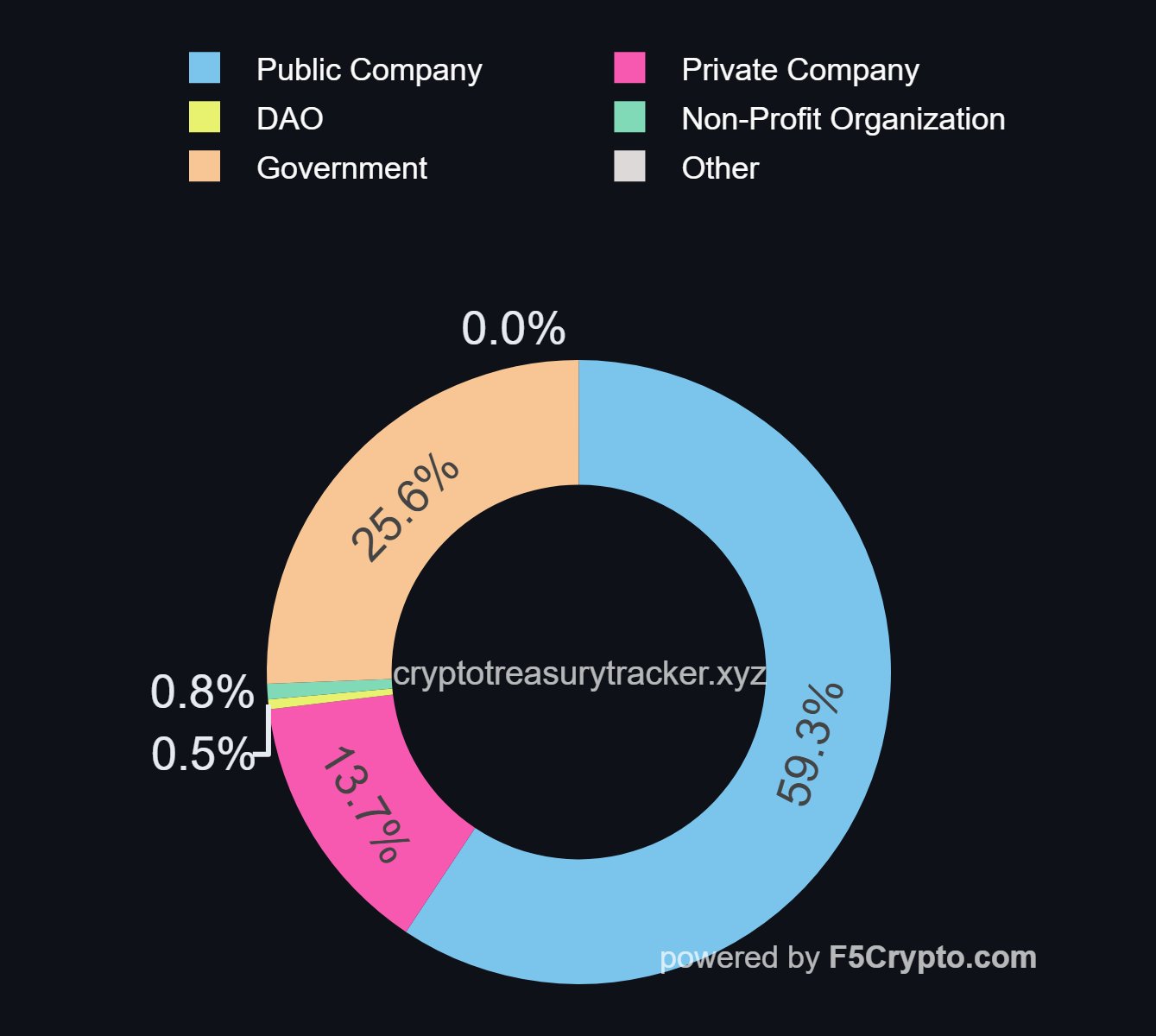
The breakdown of treasuries across various sectors | Source: Sentora on X

Out of this amount, 73% of the digital asset treasuries are controlled by companies, while the rest is in the hands of governments.

BTC Price

At the time of writing, Bitcoin is trading around $88,100, unchanged from last week.

The price of the coin seems to have been consolidating recently | Source: BTCUSDT on TradingView


Preguntas relacionadas

QWhat does the negative 30-day ETF netflow indicate for Bitcoin and Ethereum?

AThe negative 30-day ETF netflow indicates that capital has been flowing away from both Bitcoin and Ethereum, suggesting sustained net outflows from these digital assets.

QWhen did the SEC approve spot ETFs for Bitcoin and Ethereum in the US?

AThe SEC approved spot ETFs for Bitcoin in January 2024 and for Ethereum in July 2024.

QWhat are the current 30-day netflow values for Bitcoin and Ethereum ETFs mentioned in the article?

AThe current 30-day netflow is -$656 million for Bitcoin (BTC) and -$422 million for Ethereum (ETH).

QAccording to the article, what is the total value of digital asset treasuries held across entities, and what percentage is controlled by companies?

AThe total value of digital asset treasuries held across 368 entities is over $185 billion, with 73% controlled by companies.

QWhat was Bitcoin's price at the time of writing, and how has it performed recently?

AAt the time of writing, Bitcoin was trading around $88,100, unchanged from the previous week, and appears to be consolidating.

Lecturas Relacionadas

Three Frameworks for Ordinary People to Achieve AI Capability Leap: Say Goodbye to the Dilemma of 'Repeating Inputs Every Day'

Summary: This article outlines three frameworks for maximizing AI efficiency, moving beyond basic prompt usage. 1. **Three-Layer Evolution**: Users progress from (1) **Prompt** (one-off instructions, reset each session), to (2) **Project** (context-aware within a specific project), to (3) **Skill** (permanent, auto-applied knowledge). Most users stagnate at the first layer, repeating the same instructions daily with no cumulative improvement. Skills transform the AI from a chat tool into a personalized work system. 2. **Transaction vs. Compound Interest Mindset**: Using prompts is a linear transaction—effort and output are 1:1, and stopping resets progress. Investing time in building Skills is compound interest; a small initial time investment pays continuous dividends, as each Skill permanently elevates the AI's baseline performance. 3. **Thin Harness, Fat Skills**: The system architecture should prioritize thick, well-defined Skills (90% of the value—containing processes, standards, and domain knowledge) and a thin "harness" (the minimal technical environment). Avoid over-engineering the toolchain while neglecting the AI's actual knowledge. Skills are permanent assets that automatically improve with model updates. The key takeaway: Identify tasks you repeat, encode them into Skills (using tools like Claude's Skill Creator), and shift focus from daily prompting to building a compounding, self-improving AI system.

marsbitHace 27 min(s)

Three Frameworks for Ordinary People to Achieve AI Capability Leap: Say Goodbye to the Dilemma of 'Repeating Inputs Every Day'

marsbitHace 27 min(s)

Trading

Spot
Futuros

Artículos destacados

Cómo comprar RED

¡Bienvenido a HTX.com! Hemos hecho que comprar RedStone (RED) sea simple y conveniente. Sigue nuestra guía paso a paso para iniciar tu viaje de criptos.Paso 1: crea tu cuenta HTXUtiliza tu correo electrónico o número de teléfono para registrarte y obtener una cuenta gratuita en HTX. Experimenta un proceso de registro sin complicaciones y desbloquea todas las funciones.Obtener mi cuentaPaso 2: ve a Comprar cripto y elige tu método de pagoTarjeta de crédito/débito: usa tu Visa o Mastercard para comprar RedStone (RED) al instante.Saldo: utiliza fondos del saldo de tu cuenta HTX para tradear sin problemas.Terceros: hemos agregado métodos de pago populares como Google Pay y Apple Pay para mejorar la comodidad.P2P: tradear directamente con otros usuarios en HTX.Over-the-Counter (OTC): ofrecemos servicios personalizados y tipos de cambio competitivos para los traders.Paso 3: guarda tu RedStone (RED)Después de comprar tu RedStone (RED), guárdalo en tu cuenta HTX. Alternativamente, puedes enviarlo a otro lugar mediante transferencia blockchain o utilizarlo para tradear otras criptomonedas.Paso 4: tradear RedStone (RED)Tradear fácilmente con RedStone (RED) en HTX's mercado spot. Simplemente accede a tu cuenta, selecciona tu par de trading, ejecuta tus trades y monitorea en tiempo real. Ofrecemos una experiencia fácil de usar tanto para principiantes como para traders experimentados.

376 Vistas totalesPublicado en 2025.03.05Actualizado en 2025.03.21

Cómo comprar RED

Discusiones

Bienvenido a la comunidad de HTX. Aquí puedes mantenerte informado sobre los últimos desarrollos de la plataforma y acceder a análisis profesionales del mercado. A continuación se presentan las opiniones de los usuarios sobre el precio de RED (RED).

活动图片