Binance let suspicious accounts move millions after $4.3B US plea deal: Report

cointelegraphPublicado a 2025-12-22Actualizado a 2025-12-22

Resumen

Binance reportedly allowed 13 suspicious accounts to move approximately $1.7 billion in crypto, including $144 million after its November 2023 $4.3 billion plea deal with U.S. authorities. Internal documents show accounts from Venezuela, Brazil, Syria, Niger, and China exhibited red flags, such as a Venezuelan account receiving $177 million and changing bank details 647 times in 14 months. Another account, accessed from Caracas and Osaka within 10 hours—a physical impossibility—processed $93 million. The activity raises questions about Binance's compliance upgrades promised in its settlement, which included enhanced monitoring and due diligence. The report follows former President Trump’s pardon of Binance founder Changpeng Zhao in October.

Binance reportedly continued to allow suspicious accounts to move funds in crypto even after the exchange pledged to tighten controls as part of its $4.3 billion US criminal settlement in 2023.

According to internal data reviewed by the Financial Times, a network of 13 user accounts processed about $1.7 billion in transactions from 2021, including roughly $144 million after the November 2023 plea agreement.

​The files reportedly include Know-Your-Customer (KYC) documents, IP and device logs, and transaction histories for users in countries including Venezuela, Brazil, Syria, Niger and China.

Regulatory and AML specialists cited by the Financial Times said that the findings raise fresh questions about how effectively Binance has implemented the governance and surveillance upgrades promised US authorities after the settlement.

Binance did not provide a comment to Cointelegraph by press time.

Related: Binance alleges fake listing agents, offers up to $5M whistleblower reward

Suspicious account behaviors

In one case, a Binance account linked to a 25-year-old Venezuelan woman received more than $177 million over two years and changed its linked bank details 647 times in 14 months.

Former prosecutors told the Financial Times that such activity would normally be treated as highly suspicious and potentially consistent with an unregistered money-transmitting business.

​Another account, held by a junior bank employee living in a poor district of Caracas, saw about $93 million flow in and out between 2022 and May 2025. Internal logs showed the account was accessed from Caracas one afternoon and from Osaka, Japan, less than 10 hours later, a sequence experts told the FT was physically impossible and the type of anomaly that should automatically trigger review at a regulated institution.

Nick Heather, head of trading at ONE.io, a financial services company providing digital asset trading services, told Cointelegraph that such cases underline the importance of adaptive governance frameworks in digital asset markets.

“When accounts displaying repeated red flags remain active, that points to an escalation and oversight challenge rather than one of market structure. Robust governance, sanctions screening, and post-trade surveillance are of critical importance, and institutional and retail traders operating in regulated markets are already accustomed to these requirements,” Heather said.

​All 13 accounts shared markers of suspicious behavior and collectively received about $29 million in stablecoin USDt (USDT) from wallets later frozen by Israel under anti-terrorism laws.

Related: CZ pardon was considered with ‘utmost seriousness,’ White House says

​Plea deal promises and Trump pardon backdrop

Binance in its 2023 plea deal promised to implement real-time monitoring, enhanced due diligence and regular customer reviews to detect suspicious activities.
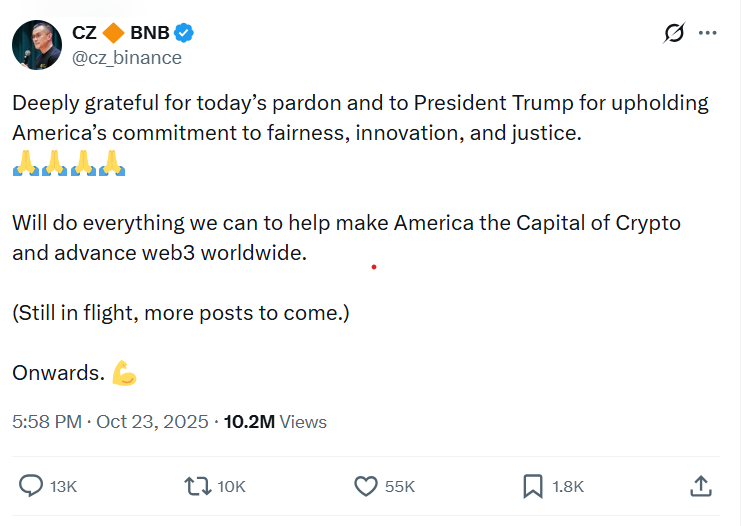
CZ announces his presidential pardon | Source: CZ_Binance

At the time, US authorities said Binance had failed to report more than 100,000 suspicious transactions involving activities including ransomware, child sexual abuse, narcotics trafficking and transfers linked to groups including al-Qaeda and ISIS.

​The Financial Times report comes after US President Donald Trump pardoned Binance founder Changpeng Zhao in October.


Preguntas relacionadas

QWhat did Binance reportedly continue to do even after its $4.3 billion plea deal in 2023?

ABinance reportedly continued to allow suspicious accounts to move funds in crypto even after pledging to tighten controls as part of its settlement.

QHow much money did the network of 13 suspicious accounts process in total and after the plea agreement?

AThe network of 13 accounts processed about $1.7 billion in transactions from 2021, including roughly $144 million after the November 2023 plea agreement.

QWhat was one example of highly suspicious account behavior cited in the report?

AOne account linked to a 25-year-old Venezuelan woman received over $177 million and changed its linked bank details 647 times in 14 months, which former prosecutors said is consistent with an unregistered money-transmitting business.

QWhat did Binance plea deal promise to implement regarding surveillance?

ABinance promised to implement real-time monitoring, enhanced due diligence, and regular customer reviews to detect suspicious activities as part of its 2023 plea deal.

QWhat significant political event for Binance's founder occurred just before this Financial Times report?

AUS President Donald Trump pardoned Binance founder Changpeng Zhao in October, just before this report was published.

Lecturas Relacionadas

From Theft to Re-entry: How Was $292 Million "Laundered"?

A sophisticated crypto laundering operation was executed following the $292 million hack of Kelp DAO on April 18. The attack, attributed to the North Korean Lazarus group, began with anonymous infrastructure preparation using Tornado Cash to fund wallets untraceably. The hacker exploited a vulnerability in Kelp’s cross-chain bridge, stealing 116,500 rsETH. To avoid crashing the market, the attacker used Aave and Compound as laundering tools—depositing the stolen rsETH as collateral to borrow $190 million in clean, liquid ETH. This move triggered a bank run on Aave, causing an $8 billion drop in TVL. After consolidating funds, the attacker fragmented them across hundreds of wallets to evade detection. A major breakpoint was THORChain, where over $460 million in volume—30 times its usual activity—was processed in 24 hours, converting ETH into Bitcoin. This shift to Bitcoin’s UTXO model exponentially increased tracing complexity by shattering funds into countless untraceable fragments. The final destination was Tron-based USDT, the primary channel for illicit crypto flows. From there, funds were cashed out via OTC brokers in China and Southeast Asia, using unlicensed underground banks and UnionPay networks outside Western sanctions scope. Ultimately, the laundered money supports North Korea’s weapons programs, which rely heavily on crypto hacking for foreign currency. The incident underscores structural challenges in DeFi: its openness, composability, and lack of central control make such laundering not just possible, but inherently difficult to prevent.

marsbitHace 9 min(s)

From Theft to Re-entry: How Was $292 Million "Laundered"?

marsbitHace 9 min(s)

Google and Amazon Simultaneously Invest Heavily in a Competitor: The Most Absurd Business Logic of the AI Era Is Becoming Reality

In a span of four days, Amazon announced an additional $25 billion investment, and Google pledged up to $40 billion—both direct competitors pouring over $65 billion into the same AI startup, Anthropic. Rather than a typical venture capital move, this signals the latest escalation in the cloud wars. The core of the deal is not equity but compute pre-orders: Anthropic must spend the majority of these funds on AWS and Google Cloud services and chips, effectively locking in massive future compute consumption. This reflects a shift in cloud market dynamics—enterprises now choose cloud providers based on which hosts the best AI models, not just price or stability. With OpenAI deeply tied to Microsoft, Anthropic’s Claude has become the only viable strategic asset for Google and Amazon to remain competitive. Anthropic’s annualized revenue has surged to $30 billion, and it is expanding into verticals like biotech, positioning itself as a cross-industry AI infrastructure layer. However, this funding comes with constraints: Anthropic’s independence is challenged as it balances two rival investors, its safety-first narrative faces pressure from regulatory scrutiny, and its path to IPO introduces new financial pressures. Globally, this accelerates a "tri-polar" closed-loop structure in AI infrastructure, with Microsoft-OpenAI, Google-Anthropic, and Amazon-Anthropic forming exclusive model-cloud alliances. In contrast, China’s landscape differs—investments like Alibaba and Tencent backing open-source model firm DeepSeek reflect a more decoupled approach, though closed-source models from major cloud providers still dominate. The $65 billion bet is ultimately about securing a seat at the table in an AI-defined future—where missing the model layer means losing the cloud war.

marsbitHace 6 hora(s)

Google and Amazon Simultaneously Invest Heavily in a Competitor: The Most Absurd Business Logic of the AI Era Is Becoming Reality

marsbitHace 6 hora(s)

Trading

Spot
Futuros

Artículos destacados

Cómo comprar US

¡Bienvenido a HTX.com! Hemos hecho que comprar Talus Network (US) sea simple y conveniente. Sigue nuestra guía paso a paso para iniciar tu viaje de criptos.Paso 1: crea tu cuenta HTXUtiliza tu correo electrónico o número de teléfono para registrarte y obtener una cuenta gratuita en HTX. Experimenta un proceso de registro sin complicaciones y desbloquea todas las funciones.Obtener mi cuentaPaso 2: ve a Comprar cripto y elige tu método de pagoTarjeta de crédito/débito: usa tu Visa o Mastercard para comprar Talus Network (US) al instante.Saldo: utiliza fondos del saldo de tu cuenta HTX para tradear sin problemas.Terceros: hemos agregado métodos de pago populares como Google Pay y Apple Pay para mejorar la comodidad.P2P: tradear directamente con otros usuarios en HTX.Over-the-Counter (OTC): ofrecemos servicios personalizados y tipos de cambio competitivos para los traders.Paso 3: guarda tu Talus Network (US)Después de comprar tu Talus Network (US), guárdalo en tu cuenta HTX. Alternativamente, puedes enviarlo a otro lugar mediante transferencia blockchain o utilizarlo para tradear otras criptomonedas.Paso 4: tradear Talus Network (US)Tradear fácilmente con Talus Network (US) en HTX's mercado spot. Simplemente accede a tu cuenta, selecciona tu par de trading, ejecuta tus trades y monitorea en tiempo real. Ofrecemos una experiencia fácil de usar tanto para principiantes como para traders experimentados.

524 Vistas totalesPublicado en 2025.12.11Actualizado en 2025.12.11

Cómo comprar US

Discusiones

Bienvenido a la comunidad de HTX. Aquí puedes mantenerte informado sobre los últimos desarrollos de la plataforma y acceder a análisis profesionales del mercado. A continuación se presentan las opiniones de los usuarios sobre el precio de US (US).

活动图片