Before You Jump on Any ICO Bandwagon, Read This First

深潮Publicado a 2025-12-16Actualizado a 2025-12-16

Resumen

Before participating in any ICO, it's crucial to understand that most projects fail, and only a few achieve success. The recent hype around ICOs, driven by projects like MegaETH and Plasma, often leads to impulsive investments without proper due diligence. Here are key points to consider: 1. **Product Fundamentals**: Evaluate if the product solves a real problem and has genuine innovation. Avoid projects based on future promises or testnet data without a working product. 2. **Team Experience**: The team's track record matters. Experienced teams can adapt to market changes, while weak teams may disappear when hype fades. 3. **Investors and Valuation**: Check if reputable VCs are involved and assess the valuation. Avoid projects where insiders have low valuations, leaving retail investors at risk. 4. **Authentic Data**: Look beyond surface metrics like TVL or user numbers. Ensure data is genuine and not inflated by incentives or fake activity. 5. **Marketing and Narrative**: Strong projects control their narrative and attract organic attention. Poor projects rely on buzzwords without substance. 6. **Tokenomics**: Understand token unlock schedules, vesting, and fully diluted valuation (FDV). Avoid structures that favor insiders and shift risk to retail. 7. **Market Conditions**: Market cycles significantly impact valuation and returns. The same project may perform differently in a bull vs. bear market. ICO investments are not free money. Avoid FOMO-driven decisions and p...

Written by: Ola Ξlixir

Compiled by: AididiaoJP, Foresight News

ICOs are the hottest topic on crypto Twitter right now, and everyone is talking about them.

Everyone thinks they've found the next MegaETH or Plasma.

But most people are overlooking one key point:

Only a small fraction of these ICOs will actually make money; that's how the crypto market has always been.

One project pioneers a model, and it succeeds.

Then ten teams copy it, thinking they can replicate that success, but it's hard to duplicate, and eight or nine out of ten will fail.

Right now, every team wants to do an ICO, just because MegaETH and Plasma are hot.

They figure, instead of giving you an airdrop, why not have you pay to "get in."

However, those two projects succeeded because they were well-planned before execution.

So, before you invest in any ICO, consider the following points.

1. The Product is Fundamental

Ignore the flashy PowerPoints and the hype posts from KOLs.

Just ask a simple question:

Does this product actually solve a real problem today? Does it have genuine innovation? Why do they need to issue a token?

If the product only exists in a "future story" or requires a bunch of assumptions to work, that's dangerous.

Good ICOs usually have something actually running, not just empty promises or testnet data.

If they can't explain what the product does in one sentence, that's your first red flag.

2. The Team Matters

The quality of a project depends on the strength of the team behind it.

Look at the team's track record:

Have they built products before, in crypto or elsewhere?

Experience is a plus; it shows they've been down this road.

An anonymous team isn't necessarily a bad thing,

but they must deliver exceptional results to earn trust.

When the market shifts, strong teams adapt;

weak teams vanish as soon as the hype dies down. This is an "attention economy."

3. Investors and Valuation

Who invested in this project? Top-tier VCs or third-rate funds?
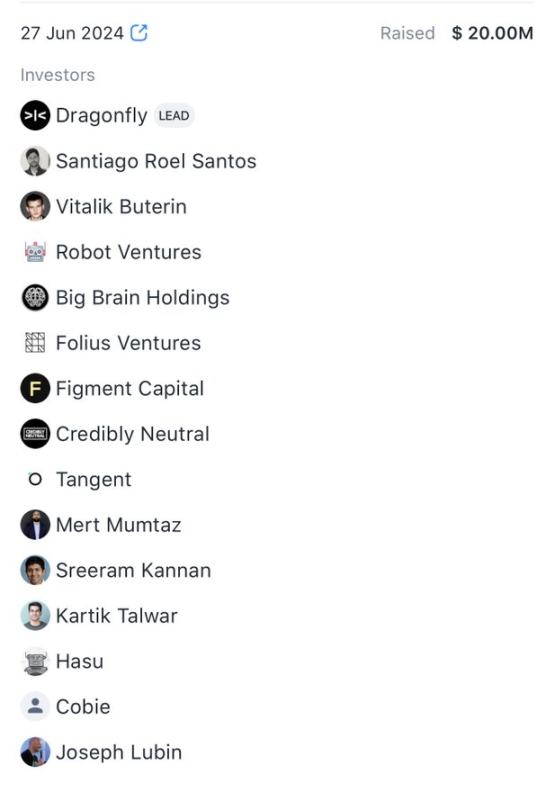
How much did they raise? What's the valuation? This is more important than many think.

If insiders and early investors got in at extremely low valuations, you're likely their "exit liquidity."

A good ICO's valuation makes sense even without hype;

a bad ICO relies on buzz and vanity metrics to justify its price.

4. Look at Real Data, Not Surface Numbers

Do they have real revenue? What are the active user numbers and Total Value Locked (TVL)?

Most importantly, the quality of this data—any data can be faked.

Testnet data is meaningless if it's easy to manipulate.

A dashboard full of fake activity won't magically turn into real usage—Monad is a prime example.

See if user demand is organic: are people willing to use the product without incentives,

or are they just there for a potential airdrop?

5. Marketing and Narrative Power

Marketing is more important than many realize.

MegaETH's marketing was executed masterfully.

The team controlled everything, perfectly steering the narrative.

Everyone was actively discussing MegaETH.

In the Web3 world, attention is everything.

If an ICO gets no attention before launch, don't expect miracles afterward—again, think Monad.

Good projects know how to tell their story clearly from the start.

Bad projects hide behind buzzwords: "We're building Web3's next ChatGPT + Nvidia + prediction market..." Nice story.

6. Offering Terms and Valuation

Read the terms carefully:

  • Token unlock rules

  • Vesting schedule

  • Circulating supply

  • Fully Diluted Valuation (FDV) at listing

Understanding the full tokenomics is crucial. If you can't, use AI tools to help analyze it.

If the ICO structure heavily favors insiders and dumps all the risk on retail, stay away.

A fair launch doesn't mean cheap; it means the interests of the project and participants are aligned.

7. Market Conditions are Key

This is the most easily overlooked point.

In a real bull market, a decent project can hit a $500M to $1B FDV on narrative alone.

Right now, even the hottest projects often cap out at $100M to $300M valuations.

This directly impacts your risk-reward calculation.

The same project can have wildly different outcomes in different markets.

Timing isn't everything, but it's never irrelevant.

Final Thoughts

ICOs are not free money; they never were.

The current trend will create some winners and leave a long list of lessons.

Don't buy just because everyone else is, or because a KOL you like is shilling it.

Don't assume every promoted project will be the next MegaETH.

The worst projects will just exploit your FOMO and hype-chasing mentality, with zero substance.

Preguntas relacionadas

QWhat is the main reason many ICOs fail to replicate the success of projects like MegaETH or Plasma?

AMost ICOs fail because they are merely copying a successful model without proper planning, execution, or innovation, unlike the original projects which were well-planned from the start.

QAccording to the article, what should be the primary focus when evaluating an ICO?

AThe primary focus should be on the product itself—whether it solves a real problem, has actual innovation, and has a working product rather than just promises or testnet data.

QWhy is the team behind an ICO important, as mentioned in the article?

AThe team's experience and track record are crucial because a strong team can adapt to market changes, while a weak one may disappear when hype fades. Anonymous teams need to deliver exceptional results to gain trust.

QWhat does the article suggest about ICO valuations and investor alignment?

AThe article warns that if insiders and early investors get in at very low valuations, retail investors might become 'exit liquidity.' A good ICO should have a logical valuation and fair terms that align interests between the project and participants.

QHow does market timing affect the outcome of an ICO, based on the article?

AMarket timing is critical—the same project can have vastly different results in a bull market versus the current environment. Valuations and risk-reward ratios are heavily influenced by the overall market conditions.

Lecturas Relacionadas

Gate Research Institute: The 'Wall Street-ization' Wave of Crypto Financial Products – Competition or Integration?

The article titled "Gate Research Institute: Are Crypto Financial Products Sparking a 'Wall Street' Wave—Competition or Convergence?" explores the evolving relationship between the crypto ecosystem and traditional finance (TradFi). The piece begins by reflecting on Bitcoin's original 2009 vision of decentralization, disintermediation, and moving away from banks. It then contrasts this with the 2024 landscape, where key crypto assets like Bitcoin are increasingly held through Wall Street products like ETFs issued by giants like BlackRock. The article questions whether this signifies that TradFi is systematically taking over the rights to issue, price, custody, and distribute crypto financial assets. The core argument is that this is not a zero-sum takeover but rather a bidirectional convergence where each side addresses the other's weaknesses. Crypto offers 24/7 global markets, programmable settlement, and open access but lacks compliant channels, institutional-grade custody, deep fiat liquidity, and mainstream distribution. TradFi possesses these but is constrained by legacy systems, limited operating hours, and slow settlement. Two primary convergence paths are highlighted: * **Path A (CEX to TradFi):** Exemplified by Gate, which has progressed from offering tokenized stocks and CFDs to providing direct, real stock trading (US, Hong Kong, South Korea) within its platform, using USDT. * **Path B (TradFi to Crypto):** Exemplified by Robinhood, which has integrated crypto trading, acquired exchanges like Bitstamp, and is moving traditional assets like stocks onto the blockchain via tokenization and its own Layer 2. Both paths are ultimately competing to become the next-generation, unified financial account—a "super account" where users can seamlessly trade cryptocurrencies, stocks, ETFs, RWA (Real World Assets), and tokenized treasury products in one interface. The growth of RWA and tokenized treasuries (e.g., BlackRock's BUIDL) is presented as the asset-layer fusion, providing stable, yield-bearing assets on-chain and acting as a bridge between the two worlds. In conclusion, the "Wall Street-ization" of crypto is framed as a mutual transformation. Decentralized ideals persist in the protocol layer, while at the application layer, a more efficient, global, and accessible unified capital market is emerging from this convergence. The future competition lies not between crypto exchanges and stockbrokers, but between platforms vying to offer the most comprehensive asset coverage, liquidity, and user experience within a single account.

marsbitHace 2 min(s)

Gate Research Institute: The 'Wall Street-ization' Wave of Crypto Financial Products – Competition or Integration?

marsbitHace 2 min(s)

Claude's Major New Feature: Screen Recording + Voice, Distilling Your Skills into AI Tasks in One Click

Claude has introduced a major new feature called "Record a Skill," available for Pro, Max, and Team users. This function, found in the Claude desktop app's CoWork menu, allows users to create reusable AI skills simply by recording their screen and providing voice narration while performing a task. Claude then automatically analyzes the recording and generates a functional Skill. A hands-on test confirmed the feature works seamlessly. Users start recording via the Skills manager, perform their workflow while verbally explaining the steps and logic, and avoid including sensitive information. After recording, Claude processes the content and creates the Skill, which can be saved and later invoked with a slash command (/). This eliminates the need for manual adjustments or writing complex instruction files. The innovation goes beyond mere efficiency. Previously, creating a Skill required writing a detailed SKILL.md file in Markdown—a significant barrier for non-technical users. "Record a Skill" bypasses this by directly capturing both actions and the implicit reasoning shared in the narration. This lowers the barrier to knowledge transfer and automation, addressing a core challenge in corporate knowledge management: the difficulty of getting experts to write and maintain documentation. However, the feature also highlights a shift in the nature of work. A case study from March 2026 showed a freelancer whose five-year client relationship was effectively replaced by a hand-coded Claude Skill automating their content workflow. With the even lower barrier of screen recording, the ability to distill personal expertise into automatable skills accelerates this trend. The "moat" for work is moving from simply knowing how to do a task to mastering tasks that are difficult or impossible to automate.

marsbitHace 7 min(s)

Claude's Major New Feature: Screen Recording + Voice, Distilling Your Skills into AI Tasks in One Click

marsbitHace 7 min(s)

Feeding AI "Noise" Can Also Boost Scores, This Work Enables Positive Transfer with Noise

Feeding "Noise" to AI Can Improve Performance: A Method Enables Positive Transfer from Noise This work, Semi-Supervised Noise Adaptation (SSNA), introduces a Noise Adaptation Framework (NAF) that challenges traditional transfer learning. Instead of requiring a labeled source domain of real data (e.g., images, text), NAF uses randomly generated Gaussian noise as the source. For a target task with C classes, it constructs C noise clusters by sampling from Gaussian distributions. Although this synthetic noise contains no semantic meaning, NAF trains it to form a discriminative class structure in a shared representation space—clustering same-class noise and separating different classes. The key is aligning this learned structure from the noise domain to the real, sparsely labeled target domain. A small number of target labels are still essential to establish the correspondence between noise clusters and actual classes. The training objective combines: 1) supervised loss on the few labeled target samples, 2) classification loss for the noise to build its structure, and 3) a distribution alignment loss (using Negative Domain Similarity) to minimize the gap between the noise and target domains in the shared space. Experiments show significant gains in few-label settings. With just 4 labels per class, NAF with a ResNet-18 backbone improves accuracy over a standard supervised baseline (ERM) by +12.35% on CIFAR-10, +7.61% on CIFAR-100, +4.38% on DTD-47, and +2.74% on Caltech-101. It also benefits fine-grained datasets and scales to ImageNet-1K (with 100 labels/class) and text classification (AG News). NAF can be integrated into existing semi-supervised methods like FixMatch for further gains. Ablation studies confirm the transferred benefit comes from the discriminative structure of the noise, not randomness itself. Collapsing all noise into a single point causes negative transfer, while increasing separation between noise cluster centers improves performance. The amount of noise per class is less critical once a basic structure forms. In conclusion, this work demonstrates that for positive transfer, the semantic content of source data may not be necessary. What can be effectively transferred is the *organizational structure* of categories within a representation space. This offers a promising alternative for scenarios where real source data is unavailable due to privacy, copyright, or procurement constraints.

marsbitHace 8 min(s)

Feeding AI "Noise" Can Also Boost Scores, This Work Enables Positive Transfer with Noise

marsbitHace 8 min(s)

Trading

Spot
活动图片