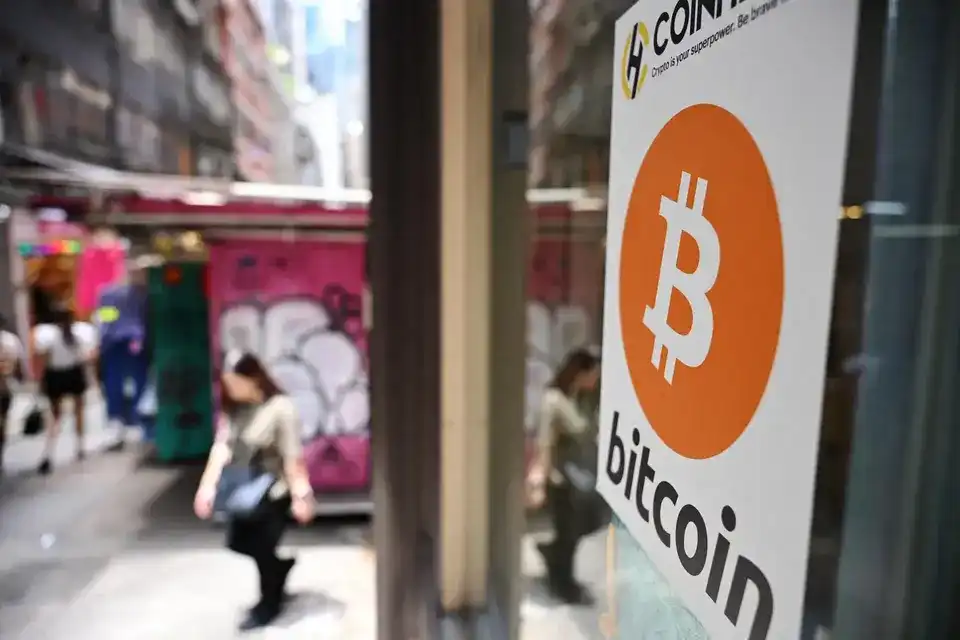
Bank Of America CEO Issues $6T Stablecoin Rewards Warning As Regulatory Debate Heats Up

bitcoinistPublicado a 2026-01-16Actualizado a 2026-01-16

Resumen

Bank of America CEO Brian Moynihan has issued a warning that up to $6 trillion in deposits could leave the US banking system for the stablecoin sector if proposed crypto legislation allows interest payments on such tokens. He stated this could reduce banks' lending capacity and increase borrowing costs, particularly harming small and medium-sized businesses. The warning comes amid heated debate over the new market structure bill, which has faced criticism from both banking associations and crypto industry leaders. Coinbase CEO Brian Armstrong expressed strong opposition, arguing the bill would be worse than the status quo by effectively banning stablecoin rewards and restricting key crypto sectors. Due to significant backlash, the Senate Banking Committee has postponed the bill's markup to further review.

The CEO of Bank of America has warned that trillions of dollars could flee from bank deposits to the stablecoin sector if the upcoming crypto market structure bill allows interest payments on the tokens.

Banking System Could Face $6 Trillion Problem

On Wednesday, Bank of America CEO Brian Moynihan told investors that the banking industry could face significant challenges if the US Congress does not prohibit interest-bearing stablecoins.

During its Q4 earnings call, the executive affirmed that up to $6 trillion in deposits, around 30% to 35% of all US commercial bank deposits, could flow out of the banking system and into the stablecoin sector, citing Treasury Department studies.

The banking sector has heavily criticized the US’s landmark stablecoin legislation, the GENIUS Act, for months, claiming that it has loopholes that could pose risks to the financial system. Notably, the crypto framework prohibits interest payments on the holding or use of payment-purpose stablecoins but only addresses issuers.

Multiple banking associations across the US sent a joint letter to the Senate Banking Committee urging Congress to amend the law to include digital asset exchanges, brokers, dealers, and related entities.

According to the call’s transcript, Moynihan compared the digital assets to money market mutual funds, which require reserves to be held in short-term instruments, such as US Treasuries, thereby reducing lending capacity in the system.

That is the bigger concern that we’ve all expressed to Congress as they think about this, if you move it outside the system, you’ll reduce the lending capacity of banks. (...) And if you take out deposits, (...) they’re either not going to be able to loan or they’re going to have to get wholesale funding and that wholesale funding will come at a cost that will increase the cost of borrowing.

The CEO asserted that Bank of America would not be affected by this issue, as the institution would be able to “meet customer demand, whatever may surface.” However, he noted that it would particularly hurt small- and medium-sized businesses, as they’re “largely lent to end consumers by the banking industry.”

Stablecoin Rewards Debate Intensifies

Moynihan’s remarks come amid the Senate’s struggles with the long-awaited market structure bill. The recently shared draft, which was scheduled for a markup today, has raised concerns among crypto industry leaders, who have outlined multiple problems with the bill.

Coinbase’s CEO, Brian Armstrong, took to X to share his disappointment with the legislation, affirming that “this version would be materially worse than the current status quo. We’d rather have no bill than a bad bill.”

He affirmed that, after reviewing the bill’s draft, Coinbase could not support it in its current state, arguing that there were “too many issues.” Among the problems, he noted the de facto ban on tokenized equities, crucial DeFi prohibitions, the “erosion” of the Commodity Futures Trading Commission (CFTC)’s authority, and the policies regarding the payment of interests on stablecoins.

As reported by Bitcoinist, this version of the market structure bill introduced key restrictions for stablecoin issuers. Under the proposed changes, issuers would be able to offer rewards for specific actions, such as account openings and cashback.

However, they are prohibited from offering interest payments to passive token holders. To Armstrong, this “would kill rewards on stablecoins,” and allow banks to “ban their competition.”

Amid the intensified backlash, Senate Banking Committee Chairman Tim Scott announced on Wednesday that the bill’s markup had been postponed to “deliver clear rules of the road that protect consumers, strengthen our national security, and ensure the future of finance is built in the United States.”
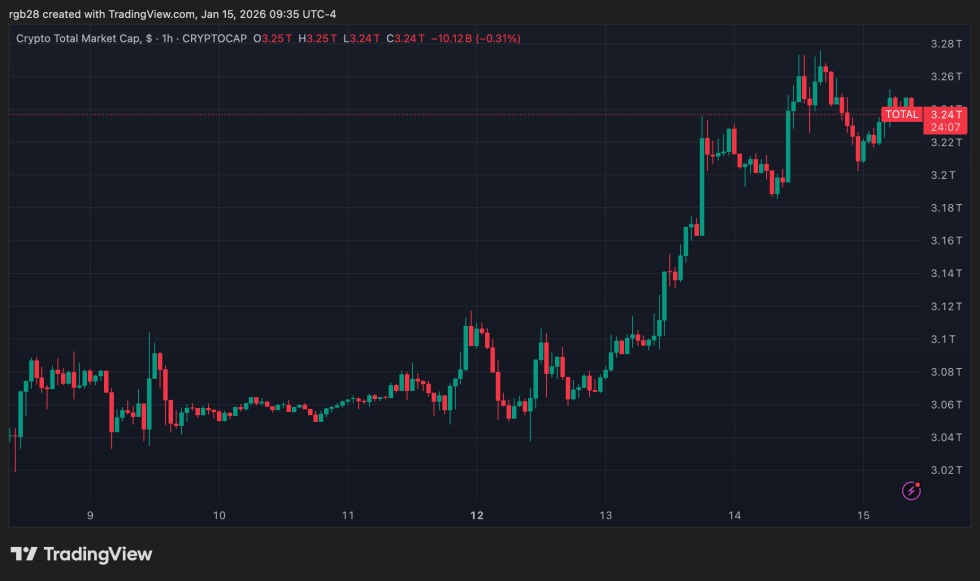
The total crypto market capitalization is at $3.24 trillion in the one-week chart. Source: TOTAL on TradingView


Criptos en tendencia

Preguntas relacionadas

QWhat is the main concern expressed by Bank of America CEO Brian Moynihan regarding the proposed stablecoin legislation?

ABrian Moynihan's main concern is that if the upcoming crypto market structure bill allows interest payments on stablecoins, up to $6 trillion in bank deposits could flee the banking system and move into the stablecoin sector, which would significantly reduce the lending capacity of banks and increase the cost of borrowing.

QAccording to the article, what specific percentage of US commercial bank deposits does the $6 trillion figure represent?

AThe $6 trillion figure represents approximately 30% to 35% of all US commercial bank deposits.

QWhy does the banking industry criticize the GENIUS Act, the US's landmark stablecoin legislation?

AThe banking industry criticizes the GENIUS Act for having loopholes that could pose risks to the financial system. They claim it only addresses issuers in its ban on interest for payment-purpose stablecoins and does not extend this prohibition to digital asset exchanges, brokers, dealers, and related entities.

QWhat was Coinbase CEO Brian Armstrong's reaction to the draft of the market structure bill?

ABrian Armstrong expressed strong disappointment, stating that the bill in its current state would be 'materially worse than the current status quo' and that Coinbase could not support it due to 'too many issues.' He stated, 'We’d rather have no bill than a bad bill.'

QWhat was the reason given for the postponement of the bill's markup by Senate Banking Committee Chairman Tim Scott?

ASenate Banking Committee Chairman Tim Scott announced the postponement in order to 'deliver clear rules of the road that protect consumers, strengthen our national security, and ensure the future of finance is built in the United States.'

Lecturas Relacionadas

Can Generative Models Finally Be Trained End-to-End? The Core Is a For Loop

This article introduces a novel training paradigm for generative models called Explorative Modeling (XM), which enables true end-to-end training. Traditionally, powerful generative models like autoregressive and diffusion models are not trained end-to-end. They are trained to predict a single small step but require iterative multi-step sampling for inference. This "exposure bias" leads to error accumulation and limits performance. The core challenge XM addresses is "mode blurring." In generative tasks, a single input (e.g., "generate a dog") corresponds to many valid outputs (multiple modes). Standard training objectives like reconstruction loss force the model to average these modes, producing unrealistic, blurry outputs. To avoid this, existing models break generation into many small, almost deterministic steps, sacrificing end-to-end training. XM tackles this by restructuring the training loop itself. Its key insight is to amplify "generative expressivity." For each training input, instead of generating one sample, the model generates K candidate outputs. Only the candidate closest to the real data is used for computing the loss and updating the model via backpropagation. This simple "best-of-K" mechanism is implemented as a short for-loop. By exploring multiple possibilities, the model learns to distribute its guesses across different modes rather than collapsing to their uninformative average. The paper demonstrates that "exploration" acts as a new, powerful scaling axis. Gains from XM increase with model size, data scale, and compute. Experiments show improvements in FID scores for image generation and significant efficiency gains, sometimes outperforming larger models without exploration. When pushed to the limit, XM enables fully single-step, end-to-end generative models. In robotics tasks, an "Explorative Policy" matched the performance of a 100-step Diffusion Policy with a single forward pass, drastically improving inference speed. While the best-of-K concept is not entirely new, the authors' contribution lies in formally understanding it as a direct method to boost generative expressivity without fragmenting the generation process. This work suggests that as models scale, enhancing exploration during training may become crucial for overcoming fundamental performance bottlenecks.

marsbitHace 23 min(s)

Can Generative Models Finally Be Trained End-to-End? The Core Is a For Loop

marsbitHace 23 min(s)

Annual Salary of Millions Competing for Electricians, Meta Rushes to Open Its Own Technical School

The AI boom is facing an unexpected bottleneck: a severe shortage of skilled construction workers and electricians. As tech giants like Meta, OpenAI, and Alphabet race to build massive data centers—such as OpenAI's $16 billion "Stargate" project—they are hitting a critical labor wall. The U.S. needs an estimated 130,000 more electricians, 240,000 construction workers, and 150,000 supervisors by 2030 for AI infrastructure alone, but tens of thousands of electrician jobs go unfilled each year. While AI companies offer high premiums, with electricians earning up to $280,000 annually, worker scarcity still causes massive losses—delays on a single project can cost $14.2 million per month. The complexity of building AI data centers, which require immense power (equivalent to powering hundreds of thousands of homes), sophisticated electrical systems, and advanced liquid cooling solutions, demands highly skilled technicians who are in short supply. To combat this, companies are investing heavily in training. Meta has committed $115 million to a free training school offering tuition, housing, and stipends, targeting 5,000 new workers. OpenAI is partnering with unions to secure skilled labor. These efforts are paying off, with a significant rise in Gen Z interest in trade schools over college. However, the power demands are staggering. AI data centers are driving a rapid surge in electricity consumption, projected to account for up to 12% of U.S. power use by 2028 and raising costs for consumers. Furthermore, the construction boom is project-based, leading to a potential future glut of trained workers once building peaks, which could depress wages industry-wide. The race for AI supremacy now depends as much on skilled hands as on advanced chips.

marsbitHace 2 hora(s)

Annual Salary of Millions Competing for Electricians, Meta Rushes to Open Its Own Technical School

marsbitHace 2 hora(s)

Trading

Spot

Artículos destacados

Qué es $BANK

Banco AI: Un Paso Revolucionario en el Futuro de la Banca Introducción En una era marcada por avances rápidos en tecnología, Banco AI se sitúa en la intersección de la inteligencia artificial (IA) y los servicios bancarios. Este proyecto innovador busca redefinir el panorama financiero, mejorando la eficiencia operativa, las medidas de seguridad y las experiencias del cliente a través del poder de la IA. Al embarcarnos en esta exploración de Banco AI, profundizaremos en lo que implica el proyecto, sus dinámicas operativas, su contexto histórico y hitos significativos. ¿Qué es Banco AI? En su esencia, Banco AI representa una iniciativa transformadora destinada a integrar la inteligencia artificial en varias operaciones bancarias. Este proyecto aprovecha las capacidades de la IA para automatizar procesos, mejorar los protocolos de gestión de riesgos y mejorar la interacción con los clientes a través de servicios personalizados. Los objetivos principales de Banco AI incluyen: Automatización de Funciones Bancarias: Al aprovechar las tecnologías de IA, Banco AI tiene como objetivo automatizar tareas rutinarias, reduciendo la carga sobre los recursos humanos y mejorando la eficiencia. Mejora en la Gestión de Riesgos: El proyecto utiliza algoritmos de IA para predecir e identificar riesgos, fortaleciendo así las medidas de seguridad contra fraudes y otras amenazas. Personalización de Servicios Bancarios: Banco AI se centra en ofrecer productos y servicios financieros a medida al analizar datos y comportamientos de los clientes. Mejoramiento de la Experiencia del Cliente: La implementación de soluciones impulsadas por IA, como chatbots y asistentes virtuales, tiene como objetivo proporcionar a los usuarios interacciones más humanas, revolucionando la forma en que los clientes se relacionan con los bancos. Con estos objetivos, Banco AI se posiciona como un jugador crucial para hacer que la banca sea más eficiente, segura y centrada en el usuario. ¿Quién es el Creador de Banco AI? Los detalles sobre el creador de Banco AI siguen siendo desconocidos. Como tal, no se ha identificado a ninguna persona u organización específica en la información disponible. El anonimato que rodea el inicio del proyecto plantea preguntas, pero no resta valor a su ambiciosa visión y objetivos. ¿Quiénes Son los Inversores de Banco AI? Al igual que con el creador del proyecto, no se ha divulgado información específica sobre los inversores u organizaciones que apoyan a Banco AI. Sin esta información, es un desafío delinear el respaldo financiero y el apoyo institucional que podrían estar impulsando el proyecto hacia adelante. No obstante, la importancia de contar con una sólida base de inversión es fundamental para sostener el desarrollo en un campo tan innovador. ¿Cómo Funciona Banco AI? Banco AI opera en múltiples frentes innovadores, centrándose en factores únicos que lo diferencian de los marcos bancarios tradicionales. A continuación, se presentan las características operativas clave: Automatización: Al aplicar algoritmos de aprendizaje automático, Banco AI automatiza varios procesos manuales dentro de los bancos. Esto resulta en la reducción de costos operativos y permite que los trabajadores humanos redirijan sus esfuerzos hacia actividades más estratégicas. Gestión Avanzada de Riesgos: La integración de la IA en las prácticas de gestión de riesgos equipa a los bancos con herramientas para predecir con precisión amenazas potenciales como el fraude, garantizando que la información y los activos de los clientes permanezcan seguros. Recomendaciones Financieras Personalizadas: A través del aprendizaje continuo a partir de las interacciones con los clientes, los sistemas de IA desarrollan una comprensión matizada de las necesidades del usuario, lo que les permite ofrecer consejos adaptados sobre decisiones financieras. Interacciones Mejoradas con los Clientes: Al utilizar chatbots y asistentes virtuales impulsados por IA, Banco AI permite una experiencia más atractiva para el cliente, permitiendo a los usuarios resolver sus consultas rápidamente, reduciendo así los tiempos de espera y mejorando los niveles de satisfacción. En conjunto, estas características operativas posicionan a Banco AI como un pionero en el sector bancario, estableciendo nuevos parámetros para la entrega de servicios y la excelencia operativa. Línea de Tiempo de Banco AI Entender la trayectoria de Banco AI requiere mirar su contexto histórico. A continuación, se presenta una línea de tiempo que destaca hitos y desarrollos importantes: Inicios de 2010: La conceptualización de la integración de la IA en los servicios bancarios comenzó a ganar atención a medida que las instituciones bancarias reconocieron los posibles beneficios. 2018: Se produjo un aumento notable en la implementación de tecnologías de IA cuando los bancos comenzaron a utilizar herramientas de IA como chatbots para el servicio al cliente básico y sistemas de gestión de riesgos para mejorar la seguridad. 2023: La sofisticación de la IA continuó avanzando, con la introducción de IA generativa para tareas más complejas como el procesamiento de documentos y análisis de inversiones en tiempo real. Este año marcó un salto significativo en las capacidades que la tecnología de IA otorgó a los bancos. 2024-Estatus Actual: A partir de este año, Banco AI se encuentra en una trayectoria ascendente, con investigaciones y desarrollos en curso que pronto mejorarán las capacidades en las operaciones bancarias. La continua exploración de las aplicaciones de IA sugiere emocionantes desarrollos aún por venir. Puntos Clave Sobre Banco AI Integración de la IA en la Banca: Banco AI se centra en adoptar inteligencia artificial para optimizar los procesos bancarios y mejorar la experiencia del usuario. Enfoque en Automatización y Gestión de Riesgos: El proyecto enfatiza fuertemente estas áreas, con el objetivo de desplazar la carga de tareas rutinarias mientras mejora los marcos de seguridad a través de análisis predictivos. Soluciones Bancarias Personalizadas: Al aprovechar los datos de los clientes, Banco AI permite servicios bancarios adaptados a las necesidades individuales de los usuarios. Compromiso con el Desarrollo: Banco AI se mantiene comprometido con esfuerzos de investigación y desarrollo continuos, asegurando su adaptabilidad y relevancia continua a medida que la tecnología sigue evolucionando. Conclusión En resumen, Banco AI ejemplifica un paso crucial hacia adelante en la industria bancaria, aprovechando la inteligencia artificial para redefinir los paradigmas operativos, mejorar la seguridad y promover la satisfacción del cliente. A pesar de las lagunas en la información sobre el creador y los inversores, los objetivos claros y los mecanismos funcionales de Banco AI proporcionan una sólida base para su evolución continua. A medida que la tecnología de IA sigue avanzando y fusionándose con el sector bancario, Banco AI está bien posicionado para impactar significativamente el futuro de los servicios financieros, mejorando la forma en que entendemos e interactuamos con la banca.

207 Vistas totalesPublicado en 2024.04.06Actualizado en 2024.12.03

Qué es $BANK

Cómo comprar BANK

¡Bienvenido a HTX.com! Hemos hecho que comprar Lorenzo Protocol (BANK) sea simple y conveniente. Sigue nuestra guía paso a paso para iniciar tu viaje de criptos.Paso 1: crea tu cuenta HTXUtiliza tu correo electrónico o número de teléfono para registrarte y obtener una cuenta gratuita en HTX. Experimenta un proceso de registro sin complicaciones y desbloquea todas las funciones.Obtener mi cuentaPaso 2: ve a Comprar cripto y elige tu método de pagoTarjeta de crédito/débito: usa tu Visa o Mastercard para comprar Lorenzo Protocol (BANK) al instante.Saldo: utiliza fondos del saldo de tu cuenta HTX para tradear sin problemas.Terceros: hemos agregado métodos de pago populares como Google Pay y Apple Pay para mejorar la comodidad.P2P: tradear directamente con otros usuarios en HTX.Over-the-Counter (OTC): ofrecemos servicios personalizados y tipos de cambio competitivos para los traders.Paso 3: guarda tu Lorenzo Protocol (BANK)Después de comprar tu Lorenzo Protocol (BANK), guárdalo en tu cuenta HTX. Alternativamente, puedes enviarlo a otro lugar mediante transferencia blockchain o utilizarlo para tradear otras criptomonedas.Paso 4: tradear Lorenzo Protocol (BANK)Tradear fácilmente con Lorenzo Protocol (BANK) en HTX's mercado spot. Simplemente accede a tu cuenta, selecciona tu par de trading, ejecuta tus trades y monitorea en tiempo real. Ofrecemos una experiencia fácil de usar tanto para principiantes como para traders experimentados.

872 Vistas totalesPublicado en 2025.05.09Actualizado en 2026.06.02

Cómo comprar BANK

Discusiones

Bienvenido a la comunidad de HTX. Aquí puedes mantenerte informado sobre los últimos desarrollos de la plataforma y acceder a análisis profesionales del mercado. A continuación se presentan las opiniones de los usuarios sobre el precio de BANK (BANK).

活动图片