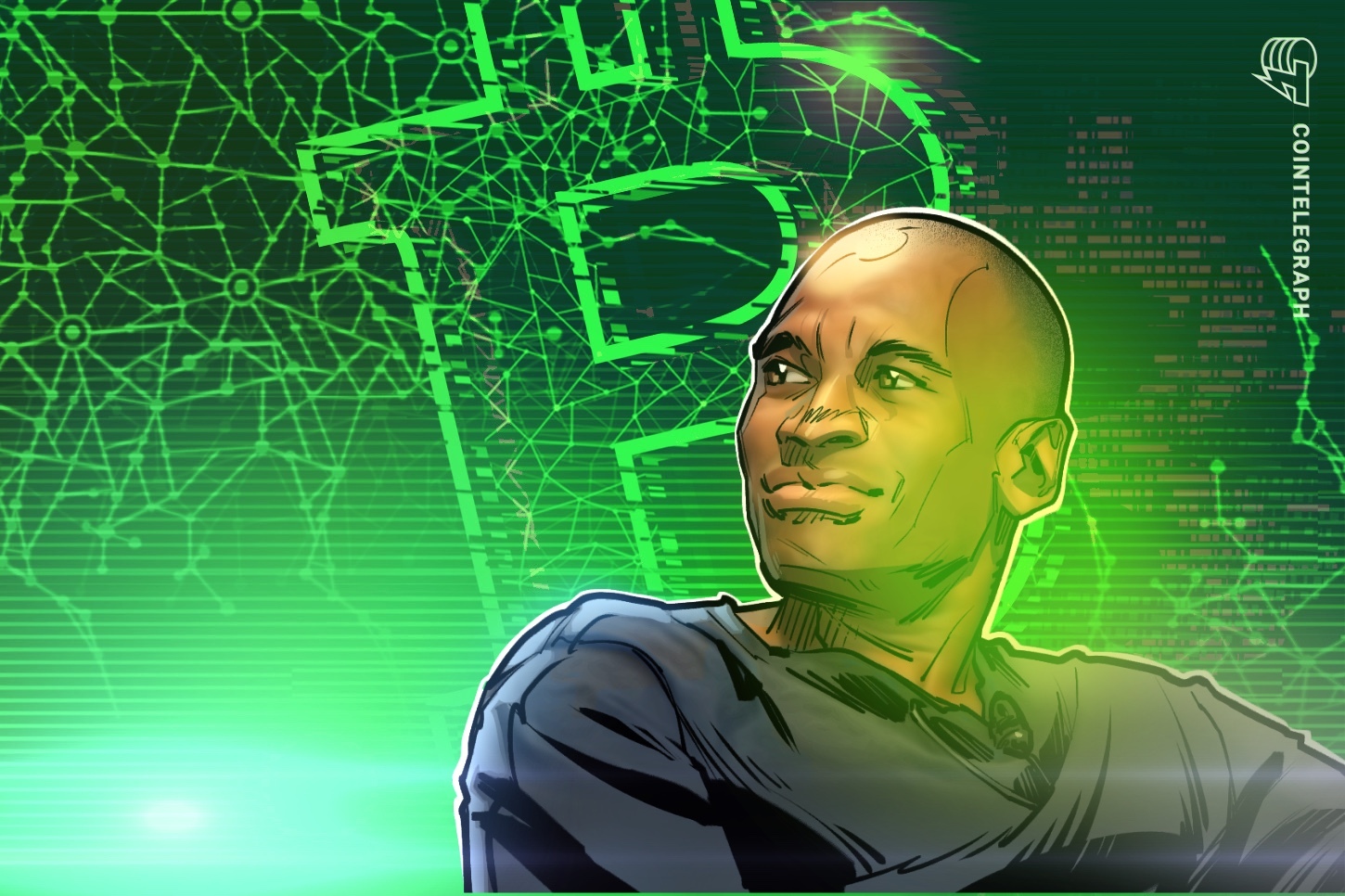
Arkham Announces 'De-anonymization' of ZCash. Which Transactions Are Being Tracked

RBK-cryptoPublicado a 2025-12-09Actualizado a 2025-12-09

Resumen

Analytics platform Arkham Intelligence has announced it has begun "de-anonymizing" transactions of the privacy-focused cryptocurrency Zcash (ZEC). Arkham claims to have labeled over half (53%) of all ZEC transactions, including both private (shielded) and public ones, and has linked $420 billion worth of ZEC to specific individuals and entities. Its monitoring tools provide alerts for large transactions and use AI for analysis. As an example, Arkham highlighted that the U.S. government holds $1.26 million in ZEC, confiscated from AlphaBay founder Alexander Cazes eight years ago. Zcash creator Zooko Wilcox responded by stating the announcement is not true de-anonymization, as ZEC users themselves choose whether to make their transactions visible on such a dashboard. The news comes amid a significant price surge for ZEC, which has increased nearly tenfold since the start of the year. Wilcox admitted he does not know the reason for the price increase but dismissed theories of a "coordinated pump" as cynical propaganda. Zcash supporters argue that Arkham's labeling is primarily based on data from the public portion of the network, though Arkham asserts it used methods to correlate some activity from the private pool as well.

Analytics platform Arkham has announced that it has started 'de-anonymizing' transactions in the Zcash cryptocurrency. This coin is known for allowing users to choose between private or public transaction processing.

Arkham claims to have labeled more than half (53%) of the transactions in the Zcash network, both shielded and open. Analysts have linked $420 billion in ZEC to specific individuals and organizations. Arkham's features for monitoring Zcash activity include the ability to receive notifications about large transactions, as well as analyze operations using artificial intelligence.

As an example of Zcash monitoring, Arkham pointed out that eight years ago, the US government confiscated $737,000 in ZEC from AlphaBay founder Alexander Cazes, which has appreciated in value over the years. The US government's balance now holds $1.26 million in ZEC.

Zcash creator Zooko Wilcox stated that this is not de-anonymization in the full sense, as ZEC users themselves decide whether their operations will be visible.

"The Arkham headline makes it sound like they can 'de-anonymize' Zcash owners. But in reality, when you use Zcash, you choose for yourself whether one of your wallets will be displayed on their dashboard or not," Wilcox wrote.

This fall, after almost five years of dormancy, the price of ZEC has increased nearly tenfold since the beginning of the year. Such a sharp spike has caused a lively reaction in the crypto community, dividing it into two camps: some believe the growth is a natural revaluation of the project's fundamental characteristics, while others see it as the result of a large-scale and coordinated promotional campaign.

At the end of October, Wilcox admitted that he did not know why ZEC was rising so much in price or if it would fall back. "But here's what I do know: the talk about this being a 'coordinated pump' is just more propaganda from people who can't believe in something good and genuine," the ZEC founder wrote.

Zcash supporters on social media also claim that the main part of Arkham's labeling is based on data from the open part of the network. The company itself assures that it used methods to correlate some activity from the private pool as well.

As of 12:40 Moscow time, Zcash is trading around $410. Over the past 24 hours, the coin has appreciated by 4.5%, and over the year by 543%.

Tether has invested in humanoid robots. When will they be launched

Binance suspends employee for insider trading. What happened

Strategy purchased the largest batch of bitcoins since July
Lecturas Relacionadas

Bank of Russia: 12 Largest Banks to Connect Digital Ruble from September 1, 2026

The Central Bank of Russia (CBR) announced that all 12 of the country's systemically important banks will be ready to offer clients digital ruble accounts and transactions starting September 1, 2026. According to Alla Bakina, director of the CBR's national payment system department, these banks cover over 80% of the domestic payment market. The digital ruble is described as a new form of the existing currency, functioning as a cashless payment method but held directly in a user's wallet on the CBR platform. Nine other banks designated as significant payment market participants are also expected to provide access, with most aiming to complete integration by autumn 2026. Starting from the September launch date, major retail chains with annual revenue exceeding 120 million rubles will be required to accept digital ruble payments, though adoption for citizens remains voluntary. The rollout follows a delayed pilot phase, with mass implementation postponed from 2025. The CBR's model currently offers basic account functionality without interest accrual, unlike China's digital yuan, which began paying interest in early 2026. The announcement positions Russia among dozens of countries testing Central Bank Digital Currencies (CBDCs), though the digital ruble's potential role in cross-border settlements, particularly within BRICS, remains an open question for its future international relevance.

cryptonews.ruJusto ahora

Bank of Russia: 12 Largest Banks to Connect Digital Ruble from September 1, 2026

cryptonews.ruJusto ahora

MSX US Stock Daily Observation: Baidu 2026 Q2 Earnings: AI Revenue Accounts for Half of Core Business for Two Consecutive Quarters, 283% GPU Cloud Growth Boosts Business Transformation

**MSX Daily US Stock Observation: Baidu 2026 Q2 Earnings Report** Baidu's Q2 2026 earnings present a clear picture of a company in transition. Total revenue declined slightly to RMB 313.25 billion, missing market expectations. This was driven by a continued double-digit contraction (-19%) in its core online marketing (advertising) business. The key highlight is the structural shift within the company's operations. AI-related revenue reached RMB 125 billion, accounting for approximately half of Baidu's core business income for the second consecutive quarter. Within AI, growth is heavily skewed towards infrastructure: AI cloud infrastructure revenue grew 50% year-over-year to RMB 73 billion, with GPU cloud revenue surging 283%. In contrast, AI application and AI-native marketing services revenue grew only 3% and remained flat, respectively, indicating slower commercialization on the application side. Profitability metrics were mixed. While adjusted operating profit and EBITDA exceeded expectations, demonstrating cost control, adjusted earnings per ADS of RMB 7.22 fell short by about 26%. This gap is largely attributed to depreciation and amortization costs linked to significant AI infrastructure investments, which continue to pressure bottom-line profit realization. The company holds a substantial cash position of RMB 2831 billion, providing runway for continued investment. The critical challenge ahead is translating the explosive growth in AI infrastructure (like GPU cloud) into stronger monetization from AI applications to bridge the gap between operational profit and per-share earnings.

Odaily星球日报Hace 5 min(s)

MSX US Stock Daily Observation: Baidu 2026 Q2 Earnings: AI Revenue Accounts for Half of Core Business for Two Consecutive Quarters, 283% GPU Cloud Growth Boosts Business Transformation

Odaily星球日报Hace 5 min(s)

Bitwise CIO: Three Major Cognitive Errors Common Among Crypto Investors Today

Bitwise CIO Matt Hougan highlights three key misconceptions he believes many crypto investors currently hold, presenting them as opportunities for those who see beyond them. First, investors significantly underestimate the total addressable market for crypto applications. While many view platforms like Uniswap only as tools for trading crypto assets (a ~$2 trillion market), their true potential lies in tokenizing and trading *all* asset classes—such as stocks and bonds—which represent markets hundreds of trillions of dollars in size. Second, there's a persistent overestimation of traditional financial institutions' ability to dominate crypto-native sectors. Examples like PayPal's stable币 (with ~1% market share vs. Tether/Circle's 88%) and Fidelity's custody business (trailing Coinbase) show that crypto-native firms often win due to faster iteration, focused expertise, and established user trust within the crypto ecosystem. Third, investors linearly extrapolate future on-chain transaction volumes from today's data, severely underestimating potential growth. The shift to 24/7 trading for tokenized assets could multiply trading hours by 5x. When combined with AI agents that may execute trades far more frequently than humans, transaction volumes could grow by 10x to 100x, massively boosting revenue for underlying blockchains and applications. Hougan concludes that the gap between the rapid pace of industry change and slower mainstream perception updates creates significant investment opportunities.

marsbitHace 8 min(s)

Bitwise CIO: Three Major Cognitive Errors Common Among Crypto Investors Today

marsbitHace 8 min(s)

Trading

Spot
活动图片