Arizona Warns of Crypto ATM Scams After $177M in Losses

TheNewsCryptoPublicado a 2026-02-03Actualizado a 2026-02-03

Resumen

Arizona Attorney General Kris Mayes issued a statewide warning about the rising threat of crypto ATM scams, which cost residents over $177 million in losses in 2024. The FBI reported a 99% increase in such complaints nationwide, totaling more than $246 million. Scammers typically contact victims via phone or text, posing as banks, law enforcement, or relatives, and convince them to deposit cash into one of Arizona’s 600 crypto ATMs—after which funds are irrecoverable. In response, Arizona implemented the Crypto Kiosk Licence Fraud Prevention law, capping daily transactions at $2,000 for new users and $10,500 for existing ones. Operators must now refund victims who file a police report within 30 days. The state has also placed physical "STOP" signs on Bitcoin ATMs and collaborated with law enforcement to raise awareness. Legal actions are expanding beyond Arizona, with Washington D.C.’s Attorney General suing Athena Bitcoin after finding that 93% of its deposits in the first five months were scam-related, often targeting elderly victims.

The Attorney General of Arizona, Kris Mayes, issued a statewide warning on January 2, alerting natives that crypto ATM fraud has become an increasing threat after Arizonans lost more than $177 million to these schemes in 2024.

At the same time, her office rolled out a new fraud complaint form, permitting victims to note losses within 30 days of being scammed. The alert comes as a wide clampdown on crypto kiosk fraud increases over the US and beyond, with the FBI noting a 99% increase in complaints and more than $246 million in losses in 2024.

From having lawsuits against prominent operators to extensive federal legislation, the industry is under fire as policymakers race to safeguard vulnerable consumers. Scammers normally reach victims via unsolicited calls or texts, imitating banks, law enforcement, or loved ones before influencing them to deposit cash into one of Arizona’s 600 crypto ATMs.

Once funds are deposited into a kiosk, it is not possible to recover them. Scottsdale police have solely reported around $5 million in losses in 2026. Arizona has also collaborated with Yavapai County Sheriff David Rhodes to position physical “STOP” signs on Bitcoin ATMs all over the state.

The Increased Cases

After warnings, Arizona’s Crypto Kiosk Licence Fraud Prevention law, efficient since September 2025, caps daily transactions at $2,000 for new customers and $10,500 for current users.

Operators must now provide complete refunds to fraud victims who file a police report within one month. At that time, Governor Hobbs also signed HB 2749 to make a state BTC reserve funded completely by unclaimed digital assets.

As Arizona makes consumer safeguards tighter, legal battles are escalating elsewhere against some of the sector’s largest players. The Attorney General of Washington, D.C., Brian Schwalb, sued Athena Bitcoin after a probe unveiled that 93% of the firm’s deposits at the time of its first five months in the district were directly associated with scams, with a median victim age of 71, and that one resident lost $98,000 over 19 transactions.

Highlighted Crypto News Today:

Whale Wallet Withdraws ETH, Analysts Explain the Game Around Ethereum Tokens on Current Situation


TagsATMCrypto ScamScam

Criptos en tendencia

Preguntas relacionadas

QWhat is the total amount of money lost to crypto ATM scams in Arizona in 2024, according to the Attorney General?

AArizonans lost more than $177 million to crypto ATM scams in 2024.

QWhat new measure did the Arizona Attorney General's office introduce to help victims of these scams?

AThe office rolled out a new fraud complaint form, permitting victims to note losses within 30 days of being scammed.

QWhat is the daily transaction cap for new customers under Arizona's Crypto Kiosk Licence Fraud Prevention law?

AThe law caps daily transactions at $2,000 for new customers.

QWhich company was sued by the Attorney General of Washington, D.C., and what percentage of its deposits were linked to scams?

AThe Attorney General of Washington, D.C., sued Athena Bitcoin after a probe unveiled that 93% of the firm's deposits were directly associated with scams.

QWhat physical warning measure has Arizona collaborated on to place on Bitcoin ATMs throughout the state?

AArizona has collaborated with Yavapai County Sheriff David Rhodes to position physical 'STOP' signs on Bitcoin ATMs all over the state.

Lecturas Relacionadas

How Does Codex Use a Computer? Three Entry Points and Permission Boundaries

This article explains the three primary methods for Codex to interact with a computer, each with distinct use cases, permission boundaries, and trust levels. **1. Computer Use:** This offers the broadest access, allowing Codex to visually control and interact with the graphical user interface of authorized macOS/Windows apps, system settings, and even iOS simulators. It's ideal for tasks lacking APIs or structured tools, such as operating legacy software or multi-app workflows. However, it's the slowest method and has the widest permission scope, requiring careful supervision for sensitive actions. **2. Chrome Extension:** This grants Codex access to the user's logged-in Chrome browser state, including cookies, profiles, and open tabs. It's best for tasks requiring user identity across websites like Gmail, LinkedIn, Salesforce, or internal dashboards. Its key advantage is multi-tab control for complex workflows. While more powerful for browser-based tasks than Computer Use, it carries higher sensitivity as actions are performed under the user's identity. **3. In-App Browser:** This is a browser isolated within the Codex thread, separate from the user's personal browsing data. It excels in web development and debugging scenarios—previewing local servers, testing responsive layouts, or annotating designs directly on the page. Its isolation is a strength for development but a limitation for tasks requiring login sessions. The core principle is to choose the narrowest, safest, and most structured interface for the task. Use plugins or MCPs first, resort to visual control (Computer Use) only for GUI-dependent tasks, employ the Chrome extension for identity-reliant browser work, and prefer the In-App Browser for isolated development. **Appshots** are clarified as a fourth, complementary tool for *inputting* context—capturing a screenshot of a window to point Codex to something—rather than a method for Codex to *act*. Together, this layered approach highlights a key to AI agent productization: not granting unlimited permissions, but constraining them within clear boundaries for specific tasks while preserving user oversight.

marsbitHace 7 min(s)

How Does Codex Use a Computer? Three Entry Points and Permission Boundaries

marsbitHace 7 min(s)

The "Iron Rule" of Chip Equipment Is Being Broken

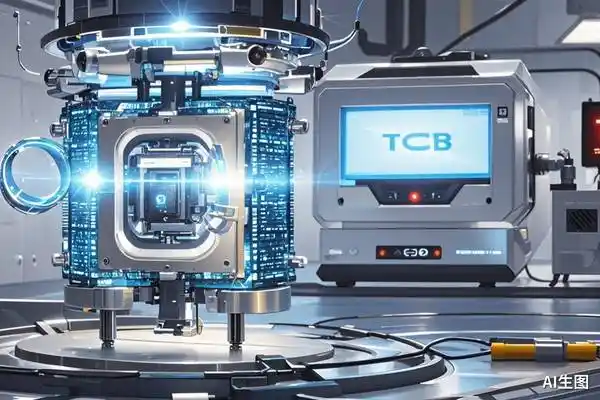
For years, the semiconductor equipment industry followed an unwritten "iron rule": suppliers offered steep discounts for new tool introductions (Design-in) and faced consistent price pressure during repeat orders, especially during market downturns. This long-standing buyer's market dynamic is now being upended. Recently, SK Hynix's primary equipment suppliers have reportedly requested a 3-4% price *increase*, a nearly unprecedented move. This shift is driven by a severe supply-demand imbalance fueled by the AI compute boom. Securing equipment has become an urgent arms race as chipmakers' expansion speed dictates their ability to fulfill massive AI chip orders. Key areas feeling the strain include: **TCB (Thermal Compression Bonding) Equipment:** Demand is exploding, driven by the simultaneous needs of HBM4 memory stacking, AI chip Chip-on-Substrate (C2S), and logic Chiplet Chip-on-Wafer (C2W) packaging. Players like Hanmi Semiconductor, Hanwha Semitech, and ASMPT are receiving major orders. While hybrid bonding is seen as the future, TCB remains the pragmatic choice for HBM4 mass production, with its lifecycle extended by relaxed specifications and ongoing technological upgrades. **Test Equipment Bottlenecks:** Ironically, AI-driven shortages are now crippling test equipment manufacturing. Critical components like FPGAs, Driver ICs, and CPUs face severe shortages and extended lead times (up to 52 weeks for FPGAs), as AI data center and server vendors prioritize supply. This creates a paradoxical cycle: AI chip shortages drive fab expansion, which requires more test equipment, whose production is delayed because its key parts are diverted to make AI chips. The industry is entering a broad, AI-powered upcycle. SEMI forecasts global semiconductor equipment sales to hit a record $156 billion by 2027, fueled by investment in advanced logic/foundry, HBM-driven DRAM, and advanced packaging (like CoWoS). Major players like TSMC, SK Hynix, and Micron are aggressively ramping capital expenditure. In conclusion, leading equipment vendors are no longer just selling tools; they are selling the critical capability to deliver AI-era capacity. Pricing power is shifting decisively to those with indispensable technology in key process nodes like advanced logic, HBM, and advanced packaging, rewriting the industry's traditional power structure.

marsbitHace 20 min(s)

The "Iron Rule" of Chip Equipment Is Being Broken

marsbitHace 20 min(s)

Trading

Spot
Futuros

Artículos destacados

Cómo comprar ATM

¡Bienvenido a HTX.com! Hemos hecho que comprar Atletico De Madrid Fan Token (ATM) sea simple y conveniente. Sigue nuestra guía paso a paso para iniciar tu viaje de criptos.Paso 1: crea tu cuenta HTXUtiliza tu correo electrónico o número de teléfono para registrarte y obtener una cuenta gratuita en HTX. Experimenta un proceso de registro sin complicaciones y desbloquea todas las funciones.Obtener mi cuentaPaso 2: ve a Comprar cripto y elige tu método de pagoTarjeta de crédito/débito: usa tu Visa o Mastercard para comprar Atletico De Madrid Fan Token (ATM) al instante.Saldo: utiliza fondos del saldo de tu cuenta HTX para tradear sin problemas.Terceros: hemos agregado métodos de pago populares como Google Pay y Apple Pay para mejorar la comodidad.P2P: tradear directamente con otros usuarios en HTX.Over-the-Counter (OTC): ofrecemos servicios personalizados y tipos de cambio competitivos para los traders.Paso 3: guarda tu Atletico De Madrid Fan Token (ATM)Después de comprar tu Atletico De Madrid Fan Token (ATM), guárdalo en tu cuenta HTX. Alternativamente, puedes enviarlo a otro lugar mediante transferencia blockchain o utilizarlo para tradear otras criptomonedas.Paso 4: tradear Atletico De Madrid Fan Token (ATM)Tradear fácilmente con Atletico De Madrid Fan Token (ATM) en HTX's mercado spot. Simplemente accede a tu cuenta, selecciona tu par de trading, ejecuta tus trades y monitorea en tiempo real. Ofrecemos una experiencia fácil de usar tanto para principiantes como para traders experimentados.

126 Vistas totalesPublicado en 2024.12.11Actualizado en 2025.03.21

Cómo comprar ATM

Discusiones

Bienvenido a la comunidad de HTX. Aquí puedes mantenerte informado sobre los últimos desarrollos de la plataforma y acceder a análisis profesionales del mercado. A continuación se presentan las opiniones de los usuarios sobre el precio de ATM (ATM).

活动图片