Arbitrum gains 10% as volume spikes – Can ARB break supply zone?

ambcryptoPublicado a 2026-04-08Actualizado a 2026-04-08

Resumen

ARB gained 10% in 24 hours, supported by a 40% surge in trading volume exceeding $100 million, indicating strong demand. The token is testing a key supply zone near $0.1031. While the Stochastic RSI suggests potential exhaustion, on-chain data shows whale accumulation reducing supply, and derivatives reflect bullish sentiment with a Long/Short Ratio of 1.6. A break above the resistance could target $1.1, but failure may lead to consolidation. The rally's sustainability depends on continued volume and buying pressure.

Arbitrum gained momentum as price and activity increased over the past 24 hours.

The token, ARB, rose 10%, supported by a sharp rise in market participation. Trading Volume climbed 40%, crossing $100 million.

That expansion suggested growing demand rather than fading interest. However, the Stochastic RSI signaled caution near current levels.

Is volume driving ARB’s rally?

Trading activity surged alongside price, strengthening the current move. The rise in Trading Volume indicated fresh participation rather than short-lived speculation.

That move aligned with sustained buying pressure, which kept momentum intact despite early signs of exhaustion.
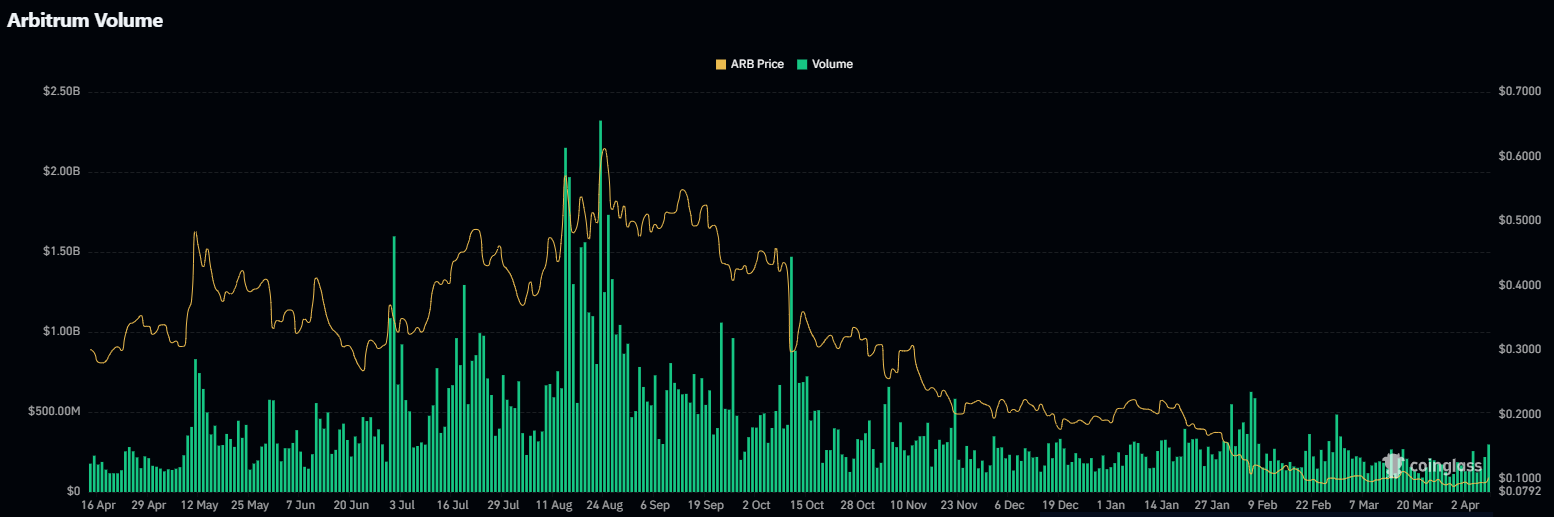
Source: CoinGlass

Can ARB clear its supply zone?

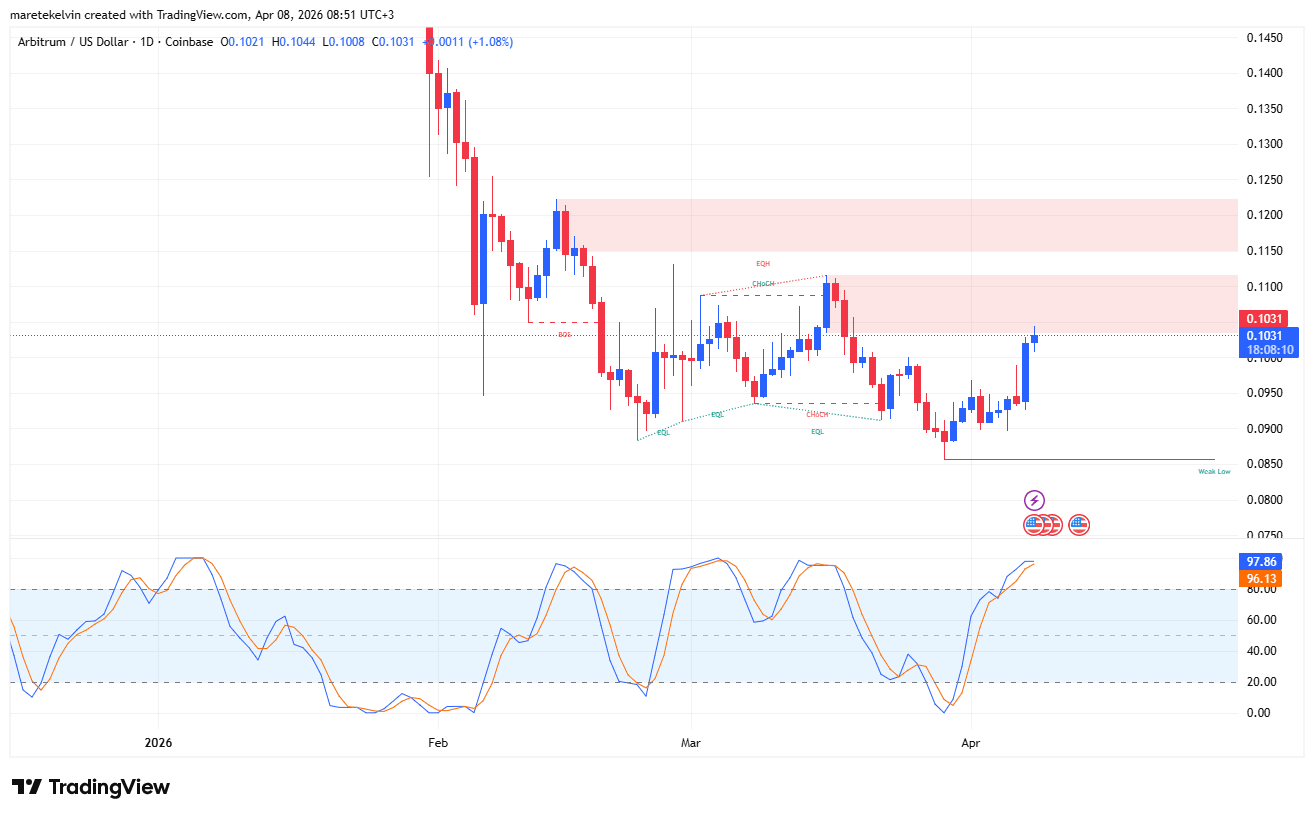
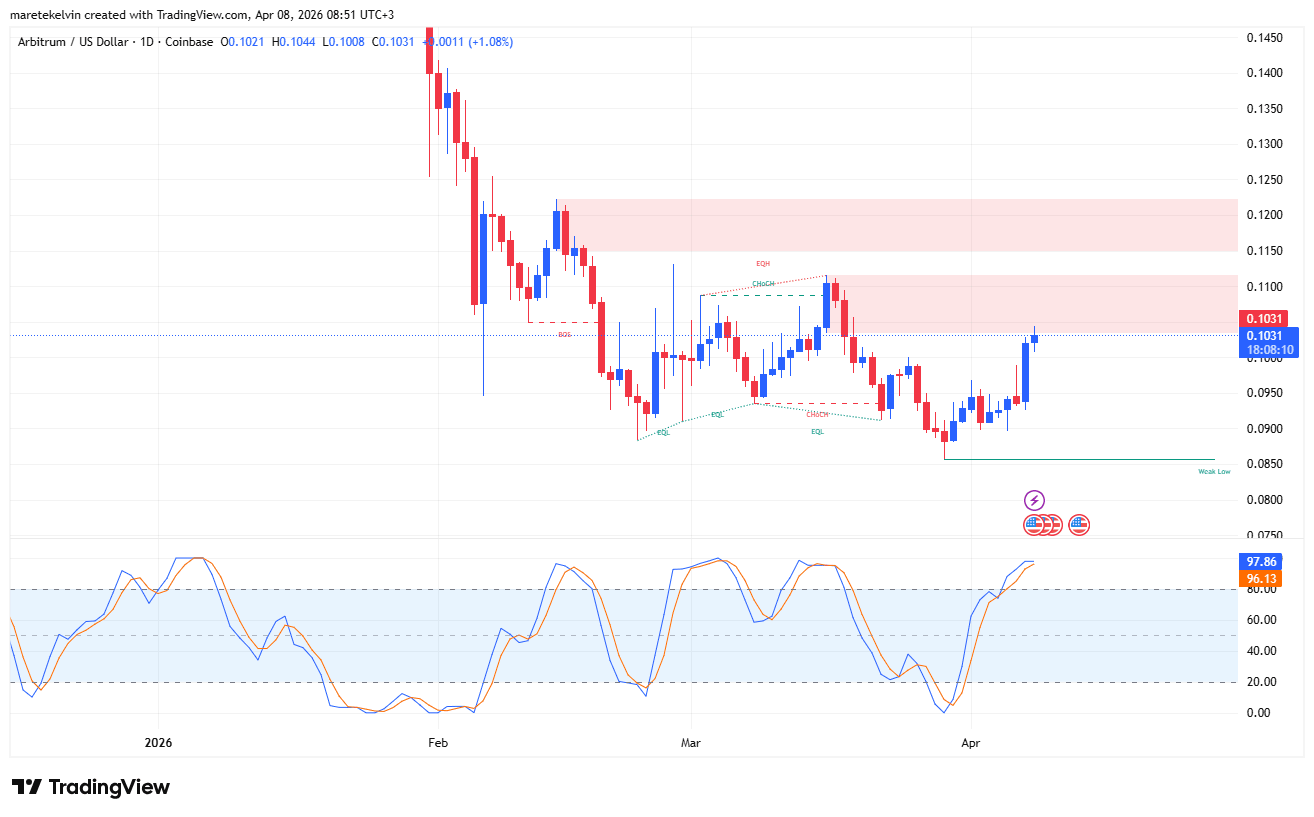
Arbitrum [ARB] tested a key supply zone near $0.1031 on the daily chart. The move followed a strong rally after clearing liquidity clusters during the previous downtrend phase.

Even so, the structure still favored buyers at press time.

However, the Stochastic RSI suggested the rally approached an exhaustion phase. The RSI remained in an oversold region, indicating a potential cooldown.

This left price consolidating near resistance while the market absorbed recent gains.
Source: TradingView

Whale accumulation supports the trend

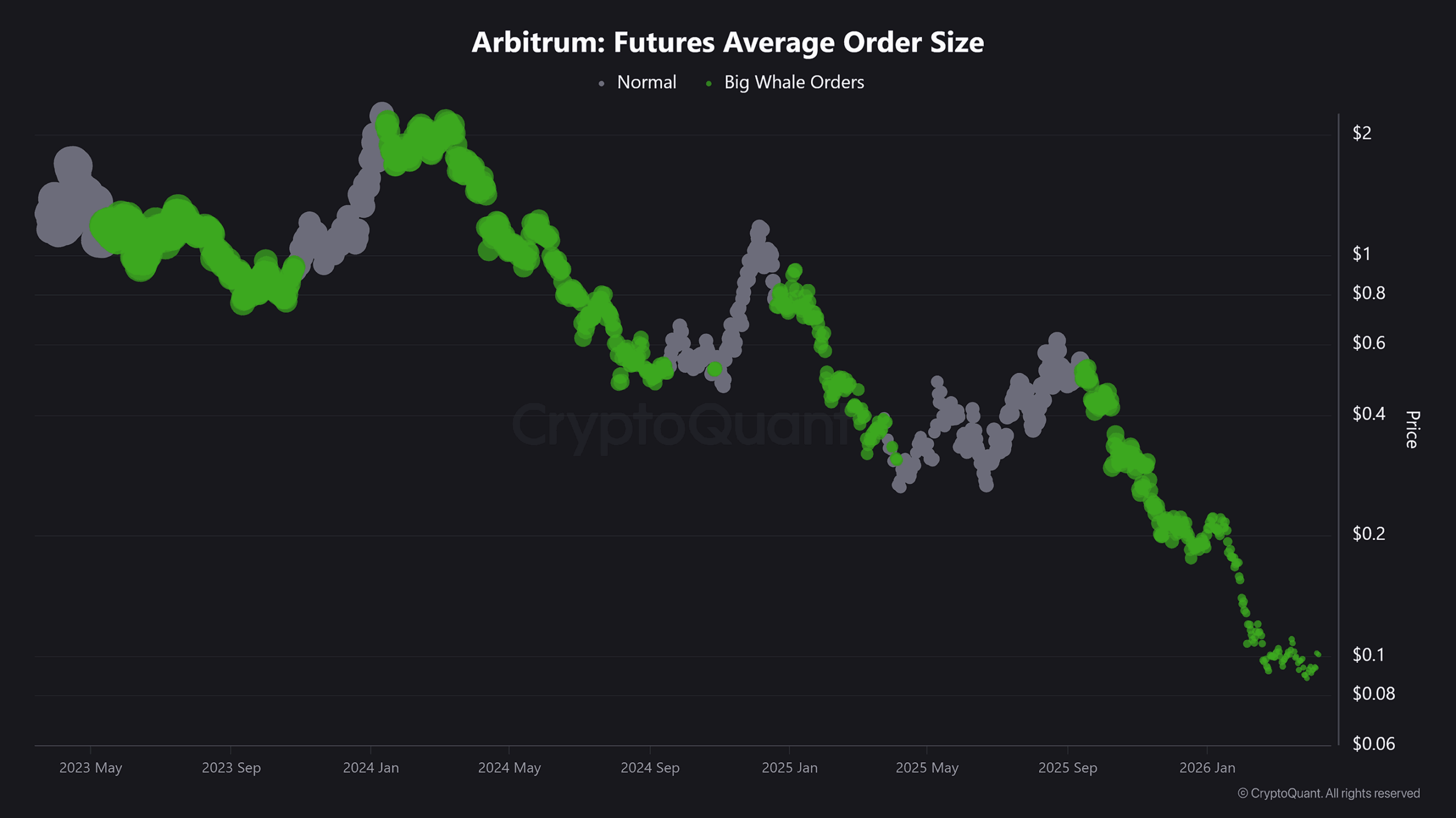
On-chain data showed continued accumulation by large holders at current levels. This behavior reduced circulating supply and supported the ongoing trend.
Source: CryptoQuant

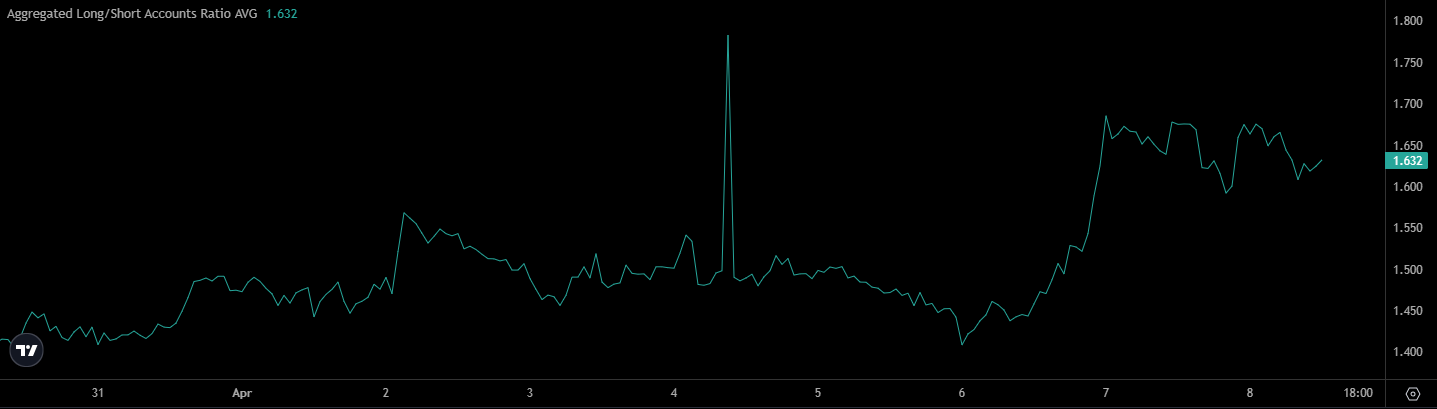
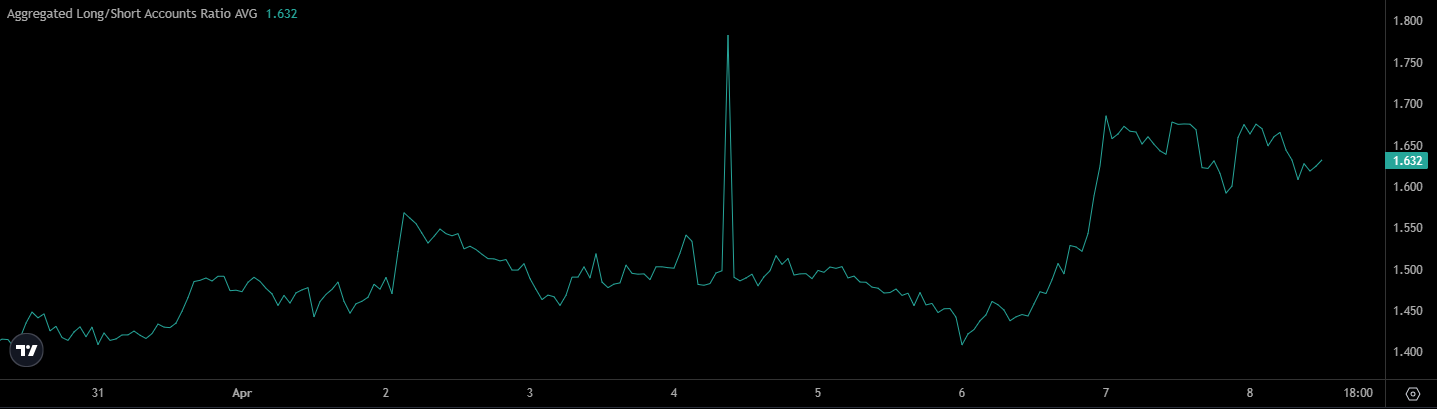
On top of that, derivatives data confirmed bullish positioning. The Long/Short Ratio stood at 1.6, at press time, showing longs outweighed shorts.

That alignment suggested traders leaned toward continuation rather than reversal.
Source: Coinalyze

What is ahead for ARB?

The structure remained constructive as long as buying pressure held. Sustained momentum depended on strong Trading Volume and continued accumulation.

A successful break above the supply zone could open the path toward $1.1. Failure to sustain demand may lead to consolidation before the next move.


Final Summary

  • ARB’s price rise is backed by strong volume growth, showing real market participation rather than a weak bounce.
  • The token is now testing a key supply zone, which will decide whether the rally continues or stalls.


Preguntas relacionadas

QWhat was the percentage increase in ARB's price and the approximate trading volume mentioned in the article?

AARB's price rose by 10%, and the trading volume climbed 40%, crossing $100 million.

QAccording to the technical analysis, what does the Stochastic RSI signal for ARB near its current price level?

AThe Stochastic RSI signaled caution and suggested that the rally was approaching an exhaustion phase.

QWhat key supply zone is ARB testing on the daily chart, and what could a successful break above it lead to?

AARB is testing a key supply zone near $0.1031. A successful break above it could open the path toward $1.1.

QHow did on-chain data and whale activity contribute to supporting the ongoing trend for ARB?

AOn-chain data showed continued accumulation by large holders (whales) at current levels, which reduced circulating supply and supported the ongoing trend.

QWhat does the Long/Short Ratio of 1.6 indicate about trader positioning in the ARB market?

AA Long/Short Ratio of 1.6 indicates that long positions outweigh short positions, showing that traders are leaning toward a continuation of the trend rather than a reversal.

Lecturas Relacionadas

Michael Saylor: 110 Reasons to Oppose BIP-110

Michael Saylor presents 110 arguments against Bitcoin Improvement Proposal (BIP) 110, a soft fork aimed at restricting certain non-monetary data storage uses (like inscriptions) on the Bitcoin blockchain. He acknowledges the proponents' valid concerns—such as node costs, fee pressure, and preserving Bitcoin's monetary focus—but fundamentally disagrees with the proposed solution. Saylor argues that BIP 110 represents a dangerous precedent of using consensus rules to enforce value judgments on transaction validity, moving away from Bitcoin's core principles of neutrality and permissionless innovation. His key objections are organized into eleven categories: 1) It violates neutrality and hard consensus by banning currently valid transactions. 2) It fails to meet the high burden of proof required for a consensus change, lacking concrete data on the alleged crisis. 3) Its seven bundled technical restrictions are overly broad, targeting generic script functionalities and blocking future upgrade paths. 4) It sacrifices compatibility and future optionality by closing off designed upgrade hooks. 5) Its temporary rules add significant complexity (grandfathering, expiry states) without sufficient justification. 6) The economic and security impacts, particularly on miner revenue and fee markets, are uncertain and unmodeled. 7) Superior, market-based tools (fee markets, relay/mining policies) already exist to manage blockchain load. 8) It stifles innovation by creating a chilling effect for developers. 9) Its modified activation mechanism (55% threshold, forced signaling) is aggressive and risks network splits. 10) The precedent it sets—using consensus to suppress disliked but legal uses—is more dangerous than the problem it aims to solve. 11) A better path exists: improving measurements, refining resource-based policies, and allowing market forces to work. Saylor concludes that Bitcoin's strength lies in its neutral rules, open markets, and hard consensus. Changing these foundational elements to target specific use cases is an unnecessary and risky "iatrogenic" intervention. He advocates for guarding Bitcoin's neutrality rather than acting as its redeemer.

marsbitHace 15 min(s)

Michael Saylor: 110 Reasons to Oppose BIP-110

marsbitHace 15 min(s)

Trading

Spot
活动图片