Apple Launches First 2nm Smartphone Chip, Introducing New Packaging

marsbitPublished on 2026-09-10Last updated on 2026-09-10

Abstract

Apple has unveiled its first 2nm smartphone chip, the A20 Pro, at the iPhone 18 launch event. Powering the new iPhone 18 Pro, Pro Max, and the debut foldable iPhone Duo, the SoC features a 6-core CPU with two "super cores," a 7-core GPU offering 40% faster performance, and a new dual 16-core Neural Engine for twice the AI performance of its predecessor. A key innovation is the new WMCM (Wafer-Level Multi-Chip Module) packaging. Instead of stacking DRAM memory on top, WMCM places the memory chips side-by-side with the SoC, improving thermal management. This, combined with a redesigned vapor chamber cooling system three times larger, allows the chip to sustain peak performance longer, with Apple claiming up to a 40% improvement in sustained performance over the iPhone 17 Pro. The phones also feature Apple's new in-house C2 5G modem, which adds mmWave support in the US and promises 15% lower power consumption. Battery life is also improved, with Apple citing up to 30 hours of usage per charge for the Pro Max.

Apple has introduced a new flagship smartphone System-on-a-Chip (SoC)—the A20 Pro. This new processor debuted at today's Apple iPhone launch event, which was also the first event presided over by the new CEO, John Ternus. Also unveiled was a new self-developed modem (C2).

The A20 Pro is Apple's first 2-nanometer chip to be used in an iPhone. (Apple's first 2nm chip was the M6, which the company announced in August and will debut later this month in the Mac Mini.) Like the M6, the A20 is equipped with a dual Neural Engine, and new CPU and GPU cores.
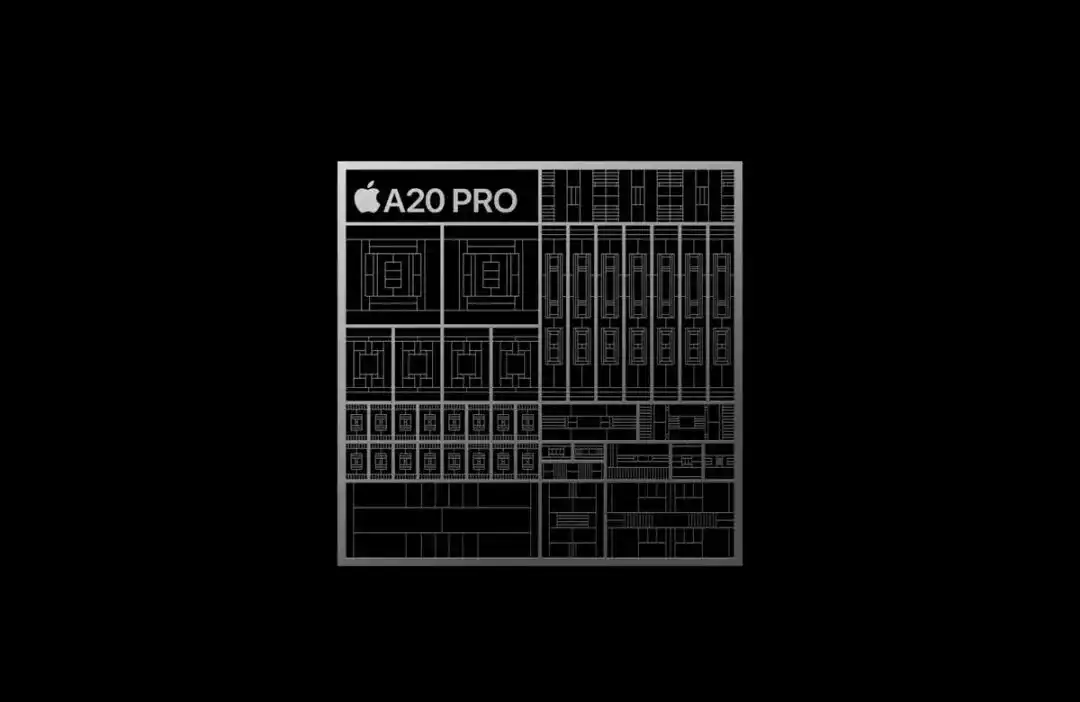
The A20 Pro will power the new foldable iPhone Duo as well as the iPhone 18 Pro and Pro Max.

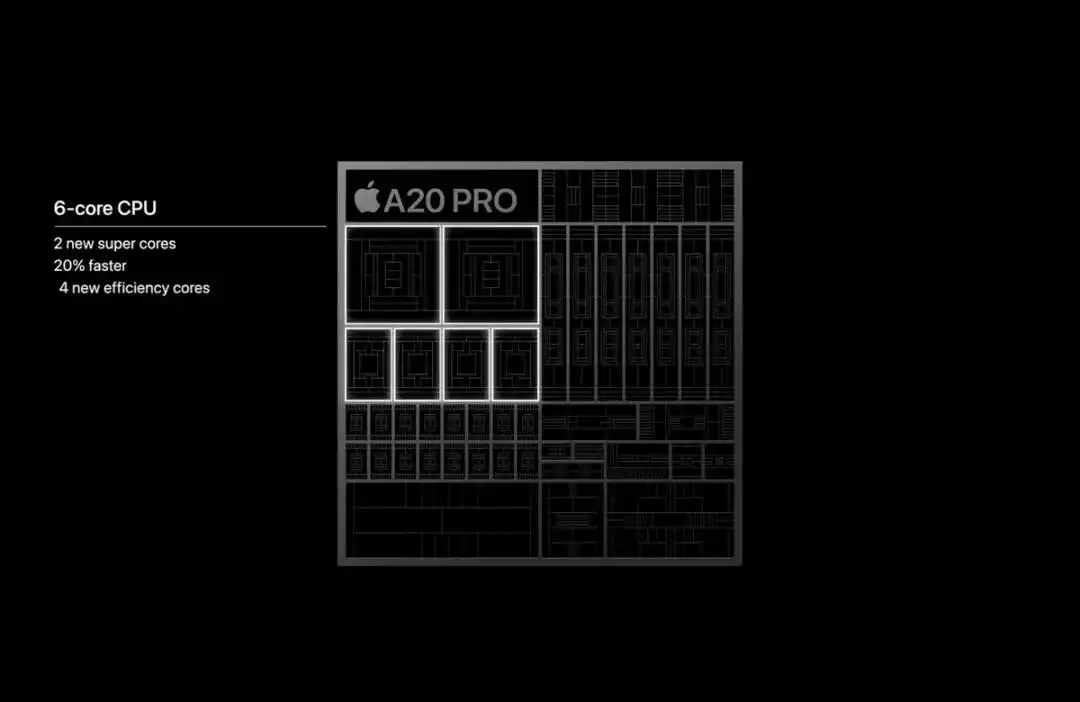
This new SoC features a 6-core CPU, which includes two of Apple's performance cores (20% faster than the previous generation) and four efficiency cores with neural network accelerators. Apple calls it a "desktop-class" processor and the "fastest CPU in a smartphone."
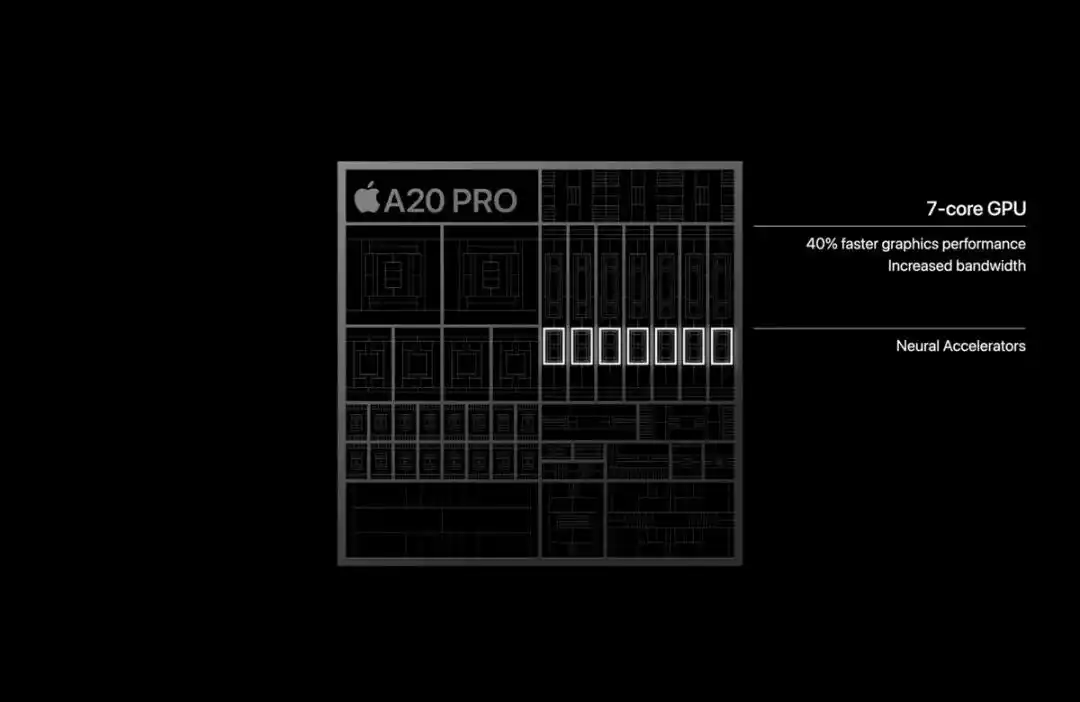
The 7-core GPU offers 40% better performance than the previous generation, along with increased bandwidth, and features new neural accelerators which the company says double FP8 compute speeds.
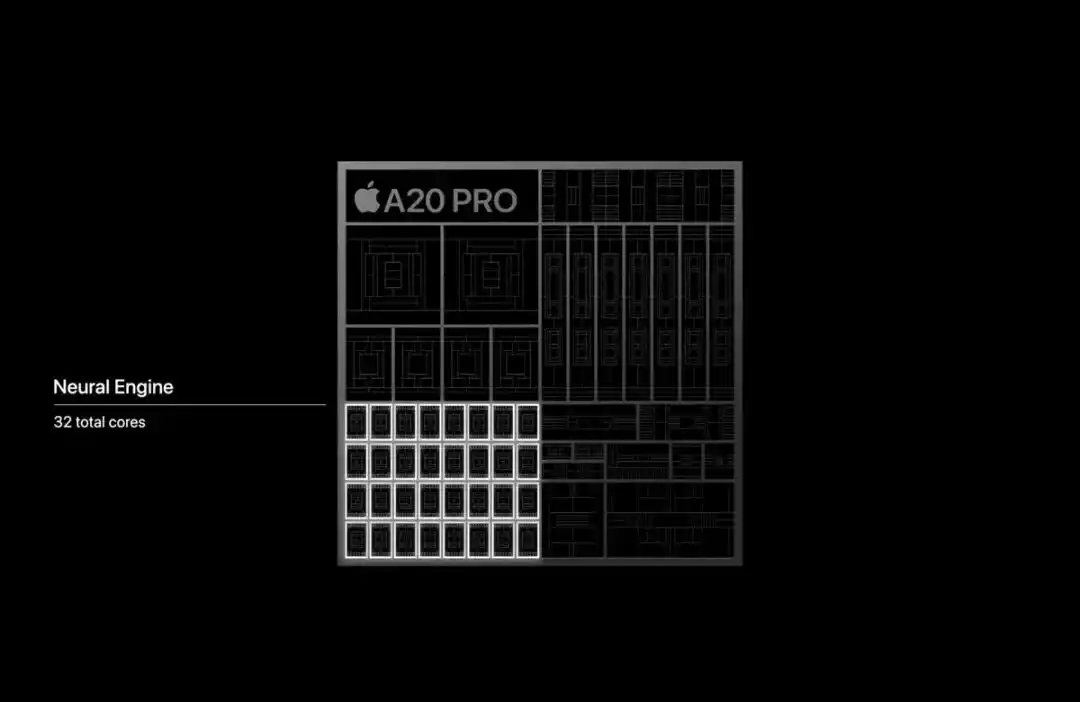
The A20 Pro also features a brand-new dual 16-core Neural Engine for accelerating on-device AI models and computational photography, totaling 32 cores, providing double the AI processing power of the A19 Pro. Memory bandwidth has been increased by 50%, which Apple says is the widest memory interface in an iPhone.
Apple has also improved the packaging by placing the silicon die away from the SoC's thermal path, allowing it to connect directly to a vapor chamber. Compared to the 17 Pro, this vapor chamber has three times the surface area, uses more graphite and copper, and features 80% recycled stainless steel.
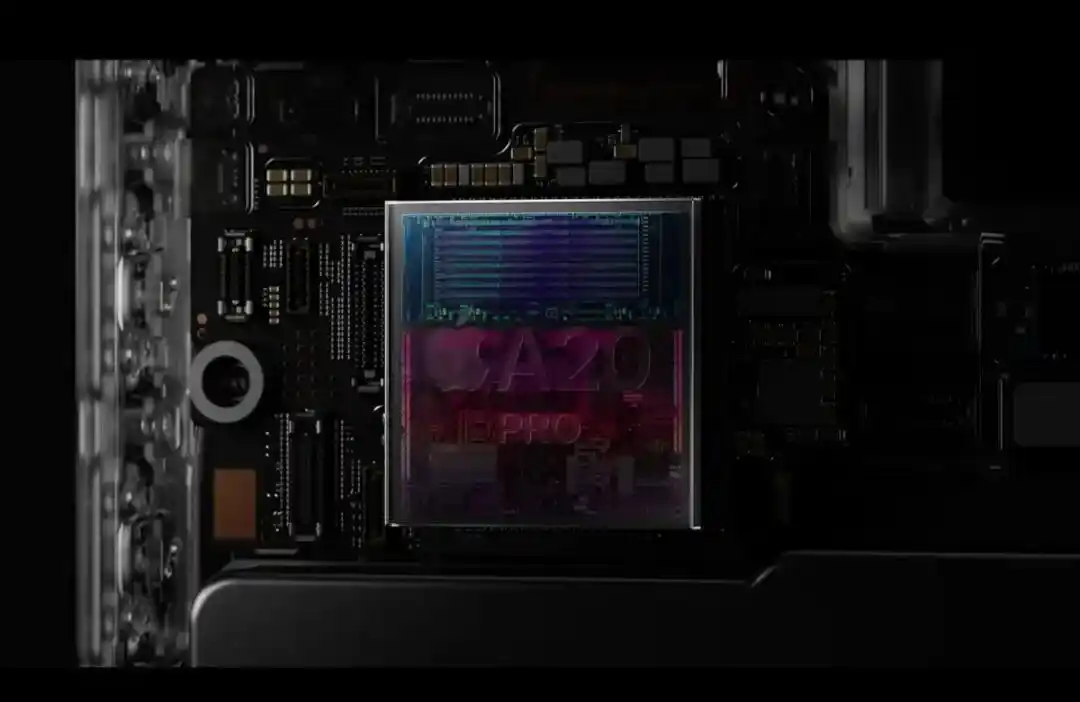
Apple introduced a redesigned thermal system centered around a new-generation vapor chamber, whose surface area is three times that of the previous generation.
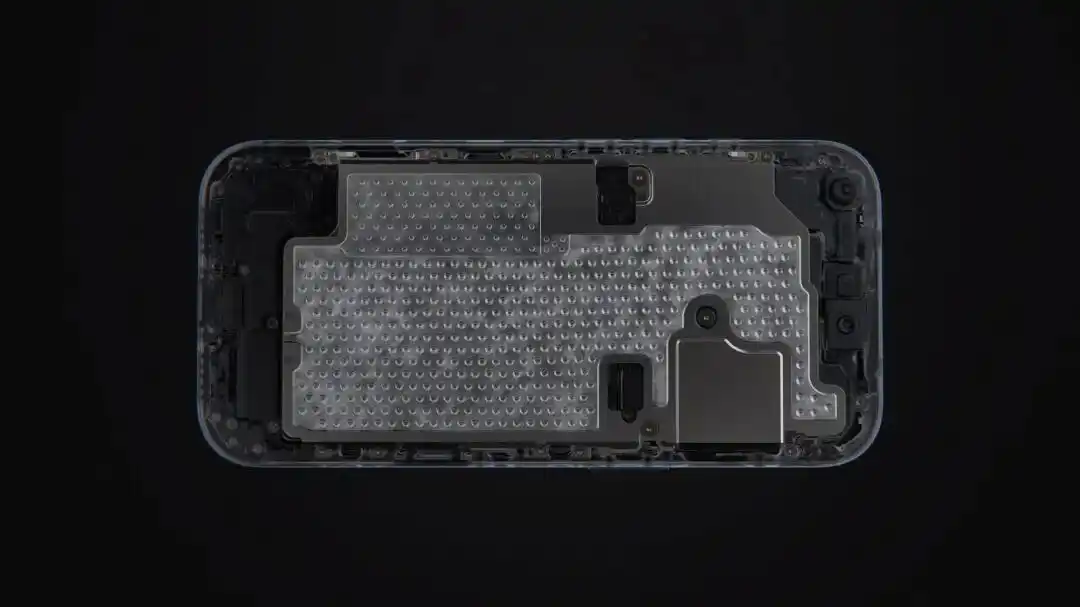
The new vapor chamber continuously circulates deionized water, significantly improving heat dissipation, allowing the A20 Pro chip to sustain higher performance for longer under heavy workloads.

Apple redesigned the silicon packaging, adopting "a custom packaging inspired by the M-series chips," placing the silicon die and memory side-by-side rather than stacked. This removes the memory from the chip's thermal path, enabling the A20 Pro to connect directly to the vapor chamber.

To achieve these improvements, Apple had to redesign the physical packaging of the A20 Pro. The old InFO_PoP packaging has been abandoned in favor of a new technology called WMCM (Wafer-Level Multi-Chip Module). Simply put, DRAM chips are no longer stacked on top of the A20 Pro die; instead, they are packaged side-by-side.

This design provides ample space for SoC heat dissipation, thereby improving sustained performance while preventing the DRAM chips from causing the SoC to overheat. As always, Apple did not reveal more specific technical details of the A20 Pro at launch.

Apple states that the combination of the new packaging, new thermal materials, and larger vapor chamber results in a 40% improvement in the iPhone's sustained performance compared to the previous generation, which the company calls the highest sustained performance ever in an iPhone.

The company claims this brings up to a 40% improvement in sustained performance over the iPhone 17 Pro, and double the sustained performance of the iPhone 16 Pro.

Apple says the A20 Pro's efficient performance and new battery design deliver longer battery life. The company claims the iPhone 18 Pro achieves 36 hours of video playback, while the iPhone 18 Pro Max achieves 45 hours. Apple also claims, based on a proprietary test using data on how users actually use their phones, that the iPhone 18 Pro lasts 24 hours per charge and the iPhone 18 Pro Max lasts 30 hours per charge.

In addition to the System-on-a-Chip (SoC), Apple has adopted a new C2 cellular modem, replacing the equivalent product from Qualcomm. Apple claims the C2 modem "delivers significantly faster upload speeds compared to the C1X, while consuming 15% less power," and adds support for mmWave in the US. Both phones also feature the N1 networking chip, supporting Wi-Fi 7, Bluetooth 6, and Thread.

Another new chip from Apple is the S11, designed for the Apple Watch Series 12 and Ultra 4. It features two efficiency cores, a single-core GPU, and a quad-core AI accelerator.

The New C2 Modem

Apple today launched the new iPhone 18 Pro models and the iPhone Duo—its first foldable iPhone. Both the iPhone 18 Pro and iPhone Duo are equipped with Apple's new custom-designed C2 modem, supporting 5G connectivity.
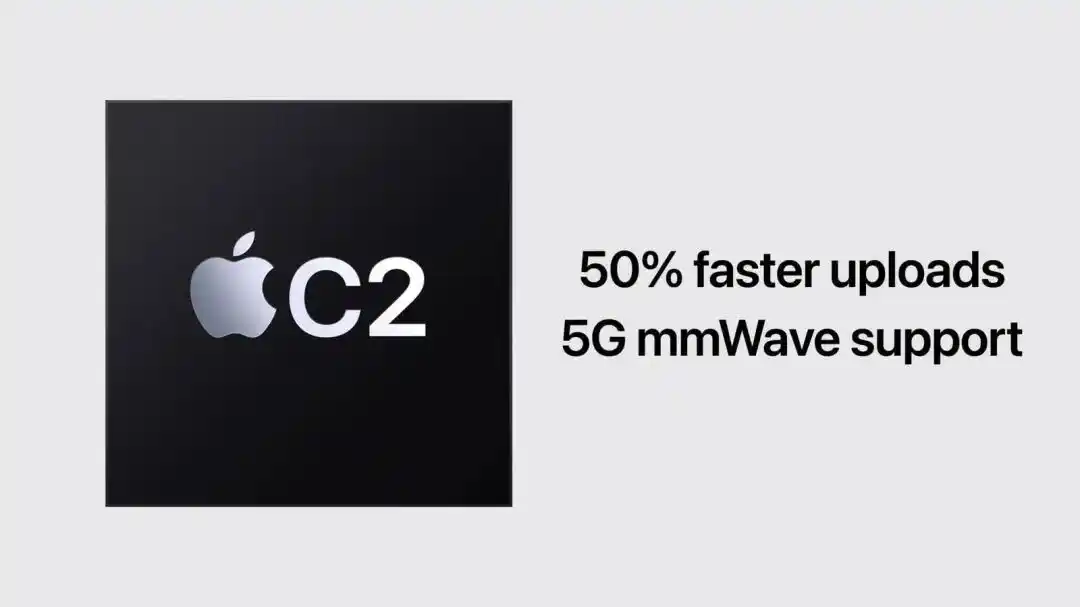
Prior to today's announcement, there were rumors that Apple's self-developed C2 modem would not support mmWave 5G in the US market, and the company would rely on Qualcomm again to fill this gap for US carriers. However, that is apparently not the case, at least regarding mmWave support.

The iPhone 18 Pro and Pro Max press releases and technical specification pages from Apple seem to indicate that the C2 modem is limited to the smaller iPhone 18 Pro model, while the iPhone 18 Pro Max uses a Qualcomm modem. The reason for this distinction is unclear, considering the iPhone 18 Pro and Pro Max have nearly identical features.

Apple says the C2 chip uses AI to improve cellular quality and reliability and now supports mmWave technology in the US. The company claims upload speeds are also significantly faster compared to the C1X, while power consumption is reduced by 15%.

Regarding mmWave support, Apple's US specifications list bands n258, n260, and n261, along with sub-6GHz 5G with 4x4 MIMO, but the UK specifications only list sub-6GHz.

Meanwhile, both models are equipped with the N1, an Apple-designed wireless networking chip supporting Wi-Fi 7, Bluetooth 6, and Thread.

Introduction to the New WMCM Packaging

Earlier, we mentioned Apple introduced the latest WMCM packaging for its new chip. So what exactly is this technology?

It is reported that WMCM packaging will utilize MUF (Molded Underfill) technology, which integrates underfill and molding processes.

This packaging technology is said to be an upgraded version of TSMC's InFO-PoP (Integrated Fan-Out Package-on-Package) technology, integrating advanced packaging technologies like CoW (Chip-on-Wafer) and RDL (Redistribution Layer). By horizontally packaging the logic chip and DRAM, it replaces the traditional vertical stacking method, achieving significant improvements in heat dissipation and performance. This is also an advanced packaging technology jointly developed by TSMC and Apple, designed specifically for Apple, becoming another highlight alongside the A20 processor's adoption of the 2nm process.

Industry insiders point out that WMCM not only enables thinner packaging but can also integrate more memory, which is crucial for meeting the stringent demands of future edge AI applications for computing power and energy efficiency. Chip industry analysts believe this upgrade is a necessary move to address the high-performance computing demands of the AI era.

Analysts note that WMCM is one of the first packaging technologies to blur the lines of traditional packaging. It is considered likely to be applied to iPhone packaging in the future, but the logic behind it is quite similar to that of High-Performance Computing (HPC): shifting from stacked packaging to smarter integration, reducing bottlenecks, improving yield, and avoiding thermal throttling.

WMCM is not a "single technology" but a hybrid way of thinking.

A widely circulated description that best illustrates this technology is that WMCM operates similarly to a hybrid approach, blending concepts from InFO and CoWoS. This perhaps hints at how TSMC wants the industry to view it:

  • InFO showed the world how much fan-out capabilities can do.
  • CoWoS taught the world how to scale integration for performance.
  • WMCM attempts to get the best of both: tighter integration while avoiding the full complexity (and cost) of traditional interposer-intensive methods.
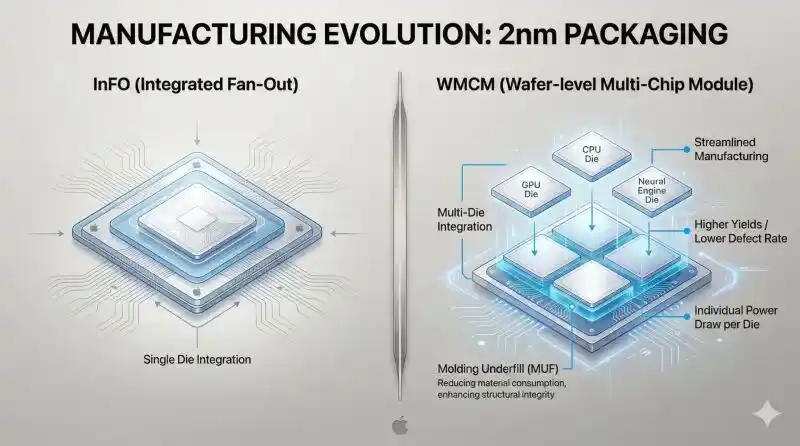
From a packaging perspective, WMCM offers several structural advantages. By integrating memory directly into the module, it reduces the need for separate components and eliminates traditional interposers or substrates. Using molded underfill material further simplifies the stacking structure, reduces material consumption and process steps, and may also free up internal space for other components, such as a larger battery.

This article is from the WeChat public account "Semiconductor Industry Observation" (ID: icbank), by the Editorial Department.
Trending Cryptos

Related Questions

QWhat is the name of Apple's first 2nm chip for iPhone and what key feature distinguishes its packaging?

AThe chip is named the A20 Pro. A key distinguishing feature of its packaging is the introduction of the new WMCM (Wafer-Level Multi-Chip Module) technology, which places the DRAM chips side-by-side with the SoC instead of stacking them on top.

QWhich iPhone models are powered by the new A20 Pro chip according to the article?

AThe A20 Pro chip powers the new foldable iPhone Duo, as well as the iPhone 18 Pro and iPhone 18 Pro Max.

QWhat are the claimed performance and battery life improvements for the iPhone 18 Pro models with the A20 Pro?

AApple claims the A20 Pro provides up to 40% higher sustained performance compared to the iPhone 17 Pro. For battery life, the iPhone 18 Pro is claimed to last for 36 hours of video playback (or 24 hours of proprietary 'all-day' use), while the iPhone 18 Pro Max is claimed to last for 45 hours of video playback (or 30 hours of proprietary 'all-day' use).

QWhat is the new custom-designed cellular modem announced alongside the A20 Pro, and what are its key improvements?

AThe new modem is called the C2. Key improvements include significantly faster upload speeds, 15% lower power consumption compared to the C1X, and the addition of mmWave support in the United States.

QHow does the new WMCM packaging technology benefit the A20 Pro chip's performance?

AThe WMCM packaging removes the DRAM from the thermal path above the SoC by placing them side-by-side. This allows the SoC to connect directly to a larger vapor chamber for better heat dissipation, preventing overheating and enabling higher sustained performance.

Related Reads

Altman Empathizes with Jensen Huang: 'Heroes Have Flaws,' But Does He Support His Return as NVIDIA CEO...

At the Semafor Silicon Valley Summit on November 16, OpenAI CEO Sam Altman publicly addressed Nvidia founder Jensen Huang's resignation as CEO after 33 years, expressing strong personal empathy. Altman called Huang "a hero of mine" and said it's hard to imagine the AI revolution without him, acknowledging that "heroes have flaws." Nvidia's stock fell about 15% within a week, wiping out over $570 billion in market value, and 180,000 people signed a petition urging his reinstatement—echoing Altman's own 2023 board ouster and dramatic return. Altman noted that Nvidia and OpenAI bet on each other early on. On business matters, he dismissed concerns that Nvidia's commitments—including a $105 billion financial guarantee for an OpenAI data center in Ohio—would lose credibility, saying the company is now a massive giant whose backing remains trusted. He also expressed optimism that the AI industry will keep advancing without Huang, given strong market demand and validated AI value. Altman identified scientific research as the next major AI breakthrough area, citing progress in math and physics, and predicted AI will take over repetitive, process-driven enterprise work. He also clarified his controversial memory chip remarks (saying he actually supports consumers upgrading their own PCs), explained that chip demand projections from multiple suppliers overlap even though real data center demand is solid, said OpenAI has not yet launched fully autonomous recursive self-improvement due to safety concerns, and stated OpenAI is in no rush to IPO despite Anthropic's filing, noting investor demand far exceeds quality supply.

marsbit5m ago

Altman Empathizes with Jensen Huang: 'Heroes Have Flaws,' But Does He Support His Return as NVIDIA CEO...

marsbit5m ago

If you lose money helping a friend trade cryptocurrency, will it be deemed fraud?

When friends entrust you with money to trade cryptocurrency on their behalf and the market turns against them, two distinct legal questions arise: whether you must compensate them, and whether your conduct constitutes fraud. These are separate issues. Civil liability depends on the nature of the relationship—whether it was a loan, a委托 investment, or a joint venture—and on the validity of any agreement. Under Chinese policy, virtual currency investment activities are treated as illegal financial activities, and civil acts involving them that violate public order and good morals are void, with losses generally borne by the parties themselves. Courts have reached different outcomes: in one case, an investor's claim for full repayment was rejected because the loss stemmed from market risk; in another, the operator was ordered to bear 20% of the loss for failing to recognize compliance risks, while the investor bore 80%. Fraud, by contrast, requires proof of deceptive conduct and intent to illegally possess the funds—mere trading losses or refusal to repay do not establish fraud. However, fabricating trade records, misappropriating funds, or secretly using leverage contrary to instructions can change the analysis. If a dispute escalates or police become involved, the priority is to preserve complete records of the agreement, fund flows, and trading history, avoid making unauthorized repayment promises, and cooperate truthfully with authorities while seeking professional legal advice.

marsbit5m ago

If you lose money helping a friend trade cryptocurrency, will it be deemed fraud?

marsbit5m ago

Stop Asking, I Just Love Money! The Naked-Quit Genius Researcher Backtracks, May Want to Return to Big Tech

Jacob Coxon, a 27-year-old Cambridge mathematics graduate and former pretraining researcher at both OpenAI and Anthropic, publicly reversed his stance just two months after a high-profile resignation. Speaking at a Stanford University event hosted by professor Rob Reich, Coxon admitted he is unsure whether leaving was the right decision and suggested he might return to a top AI lab. When pressed on why he still holds OpenAI stock options despite describing frontier labs as existential threats, he candidly replied, "I like money, brother. I admit it's blood money," and deflected further questions by blaming the host for raising the issue. He also said he remains anxious about no longer seeing frontier progress from the inside and feels he is "shouting into the void," questioning whether staying inside a lab would have been more influential. On technical matters, he argued that pretraining is not hitting a wall—compute efficiency is following a "super-exponential" curve—that recursive self-improvement requires only one narrow technical capability rather than broad mastery, and that deceptive or uncontrolled behavior in models originates solely from reinforcement learning during post-training, a loop labs cannot escape because RL remains the only effective tool for making models follow complex instructions. The episode, in which he clings to valuable equity while warning of AI risk, is seen as a candid portrait of Silicon Valley's AI culture.

marsbit9m ago

Stop Asking, I Just Love Money! The Naked-Quit Genius Researcher Backtracks, May Want to Return to Big Tech

marsbit9m ago

Acquisition Complete: Fei-Fei Li Officially Leads Team into AMD, Lisa Su Personally Welcomes Her

AMD has completed its acquisition of World Labs, the spatial intelligence startup co-founded by AI pioneer Fei-Fei Li, in an all-stock deal valued at approximately $8.2 billion (about 14.98 million shares). The transaction, signed September 28 and closed November 13—just 46 days later—marks AMD's second-largest acquisition after Xilinx in 2022. Li now serves as AMD Executive Vice President and Chief Scientist, reporting directly to CEO Lisa Su, while co-founders Justin Johnson and Ben Mildenhall remain to lead an independent frontier research group. World Labs, founded in 2024, focuses on spatial intelligence and 3D world models rather than large language models. Its Atlas world model, released September 2026, uses camera pose-conditioned prediction ("Viewpoint Is All You Need") and topped blind tests with over 500,000 human evaluations, generating coherent 1440p videos over 60 seconds. The company also acquired robotics firm Scenix and opened Atlas to the public on November 12. The deal deepens AMD's push into physical AI and robotics—a market Su calls a multi-trillion-dollar opportunity—allowing Li's team to co-design future Instinct chips and the ROCm software stack. AMD positions this against Nvidia's integrated hardware-software dominance, emphasizing an open AI ecosystem. AMD shares dipped about 5% on announcement day amid a broader semiconductor pullback.

marsbit9m ago

Acquisition Complete: Fei-Fei Li Officially Leads Team into AMD, Lisa Su Personally Welcomes Her

marsbit9m ago

Hackers inject credit card, crypto-stealing malware into 178 major websites

Cyber attackers planted cryptocurrency and credit card-stealing malware on websites associated with Ledger, Coinpass and scores of other major businesses in an attack exploiting website optimization platform Optimizely on Monday. Dubbed "Optimjack" by researcher Amirul Iman, the campaign delivered malicious code through scripts hosted by Optimizely. The malware could replace legitimate cryptocurrency wallet addresses with attacker-controlled alternatives when visitors copied addresses, and it also captured credit card details entered into website forms, according to a separate analysis by cybersecurity firm StepSecurity. The campaign affected website scripts belonging to 178 organizations, including hardware wallet Ledger, OANDA / Coinpass and trading platforms IG, Interactive Investor and TMS Brokers, according to Report URI's investigation. Other affected brands included IKEA, Salesforce, Zoom, the BBC and CNN, websites that collectively attract millions of visitors a day. BBC was among the first websites observed to serve the Optimizely injection at around 4:21 am UTC on Monday. By 9:52 pm UTC, most of the malicious code had been removed, with Ledger's snippet cleaned at about 8:41 pm UTC. Cointelegraph reached out to Ledger, Coinpass, and a number of other major businesses reported to be impacted by the malicious injection. This is a developing story, more information will be added as it becomes available.

cointelegraph20m ago

Hackers inject credit card, crypto-stealing malware into 178 major websites

cointelegraph20m ago

Trading

Spot

Hot Articles

How to Buy CHIP

Welcome to HTX.com! We've made purchasing USD.AI (CHIP) simple and convenient. Follow our step-by-step guide to embark on your crypto journey.Step 1: Create Your HTX AccountUse your email or phone number to sign up for a free account on HTX. Experience a hassle-free registration journey and unlock all features.Get My AccountStep 2: Go to Buy Crypto and Choose Your Payment MethodCredit/Debit Card: Use your Visa or Mastercard to buy USD.AI (CHIP) instantly.Balance: Use funds from your HTX account balance to trade seamlessly.Third Parties: We've added popular payment methods such as Google Pay and Apple Pay to enhance convenience.P2P: Trade directly with other users on HTX.Over-the-Counter (OTC): We offer tailor-made services and competitive exchange rates for traders.Step 3: Store Your USD.AI (CHIP)After purchasing your USD.AI (CHIP), store it in your HTX account. Alternatively, you can send it elsewhere via blockchain transfer or use it to trade other cryptocurrencies.Step 4: Trade USD.AI (CHIP)Easily trade USD.AI (CHIP) on HTX's spot market. Simply access your account, select your trading pair, execute your trades, and monitor in real-time. We offer a user-friendly experience for both beginners and seasoned traders.

9.2k Total ViewsPublished 2026.04.21Updated 2026.06.02

How to Buy CHIP

Discussions

Welcome to the HTX Community. Here, you can stay informed about the latest platform developments and gain access to professional market insights. Users' opinions on the price of CHIP (CHIP) are presented below.

活动图片