ANSEM Token Rockets From $4 Million To $97 Million In Solana Meme Coin Frenzy

bitcoinistPublicado a 2026-06-30Actualizado a 2026-06-30

Resumen

The Solana-based meme coin ANSEM experienced an extremely rapid and speculative surge, reportedly growing from a valuation of approximately $4 million to over $97 million in market capitalization within just 11 days of its on-chain appearance. This dramatic move highlights the potent, high-speed environment for retail trading on Solana, where low transaction costs and fast execution can fuel explosive gains. However, the article cautions that such vertical rallies are often driven by factors like low liquidity, concentrated token supply, and thin trading floats, rather than sustainable fundamentals. While illustrating that speculative capital remains active in Solana's meme coin sector, the ANSEM case serves as both a headline-grabbing story and a warning. It emphasizes that by the time such moves gain widespread attention, the early opportunity is often gone, and chasing them without understanding the underlying market structure can lead to significant losses.

For more details, visit the official Blockonomi platform.

TL;DR

  • ANSEM reportedly grew from a $4 million valuation to more than $97 million in market capitalization.
  • The move unfolded within roughly 11 days of the token appearing on-chain.
  • The surge shows how quickly Solana meme coin liquidity can move, but also how dangerous low-float rallies can be.

ANSEM Becomes The Latest Solana Meme Coin Flashpoint

ANSEM has become one of the latest Solana meme coin stories after reportedly growing from a roughly $4 million valuation to more than $97 million in market capitalization within 11 days of appearing on-chain.

That kind of move gets attention for obvious reasons. It is fast, dramatic, and easy to package as another example of Solana’s meme coin machine. But the more useful question is not simply “how high did it go?” It is “what kind of market structure allowed it to move that quickly?”

Meme coins can rally because of community, branding, timing, influencer attention, low liquidity, concentrated supply, or a mix of all of those. When a token moves from a small valuation to nearly nine figures in days, traders should assume structure matters as much as story.

Why Solana Meme Coins Can Move So Fast

Solana has become one of the most active chains for retail trading because transactions are fast and cheap. That makes it easier for new tokens to launch, spread, and attract speculative capital quickly.

The upside is obvious: communities can form almost instantly, and traders can move in and out without the friction seen on more expensive networks. The downside is just as obvious: speed cuts both ways. The same conditions that allow a token to rise violently can also allow it to collapse quickly once liquidity rotates elsewhere.

ANSEM’s reported growth shows how powerful that environment can be. But it also highlights why traders need to look beyond market cap screenshots. How concentrated is supply? How deep is liquidity? Who controls large wallets? Are new buyers entering, or is the move being driven by a thin float?

Those questions matter more than the headline multiple.

The Reader-Relevant Takeaway

ANSEM may continue to attract attention because big meme coin moves create their own gravity. Traders chase what is moving. Communities form around price. Social media turns volatility into narrative.

But a 190x-style move is not a normal market event. It is a warning label as much as a headline. By the time a token becomes widely discussed, much of the early asymmetry may already be gone.

For Solana, the broader story is that meme coin speculation remains alive even in a weaker crypto market. Capital may be cautious in Bitcoin and Ethereum products, but it can still rush into highly speculative pockets when the setup is right.

For traders, the lesson is simple: ANSEM shows that Solana meme coin liquidity can still ignite. It also shows why chasing vertical moves without understanding supply and liquidity can be brutal.

This article was written by the News Desk and edited by Samuel Rae.

This report is based on information released by Blockonomi. at Blockonomi

Criptos en tendencia

Preguntas relacionadas

QWhat was the reported valuation increase of the ANSEM token, and over what time period?

AThe ANSEM token reportedly grew from a roughly $4 million valuation to over $97 million in market capitalization within approximately 11 days of appearing on-chain.

QAccording to the article, what is the primary downside of Solana's fast and cheap transaction environment for meme coins?

AThe downside is that the same speed and low cost that allow a token to rise violently can also allow it to collapse quickly once liquidity rotates elsewhere.

QWhat does the article suggest traders should focus on beyond the headline market cap when evaluating meme coins like ANSEM?

ATraders should look at factors like how concentrated the supply is, how deep the liquidity is, who controls large wallets, and whether the move is driven by new buyers or a thin float.

QWhat broader market trend does the ANSEM story illustrate for Solana, according to the article?

AIt illustrates that meme coin speculation remains alive on Solana even in a weaker overall crypto market, as capital can still rush into highly speculative pockets when the setup is right.

QWhat final warning or lesson does the article provide for traders regarding Solana meme coins?

AThe lesson is that while Solana meme coin liquidity can still ignite for dramatic gains, chasing vertical moves without understanding supply and liquidity structure can be brutal.

Lecturas Relacionadas

Conversation with Co-founder of Hyperdash: Why is Hyperliquid Still Severely Undervalued?

Interview Summary with Hanson Birringer, Co-founder of Hyperdash: Why Hyperliquid Remains Undervalued In an interview on *The Rollup*, Hanson Birringer, Co-founder and Chief Revenue Officer of Hyperdash—a trading data analytics platform for Hyperliquid—shared his investment thesis on the Hyperliquid ecosystem. He described Hyperliquid as a pure play on three key crypto super-trends: perpetual contracts, real-world assets (RWAs), and stablecoins. The platform is an open-source, decentralized, and high-performance financial system uniquely positioned to bridge traditional institutional capital with decentralized finance. Birringer highlighted Hyperliquid's leadership in perpetual DEX trading and its recent innovation of RWA perpetual contracts. He emphasized the significance of USDC becoming a core quoting asset, which, by allocating 90% of its backend yield from assets like US treasuries to a protocol buyback fund, creates substantial, programmatic buy pressure for the Hype token. He addressed regulatory challenges, noting that Hyperliquid's policy team is actively engaging with US regulators like the CFTC to establish clear rules for decentralized venues. Once achieved, regulated brokers could route orders directly to Hyperliquid's backend, tapping into its low-cost liquidity layer. Regarding revenue, Birringer was optimistic, citing the immense size of traditional financial markets. Even capturing a small fraction of global trading volume in products like RWA perpetuals could lead to exponential growth for the protocol. The recently launched Grayscale Hyperliquid ETF, seeded by their SPV (Hyper Holdings Global), provides a compliant on-ramp for institutional investors drawn to the clear "cash flow + token buyback" model. Finally, he discussed Hyperdash's acquisition of Imperator, enhancing its data and node infrastructure to serve both retail traders and traditional asset managers. His bullish case rests on Hyperliquid's potential to provide unprecedented global access to dollar-based capital markets. He struggled to articulate a bear case, seeing the long-term trends of internet adoption and financial inclusion as powerful tailwinds.

marsbitHace 1 hora(s)

Conversation with Co-founder of Hyperdash: Why is Hyperliquid Still Severely Undervalued?

marsbitHace 1 hora(s)

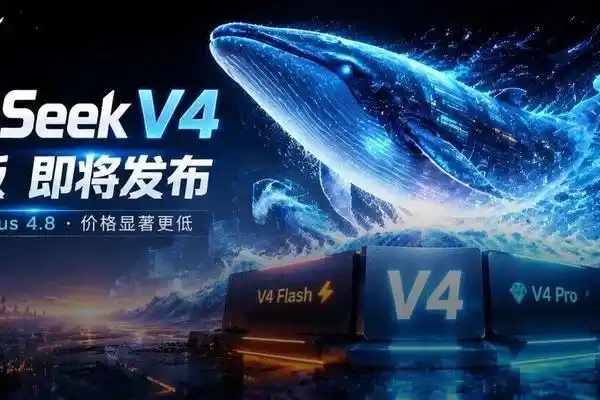
DeepSeek V4 'Full-Blooded Edition' Leaked, Could Be Released As Early As Tomorrow

The highly anticipated full release of DeepSeek V4 is imminent, expected to launch as early as tomorrow after nearly three months of waiting. A select group has already received access to the GA (General Availability) beta, which includes two versions: DeepSeek V4 Flash and DeepSeek V4 Pro. Early testers report that V4's overall performance is close to the level of Opus 4.8, with coding capabilities rivaling GPT-5.6 Sol. Its agent abilities are significantly enhanced, and 3D/SVG generation has improved notably. While it may not surpass the recently released Kimi K3 in performance, its expected price point is significantly lower. The official release will introduce a new "peak/off-peak" pricing model for its API. For example, deepseek-v4-pro will cost $0.87 per million output tokens during standard times and $1.74 during peak hours. The flash version is even more aggressive at $0.28/$0.56 per million tokens, with cached input tokens priced extremely low at $0.0028. This makes V4 a strong contender in terms of cost-effectiveness, potentially offering Opus-level capabilities at a fraction of the cost, continuing DeepSeek's reputation as a "price disruptor" in the AI market. Initial demos showcasing V4's capabilities have begun circulating, including generated 3D simulation games, HTML games blending elements of Minecraft and No Man's Sky, and classic games like a "Cut the Rope" clone. The final GA version is set to replace the older deepseek-chat and deepseek-reasoner models, which will be retired on July 24th.

marsbitHace 1 hora(s)

DeepSeek V4 'Full-Blooded Edition' Leaked, Could Be Released As Early As Tomorrow

marsbitHace 1 hora(s)

WEEX Labs Weekly Observation: The 'Power Restructuring' of AI Infrastructure and the 'Deep Dive Movement' into the Real Economy

WEEX Labs Weekly Review: AI Infrastructure's "Power Restructuring" and the "Deep Dive" into the Real Economy Mid-July 2026 marks a pivotal shift in the global AI industry. The allocation of computing power is transferring from cloud giants to compute resource owners, while the core value of AI is solidifying around its penetration into physical industry, moving beyond the race for model parameters. The era of fragmented model development is over, replaced by a capital-intensive, integrated chain driven by hard tech. Key developments this week include Meta's planned entry into the cloud computing market with "MetaCompute." This move by social media giants with massive GPU clusters challenges traditional cloud providers like AWS, integrating compute, models, and data into one-stop services, which will squeeze smaller rental providers and shift enterprise focus towards underlying model ecosystems. Chinese foundational models like DeepSeek-V4 and Tencent's Hy-3 are pushing towards "utility" status through open-source releases and extreme cost reductions via MoE architectures. This lowers entry barriers for enterprises, allowing them to focus resources on private deployment and deep business integration. Embodied intelligence, particularly humanoid robots, is transitioning from lab demos to real-world factory applications, driven by policies promoting large-scale, practical deployment in logistics and manufacturing. The value focus is shifting from spectacle to stable industrial data and real operational efficiency. Global governance, through forums like WAIC, is evolving from theoretical ethics to practical operational frameworks for "Sovereign AI," raising geopolitical compliance barriers and making auditability and data sovereignty core design requirements from the outset. WEEX Labs Insights: The current transformation shows AI's prosperity is deeply embedding into the fabric of global manufacturing. Strategic recommendations include: 1) leveraging open-source models for private, proprietary knowledge bases; 2) maintaining cloud provider diversity to avoid vendor lock-in from integrated model ecosystems; and 3) seeking opportunities in the "embodied infrastructure" supporting robots, such as data collection, industrial simulation, and factory AI adaptation services.

marsbitHace 2 hora(s)

WEEX Labs Weekly Observation: The 'Power Restructuring' of AI Infrastructure and the 'Deep Dive Movement' into the Real Economy

marsbitHace 2 hora(s)

Is WEEX TradFi Reliable? What You Should Know Before Your First Trade of U.S. Stock Tokens

In recent years, cryptocurrency users have expanded their focus beyond Bitcoin and Ethereum to include popular traditional financial (TradFi) assets like Nvidia, Apple, and Tesla stocks. This shift raises key questions: What do these TradFi assets represent on crypto trading platforms? How do they differ from traditional stock ownership? And how can users assess the reliability of platforms offering such products? TradFi products, such as those offered by WEEX TradFi (including NVDA, MSFT, AAPL, TSLA, and QQQ tokens), are blurring the lines between crypto and traditional markets. They allow users to trade based on the price movements of traditional assets within a familiar digital asset trading environment. However, it's crucial to understand that trading a "stock token" is not equivalent to owning the actual stock. Users are participating in price speculation, not gaining shareholder rights like dividends or voting. A key feature of these products is 7x24 trading, offering flexibility beyond traditional market hours. While convenient, this also introduces unique risks, such as potential liquidity gaps and volatility when underlying markets are closed. For users evaluating TradFi products, reliability hinges on transparency and risk management. Critical factors include understanding the product mechanism, how prices track the underlying assets, and the associated risks—especially when using leverage. Popular stocks and indices are still subject to company performance, macroeconomic shifts, and sector trends. Ultimately, TradFi represents a new gateway connecting crypto users to global markets. The future points toward integrated trading environments where the distinction between "crypto investor" and "traditional investor" fades. For newcomers, a platform's reliability stems not from promises, but from a clear understanding of the product, a comprehensive view of risks, and informed judgment of the platform's capabilities.

marsbitHace 2 hora(s)

Is WEEX TradFi Reliable? What You Should Know Before Your First Trade of U.S. Stock Tokens

marsbitHace 2 hora(s)

Trading

Spot

Artículos destacados

Cómo comprar 4

¡Bienvenido a HTX.com! Hemos hecho que comprar 4 (4) sea simple y conveniente. Sigue nuestra guía paso a paso para iniciar tu viaje de criptos.Paso 1: crea tu cuenta HTXUtiliza tu correo electrónico o número de teléfono para registrarte y obtener una cuenta gratuita en HTX. Experimenta un proceso de registro sin complicaciones y desbloquea todas las funciones.Obtener mi cuentaPaso 2: ve a Comprar cripto y elige tu método de pagoTarjeta de crédito/débito: usa tu Visa o Mastercard para comprar 4 (4) al instante.Saldo: utiliza fondos del saldo de tu cuenta HTX para tradear sin problemas.Terceros: hemos agregado métodos de pago populares como Google Pay y Apple Pay para mejorar la comodidad.P2P: tradear directamente con otros usuarios en HTX.Over-the-Counter (OTC): ofrecemos servicios personalizados y tipos de cambio competitivos para los traders.Paso 3: guarda tu 4 (4)Después de comprar tu 4 (4), guárdalo en tu cuenta HTX. Alternativamente, puedes enviarlo a otro lugar mediante transferencia blockchain o utilizarlo para tradear otras criptomonedas.Paso 4: tradear 4 (4)Tradear fácilmente con 4 (4) en HTX's mercado spot. Simplemente accede a tu cuenta, selecciona tu par de trading, ejecuta tus trades y monitorea en tiempo real. Ofrecemos una experiencia fácil de usar tanto para principiantes como para traders experimentados.

796 Vistas totalesPublicado en 2025.10.20Actualizado en 2026.06.02

Cómo comprar 4

Discusiones

Bienvenido a la comunidad de HTX. Aquí puedes mantenerte informado sobre los últimos desarrollos de la plataforma y acceder a análisis profesionales del mercado. A continuación se presentan las opiniones de los usuarios sobre el precio de 4 (4).

活动图片