Another Dogecoin ETF Just Dropped: When Will It Begin Trading?

bitcoinistPublicado a 2026-01-13Actualizado a 2026-01-13

21Shares is set to launch its Dogecoin ETF after gaining approval from the U.S. Securities and Exchange Commission (SEC) and Nasdaq. This is expected to provide some bullish momentum for the meme coin even as DOGE funds see muted interest from institutional investors.

21Shares To Launch Dogecoin ETF After Filing Final Prospectus

Crypto ETF issuer 21Shares has filed the prospectus for its Dogecoin ETF, signaling plans to launch this fund this week. However, the asset manager has yet to announce a specific launch date. This will be the third spot DOGE fund to launch after Grayscale and Bitwise’s DOGE ETF, which launched last year.

21Shares Dogecoin ETF will launch on the Nasdaq under the ticker ‘TDOG.’ Crypto exchange Coinbase is listed among the Trust’s custodians alongside BitGo and Anchorage. Meanwhile, the fund will offer in-kind creations and redemptions, similar to other existing spot crypto ETFs. 21shares will charge a 0.50% management fee for the fund.

The Dogecoin ETF will be 21Shares’ fifth spot U.S. crypto ETF, as the asset manager already offers Bitcoin, Ethereum, Solana, and XRP ETFs. The DOGE fund’s launch is bullish for the foremost meme coin as it could attract more institutional flows into its ecosystem. However, it is worth noting that the other existing spot U.S. DOGE funds have only seen moderate demand so far.

SoSoValue data shows that the inflows into these Dogecoin ETFs have been minimal, with these funds currently boasting net assets of just under $10 million, which is less than 1% of the meme coin’s market cap. They have also mostly recorded zero-flow days since launching, with most inflow days below $1 million. However, it is worth noting that these funds saw greater demand at the start of the year, when DOGE rose to around $0.15. As such, they could attract more inflows as the market recovers.

A Generational Buying Opportunity

Crypto analyst Hokage described the current DOGE price level as a generational buying opportunity amid the imminent launch of the Dogecoin ETF. This came as the analyst remarked that while the short-term is extremely hard to figure out, the long-term support will eventually get hit. His accompanying chart showed that the leading meme coin could rally to as high as $1.6 in the long term.
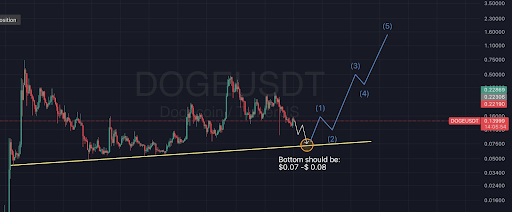
Source: Chart from Hokage on X

The crypto analyst highlighted the potential integration of Dogecoin into Elon Musk’s X as one catalyst that could spark this run. He opined that the meme coin will eventually get integrated into X as a payment and tips feature. Hokage added that it is just a matter of time and not if.

Related Reading: Dogecoin Is Breakout Ready: Analyst Shows Major Target For The Meme Coin King

At the time of writing, the Dogecoin price is trading at around $0.137, down over 2% in the last 24 hours, according to data from CoinMarketCap.

DOGE trading at $0.13 on the 1D chart | Source: DOGEUSDT on Tradingview.com

Preguntas relacionadas

QWhat is the name of the company launching the new Dogecoin ETF and on which exchange will it trade?

A21Shares is launching the new Dogecoin ETF, and it will trade on the Nasdaq under the ticker 'TDOG'.

QHow many spot U.S. crypto ETFs does 21Shares offer, including the new Dogecoin fund?

AIncluding the new Dogecoin ETF, 21Shares offers five spot U.S. crypto ETFs. The others are for Bitcoin, Ethereum, Solana, and XRP.

QWhat is the management fee for the 21Shares Dogecoin ETF?

AThe management fee for the 21Shares Dogecoin ETF is 0.50%.

QAccording to the article, what is the approximate total net value of assets in the existing U.S. Dogecoin ETFs?

AThe existing U.S. Dogecoin ETFs have net assets of just under $10 million.

QWhich crypto analyst described the current DOGE price as a 'generational buying opportunity' and what long-term price target did they suggest?

ACrypto analyst Hokage described it as a generational buying opportunity and suggested a long-term price target of $1.6.

Lecturas Relacionadas

You Bet on the News, the Pros Read the Rules: The True Cognitive Gap in Losing Money on Polymarket

The article explains that the key to profiting on Polymarket, a prediction market platform, lies not just predicting real-world events correctly, but in meticulously understanding the specific rules that govern how each market will be resolved. It illustrates this with examples, such as a market on Venezuela's 2026 leader, where the official rules defining "officially holds" the office overruled the intuitive answer of who was in practical control. Other examples include debates over the definition of a "token" or what constitutes an "agreement." The core argument is that a "reality vs. rules" gap creates pricing discrepancies that savvy traders ("车头" or "whales") exploit. The platform has a formal dispute resolution process managed by UMA token holders to settle ambiguous outcomes. This process involves proposal submission, a challenge window, a discussion period, and a final vote. However, the article highlights a critical flaw in this system compared to a traditional court: the lack of separation between the arbiters (UMA voters) and the interested parties (traders with financial stakes in the outcome). This conflict of interest undermines the discussion phase, leads to herd mentality, and results in opaque final decisions without explanatory rulings. Consequently, the system lacks a body of precedent, making it difficult for users to learn from past disputes. The ultimate takeaway is that success on Polymarket requires a lawyer-like scrutiny of the rules to identify and capitalize on the cognitive gap between how events appear and how they are contractually defined for settlement.

marsbitHace 24 min(s)

You Bet on the News, the Pros Read the Rules: The True Cognitive Gap in Losing Money on Polymarket

marsbitHace 24 min(s)

Will the Fed Still Cut Interest Rates? Tonight's Data Is Crucial

The core debate surrounding the Federal Reserve's potential interest rate cuts is intensifying amid geopolitical conflict and rebounding inflation. The key question is whether high energy prices will cause persistent inflation or weaken consumer demand enough to force the Fed to cut rates. Citigroup presents a bullish case for cuts, arguing that oil supply disruptions from the Strait of Hormuz are temporary and will not lead to lasting inflationary pressure. They point to receding bond yields and oil prices as evidence the market is pricing in a short-lived shock. Citi's data also shows tightening financial conditions, a stabilizing labor market, and healthy tax returns, supporting their view that the path to lower rates remains open. Conversely, Deutsche Bank offers a starkly contrasting, more hawkish outlook. They argue the Fed's current policy is already neutral and expect rates to remain unchanged indefinitely. Their view is based on stalled disinflation progress and a shift toward more hawkish rhetoric from key Fed officials like Waller, who cited risks from prolonged Middle East conflict and tariffs. Other officials, including Williams and Hammack, signaled rates would likely stay on hold for a "considerable time." The market pricing has shifted dramatically, now forecasting zero cuts in 2026. The imminent release of the March retail sales "control group" data is highlighted as a critical test. This metric, which excludes gas station sales, will reveal if high gasoline prices are eroding consumer spending in other areas. A weak reading could support the case for imminent rate cuts, while a strong one would bolster the argument for the Fed to hold steady. This data is pivotal for determining the near-term policy path.

marsbitHace 44 min(s)

Will the Fed Still Cut Interest Rates? Tonight's Data Is Crucial

marsbitHace 44 min(s)

Trading

Spot
Futuros
活动图片