After OpenClaw's China Tour, We Interviewed a Group of 'Lobster Chasers'

marsbitPublicado a 2026-03-07Actualizado a 2026-03-07

Resumen

"OpenClaw China Tour: Chasing the Lobster in the AI-Driven Era" Following OpenClaw's surpassing of React as GitHub's most-starred project, a wave of "AI anxiety" has swept through China's tech community. This led to the "Web4.0 China Tour," a series of nationwide offline events co-initiated by crypto figures, aiming to demystify the AI agent tool often nicknamed "Lobster." Event observations revealed a diverse, intergenerational audience—from 05ers to 70-year-olds—flocking to these gatherings. Participants were polarized: some were already monetizing OpenClaw, while others struggled with basic setup. A key insight was that AI's primary impact is not necessarily job replacement but a massive restructuring of work, automating standardized tasks and creating new roles, particularly for those who can effectively manage AI agents. Interestingly, fields like programming and creative work are now seen as more vulnerable to AI disruption than manual labor. Despite OpenClaw's founder cautioning against crypto, a strong convergence between AI agents and cryptocurrency was debated on-site. Many believe crypto assets, especially Bitcoin, could become the native currency for AI economies, facilitating machine-to-machine transactions and value exchange. The trend also spawned a paid installation service industry. However, a significant hurdle remains: many users successfully install OpenClaw but lack the knowledge to use it effectively, sometimes leading to unexpected costs and securit...

Original|Odaily Planet Daily(@OdailyChina)

Author|Wenser(@wenser 2010)
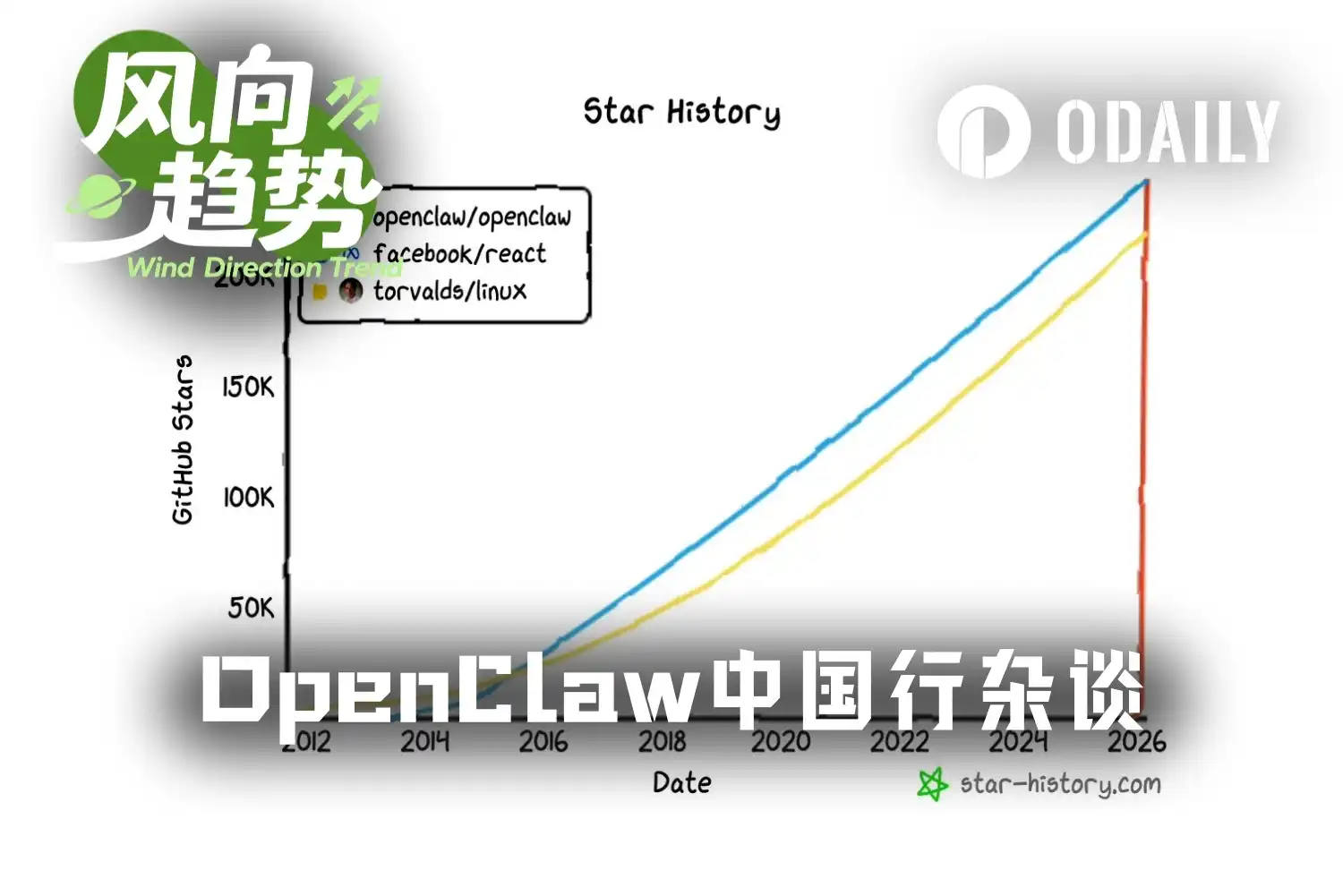
On March 2, OpenClaw finally surpassed React to become the project with the most stars on GitHub, thus rising to become the "most recognized tool" among programmers at the moment.

In just over two months, this AI project focused on automated execution has rapidly swept through global discussion forums. Almost everyone is racking their brains to "adopt a lobster," trying to use it to complete various goals, projecting expectations like believers making wishes.

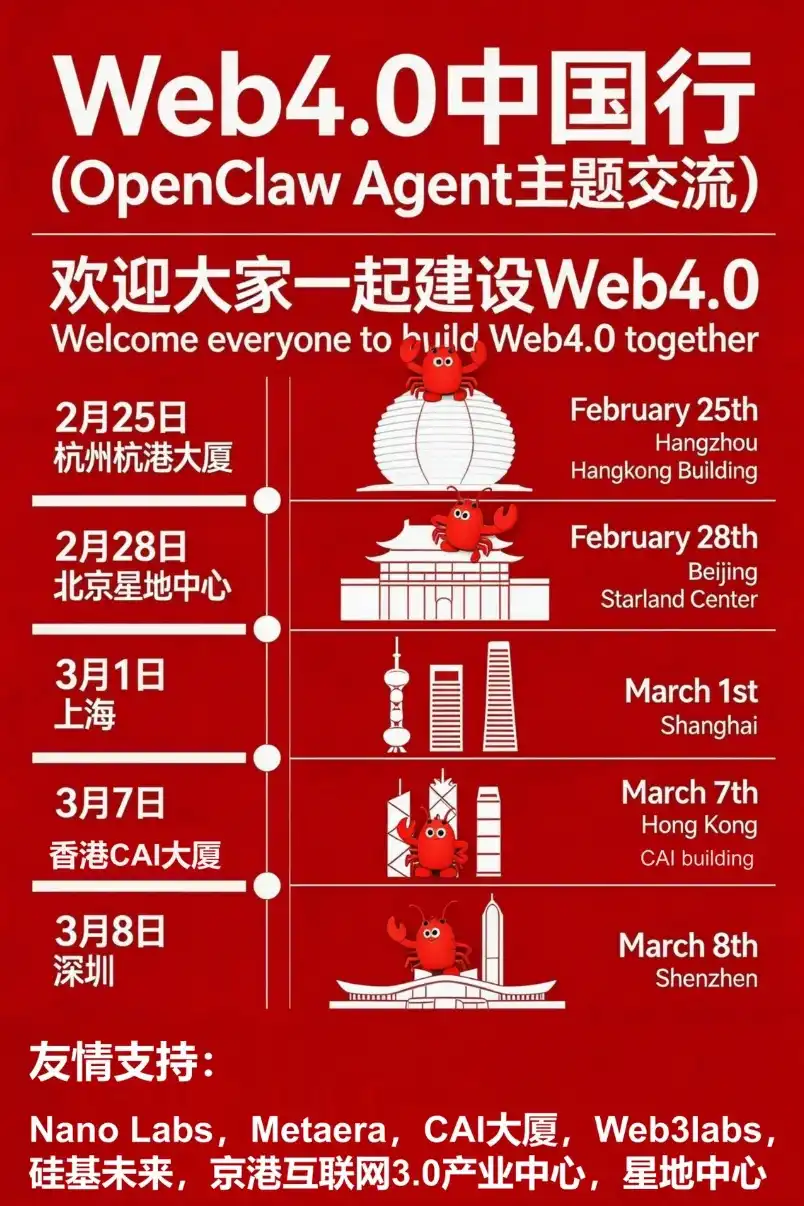
Spring river water warms, ducks know first; changes often happen first among the most敏锐嗅ally敏锐的人群. At the end of February, some active figures in the币圈, represented by Nano Labs founder Kong Jianping and TRON founder孙宇晨,联合 allies like CAI under Meituan's Cai Wensheng to launch the "Web4.0 China Tour" nationwide offline event. Crowds flocked to it instantly, reminiscent of the days when "every conversation had to mention Web3,加密,元宇宙, NFT".

As industry observers active in the intersection of AI and加密, Odaily Planet Daily辗转 interviewed multiple现场 participants and compiled some "post-event impressions" to还原 this "AI counter-siege campaign" initiated by humans.
Web3 is Dead, Web4 Rises: The AI Anxiety Ignited by OpenClaw

In the first week after the New Year, a chart circulating in various WeChat groups率先 ignited discussion: Clawdbot ranked first—this was one of OpenClaw's early names (another was Moltbot).
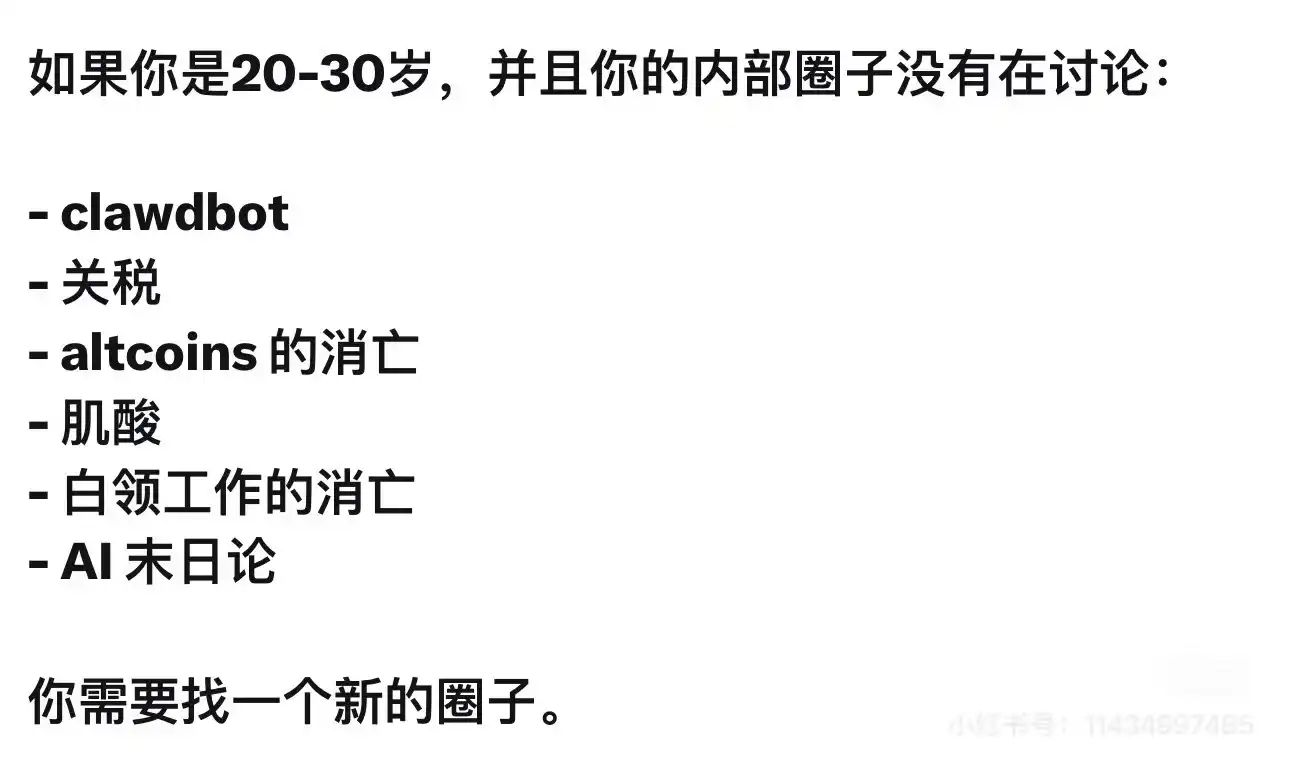
After密集刷屏 of messages like "2028 AI Doomsday Prophecy" and Block laying off 4,000 people, the internet群体 quickly fell into a collective "AI anxiety": if you don't know about the "lobster" yet, it's like not knowing about Douyin, Clubhouse, or ChatGPT back in the day, meaning you're already behind.

Thus, offline events framed with the "Web4.0 China Tour" narrative and centered on OpenClaw rapidly heated up. The远超预期的报名 and attendance numbers also pushed technical concepts like AI Agent and "lobster robots" to a broader audience.

On-Site Sketch: AI Has Moved from Narrative to Reality

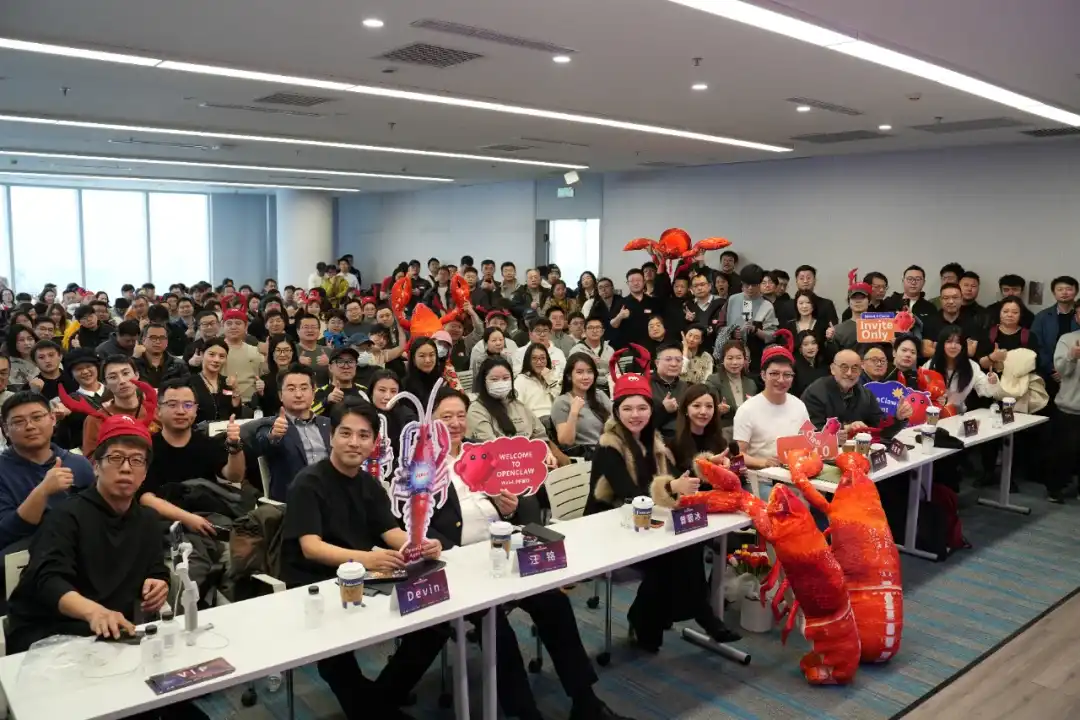
Photos released by 1783 DAO from the Beijing stop showed a packed house; @Wayne, who participated in the Beijing event, told us he initially saw KOLs转发 the information on X, then searched via Xiaohongshu and Luma, and within a few days had attended three offline events in a row.

In his view, the现场 showed obvious "polarization": some had already run businesses and earned dollars, while others didn't even know how to buy cloud servers;同时, "generational differences" were also apparent—05后 are starting to enter, 00后 entrepreneurs are common, 90后 are still the fastest-acting group, while the older generation came more with anxiety about being left behind by the times.
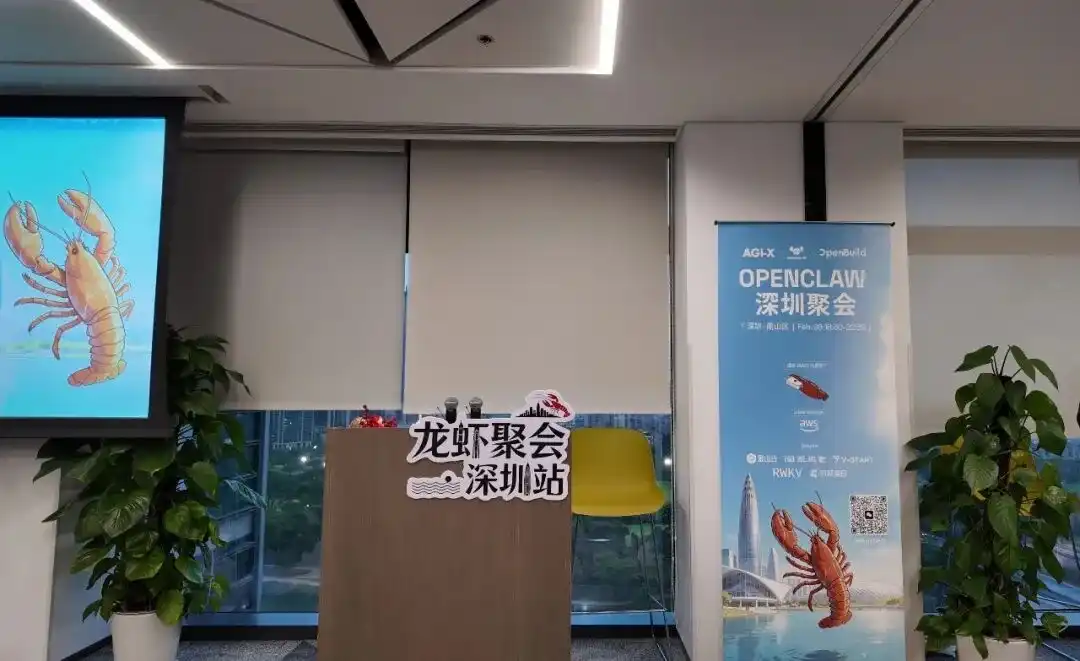
Another小伙伴 who helped organize the OpenClaw Lobster Gathering in Shenzhen, @0xqiuqiuu, offered a different perspective.

As a community运营 for OpenBuild, Qiuqiu sees that the biggest beneficiaries of this wave of AI-driven efficiency gains are companies and bosses, and it also provides more convenient efficiency tools for "one-person companies," independent developers, and creators to boost output.

Furthermore, the Shenzhen event had many white-haired elderly participants, and parents brought their young daughters and sons to participate. The age range went up to over 70 years old and down to 11 years old. This is also a point that distinguishes it from the previous knowledge付费 courses that打着 the banner of "9.9 yuan to teach you how to use AI." AI has gradually渗透 into all人群 and most industries. And the best way to alleviate "AI anxiety disorder" is not to sit back and wait, but to embrace AI, use AI, and use concrete actions to combat虚无的情绪.
As for "whether AI will replace jobs or humans," some interviewees gave a negative answer.

@币圈离镜, who works in Web3 industry interviews, pointed out that AI will not replace humans; instead, more positions will be born because of AI. (This is similar to the "Jevons Paradox" we mentioned earlier,详见 "The War Between Stablecoins and Banking Likely Doesn't Exist")

@Wayne, a Web3 industry analyst, also mentioned that AI will not replace most people but may重构 over 50% of work structures. Specifically, he believes replacing "position" ≠ replacing "person," so what is actually being replaced are "task modules." AI will优先 replace the highly structured, standardized parts. For example, managers who used to manage humans and organize coordination might be replaced by managers who can manage AI employees.

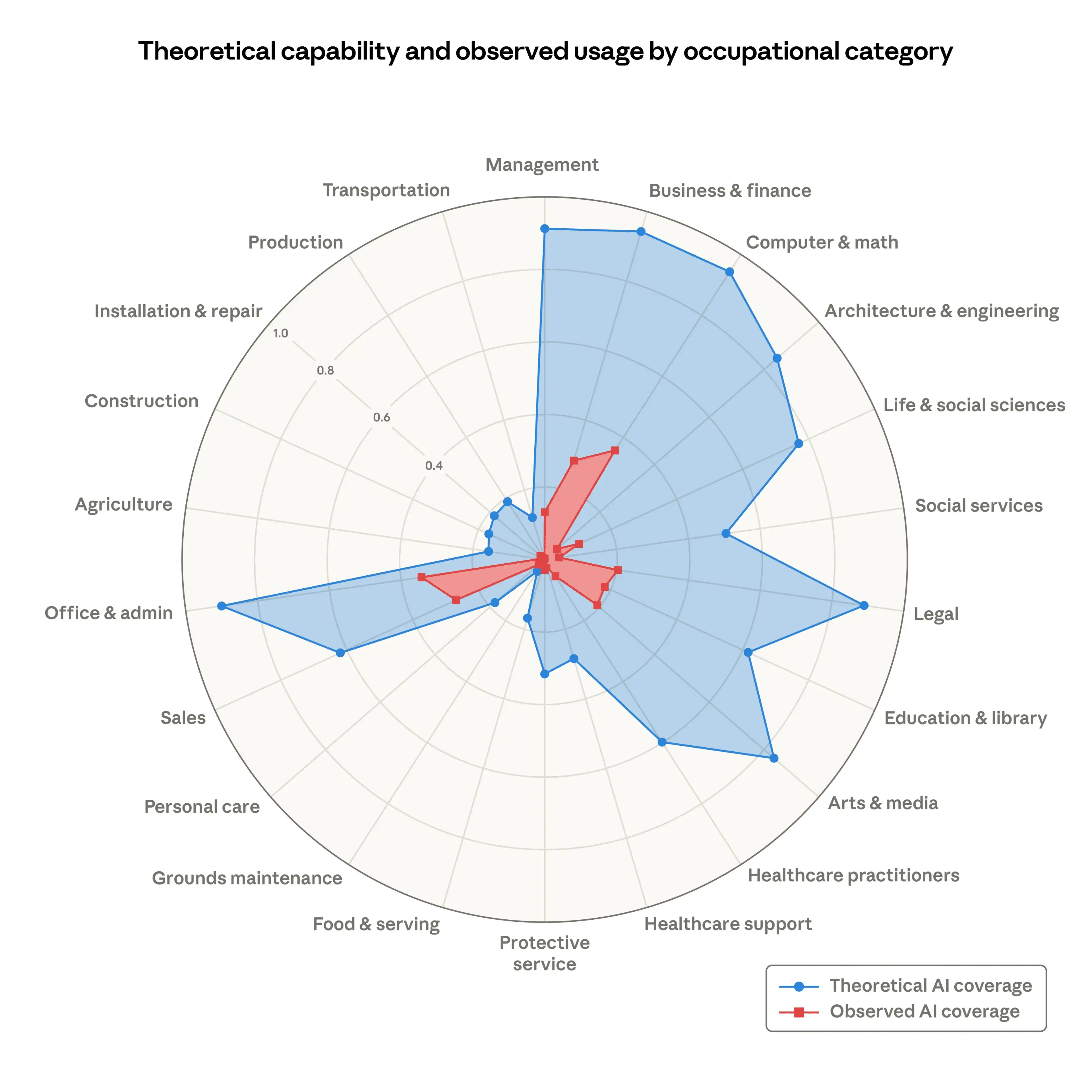
Incidentally, a research study released yesterday by Anthropic, "AI Labor Market Impact," found that occupations previously thought to be least impacted by AI, such as programmers, lawyers, educators, artists, as well as white-collar workers and salespeople, are actually the most impacted by AI; conversely, occupations like construction workers, farmers, repairmen, caregivers, security guards, and restaurant waiters that AI cannot do in the short term are less impacted.

In other words, AI can already cover the vast majority of the work content of programmers, educators, artists, and written work professionals, including the visible impact on live-action movies, short dramas, and TV series after the emergence of Seedance 2.0; offline manual laborers are, of course, not easily replaced by AI.
When OpenClaw Meets the币圈: The Prelude to the AI Economy

Although OpenClaw founder Peter Steinberger has publicly advised young people to stay away from cryptocurrency (Recommended reading: When Openclaw Founder Advises Young People to Stay Away from Crypto), many practitioners still believe that AI Agent and the加密 system have a natural coupling.

@币圈离镜直言: "Human wealth relies on fiat currency settlement, while AI's wealth is more likely to rely on加密 assets." (We discussed this logic earlier in "When AI Agent Becomes Sentient, Stablecoin = Dollar API.")

Many participants said they preferred to pay event fees with BTC, hoping for earlier integration of Bitcoin payments with AI, rather than stablecoins.

In @Wayne's view, when AI Agents can autonomously call wallets, purchase computing power and data, and complete payment settlements, cryptocurrency will become a medium for machine collaboration and value exchange, shifting from speculative assets to production infrastructure—permissionless settlement networks, on-chain transparency, and incentive mechanisms make it an important bridge for AI to access the real economy.

It is worth mentioning that, despite the founder's克制 attitude, OpenClaw has still recommended the加密 privacy AI platform Venice.ai. Reality once again proves: industry boundaries are always determined by products and efficiency, not立场. (Recommended reading: "OpenClaw Endorses Venice.ai, Token VVV Surges Over 500% in a Month")

Conclusion: What Matters is Not 'Having a Lobster,' but 'Using the Lobster'

Lately, "door-to-door OpenClaw installation" has formed a complete paid industry chain on某鱼,某宝,某书; Tencent Cloud's offline installation assistance has also attracted attention. The story shared on the卡兹克 public account about "spending 499 to experience door-to-door OpenClaw installation" is津津乐道 by everyone.

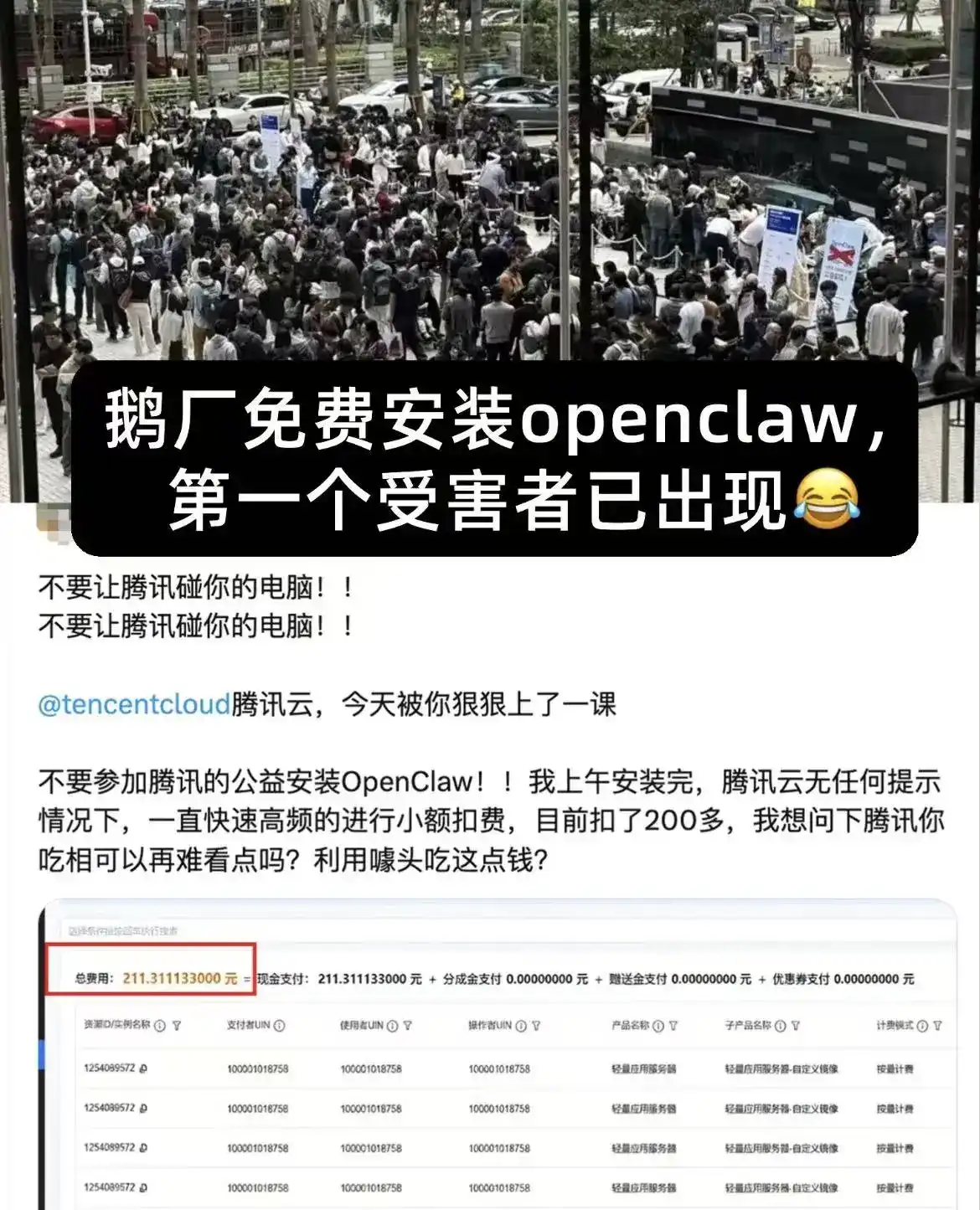
However, among the majority of participants we contacted, there are still大量 users stuck at the installation stage, not knowing how to truly use it. Moreover, most people using OpenClaw are still using the easy installation versions provided by various AI model companies or platforms. What's more, some, after finally排队 and getting OpenClaw installed by the Tencent Cloud team, let it run automatically due to unfamiliarity with operation, ultimately incurring a not-small token consumption fee, and then angrily criticized Tencent Cloud for having难看吃相.

It must be said that in the face of new technology, the opposite of FOMO may be potential security risks and unknown operational risks caused by excessive permissions.
Therefore, for most people, there's no need to be overly anxious. What truly matters is never "I also have a lobster," but "whether my AI is truly solving problems and producing results."

In the era of coexisting with AI, many people may start early, but大概率 will only catch the late show.


Preguntas relacionadas

QWhat is OpenClaw and why did it become the most recognized tool among programmers?

AOpenClaw is an AI project focused on automated execution. It surpassed React to become the most starred project, making it the most recognized tool among programmers due to its rapid global adoption and ability to help users achieve various goals.

QWhat was the purpose of the 'Web4.0 China Tour' event mentioned in the article?

AThe 'Web4.0 China Tour' was a nationwide offline event initiated by figures like Jack Kong of Nano Labs and Justin Sun of TRON, aimed at promoting discussions around AI, particularly OpenClaw, and addressing the collective 'AI anxiety' by bringing together enthusiasts and professionals.

QHow did the article describe the demographic participation in the OpenClaw events in China?

AThe events attracted a diverse age range, from 05 and 00 generation newcomers to 90 generation fast movers, and even included elderly participants and parents with young children, showing AI's penetration across all age groups and industries.

QAccording to the article, what is the relationship between AI Agent and the cryptocurrency system?

ADespite OpenClaw's founder advising against cryptocurrencies, many believe AI Agents and crypto systems are naturally complementary, with crypto potentially serving as a medium for machine collaboration and value exchange, such as through Bitcoin payments and transparent settlement networks.

QWhat caution did the article highlight about using OpenClaw and AI technology?

AThe article warned against FOMO (fear of missing out) leading to potential security risks and operational hazards, emphasizing that merely having OpenClaw isn't enough—it's crucial to use it effectively to solve problems and produce results.

Lecturas Relacionadas

KOL's Perspective: Why Is SOL Set to Rise from This Point?

**Summary: Why SOL is Positioned for Growth at This Level** The article argues that SOL is poised for an upward move from its current price point, citing several key factors. Primarily, SOL has just broken out of a 4-month consolidation phase. This breakout signals a return of risk appetite to the broader crypto market, as SOL is seen as a key indicator of overall crypto health. The token's ownership has reportedly shifted from short-term traders and tourists to long-term accumulators, leading to low volume. Any meaningful increase in trading activity could thus trigger significant upward momentum. Fundamental strengths include strong institutional adoption, integration with DeFi and RWAs (Real-World Assets), and the potential benefits from the Clarity Act. Despite its high volatility—having dropped 70% from its all-time high but still up 12x from its bear market low—SOL is highlighted as one of the few tokens from the last cycle to reach new highs. It boasts a robust ecosystem of applications, users, and protocols. Future catalysts include the expected influx of AI developers following the Miami Accelerate conference, which focused on AI on Solana. Furthermore, Solana is positioned as the premier chain for memecoin activity, a trend expected to continue and drive network usage and fees. The article concludes that recent price action reflects a healthy transfer to long-term holders, setting the stage for growth.

marsbitHace 31 min(s)

KOL's Perspective: Why Is SOL Set to Rise from This Point?

marsbitHace 31 min(s)

Those Pre-Bitcoin PoW Protocols Have Recently Been Reimplemented

This article details a recent surge in replicating pre-Bitcoin Proof-of-Work (PoW) protocols, specifically focusing on Hal Finney's 2004 RPOW (Reusable Proofs of Work). Within five days in May 2026, multiple independent builders in the Bitcoin/cypherpunk community launched projects inspired by this early electronic cash proposal. The initiative began with Fred Krueger's `rpow2.com`, a centralized but auditable system that replaced RPOW's original IBM 4758 hardware with Ed25519 signatures. Initially a faithful replica, it later adopted Bitcoin-like features (21M supply cap, difficulty adjustment) and a controversial 5.24% founder allocation. This sparked rapid forks, including `rpow4.com` which incorporated full Bitcoin parameters, a prediction market (`rpowmarket.com`), and a DEX (`rpow2swap.com`). Concurrently, Mike In Space created a prototype of Wei Dai's 1998 b-money proposal (`b-money.replit.app`), pushing the historical exploration even further back. The article contrasts these centralized, server-dependent experiments with Bitcoin's core innovation of decentralized, trustless consensus. It also highlights a parallel development: the `HASH` project on Ethereum, which uses smart contract hooks to enable a purely fair-launch, browser-mineable PoW token with 0% allocations to team or VCs. The collective activity is framed as a meme-driven, educational exploration of cypherpunk history rather than a serious financial movement, with all projects heavily disclaiming any investment value.

marsbitHace 36 min(s)

Those Pre-Bitcoin PoW Protocols Have Recently Been Reimplemented

marsbitHace 36 min(s)

South Korean Exchanges 'Battle' Regulators, Challenging the Boundaries of Enforcement and Legislation

South Korea's cryptocurrency industry is engaged in a rare, direct confrontation with regulators. The Financial Intelligence Unit (FIU), the primary anti-money laundering (AML) watchdog, has recently imposed heavy penalties on major exchanges like Upbit and Bithumb for alleged violations involving unregistered overseas VASPs and AML procedures. However, exchanges are now actively challenging these actions in court and through industry associations. In a significant shift, the Seoul Administrative Court ruled in favor of Upbit's operator, Dunamu, overturning part of an FIU-ordered business suspension. The court found the FIU's penalty criteria and justification insufficiently clear. Similarly, the court suspended the enforcement of a six-month business suspension against Bithumb pending a final ruling, citing potential irreversible harm to the exchange. Beyond legal battles, the industry is contesting proposed legislative amendments. The Digital Asset eXchange Alliance (DAXA) strongly opposes a draft rule that would mandate Suspicious Transaction Reports (STRs) for all crypto transfers over 10 million KRW (~$6,800). DAXA argues this "poison pill" clause violates legal principles and would overwhelm the STR system, increasing reports from 63,000 to an estimated 5.45 million annually for major exchanges, thereby crippling effective AML monitoring. This conflict highlights a structural tension in South Korea's crypto governance: comprehensive digital asset laws are still developing, while regulators rely heavily on AML enforcement. The industry's move from passive compliance to active legal and legislative challenges signifies a new phase, pressing for clearer rules and more proportionate enforcement. While short-term disputes may intensify, this clash could ultimately lead to a more mature and sustainable regulatory framework for South Korea's vibrant crypto market.

marsbitHace 1 hora(s)

South Korean Exchanges 'Battle' Regulators, Challenging the Boundaries of Enforcement and Legislation

marsbitHace 1 hora(s)

After 50x Storage Surge, Justin Sun Always Looks to the Next Decade

Sun Yuchen, known for his controversial stunts like a $30 million lunch with Warren Buffett (canceled due to a kidney stone) and eating a $6.2 million duct-taped banana, is often overshadowed by a significant fact: his decade-long track record of spotting major investment trends. In 2016, he famously advised young people to invest in Bitcoin, Nvidia, Tesla, and Tencent instead of buying property. A hypothetical $20,000 investment in Nvidia and Tesla from that list would now be worth over 50 million RMB. His latest major call was on November 6, 2025, predicting a "50x storage opportunity" tied to the AI boom, which materialized with Sandisk's stock surging nearly 50-fold by 2026. Looking ahead, Sun now focuses on the next frontier: Physical AI. He identifies four key areas: 1. **Embodied AI/Robotics**: He sees this reaching its "iPhone moment," with companies like UBTech and Galaxy General leading in commercialization. 2. **Drones**: Viewed as the first commercially viable form of Physical AI, revolutionizing sectors from warfare (e.g., AeroVironment's Switchblade) to logistics. 3. **Spatial Computing**: Beyond VR, it's about AI understanding physical space, a foundational technology for robotics and autonomous systems, exemplified by Apple's Vision Pro. 4. **Space Exploration**: After a 2025 suborbital flight with Blue Origin, Sun advocates for space as the ultimate frontier, discussing blockchain's potential role in space asset management and data transactions. His investment philosophy involves betting on entire, inevitable trends rather than single companies. For robotics, he sees Tesla (the body/manufacturer) and Nvidia (the brain/AI platform) as complementary plays. In defense drones, he highlights companies making tanks obsolete (AeroVironment) and those augmenting fighter jets (Kratos). For space, he participated in Blue Origin's flight and anticipates SpaceX's potential IPO to redefine the sector's valuation. Sun Yuchen's vision frames the next two decades not as a revolution in information flow (like the internet), but in the fundamental operation of the physical world through AI-powered robots, autonomous systems, and spatial intelligence, ultimately extending human and AI activity into space. While many still focus on conventional assets, he continues to look toward the next technological horizon.

marsbitHace 2 hora(s)

After 50x Storage Surge, Justin Sun Always Looks to the Next Decade

marsbitHace 2 hora(s)

Trading

Spot
Futuros
活动图片




