After OpenClaw's China Tour, We Interviewed a Group of 'Lobster Chasers'

Odaily星球日报Publicado a 2026-03-07Actualizado a 2026-03-07

Resumen

In March 2026, OpenClaw surpassed React to become the most-starred project on GitHub, rapidly gaining global recognition as a leading AI tool. Dubbed the "lobster" by enthusiasts, this automation-focused AI agent has sparked widespread discussion and a sense of urgency among tech communities, particularly in China. Following the "Web4.0 China Tour" initiated by figures from the crypto space, offline events saw significant turnout, attracting everyone from seasoned developers to curious newcomers, including teenagers and seniors. Participants expressed a mix of excitement and "AI anxiety," driven by fears of being left behind. Discussions revealed divergent perspectives: while some see AI as a threat to jobs, others, citing reports like Anthropic’s, argue it will reshape rather than replace roles—impacting structured, cognitive tasks more than manual labor. The intersection of AI and crypto also emerged as a key theme, with some believing cryptocurrency could become the native economic system for AI agents. Despite the hype, many users struggle to operationalize OpenClaw, with some paying for installation services only to face unexpected costs or operational challenges. The consensus among informed participants is that success lies not in merely adopting the tool, but in effectively leveraging it to solve real problems. In the age of AI, early adoption does not guarantee advantage—meaningful outcomes depend on practical application.

Original|Odaily Planet Daily(@OdailyChina)

Author|Wenser(@wenser 2010)
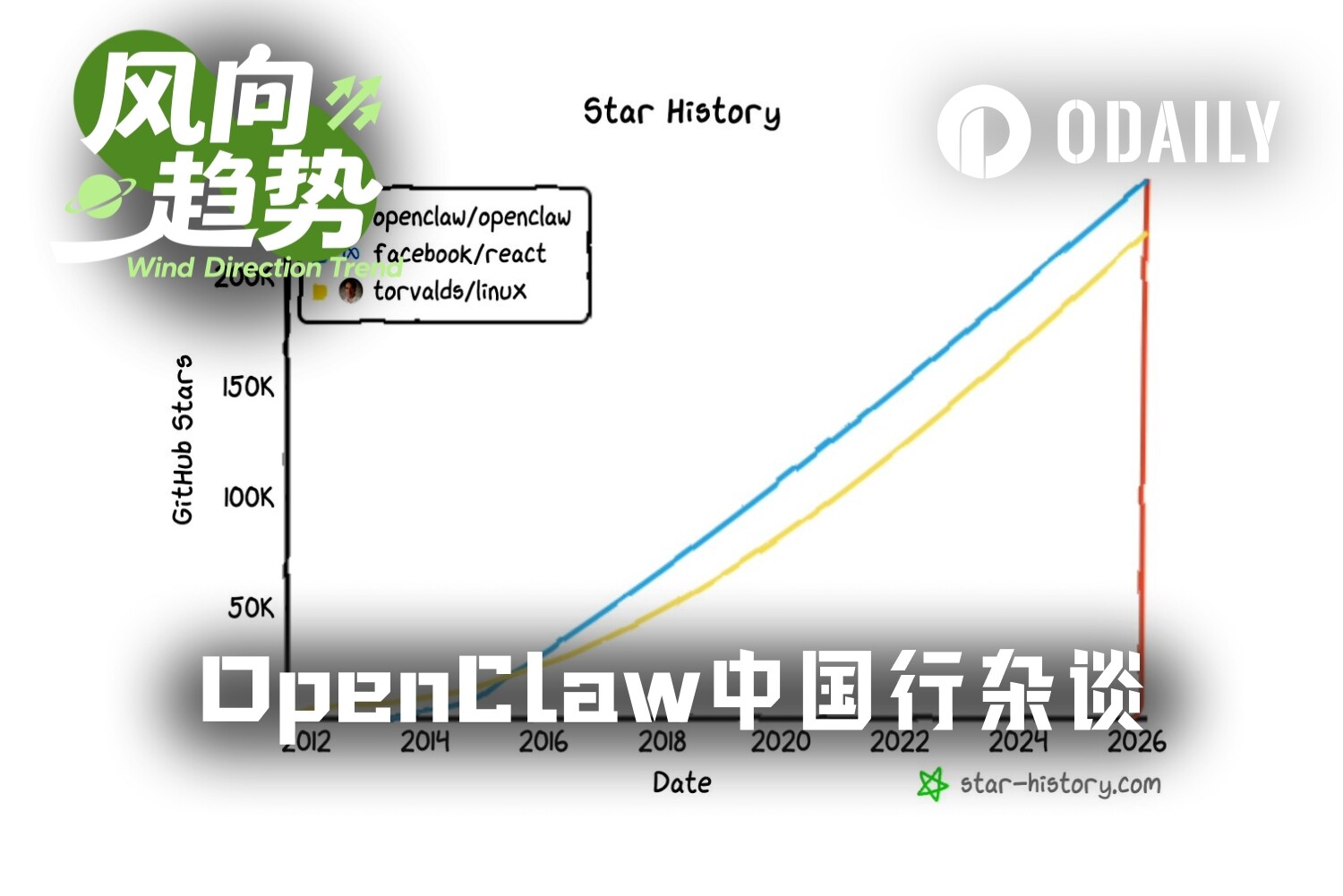
On March 2, OpenClaw finally surpassed React to become the project with the most stars on GitHub, thus rising to become the "most recognized tool" among programmer communities at the moment.

In just over two months, this AI project focused on automated execution has rapidly swept across global discussion platforms. Almost everyone is racking their brains to "adopt a lobster," attempting to use it to complete various goals, projecting expectations like believers making wishes.

Spring river water warms, ducks know first; changes often occur among the most敏锐嗅ally sharp groups. At the end of February, some active figures in the crypto circle, represented by Nano Labs founder Kong Jianping and TRON founder Sun Yuchen,联合 launched the "Web4.0 China Tour" nationwide offline event with allies like CAI under Meituan's Cai Wensheng. Crowds flocked to it instantly, reminiscent of the days when everyone talked about Web3, crypto, metaverse, and NFT.

As industry observers active at the intersection of AI and crypto, Odaily Planet Daily辗转 interviewed multiple现场 participants and compiled some "post-participation impressions," attempting to还原 this "AI counter-siege battle" initiated by humans.
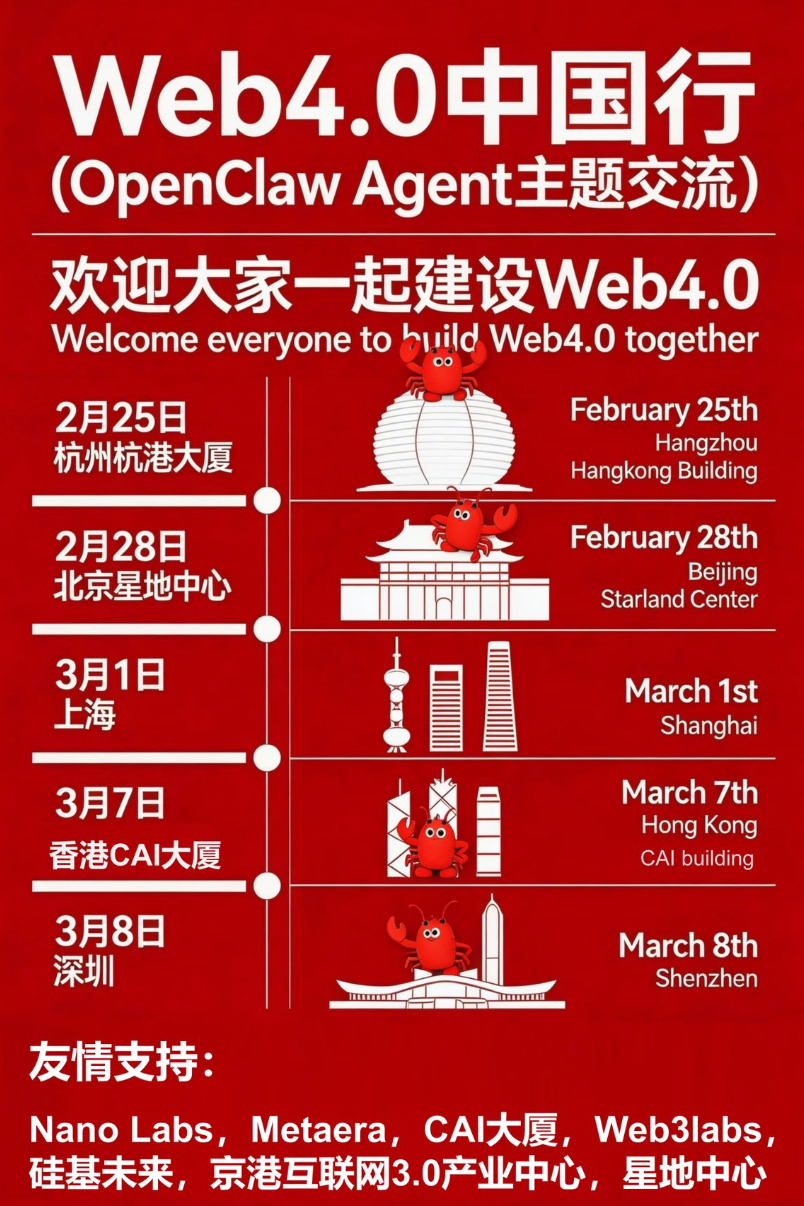
Web3 is Dead, Web4 Rises: The AI Anxiety Ignited by OpenClaw

In the first week after the Chinese New Year, a chart circulating in various WeChat groups率先 ignited discussion: Clawdbot ranked first—this was one of the early names for OpenClaw (another was Moltbot).
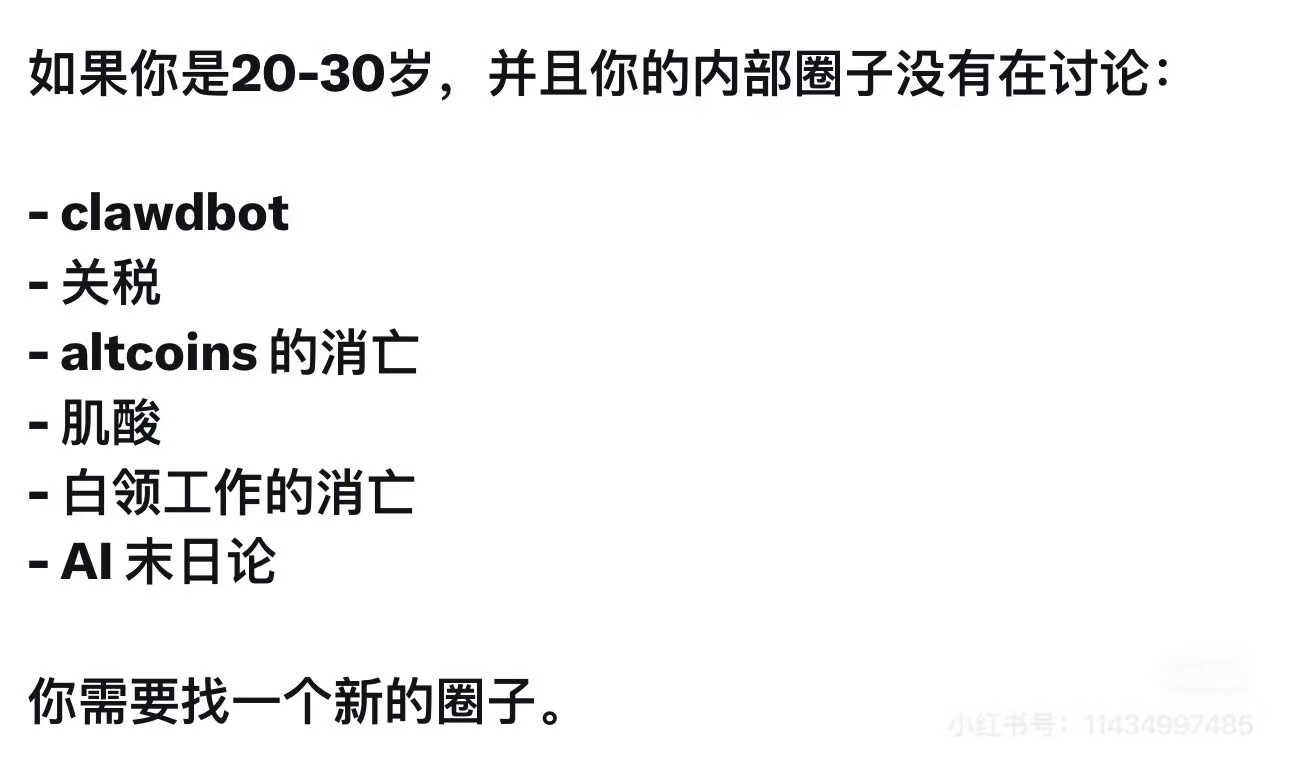
After密集刷屏 messages like the "2028 AI Doomsday Prophecy" and Block laying off 4,000 people, the internet群体 quickly fell into a collective "AI anxiety": if you don't know about the "lobster" yet, it's like not knowing about Douyin, Clubhouse, or ChatGPT back in the day, meaning you're already behind.

Thus, offline events framed with the "Web4.0 China Tour" narrative and centered on OpenClaw rapidly heated up. The远超预期的报名 and attendance numbers also pushed technical concepts like AI Agent and "lobster robots" to a broader audience.

On-Site Activity Side Note: AI Has Moved from Narrative to Reality

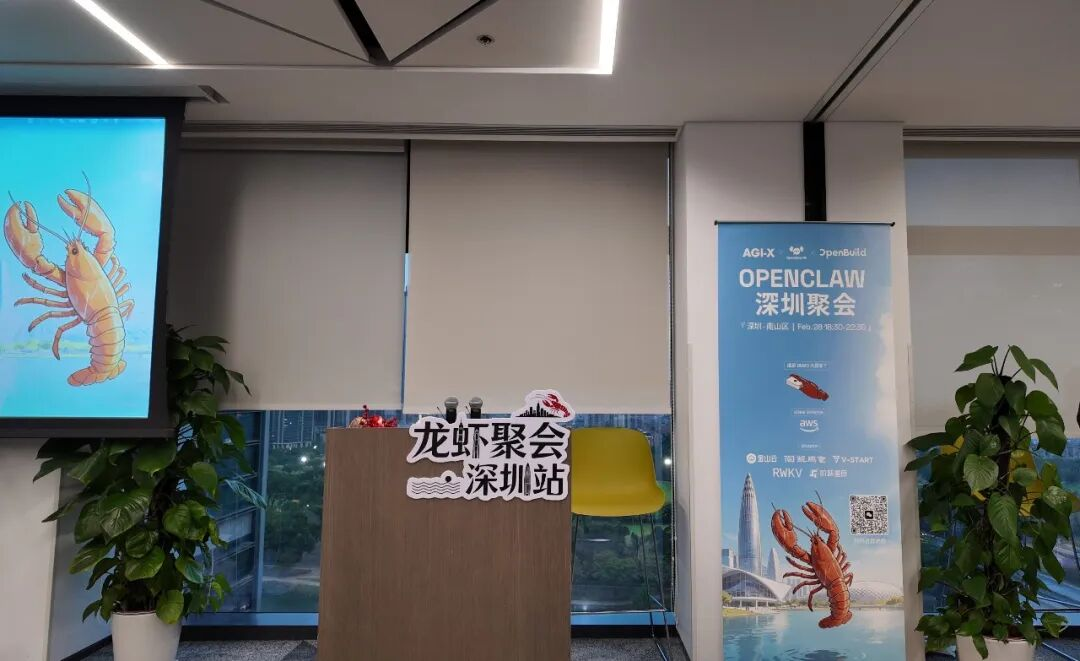
Photos released by 1783 DAO for the Beijing stop showed a full house; @Wayne, who participated in the Beijing event, told us he initially saw KOLs reposting information on X, then searched via Xiaohongshu and Luma, and within a few days had attended three offline events in a row.

In his view, the现场 showed obvious "polarization": some had already run businesses and earned dollars, while others didn't even know how to buy cloud servers;同时, "generational differences" were also apparent—post-05s started entering, post-00s entrepreneurs were common, post-90s were still the fastest acting group, while the earlier generation came more with anxiety about being left behind by the times.
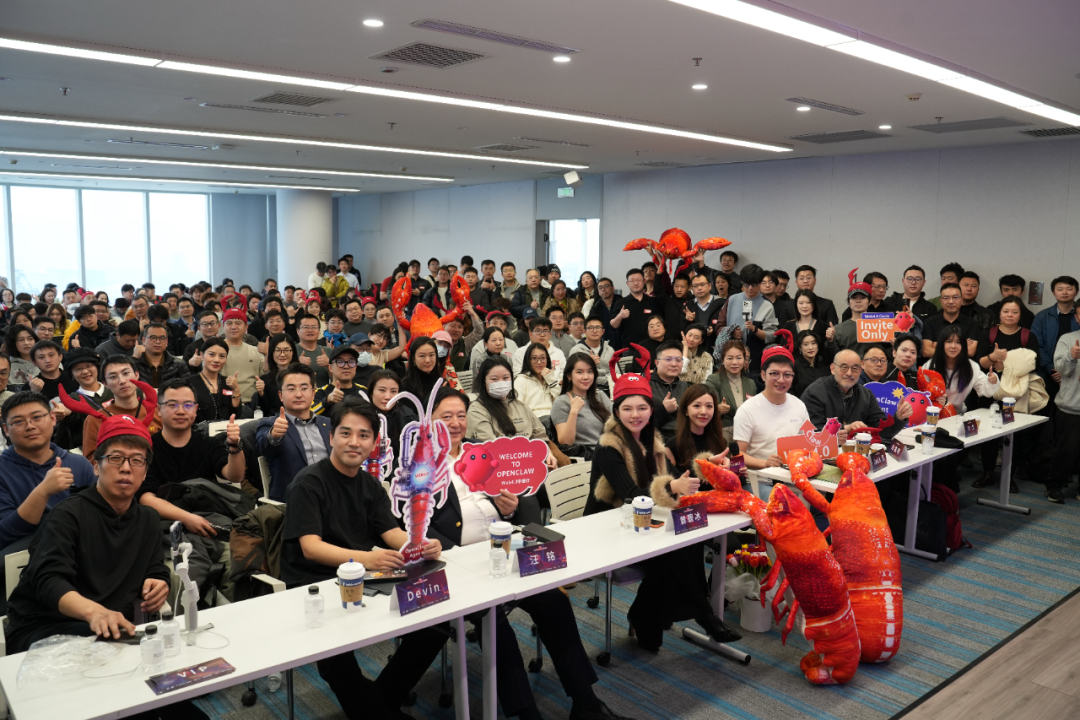
Another小伙伴 who helped organize the OpenClaw Lobster Meetup Shenzhen stop, @0xqiuqiuu, offered a different perspective.

As a community operator for OpenBuild, Qiuqiu observed that the biggest beneficiaries of this wave of AI-driven efficiency gains are companies and bosses, and it also provides more convenient efficiency tools for "one-person companies," independent developers, and creators to boost output.

Furthermore, the Shenzhen event had many white-haired elderly participants, as well as parents bringing their young daughters and sons. The age range went up to over 70 years old and down to 11 years old. This is different from the previous knowledge付费 courses that打着 "9.9 yuan to teach you AI" flags. AI has gradually penetrated all demographics and most industries. And the best way to alleviate "AI anxiety" is not to wait passively, but to embrace AI, use AI, and use concrete actions to counter虚无的情绪.
As for "whether AI will replace jobs or humans," some interviewees gave negative answers.

@币圈离镜, engaged in Web3 industry interviews, pointed out that AI will not only not replace humans, but will also create more jobs due to AI. (Similar to the "Jevons Paradox" we mentioned earlier,详见 "The War Between Stablecoins and Banking Likely Doesn't Exist")

@Wayne, a Web3 industry analyst, also mentioned that AI will not replace most people but may restructure over 50% of work structures. Specifically, he believes replacing "position" ≠ replacing "person," so what is actually being replaced are "task modules." AI will优先 replace highly structured, standardized parts. For example, managers who used to manage humans and organize coordination might be replaced by managers who can manage AI employees.

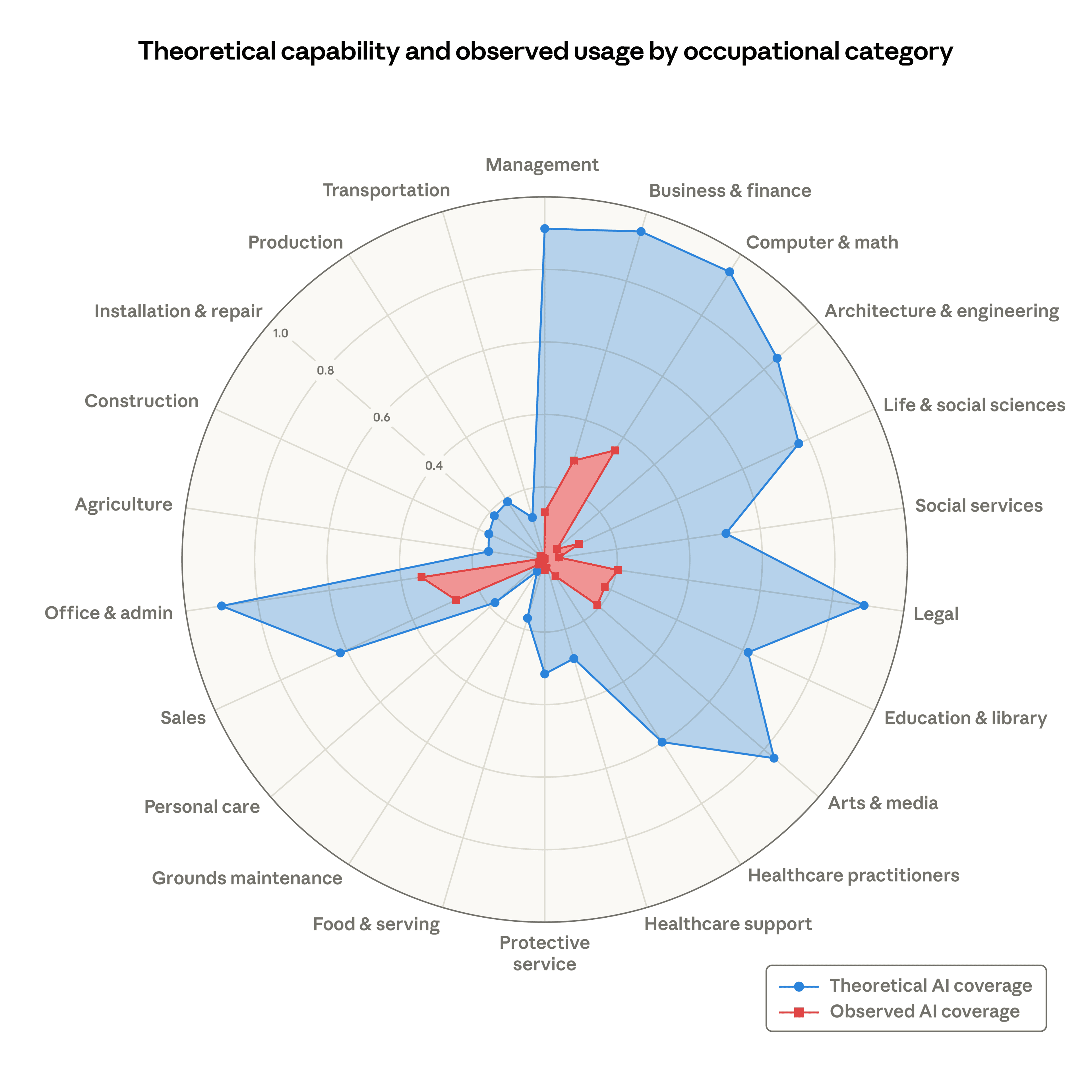
Incidentally, a research study "AI Labor Market Impact" released yesterday by Anthropic found that professions previously thought to be least impacted by AI, such as programmers, lawyers, educators, artists, as well as white-collar workers and salespeople, are actually the most impacted by AI; conversely, construction workers, farmers, repairmen, caregivers, security guards, and restaurant servers—jobs that AI can't do easily in the short term—are less impacted.

In other words, AI can already cover most of the work content of programmers, educators, artists, and written work professionals, including the visible impact on live-action movies, short dramas, and TV series after the emergence of Seedance 2.0; offline manual laborers, of course, are not easily replaced by AI.
When OpenClaw Meets the Crypto Circle: The Prelude to an AI Economy

Although OpenClaw founder Peter Steinberger has publicly advised young people to stay away from cryptocurrency (Recommended reading: When Openclaw Founder Advises Young People to Stay Away from Crypto), many practitioners still believe that AI Agent and the加密 system have a natural coupling.

@币圈离镜 stated bluntly: "Human wealth relies on fiat settlement, while AI's wealth is more likely to depend on crypto assets." (We discussed this logic earlier in "When AI Agents Become Sentient, Stablecoin = Dollar API.")

Many participants expressed a preference to pay event fees in BTC, hoping for earlier integration between Bitcoin payments and AI, rather than stablecoins.

In @Wayne's view, when AI Agents can autonomously call wallets, purchase computing power and data, and complete payment settlements, cryptocurrency will become a medium for machine collaboration and value exchange, shifting from speculative assets to production infrastructure—permissionless settlement networks, on-chain transparency, and incentive mechanisms make it an important bridge for AI to access the real economy.

It is worth mentioning that despite the founder's cautious attitude, OpenClaw has still recommended the加密 privacy AI platform Venice.ai. Reality once again proves: industry boundaries are determined by products and efficiency, not立场. (Recommended reading: "OpenClaw Endorses Venice.ai, VVV Token Soars Over 500% in a Month")

Conclusion: What Matters is Not 'Having a Lobster,' but 'Using the Lobster'

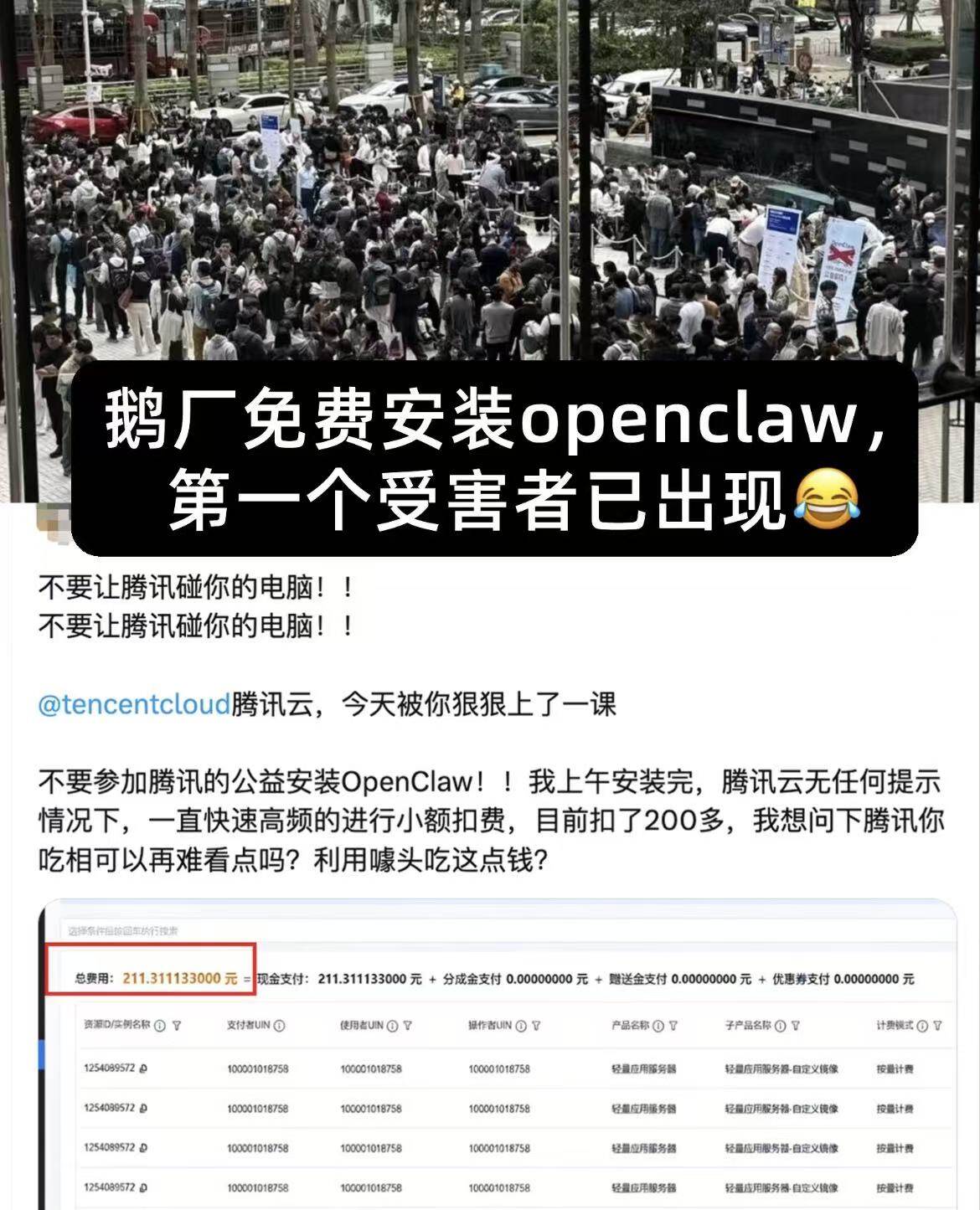
Lately, "on-site OpenClaw installation" has formed a complete paid industry chain on Xianyu, Taobao, and Xiaohongshu; Tencent Cloud's offline installation assistance has attracted attention. The story shared on the Kazuo public account about "spending 499 to experience on-site OpenClaw installation" is津津乐道 among everyone.

However, among the majority of participants we contacted, many users are still stuck at the installation stage, not knowing how to truly utilize it. Moreover, most people using OpenClaw still employ the easy installation versions provided by various AI model companies or platforms. What's more, some finally managed to install OpenClaw with the help of the Tencent Cloud team after queuing offline, but due to unfamiliarity with operations, let it run automatically,最终 generating a not insignificant Token consumption fee, and then angrily criticized Tencent Cloud for having难看吃相.

It must be said that in the face of new technology, the opposite of FOMO might be potential security risks and unknown operational hazards caused by excessive permissions.
So, for most people, there's no need to be overly anxious. What truly matters is never "I also have a lobster," but "whether my AI is actually solving problems and producing results."

In the era of coexisting with AI, many people might start early, but most will likely only catch the late show.


Preguntas relacionadas

QWhat is OpenClaw and why did it become a trending topic among programmers?

AOpenClaw is an AI project focused on automation execution. It became the most recognized tool among programmers by surpassing React in GitHub stars on March 2, gaining rapid global attention for its ability to help users achieve various goals.

QHow did the 'Web4.0 China Tour' activities relate to OpenClaw and AI anxiety?

AThe 'Web4.0 China Tour' was a series of offline events initiated by figures like Jack Kong and Justin Sun, using OpenClaw as a core topic to address widespread 'AI anxiety' and promote discussions about AI Agents and technological concepts, attracting large crowds.

QWhat were some key observations about the participants at the OpenClaw offline events in China?

AParticipants showed significant generational and skill-level diversity: 05s and 00s entrepreneurs were common, while 90s were the most active. Some were already profiting from AI, while others lacked basic knowledge like buying cloud servers. Events also included elderly and young children, indicating broad AI penetration.

QAccording to interviewees, how might AI impact jobs and the workforce?

AInterviewees suggested AI won't replace humans but will restructure over 50% of work tasks, automating highly structured and standardized modules. Jobs like programmers, lawyers, and artists are most impacted, while physical laborers like construction workers and farmers are less affected, as per Anthropic's research.

QWhy is there a connection between OpenClaw/AI Agents and cryptocurrency, despite the founder's stance?

ASome believe AI Agents and crypto are naturally coupled because cryptocurrencies could serve as a permissionless settlement network for AI transactions, such as purchasing computing power and data. Despite OpenClaw's founder advising against crypto, the project endorsed Venice.ai, showing practical alignment over ideological stance.

Lecturas Relacionadas

Must-Watch Events Next Week|CLARITY Act Could Face Senate Vote; SpaceX, Circle to Report Earnings (8.3-8.9)

**Summary: Key Events and Developments to Watch (August 3-9)** The upcoming week is marked by significant financial disclosures, key legislative deadlines, and notable product updates. **Major Financial Events:** Several companies are scheduled to release their Q2 2026 earnings. American Bitcoin (ABTC) will report on August 3, followed by SpaceX and Hut 8 Mining Corp. on August 4, and Circle on August 5. Notably, a significant portion of SpaceX shares (up to 12% of total shares) will be unlocked on August 6 following their earnings release. **Key Legislative Deadline:** The U.S. Senate faces an August 7 deadline to secure 60 votes for the CLARITY Act, a bipartisan bill aiming to establish a federal regulatory framework for cryptocurrencies. The Senate may hold a full vote on the bill during the week. **Economic Data:** The U.S. July Non-Farm Payrolls report will be released on August 7, providing crucial labor market data. **Technology & Product Updates:** * **Shutdowns:** DeFi portfolio tracker Zapper and wallet app Ctrl Wallet will cease operations on August 3. * **Upgrades:** LayerZero will deprecate its v1 relayers on August 3. XRP Ledger's new version 3.3.0, featuring five new functions, is expected next week. * **AI:** Elon Musk announced that the advanced Grok 4.6 AI model is set for release around August 7. * **Bitcoin:** The BIP-110 forced signaling for a potential Bitcoin network change is scheduled to begin around August 8. **Other Notable Events:** Chinese robotics firm Unitree Tech has set its preliminary price inquiry for its IPO for August 5. South Korean exchange Upbit will delist AQT and AERGO tokens on August 3.

marsbitHace 1 hora(s)

Must-Watch Events Next Week|CLARITY Act Could Face Senate Vote; SpaceX, Circle to Report Earnings (8.3-8.9)

marsbitHace 1 hora(s)

Stocks Are Plummeting More Sharply Than Cryptocurrencies. Where Has the Money Gone?

Stock Markets Plunge Deeper Than Cryptocurrencies: Where Did the Money Go? In late July, Seoul's Kospi index triggered circuit breakers for two consecutive days, plummeting over 40% from its June high. The collapse was led by heavyweight stocks like SK Hynix, whose record profits still disappointed investors, and devastating leveraged ETFs, with one major product losing over 83% of its value. This signaled a global, forced deleveraging targeting the most crowded trades. Interestingly, while stocks exhibited extreme volatility akin to crypto markets, Bitcoin rose nearly 15% in July after a prior steep drop. Analysis shows the money fleeing equities did not flow into Bitcoin. Instead, Bitcoin had already absorbed its sell-off in May-June, when U.S. spot Bitcoin ETFs saw historic outflows. The true safe-haven beneficiary was gold, whose price rose over 20% year-on-year, highlighting a decoupling between Bitcoin and gold as "digital gold." The sell-off was a targeted unwinding of leveraged positions in tech and semiconductors, accelerated by broker-dealer risk management and shifts in the AI narrative, including new competition from Chinese memory chipmakers. The retreat path was clear: from high-valuation tech stocks to cash and U.S. Treasuries, then to gold. For Bitcoin to attract sustained institutional inflows, conditions like eased global liquidity pressure, a "soft-landing" Fed rate cut, and U.S. regulatory clarity via legislation like the stalled CLARITY Act are needed. Currently, Bitcoin is not a safe haven but an already-cleared asset. Its low correlation with tech stocks, however, makes it a potential diversification play for institutional portfolios once the storm passes. The money isn't here yet, but the positioning is underway.

marsbitHace 1 hora(s)

Stocks Are Plummeting More Sharply Than Cryptocurrencies. Where Has the Money Gone?

marsbitHace 1 hora(s)

In Conversation with Ray Dalio: We Are Currently in an AI Bubble, with 1% of My Portfolio in Bitcoin

Ray Dalio, founder of Bridgewater Associates, warns in an interview that the current AI boom shows classic bubble characteristics, which could lead to significant economic downturns as seen in past cycles like 1929 or 2000. He explains that speculative enthusiasm, fueled by debt and overvaluation, often precedes a crash when rising rates or taxation force asset sales, causing widespread losses and recession. Dalio also outlines his "Big Cycle" theory, describing an approximate 80-year pattern where widening wealth gaps, massive government deficits, and shifting geopolitical power (like China's rise) create internal conflict and global instability. He emphasizes that we are in a late-cycle, transitional phase where traditional powers like the US and UK face decline. For personal wealth protection, Dalio advises diversification beyond cash into assets like stocks, bonds, real estate, and particularly gold, which he prefers over Bitcoin. While he holds about 1% of his portfolio in Bitcoin as a non-printable hard asset, he views gold as more secure from technological or governmental threats. Regarding AI's impact, Dalio believes it will disproportionately benefit capital owners, worsening inequality by replacing both physical and cognitive labor. He suggests that human intuition and emotional intelligence, combined with AI, will be key for future workers. On taxation, Dalio argues that wealth taxes are impractical and risk triggering asset sell-offs, reducing productive investment. He points to the UK as a cautionary example of debt, low productivity, and political strife. Geopolitically, Dalio foresees a more regionalized world, with the US showing weakness in prolonged conflicts like with Iran, akin to past imperial declines. The ideal outcome, he suggests, is coexisting powerful blocs (e.g., Americas, China-Asia Pacific) without major war.

marsbitHace 5 hora(s)

In Conversation with Ray Dalio: We Are Currently in an AI Bubble, with 1% of My Portfolio in Bitcoin

marsbitHace 5 hora(s)

Trading

Spot
活动图片




