After Losing 97% of Its Market Value, iQiyi Attempts to Use AI to Forcefully Extend Its Lifespan

marsbitPublicado a 2026-04-23Actualizado a 2026-04-23

Resumen

After losing 97% of its market value since its 2018 peak, iQiyi is aggressively pivoting to AI in a desperate attempt to survive. At its 2026 World Conference, CEO Gong Yu announced an "AI Artist Library" with over 100 virtual performers and a new AIGC platform, "NaDou Pro," promising faster production and lower costs. This shift comes as the company faces severe financial distress: its market cap sits near delisting thresholds at $1.36 billion, with significant losses, declining membership revenue, and depleted cash flow. The AI strategy has sparked controversy. Top actors have issued legal threats against unauthorized digital replicas, while in Hengdian, over 134,000 background actors are seeing their already scarce job opportunities vanish as AI replaces them for background roles. iQiyi's move represents a fundamental shift from being a high-cost content buyer to a landlord" to becoming a "platform capitalist" that transfers production risk to creators. This contrasts with competitors like Douyin (TikTok's Chinese counterpart), which is investing heavily in *real* actor-led short dramas, betting that authentic human connection retains users better than AI-generated content. The article draws a parallel to the 1920s transition to "talkies," which made cinema musicians obsolete but ultimately enriched the art form. In contrast, iQiyi's AI drive is framed not as an artistic evolution but as a cost-cutting measure that could degrade storytelling, replacing genuine human emo...

At the iQiyi World Conference in April 2026, Gong Yu stood on stage and said: "Live-action filming may become intangible cultural heritage."

The large screen on stage displayed the "AI Actor Library," with virtual humans inside tirelessly changing expressions and costumes. Gong Yu stated that iQiyi had signed over 100 AI actors, and that using AI would significantly shorten filming time, with post-production completing a large amount of work using digital doubles. He also announced the official commercial launch of "Nadou Pro," an AIGC film and television production platform for small and medium-sized creators, providing AI tools, new revenue-sharing rules, and "uncapped" profit promises.

The press conference was packaged as a technological狂欢, with music, lighting, and PPTs all配合 this narrative: the future has arrived, embrace it.

But outside this grand event, on another large screen, there was a number: $1.41.

This was iQiyi's closing price on the Nasdaq screen, with a market capitalization of only $1.361 billion, just one step away from the delisting threshold. At its IPO in 2018, iQiyi's stock price had once reached a high of $46, with a peak market cap exceeding $31.2 billion. From $31.2 billion to $1.361 billion, a drop of 97%, it took less than eight years.
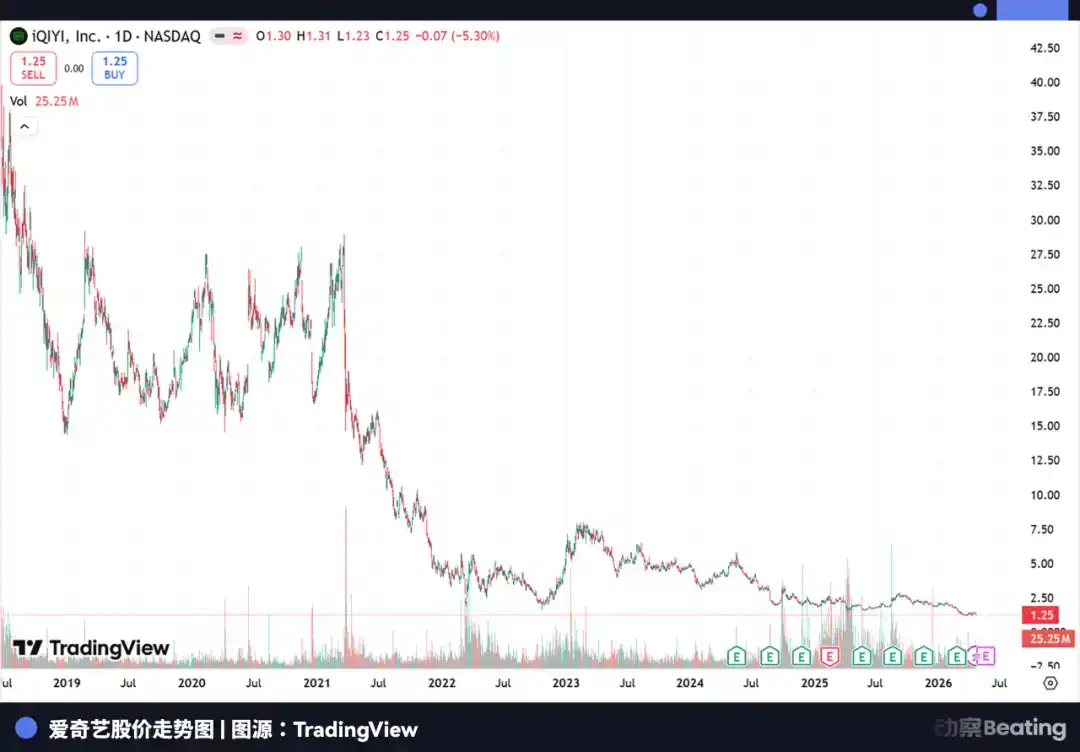
The outside world debates whether AI can act well, but the capital market only cares whether AI can tell a good story. Over the past decade, iQiyi has burned through hundreds of billions in funds but has never found a path to sustainable profitability.

In 2025, this streaming giant's content costs still reached 15.45 billion yuan, accounting for 56% of its total annual revenue; the annual net loss was 206.3 million yuan, turning from profit to loss; operating profit was only 640 million yuan, a plunge of 73% compared to 2024's 2.36 billion yuan. And just two years earlier, in 2023, iQiyi's net profit was as high as 1.93 billion yuan, the peak of profitability since the company's founding.

From peak to loss, it took only two years.

More棘手的是, iQiyi's free cash flow had plummeted from over 3.3 billion yuan in 2023 to less than 10 million yuan, its self-造血 ability rapidly deteriorating.

The company issued convertible bonds twice in 2023 and 2025, totaling nearly $1 billion, with interest burdens持续加重. After its U.S. stock financing function basically failed, iQiyi secretly submitted a listing application to the Hong Kong Stock Exchange at the end of March 2026, and in April, it rolled out the big饼 of the AI Actor Library and "Nadou Pro."

A company seeking to "replenish blood" in Hong Kong needs a new narrative that can make investors' eyes light up. "Marginal cost趋零," "AI cost reduction and efficiency increase"—these词汇 in today's capital market context are more valuable than any hit drama.

This has nothing to do with art; it's only about preserving the shell.

But when a company no longer pleases capital with content quality but with "cost reduction," who will become the first batch of fuel under this cost-cutting machine?

Hengdian

The focus of public opinion on this AI storm was soon occupied by several lawyer's letters.

Zhang Ruoyun was the first to speak out, stating that he had never authorized any platform to generate an AI double and reserved the right to pursue legal action. Yu Hewei, Chen Xiao, Wang Churan, and others followed suit,纷纷辟谣. Yi Yangqianxi's studio issued a statement pointing out that several AI short dramas had unauthorized use of his likeness and voice, with the involved short dramas reaching nearly 75 million in热度. Tan Jianci, Gong Jun, Yang Zi, and other actors also接连发声维权.

For a time, the "AI Actor Library" became a hot potato, forcing iQiyi to explain that the AI actors in the library were "authorized AI actors," not digital copies of real stars, and that "actors joining the Nadou Pro Actor Library only represents their intention to engage with AI film and television projects." Gong Yu also responded publicly multiple times, emphasizing that the platform respects actors' rights and that AI is a tool, not a replacement.
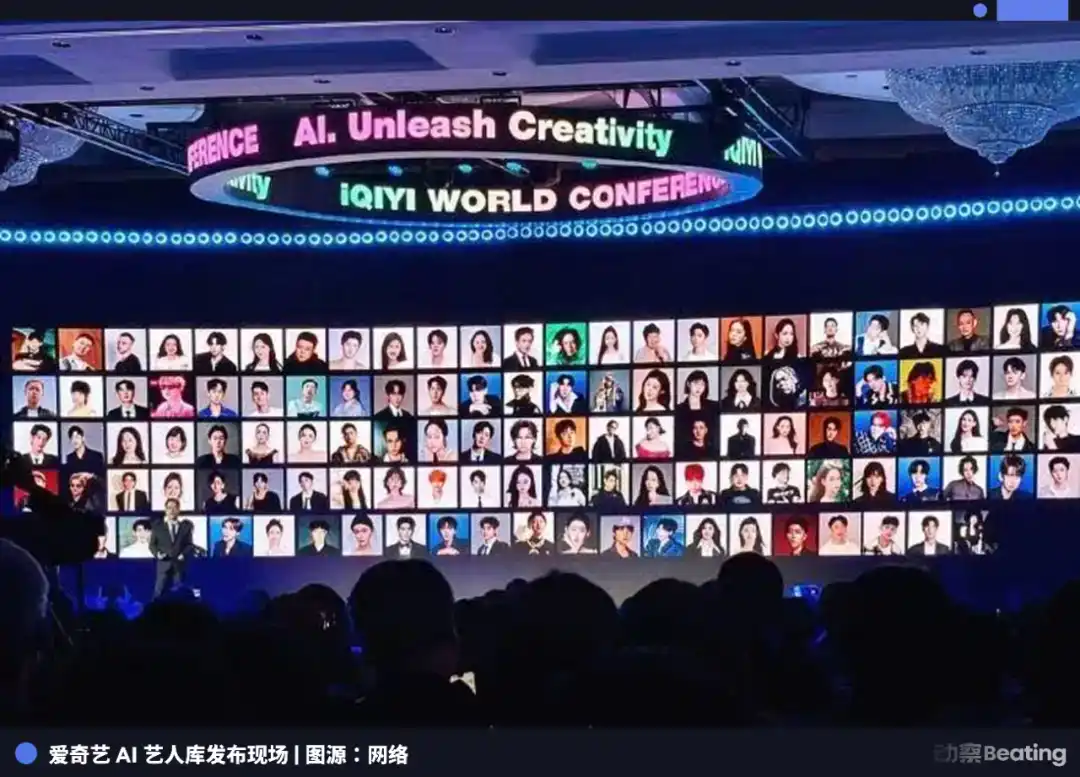
Big stars' statements can make it to热搜, but in places the camera doesn't see, there are also the 134,000 background actors in Hengdian.

In recent years, with the explosion of the short drama market, the demand for background actors in Hengdian had once rebounded. Short drama crews are numerous, cycles are short, and the pace is fast, requiring a large number of background actors. In long dramas, background actors are just set pieces, without lines or names; in short dramas, they have the opportunity to show their faces, say a few lines, even play major roles. A regular background actor's daily salary is between 150 and 300 yuan; if they work hard, they can earn four or five thousand a month. Not much, but enough to live on.

After AI arrived, this "enough to live on" began to动摇.

In the first quarter of 2026, over 85% of short drama crews in Hengdian had fully switched to using AI actors for supporting roles and background actors. The employment rate for专职 actors in live-action short dramas plummeted from 82% in 2025 to 29%. Some crews no longer recruit background actors, only needing to film the leads in front of a green screen, leaving the rest of the background crowd to be generated by algorithms with one click. AI-generated background actors don't need to eat, don't need rest, are never late, never ask for raises, and never complain.

There are about 134,000 registered background actors in Hengdian, with only about 800 effective positions available daily, making the competition more fierce than the civil service exam. Some actors used to maintain a pace of filming over 20 days a month, shooting上百部 short dramas, but for over a month after the Spring Festival, they didn't get a single day of work. After this year's Spring Festival, the production volume of live-action short dramas was directly halved by 50%.

Big stars defend their肖像权 on热搜, while small background actors disappear under the wash of AI. Top stars have agencies, lawyers, and Weibo热搜; their维权 can become news, can create舆论 pressure, can force platforms to让步. But background actors have nothing. Their disappearance won't make news; it will only become the increasingly short waiting lines outside some Hengdian crew gates.

The paeans of technological revolution are always composed with the sighs of底层劳动者. But in this cost-cutting game, what role does the platform itself play? Is it truly promoting a technological revolution, or is it using a pretty name to甩出去 its heaviest包袱?

From "Landlord" to "Pump"

At the conference, iQiyi announced its transformation into a "decentralized social media" platform, launching "Nadou Pro" and modifying its revenue-sharing rules.

"Nadou Pro" is positioned as a content platform for small and medium-sized creators, providing AI creation tools, supporting user-made short dramas, and allowing them to earn revenue through sharing. Gong Yu said this is "returning the power of content creation to the masses," a "decentralized" content revolution. The new revenue-sharing rules promise creators "uncapped" shared revenue, with additional subsidy incentives for AIGC content and medium-length drama content.

It sounds like empowering creators, handing the stage to the masses. But it's only "sounds like."

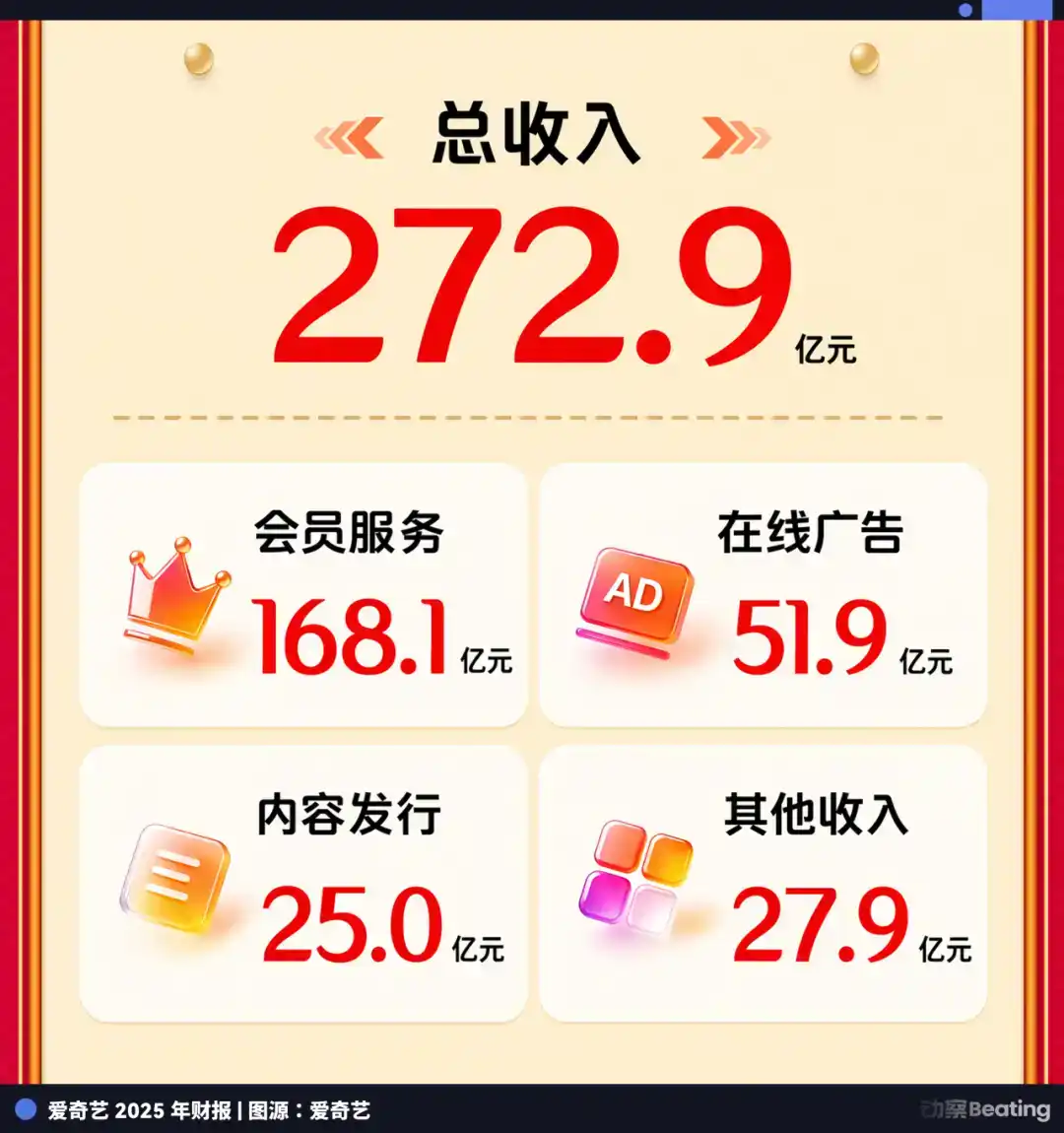
Long-form video platforms used to be "landlords" who spent money buying shows. At its peak, iQiyi spent over 20 billion yuan a year on content procurement and production, with a single S-level drama often costing hundreds of millions in investment, and the平台自负盈亏. The logic of this model was: I spend money, I buy content, I attract user subscriptions, I earn membership fees. In 2023, iQiyi's membership service revenue reached 20.3 billion yuan, with membership numbers突破 120 million, its peak moment.

But this logic has a fatal flaw: it assumes the platform can持续判断 what good content is, and that good content can持续 bring enough subscribing users.

iQiyi spent money for ten years, lost money for ten years. Membership numbers fell all the way from the peak of 120 million; in 2025, membership service revenue dropped to 16.81 billion yuan, a year-on-year decrease of about 5%. More troublesome was that one of iQiyi's cost-cutting methods was vigorously promoting a movie revenue-sharing model, where the platform no longer prepays licensing fees but shares revenue with partners based on actual播放量. This确实 reduced upfront cash支出, but the side effect was that the studios willing to accept revenue sharing were mostly mid-to-low-tier content. Truly popular IPs that could drive membership payments, copyright holders still preferred high-price buyouts. The result was that iQiyi's content library became filled with mid-to-low-tier works that "prioritized quantity over quality." Hit titles were missing, users noticed, and the platform's stickiness and willingness to pay也随之下降.
This model has reached its end.

Now, iQiyi doesn't want to lose money anymore; it wants to make稳赚不赔. The platform hands AI tools to countless retail creators, letting them卷、试错. Whoever becomes popular, the platform takes the lion's share; whoever flops, the platform remains unaffected. Just like Uber doesn't employ drivers and Airbnb doesn't buy properties, iQiyi no longer wants to buy shows.

This logic has a more academic name in the internet industry: "platform capitalism." The platform provides infrastructure, attracts a large number of suppliers to join, then through algorithm distribution and抽成 mechanisms, transfers risk to the suppliers and keeps the profits for itself. YouTube and TikTok are both successful cases of this logic. But the success of these two platforms is based on the premise that they are themselves traffic entrances and have huge user bases.

Can iQiyi replicate this logic? This is a questionable issue. iQiyi's monthly active user scale is not on the same level as TikTok's; its content consumption scenario is "sitting down to watch a show," not "scrolling." Transforming a paid subscription platform into a UGC content platform—why would users stay?

But what's more worth questioning is, when a long-form video platform starts lowering itself to become a "pump," transferring all the risks of content production to retail creators, what does this mean for the entire content industry? And what are those short-form video platforms that originally rose依靠短平快 doing?

Two Routes

Just as iQiyi bet on AI, Douyin invested 500 million yuan to support "live-action short dramas."

On April 15, 2026, at the 13th China Network Audiovisual Conference, Douyin Group released its latest live-action short drama support plan. The platform will invest 500 million yuan in special funds to持续扶持 live-action short drama content innovation and现实题材深耕. Hongguo Short Drama's总编辑乐力 clearly stated at the press conference that live-action short dramas have obvious advantages in user retention, completion rate, and long-term payment willingness.

Douyin's 500 million yuan support plan specifically targets "short dramas performed by real people," explicitly excluding AI-generated content. Douyin's logic is that AI-generated content on the platform has already泛滥, users are beginning to experience aesthetic fatigue, and real faces, real emotional expressions, and real body language have instead become scarce commodities. Live-action short dramas contribute the vast majority of the platform's播放量,收藏量, interaction volume, and payment conversion. AI anime dramas significantly lag behind live-action content in user retention and completion rates.

After short-form video platforms reached traffic peaks, the core problem they faced was user retention and payment conversion. Low-quality AI content can fill timelines but cannot build user stickiness, let alone drive payments. Real emotional resonance can achieve this. Thus, Douyin began spending big money to buy "human touch."

Meanwhile, the platform that should have represented high-quality, in-depth content—the long-form video platform—jumped into the cheapest industrial assembly line due to financial despair.

This dislocation is a rational choice under two different financial conditions. Douyin, backed by ByteDance, has sufficient cash flow and can make long-term investments in content quality; iQiyi's on-hand cash is no longer enough to support the long-term gambling of high-cost content—it must find a path of "low cost, high output."

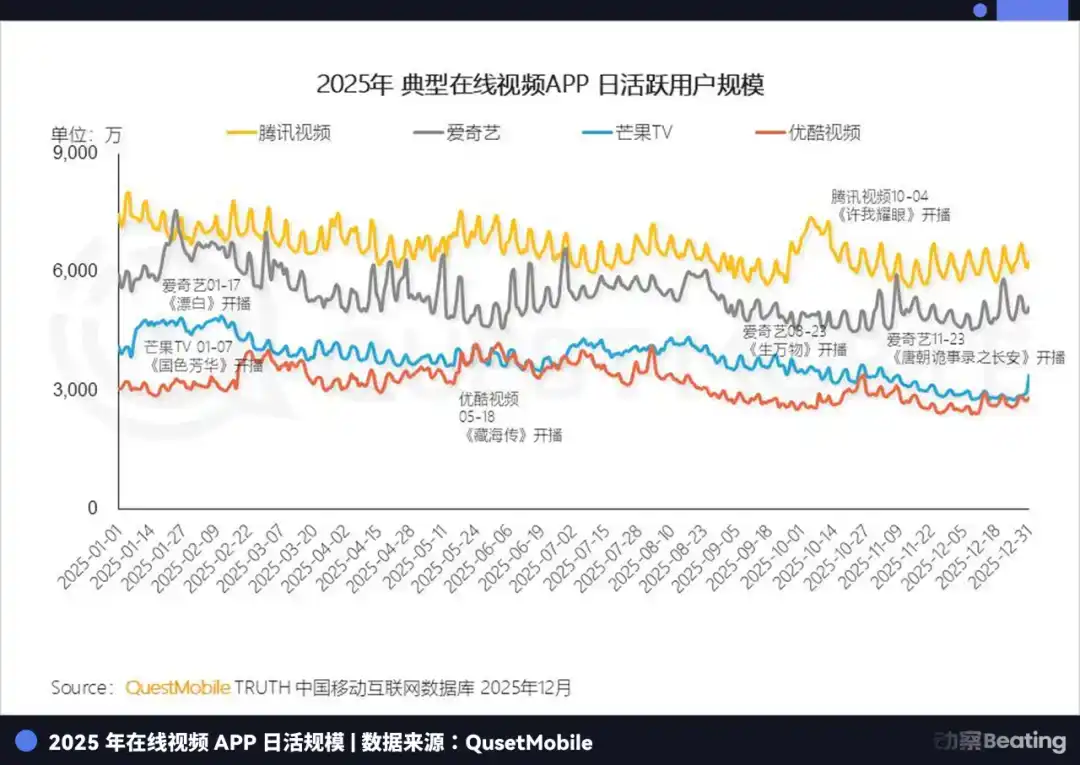
In comparison, Tencent Video is backed by Tencent Holdings. In the first three quarters of 2025, the parent company's revenue was 557.3 billion yuan, a year-on-year increase of 14%. Tencent Video maintains its lead in the long-form video market with over 340 million月活 and 114 million members. Mango TV, relying on Hunan Broadcasting System's content supply chain and low-cost self-production capability, remains stably profitable. iQiyi has neither Tencent's social ecosystem for blood transfusion nor Mango's cost advantage; its situation is the most difficult among the three major long-form video platforms.
But the path of "low cost, high output" has never been a good path in the content industry.

Data shows that the proportion of AI仿真人 short dramas in the Top 100 Anime Drama chart has surged from 7% in 2025 to 38%. The daily新增量级 of authorized AI short dramas might be in the thousands. A three-person team, a few thousand yuan in computing costs, 48 hours to produce a drama—this is the production efficiency of AI short dramas. But in this track, 90% of companies are in a loss-making state, over 60% of works have惨淡播放量, and profitability is difficult. Among tens of thousands of released works, hit titles with播放量破亿 are few and far between.

Low barriers to entry are never a competitive advantage; they only make the track excessively crowded.

The Jazz Singer

On October 6, 1927, the first talking picture, "The Jazz Singer," premiered in New York.

Before this, every movie theater had a band专门为 silent films伴奏. Large-scale theaters had bands of twenty or thirty people; small theaters had at least one pianist. They improvised演奏 based on the情节 on the silver screen—low strings for tragedies, light piano for comedies. It was a craft and a stable livelihood. There were about 22,000 theater musicians in the United States; they had their own union, their own industry standards, their own professional dignity.
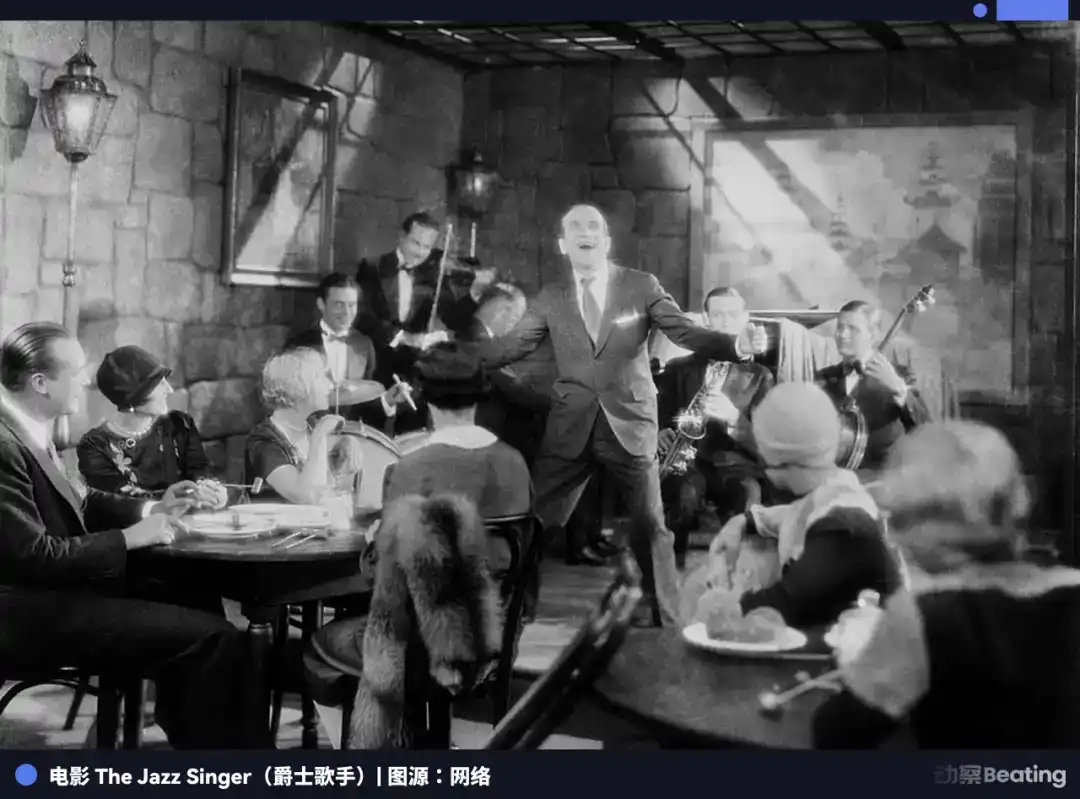
After the advent of talking pictures, these musicians were almost all unemployed within a few years. From 1927 to 1930, the number of U.S. theater musicians plummeted from about 22,000 to less than 5,000. Their union once launched boycotts, organizing musicians to refuse to play in theaters equipped with sound devices, but it was to no avail. The tide of technology does not stop because有人反对.

John Philip Sousa早在 1906 wrote "The Menace of Mechanical Music," predicting that phonographs and mechanical instruments would replace live演奏, turn music into an industrial product, and deprive musicians of their livelihoods.

Today, Gong Yu saying "live-action filming becomes intangible cultural heritage" seems, at first glance, to be the same statement that movie companies made to theater musicians back then.

Every technological revolution needs a "intangible cultural heritage" narrative to complete the handover, beautifying the淘汰的东西 as "precious tradition," then smoothly sweeping it into the museum. The term "intangible cultural heritage" itself is a form of安抚; it acknowledges that you once were, acknowledges that you once had value, but simultaneously宣告 your era is over.

Talkies and the AI Actor Library are superficially similar, but there is an essential difference.

Talkies were a new mode of expression. They allowed films to tell more complex stories, express richer emotions, and ultimately gave audiences more.

Theater musicians lost their jobs, but the art form of film itself became more complete and more powerful.

What is the AI Actor Library? It is not a new mode of expression; it is a cheaper mode of replication. It does not make film and television more complete; it only makes it cheaper. The logic of talkies was to use better technology to tell better stories, attracting more people into theaters. The logic of the AI Actor Library is to use cheaper costs to produce more content, to spend less money.

These are not the same thing.

If iQiyi's AI gamble succeeds, if it wins, then what about the audience?

Stimulation Replaces Empathy, The Folded Reality

The final outcome of the泛滥 of AI film and television is not about replacing anyone, but about quietly changing the mechanism by which humans receive stories and perceive real emotions.

Neuroscience research indicates that when humans watch live performances, mirror neurons in the brain are activated, generating emotional empathy; we feel, to some extent, the emotions the actor is experiencing. This is an ability evolved over tens of thousands of years, the foundation of our understanding of others and building social connections. This is also why a good movie or series can leave people回味 long after it ends, even changing a person's views on certain things.

AI-generated performances can be highly realistic on a technical level, but they lack real experience. An AI-generated character cries because the algorithm calculated that this scene requires crying, not because the character truly experienced something. The human brain can perceive this difference to some extent, which is why the completion rate and payment conversion rate of AI-generated content are far lower than those of live-action content, even if its visuals might be more refined and the plot more "thrilling."

But this perceptual ability is use-it-or-lose-it.

When a generation grows up accustomed to the absolute smoothness and high-frequency stimulation fed by AI, their brains will gradually adapt to this stimulation mode, and their perception threshold for complex, subtle, wrinkled real emotions will become higher and higher. Just like people who长期 eat heavily seasoned food gradually lose the ability to taste bland food.

Marshall McLuhan said "the medium is the massage," meaning that the medium is not just a pipeline for transmitting content; it itself shapes the way we perceive the world. When the logic of content production shifts from "telling a real story" to "using algorithms to calculate the stimulation the audience wants," the medium is no longer a massage but an anesthetic.

This is not singing a挽歌 for "live-action filming," nor is it saying that AI is necessarily bad. Technology itself has no good or evil; the problem lies in what it is used for and under what commercial logic it is大规模推广. A company betting on AI out of financial despair and a creator who truly believes AI can make art better use the same technology, but their motivations are completely different, and the results will be completely different.

Gong Yu said AI could allow actors to take on 4 projects a year instead of 2. The subtext of this statement is that the value of actors lies not in what they experience on set but in how many times their faces are rendered.

But real performance was never about the face. It's about a person, at a specific moment, because of some real experience, making a choice that cannot be predicted. This is something AI cannot calculate.

Only, when audiences are already accustomed to algorithm feeding, will they still need that which cannot be calculated?


Preguntas relacionadas

QWhat is the main reason iQiyi is aggressively adopting AI technology according to the article?

AThe main reason is iQiyi's severe financial situation, with its market value dropping 97% from its peak and facing delisting risks. It is using AI as a new narrative to attract investment, particularly for its upcoming HK listing, by promising lower production costs and higher efficiency.

QHow has the rise of AI-generated actors impacted real actors, particularly extras in Hengdian?

AAI-generated actors have severely impacted extras in Hengdian. Over 85% of short drama crews have switched to using AI for supporting and background roles by Q1 2026, causing the employment rate for real actors in short dramas to plummet from 82% to 29%. This has left approximately 134,000 registered extras competing for only about 800 available positions daily.

QWhat contrasting approach is TikTok's parent company taking compared to iQiyi regarding content creation?

AWhile iQiyi is pushing for AI-generated content to reduce costs, TikTok's parent company, ByteDance, is investing 500 million yuan to specifically fund and support 'real-person short dramas'. They believe content featuring real actors leads to better user retention, completion rates, and long-term payment willingness compared to AI content.

QWhat key financial metrics highlight iQiyi's struggle as mentioned in the article?

AKey financial metrics include a market cap drop from over $31.2 billion at its peak to just $1.36 billion (a 97% decrease), a net loss of 206.3 million yuan in 2025 after previously turning a profit, a 73% plunge in operating profit, and a drastic reduction in free cash flow from over 3.3 billion yuan to under 10 million yuan.

QAccording to the article, what is a fundamental difference between the introduction of sound in film and iQiyi's push for AI actors?

AThe introduction of sound in film was a new form of expression that enhanced storytelling and made the art form more complete and powerful, even though it made some professions obsolete. In contrast, iQiyi's push for AI actors is primarily about creating a cheaper way to replicate content, not about artistic enhancement. It focuses on cost reduction rather than improving the narrative quality or emotional depth of the content.

Lecturas Relacionadas

Trading Reflection: Why Does Trading Cryptocurrencies Become More Miserable the Longer You Do It? In Fact, Your Brain Has Been 'Damaged' by Stress.

Trading Reflection: Why Does Trading Cryptocurrency Become More Miserable Over Time? Your Brain Might Be Damaged by Stress This article explores the often-overlooked yet crucial psychological aspect of trading. It argues that long-term success depends less on intellect and more on the survival capacity of one's nervous system. The core issue is that sustained trading pressure disrupts normal brain chemistry. While initial hope and occasional wins provide dopamine-driven pleasure, repeated losses and constant market exposure trigger chronic cortisol release. This stress hormone, meant for short-term survival, keeps the trader in a perpetual "fight-or-flight" mode. Over time, this erodes sleep quality, depletes patience, and fuels emotional, impulsive decision-making. The author describes a dangerous cycle: fear of missing out leads to overtrading and lowered standards. As losses mount (30%, 50%), trading shifts from a pursuit of profit to a psychological battle for survival. The brain begins to associate prolonged stress with the occasional reward, trapping the trader in an addictive loop. Anxiety becomes a baseline state, and trading turns into a compulsive need to feel something—where green candles offer relief and red ones spark self-loathing. The most powerful move a trader can make, the article concludes, is sometimes to stop entirely—to avoid revenge trading, chasing losses, or seeking dopamine fixes. The key is to step back long enough to ask: is this still about passion, or is it a cage of stress hormones? The market and its opportunities will always return, but a trader who is mentally broken will have nothing left to capitalize on them. The best traders are not necessarily the smartest, but those who preserve their mental well-being long enough to stay in the game. Ultimately, the chase may not be for money, but for relief from the very pressure the game creates.

marsbitHace 57 min(s)

Trading Reflection: Why Does Trading Cryptocurrencies Become More Miserable the Longer You Do It? In Fact, Your Brain Has Been 'Damaged' by Stress.

marsbitHace 57 min(s)

Issued Two Work Badges to Unitree

At the keynote of his speech at the Taipei Music Center, Jensen Huang introduced a humanoid robot named Isaac GR00T. This robot, described as a 'reference design,' is a collaboration: its body comes from Unitree Robotics' H2 Plus, its hands from Singapore's Sharpa, and its 'brain'—the chip and full software stack—is from Nvidia, powered by the Jetson Thor. Huang positioned it as a turnkey solution for universities and researchers, aimed at drastically reducing setup time for experiments. On the same day as this reveal, Unitree Robotics passed its IPO review in Shanghai, seeking to raise 4.2 billion yuan, with a significant portion earmarked for developing its own embodied AI model—its own 'brain.' The article draws a parallel to the smartphone industry, where Qualcomm's 'reference design' led to homogenized hardware and concentrated profits in chips and software. It suggests Nvidia's GR00T initiative follows a similar playbook: by open-sourcing the model and framework, it aims to establish the industry standard, potentially relegating hardware makers to low-margin roles. While currently a body supplier for Nvidia's project, Unitree is actively pursuing its own AI brain, having open-sourced initial models and tested a more advanced one. The company faces a critical window to develop a competitive proprietary system before GR00T becomes the default. The article contrasts this with Tesla's vertically integrated approach for its Optimus robot, which uses in-house chips and benefits from its automotive data and manufacturing scale. It concludes that while the robot body still holds technical value and differentiation, the race for the 'brain' will ultimately define the industry's profit centers and power dynamics.

marsbitHace 1 hora(s)

Issued Two Work Badges to Unitree

marsbitHace 1 hora(s)

Trading

Spot
Futuros

Artículos destacados

Qué es GROK AI

Grok AI: Revolucionando la Tecnología Conversacional en la Era Web3 Introducción En el paisaje de rápida evolución de la inteligencia artificial, Grok AI se destaca como un proyecto notable que une los dominios de la tecnología avanzada y la interacción del usuario. Desarrollado por xAI, una empresa liderada por el renombrado empresario Elon Musk, Grok AI busca redefinir la forma en que interactuamos con la inteligencia artificial. A medida que el movimiento Web3 continúa floreciendo, Grok AI tiene como objetivo aprovechar el poder de la IA conversacional para responder consultas complejas, proporcionando a los usuarios una experiencia que no solo es informativa, sino también entretenida. ¿Qué es Grok AI? Grok AI es un sofisticado chatbot de IA conversacional diseñado para interactuar dinámicamente con los usuarios. A diferencia de muchos sistemas de IA tradicionales, Grok AI abraza una gama más amplia de consultas, incluyendo aquellas que normalmente se consideran inapropiadas o fuera de las respuestas estándar. Los objetivos centrales del proyecto incluyen: Razonamiento Confiable: Grok AI enfatiza el razonamiento de sentido común para proporcionar respuestas lógicas basadas en la comprensión contextual. Supervisión Escalable: La integración de asistencia de herramientas asegura que las interacciones de los usuarios sean monitoreadas y optimizadas para la calidad. Verificación Formal: La seguridad es primordial; Grok AI incorpora métodos de verificación formal para mejorar la confiabilidad de sus resultados. Comprensión de Largo Contexto: El modelo de IA sobresale en retener y recordar un extenso historial de conversaciones, facilitando discusiones significativas y contextualizadas. Robustez Adversarial: Al enfocarse en mejorar sus defensas contra entradas manipuladas o maliciosas, Grok AI busca mantener la integridad de las interacciones de los usuarios. En esencia, Grok AI no es solo un dispositivo de recuperación de información; es un compañero conversacional inmersivo que fomenta un diálogo dinámico. Creador de Grok AI La mente detrás de Grok AI no es otra que Elon Musk, una persona sinónimo de innovación en varios campos, incluyendo la automoción, los viajes espaciales y la tecnología. Bajo el paraguas de xAI, una empresa enfocada en avanzar la tecnología de IA de maneras beneficiosas, la visión de Musk busca remodelar la comprensión de las interacciones de IA. El liderazgo y la ética fundacional están profundamente influenciados por el compromiso de Musk de empujar los límites tecnológicos. Inversores de Grok AI Si bien los detalles específicos sobre los inversores que respaldan a Grok AI son limitados, se reconoce públicamente que xAI, el incubador del proyecto, está fundado y apoyado principalmente por el propio Elon Musk. Las empresas y participaciones anteriores de Musk proporcionan un respaldo robusto, fortaleciendo aún más la credibilidad y el potencial de crecimiento de Grok AI. Sin embargo, hasta ahora, la información sobre fundaciones de inversión adicionales u organizaciones que apoyan a Grok AI no está fácilmente accesible, marcando un área para una posible exploración futura. ¿Cómo Funciona Grok AI? La mecánica operativa de Grok AI es tan innovadora como su marco conceptual. El proyecto integra varias tecnologías de vanguardia que facilitan sus funcionalidades únicas: Infraestructura Robusta: Grok AI está construido utilizando Kubernetes para la orquestación de contenedores, Rust para rendimiento y seguridad, y JAX para computación numérica de alto rendimiento. Este trío asegura que el chatbot opere de manera eficiente, escale efectivamente y sirva a los usuarios de manera oportuna. Acceso a Conocimiento en Tiempo Real: Una de las características distintivas de Grok AI es su capacidad para acceder a datos en tiempo real a través de la plataforma X—anteriormente conocida como Twitter. Esta capacidad otorga a la IA acceso a la información más reciente, permitiéndole proporcionar respuestas y recomendaciones oportunas que otros modelos de IA podrían pasar por alto. Dos Modos de Interacción: Grok AI ofrece a los usuarios una elección entre “Modo Divertido” y “Modo Regular”. El Modo Divertido permite un estilo de interacción más lúdico y humorístico, mientras que el Modo Regular se centra en ofrecer respuestas precisas y exactas. Esta versatilidad asegura una experiencia personalizada que se adapta a diversas preferencias de los usuarios. En esencia, Grok AI une rendimiento con compromiso, creando una experiencia que es tanto enriquecedora como entretenida. Cronología de Grok AI El viaje de Grok AI está marcado por hitos cruciales que reflejan sus etapas de desarrollo y despliegue: Desarrollo Inicial: La fase fundamental de Grok AI tuvo lugar durante aproximadamente dos meses, durante los cuales se realizó el entrenamiento inicial y el ajuste del modelo. Lanzamiento Beta de Grok-2: En un avance significativo, se anunció la beta de Grok-2. Este lanzamiento introdujo dos versiones del chatbot—Grok-2 y Grok-2 mini—cada una equipada con capacidades para chatear, programar y razonar. Acceso Público: Tras su desarrollo beta, Grok AI se volvió disponible para los usuarios de la plataforma X. Aquellos con cuentas verificadas por un número de teléfono y activas durante al menos siete días pueden acceder a una versión limitada, haciendo que la tecnología esté disponible para un público más amplio. Esta cronología encapsula el crecimiento sistemático de Grok AI desde su inicio hasta el compromiso público, enfatizando su compromiso con la mejora continua y la interacción del usuario. Características Clave de Grok AI Grok AI abarca varias características clave que contribuyen a su identidad innovadora: Integración de Conocimiento en Tiempo Real: El acceso a información actual y relevante diferencia a Grok AI de muchos modelos estáticos, permitiendo una experiencia de usuario atractiva y precisa. Estilos de Interacción Versátiles: Al ofrecer modos de interacción distintos, Grok AI se adapta a diversas preferencias de los usuarios, invitando a la creatividad y la personalización en la conversación con la IA. Avanzada Infraestructura Tecnológica: La utilización de Kubernetes, Rust y JAX proporciona al proyecto un marco sólido para asegurar confiabilidad y rendimiento óptimo. Consideración de Discurso Ético: La inclusión de una función generadora de imágenes muestra el espíritu innovador del proyecto. Sin embargo, también plantea consideraciones éticas en torno a los derechos de autor y la representación respetuosa de figuras reconocibles—una discusión en curso dentro de la comunidad de IA. Conclusión Como una entidad pionera en el ámbito de la IA conversacional, Grok AI encapsula el potencial de experiencias transformadoras para los usuarios en la era digital. Desarrollado por xAI y guiado por el enfoque visionario de Elon Musk, Grok AI integra conocimiento en tiempo real con capacidades avanzadas de interacción. Busca empujar los límites de lo que la inteligencia artificial puede lograr mientras mantiene un enfoque en consideraciones éticas y la seguridad del usuario. Grok AI no solo encarna el avance tecnológico, sino que también representa un nuevo paradigma de conversación en el paisaje Web3, prometiendo involucrar a los usuarios con tanto conocimiento hábil como interacción lúdica. A medida que el proyecto continúa evolucionando, se erige como un testimonio de lo que la intersección de la tecnología, la creatividad y la interacción similar a la humana puede lograr.

389 Vistas totalesPublicado en 2024.12.26Actualizado en 2024.12.26

Qué es GROK AI

Qué es ERC AI

Euruka Tech: Una Visión General de $erc ai y sus Ambiciones en Web3 Introducción En el paisaje en rápida evolución de la tecnología blockchain y las aplicaciones descentralizadas, nuevos proyectos emergen con frecuencia, cada uno con objetivos y metodologías únicas. Uno de estos proyectos es Euruka Tech, que opera en el amplio dominio de las criptomonedas y Web3. El enfoque principal de Euruka Tech, particularmente su token $erc ai, es presentar soluciones innovadoras diseñadas para aprovechar las crecientes capacidades de la tecnología descentralizada. Este artículo tiene como objetivo proporcionar una visión general completa de Euruka Tech, una exploración de sus objetivos, funcionalidad, la identidad de su creador, posibles inversores y su importancia dentro del contexto más amplio de Web3. ¿Qué es Euruka Tech, $erc ai? Euruka Tech se caracteriza como un proyecto que aprovecha las herramientas y funcionalidades ofrecidas por el entorno Web3, centrándose en integrar inteligencia artificial dentro de sus operaciones. Aunque los detalles específicos sobre el marco del proyecto son algo elusivos, está diseñado para mejorar la participación del usuario y automatizar procesos en el espacio cripto. El proyecto tiene como objetivo crear un ecosistema descentralizado que no solo facilite transacciones, sino que también incorpore funcionalidades predictivas a través de inteligencia artificial, de ahí la designación de su token, $erc ai. El objetivo es proporcionar una plataforma intuitiva que facilite interacciones más inteligentes y un procesamiento eficiente de transacciones dentro de la creciente esfera de Web3. ¿Quién es el Creador de Euruka Tech, $erc ai? En la actualidad, la información sobre el creador o el equipo fundador detrás de Euruka Tech permanece no especificada y algo opaca. Esta ausencia de datos genera preocupaciones, ya que el conocimiento del trasfondo del equipo es a menudo esencial para establecer credibilidad dentro del sector blockchain. Por lo tanto, hemos categorizado esta información como desconocida hasta que se disponga de detalles concretos en el dominio público. ¿Quiénes son los Inversores de Euruka Tech, $erc ai? De manera similar, la identificación de inversores u organizaciones de respaldo para el proyecto Euruka Tech no se proporciona fácilmente a través de la investigación disponible. Un aspecto que es crucial para los posibles interesados o usuarios que consideren involucrarse con Euruka Tech es la garantía que proviene de asociaciones financieras establecidas o respaldo de firmas de inversión de renombre. Sin divulgaciones sobre afiliaciones de inversión, es difícil sacar conclusiones completas sobre la seguridad financiera o la longevidad del proyecto. De acuerdo con la información encontrada, esta sección también se encuentra en estado de desconocido. ¿Cómo Funciona Euruka Tech, $erc ai? A pesar de la falta de especificaciones técnicas detalladas para Euruka Tech, es esencial considerar sus ambiciones innovadoras. El proyecto busca aprovechar el poder computacional de la inteligencia artificial para automatizar y mejorar la experiencia del usuario dentro del entorno de las criptomonedas. Al integrar IA con tecnología blockchain, Euruka Tech tiene como objetivo proporcionar características como operaciones automatizadas, evaluaciones de riesgo e interfaces de usuario personalizadas. La esencia innovadora de Euruka Tech radica en su objetivo de crear una conexión fluida entre los usuarios y las vastas posibilidades que presentan las redes descentralizadas. A través de la utilización de algoritmos de aprendizaje automático e IA, busca minimizar los desafíos de los usuarios primerizos y optimizar las experiencias transaccionales dentro del marco de Web3. Esta simbiosis entre IA y blockchain subraya la importancia del token $erc ai, que actúa como un puente entre las interfaces de usuario tradicionales y las capacidades avanzadas de las tecnologías descentralizadas. Cronología de Euruka Tech, $erc ai Desafortunadamente, como resultado de la información limitada disponible sobre Euruka Tech, no podemos presentar una cronología detallada de los principales desarrollos o hitos en el viaje del proyecto. Esta cronología, típicamente invaluable para trazar la evolución de un proyecto y entender su trayectoria de crecimiento, no está actualmente disponible. A medida que la información sobre eventos notables, asociaciones o adiciones funcionales se haga evidente, las actualizaciones seguramente mejorarán la visibilidad de Euruka Tech en la esfera cripto. Aclaración sobre Otros Proyectos “Eureka” Es importante señalar que múltiples proyectos y empresas comparten una nomenclatura similar con “Eureka”. La investigación ha identificado iniciativas como un agente de IA de NVIDIA Research, que se centra en enseñar a los robots tareas complejas utilizando métodos generativos, así como Eureka Labs y Eureka AI, que mejoran la experiencia del usuario en educación y análisis de servicio al cliente, respectivamente. Sin embargo, estos proyectos son distintos de Euruka Tech y no deben confundirse con sus objetivos o funcionalidades. Conclusión Euruka Tech, junto con su token $erc ai, representa un jugador prometedor pero actualmente oscuro dentro del paisaje de Web3. Si bien los detalles sobre su creador e inversores permanecen no revelados, la ambición central de combinar inteligencia artificial con tecnología blockchain se presenta como un punto focal de interés. Los enfoques únicos del proyecto para fomentar la participación del usuario a través de la automatización avanzada podrían destacarlo a medida que el ecosistema Web3 progresa. A medida que el mercado cripto continúa evolucionando, los interesados deben mantener un ojo atento a los avances en torno a Euruka Tech, ya que el desarrollo de innovaciones documentadas, asociaciones o una hoja de ruta definida podría presentar oportunidades significativas en el futuro cercano. Tal como está, esperamos más información sustancial que podría revelar el potencial de Euruka Tech y su posición en el competitivo paisaje cripto.

340 Vistas totalesPublicado en 2025.01.02Actualizado en 2025.01.02

Qué es ERC AI

Qué es DUOLINGO AI

DUOLINGO AI: Integrando el Aprendizaje de Idiomas con Web3 e Innovación en IA En una era donde la tecnología redefine la educación, la integración de la inteligencia artificial (IA) y las redes blockchain anuncia una nueva frontera para el aprendizaje de idiomas. Entra DUOLINGO AI y su criptomoneda asociada, $DUOLINGO AI. Este proyecto aspira a fusionar la capacidad educativa de las principales plataformas de aprendizaje de idiomas con los beneficios de la tecnología descentralizada Web3. Este artículo profundiza en los aspectos clave de DUOLINGO AI, explorando sus objetivos, marco tecnológico, desarrollo histórico y potencial futuro, mientras mantiene claridad entre el recurso educativo original y esta iniciativa independiente de criptomoneda. Visión General de DUOLINGO AI En su esencia, DUOLINGO AI busca establecer un entorno descentralizado donde los aprendices puedan ganar recompensas criptográficas por alcanzar hitos educativos en la competencia lingüística. Al aplicar contratos inteligentes, el proyecto tiene como objetivo automatizar los procesos de verificación de habilidades y asignación de tokens, adhiriéndose a los principios de Web3 que enfatizan la transparencia y la propiedad del usuario. El modelo se aparta de los enfoques tradicionales para la adquisición de idiomas al apoyarse en gran medida en una estructura de gobernanza impulsada por la comunidad, permitiendo a los poseedores de tokens sugerir mejoras al contenido del curso y a las distribuciones de recompensas. Algunos de los objetivos notables de DUOLINGO AI incluyen: Aprendizaje Gamificado: El proyecto integra logros en blockchain y tokens no fungibles (NFTs) para representar niveles de competencia lingüística, fomentando la motivación a través de recompensas digitales atractivas. Creación de Contenido Descentralizada: Abre avenidas para que educadores y entusiastas de los idiomas contribuyan con sus cursos, facilitando un modelo de reparto de ingresos que beneficia a todos los contribuyentes. Personalización Impulsada por IA: Al emplear modelos avanzados de aprendizaje automático, DUOLINGO AI personaliza las lecciones para adaptarse al progreso de aprendizaje individual, similar a las características adaptativas que se encuentran en plataformas establecidas. Creadores del Proyecto y Gobernanza A partir de abril de 2025, el equipo detrás de $DUOLINGO AI permanece seudónimo, una práctica frecuente en el paisaje descentralizado de criptomonedas. Esta anonimidad está destinada a promover el crecimiento colectivo y la participación de los interesados en lugar de centrarse en desarrolladores individuales. El contrato inteligente desplegado en la blockchain de Solana anota la dirección de la billetera del desarrollador, lo que significa el compromiso con la transparencia en las transacciones a pesar de que la identidad de los creadores sea desconocida. Según su hoja de ruta, DUOLINGO AI aspira a evolucionar hacia una Organización Autónoma Descentralizada (DAO). Esta estructura de gobernanza permite a los poseedores de tokens votar sobre cuestiones críticas como implementaciones de características y asignaciones del tesoro. Este modelo se alinea con la ética del empoderamiento comunitario que se encuentra en diversas aplicaciones descentralizadas, enfatizando la importancia de la toma de decisiones colectiva. Inversores y Asociaciones Estratégicas Actualmente, no hay inversores institucionales o capitalistas de riesgo identificables públicamente vinculados a $DUOLINGO AI. En cambio, la liquidez del proyecto proviene principalmente de intercambios descentralizados (DEXs), marcando un contraste marcado con las estrategias de financiamiento de las empresas de tecnología educativa tradicionales. Este modelo de base indica un enfoque impulsado por la comunidad, reflejando el compromiso del proyecto con la descentralización. En su libro blanco, DUOLINGO AI menciona la formación de colaboraciones con “plataformas de educación blockchain” no especificadas, destinadas a enriquecer su oferta de cursos. Si bien aún no se han divulgado asociaciones específicas, estos esfuerzos colaborativos sugieren una estrategia para fusionar la innovación blockchain con iniciativas educativas, ampliando el acceso y la participación de los usuarios a través de diversas avenidas de aprendizaje. Arquitectura Tecnológica Integración de IA DUOLINGO AI incorpora dos componentes principales impulsados por IA para mejorar su oferta educativa: Motor de Aprendizaje Adaptativo: Este sofisticado motor aprende de las interacciones de los usuarios, similar a los modelos propietarios de las principales plataformas educativas. Ajusta dinámicamente la dificultad de las lecciones para abordar desafíos específicos de los aprendices, reforzando áreas débiles a través de ejercicios dirigidos. Agentes Conversacionales: Al emplear chatbots impulsados por GPT-4, DUOLINGO AI proporciona una plataforma para que los usuarios participen en conversaciones simuladas, fomentando una experiencia de aprendizaje de idiomas más interactiva y práctica. Infraestructura Blockchain Construido sobre la blockchain de Solana, $DUOLINGO AI utiliza un marco tecnológico integral que incluye: Contratos Inteligentes de Verificación de Habilidades: Esta característica otorga automáticamente tokens a los usuarios que superan con éxito las pruebas de competencia, reforzando la estructura de incentivos para resultados de aprendizaje genuinos. Insignias NFT: Estos tokens digitales significan varios hitos que los aprendices logran, como completar una sección de su curso o dominar habilidades específicas, permitiéndoles intercambiar o mostrar sus logros digitalmente. Gobernanza DAO: Los miembros de la comunidad con tokens pueden participar en la gobernanza votando sobre propuestas clave, facilitando una cultura participativa que fomenta la innovación en las ofertas de cursos y características de la plataforma. Línea de Tiempo Histórica 2022–2023: Conceptualización Los cimientos de DUOLINGO AI comienzan con la creación de un libro blanco, destacando la sinergia entre los avances en IA en el aprendizaje de idiomas y el potencial descentralizado de la tecnología blockchain. 2024: Lanzamiento Beta Un lanzamiento beta limitado introduce ofertas en idiomas populares, recompensando a los primeros usuarios con incentivos en tokens como parte de la estrategia de participación comunitaria del proyecto. 2025: Transición a DAO En abril, se produce un lanzamiento completo de la red principal con la circulación de tokens, lo que provoca discusiones comunitarias sobre posibles expansiones a idiomas asiáticos y otros desarrollos de cursos. Desafíos y Direcciones Futuras Obstáculos Técnicos A pesar de sus ambiciosos objetivos, DUOLINGO AI enfrenta desafíos significativos. La escalabilidad sigue siendo una preocupación constante, particularmente en equilibrar los costos asociados con el procesamiento de IA y mantener una red descentralizada y receptiva. Además, garantizar la creación y moderación de contenido de calidad en medio de una oferta descentralizada plantea complejidades en el mantenimiento de estándares educativos. Oportunidades Estratégicas Mirando hacia adelante, DUOLINGO AI tiene el potencial de aprovechar asociaciones de micro-certificación con instituciones académicas, proporcionando validaciones verificadas en blockchain de habilidades lingüísticas. Además, la expansión entre cadenas podría permitir que el proyecto acceda a bases de usuarios más amplias y a ecosistemas blockchain adicionales, mejorando su interoperabilidad y alcance. Conclusión DUOLINGO AI representa una fusión innovadora de inteligencia artificial y tecnología blockchain, presentando una alternativa centrada en la comunidad a los sistemas tradicionales de aprendizaje de idiomas. Si bien su desarrollo seudónimo y su modelo económico emergente traen ciertos riesgos, el compromiso del proyecto con el aprendizaje gamificado, la educación personalizada y la gobernanza descentralizada ilumina un camino hacia adelante para la tecnología educativa en el ámbito de Web3. A medida que la IA continúa avanzando y el ecosistema blockchain evoluciona, iniciativas como DUOLINGO AI podrían redefinir cómo los usuarios se involucran con la educación lingüística, empoderando comunidades y recompensando la participación a través de mecanismos de aprendizaje innovadores.

383 Vistas totalesPublicado en 2025.04.11Actualizado en 2025.04.11

Qué es DUOLINGO AI

Discusiones

Bienvenido a la comunidad de HTX. Aquí puedes mantenerte informado sobre los últimos desarrollos de la plataforma y acceder a análisis profesionales del mercado. A continuación se presentan las opiniones de los usuarios sobre el precio de AI (AI).

活动图片












