After a 97% Plunge, World Raises $65 Million OTC in Deep Bear Market, Brewing a 'Big Move'?

marsbitPublicado a 2026-03-31Actualizado a 2026-03-31

Resumen

World Foundation announced on March 28 that it completed a $65 million OTC sale of WLD tokens at an average price of $0.2719. The transaction involved four counterparties, with $25 million of the tokens subject to a 6-month lock-up. Proceeds will support core operations, R&D, Orb hardware production, and ecosystem growth. WLD’s price has fallen over 97% from its all-time high of around $11.8 in March 2024, currently trading near $0.27. The decline reflects broader market conditions, regulatory scrutiny on biometric data, and ongoing token unlocks. Approximately 532 million WLD tokens (worth ~$1.48 million) are unlocked daily, creating consistent selling pressure. Amid the bear market, World published a research paper highlighting its privacy-preserving human identity verification system, combining iris-scanning Orb hardware with SMPC and ZKP technologies. The project aims to establish a Proof-of-Human (PoH) infrastructure critical for distinguishing humans from AI in the digital age. On April 17, World will host the "Lift Off" global event in San Francisco featuring Sam Altman and CEO Alex Blania, expected to showcase World ID advancements and potential OpenAI integration.

Original Author: Ma He, Foresight News

On March 28, the World Foundation announced the completion of an OTC sale of WLD tokens totaling $65 million, with an average transaction price of $0.2719. The deal involved four counterparties, with the first settlement completed on March 20, 2026. Among these, $25 million worth of WLD tokens are subject to a 6-month lock-up period. The official statement indicated that the proceeds will be directly used for the project's core operations, R&D investments, Orb hardware manufacturing, and ecosystem development. All settlements were executed through the multi-signature address 0xE797 of World Assets.

In the current deep bear market environment, completing a token transaction of tens of millions of dollars is quite rare. The last major token sale by the World Foundation dates back to May 2025, when its subsidiary World Assets sold $135 million worth of WLD tokens to early supporters a16z and Bain Capital Crypto at market prices.
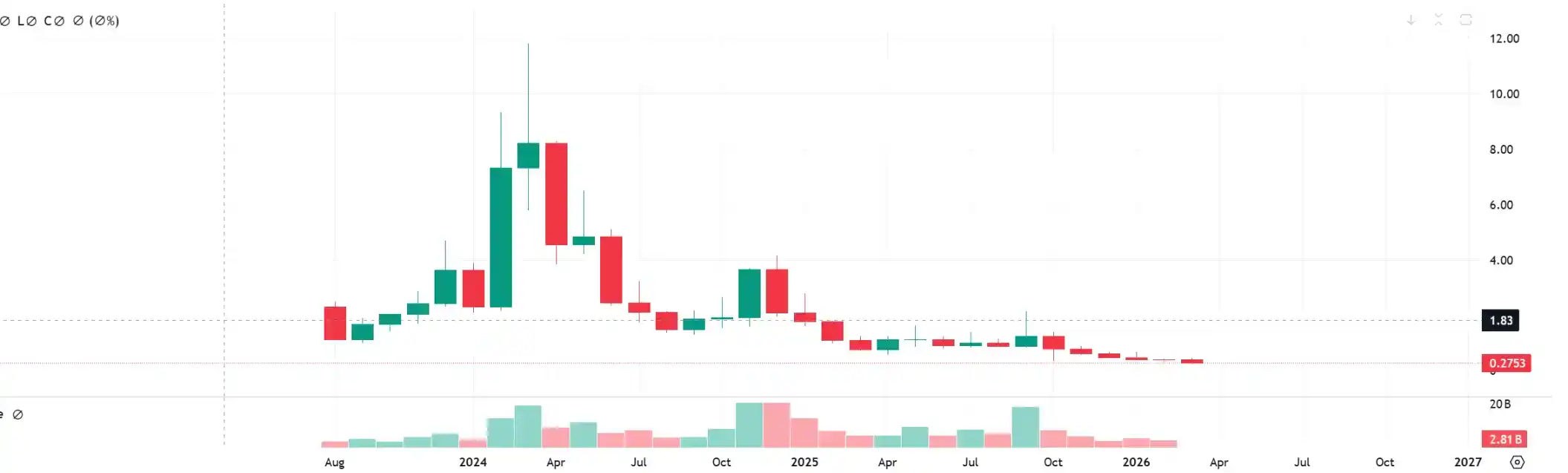
Looking back at WLD's complete price trajectory in this cycle, it serves as a textbook case from frenzy to reality. In July 2023, Worldcoin (now renamed World) officially launched WLD. Backed by Sam Altman's personal endorsement, the AI boom, and the unique narrative of "Proof of Human Uniqueness," it quickly became a market focus.

In March 2024, driven by the Bitcoin halving cycle and resonance with AI concepts, the price of WLD surged within a single month, reaching an all-time high of approximately $11.8. Its market capitalization once approached $10 billion. That year, global users showed unprecedented enthusiasm for registering World IDs through Orb iris scanning, and the project was regarded as the top contender for Web3 identity infrastructure.

However, after the peak, it soon fell into silence. In the second half of 2024, with the overall crypto market correction, strict scrutiny from regulatory bodies like the EU on biometric data, and the emergence of the project's own large-scale unlocking pressure, the price of WLD began to plummet.

Throughout 2025, the price of WLD fluctuated repeatedly in the range of $0.5 to $1.5. Although the adoption rate of iris scanning steadily advanced, it fell far short of early expectations, and user growth significantly decoupled from narrative hype. Entering 2026, WLD continued to bottom out, recently touching a new low of $0.2433 and currently hovering around $0.27, representing a cumulative drop of over 97% from its ATH.

In this cycle, the price movement of WLD resembles the trilogy of most altcoins: concept-driven → supply pressure → real-world test. Early premiums were mainly driven by the Altman IP and the AI trend, while later stages were suppressed by continuous unlocking and macro tightening.

Interestingly, just before announcing the large OTC sale, on March 25, World's official website published a research report titled "Private Proof of Human: Critical Infrastructure for Humanity in a World with Advanced AI." The article directly addresses the core pain point of the AI agent era: how to establish a reliable and privacy-preserving "Proof of Human" infrastructure in a digital world flooded by machines.

The paper elaborates on the technical solution combining Orb iris scanning hardware with Secure Multi-Party Computation (SMPC) and Zero-Knowledge Proofs (ZKP). This approach can efficiently verify human uniqueness while completely avoiding the leakage of personal biometric data, offering more foresight and security compared to traditional facial recognition or passport verification. This solution is positioned as the future foundation of internet trust, effectively countering deepfakes and AI bot attacks.

On March 26, Marc Andreessen, co-founder of a16z, shared this paper on platform X with a brief yet weighty comment: Time to prove human.
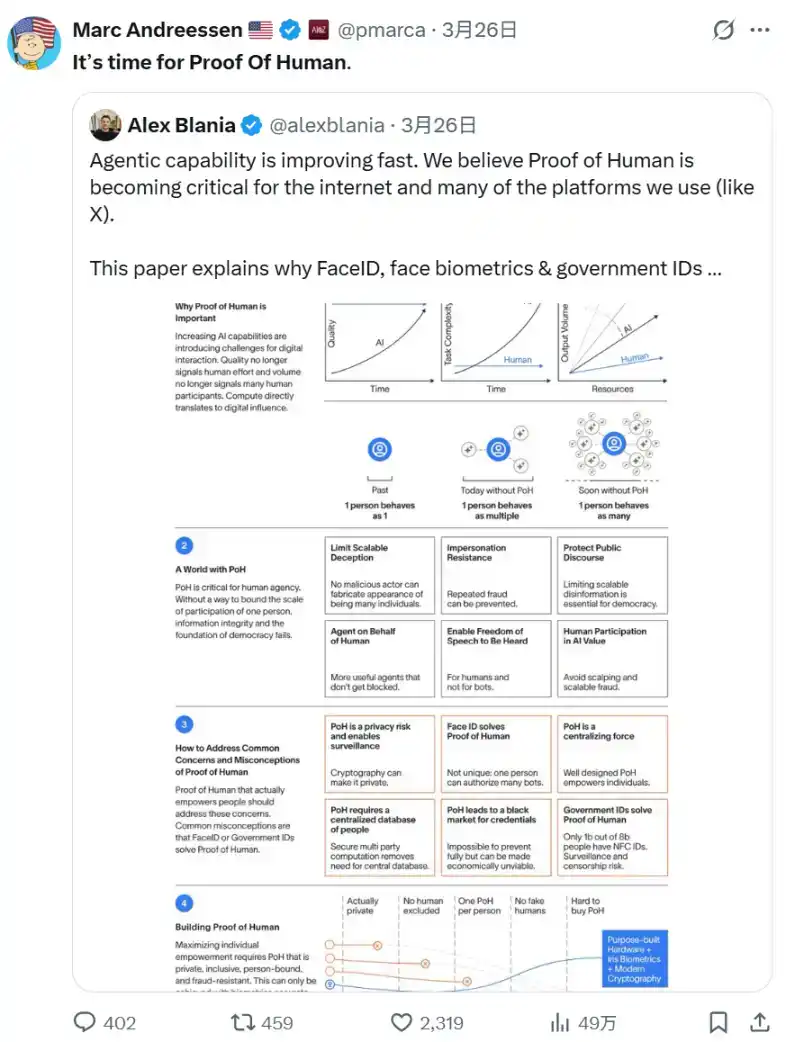
In the current era where AI is reshaping productivity, PoH will become a necessity to distinguish humans from machines and rebuild the trust layer of the digital economy.

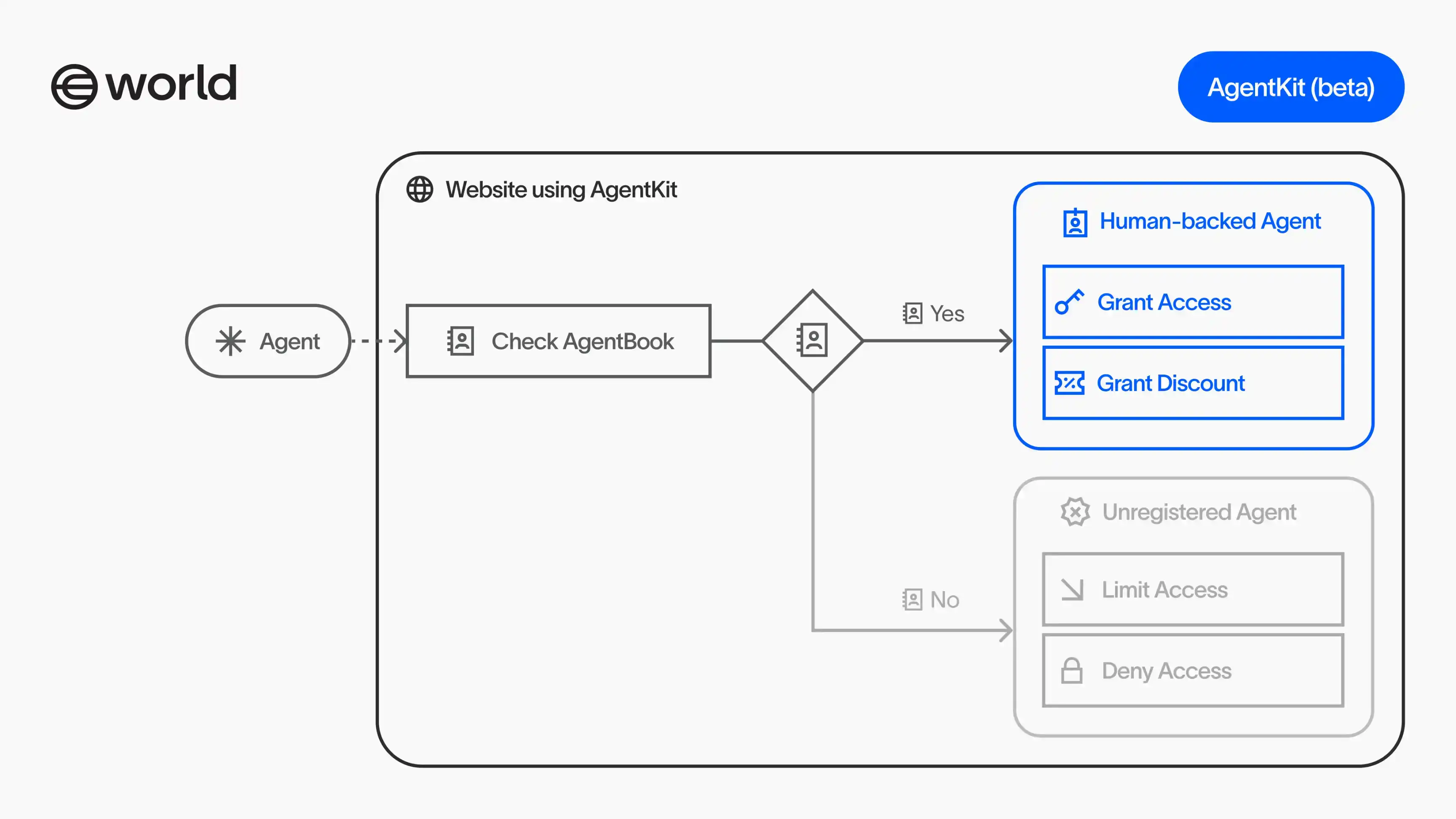
On March 17, World launched AgentKit. Its working principle involves Agents completing registration via World ID proof, linking a wallet to an anonymous human identity. The agent signs a standard identity verification challenge at a protected endpoint, and the agent's signature is matched with its associated human identity. Access is granted upon a successful match. The official application scenarios state that AgentKit agents can also be used for privacy protection, ticketing systems, access frequency limiting, and preventing Sybil attacks.
On April 17, World will host the "Lift Off" World ID global launch event in San Francisco, with Sam Altman personally attending and co-hosting alongside World CEO Alex.
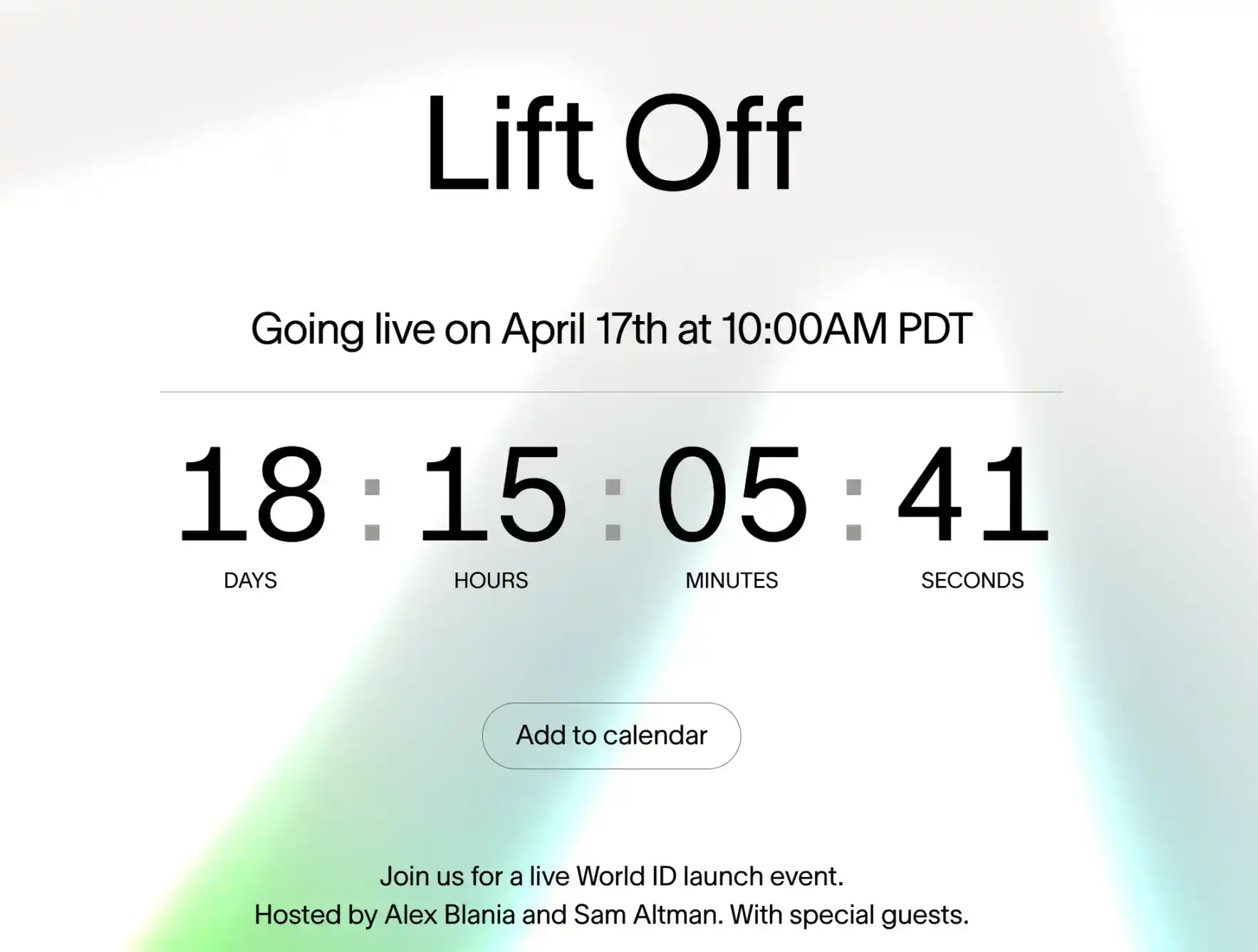
The event will focus on the latest developments of World ID, Orb hardware iterations, and application scenarios for human verification in the AI era. Altman's presence itself symbolizes top-tier influence and confidence and may signal potential synergy between OpenAI and World—AI agents need authentic human identity endorsement, and World ID恰好 provides a decentralized solution.

Currently, WLD's market capitalization is $1.346 billion, with an FDV of $2.758 billion. The proportion of unlocked tokens is 48.80%.
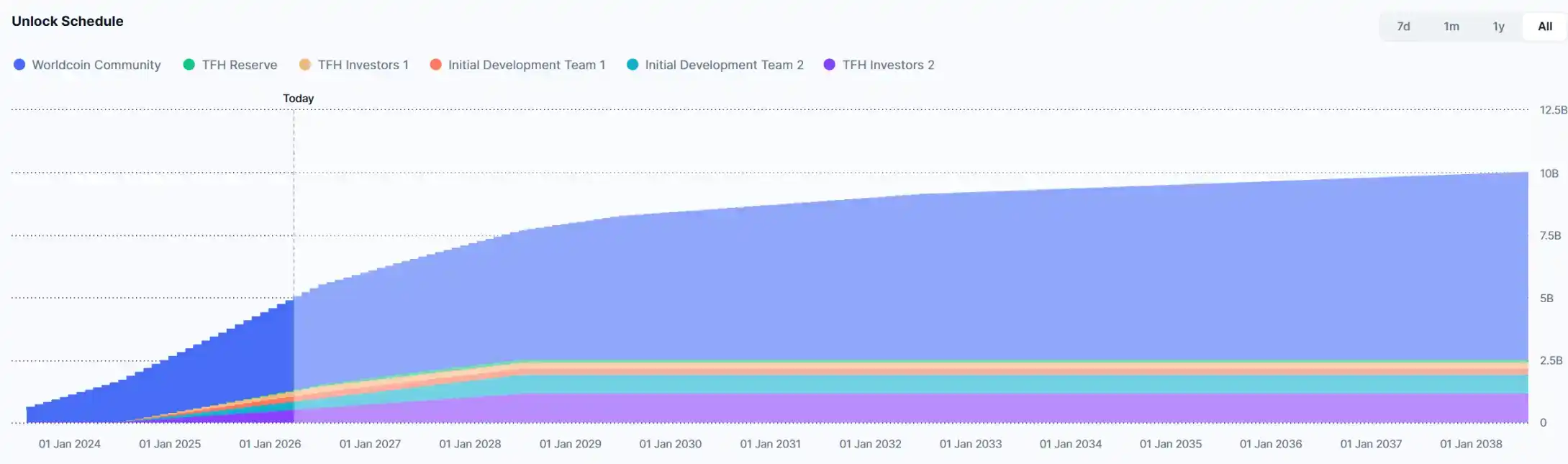
Additionally, WLD continues to unlock 0.05% of the maximum supply daily, approximately 5.32 million tokens, valued at about $1.479 million. Calculated at this rate, the value of tokens unlocked monthly is approximately $44.369 million, which is expected to continue exerting significant selling pressure on the market.


Criptos en tendencia

Preguntas relacionadas

QWhat was the total amount of WLD tokens sold in the recent OTC transaction and at what average price?

AThe World Foundation completed an OTC sale of WLD tokens totaling $65 million at an average price of $0.2719 per token.

QWhat are the primary uses of the funds raised from the OTC sale, as stated by the official announcement?

AAccording to the announcement, the funds will be used for the project's core operations, research and development, Orb hardware manufacturing, and ecosystem development.

QWhat is the significance of the research paper titled 'Private Proof of Human: Critical Infrastructure for Humanity in a World with Advanced AI' published by World?

AThe research paper details a technical solution using Orb iris scanning hardware combined with Secure Multi-Party Computation (SMPC) and Zero-Knowledge Proofs (ZKP) to verify human uniqueness while preventing the leakage of personal biometric data. It is positioned as a foundational trust infrastructure for the future internet to combat deepfakes and AI bot attacks.

QWhat major event is World hosting on April 17th in San Francisco, and who are the key figures expected to attend?

AWorld is hosting the 'Lift Off' World ID global launch event in San Francisco on April 17th. Sam Altman and World CEO Alex are expected to attend and co-host the event.

QWhat is the current fully diluted valuation (FDV) of WLD and what percentage of the total token supply has been unlocked?

AThe current fully diluted valuation (FDV) of WLD is $2.758 billion, and 48.80% of the total token supply has been unlocked.

Lecturas Relacionadas

As Consensus Accelerates, What Are Young Investors Betting On?

Title: As Consensus Forms Faster, What Are Young Investors Betting On? In the rapid evolution of tech investment, a new generation of young investors is navigating a landscape where AI, robotics, commercial aerospace, and quantum computing are advancing simultaneously. Traditional investment logic based on financial models is giving way to a need for deep technical understanding and the ability to act before industry consensus forms. An analysis of trends from the "WAIC FUTURE TECH" list of young investment leaders reveals key shifts in focus. The first major trend is the movement of AI from the digital screen into the physical world. Investment is shifting from large language models and chatbots towards embodied AI, robotics, AI hardware, and edge computing. While demonstrations generate excitement, the real challenge lies in achieving scalable, reliable, and cost-effective delivery in complex real-world environments like factories and logistics. Success depends not just on algorithms but on the integration of sensors, actuators, and control systems. Second, the competitive focus for large models is moving beyond raw capability toward building an "intelligence flywheel." The goal is to create self-reinforcing systems where user interaction generates data, improving the model, which in turn enhances the user experience and attracts more engagement. Companies that successfully embed AI into workflows to create these closed-loop systems can build lasting value that isn't easily erased by the next model upgrade. Third, facing a potential bottleneck in high-quality human-generated data, investors are looking at new underlying technologies. Reinforcement learning and self-play, as demonstrated by AlphaGo Zero, offer paths for AI to generate its own experience. Scientific foundation models, which aim to build general AI capabilities for fields like life sciences and materials discovery, represent a non-consensus direction that could unlock new frontiers of knowledge and data. Finally, in deep-tech areas like quantum computing, commercial aerospace, and space-based infrastructure, patient capital is essential. These fields have long, uncertain development and validation cycles involving complex engineering, supply chains, and regulations. Investment here requires a long-term view, focusing on foundational team capabilities and the eventual emergence of market demand, even if commercial returns are distant. Collectively, these trends illustrate how young investors are adapting to a new era. They are learning to make earlier, technically-informed judgments, balance hype with real-world viability, and provide the patient capital needed to build the deep-tech foundations of the future.

marsbitHace 11 min(s)

As Consensus Accelerates, What Are Young Investors Betting On?

marsbitHace 11 min(s)

Can Japan Buy Growth with AI? Will the Bond Market Believe It?

Japan's cabinet has introduced the 2026 Basic Policy on Economic and Fiscal Management and Reform, shifting its primary fiscal target. The new framework moves away from the traditional annual primary balance goal and instead prioritizes a stable reduction of the debt-to-GDP ratio. This change is tied to a strategy of increased "responsible proactive fiscal" spending, aiming to boost long-term growth through investments in strategic sectors like AI, semiconductors, energy, and robotics. The government estimates total public and private investment in 62 key technologies could exceed 370 trillion yen by 2040. The market reaction has been mixed and cautious. While equity markets may respond to policy signals, bond markets are focused on fiscal credibility. Concerns center on whether the weakening of the clear primary balance anchor could lead to looser fiscal discipline. If investors doubt that these strategic investments will generate sufficient productivity gains, tax revenue, and nominal growth to outpace rising interest costs, they may demand higher yields on Japanese Government Bonds (JGBs). Recent volatility in the yen and JGB yields, with the 10-year yield briefly reaching 2.9%, reflects this skepticism. The success of this new framework hinges on two factors: whether Japan can achieve a nominal growth rate consistently higher than its long-term interest rates, and whether future budgets demonstrate disciplined control over bond issuance. The government's narrative is that strategic investment is essential to break Japan's cycle of low growth, aging, and labor shortages. However, the bond market will continuously assess the credibility of this plan, pricing the risk that it may represent fiscal expansion rather than a viable growth strategy.

marsbitHace 48 min(s)

Can Japan Buy Growth with AI? Will the Bond Market Believe It?

marsbitHace 48 min(s)

Misjudged A-Shares: Resilience, Expectations, and Confidence

China's A-share market recently faced selling pressure, especially in tech sectors, initially triggered by a global tech sell-off that began in South Korea. However, the article argues this is a case of "mistaken injury" and highlights the market's underlying resilience. This resilience stems from three main pillars: **1) Tech Sector Fundamentals:** Unlike Korea's market dominated by a few memory chip stocks, China's tech sector is diversified across computing, communications, electronics, and semiconductors, supported by dual narratives of global AI supply chains and domestic substitution. Core areas like optical modules and fiber optics continue to show strong earnings growth. **2) "National Team" Support:** State-backed institutions and large corporations have made significant market purchases and announced buybacks, providing liquidity and signaling confidence. This is seen as a stabilizing policy signal, often associated with market bottoms. **3) Broader Market Pillars:** Other major sectors are showing endogenous recovery momentum. Consumer stocks benefit from stabilizing CPI and signs of sector recovery (e.g., liquor price hikes). Cyclical sectors like aluminum have high earnings, potential price increases due to tight supply, and low valuations. The financial sector offers stable dividends and low valuations. The conclusion is that the sell-off was driven by external contagion, not a collapse in fundamentals. With strong policy support and recovering momentum across key sectors, the A-share market possesses the toughness to regain stability.

marsbitHace 1 hora(s)

Misjudged A-Shares: Resilience, Expectations, and Confidence

marsbitHace 1 hora(s)

Trading

Spot

Artículos destacados

Cómo comprar MOVE

¡Bienvenido a HTX.com! Hemos hecho que comprar Movement (MOVE) sea simple y conveniente. Sigue nuestra guía paso a paso para iniciar tu viaje de criptos.Paso 1: crea tu cuenta HTXUtiliza tu correo electrónico o número de teléfono para registrarte y obtener una cuenta gratuita en HTX. Experimenta un proceso de registro sin complicaciones y desbloquea todas las funciones.Obtener mi cuentaPaso 2: ve a Comprar cripto y elige tu método de pagoTarjeta de crédito/débito: usa tu Visa o Mastercard para comprar Movement (MOVE) al instante.Saldo: utiliza fondos del saldo de tu cuenta HTX para tradear sin problemas.Terceros: hemos agregado métodos de pago populares como Google Pay y Apple Pay para mejorar la comodidad.P2P: tradear directamente con otros usuarios en HTX.Over-the-Counter (OTC): ofrecemos servicios personalizados y tipos de cambio competitivos para los traders.Paso 3: guarda tu Movement (MOVE)Después de comprar tu Movement (MOVE), guárdalo en tu cuenta HTX. Alternativamente, puedes enviarlo a otro lugar mediante transferencia blockchain o utilizarlo para tradear otras criptomonedas.Paso 4: tradear Movement (MOVE)Tradear fácilmente con Movement (MOVE) en HTX's mercado spot. Simplemente accede a tu cuenta, selecciona tu par de trading, ejecuta tus trades y monitorea en tiempo real. Ofrecemos una experiencia fácil de usar tanto para principiantes como para traders experimentados.

303 Vistas totalesPublicado en 2024.12.13Actualizado en 2026.06.02

Cómo comprar MOVE

Discusiones

Bienvenido a la comunidad de HTX. Aquí puedes mantenerte informado sobre los últimos desarrollos de la plataforma y acceder a análisis profesionales del mercado. A continuación se presentan las opiniones de los usuarios sobre el precio de MOVE (MOVE).

活动图片












