Just Now, OpenAI's Chief Futurist Departed, Once Called a Jackass by Musk

marsbitPublicado a 2026-07-08Actualizado a 2026-07-08

Resumen

Just now, OpenAI's Chief Futurist, Joshua Achiam, announced his departure from the company via X. Having joined as a 25-year-old intern in 2017, he spent nine years at OpenAI, evolving from an AI safety research scientist to leading the Mission Alignment team. Earlier this year, that team was dissolved, and Achiam transitioned to the newly created role of Chief Futurist, positioned at the intersection of AI safety and policy to study AGI's long-term risks and opportunities. In his departure statement, Achiam called his time a "graduation," reflecting on the immense progress from AI that couldn't converse to systems solving scientific problems. He expressed optimism about a future of peace, prosperity, and possibility, closing with "To safe AGI." His tenure was notably marked by a 2018 incident where he publicly challenged Elon Musk—then still with OpenAI—on safety compromises if Musk pursued AGI at Tesla, leading Musk to call him a "jackass." This became an internal legend, with colleagues later giving him a trophy inscribed, "To safety, never stop being that jackass." Achiam's exit follows a pattern of prominent safety and alignment experts leaving OpenAI, including Jan Leike and others who joined rivals like Anthropic or started non-profits. His departure coincides with OpenAI's internal efforts to more tightly integrate its research and policy teams, and the recent hiring of former White House AI advisor Dean Ball. Achiam did not cite a specific reason for leaving but ...

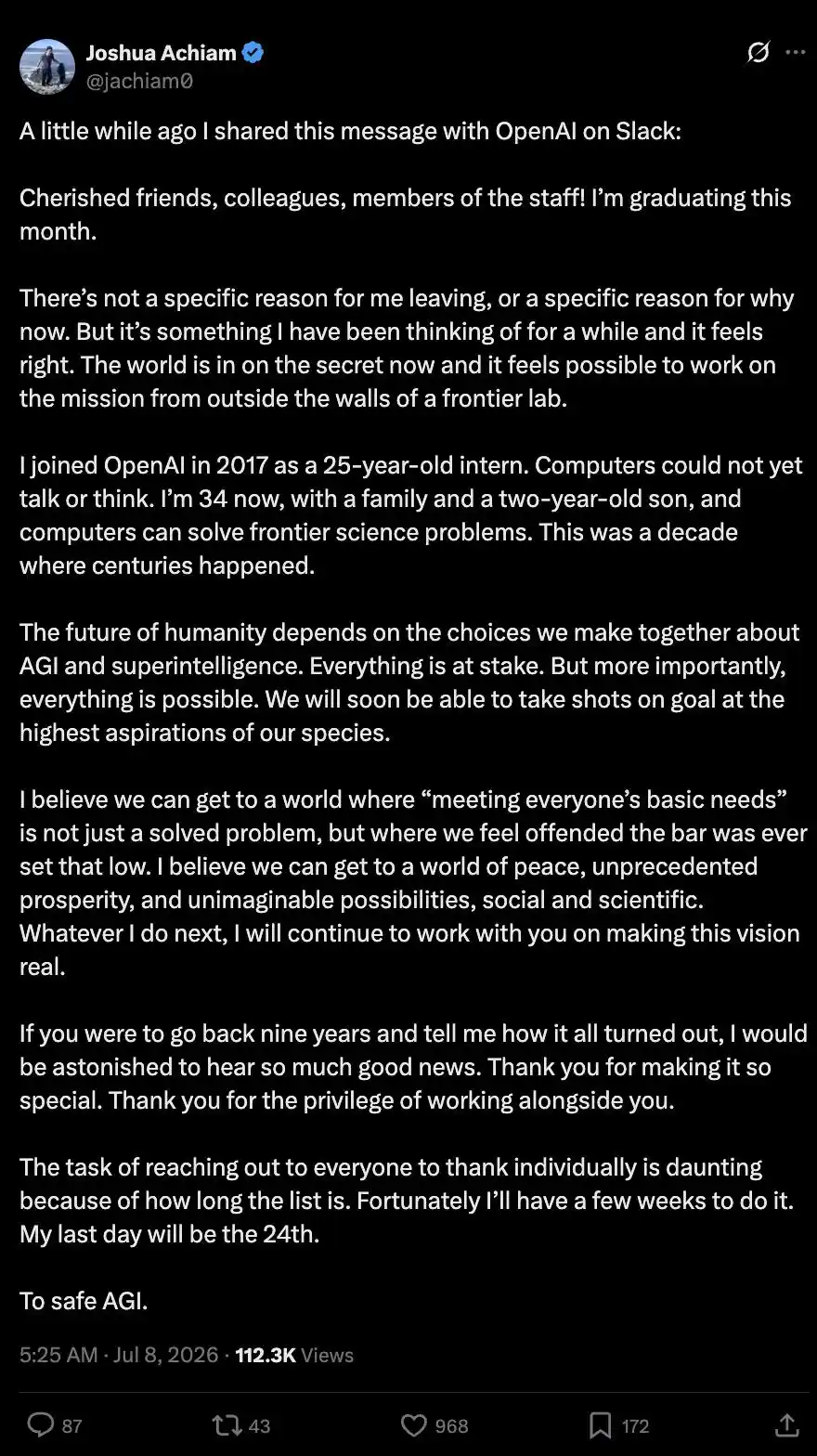
Just now, OpenAI's Chief Futurist Joshua Achiam announced his departure on X.
This is not an ordinary employee turnover.

Within OpenAI, the position of Chief Futurist sits between AI safety, policy, and the company's mission, responsible for studying the risks and opportunities that a continuously strengthening AI might bring to the world.

And Joshua Achiam was one of the key figures on OpenAI's safety and mission line.

Nine years ago in 2017, he joined OpenAI as an intern. In the early days, he was a research scientist focused on AI safety, conducting research on safety constraints in deep reinforcement learning.

Later, he led OpenAI's Mission Alignment team, responsible for upholding the company's original mission statement:

Ensure that AGI benefits all of humanity.

In February of this year, OpenAI disbanded the Mission Alignment team, and Joshua transitioned to the role of the company's Chief Futurist.
However, just five months later, Joshua announced that he would officially leave the company on July 24, after nine years.

As for the reason for his departure, Joshua did not reveal much.

He only stated that his departure was not due to a specific incident or a spur-of-the-moment decision, but something he had been contemplating for a long time.

For Safe AGI

In a long post on X, Joshua described this departure as "graduation."

He wrote that he joined OpenAI in 2017 as a 25-year-old intern (a graduate of UC Berkeley). At that time, computers could not truly converse with people, let alone think.

Now, he is 34, a father of a 2-year-old, and computers have begun solving cutting-edge scientific problems.

Joshua likened these nine years to "a decade where centuries of change happened."

Regarding the future, he remains optimistic.

I believe we can create a world where 'meeting everyone's basic needs' is no longer a problem to solve; instead, we would feel ashamed for setting the standard so low. I believe we can achieve a world filled with peace, unprecedented prosperity, and all sorts of unimaginable social and scientific possibilities. Whatever I do next, I will continue to work alongside you to make this vision a reality.

Finally, he concluded with a phrase:

To safe AGI.

This phrase also resonates with his position at OpenAI over the past nine years.

According to WIRED, OpenAI has not yet announced who will succeed Joshua. This position sits at the intersection of the company's AI safety and policy teams, with work including researching the potential harms and benefits of the rise of AI.

Previously, Joshua had also collaborated with senior leaders like OpenAI's Head of Global Affairs, Chris Lehane, to promote government regulation aligned with OpenAI's mission.

In other words, he was not just a "futurist" who made predictions.

More accurately, he was doing something else within OpenAI: constantly reminding the company of that old question as model capabilities charge forward.

Where exactly is this road ultimately leading?

The Man Who Interrupted Musk

Looking back at Joshua's OpenAI career, the most dramatic moment occurred in 2018.

During the global court case between Musk and OpenAI in April-May of this year, Joshua testified, recalling a farewell speech Musk gave in 2018 before leaving OpenAI:

At that time, he had interrupted Musk, pointing out that if planning to develop AGI at Tesla, it might come at the cost of safety.

It is said that Musk immediately called him a "jackass."

Later, this incident became something of an "urban legend" within OpenAI.

Dario Amodei, now CEO of Anthropic, and David Luan, who later became head of Amazon's AGI lab, even gifted Achiam a golden trophy engraved with the words:

"For safety, never stop being that jackass."

Whenever a Safety Leader Departs, OpenAI...?

On Reddit, users quickly placed this event into OpenAI's "safety lead departure list."

Someone joked:

Ilya left, Jan left, and now Joshua left. Every time the person responsible for alignment leaves, something seems to happen at OpenAI.

This meme is certainly an exaggeration.

But over the past two years, there have indeed been many changes in OpenAI's safety line.

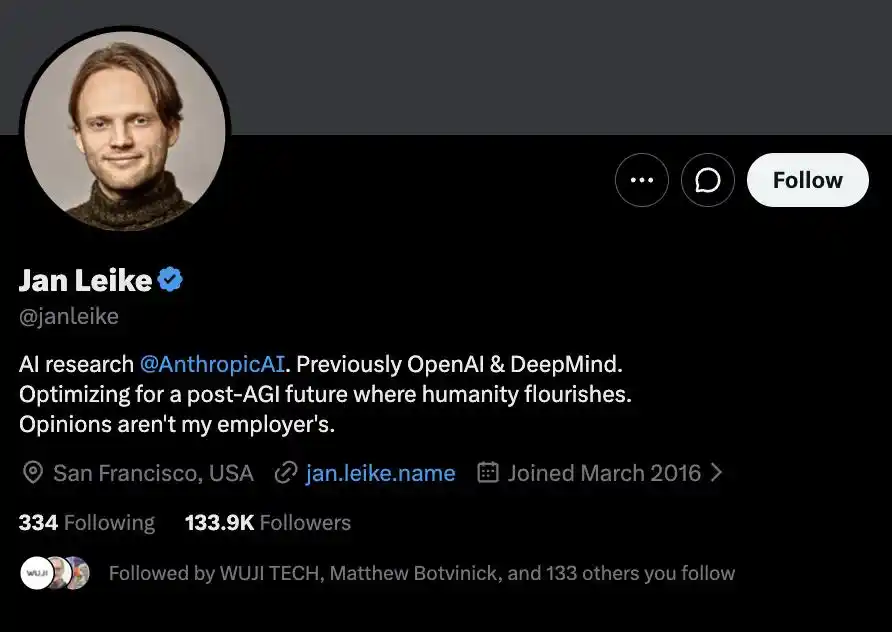
The Jan mentioned by the netizen is Jan Leike, who co-led OpenAI's Superalignment team, researching how to keep advanced AI models under human control. In 2024, he left OpenAI to join Anthropic.
In the same year, OpenAI's Policy Research Lead Miles Brundage, and Steven Adler, who had been responsible for researching dangerous capabilities of AI models, also left one after another, going on to found non-profit organizations pushing for stricter safety and security standards for AI labs.

Andrea Vallone, who was responsible for researching how ChatGPT responds to users in psychological or emotional distress, also left OpenAI at the end of 2025, joining A Corp, the team where her former colleague Jan Leike works.

Joshua is the latest name on this chain of departures.

Meanwhile, OpenAI itself is also adjusting the relationship between safety, research, and policy.

WIRED mentions that over the past year, OpenAI has been trying to bring AI research teams and policy teams closer together, hoping to develop rules and standards that better anticipate technological development. Some researchers, including Boaz Barak, Noam Brown, and Adrien Ecoffet, have also started participating more in policy-related work.

On another front, former White House AI advisor Dean Ball joined OpenAI this week as the company's Head of Strategic Futures. He will have a brief handover with Joshua and is also expected to continue collaborating with researchers and policy leads.

This makes Joshua's departure even more微妙 (subtle/delicate).

On one hand, OpenAI is tightening the bond between "safety" and "policy"; on the other hand, the person who once led Mission Alignment and later served as Chief Futurist chooses to walk out of the lab at this moment.

Joshua wrote in his departure letter: The world already knows the secret (of achieving AGI). Now, it is possible to advance this mission from outside the walls of the frontier lab.

This might be the most intriguing sentence in the whole affair.

Over the past decade, the pace of AI development has indeed been exhilarating. OpenAI has long ceased to be just that small research lab, transforming into a new kind of institution that must simultaneously face products, capital, policy, courts, and the public.

But ultimately, the past decade is just a small segment in the journey of AI. The road ahead may be even longer.

Long enough to grind any Goliath down to a dwarf.

Reference Links

[1]https://x.com/jachiam0/status/2074605703281693175

[2]https://www.wired.com/story/openai-chief-futurist-joshua-achiam-is-leaving-the-company/

This article is from the WeChat public account "Quantum Bit", author: henry

Criptos en tendencia

Preguntas relacionadas

QWho is Joshua Achiam and what was his role at OpenAI?

AJoshua Achiam was the Chief Futurist at OpenAI. He previously led the Mission Alignment team and was a key figure in AI safety and policy, responsible for studying the risks and opportunities of advanced AI.

QWhat was the most dramatic incident involving Joshua Achiam and Elon Musk?

AIn 2018, during a farewell speech before Elon Musk left OpenAI, Joshua Achiam interrupted him, pointing out that developing AGI at Tesla might compromise safety. Musk reportedly called him a 'jackass' in response.

QWhat is the significance of the 'jackass' incident within OpenAI?

AThe incident became an internal legend at OpenAI. Dario Amodei and David Luan even gave Achiam a golden trophy inscribed with: 'For safety, never stop being that jackass,' highlighting a culture that valued challenging assumptions for safety's sake.

QAccording to the article, what pattern is observed when OpenAI's safety leaders leave?

AThe article mentions a pattern, albeit exaggerated, where significant events at OpenAI seem to follow the departure of key alignment and safety figures, such as Ilya Sutskever, Jan Leike, and now Joshua Achiam.

QHow did Joshua Achiam describe his departure and his outlook on the future of AI?

AJoshua Achiam described his departure as a 'graduation.' He expressed optimism about creating a future of peace, prosperity, and scientific possibilities, ending his statement with 'To safe AGI.'

Lecturas Relacionadas

Collateral Dollars: How Does a 'Second-Layer Dollar' Above Stablecoins Form?

Collateral Dollars: How Does a "Second Layer of Dollars" Form on Top of Stablecoins? Most assume stablecoins replicate Eurodollar functions, expanding the offshore dollar system. However, stablecoins primarily replace specific functions like operational dollar balances for settlement. They do not inherently create new dollar credit; they substitute existing claims. The key question is: what happens when financial intermediaries use stablecoins as collateral to create a new layer of dollar-denominated claims? This "collateral dollar" channel operates through secured lending, not direct money creation. A money-like event only occurs when a liability issued against the controlled stablecoin is funded, rolled over, or accepted at near-par value by another balance sheet. The discount (haircut) prices the gap between "effective control over the token" and "reliable convertibility to bank dollars." Elasticity stems not from the stablecoin itself but from the liability issued against it and the willingness of third-party balance sheets to treat that liability as a near-par asset. Compared to the traditional Eurodollar system—where elasticity originates from bank deposit creation—the stablecoin collateral chain is structurally different. Eurodollar deposits are credit-expansive from inception. Stablecoins are initially substitutive; elasticity emerges later if an intermediary's liability against them gains monetary acceptance. Stablecoins disrupt specific tiers of the offshore dollar system, mainly replacing operational settlement balances. They do not replace the need for full dollar balance-sheet capacity (credit lines, hedging, maturity transformation). For systemic impact, the second-layer liability must pass three tests: transferability, funding capacity, and monetary acceptance (being fundable or held at par by others). Pressure transmission also differs. In the Eurodollar system, stress moves up a hierarchy of claims. In a stablecoin collateral chain, the second-layer liability can lose its money-like status well before the underlying stablecoin faces a run, often triggered by haircut increases and margin calls that create a dynamic spiral of falling token prices and rising discounts. In conclusion, the "collateral dollar" is not the stablecoin itself. It is the second-layer liability issued against a controlled token balance that is willing to be funded and maintained at near-par value. Its existence depends on that liability surviving the leap from "token liquidity" to "bank dollar liquidity."

marsbitHace 4 min(s)

Collateral Dollars: How Does a 'Second-Layer Dollar' Above Stablecoins Form?

marsbitHace 4 min(s)

Collateral Dollars: How the 'Second-Layer Dollar' Above Stablecoins Takes Shape?

"Collateralized Dollars: How a 'Second Layer of Dollars' Forms on Top of Stablecoins" Most assume stablecoins replicate Eurodollars and expand the offshore dollar system, but this is not accurate. Stablecoins primarily replace certain functions within the existing system, especially operational dollar balances for daily settlement. The critical question is what happens when financial intermediaries create a new layer of dollar claims *on top of* stablecoins. This article explains how this new collateralized funding channel works. Stablecoins introduce tokenized private dollar claims. Even if issuers and reserves are within the US legal perimeter, their circulation and use as collateral can become economically "offshore." Enforceable control over collateral opens a secured credit channel but does not itself create a monetary claim. A true monetary event occurs only when another balance sheet funds, rolls over, or accepts a liability issued against the controlled token at near-par value. The discount prices the gap between "effective control over the token" and "reliable convertibility into bank dollars." Elasticity comes from the balance sheet issuing the liability against the token and from third-party willingness to treat that liability as a near-par asset. Collateralized Dollars are not the stablecoins themselves; they are the second-layer liability that another balance sheet is willing to issue, fund, and maintain at near-par against a controlled token balance. The Eurodollar system is a hierarchy of claims, with elasticity originating in expandable bank liabilities. In contrast, the stablecoin collateral chain starts with a tokenized asset. It gains systemic significance only when an intermediary's liability against that token is treated as money-like by other balance sheets. Key determining factors include: who has effective control, the legal/operational path to bank dollars, and whether the resulting claim can still be financed near-par under stress. Pressure in this new channel manifests differently. The upper-layer (intermediary) claim fails first, losing its money-like status, potentially while the underlying stablecoin remains solvent. Increased haircuts and forced sales can create a destructive feedback loop, widening the very gap the discount measures. In conclusion, the Eurodollar analogy has limits. Reserve quality supports the underlying token's solvency, but the leverage, credit, and liabilities built atop it face a separate test. Collateral eligibility is not monetary acceptance. Only when a claim built on stablecoins survives the leap from "token liquidity" to "bank dollar liquidity" do Collateralized Dollars truly exist.

链捕手Hace 10 min(s)

Collateral Dollars: How the 'Second-Layer Dollar' Above Stablecoins Takes Shape?

链捕手Hace 10 min(s)

Don't Be Misled by the $1.25 Billion Cap: MicroStrategy's Three-Pronged Bitcoin Sale Pools Hide Massive Selling Pressure

Don't Be Misled by the $1.25B Cap: Strategy's Three-Tier Bitcoin Sales Plan Hides Massive Potential Selling Pressure Strategy recently sold 3,588 BTC (~$216M) to fund a dividend and replenish its dollar reserve, while claiming its $1.25B "reserve build" capacity remains fully available. This highlights a key nuance: the widely cited $1.25B limit applies only to sales for "Building" the reserve. Strategy's broader capital framework, however, allows Bitcoin sales for three primary purposes, each with different scales: 1. **Building the Reserve:** Selling BTC to raise up to $1.25B for the reserve. 2. **Covering Priority Share Expenses:** Selling BTC to pay dividends/interest or to replenish the reserve after such payments are made from it (no specified limit). 3. **Share Repurchase Funding:** Selling BTC to fund up to $1B each in convertible note and common stock repurchases (totaling $2B potential). Combined, just the capped "Build" and "Repurchase" channels could facilitate over $3B in Bitcoin sales, excluding the uncapped "Cover Expenses" channel. The accounting distinction between "Building" (adding cash before a payout) and "Replenishing" (adding cash after a payout) is operationally blurry but allows sales like the recent $216M transaction without touching the $1.25B "Build" quota. This gives Strategy significant flexibility. The move signifies a strategic shift: Strategy is transforming from a simple Bitcoin accumulator into an active capital manager, akin to a hedge fund. Bitcoin is now a financial lever to balance pressures between common stock, convertible notes, dollar reserves, and Bitcoin holdings. This creates inherent tensions—actions benefiting one part of the capital structure may harm another. Investors must understand that the potential Bitcoin sales are far greater than the surface-level $1.25B figure. Strategy has become a complex financial entity where every term in its disclosures matters. Betting on it now is a wager on its active capital management skill to navigate these internal contradictions without a systemic failure.

Foresight NewsHace 17 min(s)

Don't Be Misled by the $1.25 Billion Cap: MicroStrategy's Three-Pronged Bitcoin Sale Pools Hide Massive Selling Pressure

Foresight NewsHace 17 min(s)

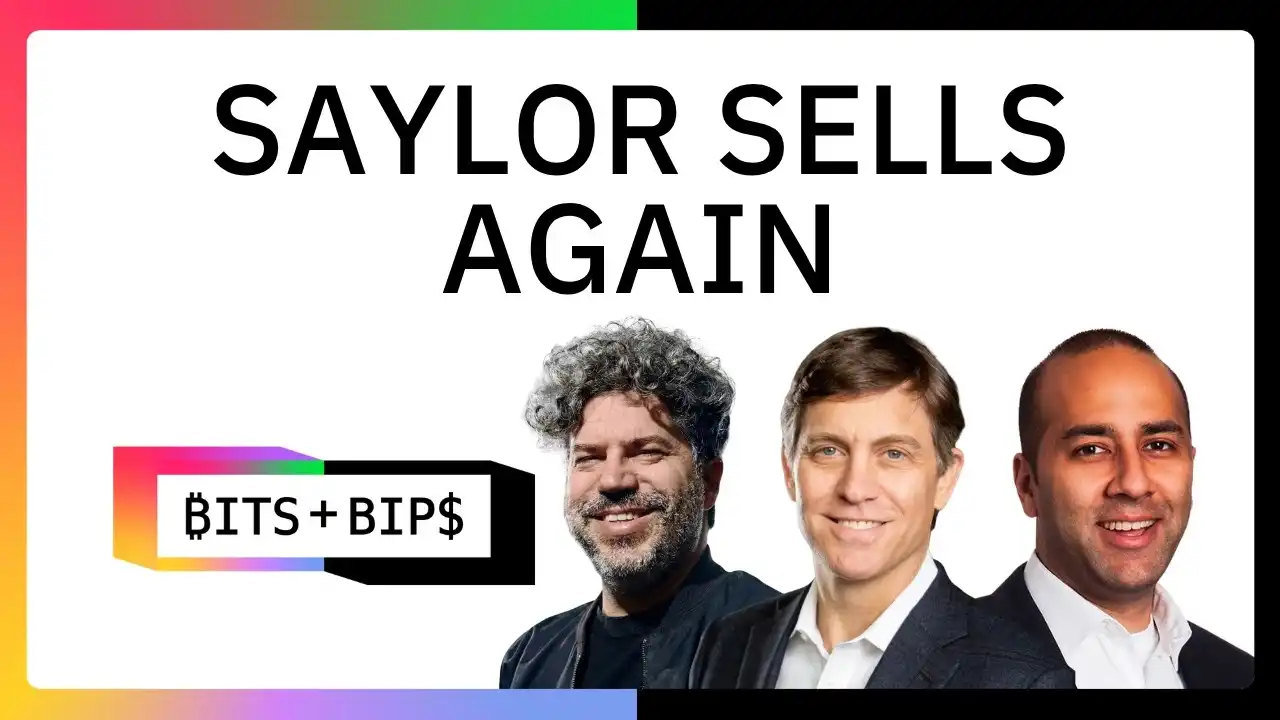
When the Largest BTC Buyer Becomes a Seller, Who's Buying After MicroStrategy Sells 3,588 Bitcoin?

MicroStrategy, once the largest corporate buyer of Bitcoin, sold 3,588 BTC for approximately $216 million to fund its preferred stock dividends, marking a significant shift from buyer to seller. This move occurred after its market-to-NAV premium vanished, breaking its "print stock to buy Bitcoin" financial model. A roundtable discussion featuring Austin Campbell, Ram Ahluwalia, and Chris Perkins analyzed the implications. They noted that MicroStrategy's dominance has become a narrative bottleneck for the broader crypto market, with some speculating that Bitcoin's price might only surge significantly after the company's influence wanes. The conversation expanded to examine the capital structure conflict between traditional equity and crypto tokens, arguing that most current tokens will fail as they don't fit neatly into existing debt/equity frameworks. A "stablecoin war" was identified as a major trend, with entities like Tether, Robinhood, and the OUSD alliance competing. Tether's decision to abandon the European MiCA market highlights strategic divergences. The panelists argued that bank-issued stablecoins could revolutionize global finance by allowing US banks to capture net interest margins from international transactions, potentially making JPMorgan the first trillion-dollar bank. They concluded that while capital is currently being siphoned by AI/semiconductors, markets will eventually refocus on fundamentals and cash flow, which could benefit cryptocurrencies with real utility.

marsbitHace 23 min(s)

When the Largest BTC Buyer Becomes a Seller, Who's Buying After MicroStrategy Sells 3,588 Bitcoin?

marsbitHace 23 min(s)

Bitcoin’s path to $80K may hinge on THIS hidden trend

Bitcoin's potential path toward $80,000 is influenced by conflicting market signals. Data shows the Coinbase Bitcoin Premium Index has recorded its longest-ever streak of consecutive negative premiums, indicating muted institutional demand or net selling from U.S. institutions. While such a trend often signals short-term weakness, it doesn't necessarily forecast a long-term bear market. Additionally, a bearish crossover occurred in Bitcoin's Net Unrealized Profit/Loss (NUPL), with its short-term average falling below the longer-term average, suggesting declining investor profitability and waning market momentum. Historically, major bear market bottoms saw the 100-day NUPL drop below zero, but this cycle it remains positive, implying either an unprecedented bottom or a further decline is needed. Currently trading around $63,148, Bitcoin has seen weekly gains but remains below its May peak. Technical indicators present a mixed picture: the MACD shows bullish momentum, while the RSI signals bearish pressure. A positive development is the return of inflows to Bitcoin ETFs after eight weeks of outflows. Analysts hold divergent views; some highlight a key liquidity zone between $48,000-$50,000 where a market bottom could form, while others maintain a more optimistic long-term outlook. Ultimately, while some bullish signs exist, a strong push from institutional investors appears crucial for Bitcoin to challenge the $80,000 level.

ambcryptoHace 1 hora(s)

Bitcoin’s path to $80K may hinge on THIS hidden trend

ambcryptoHace 1 hora(s)

Trading

Spot

Artículos destacados

Cómo comprar T

¡Bienvenido a HTX.com! Hemos hecho que comprar Threshold Network Token (T) sea simple y conveniente. Sigue nuestra guía paso a paso para iniciar tu viaje de criptos.Paso 1: crea tu cuenta HTXUtiliza tu correo electrónico o número de teléfono para registrarte y obtener una cuenta gratuita en HTX. Experimenta un proceso de registro sin complicaciones y desbloquea todas las funciones.Obtener mi cuentaPaso 2: ve a Comprar cripto y elige tu método de pagoTarjeta de crédito/débito: usa tu Visa o Mastercard para comprar Threshold Network Token (T) al instante.Saldo: utiliza fondos del saldo de tu cuenta HTX para tradear sin problemas.Terceros: hemos agregado métodos de pago populares como Google Pay y Apple Pay para mejorar la comodidad.P2P: tradear directamente con otros usuarios en HTX.Over-the-Counter (OTC): ofrecemos servicios personalizados y tipos de cambio competitivos para los traders.Paso 3: guarda tu Threshold Network Token (T)Después de comprar tu Threshold Network Token (T), guárdalo en tu cuenta HTX. Alternativamente, puedes enviarlo a otro lugar mediante transferencia blockchain o utilizarlo para tradear otras criptomonedas.Paso 4: tradear Threshold Network Token (T)Tradear fácilmente con Threshold Network Token (T) en HTX's mercado spot. Simplemente accede a tu cuenta, selecciona tu par de trading, ejecuta tus trades y monitorea en tiempo real. Ofrecemos una experiencia fácil de usar tanto para principiantes como para traders experimentados.

641 Vistas totalesPublicado en 2024.12.10Actualizado en 2026.06.02

Cómo comprar T

Discusiones

Bienvenido a la comunidad de HTX. Aquí puedes mantenerte informado sobre los últimos desarrollos de la plataforma y acceder a análisis profesionales del mercado. A continuación se presentan las opiniones de los usuarios sobre el precio de T (T).

活动图片