Tokenized stocks are transitioning from a blockchain experiment to a broader trading market, as the number of addresses holding such on-chain shares approaches 1 million.
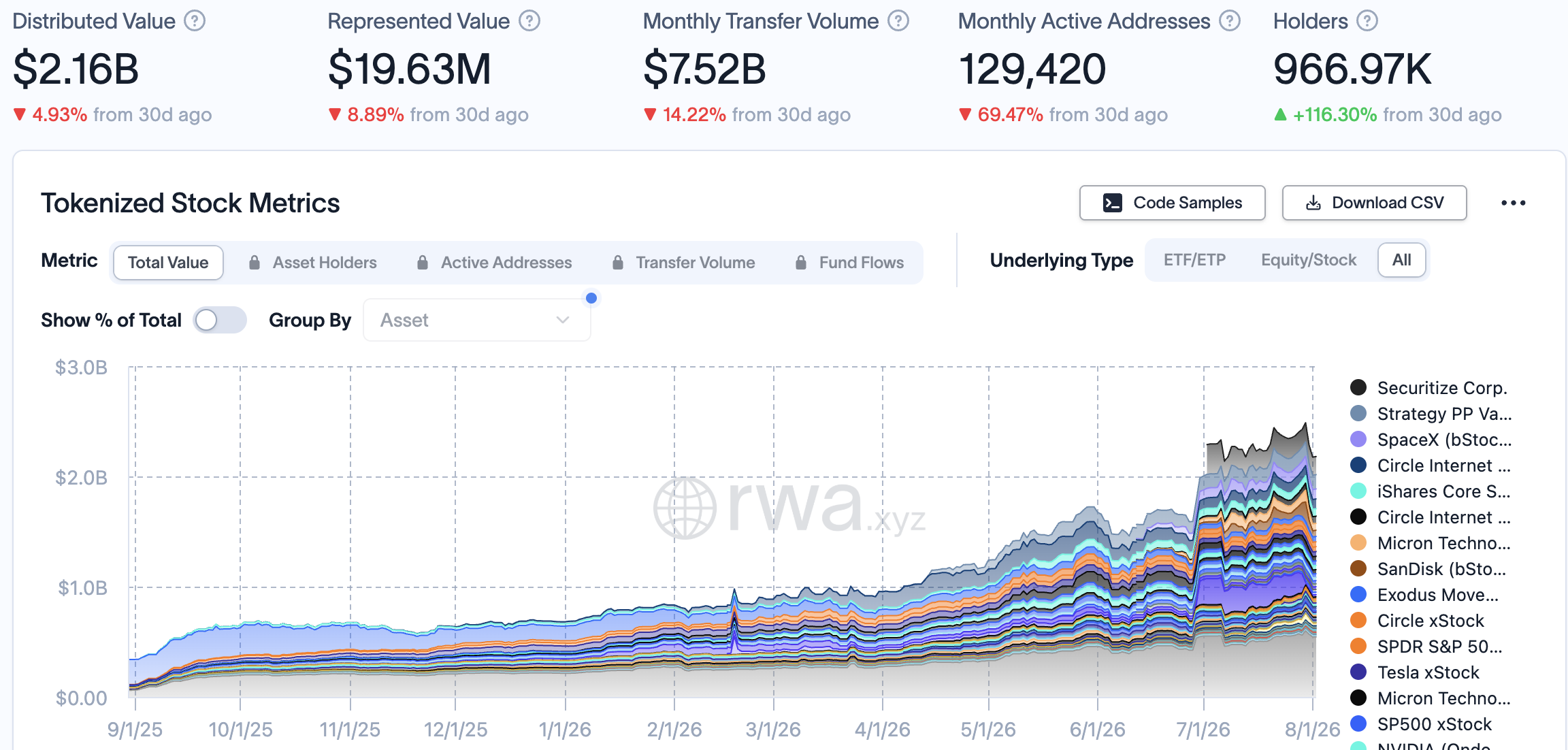
According to data cited in The Kobeissi Letter, the count reached a record 759,000 by the end of July, marking a 92% increase over 30 days and a 522% rise since the start of 2026. As of August 3, the comprehensive RWA.xyz tokenized stocks dashboard, which includes exchange-traded funds, showed nearly 967,000 holders with a distributed value of $2.16 billion.
"The growth of tokenized assets is explosive," stated Kobeissi.
These figures reflect the number of blockchain addresses, not the count of verified individual investors. One person may manage multiple wallets, and a custodial address can represent multiple clients.
Trading Continues After Wall Street Closes
The demand is partly driven by the ability to access the market outside of U.S. exchange hours.
Jupiter reported a 360% year-to-date increase in the monthly trading volume of tokenized stocks conducted in the evening, on weekends, and during other periods when Nasdaq and the New York Stock Exchange are closed. Reportedly, over 65% of tokenized stock activity on the platform occurs outside regular trading sessions.
Stocks of semiconductor and memory chip makers are particularly popular. These products allow traders to react to news concerning companies like Nvidia, Micron Technology, and SK Hynix without waiting for the next market opening.
According to market observer David Alexander's estimates, Robinhood Chain attracted 325,000 token holders in the four weeks since its launch. Robinhood tokens provide economic exposure to the underlying securities but do not grant investors direct legal or beneficial ownership of those shares.
Ondo Finance reflected the industry's optimism in a brief post: "The era of tokenized stocks has arrived."

Growth in Holders Is Not the Same as Liquidity
This growth is occurring against a backdrop where the broader cryptocurrency market remains under pressure.
According to Glassnode, since February, the yield on three-month Bitcoin futures has been lower than that of two-year U.S. Treasury bonds. This is only the second prolonged inversion on record. Such a gap removes the incentive for institutional investors to allocate capital to cryptocurrency-based operations.
Despite this backdrop, the tokenized stock market may be growing, but the number of holders alone does not prove market maturity.
"The number of holders means nothing" without meaningful account balances and secondary liquidity, asserts the analytical account CEXScan.
Liquidity remains concentrated on a limited number of markets, while token structures vary greatly. Some products are regulated securities. Others provide only economic exposure through debt instruments or derivatives.
The next test will be whether trading depth, redemption volumes, and legal protections grow as fast as the number of wallets. Reaching the 1 million address mark will be a significant milestone. Sustainable liquidity will turn this into a full-fledged market.
end-content