Summary: India's resumption of silver imports releases restocking demand. Combined with the approaching peak season and eased foreign exchange pressure, improved physical supply and demand supports silver prices.
In August, India restarted permitting silver imports, with approximately 89.81 tons of silver entering through the India International Bullion Exchange (IIBX), ending a six-month import standstill. Concurrently, import licenses for about 400 tons of silver have been approved. Although the import volume is still far from a full recovery, the policy direction has shifted from comprehensive tightening to gradual permission, indicating that the most severe administrative restriction phase for Indian silver imports has passed.
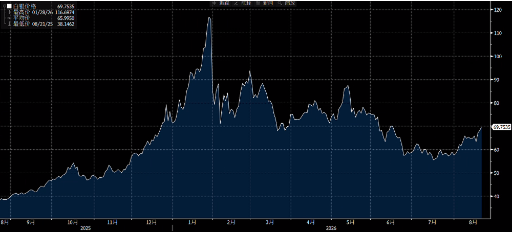
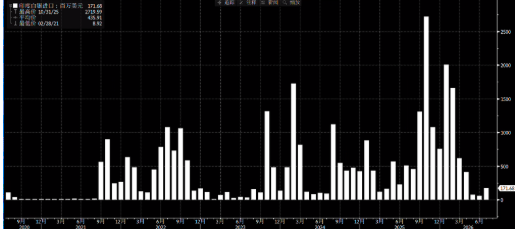
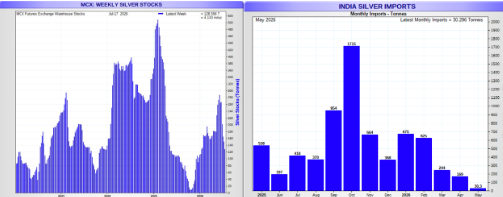
In May this year, due to tight foreign exchange liquidity and the depreciation of the rupee, the Indian government significantly increased the import duty on silver from 6% to 15%, requiring importers to obtain government permits for import. This immediately blocked silver import channels, tightened domestic silver supply, and caused a sharp decline in import volume. India's silver imports fell drastically from 747 tons in January to about 29 tons in June, rapidly depleting domestic inventories and causing the local premium relative to international prices to soar. The 30-day average premium once reached its highest level since at least 2019.
With the marginal easing of import restrictions, India's domestic silver premium has begun to narrow, with the 30-day average premium falling to $4 per ounce (approximately a 7% premium level). However, new licenses still require certificates of origin issued by official agencies, and traders also need to go through transportation, customs, and refining processes. Cumbersome approval procedures and logistics clearance delays continue to constrain the actual arrival pace. In the short term, market supply still relies on existing inventories and depleting replenishments. The domestic physical shortage situation in India has not fundamentally reversed.
Nevertheless, this premium level provides continuous arbitrage incentives for global traders. Although administrative barriers have not been fundamentally removed, traders are actively attempting to ship physical silver to the Indian market through various channels, positioning themselves in advance for further easing of restriction policies.
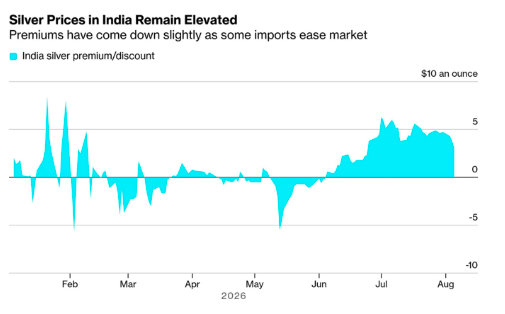
The chart shows India's silver premium surged significantly after May, reaching a historical high, before slightly retreating in August.
Article Conclusion
Indian Physical Demand and Restocking Cycle Initiation Provide a Bottom for Silver Prices
As one of the world's most important silver consumer markets, India accounts for 9% of global silverware demand in all forms (with its silverware demand alone constituting 63% of the global total). However, its domestic silver supply is highly dependent on imports. Therefore, changes in India's import policies are not merely regional adjustments but a crucial variable in the global silver supply and demand equation.
The six-month import standstill severely depleted India's domestic inventories, with the physical shortage situation providing solid bottom support for silver prices. As import restrictions ease marginally and restocking demand gradually releases, coupled with the approaching traditional consumption peak season in the second half of the year, the physical silver supply-demand structure is shifting from "extreme tightness" to "gradual improvement." Silver prices are expected to gain new upward momentum driven by the replenishment of physical demand.