Apple Finally Admits, Siri Is Getting Old

marsbitPublicado a 2026-06-09Actualizado a 2026-06-09

Resumen

In a significant shift, Apple has rebranded Siri to "Siri AI" at WWDC 2026, acknowledging the assistant's limitations after years of stagnation. The company announced a deep partnership with Google, leveraging Gemini's model capabilities to train its new Apple Foundation Models. This collaboration extends Apple's Private Cloud Compute to Google Cloud and Nvidia GPUs for the first time. The article traces Siri's history from its groundbreaking 2011 debut to its subsequent confinement within Apple's closed ecosystem, prioritizing control and privacy over expansive functionality. While Apple integrated AI into its hardware and systems over the years (e.g., Neural Engine, Core ML), it missed the paradigm shift brought by generative AI models like ChatGPT. Facing pressure, Apple restructured its AI leadership and opted to license Google's Gemini technology—reportedly paying around $1 billion annually—to power the revamped Siri. The strategy involves "distilling" knowledge from the large Gemini model into smaller, on-device models. Apple also plans to use Google Cloud's Nvidia GPUs for complex cloud inference tasks. The core vision for "Apple Intelligence" is a system-level assistant that reduces cognitive load: summarizing notifications and emails, drafting context-aware replies, and retrieving relevant information across apps. Siri gains a dedicated app with memory and cross-device sync. However, this AI push comes with hardware requirements, potentially excluding older iPhone...

By Sleepy

Beijing time, in the early hours of June 9, 2026, Apple's WWDC 2026 commenced as scheduled.

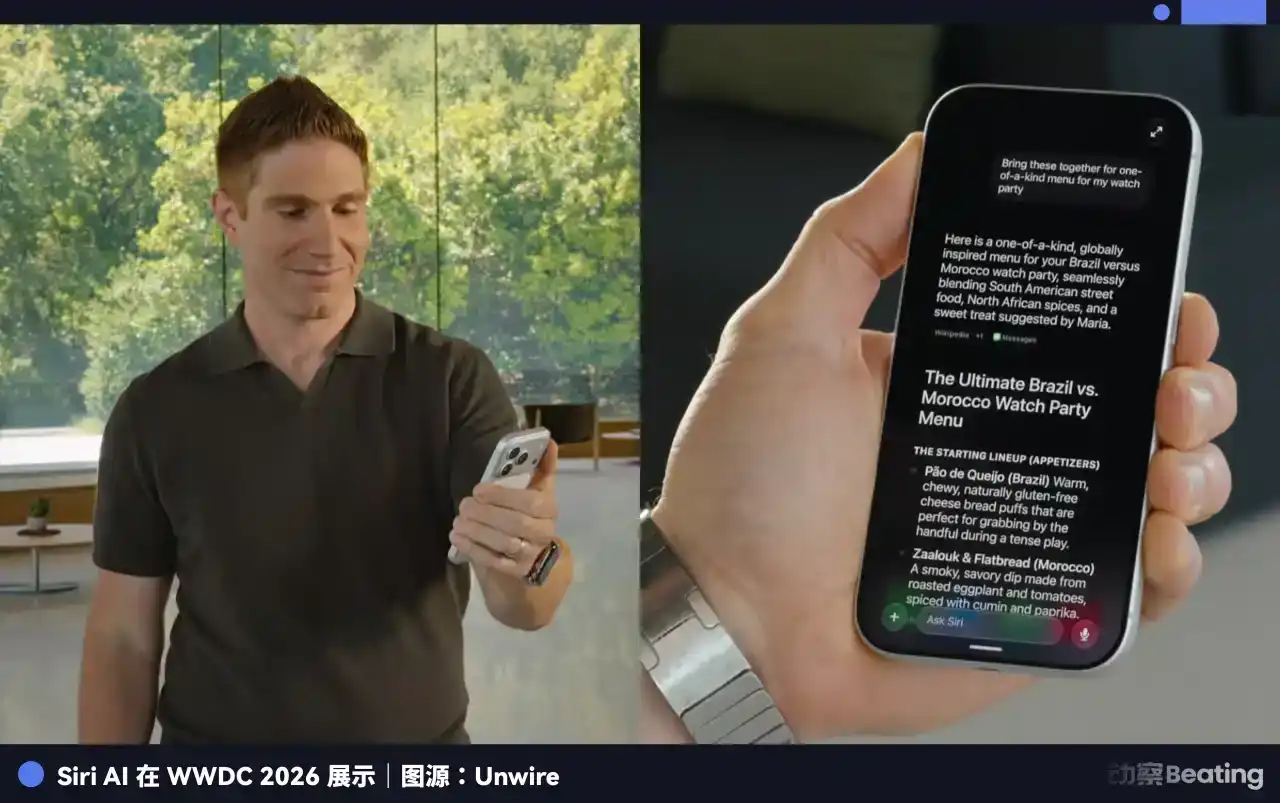
At the event, it rebranded Siri as Siri AI, announced a deep collaboration with Google, using Gemini's model capabilities to train its new generation of foundation models. It extended Private Cloud Compute for the first time to Google Cloud and Nvidia's GPUs.
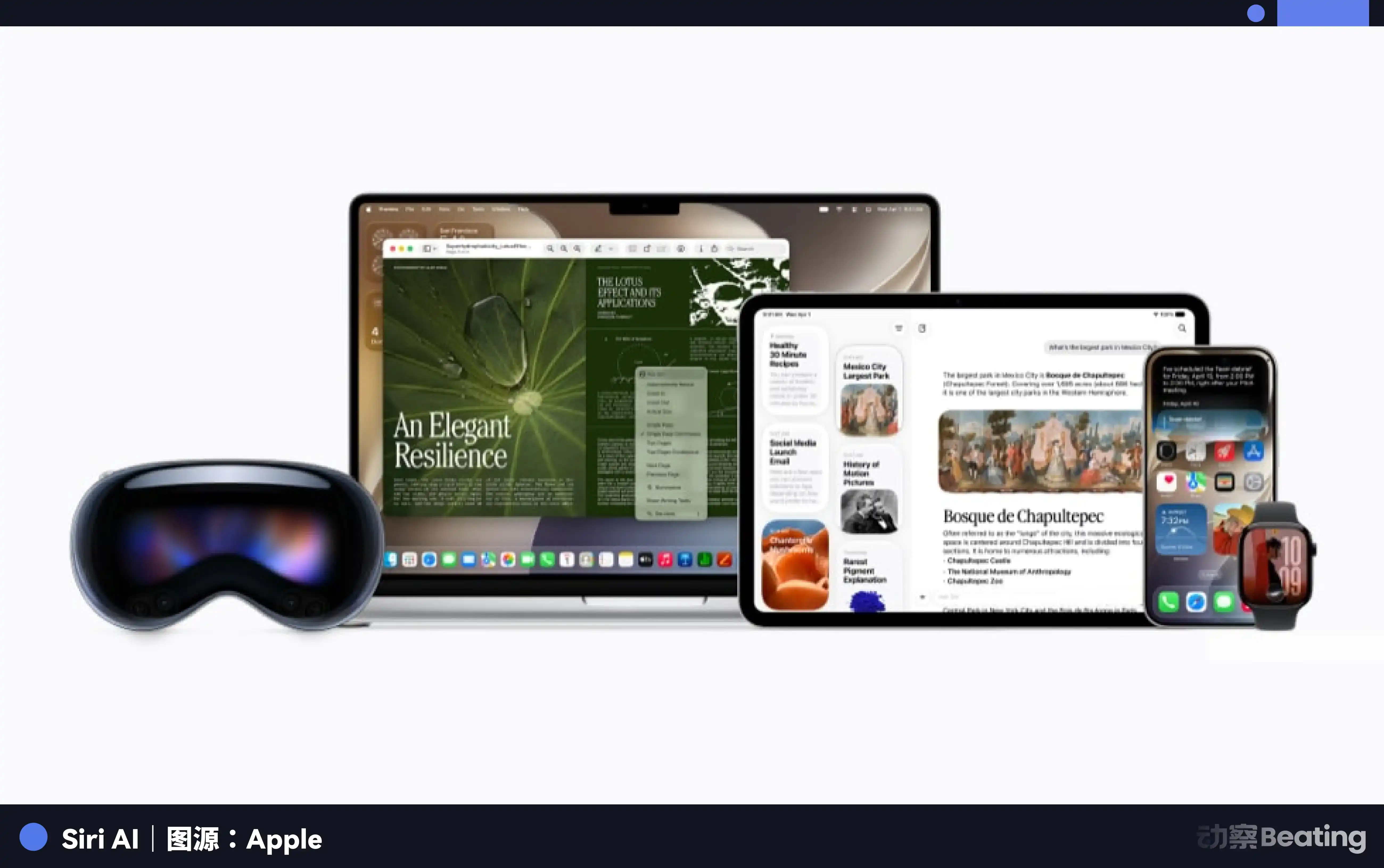
It released five Apple Foundation Models, with the smallest on-device model having 3 billion parameters and the largest cloud model optimized specifically for Nvidia GPUs. Almost every core app was rewritten. Siri even got its own standalone app, with the ability to save conversations, sync across devices, and possess memory.

This was Apple's most information-dense keynote in recent years.

Taming a Future

Apple's AI story can be traced back to the fall of 2011, at the iPhone 4S launch event, where Siri first took the stage.
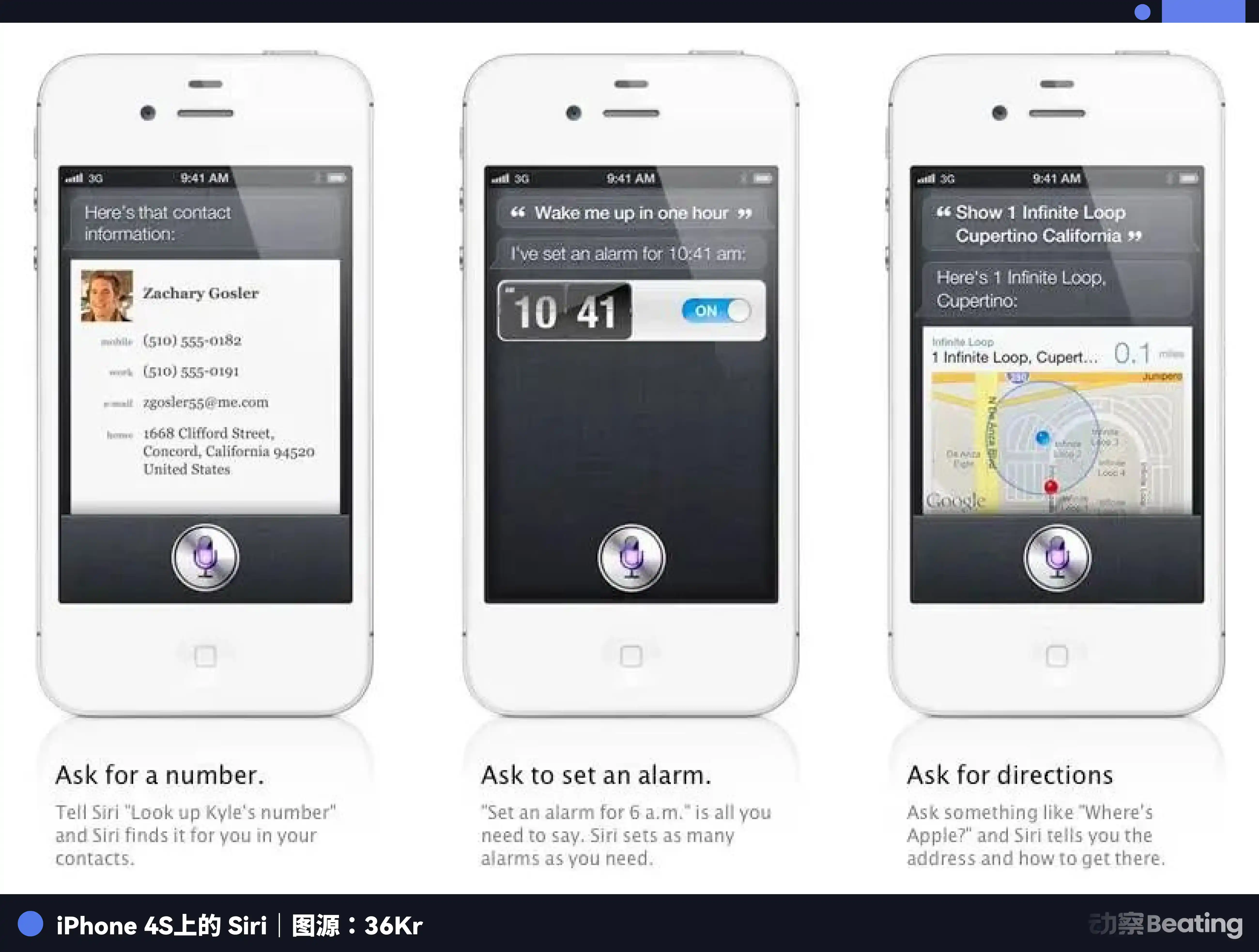
At that time, Steve Jobs was gravely ill, and Apple stood at the crossroads of an era. Siri was like a little creature that had escaped from a sci-fi movie. You could ask it about the weather, restaurants, or set an alarm. It would answer you in a slightly mechanical tone, making you feel for the first time that a phone was more than just a piece of cold glass.

Siri evolved from the CALO project by SRI International, originally a military-grade AI assistant funded by DARPA. In 2010, Apple acquired it. According to TechCrunch, the deal likely exceeded $200 million. A year later, Siri debuted with the iPhone 4S. Apple claimed it could understand natural language and act as a personal assistant to handle tasks.

At that moment, Apple secured the world's best entry point for personal intelligence. Then, it delayed for over a decade.

Looking back today, what Siri initially changed was the posture of how people talked to machines. In 2011, the iPhone was turning mobile phones from communication tools into personal computing devices. The App Store redefined software distribution, and the mobile internet migrated from the PC desktop into the palm of your hand. Siri appeared at the crest of a rising wave. But after entering Apple, it quickly transformed from an ambitious personal assistant into a obedient voice remote control.

At its core, Apple believes in being closed and in control. But a true personal assistant must integrate with more services, understand more context, and tolerate more uncertainty. Uncertainty means errors, privacy risks, and the disorder that Apple is least equipped to handle.

Thus, Siri was only allowed to perform deterministic tasks, like a future that had been tamed. It had a name, a voice, a personality wrapper, but lacked the initiative and memory required for a genuine persona. Users were initially amazed by it, later made jokes about it, and eventually stopped using it much.

Apple was the first to put a "personal assistant" into a phone and also the first to lock it away.

The Agent that the entire industry is now working on, looking back, Siri in 2011 was almost its prototype. One could say Apple was the earliest company to create the prototype of an Agent, yet ended up being one of the last to fully realize it.

The AI That Doesn't Look Like AI

During the years Siri didn't grow up, did Apple's AI stagnate?

Quite the opposite. Apple did a lot of AI; it just didn't look like AI.

If measured by the volume of keynote announcements, Apple seemed to only start talking seriously about AI in 2024. But if you trace the technical path backward, Apple had been in motion for a decade.

In 2015, it acquired two companies in succession—one to bolster natural language dialogue, another to explore running deep learning directly on phones. That same year at WWDC, it discussed the Proactive Assistant, attempting to make the system offer suggestions before the user even asked. This idea was ahead of its time but, under the technological constraints of that period, it was more like a slogan.

The following year, it launched SiriKit, cautiously opening Siri up to developers with limited functionality. It also publicly discussed Differential Privacy, stating its intention to learn from large-scale data while protecting individual privacy. In 2017, the iPhone X brought the Neural Engine. Face ID and the camera began relying on on-device machine learning. Apple simultaneously introduced Core ML, allowing developers to run models on Apple devices, and acquired Workflow, which later became Shortcuts.

This was a very Apple-like set of answers. It wanted AI, but not by betting everything on the cloud and massive personal data like Google. It wanted developers, but didn't want Siri to become a messy stew. So Apple chose the hardest and slowest path: focus on the device, privacy, and system integration.

Around 2020, Apple bought several more companies focused on low-power edge AI and speech understanding. That same year, the M1 chip was released, bringing a 16-core Neural Engine to the Mac, pushing on-device AI compute from phones in pockets all the way to computers. The next year, Live Text and Visual Look Up landed. Text in photos could be copied directly, the camera could identify plants and flowers, and more voice requests could be processed on the device without needing the cloud.

Apple indeed didn't release a standalone AI app in these years, but it did make the phone smarter.

Choosing this path had its reasons. AI on a phone isn't just a Q&A machine. It needs to see photos, hear voice, understand contacts, launch apps, sense battery, location, and time. It's best if it can do some things offline, and preferably not bundle up a user's life and upload it to the cloud with every request. Apple's hardware control gave it the qualification to walk this path.

But between localized intelligence and holistic intelligence lies a deep chasm. Apple excels at breaking technology down into reliable components, but generative AI demands it reassemble those components into a whole.

These components quietly lay buried within the system, waiting for a catalyst.

The catalyst didn't arrive first. ChatGPT did.

When ChatGPT emerged at the end of 2022, Apple wasn't unprepared. Tim Cook repeatedly emphasized in various forums that AI and machine learning had been core technologies in Apple products for many years. Bloomberg also reported in 2023 on Apple's internal Ajax large model framework and internal Chatbot project.

The problem wasn't whether Apple had cards in its hand; the problem was that the rules of the game had changed.

ChatGPT shifted user attention from "functions" to "capabilities." Users began to expect AI on their phones by default, and then compared whose was stronger. When ChatGPT could already organize messy thoughts into a coherent email, Siri was still saying, "I found this on the web."

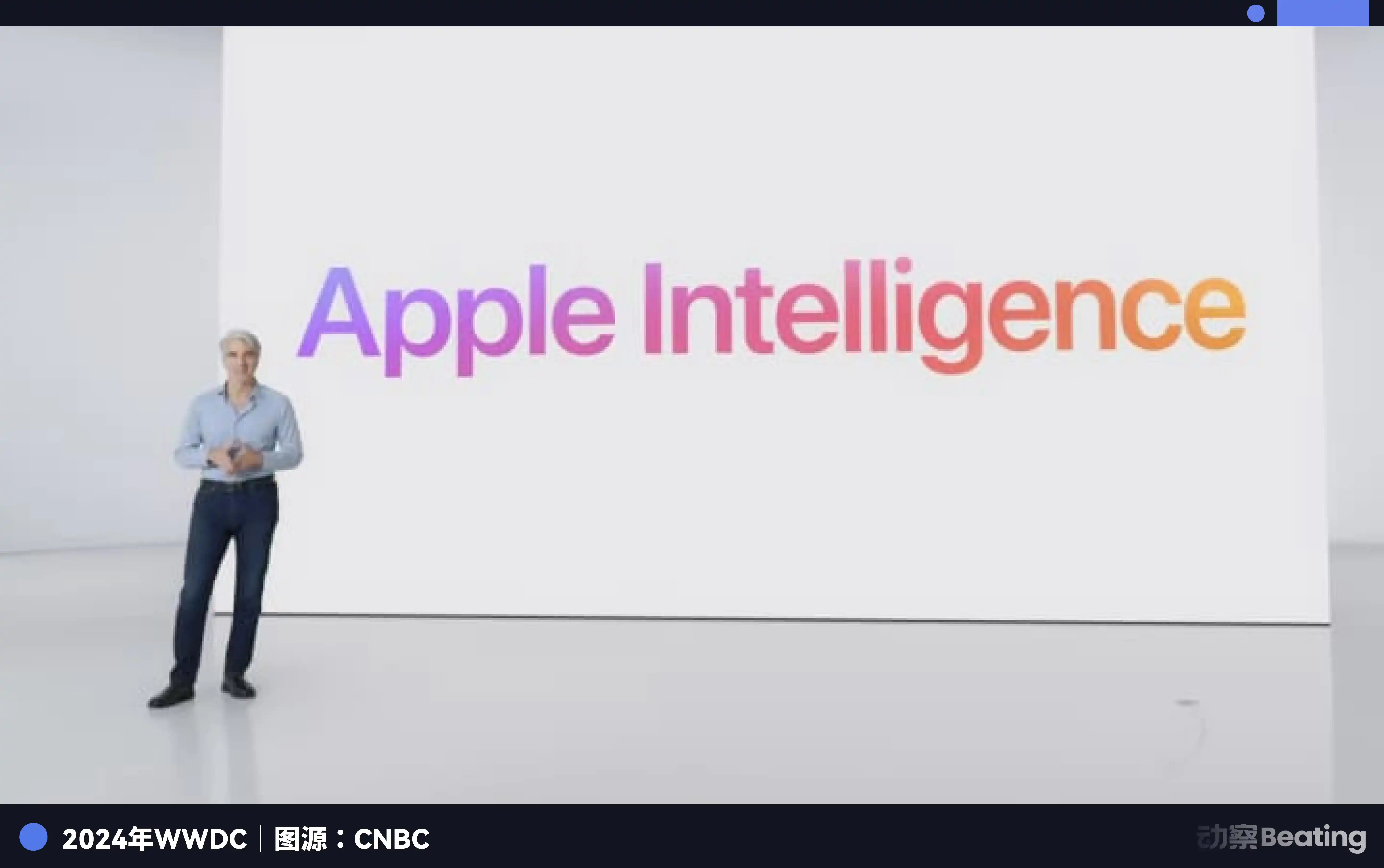
At WWDC 2024, Apple put Apple Intelligence on the table. Writing tools, notification summaries, photo search, personalized Siri understanding, ChatGPT integration. Apple finally admitted that relying solely on in-house models, at least in 2024, couldn't meet user expectations. But the vision it painted ultimately failed to land on the announced schedule.
Hiring Google as a Tutor

Behind the delay of Apple Intelligence wasn't just technology lagging, but the entire Siri team structure failing to keep pace with this round of AI.

Multiple media outlets confirmed that Apple's former AI head, John Giannandrea, stepped down. Craig Federighi took over AI direction, and Vision Pro head Mike Rockwell was transferred to lead the Siri team. A large number of Siri engineers were sent to learn AI programming tools. This wasn't a graceful rotation. Internally, Apple had realized that with the original people and the original pace, it couldn't catch up.

In January 2026, Apple and Google issued a joint statement. Apple would leverage Gemini technology to tailor Apple Intelligence features for the iPhone and other products. According to reports, Apple plans to pay Google approximately $1 billion annually to use a custom Gemini model at the 1.2 trillion parameter level to support the Siri overhaul. Apple had previously tested models from OpenAI and Anthropic but ultimately chose Google.

This is completely different from the ChatGPT integration in 2024. Back then, ChatGPT was more like a lifeline users could authorize when Siri couldn't answer—its brand was OpenAI's, and the interface was pop-up style. This time, Gemini goes directly into the underlying layers, becoming part of Apple's new generation of foundation models.

The key action is distillation. Google gave Apple full access to Gemini. Apple uses the large model within Google's data centers to generate high-quality answers and reasoning processes, then uses those results to train smaller, cheaper models that can run on the iPhone.

A technical paper published by Apple the day before WWDC framed this partnership as the third-generation Apple Foundation Models. Collaborating with Google, it custom-developed five models. On-device, there's the 3-billion-parameter AFM 3 Core, and a 20-billion-parameter sparse model, AFM 3 Core Advanced, which only activates parts per request. For the cloud, there are AFM 3 Cloud, the image model ADM 3 Cloud, and the most powerful AFM 3 Cloud Pro.

More pragmatic changes lie in compute power. No matter how smart on-device models are, they can't handle all tasks. Apple's Private Cloud Compute infrastructure alone could not fully bear Gemini-level inference. Some requests would run on Nvidia GPUs within Google Cloud. Apple subsequently confirmed PCC's first extension beyond Apple's own data centers, with the tech stack covering Nvidia Confidential Computing, Intel TDX, and Google Titan chips. Apple emphasized it still controls PCC software, with devices only trusting programs encrypted and approved by Apple. Related binary files would also be open for inspection by security researchers.

Apple didn't truly relinquish control, but it gave up the dignity of full self-reliance.

Borrowed Bones

To understand Apple's position in the AI era, one must first see its most core asset.

It's not chips, not models, but devices. Devices hold photos, emails, calendars, maps, payments, carrying the fragments of billions of ordinary lives. Whichever AI can mobilize these fragments is no longer just a chatbot; it can become the true personal intelligence hub.

Apple started paving the way for this hub long ago. The Workflow it acquired in 2017 later became Shortcuts, deeply integrated with Siri and system automation. The App Intents introduced in 2022 let third-party apps expose their capabilities to system entry points. In the Apple Intelligence era, these interfaces become the hands and feet for AI to call real-world actions.

With these interfaces, OpenAI can enter, Gemini can enter, and in the future, local partners can be found for the Chinese market. But their entry isn't directly taking over the iPhone; they are fitted into Apple's permission framework and privacy rules.
What Apple fears most isn't whose model is stronger. It fears users starting to bypass the system and directly hand over their lives to another entry point. If one day users opened not apps but an AI assistant that could orchestrate everything for them, Apple would be relegated to a well-crafted shell.

So from now on, the "Apple" in Apple Intelligence represents product control more than complete technological sovereignty. The skin is its own, the clothes are tailored by itself, but the bones are borrowed. Google provides the skeleton, Nvidia provides the joints, and Apple's job is to dress this body in its own clothes and send it out into the world.

What Google gains from this deal is a massive endorsement—even Apple acknowledges Gemini's underlying capabilities as more reliable. What Nvidia gains is another proof that even with the strongest consumer-grade chips and ambitions for self-developed servers, when it comes to cutting-edge inference and complex agent tasks, GPU clouds are still unavoidable.

But the more bones are borrowed, the less the body is truly one's own. Behind every borrowed bone lie supplier business calculations, regulations, and technology cadences. If one day someone decides to pull those bones back, can Apple stand on its own? It's a question Apple doesn't need to answer for now, but it will have to eventually.

A New Tenant Moving into the System

Ordinary people don't care about model parameters. They care if their phone can bother them less.

On the WWDC26 stage, Apple said: "There are times when you expect more from Siri."

For Apple, this almost counts as an apology.

Then it tried to show you a different morning.

You wake up, and the screen is cluttered with twenty notifications. In the past, you'd have to swipe them away one by one. Now the system has already sorted them by priority for you—your boss's messages are at the top, ads and promotions are condensed into a line of gray text. You open your email. A long work email has been summarized into three sentences. You decide to reply, and Siri drafts a response for you based on your usual tone when speaking with this person. You remember you need to call a merchant to return an item in the afternoon. Before you even dial, the system has already pulled the order number from your email from a couple of days ago and placed it on the call interface.

This is the story Apple wants to tell—a layer of intelligence laid beneath the system, saving you from the daily cognitive chores. Read less nonsense, search for files less, get interrupted by notifications less.

To tell this story well, Apple almost completely redesigned Siri's entry point. On the iPhone, it's placed in the Dynamic Island, accessible with a pull-down. On iPad and Mac, it's merged with Spotlight. It has its own standalone app, capable of saving and continuing past conversations, syncing across devices via iCloud. Apple wants Siri to become an AI assistant living within the system, with memory and context, but tries hard not to make it look like ChatGPT.

Vision is also a crucial direction. The camera adds a Siri mode—point it at food for nutritional info, point it at something unrecognizable for identification and search. System-wide dictation is no longer just speech-to-text; it automatically adds punctuation, adjusts formatting, turning spoken words into text ready to send.

The path is also being paved on the developer side. Apple opened the Core AI framework, allowing third parties to load their own models on devices. Upgraded App Intents make it easier for Siri to understand third-party apps. The Foundation Models Framework no longer just calls Apple's on-device models; it also supports integrating external providers like Claude and Gemini. Apple is paving a path for the entire ecosystem: for Siri to perform tasks across apps in the future, developers must hand over content and actions for the system to understand.

If these plans materialize, Apple AI will no longer be just "Siri that can chat."

But Apple is more cautious this time than in the past. Siri AI will only open to users in beta later this year, starting with English. And the same Apple Intelligence, when it reaches China, will likely be a different product.

For Chinese users, watching Apple AI is mostly just for entertainment. The keynote is lively, the features look good, but "not available in your region" for China.

The Chinese market has a whole set of rules for generative AI: filing, content safety, and data localization. Apple needs to find local model partners and pass regulatory approvals. Apple Intelligence in China isn't just a matter of launching months later; it may fundamentally be a different thing from the ground up.

What U.S. users see is a combination of in-house models and Gemini. What Chinese users may see is a version kneaded together by Apple's system permissions, local cloud services, domestic models, and regulatory requirements. They are both called Apple Intelligence, but their actual capabilities and reachable boundaries could be entirely different.

iCloud services in Mainland China are operated by GCBD. The cloud drive saves files, AI needs to understand files; the cloud drive stores photos, AI needs to understand photos; the cloud drive syncs notes, AI needs to extract your plans, habits, and relationships from notes. This data has new uses in the AI era and naturally faces varying degrees of scrutiny.

A more immediate threat comes from competition. Domestic smartphone manufacturers are moving fast with on-device large models, Chinese-language assistants, and imaging AI. For Chinese users, spending ten to twenty thousand yuan on a new iPhone only to find its core AI features unavailable might just prompt them to switch brands.

The daily scenarios in the Chinese market are particularly tricky for Apple. WeChat, Alipay, Meituan, Douyin, ride-hailing apps, government services, hospital registrations—these are what many people actually use their phones for every day. An AI assistant that cannot access these scenarios, cannot understand group chats, receipts, verification codes, and expressions only locals instantly grasp, can hardly be called "intelligent."

Understanding a Person

Apple Intelligence also has another issue: it doesn't cover all iPhones.

iOS 27 can cover down to the iPhone 11 and the second-gen iPhone SE, but Apple Intelligence requires at least the iPhone 15 Pro and newer models, M-series iPads, and Macs. The strongest on-device models require even more: iPhone 17 Pro, iPhone Air, iPads with at least 12GB of unified memory on M4, or M3 Macs.

In recent years, upgrade cycles have been stretching longer. Screens are good enough, cameras are sufficient, and many no longer change phones yearly. AI might become the reason Apple uses to stimulate upgrades again. On-device AI indeed requires stronger chips and more memory, making hardware thresholds inevitable. A capability packaged as "understanding you better" ultimately becomes a price barrier.

For over a decade, Apple has constantly asked, "What comes after the iPhone?" It tried watches, headphones, TVs, and that rumored car project that lasted ten years before being canceled. In 2024, part of the car team's staff were transferred to the generative AI team.

AI arrived just in time. It gives Apple a next-generation story without needing to create a new hardware category from scratch—just transform the devices already in the hands of over a billion users. What comes after the iPhone might still be the iPhone, but it must become something else.

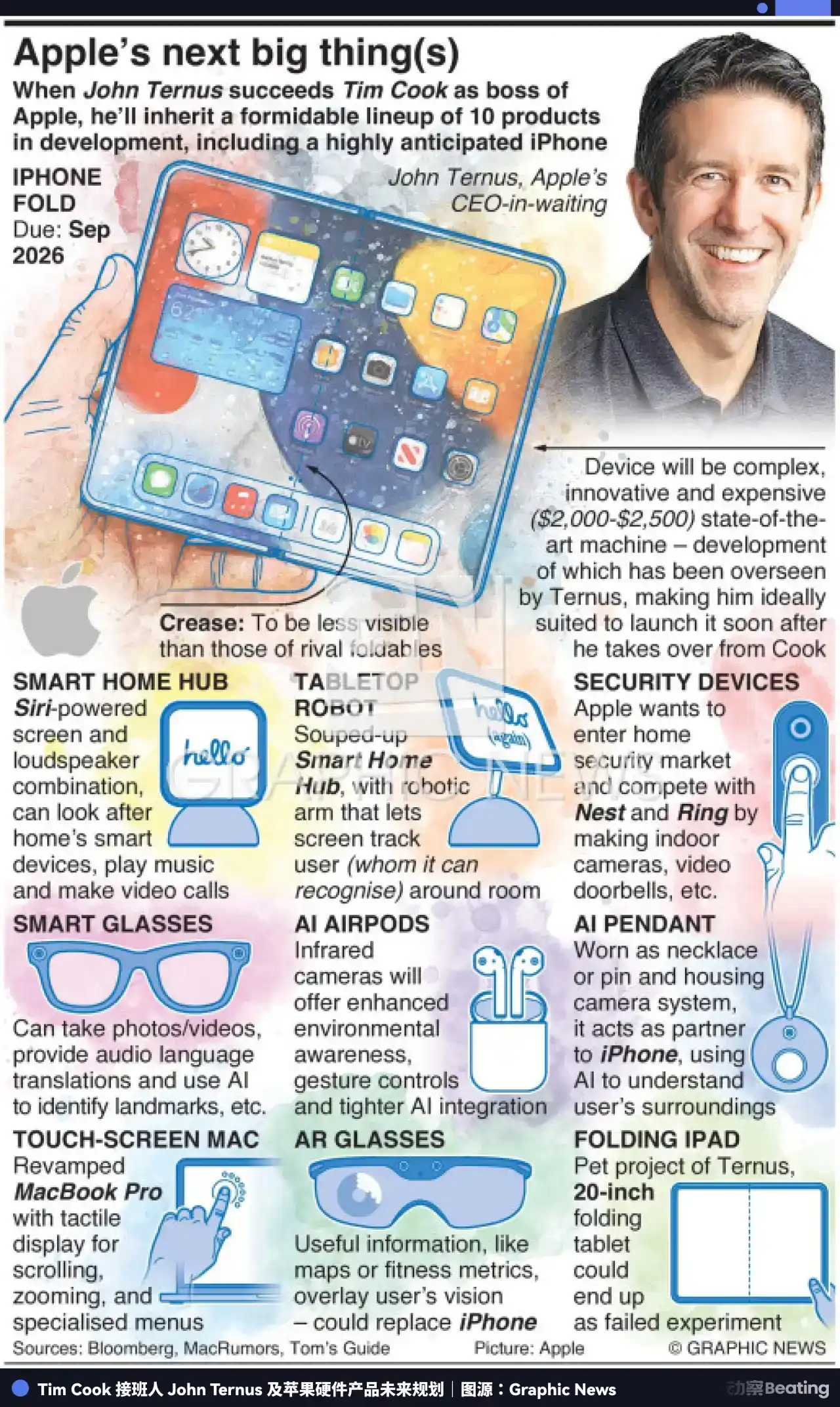
The future hardware plans overseen by Ternus, Tim Cook's successor, hint at Apple's next steps. He is advancing a set of unreleased AI devices—glasses with cameras and wearables that use computer vision to understand the surrounding environment. If these products come to fruition, Apple Intelligence will extend from phones outward, with phones, headphones, glasses, and home hubs potentially becoming new senses.
But no matter how the senses extend, the core question remains the same.

The relationship between people and their phones isn't mostly sitting down for long conversations, but mutual interruptions in extremely trivial scenarios. You're rushing for the subway, the kid is crying, the boss is pressing, and the screen is piled with 20 notifications. The most concrete meaning of Apple Intelligence for ordinary people isn't an omnipotent assistant, but a phone starting to shoulder part of your cognitive load. Read less nonsense, search for files less, get interrupted by notifications less.

Apple has always positioned itself as being on the user's side. It says privacy is a fundamental human right, that devices belong to users, that technology should serve people. In the AI era, this rhetoric will face its real test. Because once a system starts understanding you, it's not just protecting your data; it's also shaping your actions. It gives you summaries, suggestions, filters information for you, decides for you what's important and what can be ignored.

The difficulty of personal intelligence has never been just intelligence; it's also "personal." A person's life isn't a database. It contains emotions, misunderstandings, awkward moments, and corners one doesn't want any system to see. For AI to enter these places, efficiency alone cannot be the pass.

Kazuo Ishiguro wrote about an AI companion named Klara in "Klara and the Sun." She spent her entire existence trying to understand a girl. She learned to observe changes in light, to read expressions and silence, to know when to be quiet.

But the most moving part of the book is when Klara finally understands there is a part of the girl she can never touch. It's not that she isn't smart enough, but she learns one thing: understanding a person and possessing a person's data are two completely different matters.

It took Apple fifteen years to reach the point of admitting Siri wasn't good enough. On this WWDC night, it borrowed models from Google, compute from Nvidia, and another year of patience from users. It proved it's willing to bow its head, but bowing is just the beginning.

What it needs to learn next is what Klara already knew. It's not about becoming smarter, but knowing where to stop after stepping into someone's life.

-END-
Preguntas relacionadas

QAccording to the article, what is the core reason Apple is integrating Google's Gemini technology into Siri AI in 2026?

AThe article states that Apple's core reason is that despite over a decade of internal development, its own AI technology, particularly for complex reasoning and agent-like capabilities, could not meet user expectations. It acknowledges a technology gap and chooses to 'borrow bones'—leveraging Gemini's advanced foundational model power while maintaining its own product control and privacy framework.

QHow does the article contrast Apple's historical approach to AI (pre-2024) with the approach it announced in 2026?

AHistorically, Apple's approach was characterized by closed, controlled, and device-centric AI focused on privacy and specific, reliable features (like Face ID, Live Text). It avoided large-scale cloud-based models and broad data access, which inadvertently limited Siri's growth. In 2026, its approach pivots to strategic openness, deeply integrating a powerful external model (Gemini) into its foundation and expanding its private cloud compute to third-party infrastructure to achieve the advanced intelligence it now prioritizes.

QWhat are the two main strategic benefits the article suggests Google and Nvidia gain from their partnerships with Apple on AI?

AFor Google, the primary benefit is a massive endorsement, as Apple's adoption validates Gemini's underlying model capabilities as superior and reliable. For Nvidia, the benefit is proving the indispensable role of its GPU cloud infrastructure for cutting-edge AI inference and complex tasks, even for a company with Apple's formidable in-house chip design.

QWhat unique challenge does the article identify for Apple Intelligence in the Chinese market compared to the US?

AThe article identifies that in China, Apple Intelligence faces unique regulatory hurdles involving AI model filing, content security, and data localization laws. This likely means the Chinese version will be a fundamentally different product, built with a local model partner and tailored to local compliance, potentially offering different capabilities and boundaries than the Gemini-powered version available elsewhere.

QBeyond technical capability, what deeper humanistic challenge does the article imply Apple's 'personal intelligence' must eventually address?

AThe article implies that the ultimate challenge for a 'personal intelligence' is not just technical smartness, but the ethical and experiential understanding of human life. It references the novel 'Klara and the Sun' to suggest that truly understanding a person involves more than processing their data; it requires knowing when to be quiet, respecting unquantifiable human elements like emotion and privacy, and understanding where to stop—a challenge of empathy and restraint.

Lecturas Relacionadas

Fundraising is Like a Strange Dance: The 'Absurd Drama' of Silicon Valley Founders' Capital Raises

The article details a series of absurd and revealing anecdotes shared by Silicon Valley founders about their venture capital fundraising experiences, sparked by Greg Isenberg's story of pitching to a sleeping a16z partner. Founders describe surreal pitch meetings: one faced a barefoot, peanut-eating investor who offered triple the requested amount after 30 seconds; another performed a pitch in a VC's parked car; a founder discovered his audience understood no English beyond "yes." These stories highlight the often irrational and performative nature of fundraising. Beyond the absurdity, darker power imbalances are exposed. Stories include investors suggesting founders fire co-founders for their equity, blatant market misjudgments, disrespectful behavior from LPs, and discriminatory remarks. A debate also emerges around "Sequoia's" practice of splitting a round into two valuations. However, the thread isn't solely critical. Positive counter-narratives celebrate supportive VCs who offered crucial advice during crises, respected founders' timelines, and showed simple gestures of respect—like a partner personally fetching coffee before a major pitch. Ultimately, the collective sharing acts as a pressure release, illustrating that fundraising is a complex dance of power, trust, and sometimes sheer theater. It underscores that beyond capital, mutual respect and integrity remain the most enduring foundations of the founder-investor relationship.

marsbitHace 5 min(s)

Fundraising is Like a Strange Dance: The 'Absurd Drama' of Silicon Valley Founders' Capital Raises

marsbitHace 5 min(s)

Vitalik's Vision for the Next Evolution of On-Chain Finance: How to Reconstruct DeFi with an 'Options Mindset'?

Vitalik Buterin recently proposed a conceptual shift for DeFi: replacing traditional Collateralized Debt Positions (CDPs) and forced liquidations with an options-based mechanism. This aims to address key vulnerabilities in current DeFi lending. The traditional CDP model, foundational to protocols like MakerDAO and Aave, allows users to borrow against collateral but relies on real-time oracles and triggers sudden, mandatory liquidations during price volatility. This can cause cascading sell-offs, oracle manipulation risks, and significant MEV extraction, exacerbating market stress. Vitalik's alternative envisions splitting an asset like 1 ETH into two complementary components: one offering stable/index-like exposure and the other absorbing the opposite risk/reward. Instead of a hard liquidation threshold, a user's exposure to the target asset would gradually and smoothly deviate (following a near-quadratic curve) as the collateral price moves. The system would primarily depend on "slow oracles" for periodic settlement rather than instant price feeds. Key potential benefits include: the elimination of abrupt, forced liquidations; drastically reduced reliance on vulnerable real-time oracles; and inherent resistance to certain MEV exploits centered on liquidation auctions. The article posits that for Ethereum DeFi to maintain its relevance amid competition from faster, cheaper chains, it must compete on sophisticated financial engineering and robustness—not just transaction speed or yields. The core value proposition should shift towards offering users clearer, more manageable risk structures, greater autonomy, and resilience in extreme scenarios, moving DeFi from high-risk experimentation towards becoming reliable financial infrastructure.

marsbitHace 43 min(s)

Vitalik's Vision for the Next Evolution of On-Chain Finance: How to Reconstruct DeFi with an 'Options Mindset'?

marsbitHace 43 min(s)

AI Agent Completely Transforms Web3 Gaming: From the Rugpull Bakery Bot Controversy to the New 2026 Agent Paradigm

This article explores how the AI Agent paradigm is fundamentally transforming Web3 gaming, moving from a disruptive force to a core, legitimized element. It begins with the controversy in the competitive baking game Rugpull Bakery, where automated scripts caused fairness issues. Instead of banning them, the developers integrated AI Agents into the official gameplay by providing technical documentation (skill.md, agent.json), marking a shift towards "Agentic Gaming." The piece outlines three primary implementation models for AI Agents in Web3 games by 2026: 1. **Autonomous Competitors & Economic Entities:** AI Agents act as independent players with unique strategies. Examples include TEN Protocol's poker agents, AI Arena's trainable NFT fighters, and Satoshi Strike Force's "Digital Athletes" trained on player data. The Somnia blockchain is highlighted as a dedicated "Agentic L1" infrastructure supporting this model at scale. 2. **Modular Infrastructure & Programmable Environments:** This model, exemplified by EVE Frontier, allows AI Agents to program game world logic itself. Using "Smart Assemblies" (e.g., Smart Turrets, Smart Gates), Agents can modify shared economic and physical rules on-chain, creating dynamic, player/AI-built worlds. The ERC-8183 standard further enables these automated entities to hire other AI services for complex tasks. 3. **Hybrid Companions & Dynamic Adaptation:** Here, AI serves as a collaborative partner. In Parallel Colony, highly autonomous AI Avatars work alongside human players who provide high-level guidance. Illuvium plans to use AI to make NPCs dynamic and responsive, creating personalized, emergent narratives for each player. The conclusion posits that Web3 gaming has reached a "post-human" inflection point. Blockchains' transparency and programmability, combined with new standards and infrastructure like Somnia, make integrating and governing AI Agents not just viable but essential. The future lies in a symbiotic digital order where players transition from manual laborers to commanders and partners of algorithmic intelligence.

marsbitHace 1 hora(s)

AI Agent Completely Transforms Web3 Gaming: From the Rugpull Bakery Bot Controversy to the New 2026 Agent Paradigm

marsbitHace 1 hora(s)

Trading

Spot
Futuros

Artículos destacados

Qué es $S$

Entendiendo SPERO: Una Visión General Completa Introducción a SPERO A medida que el panorama de la innovación continúa evolucionando, la aparición de tecnologías web3 y proyectos de criptomonedas juega un papel fundamental en la configuración del futuro digital. Un proyecto que ha atraído la atención en este campo dinámico es SPERO, denotado como SPERO,$$s$. Este artículo tiene como objetivo reunir y presentar información detallada sobre SPERO, para ayudar a entusiastas e inversores a comprender sus fundamentos, objetivos e innovaciones dentro de los dominios web3 y cripto. ¿Qué es SPERO,$$s$? SPERO,$$s$ es un proyecto único dentro del espacio cripto que busca aprovechar los principios de descentralización y tecnología blockchain para crear un ecosistema que promueva la participación, la utilidad y la inclusión financiera. El proyecto está diseñado para facilitar interacciones de igual a igual de nuevas maneras, proporcionando a los usuarios soluciones y servicios financieros innovadores. En su esencia, SPERO,$$s$ tiene como objetivo empoderar a los individuos al proporcionar herramientas y plataformas que mejoren la experiencia del usuario en el espacio de las criptomonedas. Esto incluye habilitar métodos de transacción más flexibles, fomentar iniciativas impulsadas por la comunidad y crear caminos para oportunidades financieras a través de aplicaciones descentralizadas (dApps). La visión subyacente de SPERO,$$s$ gira en torno a la inclusividad, buscando cerrar brechas dentro de las finanzas tradicionales mientras aprovecha los beneficios de la tecnología blockchain. ¿Quién es el Creador de SPERO,$$s$? La identidad del creador de SPERO,$$s$ sigue siendo algo oscura, ya que hay recursos públicos limitados que proporcionan información de fondo detallada sobre su(s) fundador(es). Esta falta de transparencia puede derivarse del compromiso del proyecto con la descentralización, una ética que muchos proyectos web3 comparten, priorizando las contribuciones colectivas sobre el reconocimiento individual. Al centrar las discusiones en torno a la comunidad y sus objetivos colectivos, SPERO,$$s$ encarna la esencia del empoderamiento sin señalar a individuos específicos. Como tal, comprender la ética y la misión de SPERO sigue siendo más importante que identificar a un creador singular. ¿Quiénes son los Inversores de SPERO,$$s$? SPERO,$$s$ cuenta con el apoyo de una diversa gama de inversores que van desde capitalistas de riesgo hasta inversores ángeles dedicados a fomentar la innovación en el sector cripto. El enfoque de estos inversores generalmente se alinea con la misión de SPERO, priorizando proyectos que prometen avances tecnológicos sociales, inclusión financiera y gobernanza descentralizada. Estas fundaciones de inversores suelen estar interesadas en proyectos que no solo ofrecen productos innovadores, sino que también contribuyen positivamente a la comunidad blockchain y sus ecosistemas. El respaldo de estos inversores refuerza a SPERO,$$s$ como un contendiente notable en el dominio de proyectos cripto que evoluciona rápidamente. ¿Cómo Funciona SPERO,$$s$? SPERO,$$s$ emplea un marco multifacético que lo distingue de los proyectos de criptomonedas convencionales. Aquí hay algunas de las características clave que subrayan su singularidad e innovación: Gobernanza Descentralizada: SPERO,$$s$ integra modelos de gobernanza descentralizada, empoderando a los usuarios para participar activamente en los procesos de toma de decisiones sobre el futuro del proyecto. Este enfoque fomenta un sentido de propiedad y responsabilidad entre los miembros de la comunidad. Utilidad del Token: SPERO,$$s$ utiliza su propio token de criptomoneda, diseñado para servir diversas funciones dentro del ecosistema. Estos tokens permiten transacciones, recompensas y la facilitación de servicios ofrecidos en la plataforma, mejorando la participación y la utilidad general. Arquitectura en Capas: La arquitectura técnica de SPERO,$$s$ apoya la modularidad y escalabilidad, permitiendo la integración fluida de características y aplicaciones adicionales a medida que el proyecto evoluciona. Esta adaptabilidad es fundamental para mantener la relevancia en el cambiante paisaje cripto. Participación de la Comunidad: El proyecto enfatiza iniciativas impulsadas por la comunidad, empleando mecanismos que incentivan la colaboración y la retroalimentación. Al nutrir una comunidad sólida, SPERO,$$s$ puede abordar mejor las necesidades de los usuarios y adaptarse a las tendencias del mercado. Enfoque en la Inclusión: Al ofrecer tarifas de transacción bajas e interfaces amigables para el usuario, SPERO,$$s$ busca atraer a una base de usuarios diversa, incluyendo a individuos que anteriormente pueden no haber participado en el espacio cripto. Este compromiso con la inclusión se alinea con su misión general de empoderamiento a través de la accesibilidad. Cronología de SPERO,$$s$ Entender la historia de un proyecto proporciona información crucial sobre su trayectoria de desarrollo y hitos. A continuación se presenta una cronología sugerida que mapea eventos significativos en la evolución de SPERO,$$s$: Fase de Conceptualización e Ideación: Las ideas iniciales que forman la base de SPERO,$$s$ fueron concebidas, alineándose estrechamente con los principios de descentralización y enfoque comunitario dentro de la industria blockchain. Lanzamiento del Whitepaper del Proyecto: Tras la fase conceptual, se lanzó un whitepaper completo que detalla la visión, los objetivos y la infraestructura tecnológica de SPERO,$$s$ para generar interés y retroalimentación de la comunidad. Construcción de Comunidad y Primeras Interacciones: Se realizaron esfuerzos de divulgación activa para construir una comunidad de primeros adoptantes y posibles inversores, facilitando discusiones en torno a los objetivos del proyecto y obteniendo apoyo. Evento de Generación de Tokens: SPERO,$$s$ llevó a cabo un evento de generación de tokens (TGE) para distribuir sus tokens nativos a los primeros seguidores y establecer liquidez inicial dentro del ecosistema. Lanzamiento de la dApp Inicial: La primera aplicación descentralizada (dApp) asociada con SPERO,$$s$ se puso en marcha, permitiendo a los usuarios interactuar con las funcionalidades centrales de la plataforma. Desarrollo Continuo y Alianzas: Actualizaciones y mejoras continuas a las ofertas del proyecto, incluyendo alianzas estratégicas con otros actores en el espacio blockchain, han moldeado a SPERO,$$s$ en un jugador competitivo y en evolución en el mercado cripto. Conclusión SPERO,$$s$ se erige como un testimonio del potencial de web3 y las criptomonedas para revolucionar los sistemas financieros y empoderar a los individuos. Con un compromiso con la gobernanza descentralizada, la participación comunitaria y funcionalidades diseñadas de manera innovadora, allana el camino hacia un paisaje financiero más inclusivo. Como con cualquier inversión en el espacio cripto que evoluciona rápidamente, se anima a los posibles inversores y usuarios a investigar a fondo y participar de manera reflexiva con los desarrollos en curso dentro de SPERO,$$s$. El proyecto muestra el espíritu innovador de la industria cripto, invitando a una mayor exploración de sus innumerables posibilidades. Mientras el viaje de SPERO,$$s$ aún se desarrolla, sus principios fundamentales pueden, de hecho, influir en el futuro de cómo interactuamos con la tecnología, las finanzas y entre nosotros en ecosistemas digitales interconectados.

72 Vistas totalesPublicado en 2024.12.17Actualizado en 2024.12.17

Qué es $S$

Qué es AGENT S

Agent S: El Futuro de la Interacción Autónoma en Web3 Introducción En el paisaje en constante evolución de Web3 y las criptomonedas, las innovaciones están redefiniendo constantemente cómo los individuos interactúan con las plataformas digitales. Uno de estos proyectos pioneros, Agent S, promete revolucionar la interacción humano-computadora a través de su marco agente abierto. Al allanar el camino para interacciones autónomas, Agent S busca simplificar tareas complejas, ofreciendo aplicaciones transformadoras en inteligencia artificial (IA). Esta exploración detallada profundizará en las complejidades del proyecto, sus características únicas y las implicaciones para el dominio de las criptomonedas. ¿Qué es Agent S? Agent S se presenta como un marco agente abierto innovador, diseñado específicamente para abordar tres desafíos fundamentales en la automatización de tareas informáticas: Adquisición de Conocimiento Específico del Dominio: El marco aprende inteligentemente de diversas fuentes de conocimiento externas y experiencias internas. Este enfoque dual le permite construir un rico repositorio de conocimiento específico del dominio, mejorando su rendimiento en la ejecución de tareas. Planificación a Largo Plazo de Tareas: Agent S emplea planificación jerárquica aumentada por la experiencia, un enfoque estratégico que facilita la descomposición y ejecución eficiente de tareas complejas. Esta característica mejora significativamente su capacidad para gestionar múltiples subtareas de manera eficiente y efectiva. Manejo de Interfaces Dinámicas y No Uniformes: El proyecto introduce la Interfaz Agente-Computadora (ACI), una solución innovadora que mejora la interacción entre agentes y usuarios. Utilizando Modelos de Lenguaje Multimodal de Gran Escala (MLLMs), Agent S puede navegar y manipular diversas interfaces gráficas de usuario sin problemas. A través de estas características pioneras, Agent S proporciona un marco robusto que aborda las complejidades involucradas en la automatización de la interacción humana con las máquinas, preparando el terreno para una multitud de aplicaciones en IA y más allá. ¿Quién es el Creador de Agent S? Si bien el concepto de Agent S es fundamentalmente innovador, la información específica sobre su creador sigue siendo elusiva. El creador es actualmente desconocido, lo que resalta ya sea la etapa incipiente del proyecto o la elección estratégica de mantener a los miembros fundadores en el anonimato. Independientemente de la anonimidad, el enfoque sigue siendo en las capacidades y el potencial del marco. ¿Quiénes son los Inversores de Agent S? Dado que Agent S es relativamente nuevo en el ecosistema criptográfico, la información detallada sobre sus inversores y patrocinadores financieros no está documentada explícitamente. La falta de información disponible públicamente sobre las bases de inversión u organizaciones que apoyan el proyecto plantea preguntas sobre su estructura de financiamiento y hoja de ruta de desarrollo. Comprender el respaldo es crucial para evaluar la sostenibilidad del proyecto y su posible impacto en el mercado. ¿Cómo Funciona Agent S? En el núcleo de Agent S se encuentra una tecnología de vanguardia que le permite funcionar de manera efectiva en diversos entornos. Su modelo operativo se basa en varias características clave: Interacción Humano-Computadora Similar a la Humana: El marco ofrece planificación avanzada de IA, esforzándose por hacer que las interacciones con las computadoras sean más intuitivas. Al imitar el comportamiento humano en la ejecución de tareas, promete elevar las experiencias de los usuarios. Memoria Narrativa: Empleada para aprovechar experiencias de alto nivel, Agent S utiliza memoria narrativa para hacer un seguimiento de las historias de tareas, mejorando así sus procesos de toma de decisiones. Memoria Episódica: Esta característica proporciona a los usuarios una guía paso a paso, permitiendo que el marco ofrezca apoyo contextual a medida que se desarrollan las tareas. Soporte para OpenACI: Con la capacidad de ejecutarse localmente, Agent S permite a los usuarios mantener el control sobre sus interacciones y flujos de trabajo, alineándose con la ética descentralizada de Web3. Fácil Integración con APIs Externas: Su versatilidad y compatibilidad con varias plataformas de IA aseguran que Agent S pueda encajar sin problemas en ecosistemas tecnológicos existentes, convirtiéndolo en una opción atractiva para desarrolladores y organizaciones. Estas funcionalidades contribuyen colectivamente a la posición única de Agent S dentro del espacio cripto, ya que automatiza tareas complejas y de múltiples pasos con una intervención humana mínima. A medida que el proyecto evoluciona, sus posibles aplicaciones en Web3 podrían redefinir cómo se desarrollan las interacciones digitales. Cronología de Agent S El desarrollo y los hitos de Agent S pueden encapsularse en una cronología que resalta sus eventos significativos: 27 de septiembre de 2024: El concepto de Agent S fue lanzado en un documento de investigación integral titulado “Un Marco Agente Abierto que Usa Computadoras Como un Humano”, mostrando las bases del proyecto. 10 de octubre de 2024: El documento de investigación fue puesto a disposición del público en arXiv, ofreciendo una exploración profunda del marco y su evaluación de rendimiento basada en el benchmark OSWorld. 12 de octubre de 2024: Se lanzó una presentación en video, proporcionando una visión visual de las capacidades y características de Agent S, involucrando aún más a posibles usuarios e inversores. Estos marcadores en la cronología no solo ilustran el progreso de Agent S, sino que también indican su compromiso con la transparencia y la participación comunitaria. Puntos Clave Sobre Agent S A medida que el marco Agent S continúa evolucionando, varios atributos clave destacan, subrayando su naturaleza innovadora y potencial: Marco Innovador: Diseñado para proporcionar un uso intuitivo de las computadoras similar a la interacción humana, Agent S aporta un enfoque novedoso a la automatización de tareas. Interacción Autónoma: La capacidad de interactuar de manera autónoma con las computadoras a través de GUI significa un salto hacia soluciones informáticas más inteligentes y eficientes. Automatización de Tareas Complejas: Con su metodología robusta, puede automatizar tareas complejas y de múltiples pasos, haciendo que los procesos sean más rápidos y menos propensos a errores. Mejora Continua: Los mecanismos de aprendizaje permiten a Agent S mejorar a partir de experiencias pasadas, mejorando continuamente su rendimiento y eficacia. Versatilidad: Su adaptabilidad en diferentes entornos operativos como OSWorld y WindowsAgentArena asegura que pueda servir a una amplia gama de aplicaciones. A medida que Agent S se posiciona en el paisaje de Web3 y criptomonedas, su potencial para mejorar las capacidades de interacción y automatizar procesos significa un avance significativo en las tecnologías de IA. A través de su marco innovador, Agent S ejemplifica el futuro de las interacciones digitales, prometiendo una experiencia más fluida y eficiente para los usuarios en diversas industrias. Conclusión Agent S representa un audaz avance en la unión de la IA y Web3, con la capacidad de redefinir cómo interactuamos con la tecnología. Aunque aún se encuentra en sus primeras etapas, las posibilidades para su aplicación son vastas y atractivas. A través de su marco integral que aborda desafíos críticos, Agent S busca llevar las interacciones autónomas al primer plano de la experiencia digital. A medida que nos adentramos más en los reinos de las criptomonedas y la descentralización, proyectos como Agent S sin duda desempeñarán un papel crucial en la configuración del futuro de la tecnología y la colaboración humano-computadora.

477 Vistas totalesPublicado en 2025.01.14Actualizado en 2025.01.14

Qué es AGENT S

Cómo comprar S

¡Bienvenido a HTX.com! Hemos hecho que comprar Sonic (S) sea simple y conveniente. Sigue nuestra guía paso a paso para iniciar tu viaje de criptos.Paso 1: crea tu cuenta HTXUtiliza tu correo electrónico o número de teléfono para registrarte y obtener una cuenta gratuita en HTX. Experimenta un proceso de registro sin complicaciones y desbloquea todas las funciones.Obtener mi cuentaPaso 2: ve a Comprar cripto y elige tu método de pagoTarjeta de crédito/débito: usa tu Visa o Mastercard para comprar Sonic (S) al instante.Saldo: utiliza fondos del saldo de tu cuenta HTX para tradear sin problemas.Terceros: hemos agregado métodos de pago populares como Google Pay y Apple Pay para mejorar la comodidad.P2P: tradear directamente con otros usuarios en HTX.Over-the-Counter (OTC): ofrecemos servicios personalizados y tipos de cambio competitivos para los traders.Paso 3: guarda tu Sonic (S)Después de comprar tu Sonic (S), guárdalo en tu cuenta HTX. Alternativamente, puedes enviarlo a otro lugar mediante transferencia blockchain o utilizarlo para tradear otras criptomonedas.Paso 4: tradear Sonic (S)Tradear fácilmente con Sonic (S) en HTX's mercado spot. Simplemente accede a tu cuenta, selecciona tu par de trading, ejecuta tus trades y monitorea en tiempo real. Ofrecemos una experiencia fácil de usar tanto para principiantes como para traders experimentados.

969 Vistas totalesPublicado en 2025.01.15Actualizado en 2026.06.02

Cómo comprar S

Discusiones

Bienvenido a la comunidad de HTX. Aquí puedes mantenerte informado sobre los últimos desarrollos de la plataforma y acceder a análisis profesionales del mercado. A continuación se presentan las opiniones de los usuarios sobre el precio de S (S).

活动图片