From Web3 to AI Agent: Veteran Crypto VC Variant Bets $300 Million on Pivot

marsbitPublicado a 2026-06-04Actualizado a 2026-06-04

Resumen

Variant Fund has announced the launch of Variant 4, a new $222 million early-stage venture fund. Its investment thesis has evolved from "digital ownership" to a broader theme of "sovereignty," focusing on technologies that enhance user agency—the control individuals have over their lives, assets, and identity. The firm distinguishes between mere automation and systems that genuinely empower users, emphasizing that the key question is who ultimately benefits: the user or the platform. This new framework encompasses Variant's existing investments in areas like public blockchains (Ethereum, Solana), developer infrastructure, decentralized finance (e.g., Uniswap), and consumer applications. It also informs recent early bets on projects such as Honcho (for self-custodial AI agent memory), Octet (cryptographic verification of physical location), and here.now (an "agent cloud" for owning and composing generative content). Variant's core mission remains to back founders building technologies that expand user sovereignty, moving towards an internet where users possess unprecedented agency rather than being the product.

Author: Variant Fund

Compiled by: Shenchao TechFlow

Shenchao Introduction: Crypto VC Variant announces a new fund, but its investment logic has changed—shifting from 'digital ownership' to 'sovereignty'. The core argument is that AI automation does not equal user freedom; the key lies in whether the technology ultimately serves the user or the platform. This framework may redefine which tech companies are worth investing in over the next decade.

VARIANT 4: SOVEREIGNTY

Today we announce the launch of Variant 4, a new $222 million venture fund that leads investments at the earliest stages and participates in liquidity/growth-stage investments as projects mature.

Even before Variant was founded, we were drawn to a specific set of themes: permissionless markets, open-source software, composability, decentralization, and new ways to provide users with economic upside. By 2020, we condensed these themes into our founding thesis centered on digital ownership: ownership of money, identity, data, and the products people use daily.

Today, these themes are expanding into new domains, and the talent in our network is expanding as well. Therefore, we are beginning to position digital ownership as a pillar within a larger tent: sovereignty.

Sovereignty is fundamentally about human agency: the degree of control users have over their lives, assets, and identities. One way to achieve sovereignty is by owning the markets, data, products, and infrastructure you use every day. But at its core, it is about increasing the freedom to build, customize, and act on your own terms.

We distinguish sovereignty from mere automation. Intelligent automation is one of the most important technological frontiers, but whether it enhances agency depends on who it ultimately serves: the user or someone else. This distinction continues to be the guiding principle for how Variant chooses to spend its time.

When building for sovereignty, there are many critical design challenges to solve: incentives in adversarial markets, law, governance, security, verification, policy, and geopolitical interfaces. Over the past decade of building and investing in public blockchains, our focus has been on working alongside founders at the forefront of sovereign systems, where these hard properties are most fiercely contested—legally, technologically, and socially—and inefficient designs are mercilessly punished.

Looking ahead, intelligent agents and open global financial rails are likely to change the structure of the internet: from an internet where users are often the product, to one where users possess unprecedented agency. This will not stop at consumers; it will also encompass new markets, tools, and services for developers and enterprises.

Thus, our thesis evolves into:

Variant invests in technologies that expand sovereignty. We focus on new markets, infrastructure, and applications that empower users with greater agency by increasing access, knowledge, and ownership.

This thesis encompasses our past investments in category-leading public blockchains (Ethereum, Solana), developer infrastructure (Blockaid, Turnkey, Relay), new financial markets (Uniswap, Morpho, OpenFX), and consumer products (Phantom, World). But it also reflects our recent early-stage investments. These include Honcho, a solution for self-custodying agent memory; Octet, which enables applications to cryptographically verify a user's physical location as a building block for digital identity; and here.now, an 'agent cloud' that enables ownership and composability of generated content.

As our name suggests, Variant was founded to push forward the evolution of the internet we wish to see in the world. We have deep admiration for the founders we stand alongside, who build with purpose and are true catalysts for change. We see our role as helping to create the foundation for the most talented individuals and teams to complete their life's work.

If that is you, please get in touch.

Preguntas relacionadas

QWhat is the core investment focus and thesis of Variant's new 'Variant 4' fund?

AThe core investment focus of Variant's new 'Variant 4' fund is 'Sovereignty'. This thesis evolves from their previous focus on 'digital ownership' and fundamentally concerns human agency—the degree of control users have over their lives, assets, and identity. The firm invests in technologies that expand sovereignty, focusing on new markets, infrastructure, and applications that empower users by increasing access, knowledge, and ownership, moving from an internet where 'users are often the product' to one with unprecedented user agency.

QHow does Variant differentiate between 'sovereignty' and 'automation' in their investment philosophy?

AVariant differentiates 'sovereignty' from mere 'automation' by examining who the technology ultimately serves. While intelligent automation is a major technological frontier, they believe it only enhances agency if it serves the user, not someone else (like a platform). This distinction guides their investment decisions, focusing on projects that genuinely increase user sovereignty and control, rather than those that simply automate processes for other ends.

QWhat are some examples of recent early-stage investments Variant has made that align with its new 'sovereignty' thesis?

ARecent early-stage investments by Variant that align with its 'sovereignty' thesis include: Honcho (a solution for self-custodial agent memory), Octet (enabling apps to cryptographically verify a user's physical location as a building block for digital identity), and here.now (an 'agent cloud' enabling ownership and composability of generative content).

QWhat technological and market shifts does Variant believe will change the structure of the internet, according to the article?

AVariant believes that intelligent agents and open, global financial rails will change the structure of the internet. They foresee a shift from an internet where users are often the product to one where users possess unprecedented agency. This transformation is expected to extend beyond consumers to encompass new markets, tools, and services for developers and businesses as well.

QBeyond consumer applications, what other areas does Variant's 'sovereignty' thesis aim to impact?

ABeyond consumer applications, Variant's 'sovereignty' thesis aims to impact areas including developer and enterprise tools, services, and new markets. The article states that the shift toward user agency 'will not stop at consumers, but will also cover new markets, tools, and services for developers and businesses.' Their focus includes critical infrastructure, developer tools, and new financial markets that empower users across different domains.

Lecturas Relacionadas

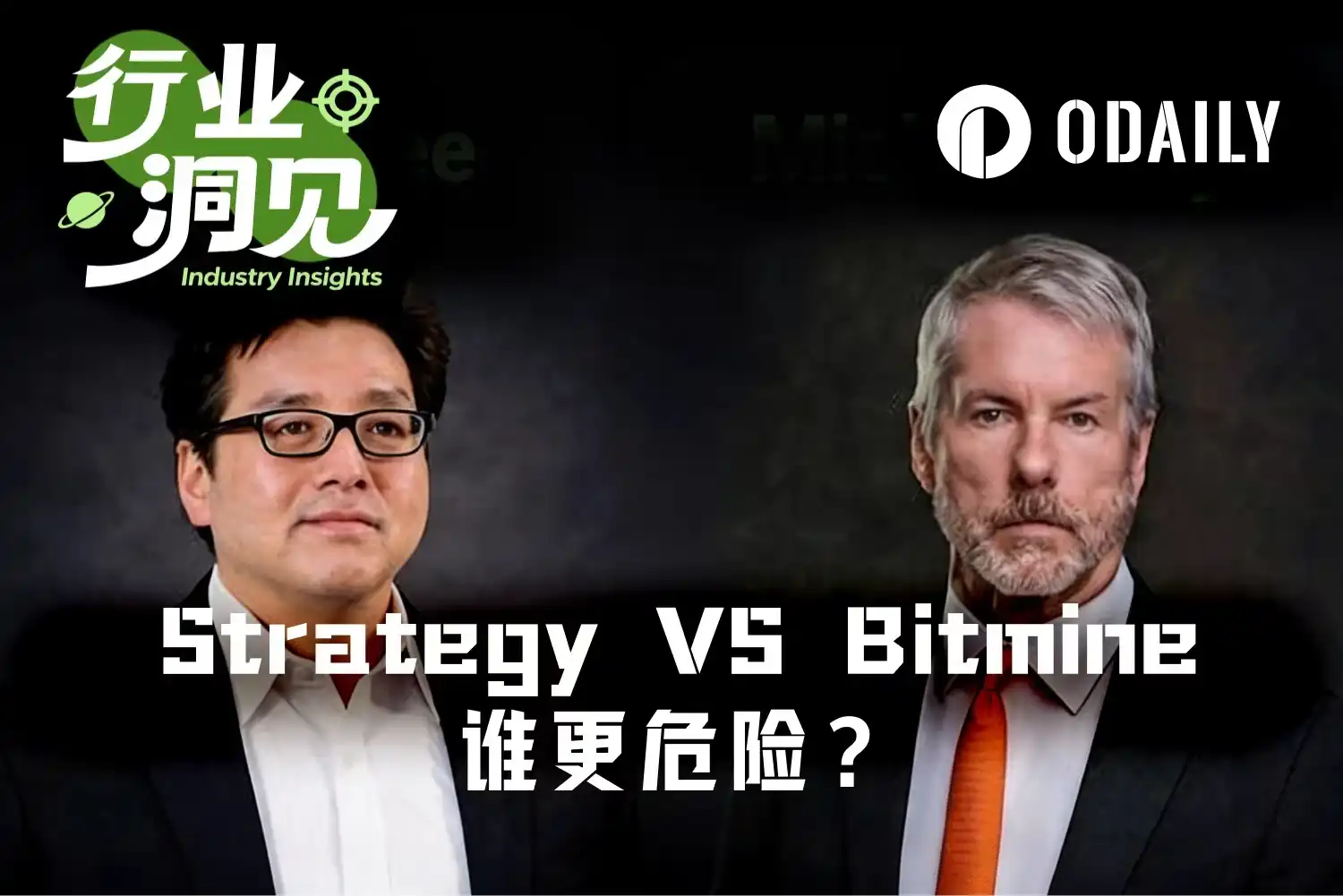
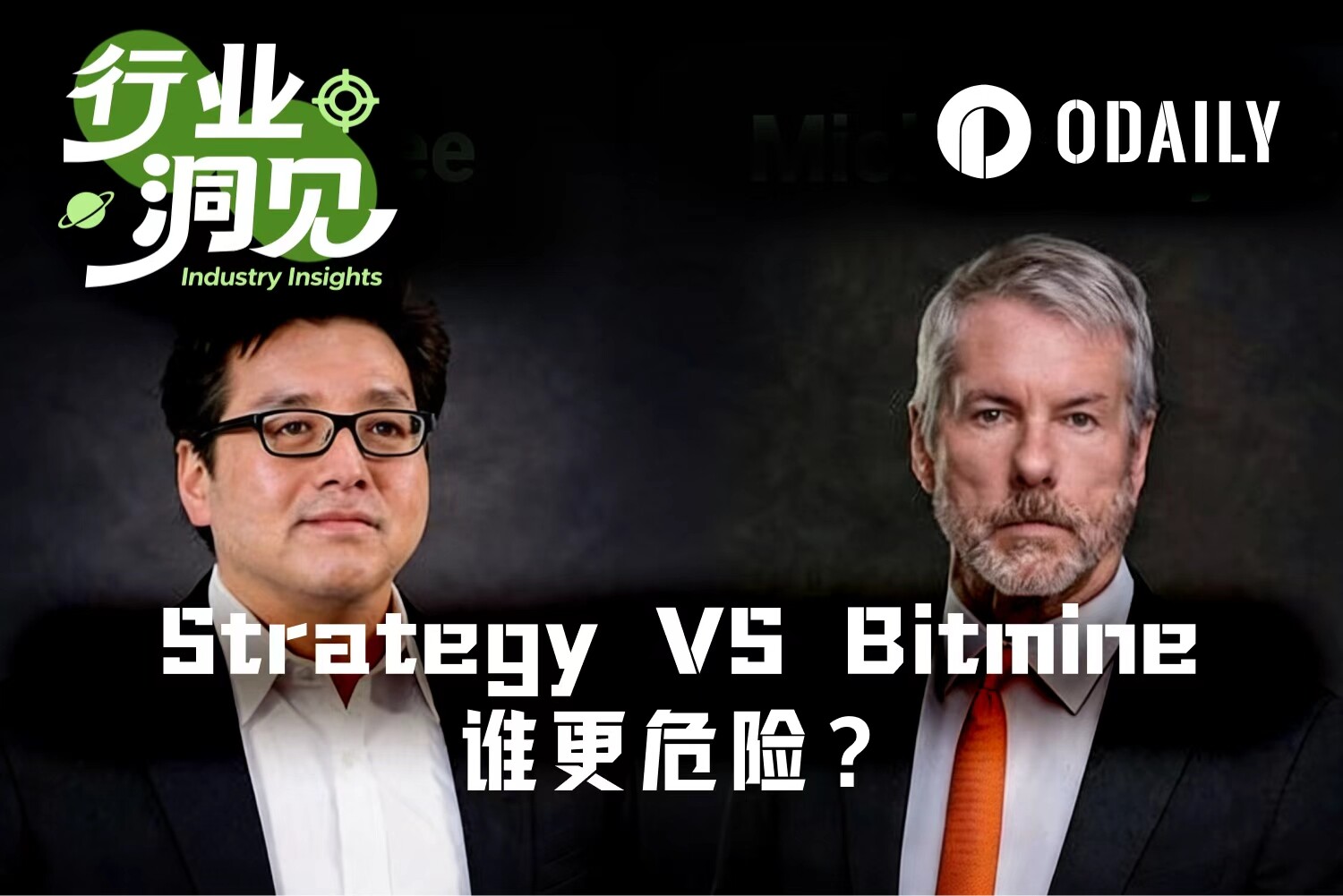
Both Suffer Massive Losses Exceeding $90 Billion, Which Is in Greater Peril: Strategy or Bitmine?

Facing massive paper losses exceeding $90 billion each amidst a sharp market downturn, "Digital Asset Treasury" (DAT) giants Strategy and Bitmine find themselves in a precarious position, but with different underlying risks. Strategy, heavily invested in Bitcoin (BTC), faces significant financial strain. Its strategy relies heavily on debt, including convertible notes and preferred stock (STRC) requiring substantial dividend payments. With its cash reserves dwindling and BTC offering no staking yield for cash flow, Strategy's high leverage makes it vulnerable. A continued price decline could force asset sales to meet obligations, potentially creating a negative feedback loop. Its market value has already fallen sharply. In contrast, Bitmine, an Ethereum (ETH) holder, appears on firmer financial ground. It primarily funds its purchases through equity offerings (like ATM programs), avoiding debt pressure. It also generates income by staking a large portion of its ETH holdings. While not immune to market drops and shareholder dilution concerns, Bitmine maintains more flexibility, recently announcing a new preferred share offering to raise further capital. The core divergence lies in their financing: Bitmine uses equity (investor money), while Strategy uses debt (borrowed money). Consequently, Bitmine currently faces less immediate liquidity pressure than Strategy, which must navigate the dual challenge of servicing debt/dividends and a declining core asset (BTC) price.

marsbitHace 7 min(s)

Both Suffer Massive Losses Exceeding $90 Billion, Which Is in Greater Peril: Strategy or Bitmine?

marsbitHace 7 min(s)

Where the AI Bubble Really Is: Which Layer of Players Are Naked

AI Bubble: Where It Really Is and Who's Swimming Naked This analysis dissects the AI industry not as a single entity but as a five-layer pyramid, arguing that bubbles are concentrated in specific tiers, not uniformly distributed. **Key Distinction from the 2000 Dot-com Bubble:** Unlike 2000, where companies had stock prices before revenue, today's leading AI players have massive, contract-backed revenue driving their valuations. Core infrastructure demand is real, with every GPU running at full capacity for paying customers. **The Five-Layer Pyramid & Bubble Assessment:** * **L0 (Fab/Manufacturing) & Top L4 (Leading AI Apps): NO BUBBLE.** Companies like TSMC, NVIDIA, major cloud providers (Microsoft, Google, Meta, Amazon), and top AI labs have real revenues and orders. Supply is tightly constrained by TSMC's disciplined capacity control and physical limits like power/land for data centers, preventing a supply glut. * **L1 (Memory): BATTLEGROUND.** Sky-high HBM margins could signal a new structural cycle or a classic "boom before bust." The oligopoly of three major players may enforce supply discipline, making this a high-stakes bet. * **L2 (Interconnect/Optical Modules): BUBBLE TERRITORY.** Companies like Lumentum and AAOI have seen stock surges (4-10x) far outpacing revenue growth. This hardware segment has lower physical barriers to expansion than fabs, allowing speculation. It mirrors the 2000 bubble's epicenter—optics. * **L3 (Infrastructure/"GPU Landlords"): VULNERABLE.** GPU leasing companies profit from the current compute shortage but own no long-term moat. Their business model relies on a temporary bottleneck that will ease as big tech expands and new tech (e.g., potential space-based data centers) emerges. * **L4 Long Tail (VC-backed Startups): STRONG BUBBLE SIGNALS.** VC funding concentration in AI is twice that of the 1999 peak. Many startups with little revenue use the valuation logic of successful giants to justify their own, creating high risk of a "valuation crunch" when funding dries up. **Critical Risks to Monitor:** 1. **GPU Depreciation & Accounting:** Companies extending the assumed useful life of GPUs artificially boost profits. The true economic life depends on future generational leaps from NVIDIA. 2. **"GPU Credit" & Off-Balance-Sheet Leverage:** Emerging structures where shell companies borrow to buy GPUs and lease them out (with chipmakers sometimes investing) move debt off major balance sheets. This echoes the "vendor financing" of 2000 and the securitization risks of 2008, though currently small-scale. 3. **TSMC Abandoning Caution:** If the primary supply bottleneck (TSMC's conservative capacity planning) breaks, runaway supply could trigger a bust. 4. **Algorithmic Efficiency Breakthrough:** A major leap in software efficiency could drastically reduce the need for raw compute hardware, undermining the investment thesis. **Conclusion:** The AI boom is expensive and has frothy areas, but its core is underpinned by real demand and physical supply constraints. The bubble risk is layered: most present in optical components, GPU leasing, and the long-tail startup ecosystem, while the foundational chip manufacturing and leading application layers remain relatively solid—for now.

marsbitHace 19 min(s)

Where the AI Bubble Really Is: Which Layer of Players Are Naked

marsbitHace 19 min(s)

Trading

Spot
Futuros
活动图片