Pope Issues First AI Encyclical: 40,000 Words, 10 Key Points, Clarifying AI Anxiety

marsbitPublicado a 2026-05-28Actualizado a 2026-05-28

Resumen

Pope Leo XIV's historic encyclical "Magnifica Humanitas," released in May 2026, marks the Catholic Church's first major document addressing artificial intelligence. The 40,000-word text moves beyond theological abstraction to confront practical AI anxieties affecting society. It argues that AI is no longer a mere tool but an embedded environment influencing daily decisions in areas like employment, healthcare, justice, and information, often without users' awareness. The encyclical presents ten core concerns. It highlights that the central issue isn't just regulation, but who holds the underlying *power*—control over data, compute, and platforms—often concentrated in private entities. It warns that even developers cannot fully explain AI systems, creating accountability gaps. While AI can simulate human interaction and creativity, it cautions against treating it as a moral agent capable of bearing true responsibility or forming genuine relationships. Key risks identified include AI's role in opaque decision-making for jobs or welfare, the amplification of persuasive disinformation, and the potential for education to focus on tool use over critical thinking. The document stresses that work has value beyond efficiency, and AI should enhance human capabilities, not merely replace roles. It firmly states that irreversible decisions, especially involving life and death, must remain under human judgment. Ultimately, the encyclical frames AI's challenge as anthropological, not ju...

On May 15, 2026, Pope Leo XIV signed his name on a document spanning over forty thousand words. That day marked exactly the 135th anniversary of the release of the encyclical "Rerum Novarum" by Pope Leo XIII. Signed in 1891, that document was the Catholic Church's first formal response to the impact of the Industrial Revolution on the labor order.

Ten days later, on May 25, 2026, Leo XIV personally attended a press conference, formally promulgating this encyclical titled "Magnifica Humanitas" to the world. This is the first encyclical in the history of the Catholic Church to focus on artificial intelligence as its core theme. At this press conference, besides cardinals and theology professors, there was also Chris Olah, co-founder of Anthropic.
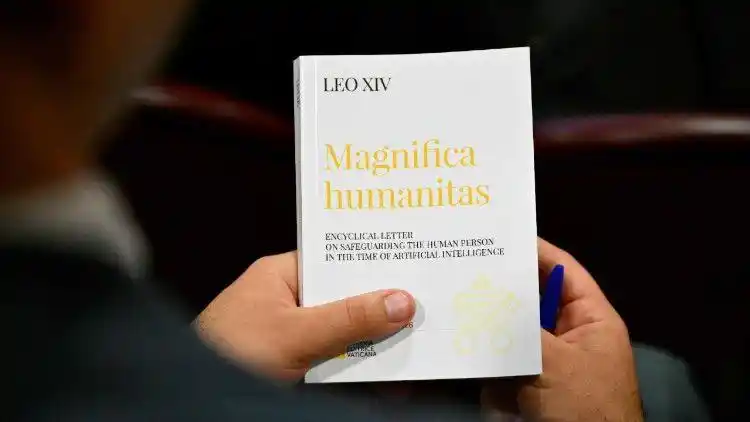
(Image source: Vatican News)

Many find it absurd. AI is science; the Church is theology. While the two disciplines have their own moral concerns, they never seemed to sit at the same table. Having the Vatican talk about algorithms is like asking a weather bureau to judge philosophy—completely unrelated.

However, upon a detailed reading of the "Magnifica Humanitas" encyclical, Lei Technology discovered that this time the Vatican did not use "God" to interpret AI from a lofty position. Instead, it engaged more down-to-earth, discussing topics like war, employment, education, healthcare, and public decision-making—topics the public often struggles to delve into deeply. We have distilled ten core viewpoints from the encyclical to see what the Pope actually said and what it means.

The Ten Viewpoints of the Encyclical, Hitting the Core of People's AI Anxieties

"Magnifica Humanitas" (Sublime Humanity) exceeds forty thousand words, covering war, employment, education, healthcare, information, and public decision-making—touching on almost all current AI controversies. However, it is essentially not a technical document but a moral checklist. It doesn't tell you how to train models; it asks: Whom is AI serving, who is responsible, and who is being left behind? We have extracted ten viewpoints most directly relevant to China's current reality from the encyclical, along with detailed interpretations.

1. AI Is Not the Enemy, But It Has Entered Daily Decision Systems

Technology itself is not the enemy of humanity, but emerging technologies have embedded themselves into daily life and have begun influencing decision-making processes and social imagination.

Leo XIV's attitude is exactly as he wrote. He does not want to label AI as a 'dangerous technology' but describes a change that has already occurred: AI is no longer just a tool but is gradually becoming the environment.

In the past, you had to actively open software to use a technology; now, many AI decisions happen in the background, and users may not even know they have already been assessed by a system. In China, short-video platforms use algorithms to decide content distribution; e-commerce platforms use algorithms to rank products; recruitment platforms perform job matching; office software summarizes meetings and generates documents; educational platforms grade homework and analyze learning situations. Ordinary people might think they only occasionally ask large models, but the real change is that AI has already intervened before they make choices.

(Image source: Lei Technology chart)

Many people might still be thinking or 'resisting' the AI wave by not using AI themselves, but in reality, AI large models have already penetrated our lives deeply. Almost no one can truly escape.

2. The AI Issue Isn't Just About Regulation, But Who Wields Technological Power

The problem is not limited to regulation. Many of the key actors driving technological development today are private institutions with transnational capabilities and immense resources.

Many AI discussions stop at 'whether to regulate.' But the encyclical probes deeper: Who exactly holds technological power? In my view, this is the sharpest point in the entire 40,000-word encyclical and a question the entire industry struggles to answer perfectly.

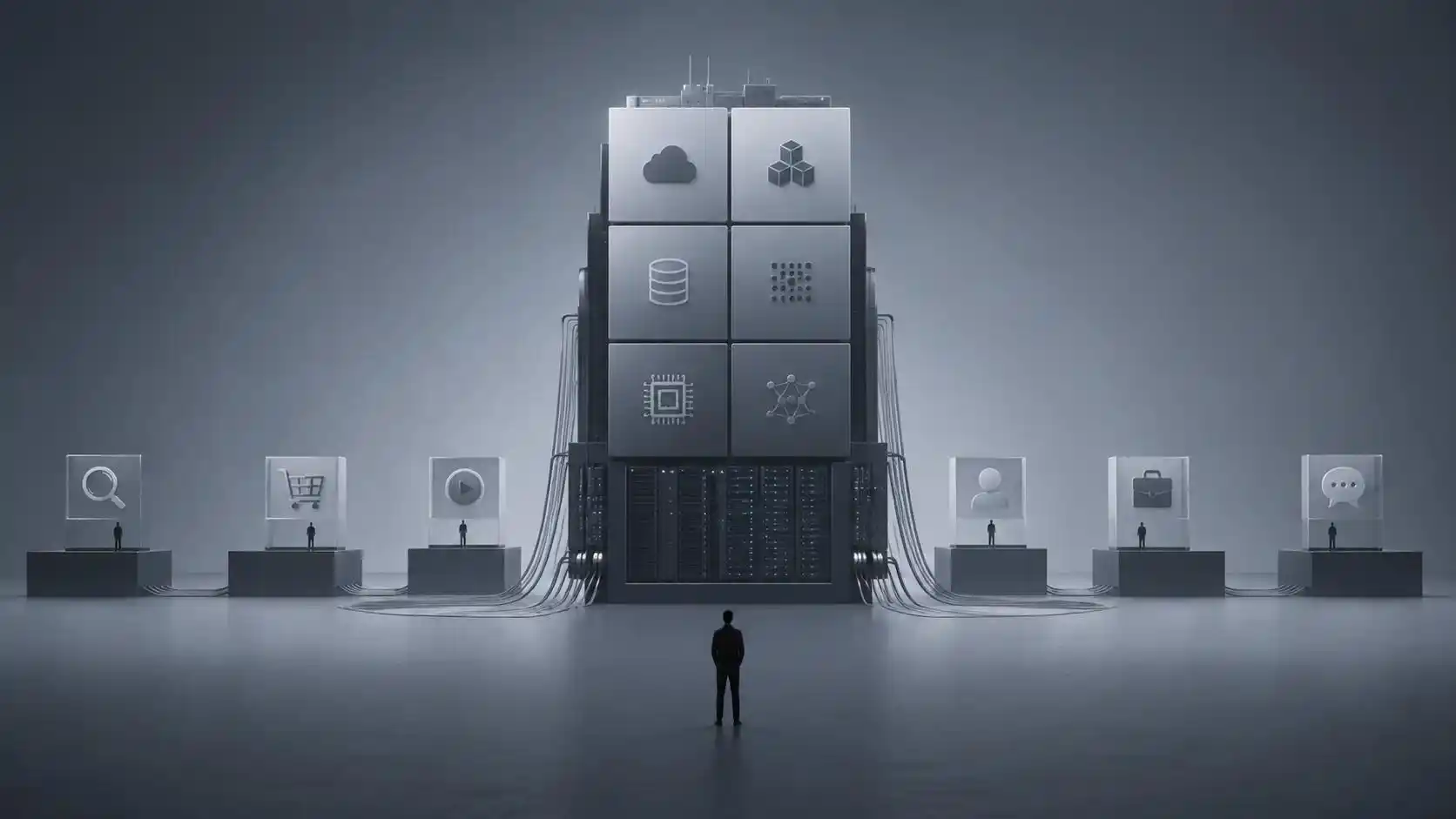
In the AI era, power comes not only from model parameters but also from computing power, data, cloud platforms, access points, and workflows. For example, Baidu has search and intelligent cloud; Alibaba has cloud and the Tongyi system; Tencent has WeChat, Enterprise WeChat, and office collaboration; ByteDance has content distribution and Feishu; DingTalk and WPS are also embedding AI into enterprise processes. A small or medium-sized enterprise wanting to develop an AI application often cannot bypass APIs, cloud services, model licensing, and platform rules.
(Image source: Lei Technology chart)

In my view, AI industry competition appears to be about model capability, but at its foundation, it's about control over infrastructure. Whoever can integrate AI into workflows for office work, search, content, transactions, and enterprise management is not just selling tools but reshaping the next generation of digital infrastructure. This is why the question of 'who to regulate' is so difficult to answer.

3. AI Is Powerful, But Even Developers Cannot Fully Explain It

AI offers many astonishing possibilities, but even its designers have limited understanding of the internal mechanisms of generative AI systems.

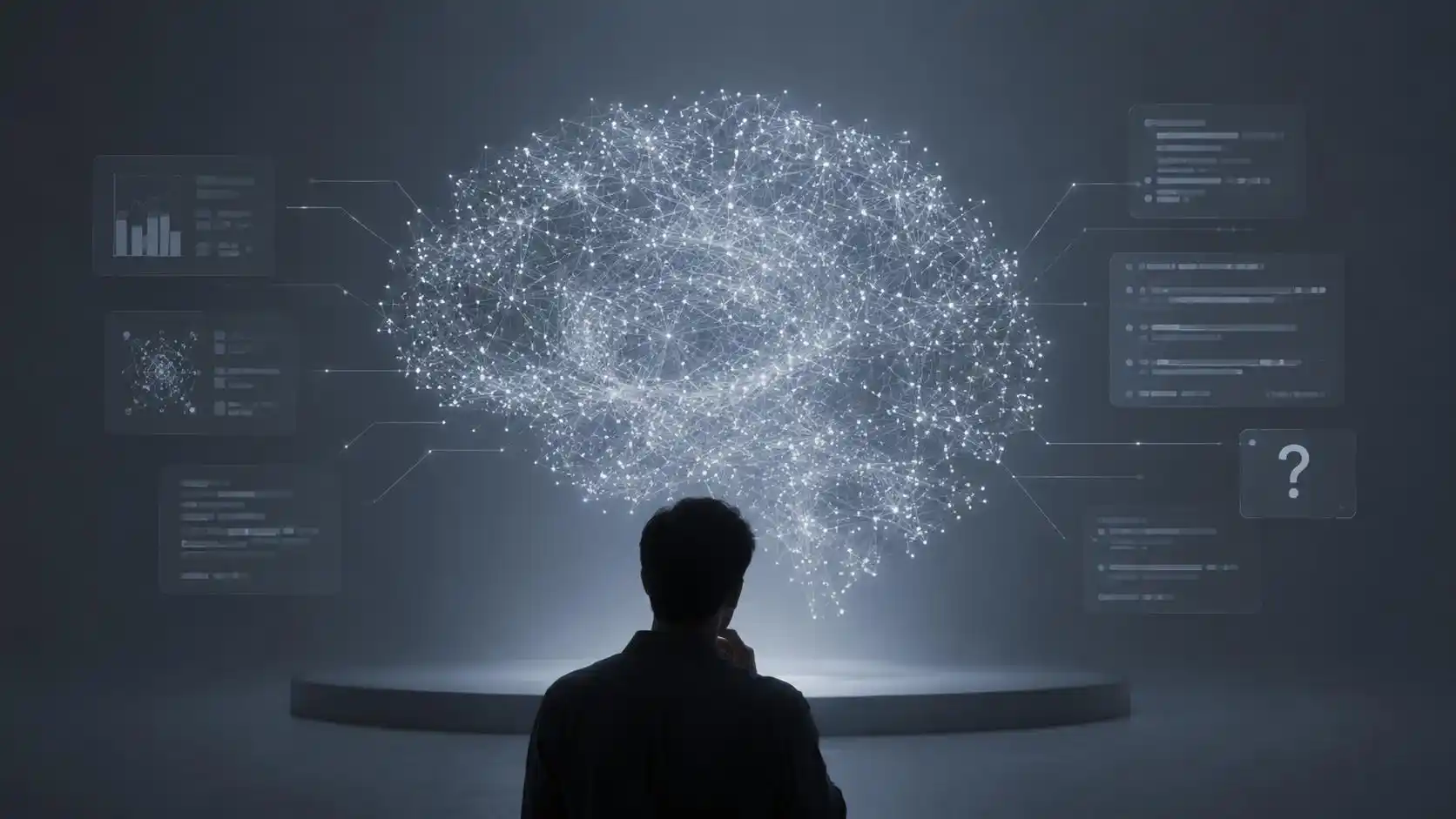
Over the past year, domestic enterprises' attitudes towards large models have shifted from 'must adopt AI' to 'which areas can we safely delegate to AI?' Customer service, marketing copywriting, meeting minutes, code assistance, and knowledge base Q&A are relatively easy to implement because error costs are controllable and human modification is convenient. However, financial risk control, medical diagnosis, legal review, and government services are different. In these scenarios, AI cannot just provide a seemingly correct answer; it must also explain its reasoning, retain logs, support audits, and allow for human takeover when necessary.
(Image source: Lei Technology chart)

Now, many enterprises procuring AI products no longer just look at how powerful the model is. They also consider data isolation, permission systems, on-premises deployment, and audit tracking capabilities. This change indicates one thing: the next threshold for enterprise AI is not whether it can generate but whether it can be held accountable. The more a model resembles an expert, the more users need to know when it might be unreliable.

4. AI Must Not Be Treated as Human Intelligence, Nor as a Moral Agent

AI is not a pile of data but a subject possessing freedom, relationships, and moral responsibility.

Now, many AI products strive to become 'more human-like.' They comfort, act coquettishly, remember preferences, and maintain long-term relationships with users. CCTV reported on a reminder from the Jiangsu Consumer Council about risks associated with AI companions, including privacy leaks, consumption traps, and emotional dependency. Xin Kuai Bao also reported on platforms like "Xingye" and "Cat Box," where young people pay to 'exclusively own' virtual lovers' AI characters. After popular characters are bought out, other users collectively experience 'heartbreak.'

(Image source: Lei Technology chart)

This actually shows users are not buying a piece of code; they are investing real emotions. AI companionship is not inherently wrong; it does fulfill needs for loneliness and companionship. But products must clearly define boundaries. AI can simulate relationships but cannot bear the responsibilities inherent in real relationships. This isn't moral preaching but a boundary that should be seriously considered at the product design level, especially when targeting minors, the elderly, and emotionally vulnerable individuals.

5. AI Decisions Are Affecting Employment, Healthcare, Welfare, and Justice

Employment, welfare, judicial, and medical decisions—sensitive choices—may be influenced by data systems. Therefore, mechanisms for transparency, accountability, and human oversight are essential.

Recruitment is the scenario where ordinary people most easily feel the pressure of AI decisions. First Financial reported that BOSS Zhipin is testing an end-to-end AI recruitment Agent called "DeepHire," covering AI resume polishing, automatic application submission, batch resume parsing on the enterprise side, automatic replies, and intelligent interview scheduling. AI entering the recruitment process certainly improves efficiency; HR is no longer overwhelmed by massive resumes, and job seekers can better present their experiences. But the problem lies here: if resumes are first batch-parsed, scored, and sorted by AI, job seekers might be filtered out by the system before ever being seen by a human.

My view is that AI can assist in screening but should not leave job seekers facing a completely black-box rejection. At the very least, when affecting hiring decisions and interview opportunities, platforms should retain human judgment, clearly mark AI-generated content, and provide necessary appeal channels. This is not limiting AI but leaving a door open for those rejected by the system. Similar dilemmas exist for beneficiary decisions in welfare agencies and judicial determinations of illegal acts.

6. Morally Defined by a Few Is Insufficient; AI Resources Should Serve the Common Good

If ethical standards are defined by only a few, then even more ethical AI is insufficient. Data, knowledge, science, and technology should serve the common good.

Making AI public does not mean demanding all models be free or excluding commercial companies. It means preventing the definition, use, and benefit rights of AI from becoming overly concentrated. This is similar to the ongoing debate about open-source versus closed-source models.

Models like Tongyi Qianwen and DeepSeek continue to open some of their capabilities. Smart computing centers across regions and core nodes of the National Supercomputing Internet also emphasize inclusive computing power and open-source model ecosystems. Abroad, initiatives like NAIRR (National AI Research Resource) aim to provide computing power, data, and model resources to universities, research institutions, and small teams.

I believe that if only a few companies can train models, access computing power, and control high-quality data, while ordinary entrepreneurs, SMEs, and university teams can only work on peripheral applications, AI will instead create new digital divides. A truly healthy AI ecosystem should allow more people to participate, not just wait for tech giants to open a few APIs. In this regard, China's current AI environment is relatively more open, with companies like Alibaba and DeepSeek providing assistance to universities and SMEs.

7. Truth Is a Public Good; AI Amplifies Misinformation and Cognitive Manipulation

Misinformation did not originate with AI, but AI enables it to be more massive, persuasive, and harder to distinguish from genuine dissemination.

This is an age-old problem. Ultimately, it's not about whether AI has hallucinations, but that the cost of using AI for fabrication has become very low.

CCTV reported cases of people using AI to fabricate fake news like "Yichang, Hubei Tour Boat Capsizes," accompanied by AI-processed fake images. In Dali, Yunnan, AI was used to create fake traffic accident scene videos. After an earthquake in Kuqa, Xinjiang, self-media used AI to generate images and audiovisuals inconsistent with the real disaster, publishing false information like "collapsed houses." Images, videos, and so-called on-scene descriptions can all be generated together, making it harder for ordinary people to distinguish.

(Image source: Lei Technology chart)

The state has already issued the "Measures for Labeling AI-Generated and Synthesized Content," requiring labeling of such content. Platforms are also improving their ability to detect fakes. But I believe this is not the end. In the AI era, what is truly scarce is not content but trustworthy content. The more content proliferates, the more important its source becomes.

8. AI Education Must Not Just Teach Tool Use; It Must Preserve Questioning and Judgment

AI education cannot be reduced to technical training. Schools should still cultivate the ability to question, relate, and think critically.

Regarding this part, China is actually at the forefront globally. For example, in 2025, the Ministry of Education released the "Guidelines for General AI Education in Primary and Secondary Schools" and the "Guidelines for the Use of Generative AI by Primary and Secondary School Students." The former emphasizes a tiered, progressive AI general education system, while the latter clarifies usage norms and safety boundaries for each educational stage.

However, if AI education merely teaches students to write prompts and get answers from models, it cultivates not intelligent societal abilities but more proficient dependency. Nowadays, students use AI to write essays, solve problems, and create PPTs; teachers use AI to generate lesson plans, test questions, and comments. Efficiency improves, but the thinking process may be compressed.

Therefore, I also agree with this viewpoint in the encyclical: AI in educational settings should be a tool, not a ghostwriter. Truly good AI education is not about getting answers faster but about enabling students to ask better questions, verify, compare, and express—in other words, learning the thinking process is more important than learning how to get AI to provide solutions directly.

9. AI Will Reshape Labor, But Work Is Not Just About Efficiency

AI can enhance productivity by taking over routine repetitive tasks, but work is also an important place for human development and social participation.

Currently, the attitude of global enterprises towards AI deployment is very uniform: "reducing costs and increasing efficiency," which has become a standard move in almost every industry. But the question is whether AI is augmenting humans or replacing them—this has always been a source of anxiety about AI. If AI in the office merely enables employees to complete reports and meeting minutes faster, it can improve work efficiency, and employees can have more free time for personal activities after finishing work. But if enterprises only use AI to compress positions, lower wages, and strengthen monitoring, it creates new insecurity.

In fact, a healthy AI workflow should allow employees to shift towards judgment, communication, creation, and complex problem-solving, not turn them into repair workers for model outputs.

10. Irreversible Life-and-Death Decisions Cannot Be Entrusted to AI

Lethal or other irreversible decisions should not be delegated to automated systems. Human judgment and moral responsibility cannot be reduced to calculation.

On the surface, this talks about military AI, but it equally applies to all high-risk scenarios like autonomous driving, medical emergencies, industrial robots, and security systems.

Commercialization of intelligent driving in China is rapid. Automated parking, unmanned delivery, and unmanned mining trucks are accelerating deployment. Users care about experience; enterprises care about cost and scale. But once an accident occurs, questions immediately arise: Was it the user's failure to take over in time, or a system misjudgment? An algorithm issue or a sensor problem? The automaker's responsibility or the driver's? Medical AI is similar. It can indeed assist in reading scans, triage, and generating medical records, but it cannot make irreversible judgments without a doctor being responsible.

High-risk scenarios cannot only emphasize the level of intelligence; they must also clarify human supervision, emergency takeover, accident review, and the chain of responsibility. So-called "disarming AI," in an industrial context, means not allowing technological capability to cross the boundary of responsibility.

40,000 Words, 10 Viewpoints: The Pope Wants to Say One Thing

After dissecting this 40,000-word encyclical, Lei Technology believes the Pope essentially wants to clarify one thing from start to finish: technology is not neutral.

Simply put, what AI looks like depends on who builds it. ChatGPT designed by OpenAI, Gemini created by Google, Doubao built by ByteDance—each has its own "preferences and biases." Whose values enter the training data, whose interests determine the product direction, who controls computing power and access points, who formulates the so-called "ethical frameworks"—all these are becoming part of the experience we feel daily when interacting with AI.

For example, when AI enters recruitment, the screening logic is defined by the platform, and job seekers don't know by what criteria they are filtered. When AI enters education, what constitutes a 'good answer' is determined by the model, and students' thinking gradually aligns with the model. When AI generates content, what is 'credible' is determined by algorithmic distribution, and misinformation circulates in the guise of truth. Behind each scenario lies the same question: Who is defining these rules, and whom are these rules shaping?

The encyclical does not name any company, but it speaks to all companies. What the Pope wants to highlight is that every AI tool you use is not just a tool but a product of certain value judgments. Sometimes you find an AI useful enough, perhaps because it's sufficiently "obedient to you."

In the document, Leo XIV uses a word almost never appearing in AI discussions: "anthropology." He says the challenge posed by AI is fundamentally not a technological challenge but an anthropological one.

AI can write, create music, generate images, simulate dialogue, and make seemingly reasonable judgments. When machines can do all these, humans are forced to answer a question they have long been able to avoid: What is the meaning of us doing these things? If AI writes more fluent articles, generates more pleasing music, and gives more efficient advice, then what is the value of "humans doing this"?

The encyclical contains this passage:

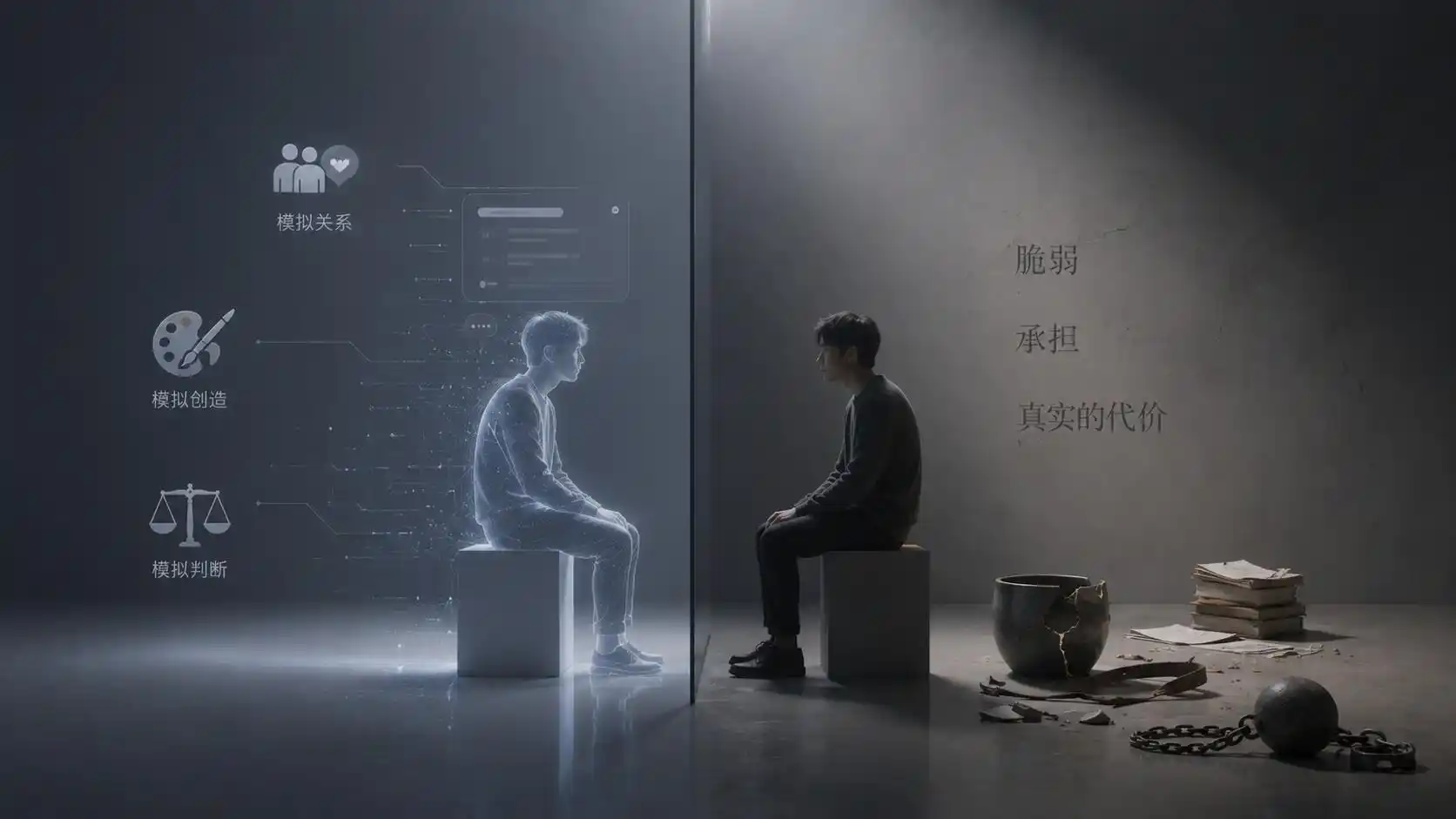
AI can simulate relationships but cannot bear the responsibilities within them; AI can simulate creation but cannot possess the will behind creation; AI can simulate judgment but cannot be accountable for the consequences of judgment. It can achieve the surface, but beneath that surface—the things that make 'human action' meaningful, like vulnerability, commitment, and real cost—it has none.

This makes us think of 1891 when the Catholic Church signed the "Rerum Novarum" encyclical. The Industrial Revolution arrived, and humanity was also experiencing a similarly difficult time. Machines replaced much physical labor but did not replace humans. Humans redefined their position and found things machines couldn't do. This time, the difference is that AI is entering the cognitive domain—creation, judgment. These parts once considered 'uniquely human' are being systematically simulated.
(Image source: Lei Technology chart)

Leo XIV calls this process "the eclipse of the human sense." If we do not seriously answer "what is a human?", AI will answer for us. And its answer comes from training data. As for who provides that training data, that depends on who holds the initiative with large models.

The line in the encyclical, "Technology is never neutral," is correct. But the question immediately following is: Who has the ability to turn the expectation of 'neutrality' into the reality of 'constraint'? Leo XIV does not answer this question, nor can he. What he can do is place a set of moral language into the pool of public discourse, let it circulate, and let it influence those who set rules, deploy technology, and use products. In fact, this has always been what the Church does.

Therefore, this is not absurd. At a time when tech companies, governments, international institutions, and society have yet to find answers, a two-thousand-year-old institution has spoken first.

This article is from "Lei Technology."

Preguntas relacionadas

QWhat is the main argument presented by Pope Leo XIV in the AI encyclical 'Magnifica Humanitas'?

AThe main argument is that technology, particularly AI, is not neutral. Its development and application are shaped by the values, interests, and power structures of those who create and control it. The encyclical frames AI's challenges as fundamentally anthropological, forcing humans to reconsider what makes human actions meaningful when machines can simulate creativity, judgment, and relationship.

QAccording to the article, what are two specific areas where AI decision-making is raising significant ethical concerns?

ATwo specific areas are employment (e.g., AI-powered resume screening and hiring processes that could create opaque rejection systems) and public information (e.g., AI's role in amplifying and making disinformation more convincing and harder to distinguish from truth).

QWhat does the encyclical suggest about the relationship between AI and human responsibility in high-stakes scenarios?

AThe encyclical asserts that irreversible decisions, especially those involving life and death, should not be delegated to automated systems. Human judgment and moral responsibility cannot be reduced to calculation. It calls for clear human oversight, emergency takeover protocols, and defined chains of responsibility in areas like autonomous weapons, healthcare, and self-driving cars.

QHow does the article contrast the current AI revolution with the Industrial Revolution discussed in the 1891 encyclical 'Rerum Novarum'?

AThe Industrial Revolution primarily replaced human physical labor, leading people to redefine their roles around tasks machines couldn't do. The AI revolution, however, is entering the cognitive domain—simulating creativity, judgment, and relationship—areas traditionally considered uniquely human. This presents a deeper challenge to human identity and purpose.

QWhat is one of the key concerns the encyclical raises regarding AI development power dynamics, according to the article's analysis?

AA key concern is that the power to define, develop, and deploy AI is concentrated in a few large, resource-rich private corporations (e.g., tech giants controlling data, compute, models, and platform ecosystems). This raises the risk of creating a new digital divide where only a few entities shape the rules and benefits of AI, potentially undermining the common good.

Lecturas Relacionadas

Morning News | Coinbase Partners with Standard Chartered to Expand Multi-Currency Fiat Channels; Sharplink and Forward to be Included in Russell Indices; JPMorgan May Issue Stablecoin in the Future

Daily Crypto Recap: Key Developments Institutional adoption continues: Coinbase partners with Standard Chartered to expand multi-currency fiat rails for institutions via Coinbase Prime, supporting AUD, SGD, CAD, CHF, EUR, and GBP. Meanwhile, Sharplink and Forward Industries, companies holding significant ETH and SOL reserves respectively, are set to be included in the Russell indexes, providing indirect crypto exposure to traditional index investors. Regulatory and compliance moves are in focus. Hong Kong's monetary authority announced new measures for investment accounts of mainland Chinese investors, including retroactive document checks to January 2023. Prediction market Polymarket is considering implementing KYC requirements to address sanctions and legal risks. Major financial players signal deeper involvement. JPMorgan Chase CEO Jamie Dimon suggested the bank might issue a stablecoin in the future. Concurrently, Falcon Finance and Anchorage Digital launched fUSD, a compliant, institution-focused stablecoin. Market sentiment presents a mixed picture. Bitmine's Tom Lee predicts an incoming crypto "supercycle," driven by Wall Street tokenization and AI agents, with Ethereum as a key beneficiary. However, a prominent trader cautions that the current period of investor losses may not be long enough to confirm a bear market bottom, and TD Cowen analysts note diminished chances for U.S. crypto market structure legislation this year due to a worsening political climate. Other notable news includes a16z crypto's observation that most tokenized assets are merely "digitized" and not actively used in DeFi, South Korea's crypto trading volume falling to about 8% of KOSPI's, and the Chinese Supreme Court stating it will research judicial rules for virtual currency cases.

链捕手Hace 1 hora(s)

Morning News | Coinbase Partners with Standard Chartered to Expand Multi-Currency Fiat Channels; Sharplink and Forward to be Included in Russell Indices; JPMorgan May Issue Stablecoin in the Future

链捕手Hace 1 hora(s)

Sitting on a Trillion-Dollar Market, Why Hasn't Real Estate Tokenization Taken Off?

For years, real estate tokenization has been hailed as a breakthrough technology poised to democratize property investment. In theory, it promises fractional ownership of premium assets, rapid transactions, and enhanced liquidity. Yet, in practice, it has failed to gain traction, accounting for less than 0.1% of the global real estate market. The core issue is not a lack of tokens, but the absence of a robust legal, operational, and compliant framework that grants them credibility as financial instruments. The industry initially erred by prioritizing technology over investor needs, creating products with unclear ownership and unreliable liquidity. Key infrastructure remains missing: legally sound ownership structures, compliant transfer mechanisms, professional servicing, and interoperability with traditional finance. This regulatory ambiguity and operational complexity deter institutional investors, who already have access to established, well-governed investment channels. A mature model would feature low minimum investments in institutional-grade assets, transparent rental income distribution, and genuine liquidity through regulated secondary markets. While regulatory progress in regions like the UAE and growth in other tokenized asset sectors (like treasuries) are positive signs, the focus must shift from issuing tokens to building foundational systems. The investment proposition of tokenized real estate is not to create new returns, but to improve access, efficiency, and liquidity for existing income-generating properties. For mainstream adoption, the sector must demonstrate tangible economic advantages over traditional models, not just technical novelty. The next phase depends on proving scalable, compliant operations with auditable track records. The barrier is no longer technology, but infrastructure and regulation. The vision remains unfulfilled until this gap is bridged.

marsbitHace 1 hora(s)

Sitting on a Trillion-Dollar Market, Why Hasn't Real Estate Tokenization Taken Off?

marsbitHace 1 hora(s)

Trading

Spot
Futuros

Artículos destacados

Qué es GROK AI

Grok AI: Revolucionando la Tecnología Conversacional en la Era Web3 Introducción En el paisaje de rápida evolución de la inteligencia artificial, Grok AI se destaca como un proyecto notable que une los dominios de la tecnología avanzada y la interacción del usuario. Desarrollado por xAI, una empresa liderada por el renombrado empresario Elon Musk, Grok AI busca redefinir la forma en que interactuamos con la inteligencia artificial. A medida que el movimiento Web3 continúa floreciendo, Grok AI tiene como objetivo aprovechar el poder de la IA conversacional para responder consultas complejas, proporcionando a los usuarios una experiencia que no solo es informativa, sino también entretenida. ¿Qué es Grok AI? Grok AI es un sofisticado chatbot de IA conversacional diseñado para interactuar dinámicamente con los usuarios. A diferencia de muchos sistemas de IA tradicionales, Grok AI abraza una gama más amplia de consultas, incluyendo aquellas que normalmente se consideran inapropiadas o fuera de las respuestas estándar. Los objetivos centrales del proyecto incluyen: Razonamiento Confiable: Grok AI enfatiza el razonamiento de sentido común para proporcionar respuestas lógicas basadas en la comprensión contextual. Supervisión Escalable: La integración de asistencia de herramientas asegura que las interacciones de los usuarios sean monitoreadas y optimizadas para la calidad. Verificación Formal: La seguridad es primordial; Grok AI incorpora métodos de verificación formal para mejorar la confiabilidad de sus resultados. Comprensión de Largo Contexto: El modelo de IA sobresale en retener y recordar un extenso historial de conversaciones, facilitando discusiones significativas y contextualizadas. Robustez Adversarial: Al enfocarse en mejorar sus defensas contra entradas manipuladas o maliciosas, Grok AI busca mantener la integridad de las interacciones de los usuarios. En esencia, Grok AI no es solo un dispositivo de recuperación de información; es un compañero conversacional inmersivo que fomenta un diálogo dinámico. Creador de Grok AI La mente detrás de Grok AI no es otra que Elon Musk, una persona sinónimo de innovación en varios campos, incluyendo la automoción, los viajes espaciales y la tecnología. Bajo el paraguas de xAI, una empresa enfocada en avanzar la tecnología de IA de maneras beneficiosas, la visión de Musk busca remodelar la comprensión de las interacciones de IA. El liderazgo y la ética fundacional están profundamente influenciados por el compromiso de Musk de empujar los límites tecnológicos. Inversores de Grok AI Si bien los detalles específicos sobre los inversores que respaldan a Grok AI son limitados, se reconoce públicamente que xAI, el incubador del proyecto, está fundado y apoyado principalmente por el propio Elon Musk. Las empresas y participaciones anteriores de Musk proporcionan un respaldo robusto, fortaleciendo aún más la credibilidad y el potencial de crecimiento de Grok AI. Sin embargo, hasta ahora, la información sobre fundaciones de inversión adicionales u organizaciones que apoyan a Grok AI no está fácilmente accesible, marcando un área para una posible exploración futura. ¿Cómo Funciona Grok AI? La mecánica operativa de Grok AI es tan innovadora como su marco conceptual. El proyecto integra varias tecnologías de vanguardia que facilitan sus funcionalidades únicas: Infraestructura Robusta: Grok AI está construido utilizando Kubernetes para la orquestación de contenedores, Rust para rendimiento y seguridad, y JAX para computación numérica de alto rendimiento. Este trío asegura que el chatbot opere de manera eficiente, escale efectivamente y sirva a los usuarios de manera oportuna. Acceso a Conocimiento en Tiempo Real: Una de las características distintivas de Grok AI es su capacidad para acceder a datos en tiempo real a través de la plataforma X—anteriormente conocida como Twitter. Esta capacidad otorga a la IA acceso a la información más reciente, permitiéndole proporcionar respuestas y recomendaciones oportunas que otros modelos de IA podrían pasar por alto. Dos Modos de Interacción: Grok AI ofrece a los usuarios una elección entre “Modo Divertido” y “Modo Regular”. El Modo Divertido permite un estilo de interacción más lúdico y humorístico, mientras que el Modo Regular se centra en ofrecer respuestas precisas y exactas. Esta versatilidad asegura una experiencia personalizada que se adapta a diversas preferencias de los usuarios. En esencia, Grok AI une rendimiento con compromiso, creando una experiencia que es tanto enriquecedora como entretenida. Cronología de Grok AI El viaje de Grok AI está marcado por hitos cruciales que reflejan sus etapas de desarrollo y despliegue: Desarrollo Inicial: La fase fundamental de Grok AI tuvo lugar durante aproximadamente dos meses, durante los cuales se realizó el entrenamiento inicial y el ajuste del modelo. Lanzamiento Beta de Grok-2: En un avance significativo, se anunció la beta de Grok-2. Este lanzamiento introdujo dos versiones del chatbot—Grok-2 y Grok-2 mini—cada una equipada con capacidades para chatear, programar y razonar. Acceso Público: Tras su desarrollo beta, Grok AI se volvió disponible para los usuarios de la plataforma X. Aquellos con cuentas verificadas por un número de teléfono y activas durante al menos siete días pueden acceder a una versión limitada, haciendo que la tecnología esté disponible para un público más amplio. Esta cronología encapsula el crecimiento sistemático de Grok AI desde su inicio hasta el compromiso público, enfatizando su compromiso con la mejora continua y la interacción del usuario. Características Clave de Grok AI Grok AI abarca varias características clave que contribuyen a su identidad innovadora: Integración de Conocimiento en Tiempo Real: El acceso a información actual y relevante diferencia a Grok AI de muchos modelos estáticos, permitiendo una experiencia de usuario atractiva y precisa. Estilos de Interacción Versátiles: Al ofrecer modos de interacción distintos, Grok AI se adapta a diversas preferencias de los usuarios, invitando a la creatividad y la personalización en la conversación con la IA. Avanzada Infraestructura Tecnológica: La utilización de Kubernetes, Rust y JAX proporciona al proyecto un marco sólido para asegurar confiabilidad y rendimiento óptimo. Consideración de Discurso Ético: La inclusión de una función generadora de imágenes muestra el espíritu innovador del proyecto. Sin embargo, también plantea consideraciones éticas en torno a los derechos de autor y la representación respetuosa de figuras reconocibles—una discusión en curso dentro de la comunidad de IA. Conclusión Como una entidad pionera en el ámbito de la IA conversacional, Grok AI encapsula el potencial de experiencias transformadoras para los usuarios en la era digital. Desarrollado por xAI y guiado por el enfoque visionario de Elon Musk, Grok AI integra conocimiento en tiempo real con capacidades avanzadas de interacción. Busca empujar los límites de lo que la inteligencia artificial puede lograr mientras mantiene un enfoque en consideraciones éticas y la seguridad del usuario. Grok AI no solo encarna el avance tecnológico, sino que también representa un nuevo paradigma de conversación en el paisaje Web3, prometiendo involucrar a los usuarios con tanto conocimiento hábil como interacción lúdica. A medida que el proyecto continúa evolucionando, se erige como un testimonio de lo que la intersección de la tecnología, la creatividad y la interacción similar a la humana puede lograr.

383 Vistas totalesPublicado en 2024.12.26Actualizado en 2024.12.26

Qué es GROK AI

Qué es ERC AI

Euruka Tech: Una Visión General de $erc ai y sus Ambiciones en Web3 Introducción En el paisaje en rápida evolución de la tecnología blockchain y las aplicaciones descentralizadas, nuevos proyectos emergen con frecuencia, cada uno con objetivos y metodologías únicas. Uno de estos proyectos es Euruka Tech, que opera en el amplio dominio de las criptomonedas y Web3. El enfoque principal de Euruka Tech, particularmente su token $erc ai, es presentar soluciones innovadoras diseñadas para aprovechar las crecientes capacidades de la tecnología descentralizada. Este artículo tiene como objetivo proporcionar una visión general completa de Euruka Tech, una exploración de sus objetivos, funcionalidad, la identidad de su creador, posibles inversores y su importancia dentro del contexto más amplio de Web3. ¿Qué es Euruka Tech, $erc ai? Euruka Tech se caracteriza como un proyecto que aprovecha las herramientas y funcionalidades ofrecidas por el entorno Web3, centrándose en integrar inteligencia artificial dentro de sus operaciones. Aunque los detalles específicos sobre el marco del proyecto son algo elusivos, está diseñado para mejorar la participación del usuario y automatizar procesos en el espacio cripto. El proyecto tiene como objetivo crear un ecosistema descentralizado que no solo facilite transacciones, sino que también incorpore funcionalidades predictivas a través de inteligencia artificial, de ahí la designación de su token, $erc ai. El objetivo es proporcionar una plataforma intuitiva que facilite interacciones más inteligentes y un procesamiento eficiente de transacciones dentro de la creciente esfera de Web3. ¿Quién es el Creador de Euruka Tech, $erc ai? En la actualidad, la información sobre el creador o el equipo fundador detrás de Euruka Tech permanece no especificada y algo opaca. Esta ausencia de datos genera preocupaciones, ya que el conocimiento del trasfondo del equipo es a menudo esencial para establecer credibilidad dentro del sector blockchain. Por lo tanto, hemos categorizado esta información como desconocida hasta que se disponga de detalles concretos en el dominio público. ¿Quiénes son los Inversores de Euruka Tech, $erc ai? De manera similar, la identificación de inversores u organizaciones de respaldo para el proyecto Euruka Tech no se proporciona fácilmente a través de la investigación disponible. Un aspecto que es crucial para los posibles interesados o usuarios que consideren involucrarse con Euruka Tech es la garantía que proviene de asociaciones financieras establecidas o respaldo de firmas de inversión de renombre. Sin divulgaciones sobre afiliaciones de inversión, es difícil sacar conclusiones completas sobre la seguridad financiera o la longevidad del proyecto. De acuerdo con la información encontrada, esta sección también se encuentra en estado de desconocido. ¿Cómo Funciona Euruka Tech, $erc ai? A pesar de la falta de especificaciones técnicas detalladas para Euruka Tech, es esencial considerar sus ambiciones innovadoras. El proyecto busca aprovechar el poder computacional de la inteligencia artificial para automatizar y mejorar la experiencia del usuario dentro del entorno de las criptomonedas. Al integrar IA con tecnología blockchain, Euruka Tech tiene como objetivo proporcionar características como operaciones automatizadas, evaluaciones de riesgo e interfaces de usuario personalizadas. La esencia innovadora de Euruka Tech radica en su objetivo de crear una conexión fluida entre los usuarios y las vastas posibilidades que presentan las redes descentralizadas. A través de la utilización de algoritmos de aprendizaje automático e IA, busca minimizar los desafíos de los usuarios primerizos y optimizar las experiencias transaccionales dentro del marco de Web3. Esta simbiosis entre IA y blockchain subraya la importancia del token $erc ai, que actúa como un puente entre las interfaces de usuario tradicionales y las capacidades avanzadas de las tecnologías descentralizadas. Cronología de Euruka Tech, $erc ai Desafortunadamente, como resultado de la información limitada disponible sobre Euruka Tech, no podemos presentar una cronología detallada de los principales desarrollos o hitos en el viaje del proyecto. Esta cronología, típicamente invaluable para trazar la evolución de un proyecto y entender su trayectoria de crecimiento, no está actualmente disponible. A medida que la información sobre eventos notables, asociaciones o adiciones funcionales se haga evidente, las actualizaciones seguramente mejorarán la visibilidad de Euruka Tech en la esfera cripto. Aclaración sobre Otros Proyectos “Eureka” Es importante señalar que múltiples proyectos y empresas comparten una nomenclatura similar con “Eureka”. La investigación ha identificado iniciativas como un agente de IA de NVIDIA Research, que se centra en enseñar a los robots tareas complejas utilizando métodos generativos, así como Eureka Labs y Eureka AI, que mejoran la experiencia del usuario en educación y análisis de servicio al cliente, respectivamente. Sin embargo, estos proyectos son distintos de Euruka Tech y no deben confundirse con sus objetivos o funcionalidades. Conclusión Euruka Tech, junto con su token $erc ai, representa un jugador prometedor pero actualmente oscuro dentro del paisaje de Web3. Si bien los detalles sobre su creador e inversores permanecen no revelados, la ambición central de combinar inteligencia artificial con tecnología blockchain se presenta como un punto focal de interés. Los enfoques únicos del proyecto para fomentar la participación del usuario a través de la automatización avanzada podrían destacarlo a medida que el ecosistema Web3 progresa. A medida que el mercado cripto continúa evolucionando, los interesados deben mantener un ojo atento a los avances en torno a Euruka Tech, ya que el desarrollo de innovaciones documentadas, asociaciones o una hoja de ruta definida podría presentar oportunidades significativas en el futuro cercano. Tal como está, esperamos más información sustancial que podría revelar el potencial de Euruka Tech y su posición en el competitivo paisaje cripto.

338 Vistas totalesPublicado en 2025.01.02Actualizado en 2025.01.02

Qué es ERC AI

Qué es DUOLINGO AI

DUOLINGO AI: Integrando el Aprendizaje de Idiomas con Web3 e Innovación en IA En una era donde la tecnología redefine la educación, la integración de la inteligencia artificial (IA) y las redes blockchain anuncia una nueva frontera para el aprendizaje de idiomas. Entra DUOLINGO AI y su criptomoneda asociada, $DUOLINGO AI. Este proyecto aspira a fusionar la capacidad educativa de las principales plataformas de aprendizaje de idiomas con los beneficios de la tecnología descentralizada Web3. Este artículo profundiza en los aspectos clave de DUOLINGO AI, explorando sus objetivos, marco tecnológico, desarrollo histórico y potencial futuro, mientras mantiene claridad entre el recurso educativo original y esta iniciativa independiente de criptomoneda. Visión General de DUOLINGO AI En su esencia, DUOLINGO AI busca establecer un entorno descentralizado donde los aprendices puedan ganar recompensas criptográficas por alcanzar hitos educativos en la competencia lingüística. Al aplicar contratos inteligentes, el proyecto tiene como objetivo automatizar los procesos de verificación de habilidades y asignación de tokens, adhiriéndose a los principios de Web3 que enfatizan la transparencia y la propiedad del usuario. El modelo se aparta de los enfoques tradicionales para la adquisición de idiomas al apoyarse en gran medida en una estructura de gobernanza impulsada por la comunidad, permitiendo a los poseedores de tokens sugerir mejoras al contenido del curso y a las distribuciones de recompensas. Algunos de los objetivos notables de DUOLINGO AI incluyen: Aprendizaje Gamificado: El proyecto integra logros en blockchain y tokens no fungibles (NFTs) para representar niveles de competencia lingüística, fomentando la motivación a través de recompensas digitales atractivas. Creación de Contenido Descentralizada: Abre avenidas para que educadores y entusiastas de los idiomas contribuyan con sus cursos, facilitando un modelo de reparto de ingresos que beneficia a todos los contribuyentes. Personalización Impulsada por IA: Al emplear modelos avanzados de aprendizaje automático, DUOLINGO AI personaliza las lecciones para adaptarse al progreso de aprendizaje individual, similar a las características adaptativas que se encuentran en plataformas establecidas. Creadores del Proyecto y Gobernanza A partir de abril de 2025, el equipo detrás de $DUOLINGO AI permanece seudónimo, una práctica frecuente en el paisaje descentralizado de criptomonedas. Esta anonimidad está destinada a promover el crecimiento colectivo y la participación de los interesados en lugar de centrarse en desarrolladores individuales. El contrato inteligente desplegado en la blockchain de Solana anota la dirección de la billetera del desarrollador, lo que significa el compromiso con la transparencia en las transacciones a pesar de que la identidad de los creadores sea desconocida. Según su hoja de ruta, DUOLINGO AI aspira a evolucionar hacia una Organización Autónoma Descentralizada (DAO). Esta estructura de gobernanza permite a los poseedores de tokens votar sobre cuestiones críticas como implementaciones de características y asignaciones del tesoro. Este modelo se alinea con la ética del empoderamiento comunitario que se encuentra en diversas aplicaciones descentralizadas, enfatizando la importancia de la toma de decisiones colectiva. Inversores y Asociaciones Estratégicas Actualmente, no hay inversores institucionales o capitalistas de riesgo identificables públicamente vinculados a $DUOLINGO AI. En cambio, la liquidez del proyecto proviene principalmente de intercambios descentralizados (DEXs), marcando un contraste marcado con las estrategias de financiamiento de las empresas de tecnología educativa tradicionales. Este modelo de base indica un enfoque impulsado por la comunidad, reflejando el compromiso del proyecto con la descentralización. En su libro blanco, DUOLINGO AI menciona la formación de colaboraciones con “plataformas de educación blockchain” no especificadas, destinadas a enriquecer su oferta de cursos. Si bien aún no se han divulgado asociaciones específicas, estos esfuerzos colaborativos sugieren una estrategia para fusionar la innovación blockchain con iniciativas educativas, ampliando el acceso y la participación de los usuarios a través de diversas avenidas de aprendizaje. Arquitectura Tecnológica Integración de IA DUOLINGO AI incorpora dos componentes principales impulsados por IA para mejorar su oferta educativa: Motor de Aprendizaje Adaptativo: Este sofisticado motor aprende de las interacciones de los usuarios, similar a los modelos propietarios de las principales plataformas educativas. Ajusta dinámicamente la dificultad de las lecciones para abordar desafíos específicos de los aprendices, reforzando áreas débiles a través de ejercicios dirigidos. Agentes Conversacionales: Al emplear chatbots impulsados por GPT-4, DUOLINGO AI proporciona una plataforma para que los usuarios participen en conversaciones simuladas, fomentando una experiencia de aprendizaje de idiomas más interactiva y práctica. Infraestructura Blockchain Construido sobre la blockchain de Solana, $DUOLINGO AI utiliza un marco tecnológico integral que incluye: Contratos Inteligentes de Verificación de Habilidades: Esta característica otorga automáticamente tokens a los usuarios que superan con éxito las pruebas de competencia, reforzando la estructura de incentivos para resultados de aprendizaje genuinos. Insignias NFT: Estos tokens digitales significan varios hitos que los aprendices logran, como completar una sección de su curso o dominar habilidades específicas, permitiéndoles intercambiar o mostrar sus logros digitalmente. Gobernanza DAO: Los miembros de la comunidad con tokens pueden participar en la gobernanza votando sobre propuestas clave, facilitando una cultura participativa que fomenta la innovación en las ofertas de cursos y características de la plataforma. Línea de Tiempo Histórica 2022–2023: Conceptualización Los cimientos de DUOLINGO AI comienzan con la creación de un libro blanco, destacando la sinergia entre los avances en IA en el aprendizaje de idiomas y el potencial descentralizado de la tecnología blockchain. 2024: Lanzamiento Beta Un lanzamiento beta limitado introduce ofertas en idiomas populares, recompensando a los primeros usuarios con incentivos en tokens como parte de la estrategia de participación comunitaria del proyecto. 2025: Transición a DAO En abril, se produce un lanzamiento completo de la red principal con la circulación de tokens, lo que provoca discusiones comunitarias sobre posibles expansiones a idiomas asiáticos y otros desarrollos de cursos. Desafíos y Direcciones Futuras Obstáculos Técnicos A pesar de sus ambiciosos objetivos, DUOLINGO AI enfrenta desafíos significativos. La escalabilidad sigue siendo una preocupación constante, particularmente en equilibrar los costos asociados con el procesamiento de IA y mantener una red descentralizada y receptiva. Además, garantizar la creación y moderación de contenido de calidad en medio de una oferta descentralizada plantea complejidades en el mantenimiento de estándares educativos. Oportunidades Estratégicas Mirando hacia adelante, DUOLINGO AI tiene el potencial de aprovechar asociaciones de micro-certificación con instituciones académicas, proporcionando validaciones verificadas en blockchain de habilidades lingüísticas. Además, la expansión entre cadenas podría permitir que el proyecto acceda a bases de usuarios más amplias y a ecosistemas blockchain adicionales, mejorando su interoperabilidad y alcance. Conclusión DUOLINGO AI representa una fusión innovadora de inteligencia artificial y tecnología blockchain, presentando una alternativa centrada en la comunidad a los sistemas tradicionales de aprendizaje de idiomas. Si bien su desarrollo seudónimo y su modelo económico emergente traen ciertos riesgos, el compromiso del proyecto con el aprendizaje gamificado, la educación personalizada y la gobernanza descentralizada ilumina un camino hacia adelante para la tecnología educativa en el ámbito de Web3. A medida que la IA continúa avanzando y el ecosistema blockchain evoluciona, iniciativas como DUOLINGO AI podrían redefinir cómo los usuarios se involucran con la educación lingüística, empoderando comunidades y recompensando la participación a través de mecanismos de aprendizaje innovadores.

378 Vistas totalesPublicado en 2025.04.11Actualizado en 2025.04.11

Qué es DUOLINGO AI

Discusiones

Bienvenido a la comunidad de HTX. Aquí puedes mantenerte informado sobre los últimos desarrollos de la plataforma y acceder a análisis profesionales del mercado. A continuación se presentan las opiniones de los usuarios sobre el precio de AI (AI).

活动图片