For the fourth quarter of the 2026 fiscal year, which ended on June 30, IREN's revenue from cloud AI services exceeded its Bitcoin mining income for the first time — $70.5 million compared to $66.7 million. This is stated in the company's announcement.
Amid the transition, IREN reported a net loss of $684 million. The figure was impacted by a non-cash impairment of assets amounting to $450.4 million, primarily related to the decommissioning of mining equipment during the repurposing of sites for AI Cloud.
The company's total quarterly revenue was $137.2 million — approximately 5% less than the previous period. Revenue from cloud AI services doubled from $33.6 million, while revenue from mining the leading cryptocurrency decreased by about 40% — from $111.2 million.
Adjusted EBITDA fell by 68% — from $59.5 million to $19.2 million. IREN explained the decline by increased personnel expenses and investments in the platform ahead of the anticipated scaling of AI Cloud.
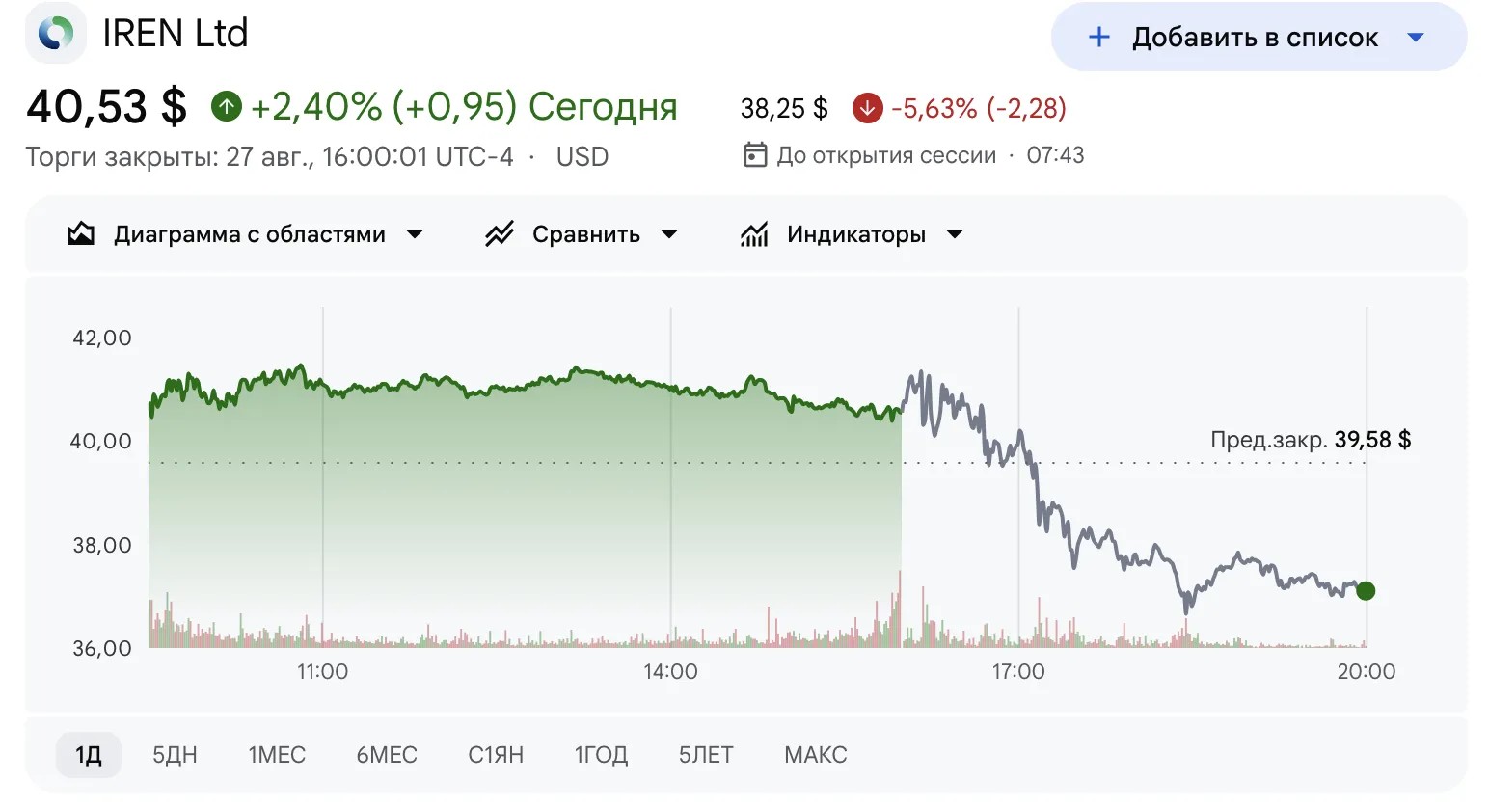
After the publication of the report, the company's stock declined in pre-market trading.
TeraWulf's Performance
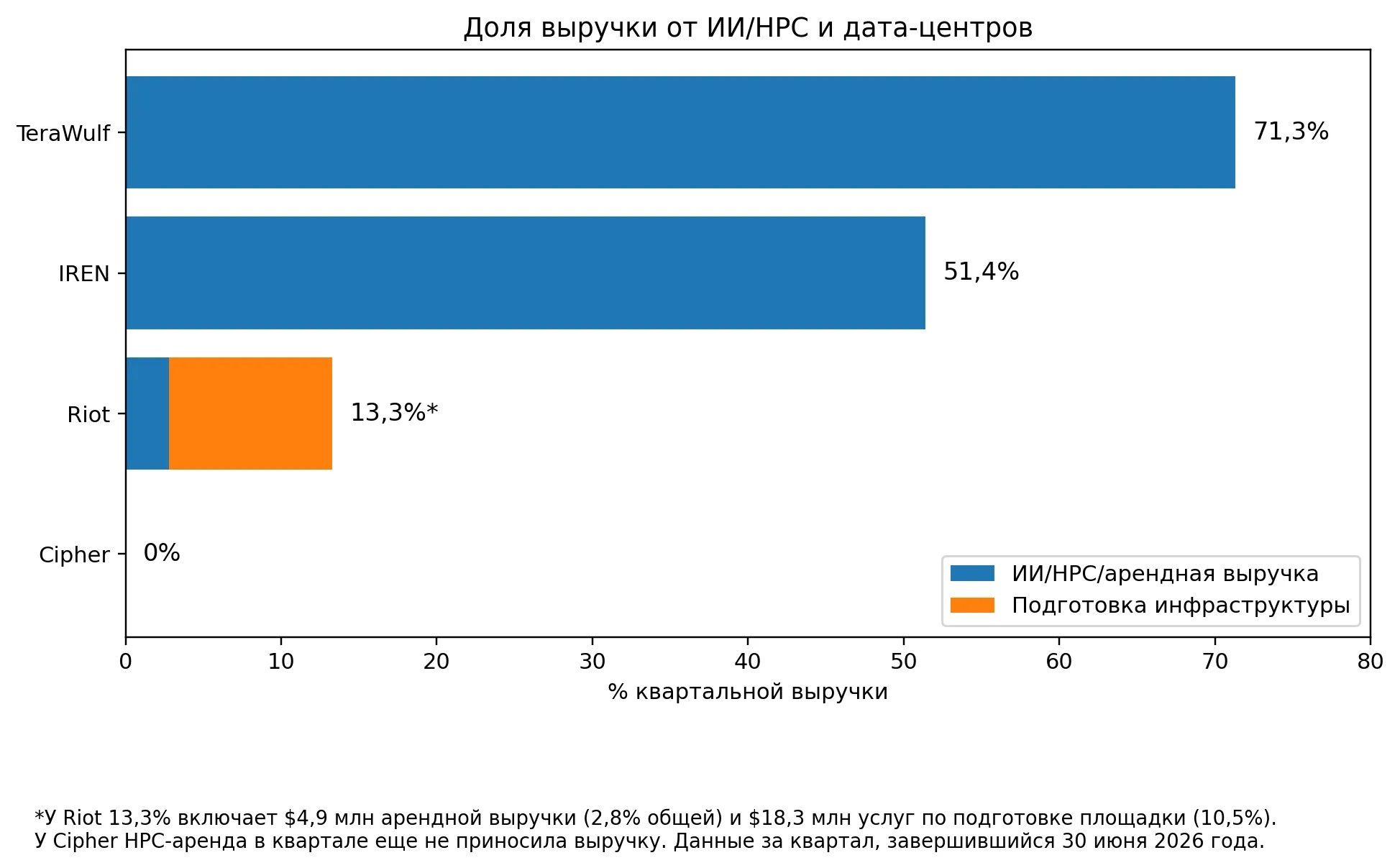
TeraWulf generated $44.8 million in revenue in the second quarter, of which $31.9 million (about 71%) came from leasing capacity for high-performance computing (HPC). Digital assets accounted for $12.8 million; a year earlier, mining revenue reached $47.6 million.
As of the end of June, the Lake Mariner campus had 81 MW of critical IT capacity already generating revenue. Following the commissioning of the next building on July 6, this figure increased to 102 MW.
However, HPC becoming the primary source of income has not yet made TeraWulf profitable. Adjusted EBITDA was −$18.3 million compared to $14.5 million a year earlier.
The net loss attributable to TeraWulf reached $939.9 million. The main contribution came from a non-cash change in the fair value of warrants amounting to $755.7 million. An additional $56.4 million was allocated to interest expenses.
Reports from Cipher and Riot
Cipher Digital's new infrastructure did not yet generate revenue in the second quarter. The company reported $24.8 million in revenue — the entire amount came from Bitcoin mining.
Adjusted EBITDA was −$30 million, and the net loss was $267.5 million. The latter was impacted by the revaluation of warrant liabilities of $150.5 million and interest expenses of $66.7 million.
The company began handing over the first capacities of the Black Pearl data center to the customer only in August. The accrual of lease payments also started then.
Riot Platforms has already started reflecting data center revenue, but it is still significantly lower than mining income. In the second quarter, the company's total figure was $174.2 million:
- Bitcoin mining — $113.7 million;
- Data centers — $23.2 million;
- Engineering — $37.3 million.
The data center segment accounted for about 13% of total revenue. However, only $4.9 million were direct lease payments, with another $18.3 million coming from services for preparing infrastructure for the lessee.
Recall that in June, public Bitcoin miners intensified their pivot to AI infrastructure. The trend became especially noticeable against the backdrop of rising capital expenditures in the AI sector and demand for sites with access to electricity.
Miners' and AI operators' equipment costs rose to $30.7 billion