Sequoia Interview with Hassabis: Information is the Essence of the Universe, AI Will Open Up Entirely New Scientific Branches

链捕手Publicado a 2026-05-12Actualizado a 2026-05-12

Resumen

Demis Hassabis, co-founder and CEO of Google DeepMind and Nobel laureate, discusses the path to AGI and its profound implications in a Sequoia Capital interview. He outlines his lifelong dedication to AI, tracing his journey from game development (e.g., *Theme Park*)—a perfect AI testing ground—to neuroscience and finally founding DeepMind in 2009. He emphasizes the critical lesson of being "5 years, not 50 years, ahead of time" for successful entrepreneurship. Hassabis reiterates DeepMind's two-step mission: first, solve intelligence by building AGI; second, use AGI to tackle other complex problems. He highlights the transformative potential of "AI for Science," particularly in biology where tools like AlphaFold have revolutionized protein folding. He envisions AI-powered simulations drastically shortening drug discovery from years to weeks and enabling personalized medicine. Furthermore, he predicts AI will spawn new scientific disciplines, such as an engineering science for understanding complex AI systems (mechanistic interpretability) and novel fields enabled by high-fidelity simulators for complex systems like economics. He posits a fundamental worldview where information, not just matter or energy, is the essence of the universe, making AI's information-processing core uniquely suited to understanding reality. He defends classical Turing machines as potentially sufficient for modeling complex phenomena, including quantum systems, as demonstrated by AlphaFold. On con...

Original text compiled: Brother Gua AI New Knowledge

This article's content is compiled from the interview with Demis Hassabis on Sequoia Capital's channel, publicly released on April 29, 2026.

Content Overview: Demis Hassabis Interview at Sequoia Capital AI Ascent 2026

  • AI and Games Genesis: Games are an excellent proving ground for artificial intelligence. By making AI the core gameplay mechanic, it can effectively validate algorithmic ideas and also provide early-stage computational support for technological development.
  • Entrepreneurial "Timing Theory": Entrepreneurship should be "five years ahead of its time, not fifty." One must keenly grasp the balance point between technological breakthroughs and practical application needs; being too far ahead often leads to failure.
  • AGI Evolution Path: DeepMind's mission is clear and steadfast—first, build Artificial General Intelligence (AGI); second, use AGI to solve all complex problems, including those in science and medicine.
  • Core Value of "AI for Science": AI is the perfect language for describing biology and complex natural systems. With AI simulation, the drug discovery cycle is expected to shrink from years to weeks, even enabling truly personalized medicine.
  • Birth of New Scientific Disciplines: The complexity of AI systems themselves will give rise to new engineering sciences like "mechanistic interpretability." Simultaneously, AI-driven simulation technology will enable humans to conduct controlled experiments on complex social systems like economics, opening up entirely new scientific branches.
  • Information as the Essence of the Universe: Matter, energy, and information are interchangeable. The essence of the universe might be a grand information processing system, giving AI profound significance in understanding the universe's fundamental operating principles.
  • Computational Limits of Turing Machines: Modern AI systems like neural networks have proven that classical Turing machines are sufficient to simulate problems once thought solvable only by quantum computing (like protein folding).The human brain is likely some form of highly approximate Turing machine.
  • Philosophical Reflections on Consciousness: Consciousness might be composed of components like self-awareness and temporal continuity. On the journey towards AGI, we should first view it as a powerful tool, and then explore the grand philosophical question of "consciousness" with its assistance.

Content Introduction

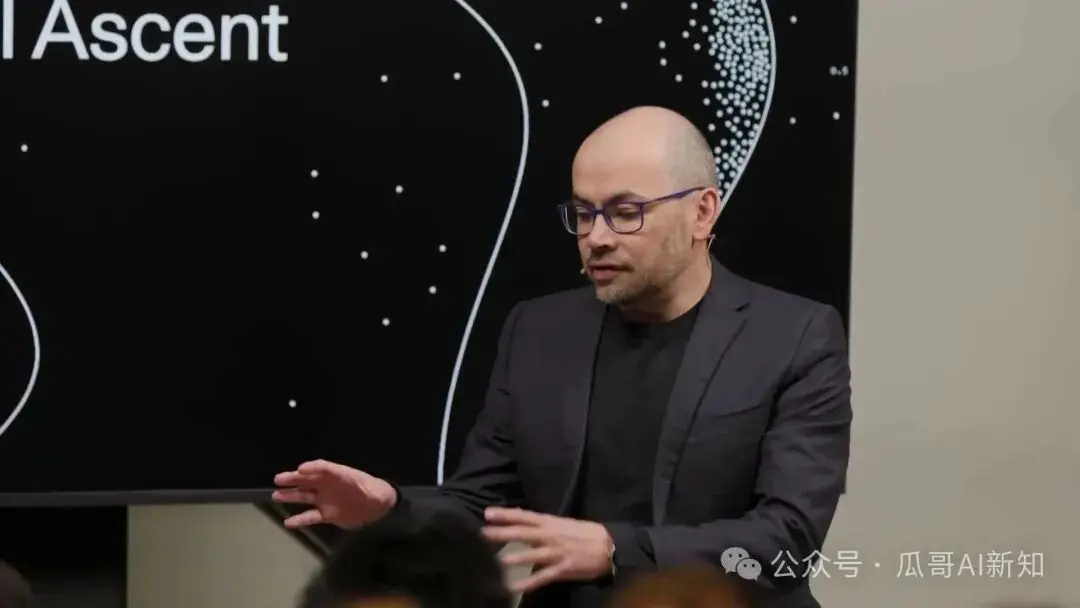
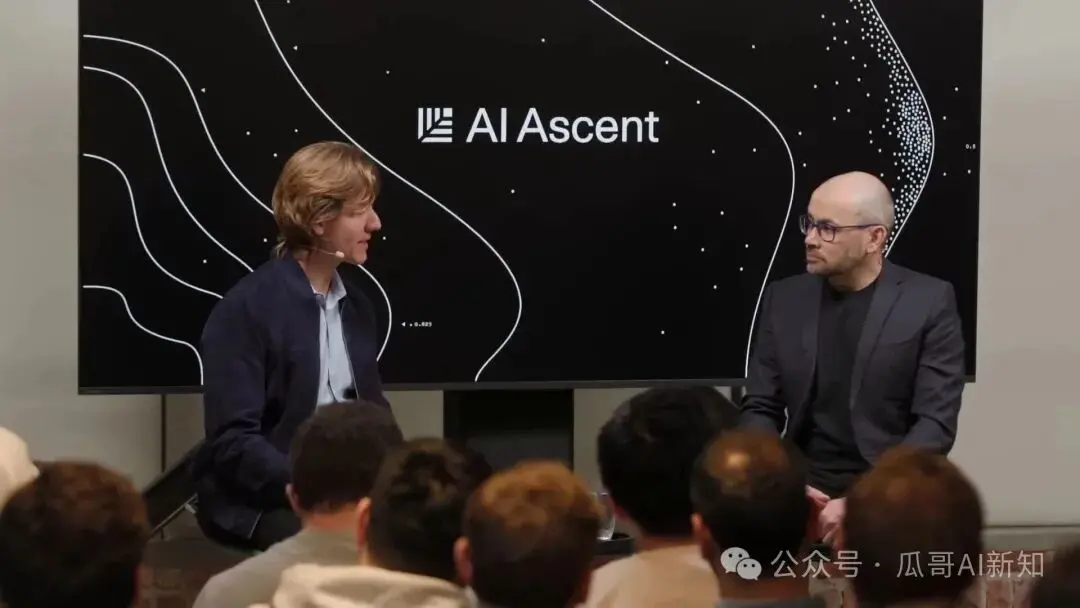
Demis Hassabis, Google DeepMind co-founder and CEO, and winner of the 2024 Nobel Prize in Chemistry for AlphaFold, held a wide-ranging and profound conversation with Sequoia Capital partner Konstantine Buhler at the AI Ascent 2026 summit, discussing the path to AGI and the future beyond.

In the dialogue, he explained why he firmly believes AGI could be achieved by 2030, why the lengthy cycle of new drug discovery might collapse from a decade to just a few days, and why we should regard "information," rather than matter or energy, as the most core and fundamental essence of the universe. Additionally, he pondered what Einstein might say about the limitations of today's AI models if he were still alive, and why the next year or two will become a critical juncture in determining humanity's destiny.

Full Interview Transcript

Host: Demis, thank you so much for coming.

Demis Hassabis: Pleasure to be here. Thank you all for coming, it's fantastic to be here chatting with you all.

Host: It's an absolute honor to have you in our chocolate factory.

Demis Hassabis: I just heard about that. Looking forward to trying some chocolate later.

Host: Wonderful. Demis, let's dive right in. Today we have a true OG: an original thinker, founder, visionary, pioneer in all things AI. Demis is a pure believer, a pure scientist.

Demis's Origin and Inner Thread

Our conversation today will start with the early story of DeepMind's founding, then delve into science and technology, and finish with audience questions. Let's begin.

Demis, you were a chess prodigy, a game company founder, and a neuroscientist. You are the founder of DeepMind, and now lead a large, pivotal company. These identities may seem disparate, but you've said there's an inner thread connecting them. Can you share that with us?

Demis Hassabis: There is indeed a thread, although perhaps with a bit of post hoc reasoning. But my desire to work in AI goes way back. I decided very early that this was the most important and interesting thing I could spend my life on.From around 15, 16 years old, every subject I chose to study, everything I did, was with the eventual aim of one day building a company like DeepMind.

Games: The Proving Ground for AI

I "detoured" into the games industry because in the 90s, the cutting-edge technology was all there. Not just AI, but graphics rendering and hardware technology. The GPUs we all use today were originally designed for graphics engines, and I was using the earliest GPUs in the late 90s. All the games I worked on, whether for Bullfrog or my own company Elixir Studios, had AI as a core gameplay mechanic.
My most famous work was probably "Theme Park," developed when I was about 17. It's an amusement park simulation where thousands of little people pour into the park, ride rides, and decide what to buy in shops. Underneath, it runs a complete economic AI model. Like SimCity, it was a groundbreaking game in its genre. Seeing it sell over 10 million copies and witnessing firsthand how much players enjoyed interacting with the AI only reinforced my decision to dedicate my life to AI.

Later, I switched to neuroscience, hoping to draw inspiration from how the brain works to derive different algorithmic ideas. When the perfect moment finally arrived to found DeepMind, synthesizing all these accumulated experiences felt natural. And indeed, we later used games as an early proving ground for AI ideas.

Entrepreneurial Experience at Elixir Studios

Host: The room is full of entrepreneurs today, you must relate, as you've not only founded one company but have been through this twice. Let's go back to your first venture, Elixir Studios. What was that experience like? It may not be your most famous company, but you achieved great success with it. How did you lead that company? What did that experience teach you about "how to build a company"?
Demis Hassabis: Well, I founded Elixir Studios right after university. I was fortunate to have previously worked at Bullfrog Productions. Those familiar with gaming know it was an early legendary studio, probably the best in the UK, maybe Europe, at the time.

I wanted to push the boundaries of what could be done with AI. Actually, in those days, I used game development as a "detour" to fund AI research, constantly challenging the technological frontier and combining it with extreme creativity. I think that ethos still applies to the blue-sky research we do today.

Perhaps the most profound lesson I learned is: you want to be five years ahead of your time, not fifty. At Elixir, we tried to develop a game called "Republic" that aimed to simulate an entire nation. The premise was that players could overthrow the dictator ruling the country in various ways, and we simulated living, breathing cities.

This was the late 90s, PCs had Pentium processors. We had to run all the graphics rendering and AI logic for a million people on home computers of that era. It was too ambitious—over-ambitious even—and caused a cascade of issues.

I learned that lesson well:You want to be ahead, but if you're fifty years ahead, you'll probably fail. Of course, it's too late when an idea becomes obvious to everyone. So, it's about finding that sweet spot.

Founding DeepMind in 2009

Host: Okay, on the topic of not being too far ahead, fast forward to 2009. You were convinced AGI would happen. That time, perhaps only ten years ahead, better than fifty. Talk to our entrepreneurs here about 2009. How did you convince those first brilliant minds? Because you did recruit an incredibly high-caliber group of early team members. At the time, AGI sounded like pure science fiction. How did you get them to believe?

Demis Hassabis: We had picked up on some interesting threads at the time. We thought we were maybe five years ahead, but it turned out to be more like ten. Deep Learning had just been invented by Jeff Hinton and his academic colleagues, but hardly anyone realized its significance. And we had a strong background in Reinforcement Learning. We felt combining these two would lead to breakthroughs. They had rarely been combined before—if at all, only on academic "toy problems." In the AI field, they were completely separate islands.

Additionally, we saw the promise of Compute; GPUs were about to take off. Today we use TPUs, but back then, the acceleration computing industry would be a huge driver. Also, towards the end of my PhD and postdoc, as I gathered some folks who were computational neuroscientists, we extracted enough valuable ideas and principles from brain mechanisms, including a core belief: that reinforcement learning, scaled up, could ultimately lead to AGI.

We felt we had the key ingredients.We even felt like keepers of a secret because, in academia or industry, no one believed AI would make any significant breakthroughs. In fact, when we proposed aiming for AGI—or sometimes called "Strong AI" back then—many academics would literally roll their eyes. To them, it was a dead end; people had tried and failed in the 90s.

I was at MIT for my postdoc, a stronghold for Expert Systems and First-order Logic Language Systems. Looking back, it's incredible, but even then, I felt that approach was too rigid and old. But in traditional AI hubs like Cambridge, UK, or MIT, people were still using the old methods. That actually made me more confident we were on the right track.At least, if we were going to fail, we'd fail in a new way, not repeat the 90s AGI failures. That made it feel worth trying; even as a risky research endeavor, if we failed, at least we'd fail originally.

DeepMind's Mission and Betting on AGI

Host: Did your early beliefs face widespread skepticism? What did you need to prove to yourself or others to get those early followers to join?

Demis Hassabis: Regardless of circumstances, I would have dedicated my life to AI. It has exceeded even our most optimistic expectations. But it was within our 2010 prediction—we thought it would be a 20-year journey.

I think our pace, as part of the field, is exactly on track, and we've clearly played our part.

Stepping back, even if things hadn't developed this way, even if AI remained a niche subject today, I'd still be on this path because it's the most important technology ever in my view. My goal was clear, DeepMind's original mission statement was: First, solve intelligence, i.e., build AGI; second, use it to solve everything else. I've always believed this is the most important and fascinating technology humanity could invent.

It's a tool for scientific exploration, a fascinating creation in itself, and one of the best ways to understand our own minds—consciousness, dreams, creativity. As a neuroscientist, I used to think about these questions and felt we lacked an analytical tool like AI. It provides a comparative mechanism, allowing us to study and compare two different systems, almost like a controlled experiment.

Culture of "AI for Science"

Host: Comparing different systems. Let's talk about "AI for Science." You were early, a firm believer, a pure idealist. This is a core driving mission. How did the model and culture you established when founding DeepMind keep it at the forefront of "AI for Science"?

Demis Hassabis: That's the ultimate goal. For me personally, the fundamental driver is to build AI to advance science, medicine, and our understanding of the world. That's how I execute the mission—through a "meta way": first build the ultimate tool, then use it, once mature, to achieve scientific breakthroughs. We've had successes like AlphaFold, and I believe there will be many more.

DeepMind has always prioritized this goal. In fact, we have an "AI for Science" division led by Pushmeet Kohli, nearly a decade old now. We formally started this work almost right after returning from the AlphaGo match in Seoul, exactly ten years ago.

I had been waiting for the algorithms to become powerful enough, the ideas general enough. For me, conquering Go was a historic turning point; we realized then that the time had come to apply these ideas to real-world important problems, starting with these grand scientific challenges.

We always believed this was AI's most beneficial destination. What could be better than curing diseases, extending healthy human lifespan, and aiding medicine? Followed closely by material science, environment, energy—key areas. I believe AI will shine brightly in these fields in the coming years.

Biology Breakthroughs and Isomorphic Labs

Host: How is AI achieving breakthroughs in biology? You're deeply involved with Isomorphic Labs, an area you're passionate about. From the start, you've been a firm believer in AI's potential to cure disease. In biology, when will we have our "breakout moment" like in language and programming?

Demis Hassabis: I think we already had our "breakout moment" for biology with AlphaFold. Protein folding and its 3D structure was a 50-year scientific challenge. Solving it is crucial for designing drugs or deciphering biology's fundamental code. Of course, it's just one part of drug discovery—a critical one, but still one part.

Our newly spun-out company, Isomorphic Labs (I'm also enjoying running it), is dedicated to building the core technologies in biochemistry and chemistry that can automatically design compounds that perfectly bind to specific sites on proteins. Now that we know the protein's shape and surface structure, we have the target. Next, we must create compounds that strongly bind to that target, ideally avoiding any off-target effects that could cause toxicity.

Our ultimate dream is to move 99% of the discovery process—which currently takes up the bulk of time and effort—into in silico simulation, leaving only the final validation for wet labs. If we can achieve that—and I firmly believe we will in the coming years—we can shrink the average 10-year drug discovery cycle to months, weeks, eventually even days.

I believe that once we cross that threshold, tackling all diseases becomes achievable. Concepts like personalized medicine (e.g., drug variants tailored to individual patients) will become reality. I think the entire landscape of medicine and drug discovery will be completely reshaped in the coming years.

New Science Born from Simulators

Host: Fascinating. You've mentioned "AI for Science" multiple times. Do you think at some point in the future, AI will give birth to entirely new scientific systems? Like how the Industrial Revolution gave rise to thermodynamics. Will there be essentially new subjects in our education system? If so, what would they look like?

Demis Hassabis: On that point, I think a few things will happen.

First, the understanding and dissection of AI systems themselves will evolve into a full discipline—an engineering science. These creations we are building are incredibly fascinating and also extremely complex. Eventually, their complexity will rival the human mind and brain. So, we must study them deeply to fully understand how they work, far beyond our current understanding. I believe a whole new field will arise; mechanistic interpretability is just the tip of the iceberg; there's vast space to explore in parsing these systems.

Second, I also believe AI itself will open doors to new sciences. What excites me most is "AI for Simulations." I'm fascinated by simulation; all the games I've written not only contained AI but were essentially simulators. I think simulators are the ultimate path to cracking problems in social sciences like economics and other humanities.

The difficulty with these disciplines is that, like biology, they are emergent systems, incredibly hard to run repeatable controlled experiments on. Say you want to raise interest rates by 0.5%, you have to do it in the real world and see the consequences; you can have theories, but you can't repeat the experiment thousands of times. However, if we could simulate these complex systems accurately, then rigorous sampling based on highly accurate simulators could perhaps establish a new science. I believe this would empower us to make better decisions in areas currently fraught with high uncertainty.

Host: To achieve these extremely accurate simulations, what conditions do we need? For example, world models—what scientific and engineering breakthroughs do we need to reach that point?

Demis Hassabis: I've been thinking deeply about this. In our work, we use learning simulators heavily. These simulators are applied in areas where we either don't understand the math well enough, or the system is too complex. We can't solve the problem just by writing direct simulation code for the specific case because that's not precise enough and can't capture all variables.

We already practice this with weather forecasting. We have the world's most accurate weather simulator, "WeatherNext," which runs much faster than tools meteorologists currently use. I'm not sure we can know everything, nor if that's a good idea, but the first step is to better understand these complex systems.

Even in biology, we're working on so-called "virtual cells"—an extremely dynamic emergent system.Just as mathematics is the perfect descriptive language for physics, machine learning will be the perfect descriptive language for biology. In biology and many natural systems, there are vast amounts of weak signals, weak correlations, and massive data, far beyond human brain analysis capacity. Yet, within these massive datasets, there are intrinsic connections, correlations, and thought-provoking causal relationships.

Machine learning is the perfect tool for describing such systems. Until now, mathematics couldn't do it, either because the systems are too complex even for top mathematicians, or because mathematics lacks the expressive power to understand these highly emergent dynamic systems—partly because they are extremely messy and stochastic.

Ultimately, once you master these simulators, perhaps a new branch of science can emerge. You might try to extract explicit equations from these implicit or intuitive simulators. Since you can sample the simulator arbitrarily many times, perhaps one day you could discover fundamental scientific laws like Maxwell's equations.

Maybe. I don't know if such laws exist for emergent systems, but if they do, I see no reason why we couldn't discover them using this method.

Host: That would be remarkable. You've spoken about a theory that the fundamental building block of everything in the universe might be akin to information, which is more theoretical. How do you view that? What does that imply for traditional classical Turing machines?

Demis Hassabis: Of course, you can quote the famous E=mc2 and all of Einstein's work, showing energy and matter are essentially equivalent. But I actually think information also has a kind of equivalence. You can view the organization of matter and structure—especially systems like biology that resist entropy—as essentially information processing systems. So, I think you can convert the three into each other.

However, I have a feeling information is the most fundamental. This is opposite to what classical physicists in the 1920s thought, when energy and matter were considered primary.I actually think viewing the universe as primarily made of information is a better way to understand the world.

If this holds—and I think there's a lot of evidence supporting it—then AI's significance is even deeper than we thought. It's already immensely significant because its core is about organizing information, understanding it, and constructing informational objects.

To me, AI's core is information processing. If you take information processing as the primary way to understand the world, you find deep internal connections between seemingly disparate fields.

Host: So, do you think classical Turing machines can compute everything?

Demis Hassabis: Sometimes I reflect on our work and see myself as a "defender of Turing," because Alan Turing is one of my greatest scientific heroes. I believe his work laid the foundations not only for computers and computer science but also for AI. Turing machine theory is one of the most profound results ever: anything computable can be computed by a relatively simple machine to describe. Therefore, I think our brains are likely also approximate Turing machines.

Thinking about the link between Turing machines and quantum systems is fascinating. However, what we've demonstrated with systems like AlphaGo and especially AlphaFold is that classical Turing machines, dressed in modern neural networks, can model problems previously thought to require quantum mechanics. For example, protein folding is in some sense a quantum system involving very small particles; one might think you have to consider all quantum effects of hydrogen bonds and other complex interactions.

Yet it turns out, with a classical system, you can get an approximately optimal solution. So, we may find that many things we thought needed quantum systems to simulate or run can actually be modeled on classical systems, if we go about it the right way.

Consciousness Philosophy

Host: You've always viewed AI as a tool, like the telescope, microscope, or astrolabe over past centuries. But when you face a machine that can simulate almost everything—as you said, even quantum systems—when does it transcend being just a tool? Will that day truly come?

Demis Hassabis: I very strongly feel that in the mission and journey to build AGI, we—including many here—think the best way is to first build a tool: an incredibly intelligent, practical, and precise tool, then cross the next threshold. That itself is profound enough. Of course, this tool may become increasingly autonomous, more agent-like, which is what we're witnessing now. We are in that wave of the Agent Era.

However, there are further questions: Does it have agency? Is it conscious? These are questions we will have to face. But I suggest we take that as step two, perhaps using the tool built in step one to help us explore these deep questions.

Ideally, through this process, we'll also better understand our own brains and minds, and be able to define concepts like "consciousness" more precisely than today.

Host: Do you have any rough predictions about the future definition of consciousness?

Demis Hassabis: No, beyond what philosophy has discussed for millennia, I don't have much to add. But it's clear to me that certain components are obviously required. They might be necessary but not sufficient. Things like self-awareness, the concept of self and other, and some kind of temporal continuity seem clearly necessary for any entity that appears conscious.

However, what the full definition actually is remains an open question. I've discussed this with many great philosophers. A few years ago, I had an in-depth conversation with Daniel Dennett, who sadly passed away recently. One core issue is the system's behavior: does it behave like a conscious system? You could argue that as some AI systems get closer to AGI, they might eventually do that.

But then the question arises: why do we think each other is conscious? Partly because of how we behave; we behave as conscious beings. But another factor is that we are both running on the same underlying substrate.

So I think if both hold, then assuming you and I have similar experiences is logically most parsimonious, which is why we don't usually argue about each other's consciousness. But obviously, we can never achieve the same substrate equivalence with an artificial system. So I think bridging that gap completely is very difficult. You can look at it behaviorally, but experientially? Perhaps there will be ways to address that after achieving AGI, but that might go beyond today's discussion, even in an "AI and Science" conversation.

Host: Excellent. We'll open to audience questions shortly, please prepare your questions. You mentioned philosophers earlier, particularly Kant and Spinoza, as two of your favorites. Kant is a classic deontological philosopher, extremely focused on duty; Spinoza had an almost deterministic view of the universe. How do you reconcile these two very different ideas? What is your fundamental understanding of how the world operates?

Demis Hassabis: The reason I like these two philosophers and am impressed by them is that Kant proposed an idea—something I deeply felt during my neuroscience PhD—that "the mind creates reality," which I think is largely correct. This gives another great reason to study how the mind and brain work. Since I'm ultimately exploring the nature of reality, we must first understand how the mind interprets reality. That's the insight I get from Kant.

As for Spinoza, it's more about the spiritual dimension. If you try to use science as a tool to understand the universe, you start touching upon the deep mysteries behind how the universe operates.

That's what I feel about our current endeavor. When I engage in scientific research, delve into AI, and build these tools, I feel we are, in a way, reading the language of the universe.

Host: Beautiful. That's the most beautiful description of your daily work: Demis, you are a scientist, a speaker, a philosopher. Before we finish, let's do a few rapid-fire questions. He hasn't seen these beforehand. Predict the year for achieving AGI—sooner or later than expected? Or you can decline.

Demis Hassabis: I'll go with 2030. I've been consistent on that prediction.

Host: Okay, 2030. When we achieve AGI, what book, poem, or paper do you recommend as a must-read?

Demis Hassabis: My favorite book for the post-AGI world is David Deutsch's "The Fabric of Reality." I think the ideas there still apply. I'd hope to use AGI to answer the deep questions posed in that book, and that would be my focus of work post-AGI.

Host: Great. Your proudest moment at DeepMind so far?

Demis Hassabis: We've been fortunate to have many high points. I think the proudest is probably AlphaFold.

Host: Okay, final game-related questions. If you were playing a high-stakes turn-based strategy game like Civilization, Polytopia, those hardcore games, and could pick a scientist from history as a teammate, like Einstein, Turing, or Newton, who would you choose for your squad?

Demis Hassabis: I think I'd choose von Neumann. You need a game theory expert in that situation, and I think he's the best.

Host: That would be a god-tier teammate. Demis, you're such a renaissance person. Thank you so much for being here today. Please join me in thanking Demis. Thank you very much.


Preguntas relacionadas

QAccording to Demis Hassabis, why are games an excellent training ground for artificial intelligence?

ADemis Hassabis believes games are an excellent testbed for AI because they allow for validating algorithmic ideas with AI as a core gameplay mechanic and provide early compute resources for technology development.

QWhat is Demis Hassabis's perspective on the timing for starting a venture, as mentioned in the interview?

AHassabis advocates for being 'five years ahead of the times, not fifty years.' He emphasizes finding the delicate balance between a technological breakthrough and the practical demand for its implementation, as being too far ahead often leads to failure.

QWhat is the two-step mission statement of DeepMind as described by Hassabis?

ADeepMind's mission is, first, to crack intelligence, which means building Artificial General Intelligence (AGI), and second, to use that AGI to solve all other problems, including those in science and medicine.

QHow does Hassabis envision AI transforming drug discovery and personalized medicine?

AHassabis envisions that AI-driven simulations can move 99% of the exploratory work in drug discovery to in silico models, potentially reducing the average 10-year drug development cycle to months, weeks, or even days, and enabling truly personalized medicine.

QWhat fundamental view of the universe does Demis Hassabis express in the interview?

AHassabis expresses the view that information, not just matter and energy, is the most fundamental essence of the universe. He suggests that the universe can be best understood as a vast information-processing system.

Lecturas Relacionadas

The Waged Worker Driven to Poverty by AI Subscriptions

"AI Membership: The Hidden Cost Pushing Workers Toward 'Poverty'" The widespread corporate push for AI adoption is creating a hidden financial burden for employees. Companies, from giants like Alibaba to small firms, are mandating AI use, often tying token consumption to KPIs, but frequently refuse to cover the costs. Workers are forced to pay for subscriptions out of pocket to stay competitive and avoid being replaced. Front-end developer Long Shen spends up to 2000 RMB monthly on tools like Cursor and ChatGPT Plus, seeing it as a necessary 3% salary investment to handle 90% of his coding tasks. While it boosted his performance and led to promotions, he now faces idle time at work, pretending to be busy. Designer Peng Peng navigates strict company firewalls by using personal devices and accounts for AI image generation tools like Midjourney, spending hundreds monthly without reimbursement, while her boss demands faster, more numerous revisions. The pressure creates workplace anxiety and suspicion. Programmer Li Huahua, after a friend's experience of raised KPIs following AI success, fears being branded a "traitor" for using it yet worries about falling behind if she doesn't. The dynamic allows management to demand results without understanding the tools or covering expenses, treating employees like AI "agents." While some, like entrepreneur Jin Tu, find high value in paid AI, building entire systems and winning competitions, for most, it's a trap. Free tools like Kimi and Doubao are introducing fees, closing off alternatives. The initial efficiency gains individual advantage, but as AI becomes ubiquitous, the personal edge disappears, workloads increase, and a cycle of dependency begins. Workers like Long Shen realize they cannot maintain AI-generated code without AI, making stopping harder than continuing to pay. The tool promising liberation is instead becoming a compulsory, costly chain in the modern workplace.

marsbitHace 23 min(s)

The Waged Worker Driven to Poverty by AI Subscriptions

marsbitHace 23 min(s)

SK Hynix's Trillion-Won Empire: The Successors

"SK Hynix's Trillion-Won Empire and Its Heirs" explores the unconventional succession narrative within SK Group, South Korea's second-largest conglomerate, following SK Hynix's dramatic market rise. Unlike traditional chaebol scripts prioritizing the eldest son, ownership, and political marriages, Chairman Choi Tae-won's three children from his first marriage are charting distinct paths. The eldest daughter, Choi Yun-jeong, is considered the most visible candidate. With a background in biology, consulting, and a PhD, she holds executive roles at SK Bioscience and SK Inc.'s growth strategy unit, focusing on biopharma and new businesses. Her marriage is to an AI infrastructure entrepreneur, not a traditional chaebol heir. The second daughter, Choi Min-jeong, took a unique route by voluntarily serving as a South Korean naval officer, including a tour in the Gulf of Aden. She later worked on policy and strategy for SK Hynix in Washington D.C. before co-founding an AI-driven healthcare startup in San Francisco. She married a former U.S. Marine Corps officer, connecting the family to U.S. defense and policy networks. The son, Choi In-geun, who has Type 1 diabetes, followed a more classic preparatory path with a physics degree and a stint at SK E&S but left to join McKinsey's Seoul office. He remains publicly silent and holds no SK shares, defying the traditional "crown prince" archetype. Their paths unfold against the backdrop of their parents' high-profile, contentious divorce and a record-setting asset division lawsuit. The article argues that as SK Hynix becomes a geopolitical asset in the AI era, the conventional rules of chaebol inheritance are changing. The heirs are being groomed not simply to take over, but to navigate a complex global landscape defined by AI, biotech, geopolitics, and policy, forging legitimacy through their own expertise and networks rather than birth order alone.

marsbitHace 31 min(s)

SK Hynix's Trillion-Won Empire: The Successors

marsbitHace 31 min(s)

BitMart Research Institute Weekly Highlights: A Comprehensive Review of Macro Environment, Crude Oil, AI Tech Stocks, and Crypto Market

**Weekly Market Review: Macro, Oil, AI Tech Stocks & Crypto Market** **Macroeconomic & Traditional Finance** The April U.S. Non-Farm Payrolls report of 115K new jobs exceeded expectations, but the data's quality was questioned. Growth was heavily concentrated in healthcare, while other sectors contracted, and manufacturing employment turned negative. A statistical model accounted for a large portion of the gains, conflicting with household survey data showing a loss of 226K jobs. Meanwhile, AI's impact on jobs is emerging, with information sector roles declining, though overall unemployment remains at ~4.3%. Oil prices hovered near $100 per barrel. Global oil buffer inventories have drawn down significantly, supporting prices, but high costs are suppressing demand. China's recent reduction in crude imports acted as a market stabilizer. Geopolitically, the U.S. and Iran are likely to reach a tentative agreement to keep the Strait of Hormuz open and avoid price spikes. For AI tech stocks, short-term prospects are mixed. A potential SpaceX IPO in June could pressure current index heavyweights like Nvidia, while smaller components might benefit. The mid-term focus shifts to Q2 earnings, emphasizing AI's return on investment. Long-term risks include potential election policy shifts and massive IPOs from companies like OpenAI, which could test the sector's sustainability. **Crypto Market & Ecosystem** Crypto markets rose moderately, with BTC climbing from ~$77K to ~$82K, driven by improved risk sentiment. Spot trading volumes remain low, but buying pressure is evident. ETF inflows continued (~$791M last week). However, institutional purchases of BTC and ETH were more modest than expected. The derivatives market shows lingering bearish bets, particularly on alts and ETH. A key trend is the "dual-track" model where projects pursue public listings for traditional funding while also building their own blockchains/tokens to capture crypto liquidity, as seen with Circle's ARC chain. Stablecoins and institutional chains present significant future opportunities. *Disclaimer: This is market analysis, not investment advice.*

marsbitHace 1 hora(s)

BitMart Research Institute Weekly Highlights: A Comprehensive Review of Macro Environment, Crude Oil, AI Tech Stocks, and Crypto Market

marsbitHace 1 hora(s)

Trading

Spot
Futuros

Artículos destacados

Qué es $S$

Entendiendo SPERO: Una Visión General Completa Introducción a SPERO A medida que el panorama de la innovación continúa evolucionando, la aparición de tecnologías web3 y proyectos de criptomonedas juega un papel fundamental en la configuración del futuro digital. Un proyecto que ha atraído la atención en este campo dinámico es SPERO, denotado como SPERO,$$s$. Este artículo tiene como objetivo reunir y presentar información detallada sobre SPERO, para ayudar a entusiastas e inversores a comprender sus fundamentos, objetivos e innovaciones dentro de los dominios web3 y cripto. ¿Qué es SPERO,$$s$? SPERO,$$s$ es un proyecto único dentro del espacio cripto que busca aprovechar los principios de descentralización y tecnología blockchain para crear un ecosistema que promueva la participación, la utilidad y la inclusión financiera. El proyecto está diseñado para facilitar interacciones de igual a igual de nuevas maneras, proporcionando a los usuarios soluciones y servicios financieros innovadores. En su esencia, SPERO,$$s$ tiene como objetivo empoderar a los individuos al proporcionar herramientas y plataformas que mejoren la experiencia del usuario en el espacio de las criptomonedas. Esto incluye habilitar métodos de transacción más flexibles, fomentar iniciativas impulsadas por la comunidad y crear caminos para oportunidades financieras a través de aplicaciones descentralizadas (dApps). La visión subyacente de SPERO,$$s$ gira en torno a la inclusividad, buscando cerrar brechas dentro de las finanzas tradicionales mientras aprovecha los beneficios de la tecnología blockchain. ¿Quién es el Creador de SPERO,$$s$? La identidad del creador de SPERO,$$s$ sigue siendo algo oscura, ya que hay recursos públicos limitados que proporcionan información de fondo detallada sobre su(s) fundador(es). Esta falta de transparencia puede derivarse del compromiso del proyecto con la descentralización, una ética que muchos proyectos web3 comparten, priorizando las contribuciones colectivas sobre el reconocimiento individual. Al centrar las discusiones en torno a la comunidad y sus objetivos colectivos, SPERO,$$s$ encarna la esencia del empoderamiento sin señalar a individuos específicos. Como tal, comprender la ética y la misión de SPERO sigue siendo más importante que identificar a un creador singular. ¿Quiénes son los Inversores de SPERO,$$s$? SPERO,$$s$ cuenta con el apoyo de una diversa gama de inversores que van desde capitalistas de riesgo hasta inversores ángeles dedicados a fomentar la innovación en el sector cripto. El enfoque de estos inversores generalmente se alinea con la misión de SPERO, priorizando proyectos que prometen avances tecnológicos sociales, inclusión financiera y gobernanza descentralizada. Estas fundaciones de inversores suelen estar interesadas en proyectos que no solo ofrecen productos innovadores, sino que también contribuyen positivamente a la comunidad blockchain y sus ecosistemas. El respaldo de estos inversores refuerza a SPERO,$$s$ como un contendiente notable en el dominio de proyectos cripto que evoluciona rápidamente. ¿Cómo Funciona SPERO,$$s$? SPERO,$$s$ emplea un marco multifacético que lo distingue de los proyectos de criptomonedas convencionales. Aquí hay algunas de las características clave que subrayan su singularidad e innovación: Gobernanza Descentralizada: SPERO,$$s$ integra modelos de gobernanza descentralizada, empoderando a los usuarios para participar activamente en los procesos de toma de decisiones sobre el futuro del proyecto. Este enfoque fomenta un sentido de propiedad y responsabilidad entre los miembros de la comunidad. Utilidad del Token: SPERO,$$s$ utiliza su propio token de criptomoneda, diseñado para servir diversas funciones dentro del ecosistema. Estos tokens permiten transacciones, recompensas y la facilitación de servicios ofrecidos en la plataforma, mejorando la participación y la utilidad general. Arquitectura en Capas: La arquitectura técnica de SPERO,$$s$ apoya la modularidad y escalabilidad, permitiendo la integración fluida de características y aplicaciones adicionales a medida que el proyecto evoluciona. Esta adaptabilidad es fundamental para mantener la relevancia en el cambiante paisaje cripto. Participación de la Comunidad: El proyecto enfatiza iniciativas impulsadas por la comunidad, empleando mecanismos que incentivan la colaboración y la retroalimentación. Al nutrir una comunidad sólida, SPERO,$$s$ puede abordar mejor las necesidades de los usuarios y adaptarse a las tendencias del mercado. Enfoque en la Inclusión: Al ofrecer tarifas de transacción bajas e interfaces amigables para el usuario, SPERO,$$s$ busca atraer a una base de usuarios diversa, incluyendo a individuos que anteriormente pueden no haber participado en el espacio cripto. Este compromiso con la inclusión se alinea con su misión general de empoderamiento a través de la accesibilidad. Cronología de SPERO,$$s$ Entender la historia de un proyecto proporciona información crucial sobre su trayectoria de desarrollo y hitos. A continuación se presenta una cronología sugerida que mapea eventos significativos en la evolución de SPERO,$$s$: Fase de Conceptualización e Ideación: Las ideas iniciales que forman la base de SPERO,$$s$ fueron concebidas, alineándose estrechamente con los principios de descentralización y enfoque comunitario dentro de la industria blockchain. Lanzamiento del Whitepaper del Proyecto: Tras la fase conceptual, se lanzó un whitepaper completo que detalla la visión, los objetivos y la infraestructura tecnológica de SPERO,$$s$ para generar interés y retroalimentación de la comunidad. Construcción de Comunidad y Primeras Interacciones: Se realizaron esfuerzos de divulgación activa para construir una comunidad de primeros adoptantes y posibles inversores, facilitando discusiones en torno a los objetivos del proyecto y obteniendo apoyo. Evento de Generación de Tokens: SPERO,$$s$ llevó a cabo un evento de generación de tokens (TGE) para distribuir sus tokens nativos a los primeros seguidores y establecer liquidez inicial dentro del ecosistema. Lanzamiento de la dApp Inicial: La primera aplicación descentralizada (dApp) asociada con SPERO,$$s$ se puso en marcha, permitiendo a los usuarios interactuar con las funcionalidades centrales de la plataforma. Desarrollo Continuo y Alianzas: Actualizaciones y mejoras continuas a las ofertas del proyecto, incluyendo alianzas estratégicas con otros actores en el espacio blockchain, han moldeado a SPERO,$$s$ en un jugador competitivo y en evolución en el mercado cripto. Conclusión SPERO,$$s$ se erige como un testimonio del potencial de web3 y las criptomonedas para revolucionar los sistemas financieros y empoderar a los individuos. Con un compromiso con la gobernanza descentralizada, la participación comunitaria y funcionalidades diseñadas de manera innovadora, allana el camino hacia un paisaje financiero más inclusivo. Como con cualquier inversión en el espacio cripto que evoluciona rápidamente, se anima a los posibles inversores y usuarios a investigar a fondo y participar de manera reflexiva con los desarrollos en curso dentro de SPERO,$$s$. El proyecto muestra el espíritu innovador de la industria cripto, invitando a una mayor exploración de sus innumerables posibilidades. Mientras el viaje de SPERO,$$s$ aún se desarrolla, sus principios fundamentales pueden, de hecho, influir en el futuro de cómo interactuamos con la tecnología, las finanzas y entre nosotros en ecosistemas digitales interconectados.

72 Vistas totalesPublicado en 2024.12.17Actualizado en 2024.12.17

Qué es $S$

Qué es AGENT S

Agent S: El Futuro de la Interacción Autónoma en Web3 Introducción En el paisaje en constante evolución de Web3 y las criptomonedas, las innovaciones están redefiniendo constantemente cómo los individuos interactúan con las plataformas digitales. Uno de estos proyectos pioneros, Agent S, promete revolucionar la interacción humano-computadora a través de su marco agente abierto. Al allanar el camino para interacciones autónomas, Agent S busca simplificar tareas complejas, ofreciendo aplicaciones transformadoras en inteligencia artificial (IA). Esta exploración detallada profundizará en las complejidades del proyecto, sus características únicas y las implicaciones para el dominio de las criptomonedas. ¿Qué es Agent S? Agent S se presenta como un marco agente abierto innovador, diseñado específicamente para abordar tres desafíos fundamentales en la automatización de tareas informáticas: Adquisición de Conocimiento Específico del Dominio: El marco aprende inteligentemente de diversas fuentes de conocimiento externas y experiencias internas. Este enfoque dual le permite construir un rico repositorio de conocimiento específico del dominio, mejorando su rendimiento en la ejecución de tareas. Planificación a Largo Plazo de Tareas: Agent S emplea planificación jerárquica aumentada por la experiencia, un enfoque estratégico que facilita la descomposición y ejecución eficiente de tareas complejas. Esta característica mejora significativamente su capacidad para gestionar múltiples subtareas de manera eficiente y efectiva. Manejo de Interfaces Dinámicas y No Uniformes: El proyecto introduce la Interfaz Agente-Computadora (ACI), una solución innovadora que mejora la interacción entre agentes y usuarios. Utilizando Modelos de Lenguaje Multimodal de Gran Escala (MLLMs), Agent S puede navegar y manipular diversas interfaces gráficas de usuario sin problemas. A través de estas características pioneras, Agent S proporciona un marco robusto que aborda las complejidades involucradas en la automatización de la interacción humana con las máquinas, preparando el terreno para una multitud de aplicaciones en IA y más allá. ¿Quién es el Creador de Agent S? Si bien el concepto de Agent S es fundamentalmente innovador, la información específica sobre su creador sigue siendo elusiva. El creador es actualmente desconocido, lo que resalta ya sea la etapa incipiente del proyecto o la elección estratégica de mantener a los miembros fundadores en el anonimato. Independientemente de la anonimidad, el enfoque sigue siendo en las capacidades y el potencial del marco. ¿Quiénes son los Inversores de Agent S? Dado que Agent S es relativamente nuevo en el ecosistema criptográfico, la información detallada sobre sus inversores y patrocinadores financieros no está documentada explícitamente. La falta de información disponible públicamente sobre las bases de inversión u organizaciones que apoyan el proyecto plantea preguntas sobre su estructura de financiamiento y hoja de ruta de desarrollo. Comprender el respaldo es crucial para evaluar la sostenibilidad del proyecto y su posible impacto en el mercado. ¿Cómo Funciona Agent S? En el núcleo de Agent S se encuentra una tecnología de vanguardia que le permite funcionar de manera efectiva en diversos entornos. Su modelo operativo se basa en varias características clave: Interacción Humano-Computadora Similar a la Humana: El marco ofrece planificación avanzada de IA, esforzándose por hacer que las interacciones con las computadoras sean más intuitivas. Al imitar el comportamiento humano en la ejecución de tareas, promete elevar las experiencias de los usuarios. Memoria Narrativa: Empleada para aprovechar experiencias de alto nivel, Agent S utiliza memoria narrativa para hacer un seguimiento de las historias de tareas, mejorando así sus procesos de toma de decisiones. Memoria Episódica: Esta característica proporciona a los usuarios una guía paso a paso, permitiendo que el marco ofrezca apoyo contextual a medida que se desarrollan las tareas. Soporte para OpenACI: Con la capacidad de ejecutarse localmente, Agent S permite a los usuarios mantener el control sobre sus interacciones y flujos de trabajo, alineándose con la ética descentralizada de Web3. Fácil Integración con APIs Externas: Su versatilidad y compatibilidad con varias plataformas de IA aseguran que Agent S pueda encajar sin problemas en ecosistemas tecnológicos existentes, convirtiéndolo en una opción atractiva para desarrolladores y organizaciones. Estas funcionalidades contribuyen colectivamente a la posición única de Agent S dentro del espacio cripto, ya que automatiza tareas complejas y de múltiples pasos con una intervención humana mínima. A medida que el proyecto evoluciona, sus posibles aplicaciones en Web3 podrían redefinir cómo se desarrollan las interacciones digitales. Cronología de Agent S El desarrollo y los hitos de Agent S pueden encapsularse en una cronología que resalta sus eventos significativos: 27 de septiembre de 2024: El concepto de Agent S fue lanzado en un documento de investigación integral titulado “Un Marco Agente Abierto que Usa Computadoras Como un Humano”, mostrando las bases del proyecto. 10 de octubre de 2024: El documento de investigación fue puesto a disposición del público en arXiv, ofreciendo una exploración profunda del marco y su evaluación de rendimiento basada en el benchmark OSWorld. 12 de octubre de 2024: Se lanzó una presentación en video, proporcionando una visión visual de las capacidades y características de Agent S, involucrando aún más a posibles usuarios e inversores. Estos marcadores en la cronología no solo ilustran el progreso de Agent S, sino que también indican su compromiso con la transparencia y la participación comunitaria. Puntos Clave Sobre Agent S A medida que el marco Agent S continúa evolucionando, varios atributos clave destacan, subrayando su naturaleza innovadora y potencial: Marco Innovador: Diseñado para proporcionar un uso intuitivo de las computadoras similar a la interacción humana, Agent S aporta un enfoque novedoso a la automatización de tareas. Interacción Autónoma: La capacidad de interactuar de manera autónoma con las computadoras a través de GUI significa un salto hacia soluciones informáticas más inteligentes y eficientes. Automatización de Tareas Complejas: Con su metodología robusta, puede automatizar tareas complejas y de múltiples pasos, haciendo que los procesos sean más rápidos y menos propensos a errores. Mejora Continua: Los mecanismos de aprendizaje permiten a Agent S mejorar a partir de experiencias pasadas, mejorando continuamente su rendimiento y eficacia. Versatilidad: Su adaptabilidad en diferentes entornos operativos como OSWorld y WindowsAgentArena asegura que pueda servir a una amplia gama de aplicaciones. A medida que Agent S se posiciona en el paisaje de Web3 y criptomonedas, su potencial para mejorar las capacidades de interacción y automatizar procesos significa un avance significativo en las tecnologías de IA. A través de su marco innovador, Agent S ejemplifica el futuro de las interacciones digitales, prometiendo una experiencia más fluida y eficiente para los usuarios en diversas industrias. Conclusión Agent S representa un audaz avance en la unión de la IA y Web3, con la capacidad de redefinir cómo interactuamos con la tecnología. Aunque aún se encuentra en sus primeras etapas, las posibilidades para su aplicación son vastas y atractivas. A través de su marco integral que aborda desafíos críticos, Agent S busca llevar las interacciones autónomas al primer plano de la experiencia digital. A medida que nos adentramos más en los reinos de las criptomonedas y la descentralización, proyectos como Agent S sin duda desempeñarán un papel crucial en la configuración del futuro de la tecnología y la colaboración humano-computadora.

432 Vistas totalesPublicado en 2025.01.14Actualizado en 2025.01.14

Qué es AGENT S

Cómo comprar S

¡Bienvenido a HTX.com! Hemos hecho que comprar Sonic (S) sea simple y conveniente. Sigue nuestra guía paso a paso para iniciar tu viaje de criptos.Paso 1: crea tu cuenta HTXUtiliza tu correo electrónico o número de teléfono para registrarte y obtener una cuenta gratuita en HTX. Experimenta un proceso de registro sin complicaciones y desbloquea todas las funciones.Obtener mi cuentaPaso 2: ve a Comprar cripto y elige tu método de pagoTarjeta de crédito/débito: usa tu Visa o Mastercard para comprar Sonic (S) al instante.Saldo: utiliza fondos del saldo de tu cuenta HTX para tradear sin problemas.Terceros: hemos agregado métodos de pago populares como Google Pay y Apple Pay para mejorar la comodidad.P2P: tradear directamente con otros usuarios en HTX.Over-the-Counter (OTC): ofrecemos servicios personalizados y tipos de cambio competitivos para los traders.Paso 3: guarda tu Sonic (S)Después de comprar tu Sonic (S), guárdalo en tu cuenta HTX. Alternativamente, puedes enviarlo a otro lugar mediante transferencia blockchain o utilizarlo para tradear otras criptomonedas.Paso 4: tradear Sonic (S)Tradear fácilmente con Sonic (S) en HTX's mercado spot. Simplemente accede a tu cuenta, selecciona tu par de trading, ejecuta tus trades y monitorea en tiempo real. Ofrecemos una experiencia fácil de usar tanto para principiantes como para traders experimentados.

849 Vistas totalesPublicado en 2025.01.15Actualizado en 2025.03.21

Cómo comprar S

Discusiones

Bienvenido a la comunidad de HTX. Aquí puedes mantenerte informado sobre los últimos desarrollos de la plataforma y acceder a análisis profesionales del mercado. A continuación se presentan las opiniones de los usuarios sobre el precio de S (S).

活动图片