Now, ChatGPT's memory system is more human-like.
OpenAI recently launched a brand-new memory system, powered by the underlying Dreaming technology.

It automatically organizes your preferences, projects, devices, travel plans, and life arrangements during long-term conversations, and determines which information is still useful and which is outdated when providing answers.

However, this update is initially rolling out to Plus and Pro users in the U.S., with expansion to more countries in the coming weeks, and will gradually cover Free and Go users.
No More Starting from Scratch: ChatGPT's All-New Memory System Arrives
As early as April 2024, ChatGPT introduced a memory function, but its main form was "saving memories." For example, users could explicitly ask ChatGPT to remember certain information, such as travel arrangements, dietary preferences, names, or job requirements.
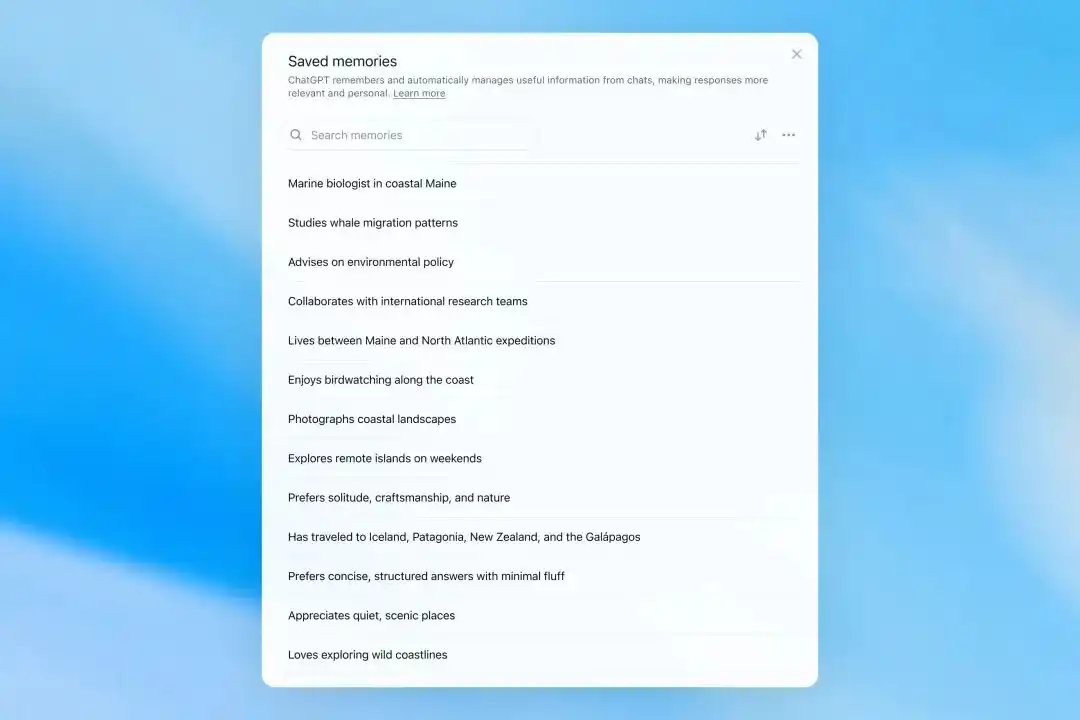
The early mechanism was more like a personal memo pad. If users were explicit enough, the system would save the information and reference it in later conversations. But in real-world use, much important information doesn't appear in the form of "please remember."
A user might mention their device during a consultation, casually state accommodation preferences while planning a trip, or reveal project context during a work discussion. The old version struggled to reliably capture these naturally scattered contextual details.
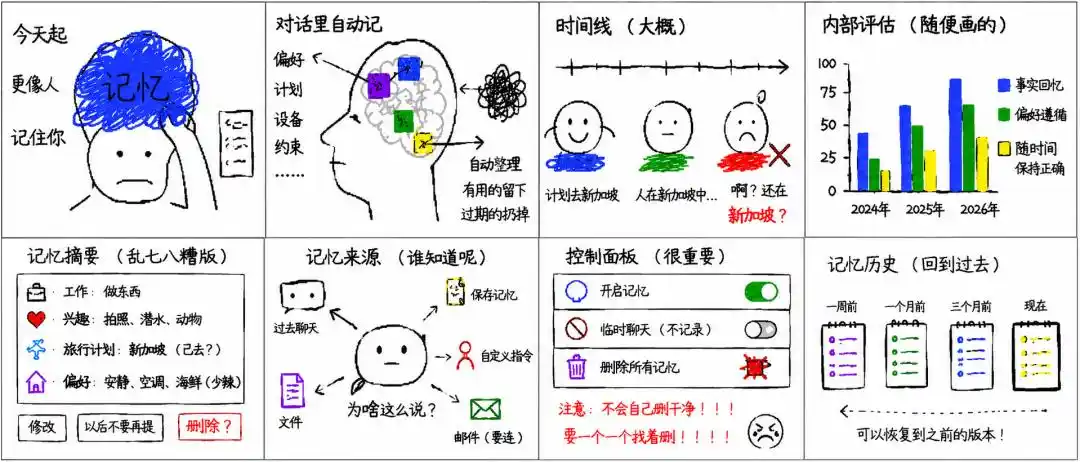
Furthermore, people's locations change, plans conclude, projects progress, and preferences may adjust. Static memories, if not updated over time, could turn personalization into a source of misinformation. For instance, if a user previously mentioned going to Singapore, that information was useful before the trip; but after the trip ends, if the system still recommends food delivery based on Singapore, it would be incorrect.
To address these issues and enable memory to update over time, more accurately reflecting the user's true needs, OpenAI introduced the first generation of Dreaming in April 2025. This aimed to let ChatGPT automatically organize useful information from multiple past conversations in the background and synthesize a new memory state.
Over the past year, Dreaming, alongside saved memories, enhanced personalization capabilities, but the early version wasn't robust enough to support a complete memory system on its own.
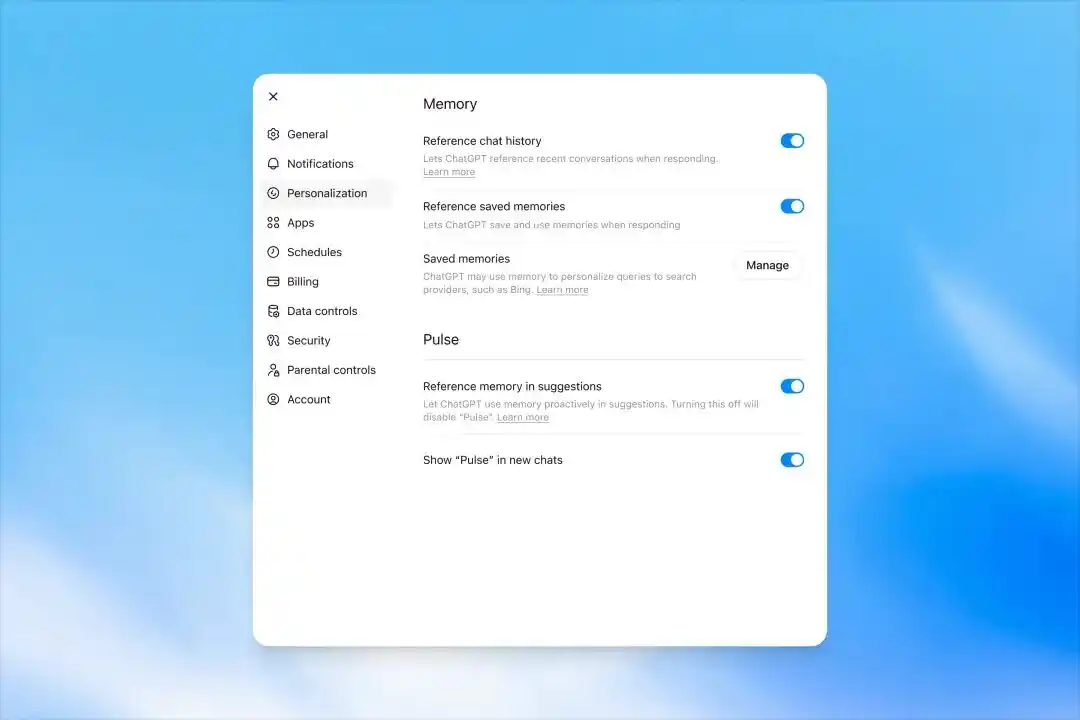
The new version builds upon Dreaming with the goal of solving three problems simultaneously: maintaining useful context, adhering to user preferences, and staying accurate over time.
In its official blog, OpenAI provided several examples. If a user previously discussed photography equipment, later inquiries about underwater photography accessories would prompt ChatGPT to offer compatible suggestions based on the specific camera, housing, and flash, rather than just a generic list.
If a user is planning a trip to Singapore, the system can also incorporate past mentions of preferences for wildlife photography, hotel air conditioning needs, and quiet dining habits to provide a more personalized itinerary.
If a user was traveling somewhere, the system should also understand this might be a temporary state and not treat it as the current location months later.
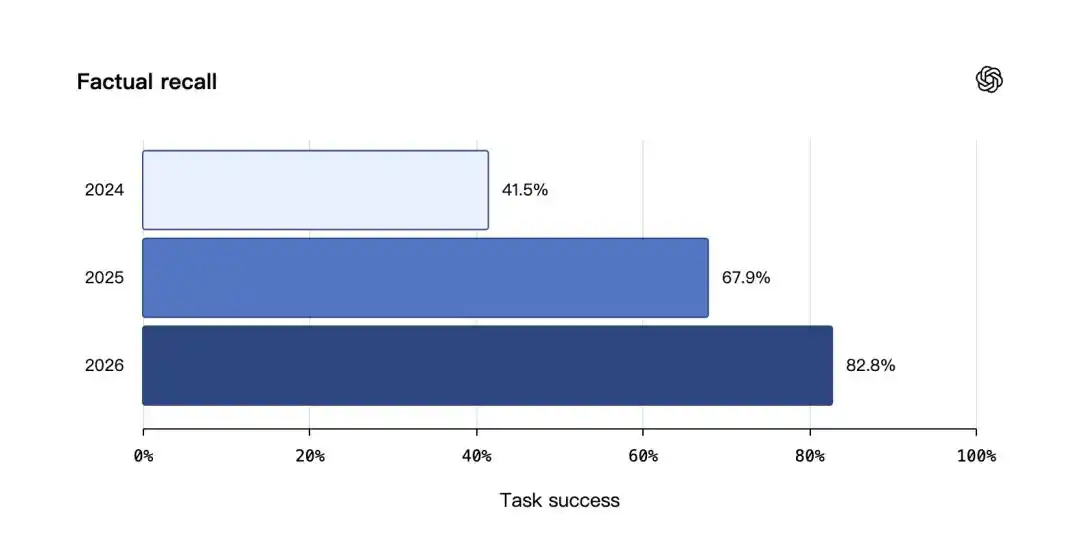
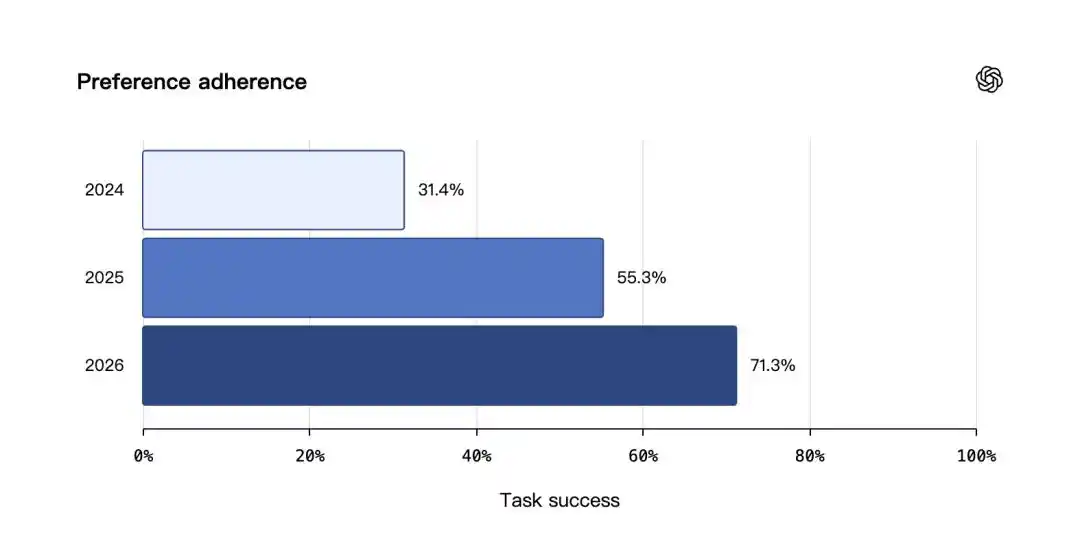
Internal evaluation data reflects these changes.
In factual recall tests, the success rate was 41.5% for the 2024 Saved Memories system, 67.9% for 2025 Saved Memories + Dreaming V0, and 82.8% for the 2026 Dreaming V3.
In preference adherence tests, the rates were 31.4%, 55.3%, and 71.3% respectively.
The improvement was even more significant in tests for staying correct over time: 9.4% in 2024, 52.2% in 2025, and 75.1% in 2026.
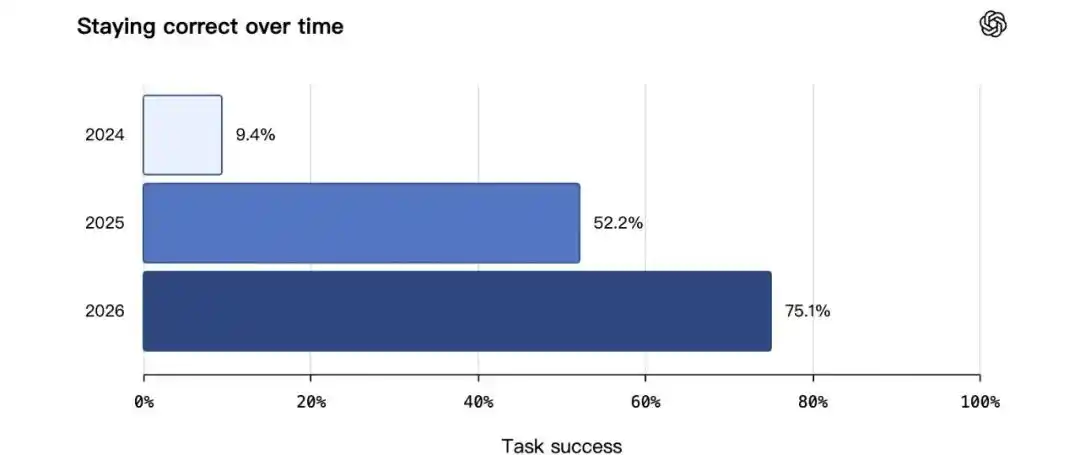
This data shows that OpenAI's goal isn't just for ChatGPT to remember more information. The real key is for the system to know which information is still fresh, which has expired, and which is suitable for inclusion in the current response.
The Endpoint of a Personal Assistant Is Becoming Another "You"
The most obvious product-level change is the addition of "Memory Summary."
OpenAI stated that memories synthesized by Dreaming can be viewed via the Memory Summary page. Users can see the personal information ChatGPT deems important, including work, interests, travel plans, long-term projects, and response preferences. They can also add or modify information in the summary.
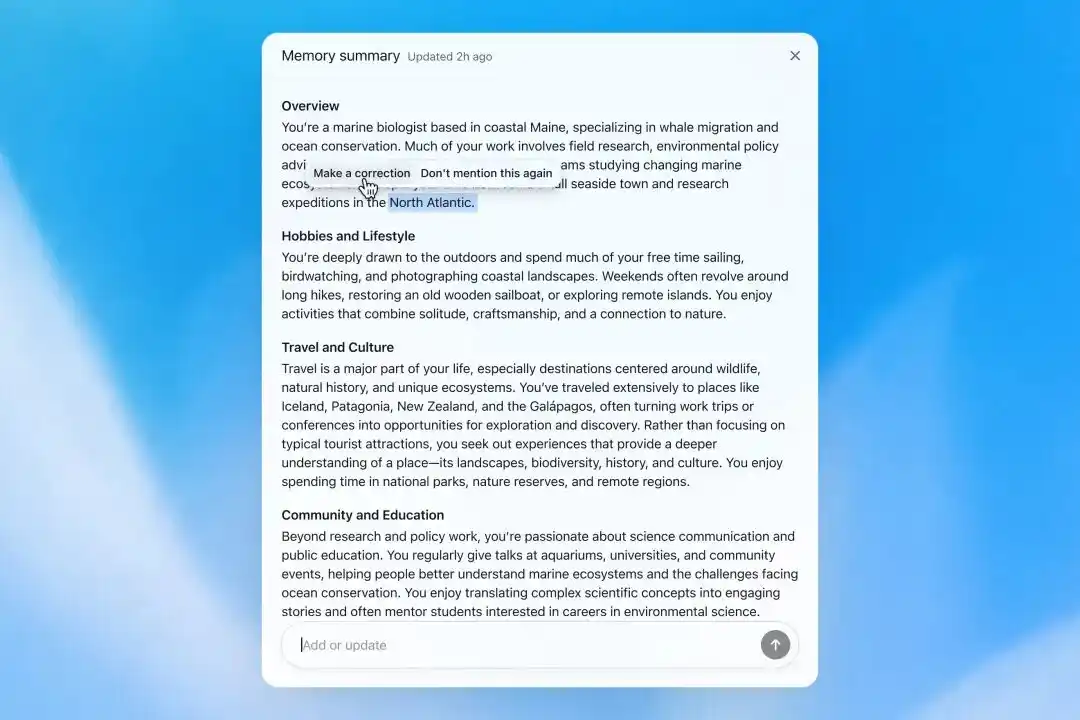
The Memory Summary updates automatically and shows the last update time.
Users can directly input modification requests, select specific text to correct, or choose "Don't mention this again." However, OpenAI emphasizes that such actions will only reduce future active mentions and do not equate to completely deleting the relevant information.
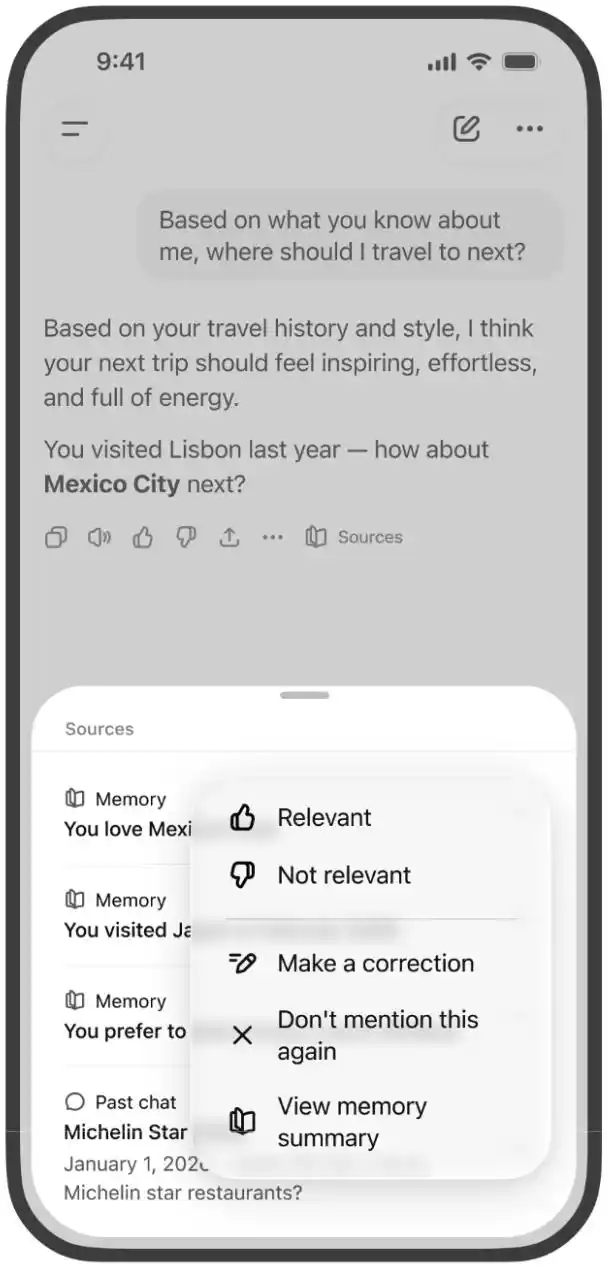
If a user wants to completely remove a piece of information, they need to delete all potential sources, including saved memories, past chats, archived chats, uploaded files, the memory summary, and relevant content in connected applications.
Of course, if you feel the new automatic summary isn't controllable enough, OpenAI still retains the old "Saved memories" system for Plus and Pro users on the web.
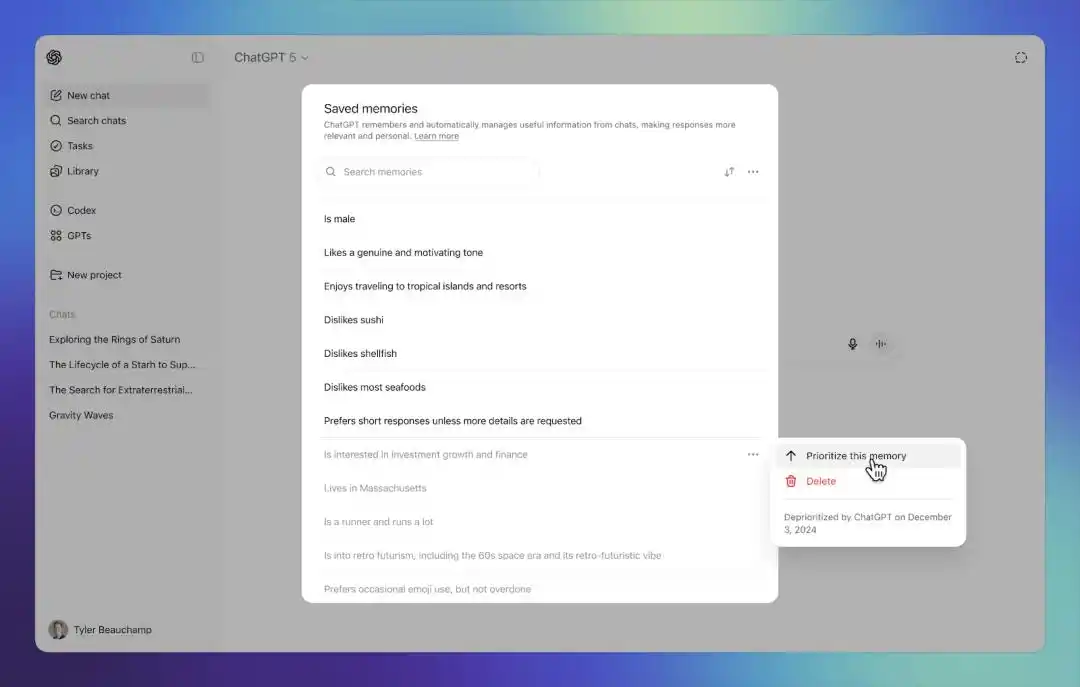
As usual, more relevant, frequently mentioned information is kept in the foreground, while less important content is moved to the background to reduce memory capacity issues. When judging priority, the system considers the recency of information and how often the user discusses related topics.
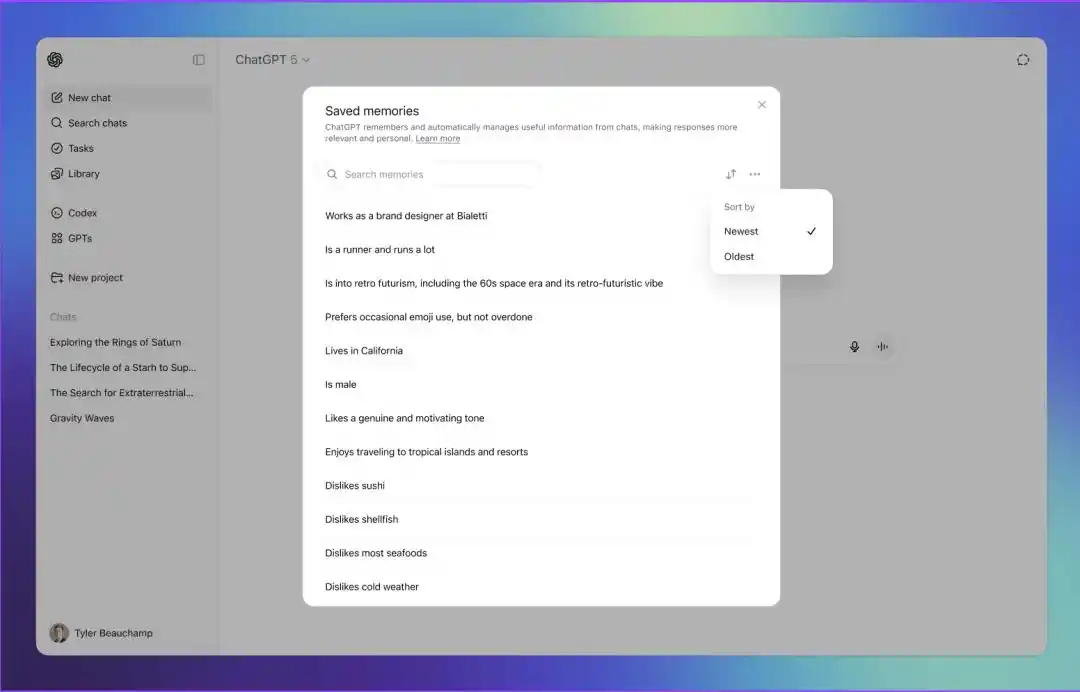
Users can also intervene manually. In the Saved memories page, they can search memories, sort by newest or oldest, and raise or lower the priority of individual memories. Memories in the background are displayed in gray. Users can also delete a single memory or all memories at once.
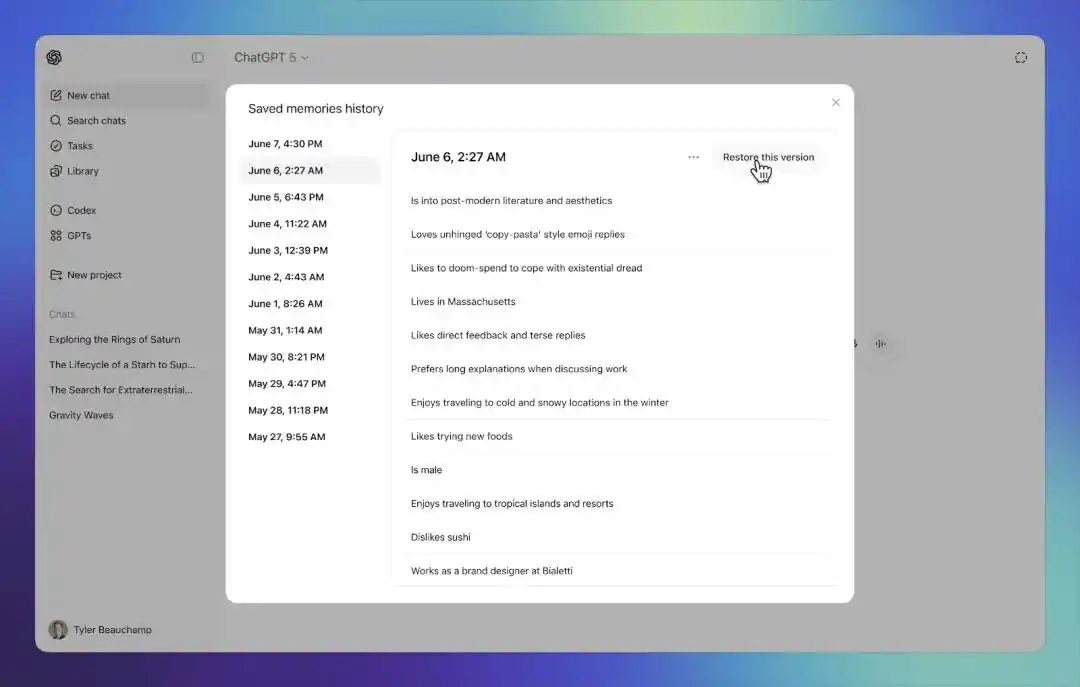
Additionally, OpenAI provides a Memory History feature. Users can view different versions of saved memories from various points in time and revert to a previous version. This means that as memory begins to update automatically, users can at least see how it changes and pull the system back to a past state.
OpenAI has also added a "Memory Sources" feature.
Users can click the book icon below an answer to see which sources contributed to the personalized response. Sources may include past chats, saved memories, custom instructions, files, and Gmail. The source display won't list every influencing factor, but it helps users better understand why ChatGPT gave a particular personalized answer.
The range of available sources varies by subscription plan.
Free and Go users can access past chats, saved memories, and custom instructions. Plus and Pro users in some regions can also use File Libraries and Gmail. Gmail requires active connection by the user; once connected, it can help identify travel confirmation emails, project threads, or schedule context. Notably, File and Gmail sources are not available in the European Economic Area, Switzerland, and the UK.
Memory controls remain in the Memory page within Settings.
Users can turn memory on or off, and can use Temporary Chat. Temporary Chat does not use existing memories or create new ones.
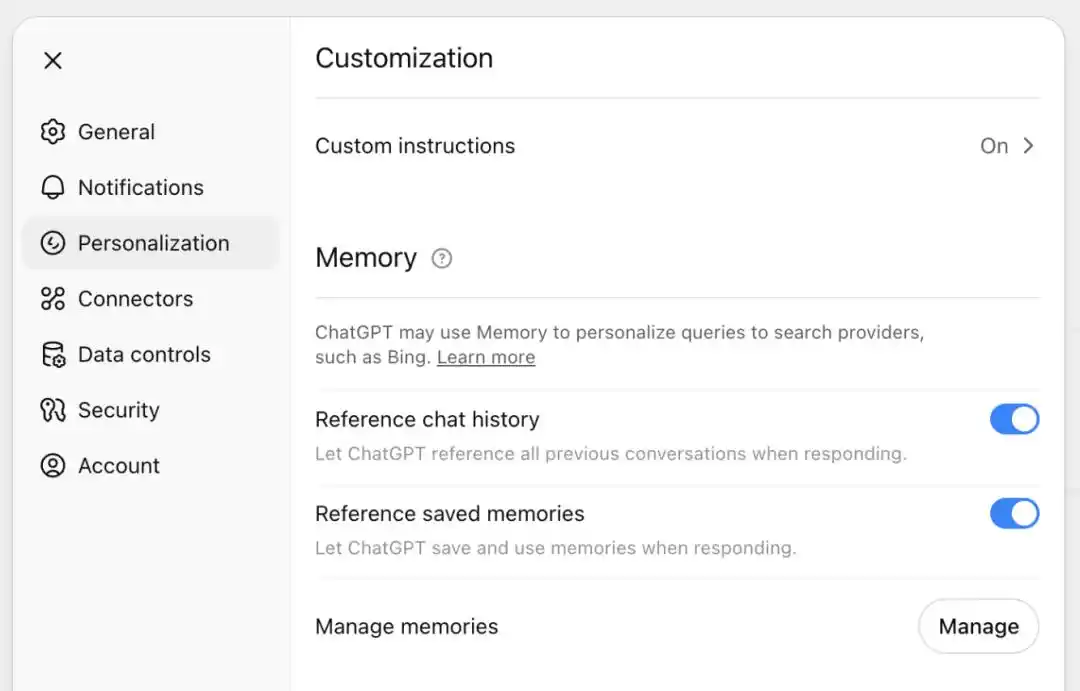
Turning off saved memories does not automatically delete already saved content, and deleting chats does not automatically delete saved memories generated from those chats. Users need to delete related memories separately or ask ChatGPT to forget.
Privacy thus becomes more critical.
OpenAI acknowledges that sensitive information shared in chats may appear in memories. If users do not want related content used for future personalized answers, they can turn off memory, use temporary chat, delete related chats, delete files, or disconnect linked applications.
Regarding model training, if users enable "Improve the model for everyone," past chats, saved memories, and related memory content may be used to improve the model. Content from ChatGPT Business, Enterprise, and Edu customers is not used for training by default.
On the deployment front, OpenAI stated that recent improvements have reduced the computational resources required for Dreaming by approximately 5 times. Therefore, OpenAI now also offers a quality-appropriate version to Free users while increasing memory capacity for Plus and Pro users.

For OpenAI, memory is a key step in ChatGPT's evolution from a model to an assistant.
A true assistant cannot start from scratch every time. It needs to know what the user is doing, how they prefer to communicate, which plans have ended, and which preferences remain valid. Otherwise, so-called personalization is just a more polite set of generic responses.
But memory also alters the relationship between the user and the product.
As ChatGPT begins to remember your projects, travels, files, emails, and life constraints, it ceases to be just a chat window. It increasingly becomes a long-standing personal interface, helping you access information, arrange tasks, interpret the world, and also, imperceptibly, accumulating an understanding of you.
In a sense, memory is a coming-of-age ceremony for AI assistants.
This also evokes the classic theme repeatedly explored in the *Blade Runner* series: whether memory (whether real or implanted) is sufficient to define humanity, constitute self-identity, and serve as a criterion to distinguish humans from replicants.
The memory system launched by ChatGPT today poses a similar question: when an AI preserves your experiences, preferences, and ways of judgment over the long term, will it gradually become your externalized self?
The endpoint of an AI assistant might be an editable version of yourself.
Attached reference links:
1. https://openai.com/index/chatgpt-memory-dreaming/
2. https://help.openai.com/en/articles/8590148-memory-faq
This article is from the WeChat public account "ifanr," author: ifanr, discovering tomorrow's products.