mRNA Vaccine Too Slow, Dog Owner Loses Beloved Pet, World's First AI-Customized Dog Cancer Vaccine Arrives

marsbitPublicado a 2026-08-24Actualizado a 2026-08-24

Resumen

A heartbreaking story from Australia showcases the intersection of AI, love, and loss. Paul Conyngham, an AI expert, lost his beloved bull terrier Rosie to cancer in 2024. Refusing to accept her prognosis, he used his machine learning skills, ChatGPT, and AlphaFold to design a personalized mRNA vaccine targeting her specific cancer mutations. The first vaccine dose, synthesized with help from university scientists, shrank Rosie's tumor by 75%, granting her a temporary reprieve. However, the cancer recurred with new mutations, requiring a second, updated vaccine. The traditional, slow production process couldn't deliver it in time, and Rosie passed away. Determined to prevent similar tragedies, Paul founded Gamgee, a startup named after a "Lord of the Rings" character. Backed by $4 million in seed funding from Founders Fund, Y Combinator, and others, Gamgee aims to industrialize and democratize personalized canine cancer vaccines. Their vision is an end-to-end platform where veterinarians submit tumor samples, AI algorithms rapidly identify target mutations, and customized mRNA vaccines are produced. The goal is to slash the design time to 48 hours and the total cost to around $2,000 per treatment. The addressable market is vast, with about 6 million dogs diagnosed with cancer annually in the US alone. Beyond pets, Gamgee's "N-of-1" medicine approach, validated in dogs, paves the way for similar ultra-personalized cancer therapies for humans, a field recently energized by M...

Remember the viral story of the "real-life Drug God" from a few months ago?

An Australian AI expert with no professional background, in order to save his terminally ill dog from cancer, taught himself genomics. Relying on ChatGPT and AlphaFold, he single-handedly created the world's first custom-made mRNA cancer vaccine.

After one injection, the tennis ball-sized tumor on the dog's leg miraculously shrank by 75%, successfully extending its life.
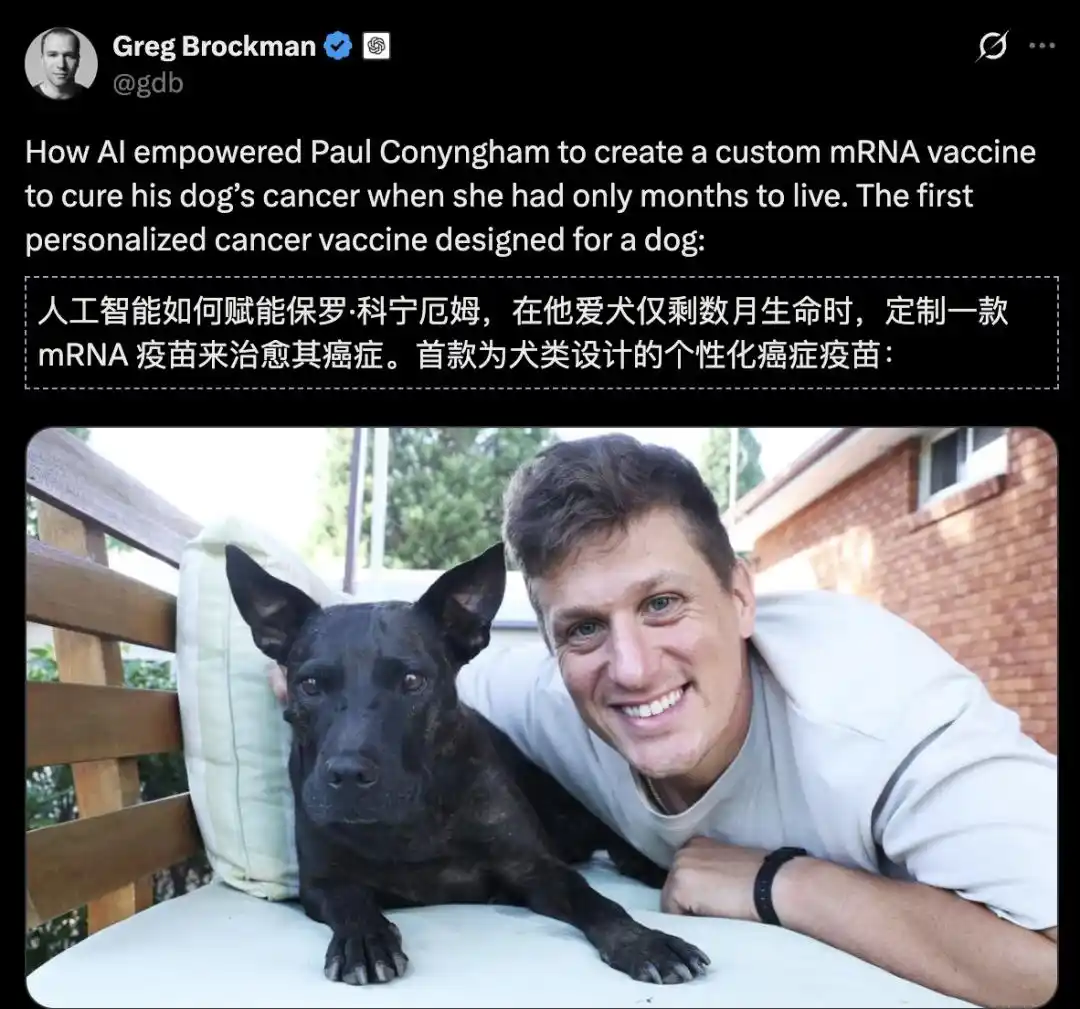
However, the latest outcome of the story unexpectedly broke hearts.

Today, Paul Conyngham announced heartbreaking news: his beloved dog Rosie has returned to the dog star.

This wasn't because the AI vaccine was ineffective, but because the vaccine production speed couldn't outrun Death.

Unable to manufacture the next dose of personalized mRNA cancer vaccine quickly enough, Rosie ultimately passed away.

But the story hasn't reached its conclusion.

Just now, Paul announced: the formal establishment of the startup Gamgee, which has already completed a $4 million seed round led by Founders Fund with participation from Y Combinator (YC).
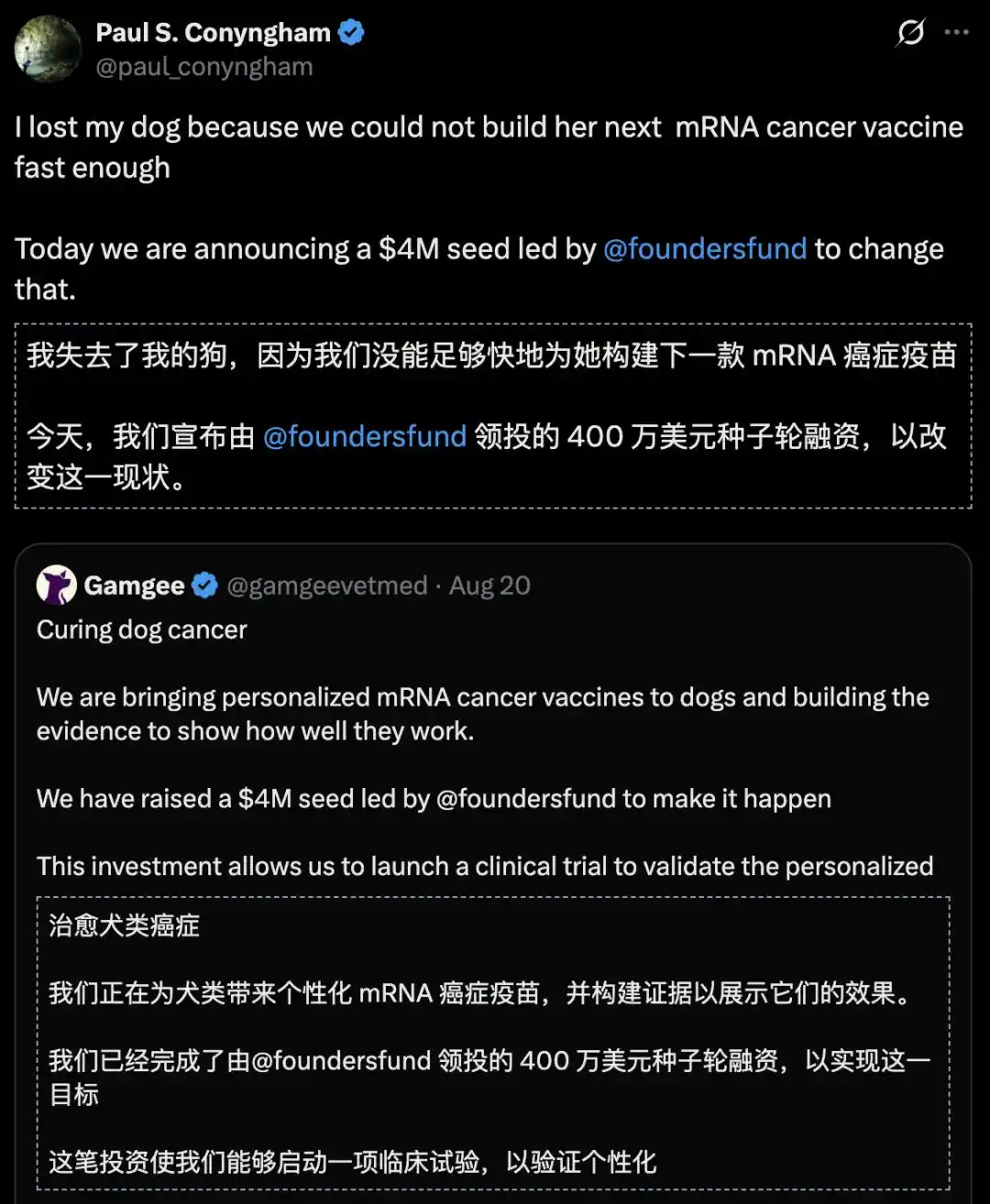
Although his own dog is gone, this "father" aims to create a clinically validated and scalable dog cancer vaccine for dogs worldwide.

A Worldwide Sensation: A "Medical Miracle"

In 2024, 8-year-old bull terrier Rosie was diagnosed with "mast cell cancer." The vet said: only a few months left.

Surgery, chemotherapy, immunotherapy... all methods failed. Paul, with 17 years of machine learning experience, decided: I'm going to save her my own way!

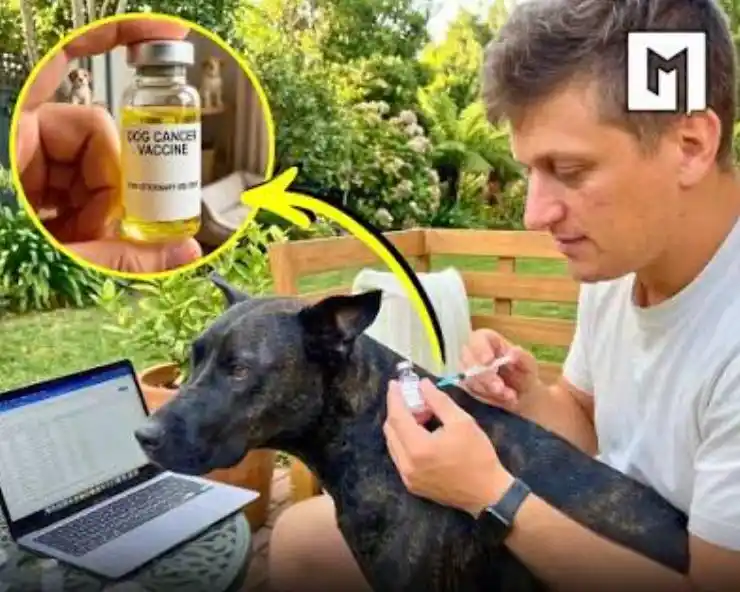
Spending just $3,000 on DNA sequencing of the tumor and healthy blood, Paul fed the massive genetic data into his own program. He consulted ChatGPT on biological principles, used AlphaFold for 3D modeling of mutated proteins, and finally pinpointed the specific attack targets tailored to Rosie's tumor.

AlphaFold's 3D modeling for Rosie's cancer
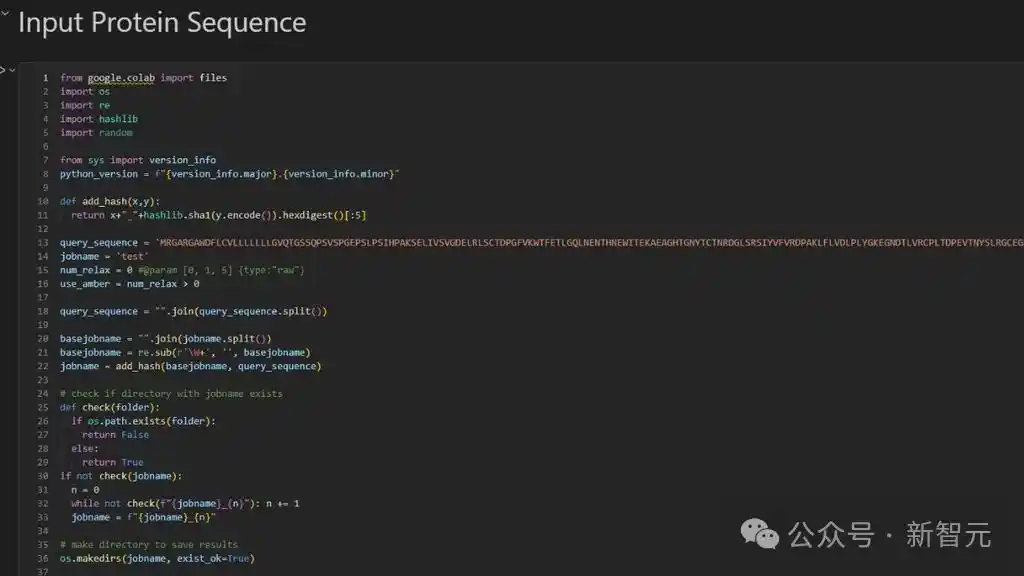
Part of the code for creating the mRNA therapy

With this AI-generated "vaccine formula" in hand, he ran around tirelessly, finally convincing scientists at the University of New South Wales and the University of Queensland to synthesize one dose of the vaccine.

In December 2025, after the first injection, a miracle occurred.

The massive tumor on Rosie's leg shrunk by 50%-75%.
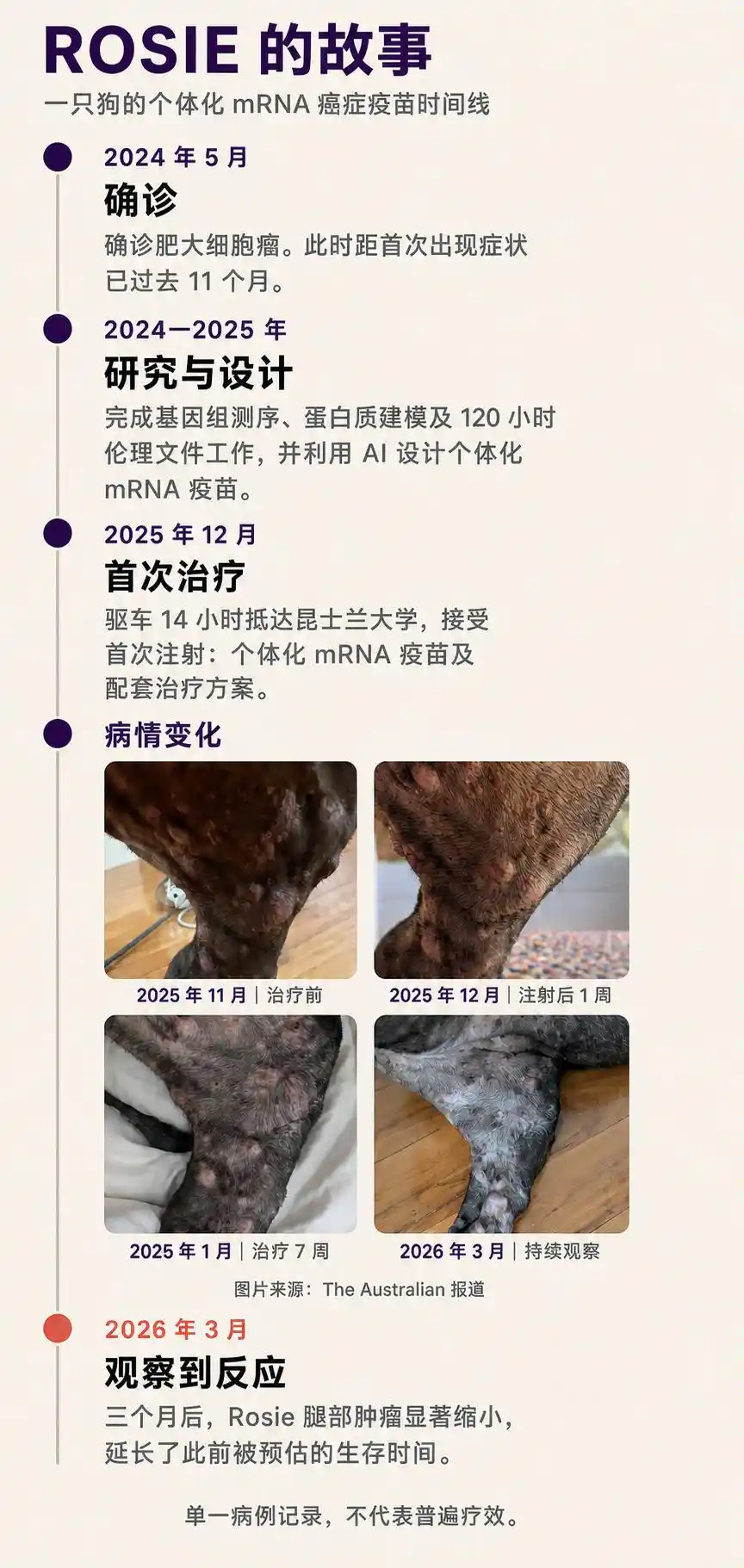
Microscopic analysis showed that large numbers of immune cells (macrophages and T cells) were vigorously attacking the cancer cells. Rosie regained her vitality; she could even jump fences again and chase rabbits.

The world was ecstatic: the era of personalized vaccines was at hand!

However, reality was far crueler than the movies.

The cancer cells were too cunning; they mutated and developed drug resistance—Rosie's cancer relapsed.

At this point, she urgently needed a second-generation mRNA vaccine customized based on the latest mutations.

Yet, the speed of traditional labs, the cumbersome manual production process, and the lengthy approval mechanisms couldn't get the vaccine to Rosie in time.

"I lost my dog because we couldn't make the next mRNA cancer vaccine fast enough," Paul wrote with anguish.

As an ordinary person, even with AI knowledge, trying to quickly customize an mRNA vaccine within a month or two within the existing medical-industrial system remained an almost impossible task.

"I shouldn't be the only person who can do this. Having a machine learning background and months of working through the night shouldn't be the barrier to accessing life-saving drugs."

Rosie is gone, but the legacy she left behind is just beginning to take root and sprout.
The "Father" Founds Gamgee for His Beloved Dog,

Making Exorbitant Vaccines Accessible

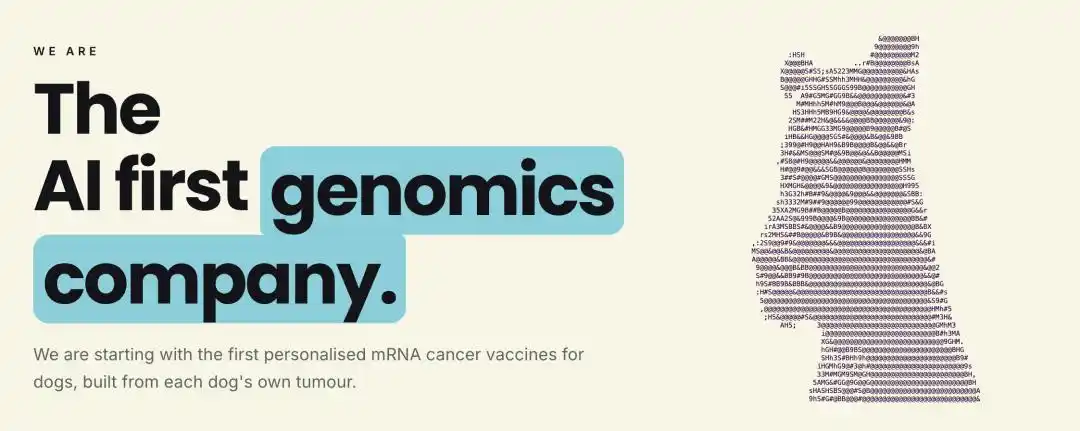
To prevent the tragedy from repeating, Paul founded Gamgee, a name derived from "The Lord of the Rings."

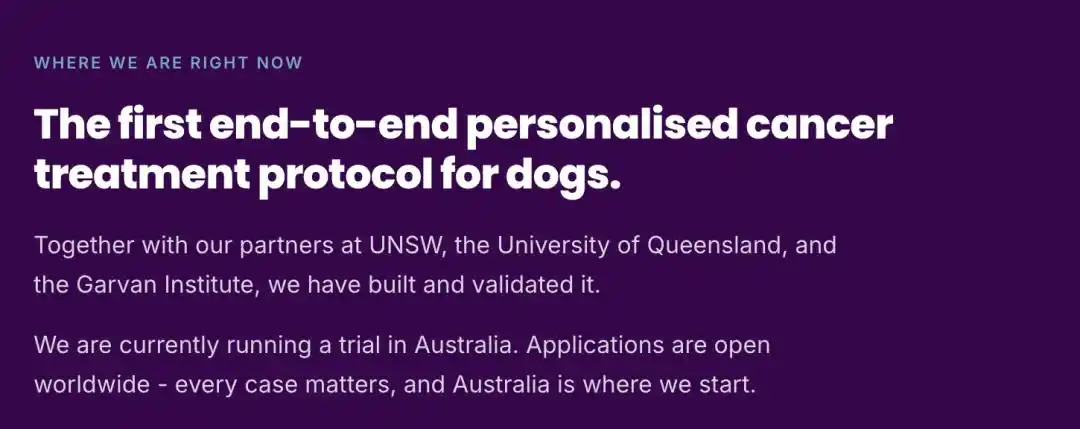
Gamgee's vision is: to cure canine cancer and bring personalized mRNA cancer vaccines to dogs all over the world.
Currently, they have launched their first prototype for personalized cancer treatment customized for dogs.
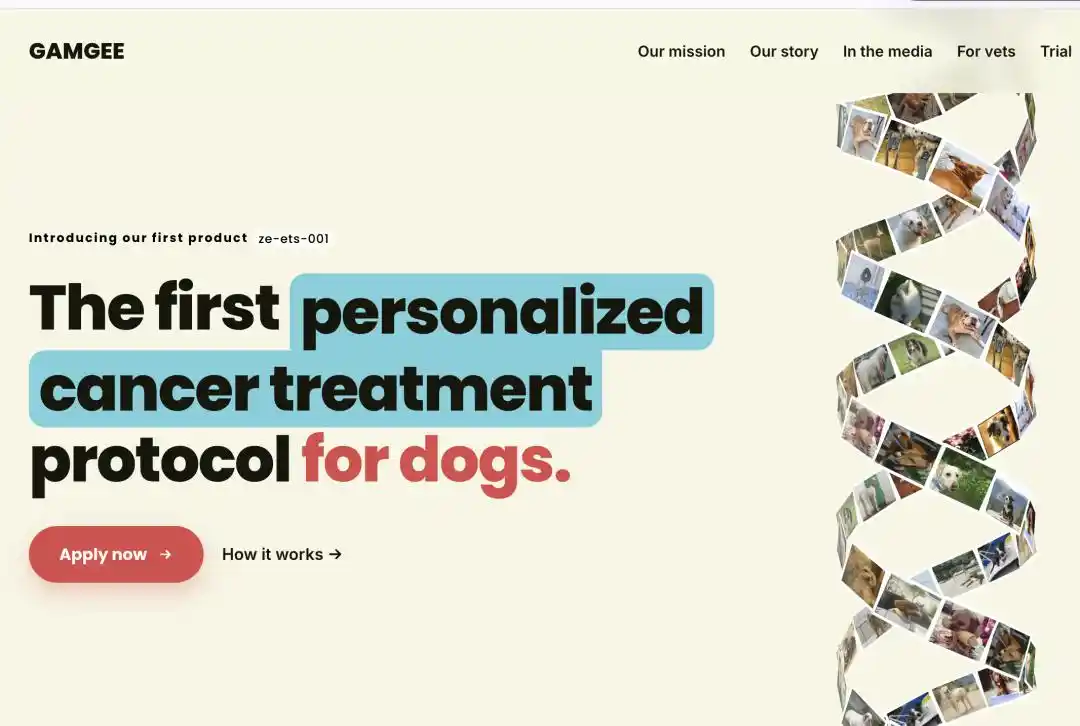
Founders Fund, founded by Peter Thiel, didn't hesitate to lead the $4 million seed round. Top global incubator Y Combinator (YC), Loyal CEO Celine Halioua, Dropbox co-founder Arash Ferdowsi, and a host of other big names have also joined the investment.

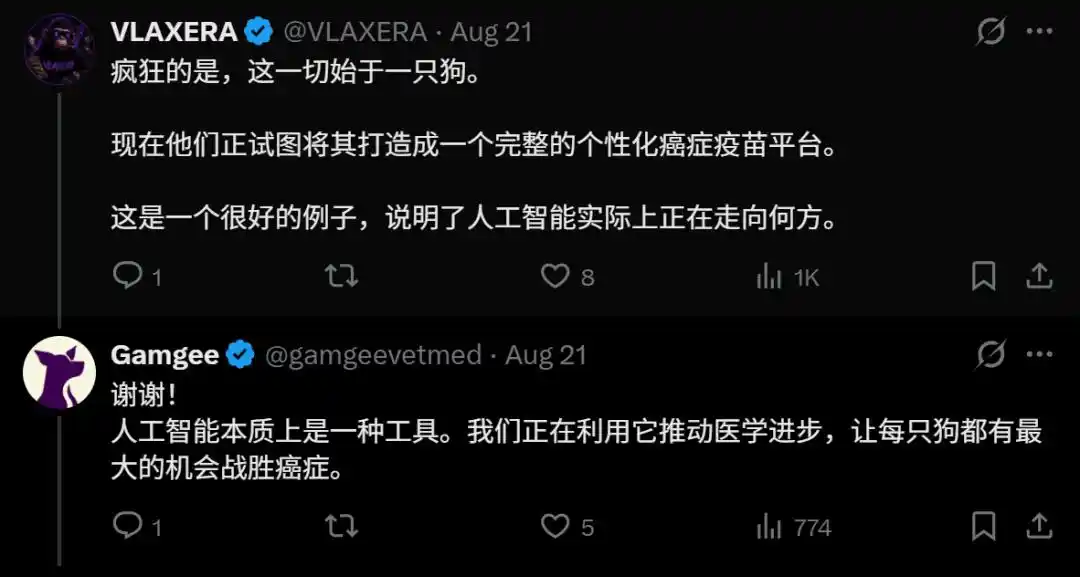
Why would top-tier Silicon Valley VCs invest in a project "to save dogs"?

Because what Gamgee aims to do is solve the fatal problem that led to Rosie's death: speed and cost.

It took Paul a whole year and $20,000 to navigate the entire process.

Now, Gamgee is turning this process into an industrialized SaaS assembly line.

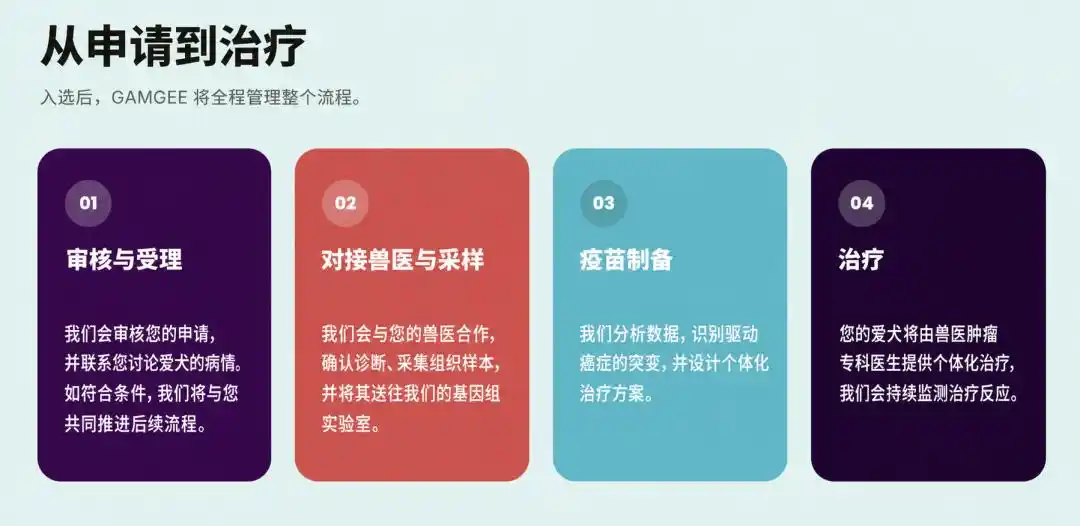
They have built an "end-to-end" closed-loop platform. Ordinary dog owners no longer need to run around like Paul did. All you need to do is follow these steps.

1. Input the Tumor: Gamgee will send you a collection kit. Your veterinarian extracts samples of the dog's tumor and healthy tissue and sends them back.

2. AI Deciphers at Lightning Speed: The samples go directly for DNA and RNA sequencing, and Gamgee's software system takes over everything. AI algorithms sift through the massive data to accurately identify and rank the actionable cancer cell mutation targets worth attacking, preserving evidence for every decision.

3. Output the Vaccine: The system automatically outputs the mRNA vaccine design ready for manufacturing. Gamgee coordinates production, cold-chain logistics, until the veterinarian administers the personalized vaccine to the dog.
Gamgee has set an audacious KPI: aiming to compress vaccine design time to within 48 hours and reduce the end-to-end cost of a full treatment course to $2,000!

"Genome sequencing, protein modeling, mRNA synthesis—the tools are all there. What I built for Rosie wasn't new science; it was new access," Paul stated.

This is nothing short of a revolutionary upheaval in the industry.

Saving 6 Million Cancer-Stricken Dogs Worldwide

In terms of commercial prospects, Gamgee demonstrates a strong Silicon Valley-style "data flywheel" mindset.

First, why dogs?

This is an enormous and heartbreaking market with urgent needs.

In the United States alone, approximately 6 million dogs are diagnosed with cancer each year.

Cancer is the leading cause of death in adult dogs. The vast majority of dog owners have no choice but to spend thousands of dollars on painful chemotherapy, radiation, or surgery.

More importantly, from a biological and AI algorithm training perspective, dogs are the perfect subjects for validating personalized cancer vaccines.

They have pure genetic pools.

Many modern pet dog breeds were developed over the past few centuries from small founder populations, resulting in relatively closed gene pools. This genetic concentration leads many breeds (like Golden Retrievers, Labradors) to be highly susceptible to specific cancers.
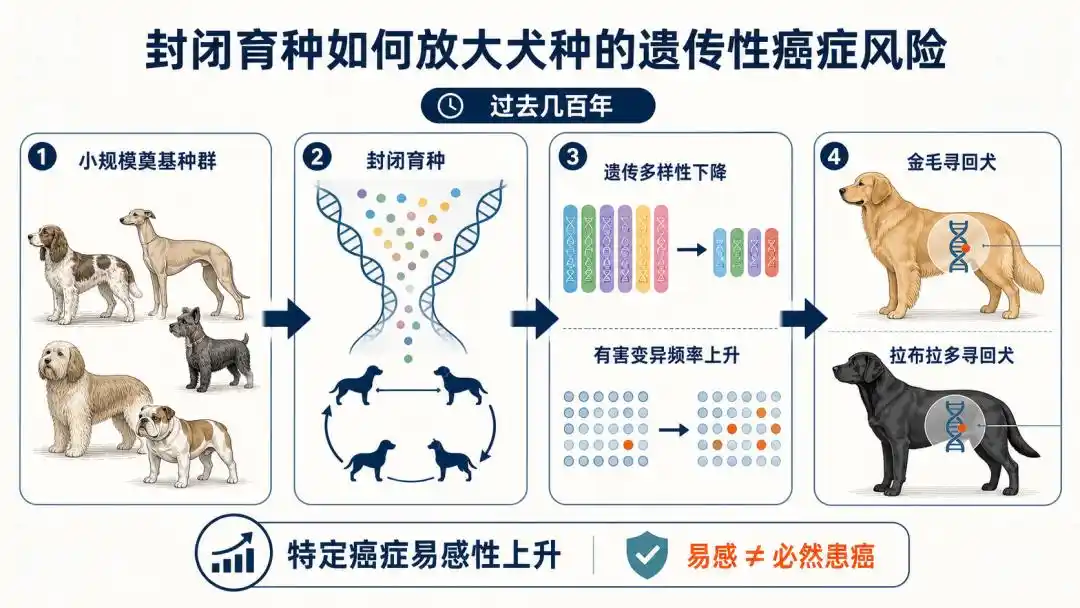
This makes it easier for AI to find patterns in mutations.

Additionally, pet dog cancers occur naturally, unlike those artificially induced in lab mice. Their immune systems are intact, and their disease progression timelines are well-suited for rapid clinical validation.

And the snowball effect of data is Gamgee's core moat.

Currently, datasets on animal genomes and immune responses are still extremely scarce. Every dog Gamgee treats yields a precious set of "sequencing + immune response + clinical outcome" data.

Once this data flywheel starts turning, it will become unstoppable.

Acquire data -> Optimize AI target selection models -> Produce next-generation, more potent vaccines -> Generate better treatment data -> Attract more dogs for treatment.

Currently, the $4 million seed funding has officially launched clinical trials. The first clinical trials are underway in Australia, in collaboration with top institutions like the University of New South Wales and the University of Queensland.

This trial will recruit 30 dogs with cancer. Eligible dogs will participate in the trial for free and receive the personalized vaccine.

Simultaneously, Gamgee is now accepting case registrations globally, with a waitlist already exceeding 300 dogs.
The Ultimate Vision: Starting with Rosie, Healing All of Humanity

But Gamgee's ambition extends far beyond canines.

For top-tier investors, what they see is not just the pet healthcare market, but the dawn of "N-of-1" medicine (i.e., extreme personalized medicine for a single patient).

Gamgee's ultimate goal is to establish a better treatment model based on "N-of-1," transcending species barriers, all the way to humans.
Imagine: if Gamgee can, through thousands of dogs, industrialize the process of "tumor sequencing -> AI design -> mRNA vaccine synthesis within 48 hours," soon, this technology will benefit humans.

As David Thomas, Director of the Centre for Molecular Oncology at UNSW, said: "If we can do this in dogs, why wouldn't we roll it out to all humans with cancer?"

Today, over 1,600 cancer therapeutics and vaccines are in development globally. The wave of mRNA and precision medicine has swept across the world.
And just a few days ago, Moderna and Merck jointly announced—

The world's first mRNA cancer therapy deeply involved with AI in its design, "privately customized" based on a patient's own cancer cell gene mutations, achieved historic success in a global Phase III clinical trial for high-risk melanoma!
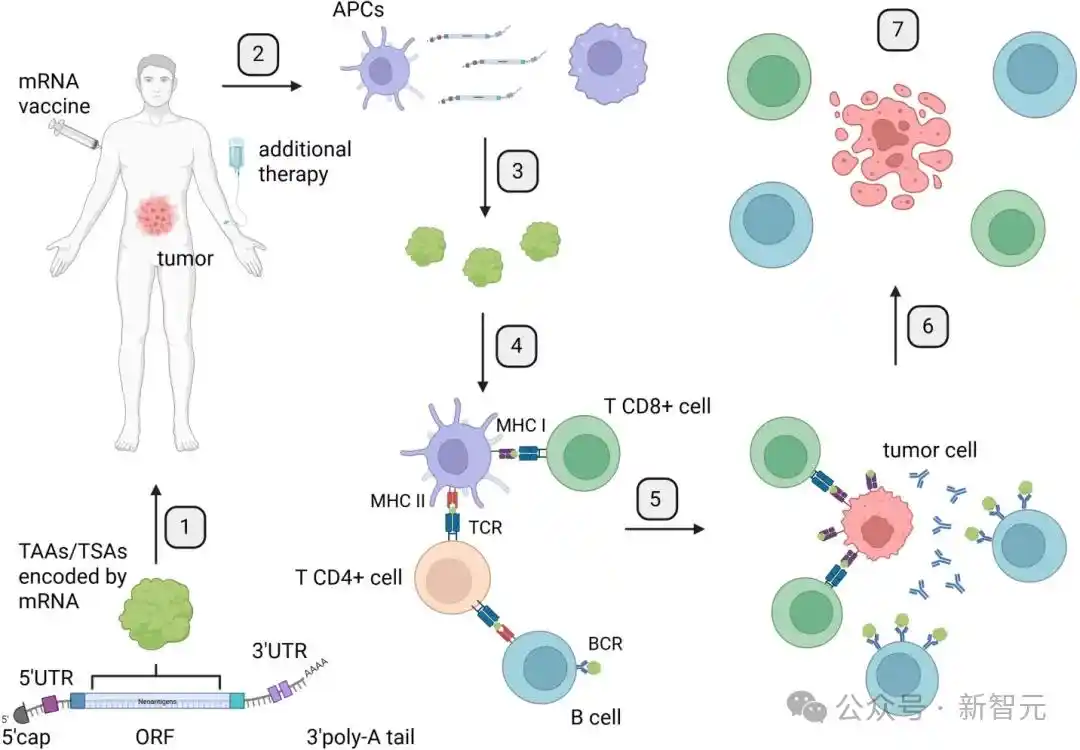
This process is essentially the "human premium version" of Paul's effort to save Rosie!

Similarly, tumor tissue is excised for genetic sequencing; similarly, AI models take the stage, running simulations within hours to precisely identify the most lethal "34 unique targets" from thousands of mutations.

The latter therapy has already significantly prolonged recurrence-free survival and markedly reduced the risk of tumors metastasizing to distant sites like the lungs, brain, and liver.

Moderna's clinical victory proves that the path of "tumor sequencing -> AI neoantigen selection -> custom mRNA -> immune activation" is entirely viable for human cancer.
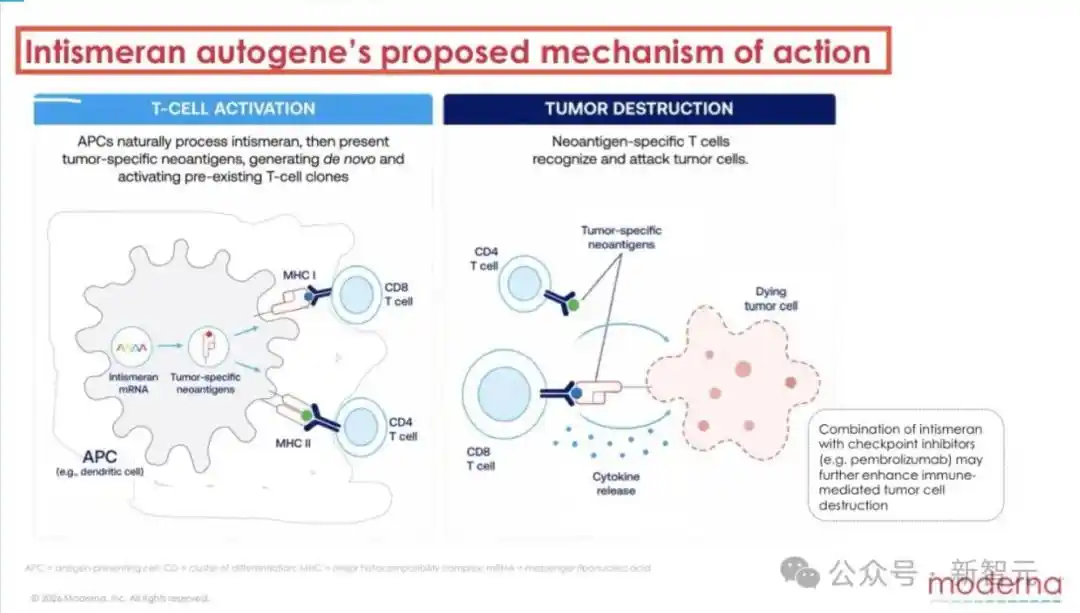
Clearly, we are on the eve of AI curing cancer.

The Legacy of Love

Rosie ultimately didn't get to receive the second vaccine dose.

But her story has given hope to 6 million dogs diagnosed with cancer each year.

In the tweet announcing Gamgee's funding, Paul ended with five words: "I love you, Rosie."

"We built Gamgee so that no other dog ever has to wait for that hope again."

Although Rosie has closed her eyes forever, the legacy she left may illuminate the path for millions of dogs, and even help humanity conquer cancer.

References:https://www.gamgee.io/https://x.com/paul_conyngham/status/2090502003449590254

https://x.com/paul_conyngham/status/2036940410363535823

This article is from the WeChat public account "New Zhiyuan," author: ASI Apocalypse, Editor: Aeneas


Criptos en tendencia

Preguntas relacionadas

QWhat was the main reason why Rosie, the dog, ultimately passed away despite the initial success of the custom mRNA vaccine?

ARosie ultimately passed away because the production of the next personalized mRNA cancer vaccine could not be completed fast enough to keep pace with the aggressive recurrence and evolution of her cancer. The traditional lab processes and regulatory hurdles were too slow.

QWhat is the name of the startup founded by Paul Conyngham, and what is its primary mission?

AThe startup is named Gamgee. Its primary mission is to create and scale personalized mRNA cancer vaccines for dogs, aiming to make them accessible and affordable to prevent other dogs from suffering the same fate as Rosie.

QHow does Gamgee plan to drastically reduce the time and cost of creating a personalized dog cancer vaccine?

AGamgee plans to create an industrialized SaaS platform that automates the process from tumor sampling to vaccine delivery. Their goal is to compress the vaccine design time to within 48 hours and reduce the end-to-end cost of a full treatment course to around $2000.

QAccording to the article, why are dogs considered a perfect model for validating personalized cancer vaccines from a biological and AI training perspective?

ADogs are ideal because many breeds have a closed gene pool due to selective breeding, making them prone to specific, predictable cancers. Their cancers occur naturally (not artificially induced), and their intact immune systems and disease timelines provide excellent, fast data for clinical validation and AI model training.

QWhat is the broader, long-term vision for the technology being developed by Gamgee, as mentioned in the article?

AThe long-term vision is to establish a proven, industrialized 'N-of-1' (highly personalized) medical treatment model for cancer. By perfecting the process in dogs, the goal is to eventually adapt and apply this technology to create effective, rapid, and personalized mRNA cancer therapies for humans.

Lecturas Relacionadas

The 'Saving U.S. Treasuries' Baton Pass: Bessent Fumbled Last Week, This Week It's Wash's Turn

"Rescuing US Treasuries" Relay: After Bessent's Miss, All Eyes Are on Walsh Last week, US Treasury Secretary Bessent's announcement to at least double long-term Treasury buybacks failed to sustainably lower yields, which quickly rebounded. The market response saw a drop in the dollar alongside surges in gold and Bitcoin, interpreted as a "pressure release valve" for anxiety. The focus now shifts to Fed Chairman Walsh's upcoming Jackson Hole speech. Markets are highly sensitive to his message, seeking clarity on the Fed's policy response to stubborn inflation and worsening fiscal conditions. Analysts warn that a lack of new guidance could disappoint markets and worsen the sell-off in long-dated bonds. Analysts question the scale of Bessent's operations, noting they are too small relative to the overall debt market and do not constitute quantitative easing. A key issue is the Fed's massive holdings of long-term bonds, which distorts the market. With the Fed holding low-yielding short-term bonds that are losing money relative to its policy rate, discussion is growing around a potential Fed-led "Operation Twist." This would involve selling short-term bonds to buy long-term ones, aiming to lower long-end yields without expanding the balance sheet. The upcoming PCE inflation data will set the stage for Walsh's speech. However, the window for action is narrowing amid political pressures. A critical threshold is the 30-year yield at 5%; holding above it could increase stress on the dollar and leveraged sectors. Overall, the article suggests that without coordinated Fed action to anchor inflation expectations, Treasury interventions may ultimately fail, with investors increasingly looking to assets like gold as hedges.

marsbitHace 13 min(s)

The 'Saving U.S. Treasuries' Baton Pass: Bessent Fumbled Last Week, This Week It's Wash's Turn

marsbitHace 13 min(s)

Hyperliquid's Compliance Journey: From Permissionless to Permissioned via HIP-3

Hyperliquid’s Compliance Path: From Permissionless to Permissioned HIP-3 Hyperliquid currently blocks U.S. access because its permissionless, on-chain infrastructure conflicts with U.S. market structure laws, which restrict futures trading to registered exchanges, clearinghouses, and brokers. Through its Hyperliquid Policy Center (HPC), the project is advocating for regulatory modernization, proposing that regulated entities be allowed to build products on HyperCore (its exchange and clearing layer) while fulfilling their compliance obligations. The platform’s modular stack separates roles like a traditional exchange (DCM), clearinghouse (DCO), and broker (FCM), but reconstructs them on-chain with code. This enables permissionless access, self-custody, and 24/7 global trading, but clashes with U.S. rules requiring KYC, specific margin models, and custodial arrangements. To resolve this, HPC is engaging with U.S. regulators (CFTC, SEC) to seek clarity that deploying on-chain software does not itself trigger licensing, and to establish exemptions allowing non-custodial wallets to route users to regulated derivatives. Recent political signals suggest openness to this approach. On the technical side, Hyperliquid Labs has introduced permissioned HIP-3 deployers on testnet. These allow regulated entities to launch markets, perform KYC, and whitelist compliant users. While these create separate order books, whitelisted market makers can bridge liquidity between them, ensuring deep, shared liquidity across the same L1. Features like payload-based “PA” permissions enable DEX-level account controls (e.g., reduce-only orders), mirroring traditional broker authorities. The strategy is not to open the native, permissionless front-end to U.S. users, but to position Hyperliquid as neutral infrastructure that U.S. regulated firms can use while meeting their legal duties. This paves a compliant path for U.S. investor access while preserving the protocol’s core, permissionless nature.

marsbitHace 37 min(s)

Hyperliquid's Compliance Journey: From Permissionless to Permissioned via HIP-3

marsbitHace 37 min(s)

Two Funding Rounds in Three Months: The Chinese Version of Palantir is on Fire

Investment Community AI has learned that Beijing Zhongshu Ruizhi Technology Co., Ltd., a domestic industrial-grade causal intelligence and high-reliability decision-making AI company, has recently completed a strategic financing round worth hundreds of millions of RMB. This round saw participation from China Internet Investment Fund, Suzhou Chuangtou National Social Security Fund, Financial Street Capital, ICBC Capital, Kunlun Capital, among others, with existing shareholders also increasing their investment. This follows a Series B funding round in the hundreds of millions completed just three months prior. The rapid succession of two major funding rounds signifies strong market recognition of the company's underlying original technology and scaled commercial implementation. Often referred to as the "Chinese version of Palantir," Zhongshu Ruizhi is entering a new phase of accelerated technological iteration, widespread scenario replication, and scaled performance release, mirroring the explosive growth of China's AI market. Founded in April 2020 by Dr. Han Han, a Tsinghua University Ph.D. and former core drafter of national AI policies, the company is mission-driven to "move AI from the digital world to the physical world." It focuses on the high-reliability, strong-decision industrial AI track and enterprise-grade AI Agent full-stack infrastructure. The team tackles the challenge of applying AI to China's vast and complex industrial and energy systems by developing a new intelligent operating system from scratch. Its core technological breakthrough lies in three proprietary底层 technologies: meta-causal cognitive theory, causal models, and a dynamic ontology engine. These address critical pain points of generative large models in industrial settings—such as AI hallucinations, insufficient reasoning, lack of temporal logic, unverifiable decisions, and multi-source rule conflicts—thereby providing trustworthy, explainable, and executable智能决策 capabilities. Commercially, Zhongshu Ruizhi has achieved scaled deployment, serving over 50 central state-owned enterprises and industrial groups in sectors like power, petroleum, and aerospace, with implementations in more than 800 highly complex production scenarios. The company reported doubled revenue in 2025, demonstrating strong self-sufficiency and a viable business model—a rarity among new-generation AI firms. The latest funds will be allocated towards advancing foundational theoretical research, replicating successful application models to expand market presence (including overseas), and attracting top-tier talent. Lead investor China Internet Investment Fund highlighted that in the current shift from general AI capability contests to deep industrial empowerment, industrial-grade causal intelligence is crucial for building China's modern digital foundation and fostering new quality productive forces. They expressed support for the company's efforts to define decision-making paradigms and trustworthy standards for industrial intelligence, aiming to secure a rule-making voice in the global physical AI arena.

marsbitHace 48 min(s)

Two Funding Rounds in Three Months: The Chinese Version of Palantir is on Fire

marsbitHace 48 min(s)

The Biggest Political Economy Question in the AI Era: As Robots Become More Capable, How Do Humans Share the Value?

In the AI era, the most pressing political economy question is: as machines become increasingly capable, how can humanity share in the value they create? An article originally critiquing China's tech focus has sparked a deeper debate on this global challenge. Historically, industrial progress improved efficiency but still relied on human labor for wealth creation and distribution. AI is fundamentally different—it is now replacing cognitive and knowledge work. As AI and robots take over more tasks, economic growth may continue while direct human participation in value creation shrinks, creating a core tension between productivity gains and widespread income generation. The issue is not unique to China. While leading tech companies amass enormous wealth, labor's share of income is declining globally. The core problem is a broken link: technological innovation and corporate profits are not translating into sufficient consumer income and demand. Three potential paths forward are outlined: a traditional capitalist model where profits primarily go to capital owners; a state-capitalist approach with public investment in AI; and more innovative models like digital sovereign wealth funds, universal shareholding, or AI-era basic income schemes to directly distribute AI-generated value. The future competitive advantage may lie not just in technological supremacy, but in which society can build a new, inclusive distribution system for the intelligent economy. The ultimate challenge is ensuring that as AI creates value, humans have a means to obtain income and share in the resulting widespread social benefits.

marsbitHace 58 min(s)

The Biggest Political Economy Question in the AI Era: As Robots Become More Capable, How Do Humans Share the Value?

marsbitHace 58 min(s)

Generating Profits for Seven Consecutive Quarters, Emerging Markets Carry Trade Outperforms Everything

For the seventh consecutive quarter, dollar-funded emerging market carry trades have delivered positive returns, marking the longest winning streak since 2008. According to Bloomberg's index, this strategy has gained approximately 22% since late 2024, outperforming U.S. Treasuries, emerging market sovereign, and corporate dollar debt. The core of the trade involves borrowing low-interest currencies like the U.S. dollar, euro, or yen to invest in high-yielding emerging market assets, such as Turkish lira bonds offering over 40% returns. Returns were amplified by favorable currency moves, with the dollar weakening against most emerging market currencies and other traditional funding currencies. For instance, the trade gained 48% on the Colombian peso in the past year. A key test came in August 2024 with a historic joint U.S.-Japan currency intervention, which caused only a modest 1% dip in the carry trade risk premium as investors shifted funding from the yen to the euro and Swiss franc. Looking ahead, the primary risk is the timing of Federal Reserve policy changes. While persistent inflation allows the Fed to hold rates, a rapid rise in long-term U.S. yields could threaten the trade. Another concern is crowding, as massive inflows increase vulnerability to a sudden reversal. High interest rates in regions like Latin America and Eastern Europe, supported by external factors like Middle East tensions and energy prices, continue to sustain the opportunity. Major investors remain engaged, favoring currencies like the Mexican peso, South African rand, and Turkish lira.

marsbitHace 1 hora(s)

Generating Profits for Seven Consecutive Quarters, Emerging Markets Carry Trade Outperforms Everything

marsbitHace 1 hora(s)

Trading

Spot

Artículos destacados

Qué es $S$

Entendiendo SPERO: Una Visión General Completa Introducción a SPERO A medida que el panorama de la innovación continúa evolucionando, la aparición de tecnologías web3 y proyectos de criptomonedas juega un papel fundamental en la configuración del futuro digital. Un proyecto que ha atraído la atención en este campo dinámico es SPERO, denotado como SPERO,$$s$. Este artículo tiene como objetivo reunir y presentar información detallada sobre SPERO, para ayudar a entusiastas e inversores a comprender sus fundamentos, objetivos e innovaciones dentro de los dominios web3 y cripto. ¿Qué es SPERO,$$s$? SPERO,$$s$ es un proyecto único dentro del espacio cripto que busca aprovechar los principios de descentralización y tecnología blockchain para crear un ecosistema que promueva la participación, la utilidad y la inclusión financiera. El proyecto está diseñado para facilitar interacciones de igual a igual de nuevas maneras, proporcionando a los usuarios soluciones y servicios financieros innovadores. En su esencia, SPERO,$$s$ tiene como objetivo empoderar a los individuos al proporcionar herramientas y plataformas que mejoren la experiencia del usuario en el espacio de las criptomonedas. Esto incluye habilitar métodos de transacción más flexibles, fomentar iniciativas impulsadas por la comunidad y crear caminos para oportunidades financieras a través de aplicaciones descentralizadas (dApps). La visión subyacente de SPERO,$$s$ gira en torno a la inclusividad, buscando cerrar brechas dentro de las finanzas tradicionales mientras aprovecha los beneficios de la tecnología blockchain. ¿Quién es el Creador de SPERO,$$s$? La identidad del creador de SPERO,$$s$ sigue siendo algo oscura, ya que hay recursos públicos limitados que proporcionan información de fondo detallada sobre su(s) fundador(es). Esta falta de transparencia puede derivarse del compromiso del proyecto con la descentralización, una ética que muchos proyectos web3 comparten, priorizando las contribuciones colectivas sobre el reconocimiento individual. Al centrar las discusiones en torno a la comunidad y sus objetivos colectivos, SPERO,$$s$ encarna la esencia del empoderamiento sin señalar a individuos específicos. Como tal, comprender la ética y la misión de SPERO sigue siendo más importante que identificar a un creador singular. ¿Quiénes son los Inversores de SPERO,$$s$? SPERO,$$s$ cuenta con el apoyo de una diversa gama de inversores que van desde capitalistas de riesgo hasta inversores ángeles dedicados a fomentar la innovación en el sector cripto. El enfoque de estos inversores generalmente se alinea con la misión de SPERO, priorizando proyectos que prometen avances tecnológicos sociales, inclusión financiera y gobernanza descentralizada. Estas fundaciones de inversores suelen estar interesadas en proyectos que no solo ofrecen productos innovadores, sino que también contribuyen positivamente a la comunidad blockchain y sus ecosistemas. El respaldo de estos inversores refuerza a SPERO,$$s$ como un contendiente notable en el dominio de proyectos cripto que evoluciona rápidamente. ¿Cómo Funciona SPERO,$$s$? SPERO,$$s$ emplea un marco multifacético que lo distingue de los proyectos de criptomonedas convencionales. Aquí hay algunas de las características clave que subrayan su singularidad e innovación: Gobernanza Descentralizada: SPERO,$$s$ integra modelos de gobernanza descentralizada, empoderando a los usuarios para participar activamente en los procesos de toma de decisiones sobre el futuro del proyecto. Este enfoque fomenta un sentido de propiedad y responsabilidad entre los miembros de la comunidad. Utilidad del Token: SPERO,$$s$ utiliza su propio token de criptomoneda, diseñado para servir diversas funciones dentro del ecosistema. Estos tokens permiten transacciones, recompensas y la facilitación de servicios ofrecidos en la plataforma, mejorando la participación y la utilidad general. Arquitectura en Capas: La arquitectura técnica de SPERO,$$s$ apoya la modularidad y escalabilidad, permitiendo la integración fluida de características y aplicaciones adicionales a medida que el proyecto evoluciona. Esta adaptabilidad es fundamental para mantener la relevancia en el cambiante paisaje cripto. Participación de la Comunidad: El proyecto enfatiza iniciativas impulsadas por la comunidad, empleando mecanismos que incentivan la colaboración y la retroalimentación. Al nutrir una comunidad sólida, SPERO,$$s$ puede abordar mejor las necesidades de los usuarios y adaptarse a las tendencias del mercado. Enfoque en la Inclusión: Al ofrecer tarifas de transacción bajas e interfaces amigables para el usuario, SPERO,$$s$ busca atraer a una base de usuarios diversa, incluyendo a individuos que anteriormente pueden no haber participado en el espacio cripto. Este compromiso con la inclusión se alinea con su misión general de empoderamiento a través de la accesibilidad. Cronología de SPERO,$$s$ Entender la historia de un proyecto proporciona información crucial sobre su trayectoria de desarrollo y hitos. A continuación se presenta una cronología sugerida que mapea eventos significativos en la evolución de SPERO,$$s$: Fase de Conceptualización e Ideación: Las ideas iniciales que forman la base de SPERO,$$s$ fueron concebidas, alineándose estrechamente con los principios de descentralización y enfoque comunitario dentro de la industria blockchain. Lanzamiento del Whitepaper del Proyecto: Tras la fase conceptual, se lanzó un whitepaper completo que detalla la visión, los objetivos y la infraestructura tecnológica de SPERO,$$s$ para generar interés y retroalimentación de la comunidad. Construcción de Comunidad y Primeras Interacciones: Se realizaron esfuerzos de divulgación activa para construir una comunidad de primeros adoptantes y posibles inversores, facilitando discusiones en torno a los objetivos del proyecto y obteniendo apoyo. Evento de Generación de Tokens: SPERO,$$s$ llevó a cabo un evento de generación de tokens (TGE) para distribuir sus tokens nativos a los primeros seguidores y establecer liquidez inicial dentro del ecosistema. Lanzamiento de la dApp Inicial: La primera aplicación descentralizada (dApp) asociada con SPERO,$$s$ se puso en marcha, permitiendo a los usuarios interactuar con las funcionalidades centrales de la plataforma. Desarrollo Continuo y Alianzas: Actualizaciones y mejoras continuas a las ofertas del proyecto, incluyendo alianzas estratégicas con otros actores en el espacio blockchain, han moldeado a SPERO,$$s$ en un jugador competitivo y en evolución en el mercado cripto. Conclusión SPERO,$$s$ se erige como un testimonio del potencial de web3 y las criptomonedas para revolucionar los sistemas financieros y empoderar a los individuos. Con un compromiso con la gobernanza descentralizada, la participación comunitaria y funcionalidades diseñadas de manera innovadora, allana el camino hacia un paisaje financiero más inclusivo. Como con cualquier inversión en el espacio cripto que evoluciona rápidamente, se anima a los posibles inversores y usuarios a investigar a fondo y participar de manera reflexiva con los desarrollos en curso dentro de SPERO,$$s$. El proyecto muestra el espíritu innovador de la industria cripto, invitando a una mayor exploración de sus innumerables posibilidades. Mientras el viaje de SPERO,$$s$ aún se desarrolla, sus principios fundamentales pueden, de hecho, influir en el futuro de cómo interactuamos con la tecnología, las finanzas y entre nosotros en ecosistemas digitales interconectados.

448 Vistas totalesPublicado en 2024.12.17Actualizado en 2024.12.17

Qué es $S$

Qué es AGENT S

Agent S: El Futuro de la Interacción Autónoma en Web3 Introducción En el paisaje en constante evolución de Web3 y las criptomonedas, las innovaciones están redefiniendo constantemente cómo los individuos interactúan con las plataformas digitales. Uno de estos proyectos pioneros, Agent S, promete revolucionar la interacción humano-computadora a través de su marco agente abierto. Al allanar el camino para interacciones autónomas, Agent S busca simplificar tareas complejas, ofreciendo aplicaciones transformadoras en inteligencia artificial (IA). Esta exploración detallada profundizará en las complejidades del proyecto, sus características únicas y las implicaciones para el dominio de las criptomonedas. ¿Qué es Agent S? Agent S se presenta como un marco agente abierto innovador, diseñado específicamente para abordar tres desafíos fundamentales en la automatización de tareas informáticas: Adquisición de Conocimiento Específico del Dominio: El marco aprende inteligentemente de diversas fuentes de conocimiento externas y experiencias internas. Este enfoque dual le permite construir un rico repositorio de conocimiento específico del dominio, mejorando su rendimiento en la ejecución de tareas. Planificación a Largo Plazo de Tareas: Agent S emplea planificación jerárquica aumentada por la experiencia, un enfoque estratégico que facilita la descomposición y ejecución eficiente de tareas complejas. Esta característica mejora significativamente su capacidad para gestionar múltiples subtareas de manera eficiente y efectiva. Manejo de Interfaces Dinámicas y No Uniformes: El proyecto introduce la Interfaz Agente-Computadora (ACI), una solución innovadora que mejora la interacción entre agentes y usuarios. Utilizando Modelos de Lenguaje Multimodal de Gran Escala (MLLMs), Agent S puede navegar y manipular diversas interfaces gráficas de usuario sin problemas. A través de estas características pioneras, Agent S proporciona un marco robusto que aborda las complejidades involucradas en la automatización de la interacción humana con las máquinas, preparando el terreno para una multitud de aplicaciones en IA y más allá. ¿Quién es el Creador de Agent S? Si bien el concepto de Agent S es fundamentalmente innovador, la información específica sobre su creador sigue siendo elusiva. El creador es actualmente desconocido, lo que resalta ya sea la etapa incipiente del proyecto o la elección estratégica de mantener a los miembros fundadores en el anonimato. Independientemente de la anonimidad, el enfoque sigue siendo en las capacidades y el potencial del marco. ¿Quiénes son los Inversores de Agent S? Dado que Agent S es relativamente nuevo en el ecosistema criptográfico, la información detallada sobre sus inversores y patrocinadores financieros no está documentada explícitamente. La falta de información disponible públicamente sobre las bases de inversión u organizaciones que apoyan el proyecto plantea preguntas sobre su estructura de financiamiento y hoja de ruta de desarrollo. Comprender el respaldo es crucial para evaluar la sostenibilidad del proyecto y su posible impacto en el mercado. ¿Cómo Funciona Agent S? En el núcleo de Agent S se encuentra una tecnología de vanguardia que le permite funcionar de manera efectiva en diversos entornos. Su modelo operativo se basa en varias características clave: Interacción Humano-Computadora Similar a la Humana: El marco ofrece planificación avanzada de IA, esforzándose por hacer que las interacciones con las computadoras sean más intuitivas. Al imitar el comportamiento humano en la ejecución de tareas, promete elevar las experiencias de los usuarios. Memoria Narrativa: Empleada para aprovechar experiencias de alto nivel, Agent S utiliza memoria narrativa para hacer un seguimiento de las historias de tareas, mejorando así sus procesos de toma de decisiones. Memoria Episódica: Esta característica proporciona a los usuarios una guía paso a paso, permitiendo que el marco ofrezca apoyo contextual a medida que se desarrollan las tareas. Soporte para OpenACI: Con la capacidad de ejecutarse localmente, Agent S permite a los usuarios mantener el control sobre sus interacciones y flujos de trabajo, alineándose con la ética descentralizada de Web3. Fácil Integración con APIs Externas: Su versatilidad y compatibilidad con varias plataformas de IA aseguran que Agent S pueda encajar sin problemas en ecosistemas tecnológicos existentes, convirtiéndolo en una opción atractiva para desarrolladores y organizaciones. Estas funcionalidades contribuyen colectivamente a la posición única de Agent S dentro del espacio cripto, ya que automatiza tareas complejas y de múltiples pasos con una intervención humana mínima. A medida que el proyecto evoluciona, sus posibles aplicaciones en Web3 podrían redefinir cómo se desarrollan las interacciones digitales. Cronología de Agent S El desarrollo y los hitos de Agent S pueden encapsularse en una cronología que resalta sus eventos significativos: 27 de septiembre de 2024: El concepto de Agent S fue lanzado en un documento de investigación integral titulado “Un Marco Agente Abierto que Usa Computadoras Como un Humano”, mostrando las bases del proyecto. 10 de octubre de 2024: El documento de investigación fue puesto a disposición del público en arXiv, ofreciendo una exploración profunda del marco y su evaluación de rendimiento basada en el benchmark OSWorld. 12 de octubre de 2024: Se lanzó una presentación en video, proporcionando una visión visual de las capacidades y características de Agent S, involucrando aún más a posibles usuarios e inversores. Estos marcadores en la cronología no solo ilustran el progreso de Agent S, sino que también indican su compromiso con la transparencia y la participación comunitaria. Puntos Clave Sobre Agent S A medida que el marco Agent S continúa evolucionando, varios atributos clave destacan, subrayando su naturaleza innovadora y potencial: Marco Innovador: Diseñado para proporcionar un uso intuitivo de las computadoras similar a la interacción humana, Agent S aporta un enfoque novedoso a la automatización de tareas. Interacción Autónoma: La capacidad de interactuar de manera autónoma con las computadoras a través de GUI significa un salto hacia soluciones informáticas más inteligentes y eficientes. Automatización de Tareas Complejas: Con su metodología robusta, puede automatizar tareas complejas y de múltiples pasos, haciendo que los procesos sean más rápidos y menos propensos a errores. Mejora Continua: Los mecanismos de aprendizaje permiten a Agent S mejorar a partir de experiencias pasadas, mejorando continuamente su rendimiento y eficacia. Versatilidad: Su adaptabilidad en diferentes entornos operativos como OSWorld y WindowsAgentArena asegura que pueda servir a una amplia gama de aplicaciones. A medida que Agent S se posiciona en el paisaje de Web3 y criptomonedas, su potencial para mejorar las capacidades de interacción y automatizar procesos significa un avance significativo en las tecnologías de IA. A través de su marco innovador, Agent S ejemplifica el futuro de las interacciones digitales, prometiendo una experiencia más fluida y eficiente para los usuarios en diversas industrias. Conclusión Agent S representa un audaz avance en la unión de la IA y Web3, con la capacidad de redefinir cómo interactuamos con la tecnología. Aunque aún se encuentra en sus primeras etapas, las posibilidades para su aplicación son vastas y atractivas. A través de su marco integral que aborda desafíos críticos, Agent S busca llevar las interacciones autónomas al primer plano de la experiencia digital. A medida que nos adentramos más en los reinos de las criptomonedas y la descentralización, proyectos como Agent S sin duda desempeñarán un papel crucial en la configuración del futuro de la tecnología y la colaboración humano-computadora.

837 Vistas totalesPublicado en 2025.01.14Actualizado en 2025.01.14

Qué es AGENT S

Cómo comprar S

¡Bienvenido a HTX.com! Hemos hecho que comprar Sonic (S) sea simple y conveniente. Sigue nuestra guía paso a paso para iniciar tu viaje de criptos.Paso 1: crea tu cuenta HTXUtiliza tu correo electrónico o número de teléfono para registrarte y obtener una cuenta gratuita en HTX. Experimenta un proceso de registro sin complicaciones y desbloquea todas las funciones.Obtener mi cuentaPaso 2: ve a Comprar cripto y elige tu método de pagoTarjeta de crédito/débito: usa tu Visa o Mastercard para comprar Sonic (S) al instante.Saldo: utiliza fondos del saldo de tu cuenta HTX para tradear sin problemas.Terceros: hemos agregado métodos de pago populares como Google Pay y Apple Pay para mejorar la comodidad.P2P: tradear directamente con otros usuarios en HTX.Over-the-Counter (OTC): ofrecemos servicios personalizados y tipos de cambio competitivos para los traders.Paso 3: guarda tu Sonic (S)Después de comprar tu Sonic (S), guárdalo en tu cuenta HTX. Alternativamente, puedes enviarlo a otro lugar mediante transferencia blockchain o utilizarlo para tradear otras criptomonedas.Paso 4: tradear Sonic (S)Tradear fácilmente con Sonic (S) en HTX's mercado spot. Simplemente accede a tu cuenta, selecciona tu par de trading, ejecuta tus trades y monitorea en tiempo real. Ofrecemos una experiencia fácil de usar tanto para principiantes como para traders experimentados.

1.6k Vistas totalesPublicado en 2025.01.15Actualizado en 2026.06.02

Cómo comprar S

Discusiones

Bienvenido a la comunidad de HTX. Aquí puedes mantenerte informado sobre los últimos desarrollos de la plataforma y acceder a análisis profesionales del mercado. A continuación se presentan las opiniones de los usuarios sobre el precio de S (S).

活动图片