What's New in Jensen Huang's 'Agent Factory'?

marsbitPublicado a 2026-06-01Actualizado a 2026-06-01

Resumen

In a keynote at COMPUTEX 2026, NVIDIA CEO Jensen Huang shifted the company's focus from hardware "full-stack" solutions to the era of AI Agents. The centerpiece is the Vera Rubin platform, now in production, which is designed specifically for Agent workloads and offers 10x the efficiency of its predecessor. The platform features the new Vera CPU, built for AI, and incorporates Spectrum-X Ethernet Photonics with CPO technology for improved networking and energy efficiency. NVIDIA introduced DSX, an integrated toolkit for designing, simulating, and operating AI data centers, aiming to streamline "AI factory" deployment and management. For end-user deployment, the company unveiled DGX Station for Windows, a desktop AI supercomputer for running Agents locally, and the RTX Spark SoC for AI PCs. On the software front, NVIDIA launched the 550B-parameter Nemotron 3 Ultra model for enterprise Agents and the Cosmos 3 foundation model for physical AI, unifying visual reasoning and action prediction. In robotics, a partnership with Unitree yielded the H2 Plus, a reference humanoid robot built on the Isaac GR00T platform to lower development barriers. Security was emphasized with enhanced confidential computing for Vera Rubin and new data path security features for the BlueField-4 STX storage platform. The presentation highlighted a strategic pivot: NVIDIA is reorganizing its entire technology stack—from chips and data centers to models, software, and robots—around the emerging ecosyst...

Original Author: Li Hailun, Su Yang

Original Editor: Xu Qingyang

Original Source: Tencent Technology

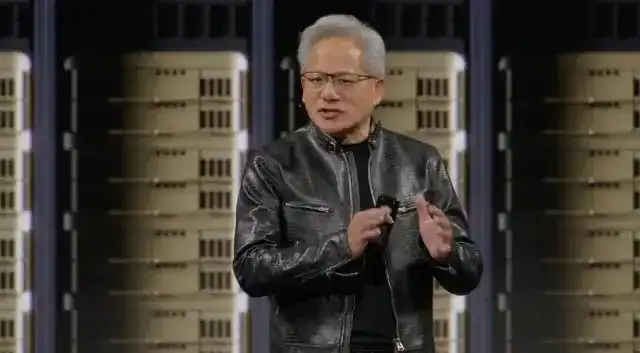
June 1, 2026 - NVIDIA Founder and CEO Jensen Huang delivered a keynote speech at the NVIDIA GTC Taipei conference held during COMPUTEX 2026.

It had only been three months since the last GTC.

At that time, NVIDIA announced the "chip family bundle" of Vera Rubin, including: the Vera CPU, Rubin GPU, Groq 3 LPU, ConnectX-9, BlueField-4 DPU, and Spectrum-6 switch. These six chips form a rack-scale AI supercomputer, announcing that the number of GPUs required to train large MoE models was reduced to one-quarter, inference throughput per watt improved 10x, and single token cost dropped to one-tenth.

Different from previous emphasis on system-level solutions like the "chip family bundle" or "computing power family bundle," three months later at COMPUTEX, Jensen Huang turned his focus to the target these infrastructures will serve—Agents.

In his speech, Jensen Huang revealed: Vera Rubin has officially entered mass production, Vera CPUs have begun shipping globally, DGX Station for the first time comes to enterprise desktops in a Windows form factor, Cosmos 3 redefines the perceptual framework for physical AI, and DSX becomes the operating system for AI factories. NVIDIA also partnered with Unitree to launch the H2 Plus—the first humanoid robot reference design based on Isaac GR00T, extending Agent boundaries from the digital world to physical form.

NVIDIA is reorganizing its complete technical system around the Agent ecosystem, from chips and data centers to models, software, and robotics platforms.

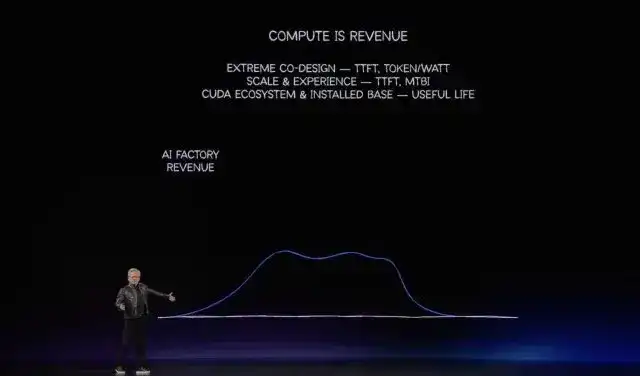
Jensen Huang said: "The era of Agent AI and practical artificial intelligence has arrived. Now tokens are the unit of profit, AI is the 'generator' of GDP, and the number of software engineers is increasing. People talk about AI reducing jobs; that's complete nonsense. In fact, more software engineers are being hired."
The Same AI Factory, Runs 10x More Agent Tasks

The Vera Rubin platform is now in full production.

Unlike the past, which mainly focused on large model training and inference, Vera Rubin was designed from the start with Agent as a key workload.

In his speech, Jensen Huang stated that an Agent task is often not just a single model inference, but includes multiple steps such as inference, search, tool calls, code execution, and result validation, potentially involving thousands of steps behind the scenes. In the future, data centers will need to handle not just individual model requests but more of these continuous, collaborative Agent tasks.

The platform is defined as a massive, unified compute-unit-level AI supercomputer built specifically for handling Agent workloads from inference, retrieval to tool usage. In a same-scale hyperscale data center, using the new Vera Rubin platform to run autonomous AI Agent tasks achieves a processing efficiency 10 times that of the previous generation Grace Blackwell platform.

Beyond the compute platform itself, networking has also become a focus of the Vera Rubin upgrade.

In the past, data transmission between GPUs in data centers relied primarily on traditional optical modules and switch architectures. However, as cluster sizes continue to expand, power consumption, cooling, and deployment complexity rapidly increase. To address this, NVIDIA introduced the Spectrum-X Ethernet Photonics networking system into the Vera Rubin platform.

This marks NVIDIA's first large-scale introduction of Co-Packaged Optics (CPO) technology into AI data center networks.

Simply put, traditional solutions require plugging optical modules externally into switches, while CPO directly integrates optical devices into the switch internal, thereby reducing energy consumption and signal loss.

Additionally, security is a core capability heavily emphasized in this Vera Rubin platform.

To this end, NVIDIA extended Confidential Computing capabilities across the entire Vera Rubin platform. Through trusted execution environments, hardware-level verification, and end-to-end encryption mechanisms, enterprises can achieve higher levels of security assurance when handling private data, industry-sensitive information, and critical models.

Jensen Huang revealed that Vera Rubin has entered mass production. As a third-generation MGX rack-level system, it involves over 150 partners, more than 350 factories, and a supply chain covering over 30 countries and regions. According to NVIDIA's announced plan, Vera Rubin will begin official shipments this fall.
The "Born-for-Agent" Processor

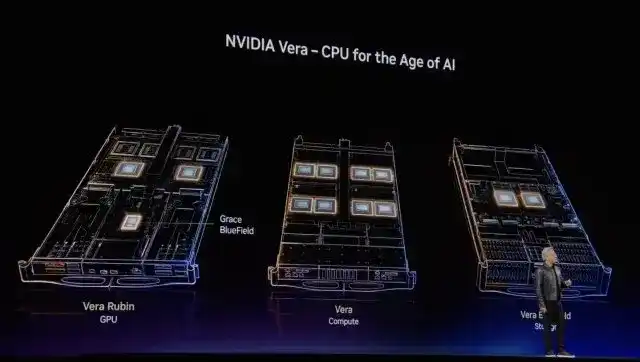
NVIDIA launched a new type of processor, Vera, designed specifically for the Agent era and has entered full production.

Jensen Huang pointed out that advancements in memory systems will drive innovation and modernization in storage systems. All CPUs to date have been built for humans, but Vera is a CPU designed for the AI era, built for Agents.

As the successor to Grace, Vera adopts NVIDIA's self-designed "Olympus" CPU core architecture, increasing core count from 72 to 88 cores and significantly improving memory and data processing capabilities. According to NVIDIA, in testing with Agent-related workloads, Vera achieved task execution speeds 1.8 times faster than contemporary x86 server CPUs.

More important than pure performance gains is the change in the relationship between Vera and the Rubin GPU: Vera connects to the Rubin GPU via second-generation NVLink-C2C, with an interconnect bandwidth reaching 1.8TB/s, further reducing the overhead of data transfer between CPU and GPU during Agent operation.

Jensen Huang stated that Vera Rubin uses HBM (High-Bandwidth Memory) from Micron, SK Hynix, and Samsung, and the supply chain scale is "twice" that of the previous generation Blackwell. However, deploying a large Blackwell rack took two hours, while the time for Vera Rubin has been compressed to the 5-minute level.
Moving AI Factories from "Construction" to "Operation"

The DSX launched by NVIDIA this time can be understood as an "AI Factory Construction and Operation Toolkit."

In the past, building an AI data center required clients to separately consider servers, networking, power, cooling, facility design, and operational systems, with many steps relying on coordination among different suppliers. DSX aims to integrate these previously fragmented steps into a single framework, providing clients with a standardized, verifiable reference plan from design, simulation, construction, to operation.

Jensen Huang stated at the launch event: "NVIDIA isn't just selling chips; we're providing infrastructure builders with a complete AI factory blueprint."

The most important new capabilities in DSX this time are two-fold.

The first is DSX MaxLPS. It addresses the most practical problem for AI factories: given a fixed power budget, how to place more GPUs and run more Tokens.

According to NVIDIA, MaxLPS, combined with liquid cooling and intra-rack power optimization, allows operators to run up to 40% more GPUs without significantly impacting performance.

The second is DSX OS. It acts as the operational software for the AI factory, responsible for lifecycle management, intelligent scheduling, health monitoring, failure recovery, multi-tenancy management, and more. Simply put, if an AI factory is a complex facility, DSX OS ensures its continuous, stable operation.

Within the DSX product matrix, Reference Design provides AI factory reference designs, telling clients how to build facilities, racks, networking, power, and cooling systems; DSX Sim handles simulation, allowing clients to verify designs before construction; DSX Flex connects the AI factory to the power grid, enabling data centers to adjust tasks based on electricity prices, loads, and demand response signals; DSX Exchange is responsible for data interfaces between IT systems, operational systems, energy, and cooling systems.

In terms of the ecosystem, cloud partners like CoreWeave, Crusoe, and Lambda are deploying DSX Sim, MaxLPS, and DSX OS to reduce risks and improve GPU utilization. Manufacturers like Dell, HPE, Lenovo, Supermicro, and ASUS, Foxconn, GIGABYTE, Wistron are building DSX-compatible systems.

Teaming Up with Windows and ARM

In his live speech, Jensen Huang officially announced the unveiling of the "DGX Station for Windows" workstation, defined by NVIDIA as a desktop-level AI supercomputer for the Windows ecosystem.

Hardware-wise, it features the GB300 Grace Blackwell Ultra Desktop Superchip, connecting the Blackwell Ultra GPU and 72-core Grace CPU via NVLink-C2C, offering up to 748GB unified memory and 20 PFLOPS FP4 performance, and equipped with up to 800Gb/s networking capability.

The key point of this product lies in the change in Agent deployment methods.

NVIDIA hopes enterprises can run multiple Agents locally, securely, and manageably within a Windows environment and integrate them into workflows like design, engineering, data science, inference, and Physical AI. Simultaneously launched, OpenShell handles Agent runtime security through isolated sandboxes and system-level policy control, limiting Agents from unauthorized operations or leaking credentials and private data.

Besides products for enterprise desktops, Jensen Huang also announced a system-level SoC—the RTX Spark SoC—integrating the N1X CPU and Blackwell GPU into a single chip with unified memory architecture, specifically for thin-and-light laptops and small form-factor desktops.

Among these, N1X is NVIDIA's first PC processor co-developed with Microsoft, based on Arm architecture, custom-designed by MediaTek, and manufactured using TSMC's 3nm process. It will debut this fall on laptops from Microsoft, Dell, HP, ASUS, Lenovo, and MSI, with over 30 models initially, targeting high-end thin-and-light notebooks.

This is NVIDIA's "super chip" prepared for the AI PC era, which Jensen Huang sees as a significant redefinition of the PC form factor.
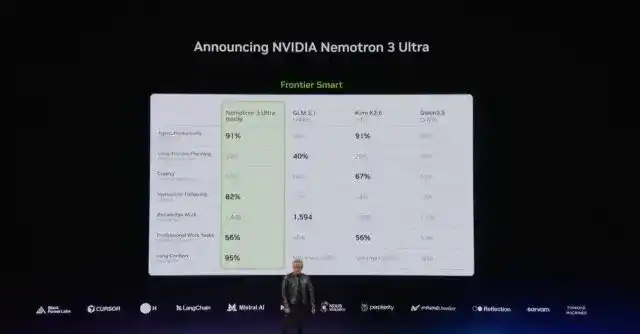
The Agent's "Two Brains"

At this launch event, NVIDIA announced the latest progress on two core model product lines, corresponding to two scenarios for Agents: one running within enterprise systems and one running in the physical world.

NVIDIA released Nemotron 3 Ultra, a 550-billion-parameter Mixture-of-Experts (MoE) model, providing top-tier intelligence for long-running agents in code development, scientific research, and enterprise business processes. Compared to mainstream open-source frontier models of similar scale, this model offers up to 5x faster inference speed and up to 30% lower usage cost, helping agents complete tasks more efficiently and affordably.

Surrounding the Nemotron open model, NVIDIA released a series of software, open-source models, and partnership progress, aiming to enable enterprises to build "digital colleagues" that assist employees in scenarios like engineering design, healthcare, software development, and business operations.

In this combination, Nemotron provides foundational model capabilities, NemoClaw organizes models into Agents, OpenShell handles runtime security, and Agent Toolkit transforms NVIDIA software libraries like CUDA-X into tools directly callable by Agents. Agents can use tools, call data, execute tasks, and integrate into existing enterprise systems within a controlled environment.

Jensen Huang stated that global software companies are bringing AI Agents into real work systems, enabling them to help employees complete complex tasks faster. NemoClaw provides open components needed to build long-running Agents, including orchestration, context, memory, tool calling, and security control capabilities.

In the past, enterprise discussions on AI focused more on what models could answer; now, NVIDIA aims to solve how Agents can securely integrate tools, data, and business processes and operate continuously in real work.

There's also Cosmos 3, officially launched as the third generation of the Cosmos series, representing an architectural-level redesign.

Cosmos 3 is a world foundation model for physical AI, providing the underlying ability to "understand the physical world, predict what will happen, and decide what to do."

Compared to previous Cosmos versions, earlier editions primarily targeted robotics and autonomous driving developers, focusing on video generation and physical world simulation, essentially being a relatively single-modal generation framework. Cosmos 3 adopts a new architecture—a hybrid Transformer—for the first time unifying three aspects: visual reasoning, world generation, and action prediction into a single system.

It can natively understand and generate text, images, videos, ambient sounds, and actions, achieving leading levels of physical accuracy, and is the world's first fully open, all-capable model. NVIDIA claims it has the potential to compress physical AI training and evaluation cycles from months in the past to days.

Jensen Huang predicted that due to breakthroughs in multimodal reasoning for language, vision, and world models, the big bang of physical AI is imminent.

The Cosmos 3 series of open frontier all-capable models provides developers with generational leap capabilities for building robots, autonomous vehicles, and visual AI that can perceive, reason, plan, and act in the physical world.

Lowering the Barrier to Physical AI

NVIDIA and Unitree jointly launched the H2 Plus—a sample humanoid robot for research and developers.

"Sample" means: Unitree is responsible for the robot body, NVIDIA is responsible for the software and computing platform, with both sides pre-integrating hardware and software. Development teams can start skill development immediately upon receiving it, without spending time solving underlying integration issues. It is also the world's first open humanoid robot built on the NVIDIA Isaac GR00T development platform.

This sample model targets a long-standing pain point in humanoid robot development: hardware integration, data collection, simulation, training, evaluation, deployment—each step operates in silos, making the entire process highly fragmented.

NVIDIA stated that research teams receiving a robot body often spend significant time on underlying integration, delaying actual skill development. What H2 Plus attempts to do is streamline this path, allowing research teams to skip underlying integration and directly enter skill development and real-world scenario validation.

In Jensen Huang's view, humanoid robots will bring physical AI to the world's largest industries, unlocking multi-trillion-dollar economic opportunities, and H2 Plus is the starting point for pushing frontier research into real scenarios like factories, warehouses, and logistics systems.

Additionally, NVIDIA announced the official open-sourcing of a set of Physical AI Skills toolkits, covering core scenarios like robotics, autonomous driving, visual AI, and industrial digital twins.

These "Skills" can be understood as standardized usage methods of NVIDIA's platforms like Cosmos, Omniverse, Isaac, Metropolis, written into operational instructions that Agents can directly read and execute. Open-sourcing these packaged instructions forms the toolkit released this time.

When an Agent receives a task, for example, generating a batch of training data for defect detection, it knows which model to call, what format to output, and how to validate results, automatically running the entire process without human step-by-step operation of each stage.

Upgrading AI Storage: From "Fast Running" to "Managed Control"

At the March GTC in San Jose, NVIDIA launched the Vera BlueField-4 STX. At that time, Jensen Huang focused on "AI-native storage architecture," with the core selling point being high-performance KV Cache storage support for Agents' long-context reasoning.

Now, NVIDIA announced the addition of a new set of security capabilities to STX, shifting the focus from "storage performance" to "storage security."

The core logic here stems from the changing context of enterprise AI usage. Now, many enterprises are actively deploying Agents. When Agents access enterprise systems, continuously reading and writing, sharing information across systems without direct human supervision—questions like who is accessing what data, whether there's unauthorized access, or data leakage become major headaches for enterprises.

NVIDIA's solution is to add a layer of security on top of accelerated storage—through a unified NVIDIA DOCA security software and hardware-enforced policies directly in the BlueField-4 chip, platforms based on STX can inspect and control interactions between agents, data, and contextual memory in real-time, helping enterprises achieve continuous policy enforcement across the AI data path.

Jensen Huang explained: "Agents have turned enterprise data into a real-time, living system, and this system must be protected wherever data moves, wherever context is stored, wherever Agents act. What Vera BlueField-4 STX aims to do is use inherently secure design to enforce trust at chip-level, at AI speeds."

Being "Mutual Suppliers" with TSMC

A particularly interesting point in this conference was the collaboration between NVIDIA and TSMC—Currently, TSMC is utilizing NVIDIA technology to improve cycle time, energy efficiency, yield, and operational productivity in advanced wafer fabs.

For the past thirty years, the relationship between TSMC and NVIDIA had only one form: TSMC manufacturing chips for NVIDIA. But now, roles have subtly changed; NVIDIA has begun helping TSMC "manage factories."

Jensen Huang stated: "NVIDIA and TSMC have collaborated for nearly thirty years, continuously pushing the limits of computing. TSMC is bringing NVIDIA's AI and accelerated computing inside the wafer fab, using simulation, optimization, and AI to tackle the world's most complex design and manufacturing challenges, improving speed, efficiency, and yield for next-generation chips."

Their relationship has evolved from a one-way client-vendor dynamic to one of mutual interdependence.

Conclusion

Looking back at this launch event, NVIDIA is piecing together a new blueprint around "Agents."

Vera CPU schedules tasks for Agents, Vera Rubin provides compute power for Agents, BlueField-4 STX secures data for Agents, Cosmos 3 enables Agents to understand the physical world, Nemotron+NemoClaw+OpenShell enables Agents to be organized, invoked, and constrained, DGX Station for Windows brings Agents to enterprise employee desktops, H2 Plus gives Agents a physical body, and DSX and Skills enable all this to be mass-produced and deployed.

From this perspective, Jensen Huang is attempting to depict a new computing era. This echoes his opening statement: "The era of Agent AI and practical artificial intelligence has arrived."

Ultimately, what Jensen Huang wanted to convey this time is one thing: when Agents become AI infrastructure, every layer can have NVIDIA.


Preguntas relacionadas

QAccording to the article, what is the main focus of NVIDIA's new strategy at COMPUTEX 2026, as outlined by Jensen Huang?

AAccording to Jensen Huang's keynote at COMPUTEX 2026, NVIDIA's main strategic focus has shifted from emphasizing 'system-level solutions' like chip or computing power 'family buckets' to the infrastructure's ultimate target: the Agent. NVIDIA is reorganizing its entire technology stack—from chips and data centers to models, software, and robotics platforms—around the Agent ecosystem.

QWhat key performance claim does NVIDIA make for the new Vera Rubin AI platform compared to its predecessor?

ANVIDIA claims that the new Vera Rubin platform can handle autonomous AI agent tasks with 10 times the processing efficiency of the previous-generation Grace Blackwell platform, within similarly sized mega-data centers.

QWhat is the significance of NVIDIA's collaboration with Unitree on the H2 Plus robot?

AThe collaboration with Unitree resulted in the H2 Plus, which is described as the first open humanoid robot reference design built on the NVIDIA Isaac GR00T platform. It serves as a 'template' or 'sample machine' that integrates hardware (by Unitree) and software/platform (by NVIDIA), allowing research teams to skip complex low-level integration and focus directly on skill development and real-world validation. Its goal is to lower the barrier to entry for Physical AI development.

QWhat are the two core model product lines NVIDIA announced for Agents, and what are their respective purposes?

ANVIDIA announced updates to two core model product lines for Agents: 1) The Nemotron series, exemplified by the Nemotron 3 Ultra model, is designed for 'digital colleagues' running within enterprise systems to assist with tasks like code development and business processes. 2) The Cosmos 3 series is a foundational world model for Physical AI, providing the underlying ability to understand the physical world, predict outcomes, and decide on actions for robots, autonomous vehicles, and visual AI.

QHow has the relationship between NVIDIA and TSMC evolved, as mentioned in the article?

AThe relationship between NVIDIA and TSMC has evolved from a traditional, one-way supplier-client dynamic (where TSMC manufactures chips for NVIDIA) into a more bidirectional, interdependent partnership. TSMC is now implementing NVIDIA's AI and accelerated computing technology within its own advanced wafer fabs to improve turnaround time, energy efficiency, yield, and operational productivity for next-generation chip manufacturing.

Lecturas Relacionadas

The Midlife Crisis of Crypto GPs: No PMF, No Next Check from LPs

The article "The Midlife Crisis of Crypto GPs: No PMF, No Next LP Check" analyzes the shifting crypto fundraising landscape. It argues the era of selling grand visions to LPs is over; GPs must now offer products with clear Product-Market Fit (PMF). The author categorizes crypto fundraising products into three types: Primary (VC funds), Liquid (trading strategies), and CeFi/DeFi Native Yield. This summary focuses on the Primary market. Key points include: * **Market Shift:** LPs are impatient, demand immediate returns, and are skeptical of future promises. The "easy money" narrative has faded. * **GP Value Erosion:** LP learning curves have shortened (aided by AI), reducing the value of a GP's basic "crypto knowledge." Superior judgment is now rare. * **Weakened LP Motivations:** Traditional reasons for LPs to invest in crypto VC funds (capturing industry beta, gaining access, leveraging GP judgment) have weakened due to new products like ETFs and increased LP sophistication. * **Surviving in Primary:** The primary market will likely persist for: 1) large funds in endowment mandates treating it as a lottery ticket, 2) family offices/HNWIs using proprietary capital, 3) a few funds with proven recent outperformance, and 4) funds with strong ecosystem "deal-making" capabilities. * **Conclusion:** For most GPs, rebuilding trust requires starting over in a niche, demonstrating alpha-generating ability, or providing concrete value/services to LPs.

marsbitHace 4 hora(s)

The Midlife Crisis of Crypto GPs: No PMF, No Next Check from LPs

marsbitHace 4 hora(s)

Trading

Spot
Futuros

Artículos destacados

Qué es $S$

Entendiendo SPERO: Una Visión General Completa Introducción a SPERO A medida que el panorama de la innovación continúa evolucionando, la aparición de tecnologías web3 y proyectos de criptomonedas juega un papel fundamental en la configuración del futuro digital. Un proyecto que ha atraído la atención en este campo dinámico es SPERO, denotado como SPERO,$$s$. Este artículo tiene como objetivo reunir y presentar información detallada sobre SPERO, para ayudar a entusiastas e inversores a comprender sus fundamentos, objetivos e innovaciones dentro de los dominios web3 y cripto. ¿Qué es SPERO,$$s$? SPERO,$$s$ es un proyecto único dentro del espacio cripto que busca aprovechar los principios de descentralización y tecnología blockchain para crear un ecosistema que promueva la participación, la utilidad y la inclusión financiera. El proyecto está diseñado para facilitar interacciones de igual a igual de nuevas maneras, proporcionando a los usuarios soluciones y servicios financieros innovadores. En su esencia, SPERO,$$s$ tiene como objetivo empoderar a los individuos al proporcionar herramientas y plataformas que mejoren la experiencia del usuario en el espacio de las criptomonedas. Esto incluye habilitar métodos de transacción más flexibles, fomentar iniciativas impulsadas por la comunidad y crear caminos para oportunidades financieras a través de aplicaciones descentralizadas (dApps). La visión subyacente de SPERO,$$s$ gira en torno a la inclusividad, buscando cerrar brechas dentro de las finanzas tradicionales mientras aprovecha los beneficios de la tecnología blockchain. ¿Quién es el Creador de SPERO,$$s$? La identidad del creador de SPERO,$$s$ sigue siendo algo oscura, ya que hay recursos públicos limitados que proporcionan información de fondo detallada sobre su(s) fundador(es). Esta falta de transparencia puede derivarse del compromiso del proyecto con la descentralización, una ética que muchos proyectos web3 comparten, priorizando las contribuciones colectivas sobre el reconocimiento individual. Al centrar las discusiones en torno a la comunidad y sus objetivos colectivos, SPERO,$$s$ encarna la esencia del empoderamiento sin señalar a individuos específicos. Como tal, comprender la ética y la misión de SPERO sigue siendo más importante que identificar a un creador singular. ¿Quiénes son los Inversores de SPERO,$$s$? SPERO,$$s$ cuenta con el apoyo de una diversa gama de inversores que van desde capitalistas de riesgo hasta inversores ángeles dedicados a fomentar la innovación en el sector cripto. El enfoque de estos inversores generalmente se alinea con la misión de SPERO, priorizando proyectos que prometen avances tecnológicos sociales, inclusión financiera y gobernanza descentralizada. Estas fundaciones de inversores suelen estar interesadas en proyectos que no solo ofrecen productos innovadores, sino que también contribuyen positivamente a la comunidad blockchain y sus ecosistemas. El respaldo de estos inversores refuerza a SPERO,$$s$ como un contendiente notable en el dominio de proyectos cripto que evoluciona rápidamente. ¿Cómo Funciona SPERO,$$s$? SPERO,$$s$ emplea un marco multifacético que lo distingue de los proyectos de criptomonedas convencionales. Aquí hay algunas de las características clave que subrayan su singularidad e innovación: Gobernanza Descentralizada: SPERO,$$s$ integra modelos de gobernanza descentralizada, empoderando a los usuarios para participar activamente en los procesos de toma de decisiones sobre el futuro del proyecto. Este enfoque fomenta un sentido de propiedad y responsabilidad entre los miembros de la comunidad. Utilidad del Token: SPERO,$$s$ utiliza su propio token de criptomoneda, diseñado para servir diversas funciones dentro del ecosistema. Estos tokens permiten transacciones, recompensas y la facilitación de servicios ofrecidos en la plataforma, mejorando la participación y la utilidad general. Arquitectura en Capas: La arquitectura técnica de SPERO,$$s$ apoya la modularidad y escalabilidad, permitiendo la integración fluida de características y aplicaciones adicionales a medida que el proyecto evoluciona. Esta adaptabilidad es fundamental para mantener la relevancia en el cambiante paisaje cripto. Participación de la Comunidad: El proyecto enfatiza iniciativas impulsadas por la comunidad, empleando mecanismos que incentivan la colaboración y la retroalimentación. Al nutrir una comunidad sólida, SPERO,$$s$ puede abordar mejor las necesidades de los usuarios y adaptarse a las tendencias del mercado. Enfoque en la Inclusión: Al ofrecer tarifas de transacción bajas e interfaces amigables para el usuario, SPERO,$$s$ busca atraer a una base de usuarios diversa, incluyendo a individuos que anteriormente pueden no haber participado en el espacio cripto. Este compromiso con la inclusión se alinea con su misión general de empoderamiento a través de la accesibilidad. Cronología de SPERO,$$s$ Entender la historia de un proyecto proporciona información crucial sobre su trayectoria de desarrollo y hitos. A continuación se presenta una cronología sugerida que mapea eventos significativos en la evolución de SPERO,$$s$: Fase de Conceptualización e Ideación: Las ideas iniciales que forman la base de SPERO,$$s$ fueron concebidas, alineándose estrechamente con los principios de descentralización y enfoque comunitario dentro de la industria blockchain. Lanzamiento del Whitepaper del Proyecto: Tras la fase conceptual, se lanzó un whitepaper completo que detalla la visión, los objetivos y la infraestructura tecnológica de SPERO,$$s$ para generar interés y retroalimentación de la comunidad. Construcción de Comunidad y Primeras Interacciones: Se realizaron esfuerzos de divulgación activa para construir una comunidad de primeros adoptantes y posibles inversores, facilitando discusiones en torno a los objetivos del proyecto y obteniendo apoyo. Evento de Generación de Tokens: SPERO,$$s$ llevó a cabo un evento de generación de tokens (TGE) para distribuir sus tokens nativos a los primeros seguidores y establecer liquidez inicial dentro del ecosistema. Lanzamiento de la dApp Inicial: La primera aplicación descentralizada (dApp) asociada con SPERO,$$s$ se puso en marcha, permitiendo a los usuarios interactuar con las funcionalidades centrales de la plataforma. Desarrollo Continuo y Alianzas: Actualizaciones y mejoras continuas a las ofertas del proyecto, incluyendo alianzas estratégicas con otros actores en el espacio blockchain, han moldeado a SPERO,$$s$ en un jugador competitivo y en evolución en el mercado cripto. Conclusión SPERO,$$s$ se erige como un testimonio del potencial de web3 y las criptomonedas para revolucionar los sistemas financieros y empoderar a los individuos. Con un compromiso con la gobernanza descentralizada, la participación comunitaria y funcionalidades diseñadas de manera innovadora, allana el camino hacia un paisaje financiero más inclusivo. Como con cualquier inversión en el espacio cripto que evoluciona rápidamente, se anima a los posibles inversores y usuarios a investigar a fondo y participar de manera reflexiva con los desarrollos en curso dentro de SPERO,$$s$. El proyecto muestra el espíritu innovador de la industria cripto, invitando a una mayor exploración de sus innumerables posibilidades. Mientras el viaje de SPERO,$$s$ aún se desarrolla, sus principios fundamentales pueden, de hecho, influir en el futuro de cómo interactuamos con la tecnología, las finanzas y entre nosotros en ecosistemas digitales interconectados.

72 Vistas totalesPublicado en 2024.12.17Actualizado en 2024.12.17

Qué es $S$

Qué es AGENT S

Agent S: El Futuro de la Interacción Autónoma en Web3 Introducción En el paisaje en constante evolución de Web3 y las criptomonedas, las innovaciones están redefiniendo constantemente cómo los individuos interactúan con las plataformas digitales. Uno de estos proyectos pioneros, Agent S, promete revolucionar la interacción humano-computadora a través de su marco agente abierto. Al allanar el camino para interacciones autónomas, Agent S busca simplificar tareas complejas, ofreciendo aplicaciones transformadoras en inteligencia artificial (IA). Esta exploración detallada profundizará en las complejidades del proyecto, sus características únicas y las implicaciones para el dominio de las criptomonedas. ¿Qué es Agent S? Agent S se presenta como un marco agente abierto innovador, diseñado específicamente para abordar tres desafíos fundamentales en la automatización de tareas informáticas: Adquisición de Conocimiento Específico del Dominio: El marco aprende inteligentemente de diversas fuentes de conocimiento externas y experiencias internas. Este enfoque dual le permite construir un rico repositorio de conocimiento específico del dominio, mejorando su rendimiento en la ejecución de tareas. Planificación a Largo Plazo de Tareas: Agent S emplea planificación jerárquica aumentada por la experiencia, un enfoque estratégico que facilita la descomposición y ejecución eficiente de tareas complejas. Esta característica mejora significativamente su capacidad para gestionar múltiples subtareas de manera eficiente y efectiva. Manejo de Interfaces Dinámicas y No Uniformes: El proyecto introduce la Interfaz Agente-Computadora (ACI), una solución innovadora que mejora la interacción entre agentes y usuarios. Utilizando Modelos de Lenguaje Multimodal de Gran Escala (MLLMs), Agent S puede navegar y manipular diversas interfaces gráficas de usuario sin problemas. A través de estas características pioneras, Agent S proporciona un marco robusto que aborda las complejidades involucradas en la automatización de la interacción humana con las máquinas, preparando el terreno para una multitud de aplicaciones en IA y más allá. ¿Quién es el Creador de Agent S? Si bien el concepto de Agent S es fundamentalmente innovador, la información específica sobre su creador sigue siendo elusiva. El creador es actualmente desconocido, lo que resalta ya sea la etapa incipiente del proyecto o la elección estratégica de mantener a los miembros fundadores en el anonimato. Independientemente de la anonimidad, el enfoque sigue siendo en las capacidades y el potencial del marco. ¿Quiénes son los Inversores de Agent S? Dado que Agent S es relativamente nuevo en el ecosistema criptográfico, la información detallada sobre sus inversores y patrocinadores financieros no está documentada explícitamente. La falta de información disponible públicamente sobre las bases de inversión u organizaciones que apoyan el proyecto plantea preguntas sobre su estructura de financiamiento y hoja de ruta de desarrollo. Comprender el respaldo es crucial para evaluar la sostenibilidad del proyecto y su posible impacto en el mercado. ¿Cómo Funciona Agent S? En el núcleo de Agent S se encuentra una tecnología de vanguardia que le permite funcionar de manera efectiva en diversos entornos. Su modelo operativo se basa en varias características clave: Interacción Humano-Computadora Similar a la Humana: El marco ofrece planificación avanzada de IA, esforzándose por hacer que las interacciones con las computadoras sean más intuitivas. Al imitar el comportamiento humano en la ejecución de tareas, promete elevar las experiencias de los usuarios. Memoria Narrativa: Empleada para aprovechar experiencias de alto nivel, Agent S utiliza memoria narrativa para hacer un seguimiento de las historias de tareas, mejorando así sus procesos de toma de decisiones. Memoria Episódica: Esta característica proporciona a los usuarios una guía paso a paso, permitiendo que el marco ofrezca apoyo contextual a medida que se desarrollan las tareas. Soporte para OpenACI: Con la capacidad de ejecutarse localmente, Agent S permite a los usuarios mantener el control sobre sus interacciones y flujos de trabajo, alineándose con la ética descentralizada de Web3. Fácil Integración con APIs Externas: Su versatilidad y compatibilidad con varias plataformas de IA aseguran que Agent S pueda encajar sin problemas en ecosistemas tecnológicos existentes, convirtiéndolo en una opción atractiva para desarrolladores y organizaciones. Estas funcionalidades contribuyen colectivamente a la posición única de Agent S dentro del espacio cripto, ya que automatiza tareas complejas y de múltiples pasos con una intervención humana mínima. A medida que el proyecto evoluciona, sus posibles aplicaciones en Web3 podrían redefinir cómo se desarrollan las interacciones digitales. Cronología de Agent S El desarrollo y los hitos de Agent S pueden encapsularse en una cronología que resalta sus eventos significativos: 27 de septiembre de 2024: El concepto de Agent S fue lanzado en un documento de investigación integral titulado “Un Marco Agente Abierto que Usa Computadoras Como un Humano”, mostrando las bases del proyecto. 10 de octubre de 2024: El documento de investigación fue puesto a disposición del público en arXiv, ofreciendo una exploración profunda del marco y su evaluación de rendimiento basada en el benchmark OSWorld. 12 de octubre de 2024: Se lanzó una presentación en video, proporcionando una visión visual de las capacidades y características de Agent S, involucrando aún más a posibles usuarios e inversores. Estos marcadores en la cronología no solo ilustran el progreso de Agent S, sino que también indican su compromiso con la transparencia y la participación comunitaria. Puntos Clave Sobre Agent S A medida que el marco Agent S continúa evolucionando, varios atributos clave destacan, subrayando su naturaleza innovadora y potencial: Marco Innovador: Diseñado para proporcionar un uso intuitivo de las computadoras similar a la interacción humana, Agent S aporta un enfoque novedoso a la automatización de tareas. Interacción Autónoma: La capacidad de interactuar de manera autónoma con las computadoras a través de GUI significa un salto hacia soluciones informáticas más inteligentes y eficientes. Automatización de Tareas Complejas: Con su metodología robusta, puede automatizar tareas complejas y de múltiples pasos, haciendo que los procesos sean más rápidos y menos propensos a errores. Mejora Continua: Los mecanismos de aprendizaje permiten a Agent S mejorar a partir de experiencias pasadas, mejorando continuamente su rendimiento y eficacia. Versatilidad: Su adaptabilidad en diferentes entornos operativos como OSWorld y WindowsAgentArena asegura que pueda servir a una amplia gama de aplicaciones. A medida que Agent S se posiciona en el paisaje de Web3 y criptomonedas, su potencial para mejorar las capacidades de interacción y automatizar procesos significa un avance significativo en las tecnologías de IA. A través de su marco innovador, Agent S ejemplifica el futuro de las interacciones digitales, prometiendo una experiencia más fluida y eficiente para los usuarios en diversas industrias. Conclusión Agent S representa un audaz avance en la unión de la IA y Web3, con la capacidad de redefinir cómo interactuamos con la tecnología. Aunque aún se encuentra en sus primeras etapas, las posibilidades para su aplicación son vastas y atractivas. A través de su marco integral que aborda desafíos críticos, Agent S busca llevar las interacciones autónomas al primer plano de la experiencia digital. A medida que nos adentramos más en los reinos de las criptomonedas y la descentralización, proyectos como Agent S sin duda desempeñarán un papel crucial en la configuración del futuro de la tecnología y la colaboración humano-computadora.

467 Vistas totalesPublicado en 2025.01.14Actualizado en 2025.01.14

Qué es AGENT S

Cómo comprar S

¡Bienvenido a HTX.com! Hemos hecho que comprar Sonic (S) sea simple y conveniente. Sigue nuestra guía paso a paso para iniciar tu viaje de criptos.Paso 1: crea tu cuenta HTXUtiliza tu correo electrónico o número de teléfono para registrarte y obtener una cuenta gratuita en HTX. Experimenta un proceso de registro sin complicaciones y desbloquea todas las funciones.Obtener mi cuentaPaso 2: ve a Comprar cripto y elige tu método de pagoTarjeta de crédito/débito: usa tu Visa o Mastercard para comprar Sonic (S) al instante.Saldo: utiliza fondos del saldo de tu cuenta HTX para tradear sin problemas.Terceros: hemos agregado métodos de pago populares como Google Pay y Apple Pay para mejorar la comodidad.P2P: tradear directamente con otros usuarios en HTX.Over-the-Counter (OTC): ofrecemos servicios personalizados y tipos de cambio competitivos para los traders.Paso 3: guarda tu Sonic (S)Después de comprar tu Sonic (S), guárdalo en tu cuenta HTX. Alternativamente, puedes enviarlo a otro lugar mediante transferencia blockchain o utilizarlo para tradear otras criptomonedas.Paso 4: tradear Sonic (S)Tradear fácilmente con Sonic (S) en HTX's mercado spot. Simplemente accede a tu cuenta, selecciona tu par de trading, ejecuta tus trades y monitorea en tiempo real. Ofrecemos una experiencia fácil de usar tanto para principiantes como para traders experimentados.

878 Vistas totalesPublicado en 2025.01.15Actualizado en 2026.06.01

Cómo comprar S

Discusiones

Bienvenido a la comunidad de HTX. Aquí puedes mantenerte informado sobre los últimos desarrollos de la plataforma y acceder a análisis profesionales del mercado. A continuación se presentan las opiniones de los usuarios sobre el precio de S (S).

活动图片