BubbleMaps Identifies 25 Wallets Holding 19% of the Total CATE Supply

cryptonews.ruPublicado a 2026-08-04Actualizado a 2026-08-04

Resumen

Analytics firm BubbleMaps revealed that 25 wallets control 19% of the total supply of the cat-themed memecoin CATE. This concentration poses a risk to the nearly 75,000 traders who currently hold the token, as price stability depends on these major holders not selling. While most current holders are in profit, the implied connection between CATE and Kabosu—the Shiba Inu dog behind the Doge meme—has been disputed. Kabosu's owner, Atsuko Sato, clarified she has no association with the token and endorsed only the "Own The Doge" project. BubbleMaps has previously highlighted similar supply concentration in other memecoins like $CASH and $LAB, which preceded significant price declines. The coming market reaction to this concentration data will be crucial for CATE's future price action.

Blockchain analytics firm BubbleMaps has released data indicating that 25 wallets control 19% of the memecoin CATE's supply.

This is a concentration warning addressed to nearly 75,000 traders who bought the cat-themed token, which positions itself through a connection to the dog behind Dogecoin.

Who Controls the Bulk of CATE Supply?

BubbleMaps shared this data in an X discussion thread, stating that the CATE token had been bought by 74,863 wallets.

Currently, over 53,500 of these wallets are in profit, with two investors making over $1 million, 48 making over $100,000, and 1,618 making over $1,000. However, BubbleMaps questioned how long investors would hold onto these funds.

The data analytics platform pointed out that a significant portion of the token supply is controlled by a small group of wallets. BubbleMaps stated: "Twenty-five wallets control 19% of $CATE," and provided a link to track them.

Current data shows the majority of buyers are currently in profit, which is quite unusual for a memecoin at this stage. While this is an optimistic sign for investors, the worrying aspect is the concentration of holdings, as paper profits only last as long as the largest holders remain in their wallets.

Is CATE Company Connected to Kabosu's Owner?

At the core of CATE lies an implied connection to Kabosu, the Shiba Inu whose photo became the Doge meme. However, this connection is disputed, as Atsuko Sato, Kabosu's owner, has stated that the CATE tokens circulating on the market have no connection to her.

Sato stated that an old Instagram post of hers was used without permission to create the appearance of a link to this token.

According to her, Own The Doge is the only project she has authorized to manage her intellectual property. This project acquired the Doge NFT in 2021, launched the DOG token, hosts Doge Day events, and launched the COCORO token on the Base platform in 2025.

Sato advised buyers to verify any token claiming to be endorsed by her before investing.

Does the Latest BubbleMaps Analysis of CATE Confirm a Familiar Scenario?

In July, the firm reported that 63% of the 164,538 traders holding the top 50 Robinhood Chain memecoins were losing money, and the CASH token network had fallen by about 75% from its July 11 peak.

In that case, BubbleMaps performed a distribution check and found that ownership of the CASHCAT token was unevenly distributed, while a separate token, CASHDOG, was flagged as heavily bundled.

Earlier, in July, the company warned that the $LAB token would face an "ugly" sell-off as early investors approached unlock events, with presale participants owning hundreds of millions of dollars in locked profits. Cryptopolitan reported that $LAB had already fallen 72% from its June high amid separate insider manipulation allegations from investigator ZachXBT.

The CATE situation resembles the state of affairs with the aforementioned tokens before everything collapsed. A small group controlled the lion's share of the supply. How the remaining investors react to this data in the coming days will be crucial for the token's dynamics.

Criptos en tendencia

Preguntas relacionadas

QWhat key finding did the analytical company BubbleMaps report regarding the CATE token?

ABubbleMaps reported that 25 wallets control 19% of the total supply of the cat-themed memecoin CATE, highlighting a significant concentration of ownership.

QAccording to the article, what is the disputed connection used to position the CATE token in the market?

AThe token is positioned based on an implied connection to Kabosu, the Shiba Innu behind the Doge meme. However, the owner, Atsuko Sato, disputes this, stating the circulating CATE tokens have no relation to her and that an old Instagram post was used without permission.

QHow does the situation with CATE compare to other memecoins analyzed by BubbleMaps earlier in the article?

AThe situation resembles that of other tokens like CASHDOG and $LAB, where a small group controlled a large portion of the supply, often preceding significant price declines as early investors or insiders sold their holdings.

QWhat did the article mention as a concerning factor for current CATE investors, despite most currently being in profit?

AThe major concern is the high concentration of supply among a small number of wallets. The paper profits exist only as long as these largest holders do not sell their tokens, which could trigger a significant market downturn.

QWhich project has been officially authorized by Kabosu's owner, Atsuko Sato, to use her intellectual property?

AThe only project Sato has authorized is 'Own The Doge,' which purchased the Doge NFT in 2021, launched the DOG token, and has since conducted events like Doge Day and launched the COCORO token on the Base platform in 2025.

Lecturas Relacionadas

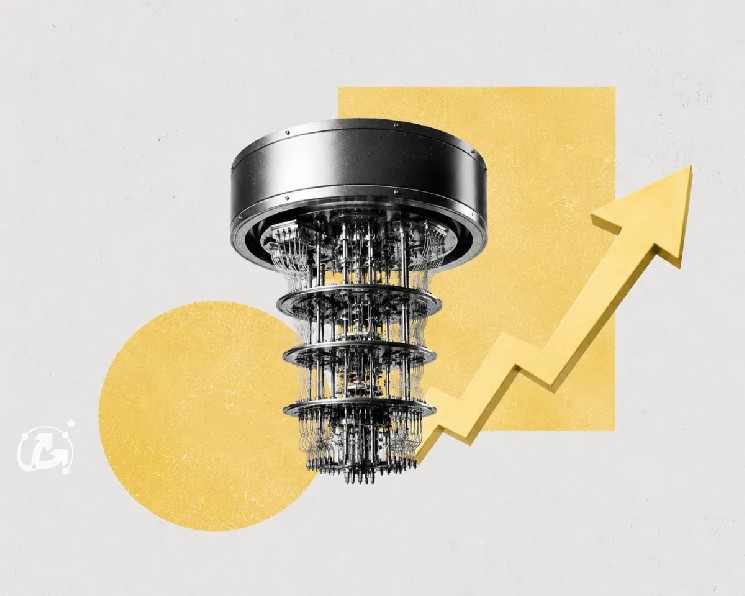
Anchorage Unveils Plan to Protect Against Quantum Threats

Regulated crypto bank Anchorage Digital has presented a strategy for preparing institutional assets for the post-quantum era, including implementing hybrid protection for internal TLS connections. The bank highlights that for cryptocurrencies, the main quantum risk lies in digital signatures, as Shor's algorithm could theoretically derive a private key from a public one. To mitigate this, Anchorage uses Bitcoin addresses based on a hash of the public key, which keeps the key hidden until a transaction is sent, and practices minimal address reuse. Internally, the company has deployed post-quantum key encapsulation for employee devices on ChromeOS and is implementing post-quantum cryptography within its hardware security modules (HSMs). A key proposal is the "Post-Quantum Turnstile" mechanism, which uses STARK zero-knowledge proofs to allow users to migrate signing rights to a post-quantum key without exposing their old private or public key. This could help secure an estimated two-thirds of circulating coins that might otherwise become inaccessible if the network phases out classical signatures. Furthermore, Anchorage open-sourced its Rust implementation of the SQIsign digital signature scheme, which it claims offers signatures about seven times smaller than the Falcon algorithm. This comes amid warnings that around 6 million BTC in addresses with exposed public keys could be vulnerable to future quantum attacks.

cryptonews.ruHace 35 min(s)

Anchorage Unveils Plan to Protect Against Quantum Threats

cryptonews.ruHace 35 min(s)

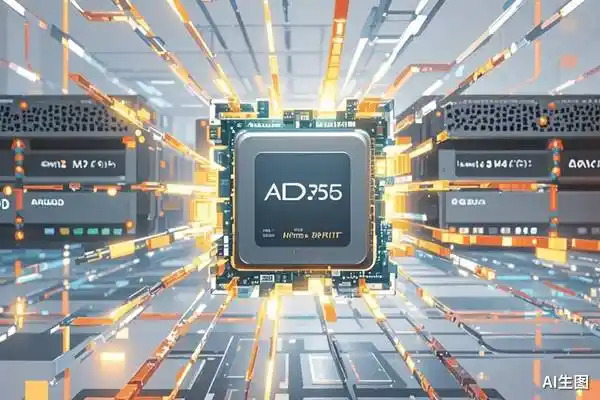
Kimi K3, which used to require 16 B200s, now fits on just 8 AMD cards

This article highlights a key achievement for AMD in the AI hardware race. The company's MI355X GPUs, each with 288 GB of memory, successfully deployed the massive 2.8 trillion parameter Kimi K3 model on a single 8-GPU server. In contrast, the NVIDIA B200 (with 192 GB per card) required a two-server, 16-GPU setup to hold the model, leading to inter-node communication overhead. In performance tests for a 1024-input/400-output token task, the 8-card MI355X system achieved a total throughput of 952 tokens/s and a single-user generation speed of 118 tokens/s. This single-node throughput was approximately 3.8 times higher than the per-node average of the dual-node B200 setup (498 tokens/s total). While NVIDIA's B300 delivered higher absolute performance (1568 tokens/s on 8 cards), a cost-efficiency analysis based on assumed hourly rates showed MI355X offered better value per dollar. Notably, the deployment on AMD's ROCm software platform was relatively straightforward, requiring only minor fixes like patching a missing function for speculative decoding and a simple zero-padding workaround to optimize a prefill kernel for attention heads. This significantly reduced the Time-To-First-Token (TTFT). The article concludes that for extremely large models, memory capacity is becoming a critical differentiator. AMD's strategy of equipping cards with more HBM memory provides a tangible system advantage in single-node deployment efficiency and cost, posing a growing challenge to NVIDIA's CUDA ecosystem dominance.

marsbitHace 37 min(s)

Kimi K3, which used to require 16 B200s, now fits on just 8 AMD cards

marsbitHace 37 min(s)

Trading

Spot

Artículos destacados

Cómo comprar DATA

¡Bienvenido a HTX.com! Hemos hecho que comprar DATA Network (DATA) sea simple y conveniente. Sigue nuestra guía paso a paso para iniciar tu viaje de criptos.Paso 1: crea tu cuenta HTXUtiliza tu correo electrónico o número de teléfono para registrarte y obtener una cuenta gratuita en HTX. Experimenta un proceso de registro sin complicaciones y desbloquea todas las funciones.Obtener mi cuentaPaso 2: ve a Comprar cripto y elige tu método de pagoTarjeta de crédito/débito: usa tu Visa o Mastercard para comprar DATA Network (DATA) al instante.Saldo: utiliza fondos del saldo de tu cuenta HTX para tradear sin problemas.Terceros: hemos agregado métodos de pago populares como Google Pay y Apple Pay para mejorar la comodidad.P2P: tradear directamente con otros usuarios en HTX.Over-the-Counter (OTC): ofrecemos servicios personalizados y tipos de cambio competitivos para los traders.Paso 3: guarda tu DATA Network (DATA)Después de comprar tu DATA Network (DATA), guárdalo en tu cuenta HTX. Alternativamente, puedes enviarlo a otro lugar mediante transferencia blockchain o utilizarlo para tradear otras criptomonedas.Paso 4: tradear DATA Network (DATA)Tradear fácilmente con DATA Network (DATA) en HTX's mercado spot. Simplemente accede a tu cuenta, selecciona tu par de trading, ejecuta tus trades y monitorea en tiempo real. Ofrecemos una experiencia fácil de usar tanto para principiantes como para traders experimentados.

315 Vistas totalesPublicado en 2026.07.01Actualizado en 2026.07.01

Cómo comprar DATA

Discusiones

Bienvenido a la comunidad de HTX. Aquí puedes mantenerte informado sobre los últimos desarrollos de la plataforma y acceder a análisis profesionales del mercado. A continuación se presentan las opiniones de los usuarios sobre el precio de DATA (DATA).

活动图片