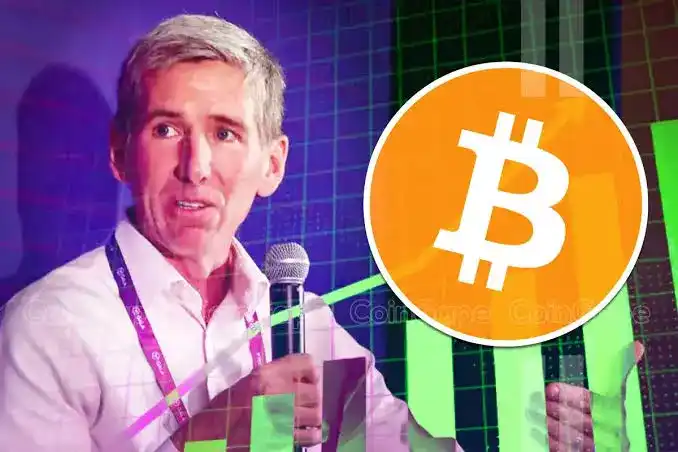
Grayscale Lists 3 Reasons Why Bitcoin Is Worth Buying Right Now

cryptonews.ruPublicado a 2026-08-22Actualizado a 2026-08-22

Resumen

Grayscale's Head of Research, Zach Pandl, suggests Bitcoin may currently be a favorable buying opportunity for long-term investors. In an assessment from August 21st, he based this view on three key factors, while emphasizing that Bitcoin's future behavior remains uncertain. The first factor is the enduring structural trend of Bitcoin adoption, driven by government deficits, growing blockchain use in financial services, and generational shifts in investment portfolios. The second is Bitcoin's market cycle position, noting the current bear market has lasted 10 months, approaching the typical duration of past cycles. The third factor is the macroeconomic outlook, particularly real interest rates and Federal Reserve policy, which has recently shifted to be more favorable. Pandl acknowledges Bitcoin's price volatility, referencing a recent swing to $79,461 before a pullback, and cautions that further Fed rate hikes could pressure prices. He concludes that, taken together, these three factors—ongoing adoption, a deep bear market phase, and generally supportive macro conditions—indicate current prices could be an attractive entry point for long-term investors. Grayscale's evaluation focuses on market conditions rather than predicting an absolute price bottom.

According to Zack Pandl, Head of Research at Grayscale, Bitcoin may currently represent a favorable buying opportunity for investors with long-term horizons. In his August 21 assessment on whether now is a suitable time to buy Bitcoin, Pandl formulated the decision based on three questions, though he emphasized that no one knows how Bitcoin will behave in the future.

Grayscale generally does not recommend that investors try to time the market and instead advises considering Bitcoin as part of a diversified portfolio. Pandl noted that uncertainty about the optimal purchase price may prevent some people from allocating funds to this investment, especially after significant market downturns or sudden price spikes.

The Grayscale Head of Research stated:

"We believe that all three factors indicate that current prices may represent an attractive entry point for investors with long-term perspectives. The trend towards structural adoption remains unchanged, we are in a deep bear market phase, and macroeconomic prospects generally look favorable. Of course, time will tell."

Bitcoin does not generate cash flow like stocks or bonds, making it difficult to apply traditional valuation methods. Investors cannot assess its value based on earnings, dividends, or interest payments, so decisions often depend on adoption trends, market cycles, monetary conditions, and expectations about future demand.

Bitcoin's recovery has made the question of timing the purchase more relevant for those considering acquisition. The BTC price rose to $79,461 before declining to around $77,000. This movement highlights how quickly market conditions can change.
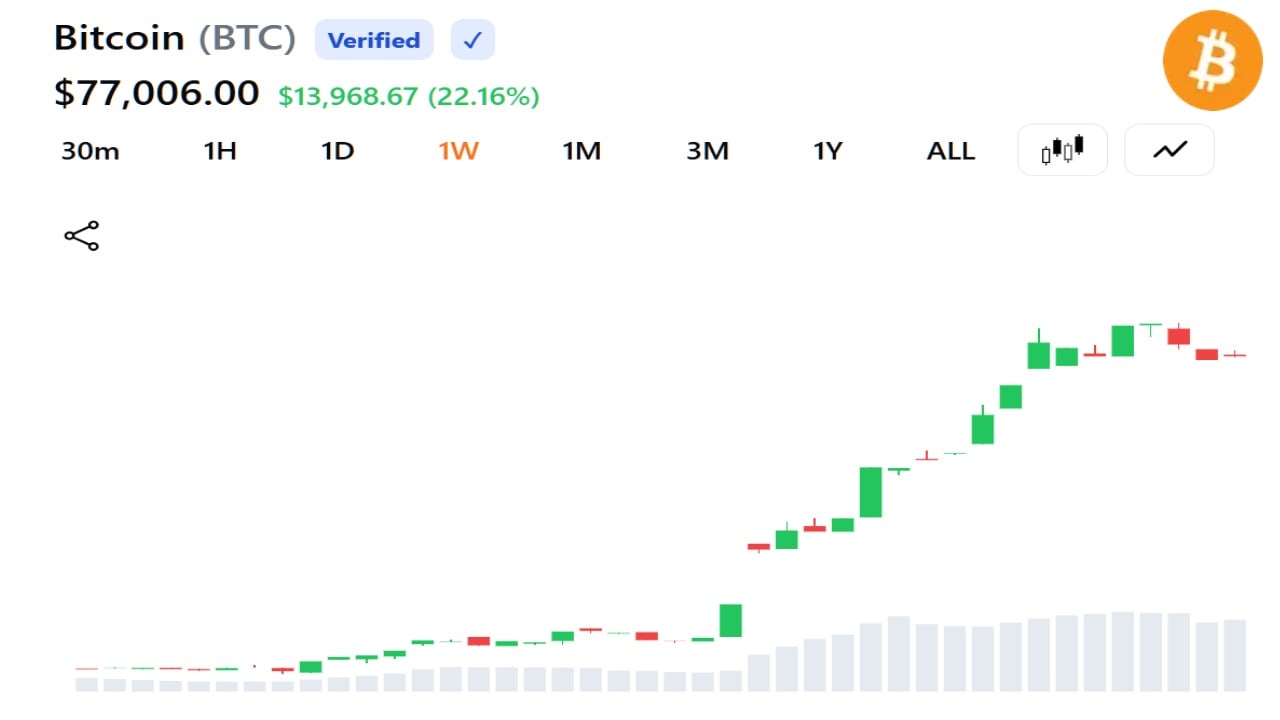
Bitcoin price chart as of August 22. Source: Bitcoin.com Markets

Bitcoin's Adoption and Cycle Confirm Grayscale's Arguments

The first factor is whether the long-term trend towards Bitcoin adoption will persist, despite its price falling from the October 2025 record high. Previously, Grayscale highlighted three factors driving Bitcoin adoption: government deficit, growing blockchain use in financial services, and generational shifts in investors' portfolio approaches.

Government borrowing supports Grayscale's view that demand for assets with limited supply may grow, although rising debt does not automatically lead to Bitcoin purchases. Official US Treasury Department data showed that on August 20, the total national debt was approximately $40.03 trillion, including $32.28 trillion held by the public.

The second factor is Bitcoin's position within its recurring cycle of price increases and decreases. Grayscale reported that the current bear market has lasted 10 months, while the average and median duration of the four previous cyclical bear markets ranged from 11 to 12 months. Prior to the August recovery, Bitcoin had already experienced a prolonged but relatively shallow bear market.

Interest Rates May Determine If Bitcoin Has Bottomed

The third factor is the outlook for macroeconomic risks, specifically real interest rates and Federal Reserve policy. In July, the Fed's Open Market Committee decided to keep the federal funds rate at 3.5–3.75%, although three officials favored a quarter-percentage-point increase. Grayscale stated that future rate hikes could subject Bitcoin to further losses.

Financial conditions recently shifted in Bitcoin's favor when Pandl published his assessment. On August 21, Bitcoin reached $79,461, as spot buying, short covering, and demand from exchange-traded funds supported a strong Bitcoin market recovery. However, analysts warned that coins transferred to exchanges for profit-taking could create new selling pressure.

Pandl added:

"Investors trying to determine if now is the right time to buy Bitcoin should consider structural adoption trends, the state of the cycle, and macroeconomic risks. We believe that all three factors together make this moment an attractive entry point for investors."

Bitcoin can be purchased using several payment methods, while also choosing whether the asset will be credited to a personal wallet or a platform account. Fees, identification requirements, and settlement times vary by method, and the storage form determines who controls the keys—the buyer or the platform. Grayscale's assessment concerns market conditions, not certainty that the current price represents the ultimate bottom.


Preguntas relacionadas

QAccording to Grayscale's head of research, what are the three key factors that currently make Bitcoin an attractive entry point for long-term investors?

AAccording to Grayscale's head of research, Zach Pandl, the three key factors are: 1) The enduring structural trend of Bitcoin adoption, 2) The asset being in a deep phase of a bear market, and 3) Favorable macroeconomic prospects, particularly regarding real interest rates.

QWhat is one of the challenges in valuing Bitcoin mentioned in the article, and how does it differ from traditional assets like stocks?

AOne major challenge in valuing Bitcoin is that it does not generate cash flow like stocks or bonds. Therefore, traditional valuation methods based on earnings, dividends, or interest payments cannot be applied. Investment decisions instead rely on factors like adoption trends, market cycles, monetary conditions, and future demand expectations.

QBased on historical cycles, how long is the average duration of Bitcoin's previous bear markets, and how does the current one compare?

AAccording to Grayscale, the average and median duration of the four previous cyclical bear markets was 11 to 12 months. The current bear market, at the time of the report, had lasted for 10 months, suggesting it is already in a deep and relatively prolonged phase.

QWhat potential risk from the Federal Reserve could subject Bitcoin to further losses, as noted by Grayscale?

AGrayscale noted that a future increase in the federal funds rate by the Federal Reserve could subject Bitcoin to further losses. At their July meeting, three officials had voted for a quarter-point hike despite the rate being held steady.

QWhat event on August 21st contributed to Bitcoin's price reaching $79,461, and what subsequent warning did analysts provide?

AOn August 21st, Bitcoin reached $79,461 due to a combination of spot purchases, short covering, and demand from exchange-traded funds, which supported a strong market recovery. However, analysts warned that coins being transferred to exchanges for profit-taking could create new selling pressure.

Lecturas Relacionadas

Coldcard Theft Reflection: Source Code Visibility Does Not Equal Security

The article examines the open-source vs. closed-source debate in crypto, prompted by a theft of over $100M in Bitcoin from Coldcard hardware wallets. It clarifies key terminology: true "Free and Open Source Software" (FOSS) grants four essential freedoms (use, study, share, modify), while "source available" code, like Coldcard's firmware, may have usage restrictions. The piece argues that visible source code alone does not guarantee security; actual safety depends on the economic incentives for thorough, ongoing review by skilled individuals. Using Bitcoin Core as a model, the article describes a successful, transparent open-source development culture built on public review and consensus. It contrasts this with the Coldcard case, where a critical bug in a lightly-reviewed, source-available library went undetected for years, highlighting a "tragedy of the commons" scenario where assumed but absent scrutiny creates vulnerability. The economics of licensing are crucial: restrictive licenses can limit the pool of motivated commercial reviewers. Finally, the article explores AI's impact. It cites the Bitcoin Red Team's use of AI to rapidly audit codebases and find vulnerabilities at scale, demonstrating a powerful new tool for security. However, AI also floods projects with low-quality code, straining maintainers. The piece concludes that in high-stakes crypto, only well-audited projects—whether open or closed-source—can withstand evolving threats, with AI both challenging and aiding security practices.

marsbitHace 11 min(s)

Coldcard Theft Reflection: Source Code Visibility Does Not Equal Security

marsbitHace 11 min(s)

Mysterious "Ox Alpha" Large Model Goes Viral with Limited-Time Free Access

A mysterious anonymous AI model named "Ox Alpha," nicknamed "Cow is Coming" by Chinese netizens, has appeared on OpenRouter, sparking widespread speculation. The model offers a 1 million token context, supports text, image, and video inputs, can call tools, and is currently free. Its standout feature is strong coding ability. Initial tests on the DeepSWE benchmark, which evaluates real-world software engineering tasks, showed an 80% pass rate on a subset of tasks, reportedly nearing top-tier code models. However, follow-up tests yielded a 63% score, with variations attributed to different task sets and configurations. The model's true developer is a major topic of debate. The prevailing theory points to Zhipu AI's unreleased GLM-5.3 Flash or its multimodal variant. Evidence cited includes identical visual token consumption patterns with GLM-5V-Turbo for videos, a consistent offset in text token counts compared to GLM-5.3, and similar behavioral traits like refusing audio processing. Zhipu has a precedent of anonymous testing. Simultaneously, another anonymous model, "korrine," appeared on Code Arena, with guesses ranging from Moonshot's Kimi K3.1 to models from Qwen or MiMo, adding to the industry's guessing game. This trend of anonymous "undercover" testing allows for unbiased performance evaluation in platforms like Arena and provides real-world, high-pressure testing through tools like OpenRouter before official release. It also serves as an effective marketing tactic, prolonging discussion through suspense. If Ox Alpha is indeed a "Flash" model, its performance raises expectations for the full-scale version's potential.

marsbitHace 5 hora(s)

Mysterious "Ox Alpha" Large Model Goes Viral with Limited-Time Free Access

marsbitHace 5 hora(s)

Trading

Spot
活动图片