More than three-quarters of Americans consider cryptocurrency in workplace retirement plans to be risky, as concerns about retirement security intensify across the United States, according to the results of a new survey by the National Institute on Retirement Security.
The survey found that 77% of Americans consider cryptocurrency in workplace retirement plans to be risky, with 46% calling it very risky, and 53% oppose employers offering cryptocurrency as an investment option.
Distrust of cryptocurrency is growing against the backdrop of 80% of respondents stating there is a U.S. retirement crisis, up from 67% in 2020, and 61% expressed concern about achieving financial security in retirement.
The rising cost of living is also negatively impacting retirement savings: 68% said it's becoming harder to prepare for retirement, and 77% reported that debt is preventing them from saving enough.
The survey was conducted by Greenwald Research from October 24 to November 14, 2025, and covered 1,203 Americans aged 25 and older, with the results weighted for age, gender, and income.
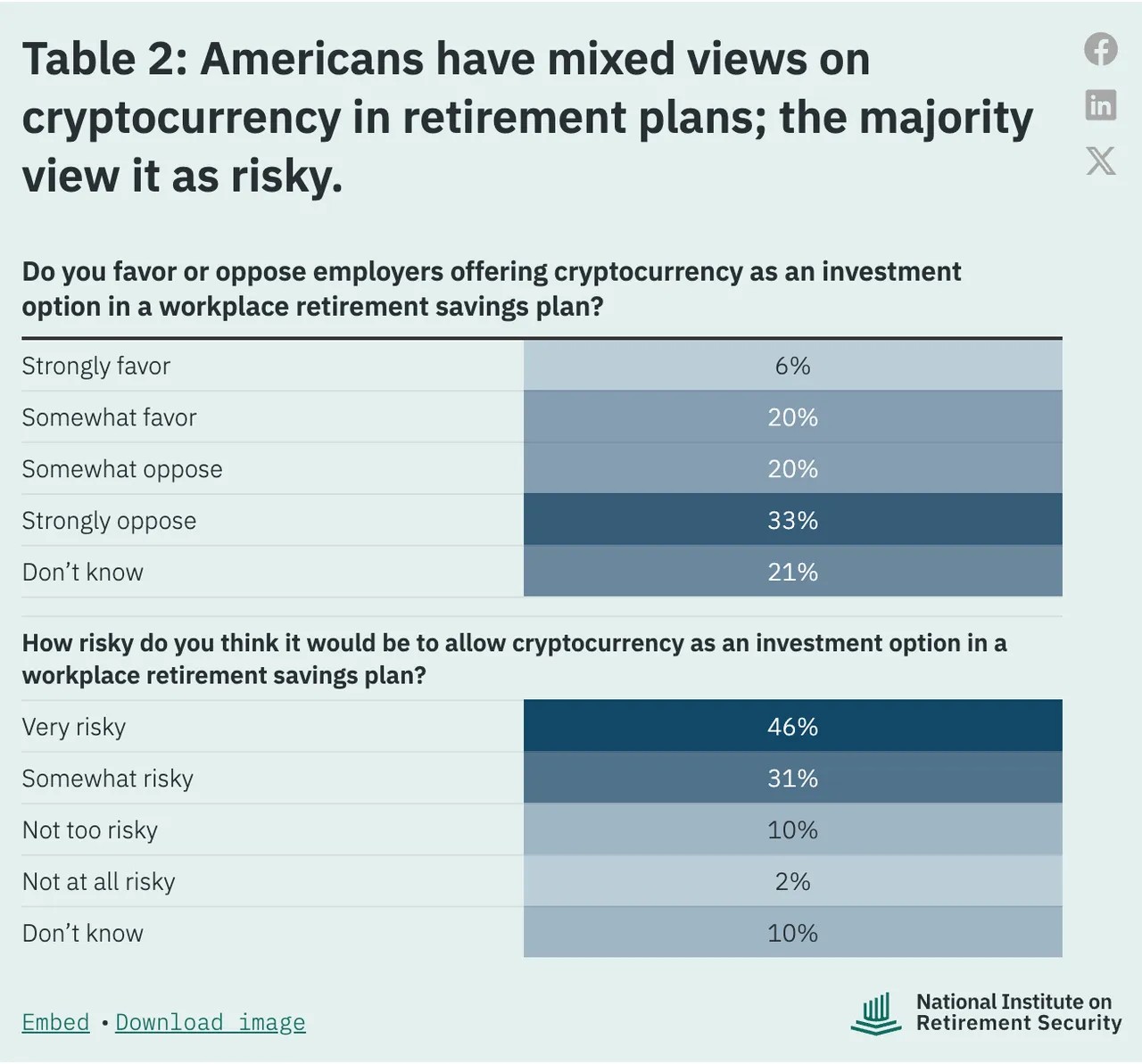
American attitudes towards cryptocurrency in retirement plans. Source: National Institute on Retirement Security
Related Topic: Bernstein Predicts Bitcoin Will Recover to $125,000 by End of 2026 Ahead of Cycle Peak
US Authorities Take Steps to Expand Access to Alternative Assets in 401(k) Plans
While the report shows that Americans generally consider cryptocurrency risky for retirement savings, the Trump administration and federal regulators have taken steps to expand access to alternative assets in retirement accounts, further involving cryptocurrency and other non-traditional investments in the retirement savings discussion.
In May 2025, the U.S. Department of Labor rescinded guidance that had urged 401(k) plan fiduciaries to exercise "extreme caution" when considering cryptocurrency investments, returning to a neutral approach that neither approves nor discourages including cryptocurrency in retirement plan investment lineups.
On August 7, 2025, President Donald Trump signed an executive order aimed at expanding access to alternative assets in defined contribution retirement plans, including investment vehicles that hold digital assets, and instructed the Department of Labor and the U.S. Securities and Exchange Commission (SEC) to consider regulatory changes to facilitate access to them.
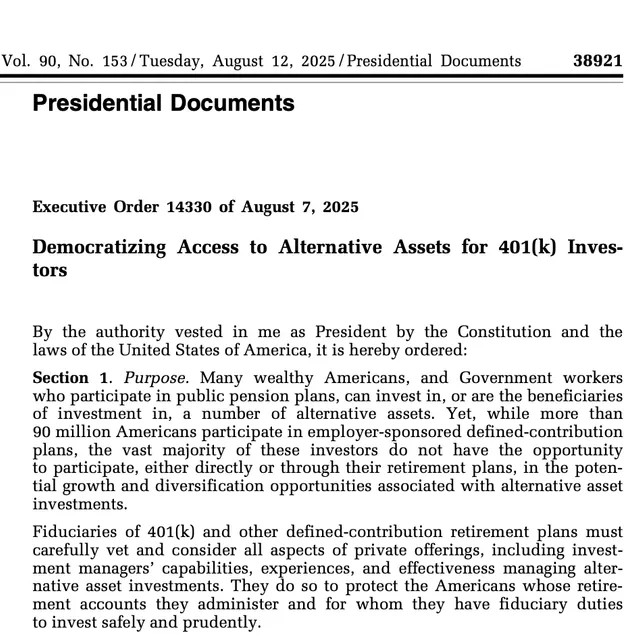
Trump's executive order on expanding access to alternative assets in 401(k) plans. Source: Federal Register
A few days later, the Department of Labor rescinded its 2021 guidance, which had discouraged 401(k) plan fiduciaries from considering alternative assets, stating that investment decisions should be evaluated based on a neutral, principled approach.
Later, in March 2026, the Department of Labor proposed rules defining how 401(k) plan fiduciaries can include alternative assets in investment lineups, including safe harbor provisions designed to reduce litigation risks by mandating consideration of factors such as fees, liquidity, valuation, and returns.
The proposal has faced resistance from lawmakers: Senators Bernie Sanders and Elizabeth Warren, along with Representative Bobby Scott, called on the Department of Labor in June to withdraw it, citing cryptocurrency volatility and what they described as insufficient investor protections.
Magazine: Proposed SEC crypto rules unlikely to trigger a new ICO boom