TxFlow L1 Strengthens Its Infrastructure With OpenZeppelin Audit as Its On-Chain Ecosystem Expands

TheNewsCryptoPublicado a 2026-08-27Actualizado a 2026-08-27

Resumen

TxFlow L1 has completed an independent security audit of its bridge contract by OpenZeppelin, a top blockchain security firm. The audit found zero critical or high-severity issues, with one medium finding resolved. This step is part of TxFlow's commitment to robust security as its ecosystem, including its Layer 1 blockchain and DEX, expands. The bridge infrastructure facilitates capital movement between networks like Arbitrum, Ethereum, and Solana with built-in safety controls. TxFlow L1 is designed specifically for financial markets, aiming to host various on-chain applications like perpetuals and spot markets through its TIP Liquidity Standards. The team is also developing "Builder Code" to further grow the ecosystem.

Independent OpenZeppelin review of TxFlow’s bridge contract marks another step in TxFlow’s approach to security as its L1, DEX, and builder ecosystem continue to develop.

TxFlow announces the completion of an independent security audit by OpenZeppelin, one of the world’s most established blockchain security firms, trusted by major organizations and protocols including Coinbase, the Ethereum Foundation, Uniswap, Aave, Arbitrum, ZKsync, Compound, and others.

OpenZeppelin’s review covered TxFlow’s bridge contract, a critical component of the infrastructure supporting the movement of capital between external networks and TxFlow L1. OpenZeppelin’s review identified zero critical and zero high-severity findings. One medium-severity finding was identified and resolved during the audit process.

The independent review forms part of TxFlow’s broader approach to incorporating external security expertise as its financial infrastructure and ecosystem continue to develop. Alongside TxFlow DEX and continued L1 development, TxFlow is also building Builder Code, with additional details to be announced as both initiatives move closer to release. Together, these developments support TxFlow’s broader objective: to build a Layer 1 designed specifically for financial markets, bringing trading, liquidity, and financial applications onto one blockchain where all finance happens.

Security at TxFlow L1 is a continuous responsibility: An independent review by OpenZeppelin

As part of this commitment, we work with leading independent security experts to rigorously assess our infrastructure. In 2026, OpenZeppelin completed a security audit of Bridge2, the USDC bridge connecting Arbitrum One to TxFlow L1. TxFlow aims to continue to strengthen its security architecture, monitoring, and operational safeguards as the network evolves. The audit report provides the technical scope, findings, and assessment from OpenZeppelin and is available for the community to review directly.

TxFlow’s broader bridge infrastructure supports deposits and withdrawals across Arbitrum One, Ethereum, Base, Polygon PoS, and Solana. TxFlow’s documented bridge flow includes controls around the movement of funds, including validator-approved withdrawals and a built-in safety wait before withdrawals are completed.

These controls form part of TxFlow’s approach to protecting one of the most important functions of financial infrastructure: the movement of capital between networks.

Global-grade security from the ground up

TxFlow is building its security program with the standards expected of serious financial infrastructure in mind. To support that approach, TxFlow engaged OpenZeppelin, one of the world’s most established blockchain security firms. OpenZeppelin has completed more than 900 security audits, identifying more than 10,000 issues, including 700+ critical and high-severity vulnerabilities, across blockchain protocols and financial infrastructure.

Its security work spans major crypto organizations and ecosystems including Coinbase, the Ethereum Foundation, Uniswap, Aave, Arbitrum, ZKsync, Optimism, and Compound, as well as established financial institutions and infrastructure providers including DTCC, Fidelity Digital Assets, WisdomTree, ANZ, and CACEIS.

For TxFlow, working with globally recognized security specialists at an early stage establishes a clear approach: independently review critical infrastructure as the network and ecosystem grow. Security is not an add-on to financial infrastructure. It is part of the infrastructure itself.

Building infrastructure for on-chain finance

TxFlow L1 is designed specifically for financial markets and applications.

TxFlow DEX, a fully on-chain central limit order book for perpetual markets, is the first application built on TxFlow L1. The DEX is the first product operating on a broader infrastructure layer. TxFlow L1 is designed to support multiple financial applications and markets on the same network, including perpetuals, spot markets, prediction markets, and new categories of on-chain financial products. Through TxFlow Improvement Protocol (TIP) Liquidity Standards, Channels can connect to common execution, settlement, and liquidity infrastructure rather than operating as isolated applications.

For traders, that means infrastructure designed around markets from the start.

For builders, it creates a foundation for developing new financial applications on a network designed for trading, liquidity, and settlement.

What’s next: Builder code

Alongside continued development of TxFlow L1 and TxFlow DEX, the team is building two new ecosystem initiatives: TxFlow Builder Code.

Builder Code is being developed to expand how builders and ecosystem participants can contribute to and grow alongside the network. For the TxFlow community, these initiatives represent the next stage of ecosystem growth: more ways for traders to participate, more ways for builders to contribute, and more activity across the TxFlow network.

About TxFlow L1

TxFlow L1 is a high-performance blockchain built for on-chain financial infrastructure, organized around TIP Liquidity Standards that define how financial products are built, composed, and settled on-chain. TxFlow DEX is the first Channel on TxFlow L1, a CLOB orderbook DEX for perpetual trading, processing over 250,000 TPS with one-block finality. Through its TxFlow Improvement Protocol standards and Channel architecture, TxFlow enables spot markets, derivatives, prediction markets and future financial products to operate on the same chain while connecting to shared execution and settlement infrastructure where all finance happens. TxFlow L1 is building an open, composable and community-owned financial ecosystem in which each new application can strengthen the infrastructure available to those that follow.

Media contact

  • Gelsey Birkett
  • Head of PR
  • Gelsey_Birkett@txflow.com

About OpenZeppelin

OpenZeppelin is a leading security partner for on-chain finance, trusted by organizations including DTCC, Fidelity Digital Assets, WisdomTree, Coinbase, Uniswap, Aave, and the Ethereum Foundation. Since 2015, OpenZeppelin has secured more than $35 trillion in value transferred and delivered 900+ security engagements, surfacing more than 10,000 vulnerabilities across critical on-chain infrastructure. Its open-source smart contract libraries are an industry standard used across leading stablecoins, tokenized assets, and blockchain applications.

txflow.com

Disclaimer: TheNewsCrypto does not endorse any content on this page. The content depicted in this Press Release does not represent any investment advice. TheNewsCrypto recommends our readers to make decisions based on their own research. TheNewsCrypto is not accountable for any damage or loss related to content, products, or services stated in this Press Release.


TagsPress ReleaseTxFlow

Preguntas relacionadas

QWhat was the main purpose of TxFlow engaging OpenZeppelin for a security audit?

AThe main purpose was to independently review and strengthen the security of TxFlow's critical bridge contract, which is part of TxFlow's broader approach to incorporating external security expertise as its financial infrastructure and ecosystem continue to develop.

QWhat were the key findings of OpenZeppelin's security audit on TxFlow's bridge contract?

AOpenZeppelin's review identified zero critical and zero high-severity findings. One medium-severity finding was identified and resolved during the audit process.

QWhat are the main components of TxFlow's on-chain ecosystem as mentioned in the article?

AThe main components are TxFlow L1 (the Layer 1 blockchain), TxFlow DEX (a fully on-chain central limit order book for perpetual markets), and the upcoming Builder Code initiative. The ecosystem is built around TIP Liquidity Standards and a Channel architecture.

QAccording to the article, what is the broader objective of TxFlow?

ATxFlow's broader objective is to build a Layer 1 blockchain designed specifically for financial markets, bringing trading, liquidity, and financial applications onto one blockchain where all finance happens.

QWhat networks does TxFlow's bridge infrastructure currently support for deposits and withdrawals?

ATxFlow's bridge infrastructure supports deposits and withdrawals across Arbitrum One, Ethereum, Base, Polygon PoS, and Solana.

Lecturas Relacionadas

Monero Price Forecast for 2026-2032: Is it Worth Buying XMR Now?

**Article Summary: Monero (XMR) Price Forecast for 2026-2032 and Investment Outlook** This article analyzes the potential future price trajectory of privacy-focused cryptocurrency Monero (XMR). Based on technical analysis and market sentiment, it presents a bullish long-term forecast. **Key Price Predictions:** * By the end of 2026, XMR is projected to reach **$825.20**. * A maximum price of **$1,016.93** is forecast for late 2029. * The price could surge to **$1,753.23** by 2032. **Current Market Analysis (as of August 2026):** * The current price is approximately $430.66, having faced resistance at $450. * Market sentiment is labeled as "Bullish," though short-term volatility persists with support found around $430. * Technical indicators like moving averages suggest a mixed but generally positive outlook. **Investment Thesis:** Monero is presented as a compelling investment due to its core focus on transaction privacy and security, which drives demand. Its decentralized development model and growing utility are cited as foundations for long-term growth. However, the article cautions investors about significant risks, including regulatory scrutiny, market volatility, and the cryptocurrency's association with illicit activities, which could hinder mainstream adoption. **Conclusion:** While the forecast is optimistic, the article strongly advises investors to conduct thorough personal research and consult experts before investing in the volatile cryptocurrency market. The potential for XMR to reach $1,000 or surpass its all-time high is deemed possible under favorable conditions but remains highly dependent on regulatory developments and broader market dynamics.

cryptonews.ruHace 28 min(s)

Monero Price Forecast for 2026-2032: Is it Worth Buying XMR Now?

cryptonews.ruHace 28 min(s)

Livio, CEO of New Huo Group: RWA Will Become the Bridge Connecting Carbon-Based Humans and Silicon-Based AI, Crypto's Next 100 Million Users to Come from AI Agents

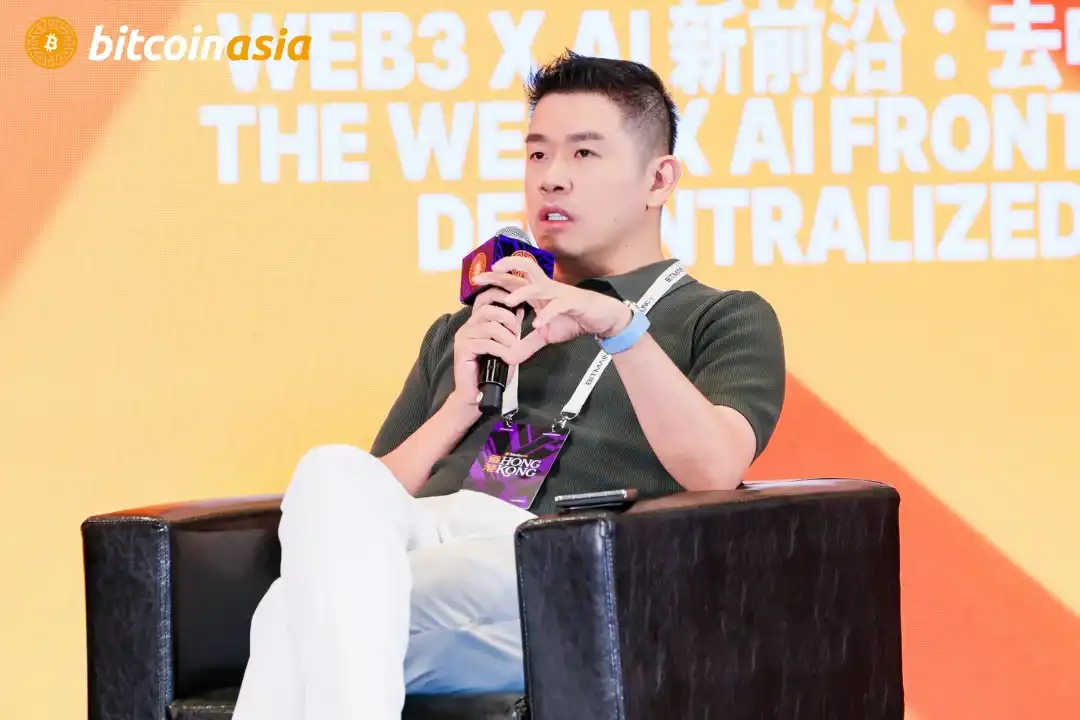
At the "Deep Integration of AI and Crypto" roundtable during the Bitcoin Asia conference, Livio Weng, CEO of Bitfire at New Huo Group, stated that the core narrative for AI and Crypto convergence in the coming years will likely focus on the "agential economy." As infrastructure for AI identity recognition, authorized wallets, and payment protocols matures, AI will progressively gain the ability to autonomously use, manage, and transact assets, deeply integrating with existing crypto sectors like trading, prediction markets, asset management, and payments. Livio believes Real World Assets (RWA) will serve as a crucial bridge connecting carbon-based humans and silicon-based AI. On one hand, RWA can tokenize traditional assets, enabling AI to use and trade assets from human society. On the other hand, "AI assets" such as computing power, data, and AI-generated services can also be made accessible to humans through RWA formats for purchase, analysis, and trading. This process will drive deeper integration between humans and AI. "The next 100 to 200 million new crypto users may not be humans, but AI Agents," Livio suggested, noting that future critical infrastructure and applications might be autonomously generated by AI rather than primarily coded by humans. As AI evolves from an information assistant to a wealth management assistant and further into an autonomous task executor, AI Agents are poised to become significant participants in the Crypto ecosystem. Livio also highlighted that deep AI-Crypto integration requires robust underlying infrastructure, including settlement layers for autonomous machine transactions, identity and authorization layers for AI independent identity and recognition, and incentive/disincentive layers to address fraud and misconduct. Protocols like X402 and EIP-8004 are exploring related applications, but challenges in security, governance, and ethics remain. In practice, New Huo is actively embracing RWA to seize opportunities from AI-Crypto convergence. The group recently launched comprehensive RWA operator services and released Hong Kong's first compliant crypto asset quantitative strategy. By incorporating RWA assets, this strategy aims to offer cross-asset allocation and risk hedging opportunities, helping investors navigate volatility across different asset classes and market cycles. Livio concluded that RWA is not only a vehicle for traditional assets to enter the on-chain world but also potential key infrastructure for AI to participate in the real economy, utilize real-world assets, and provide services to humans. As the machine economy develops, the intersection between AI and Crypto will expand, offering substantial room for innovation and growth.

marsbitHace 35 min(s)

Livio, CEO of New Huo Group: RWA Will Become the Bridge Connecting Carbon-Based Humans and Silicon-Based AI, Crypto's Next 100 Million Users to Come from AI Agents

marsbitHace 35 min(s)

Successes of Cheburnet: the share of free mobile internet in Central Russia decreased to 30.5%

Russia's "Sovereign Internet" project continues to advance, significantly impacting mobile internet access. In July 2026, only 30.5% of mobile data sessions in Central Russia were unrestricted, with the majority routed through a state-approved "whitelist." This represents a 31% increase in whitelist usage since January. The implementation is geographically uneven: Moscow and St. Petersburg see higher rates of free access (~49% and ~44% respectively), while border regions like Belgorod have seen unrestricted access plummet to around 12%. International forces are also contributing to digital isolation. Major certificate authority GlobalSign began revoking TLS certificates for Russian domains in June to comply with international sanctions, affecting thousands of domains, including those of major corporations like Rosneft. While its market share is small, the move aligns with the trend of separating the Russian internet segment. Domestically, authorities are preparing alternatives to maintain critical services. The government has tasked officials with ensuring the operation of key platforms like healthcare portals and payment systems during internet restrictions. The Ministry of Digital Development promotes a transition to certificates from a Russian National Certification Authority, which are natively supported by domestic browsers but may require manual installation for other devices. An AI analysis raises concerns, comparing the plan to Kazakhstan's failed 2019 attempt to mandate a state root certificate, which was blocked by major browsers as a security threat. This poses a future risk: users may eventually face a choice between foreign browsers potentially incompatible with Russian certificates or domestic software that fully trusts state-issued ones.

cryptonews.ruHace 59 min(s)

Successes of Cheburnet: the share of free mobile internet in Central Russia decreased to 30.5%

cryptonews.ruHace 59 min(s)

985 Professors Group Ventures into Embodied Intelligence, Raising Over ¥100 Billion in Funding This Year

In 2026, the embodied AI sector in China is witnessing a significant surge in venture capital, with individual funding rounds reaching billions of RMB. A notable trend within this boom is the rise of "academic factions," where university professors are actively founding companies. According to an IT桔子 report, over 70 embodied AI companies have founders who are or were university professors. A stricter definition identifies 18 core "academic" companies, which have collectively raised an estimated 15 billion RMB in the first eight months of 2026. These companies fall into two main categories. The first consists of firms founded by professors from top-tier universities like Tsinghua, Peking, Zhejiang, Shanghai Jiao Tong, and Fudan. Examples include Xingdong Jiyuan (陈建宇, Tsinghua), accelerating evolution (赵明国 team, Tsinghua), Galaxy Universal (王鹤, Peking University), Yunchushenchu (朱秋国, Zhejiang University), Qiongche Intelligence (卢策吾, Shanghai Jiao Tong), and Zhujidongli (张巍, Southern University of Science and Technology). The second category comprises companies incubated directly by research institutes, such as Qiuzhi Technology (from Tsinghua AIR), Delta Intelligence (from BIGAI), Xingyuan Intelligence (from Beijing智源研究院), and Zero to the Power (jointly incubated by Tsinghua). Key observations highlight Tsinghua University's dominant presence, the increasing direct investment from university-affiliated funds into these startups, and the unprecedented involvement of tenured professors. While these academic teams possess deep technical expertise in areas like robotics and control systems, they face the challenge of adapting to commercial imperatives like mass production and supply chain management. This wave represents an evolution in China's academia-to-industry model, shifting from mere patent licensing to professors leading funded ventures with institutional support, potentially accelerating the development of physical AI.

marsbitHace 1 hora(s)

985 Professors Group Ventures into Embodied Intelligence, Raising Over ¥100 Billion in Funding This Year

marsbitHace 1 hora(s)

Trading

Spot
活动图片