Storj Files Chapter 11 Bankruptcy, Keeps Cloud Storage Services and STORJ Network Running

TheNewsCryptoPublicado a 2026-07-27Actualizado a 2026-07-27

Resumen

Decentralized cloud storage provider Storj Labs has filed for Chapter 11 bankruptcy protection in the U.S., as announced on July 26. The company emphasizes that this legal step is for reorganization, not liquidation, and will not disrupt its core operations. Storj's decentralized storage network, its cloud services for customers, and the functionality of its STORJ token will all continue normally during the process. The filing is attributed to legacy debts from earlier growth phases, while the company describes its current business as "operational and healthy." Storj plans to refocus on its primary cloud infrastructure products. It also intends to propose a new ownership plan that may include eligible STORJ token holders, alongside management and investors, pending creditor and court approval. The company, which previously raised significant funding including a 2017 token sale, continues to operate independently following its 2025 acquisition by Inveniam.

Blockchain-powered decentralized cloud storage platform Storj Labs is seeking Chapter 11 bankruptcy protection. Even as it conducts business as usual on its cloud storage network. The firm has filed its petition to the U.S. Bankruptcy Court for the Northern District of West Virginia on July 26. The filing aims to enable it to reorganize and deal with legacy debts, rather than liquidate its assets. According to Storj, services offered to customers, decentralized storage, and cloud products will continue during the restructuring process.

“Storj Labs’ business is operational and healthy but still carries financial responsibilities resulting from previous growth stages,” said Director of Software Engineering Kaloyan Raev. The company is looking to refocus on its primary products of distributed cloud storage, computing, and file access services.

Company Focused on Core Cloud Infrastructure

Storj has a decentralized storage marketplace that allows individual node operators to provide unused storage capacities from distributed infrastructures. Consumers can use cloud storage services using compatible business software, while STORJ tokens are used for payments within the parts of the network. Node operators earn token payments for providing storage capacities and bandwidth.

The company mentioned that the Chapter 11 bankruptcy is related to Storj Labs as an incorporated entity and not to its blockchain network. Storj has not disclosed any changes regarding how the STORJ tokens are used, how the network is run, or how customer products work. The company had also rolled out new pricing models for storage and data egress before filing, which took effect on July 1, 2026.

Ownership Plan Will Incorporate STORJ Token Holders

Storj will be presenting an ownership plan that might involve management, current investors, members of the community, future investors, and eligible STORJ token holders. Nonetheless, the ownership proposal still needs the creditors’ consent and final approval in the Chapter 11 procedure. Storj has not provided the criteria for eligibility, ownership structure, valuation approach, and timing for the proposed changes.

Before filing for Chapter 11, Storj had received around $35 million in funding, including $30 million from the sale of STORJ tokens in 2017 and $3 million in seed money from investors affiliated with Qualcomm Ventures and Techstars. After Inveniam acquires the company in October 2025, Storj continues to function independently.

Highlighted Crypto News:
Coinbase CEO Brian Armstrong Says AI Will Drive Crypto Adoption Through Autonomous Payments


Tags#networkbankruptcyBlockchainCloudCryptocurrencyStorj

Criptos en tendencia

Preguntas relacionadas

QWhy did Storj Labs file for Chapter 11 bankruptcy?

AStorj Labs filed for Chapter 11 bankruptcy to reorganize and deal with legacy debts, rather than liquidate its assets. The company stated its business is operational and healthy but carries financial responsibilities from previous growth stages.

QWill Storj's cloud storage services continue to operate during the bankruptcy process?

AYes, Storj confirmed that services offered to customers, its decentralized storage network, and cloud products will continue to operate as usual during the Chapter 11 restructuring process.

QWhat is the relationship between the bankruptcy filing and the STORJ blockchain network?

AThe Chapter 11 bankruptcy is related only to Storj Labs as an incorporated entity, and not to its independent blockchain network. There are no disclosed changes to how the STORJ tokens are used or how the network is run.

QWho might be included in Storj's proposed new ownership plan?

AThe proposed ownership plan might involve management, current investors, members of the community, future investors, and eligible STORJ token holders. However, the final criteria and structure have not been provided.

QWhen did Storj's new pricing models for storage and data egress take effect?

AStorj's new pricing models for storage and data egress took effect on July 1, 2026, which was before the company filed for Chapter 11 bankruptcy on July 26.

Lecturas Relacionadas

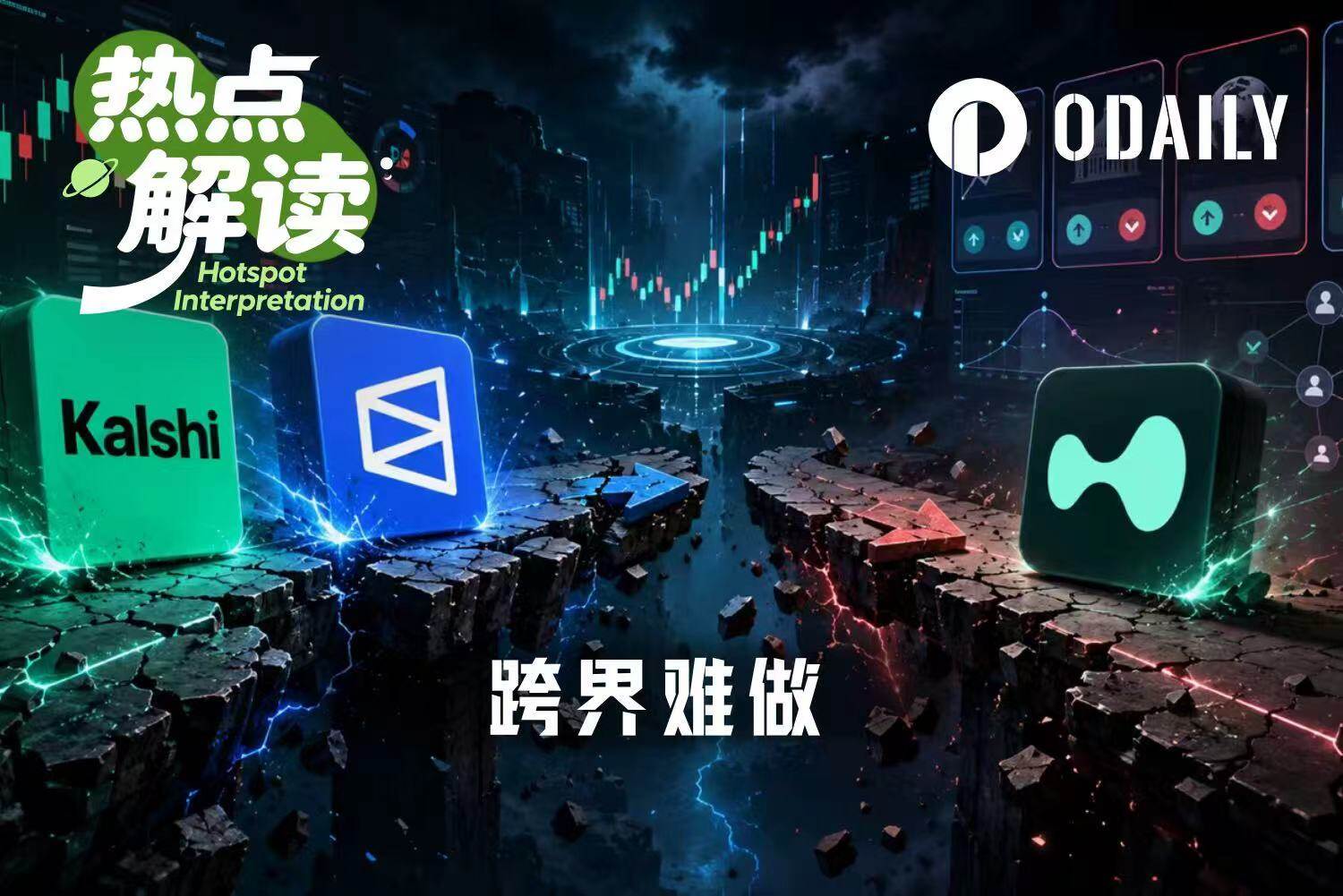
Crossing Boundaries Is Hard: Neither Prediction Market Nor Perp DEX Leader Has Replicated Their Own Success

Over the past six months, two of the hottest trading sectors—prediction markets and Perpetual DEXs (Perp DEXs)—have been attempting to cross into each other's territories. In April, prediction market platform Polymarket announced plans to launch perpetual contracts (Perps) for crypto, stocks, and commodities. In late May, the regulated platform Kalshi launched CFTC-regulated crypto Perps. Meanwhile, leading Perp DEX Hyperliquid moved in the opposite direction, launching its HIP-4 outcome markets for event-based trading in May. Initial results from these crossovers have been mixed, showing that established user habits and liquidity do not easily transfer to new product categories. Hyperliquid's HIP-4 platform saw strong initial demand, with daily volume reaching nearly $30 million during the World Cup, but active markets have since collapsed from over 120 to under 20, with daily volume often falling below $1 million. This highlights the inherent challenge: perpetual contracts maintain liquidity around core assets, while event contracts expire and require constant renewal of interest and liquidity. Similarly, Polymarket's Perps, still in an invite-only phase, saw daily volume drop from an initial ~$48 million to around $18 million by late July, with open interest (OI) at only ~$26.4 million—a fraction of Hyperliquid's ~$7.7 billion OI. Kalshi's Perps had a faster start, accumulating $16.1 billion in volume over six weeks, but recent daily volume has plummeted over 80% to around $80 million, with OI remaining in the millions, far below major Perp DEXs. The article concludes that replicating the deep liquidity and entrenched user behavior of a core market is exceptionally difficult. For these platforms, deepening their dominance in their original "home" sectors—whether Perp DEXs or prediction markets—may be a more viable strategy than pursuing a broad "everything exchange" model through跨界 expansion. Success ultimately depends on sustained accumulation of users, liquidity, and market depth in a core niche.

Odaily星球日报Hace 10 min(s)

Crossing Boundaries Is Hard: Neither Prediction Market Nor Perp DEX Leader Has Replicated Their Own Success

Odaily星球日报Hace 10 min(s)

Google's earnings report is bright enough, so why isn't Wall Street buying it?

Google's parent company, Alphabet, reported strong Q2 2026 results with revenue of $119.8 billion (up 24% YoY) and operating profit of $40.8 billion (up 30% YoY). Its Google Cloud segment was a standout, with revenue surging 82% to $24.77 billion. However, despite these positive figures, the company's stock fell nearly 3% in after-hours trading. The market's negative reaction stems from concerns over the massive costs of competing in the AI era. Alphabet's capital expenditures hit $44.9 billion in Q2, and its full-year 2026 Capex guidance was raised to $195-$205 billion. This intense spending on AI infrastructure (servers, data centers) caused Alphabet's free cash flow to turn negative for the first time, at -$5.855 billion. While Google Cloud's rapid growth demonstrates some return on AI investments, its ~$100 billion annualized revenue is still overshadowed by the nearly $200 billion in annual Capex. Investors are questioning how long it will take for these enormous investments to translate into sustainable, profitable growth. Furthermore, doubts persist about the competitiveness of Google's core Gemini AI model, especially after reported delays. The market is shifting its focus from sheer AI spending to which company can most effectively monetize its investments. For Google, the challenge is to prove its "full-stack AI" strategy can deliver long-term value that justifies the current financial strain.

Odaily星球日报Hace 12 min(s)

Google's earnings report is bright enough, so why isn't Wall Street buying it?

Odaily星球日报Hace 12 min(s)

Data Review: How Much Profit Did Prediction Markets Reap from a Single World Cup?

**How Much Did the 2026 World Cup Boost Prediction Markets? A Data Review.** The 2026 World Cup provided a major, temporary boost to leading prediction markets, according to an analysis of Kalshi, Polymarket, and predict.fun. During the tournament, total nominal trading volume reached $543.38 billion on Kalshi, $209.88 billion on Polymarket, and $10.92 billion on predict.fun. While Kalshi maintained an overall lead, Polymarket narrowed the gap significantly in World Cup-specific markets. All platforms saw daily trading volumes roughly double or more during the event compared to pre-tournament levels, but activity largely retreated to baseline shortly after the final. Fee revenue also surged. Kalshi's weekly fees peaked at over $100 million in the fourth week, totaling $473.2 million for the tournament. Polymarket's weekly fees stabilized around $20 million, totaling $111.4 million. Predict.fun saw its weekly fee income rise from a pre-tournament $159k to a peak of $755k, with a six-week total of $3.48 million. Post-tournament, daily fee income declined for all three. Analysis of Total Value Locked (TVL) showed Polymarket's deposits remained flat around $4.4-$4.8 billion during the World Cup and later fell, suggesting the event spurred high-frequency trading but not long-term capital commitment. In contrast, predict.fun's TVL saw a clear inflow during the tournament's knockout stages, rising to a peak near $25 million before easing. The data confirms that mega-sports events can generate massive, concentrated trading volume and revenue for prediction platforms. However, the post-tournament pullback indicates this growth is largely event-driven and doesn't automatically translate into sustained higher activity. The World Cup validated sports as a core trading category and helped users develop repeated trading habits, setting the stage for the next phase of competition focused on user retention and creating consistent trading demand.

Odaily星球日报Hace 16 min(s)

Data Review: How Much Profit Did Prediction Markets Reap from a Single World Cup?

Odaily星球日报Hace 16 min(s)

Trading

Spot

Artículos destacados

Cómo comprar STORJ

¡Bienvenido a HTX.com! Hemos hecho que comprar STORJ (STORJ) sea simple y conveniente. Sigue nuestra guía paso a paso para iniciar tu viaje de criptos.Paso 1: crea tu cuenta HTXUtiliza tu correo electrónico o número de teléfono para registrarte y obtener una cuenta gratuita en HTX. Experimenta un proceso de registro sin complicaciones y desbloquea todas las funciones.Obtener mi cuentaPaso 2: ve a Comprar cripto y elige tu método de pagoTarjeta de crédito/débito: usa tu Visa o Mastercard para comprar STORJ (STORJ) al instante.Saldo: utiliza fondos del saldo de tu cuenta HTX para tradear sin problemas.Terceros: hemos agregado métodos de pago populares como Google Pay y Apple Pay para mejorar la comodidad.P2P: tradear directamente con otros usuarios en HTX.Over-the-Counter (OTC): ofrecemos servicios personalizados y tipos de cambio competitivos para los traders.Paso 3: guarda tu STORJ (STORJ)Después de comprar tu STORJ (STORJ), guárdalo en tu cuenta HTX. Alternativamente, puedes enviarlo a otro lugar mediante transferencia blockchain o utilizarlo para tradear otras criptomonedas.Paso 4: tradear STORJ (STORJ)Tradear fácilmente con STORJ (STORJ) en HTX's mercado spot. Simplemente accede a tu cuenta, selecciona tu par de trading, ejecuta tus trades y monitorea en tiempo real. Ofrecemos una experiencia fácil de usar tanto para principiantes como para traders experimentados.

139 Vistas totalesPublicado en 2024.12.12Actualizado en 2026.06.02

Cómo comprar STORJ

Discusiones

Bienvenido a la comunidad de HTX. Aquí puedes mantenerte informado sobre los últimos desarrollos de la plataforma y acceder a análisis profesionales del mercado. A continuación se presentan las opiniones de los usuarios sobre el precio de STORJ (STORJ).

活动图片