UK, US, Canada launch Operation Atlantic to fight crypto scams: Report

ambcryptoPublicado a 2026-03-18Actualizado a 2026-03-18

Resumen

The US, UK, and Canada have launched Operation Atlantic, a joint initiative to combat crypto scams in real-time. Led by the US Secret Service, the UK's National Crime Agency, and Canadian authorities, the operation focuses on proactively detecting and preventing fraud, rather than just tracing stolen funds after the fact. The primary target is "approval phishing," where victims are tricked into signing malicious smart contracts that grant attackers access to their wallets. Authorities will collaborate with crypto exchanges and blockchain firms to monitor suspicious transactions and directly contact potential victims before funds are stolen. The operation also targets "pig butchering" scams, a long-term social engineering scheme. This initiative builds on previous efforts like Canada's Project Atlas. While Chainalysis reports scammers received around $14 billion in crypto in 2025, TRM Labs notes illicit activity still only represents about 1.2% of total market volume, indicating the legitimate crypto economy is growing faster. The operation highlights a shift toward cross-border, proactive law enforcement response to increasingly globalized crypto crime.

For years, crypto fraud was linked to hackers stealing funds that seemed to vanish on the blockchain. Now, that perception is changing. Three countries have joined forces to stop scams in real time.

Called Operation Atlantic, the initiative brings together the U.S. Secret Service, the UK’s National Crime Agency (NCA), and Canadian authorities.

Instead of only tracing stolen funds after a crime, the operation aims to detect and prevent scams before money is taken.

Main focus of Operation Atlantic

The main target is “approval phishing.” In this scam, victims are tricked into signing a transaction that quietly permits attackers to access their crypto wallets.

By working with private blockchain firms and analyzing real-time data, investigators are now trying to spot risky wallet activity. This marks a shift from reactive investigations to proactive prevention.

Stressing the seriousness of the situation, Brent Daniels, Deputy Assistant Director for the U.S. Secret Service’s Office of Field Operations, said,

Approval phishing and investment scams cost victims millions in financial loss each year.

In response to the rising threat of such crimes, Paul Foster, Deputy Director of Cyber at the UK’s National Crime Agency, added,

Criminals operate across borders, so our response must do the same.

What will the investigators do?

In this effort, authorities will work closely with crypto exchanges and Virtual Asset Service Providers (VASPs) to monitor suspicious transaction patterns.

When they identify a wallet at risk, investigators will contact the potential victim by phone or email before scammers complete the fraud.

Additionally, the other focus is “pig butchering” scams, a long-term social engineering scheme where criminals slowly build trust with victims.

After gaining confidence, scammers trick victims into signing transactions that grant access to their crypto wallets through malicious smart contracts.

To avoid confusion, while pig butchering refers to the broader manipulation strategy, approval phishing is the mechanism that allows scammers to actually drain funds once trust has been established.

Other such initiatives

That said, the initiative also builds on Project Atlas, a 2024 Canadian-led operation that targeted international crypto investment fraud networks.

Remarking on which, Detective Superintendent Jennifer Spurrell, Director of the Financial Crimes Services Bureau at the Ontario Provincial Police, noted,

Project Atlas demonstrated the power of coordinated disruption....As fraud becomes increasingly global, this level of collaboration is essential.

Concerning data sets on rising crypto frauds

Operation Atlantic shows that law enforcement is becoming faster and more coordinated, but crypto fraud still remains a major challenge.
Source: Chainalysis

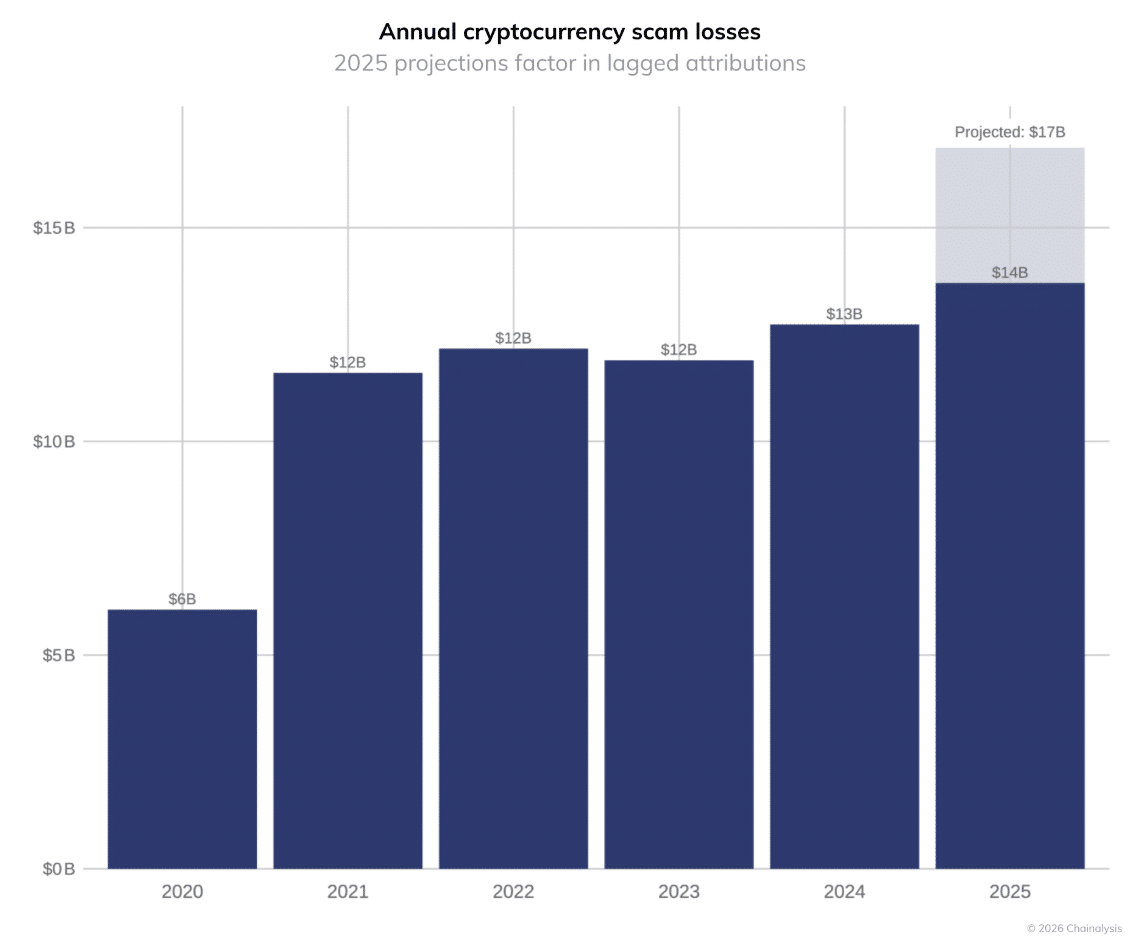
According to Chainalysis, scammers received around $14 billion in crypto in 2025, and investigators could identify over $17 billion as they uncover more illicit wallets.

However, TRM Labs reports a positive trend.
Source: TRM Labs

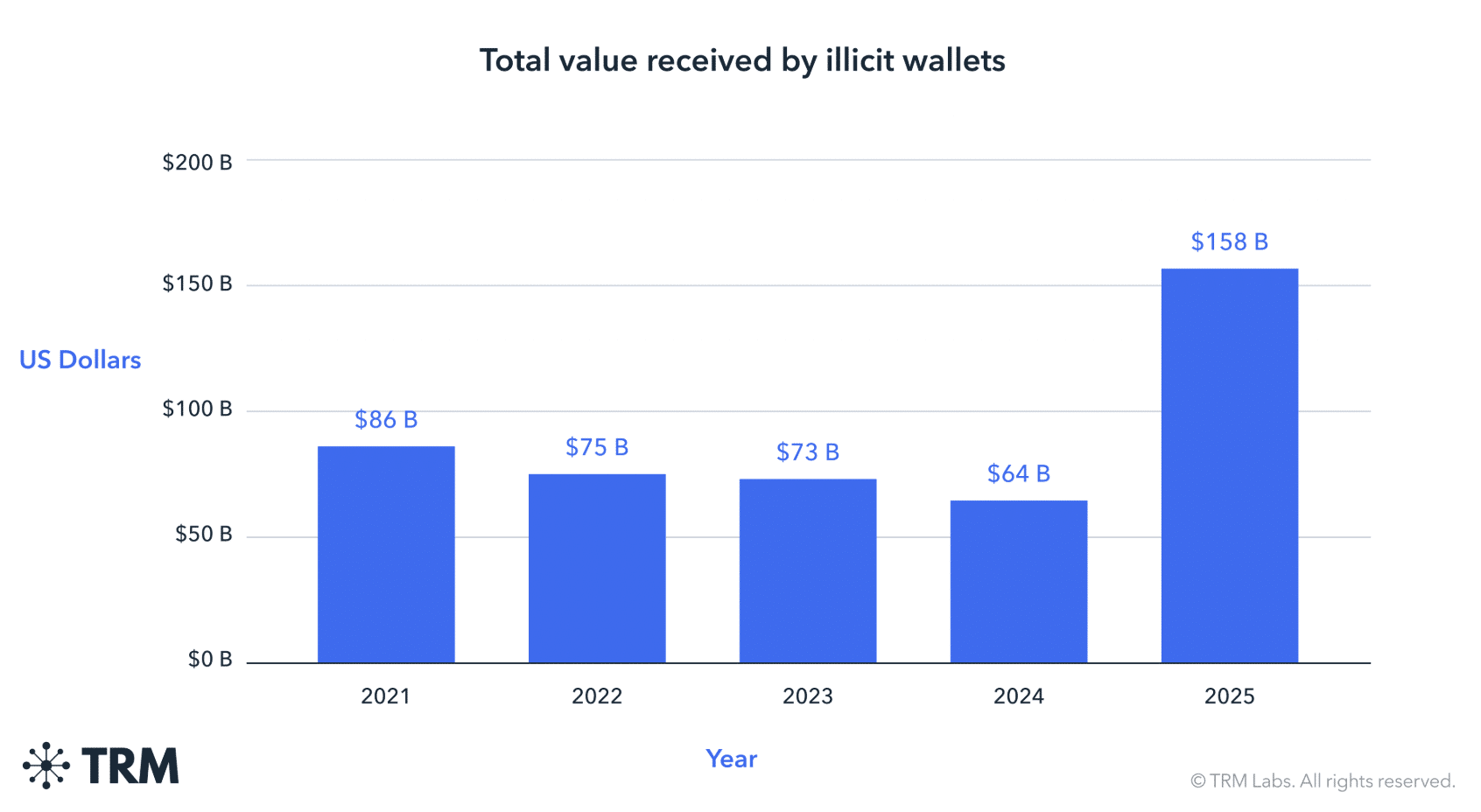
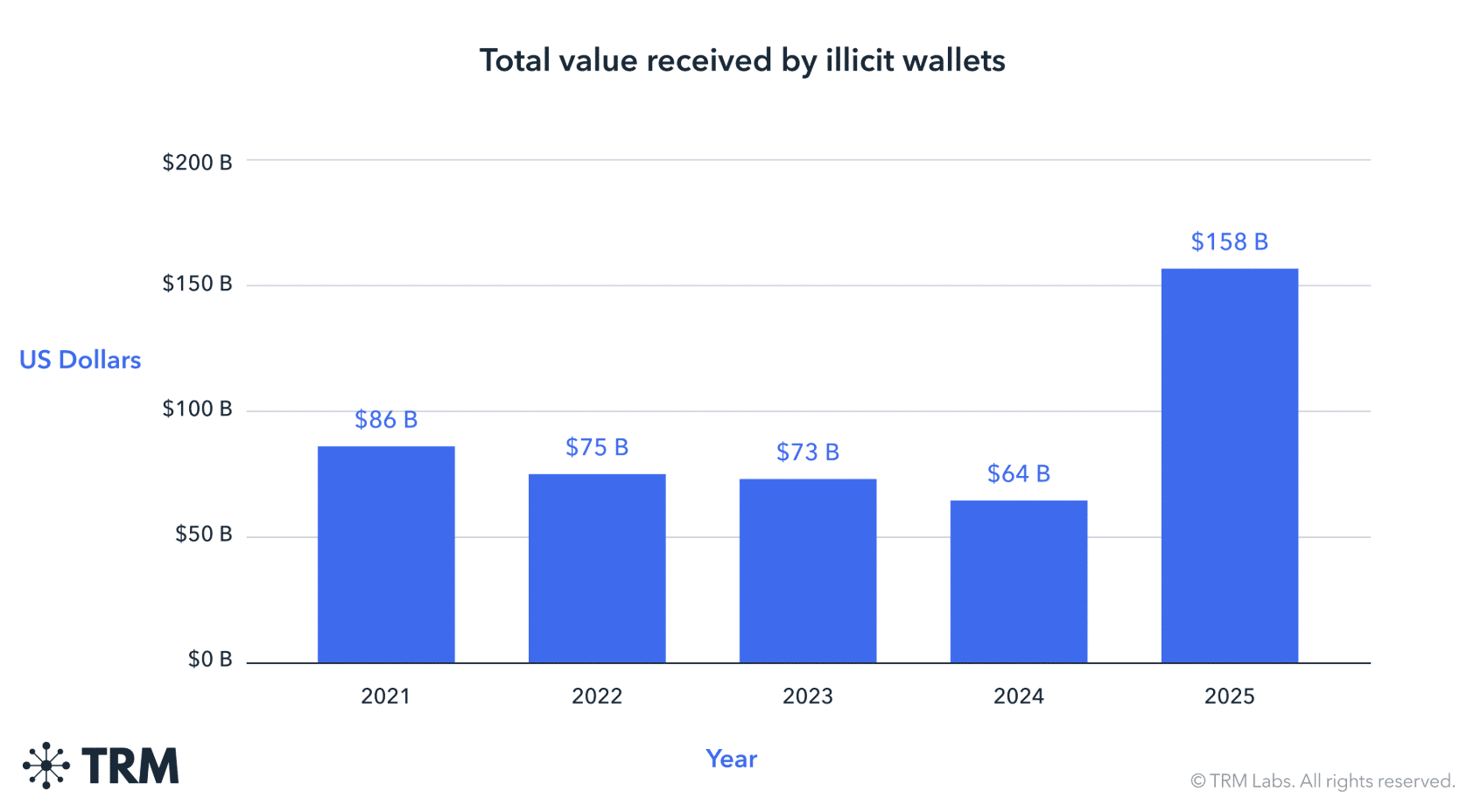
Illicit crypto activity reached $158 billion last year, but it accounted for only about 1.2% of total market activity. This suggests that despite rising fraud, the legitimate crypto economy is expanding at a much faster pace.


Final Summary

  • The rise of approval phishing scams exposes a key weakness in Web3 design, wherein many users do not fully understand the permissions they grant to smart contracts.
  • Billions lost to scams indicate that criminal networks are scaling just as quickly as the crypto industry itself.


Preguntas relacionadas

QWhat is the name of the joint operation launched by the UK, US, and Canada to combat crypto scams, and which agencies are involved?

AThe operation is called Operation Atlantic. It involves the U.S. Secret Service, the UK’s National Crime Agency (NCA), and Canadian authorities.

QWhat is the primary type of scam that Operation Atlantic is targeting, and how does it work?

AThe primary target is 'approval phishing.' In this scam, victims are tricked into signing a transaction that secretly grants attackers access to their crypto wallets, allowing the scammers to drain funds.

QHow does Operation Atlantic aim to prevent crypto fraud differently from previous methods?

AInstead of only tracing stolen funds after a crime has occurred (reactive), the operation aims to proactively detect and prevent scams by monitoring real-time data and suspicious wallet activity, then contacting potential victims before the fraud is completed.

QAccording to the report, what was the estimated value of crypto received by scammers in 2025, and what positive trend was noted by TRM Labs?

AAccording to Chainalysis, scammers received around $14 billion in crypto in 2025. TRM Labs reported that while illicit crypto activity reached $158 billion, it only accounted for about 1.2% of total market activity, indicating the legitimate crypto economy is expanding at a much faster pace.

QWhat is the name of the previous Canadian-led initiative that Operation Atlantic builds upon, and what did it target?

AOperation Atlantic builds on Project Atlas, a 2024 Canadian-led operation that targeted international crypto investment fraud networks.

Lecturas Relacionadas

Meta Spent $90 Billion to Close the Metaverse, $2 Billion to Let AI Live in Your Computer

Meta spent $90 billion to build the metaverse, only to shut down its flagship VR platform, Horizon Worlds, on June 15. The virtual world, launched in 2021 with great fanfare, failed to attract a meaningful user base despite massive investment. Its closure marks a symbolic end to Meta’s ambitious—and costly—bet on the metaverse, which accumulated nearly $90 billion in losses over seven years. Simultaneously, Meta is aggressively pivoting to AI. It acquired AI startup Manus for $2 billion, which recently launched a desktop version allowing AI to operate directly on users' local machines—reading files, running apps, and executing commands. In contrast to the metaverse’s weak adoption, Manus reached one million paid users within eight months. The shift is stark: Meta is cutting 20% of its workforce—around 15,000 jobs—and reallocating nearly its entire $115–135 billion capital expenditure budget toward AI infrastructure. This abrupt turn reflects industry-wide FOMO (fear of missing out) on AI, similar to the metaverse hype half a decade ago. Companies like Block, Shopify, and Amazon are also slashing jobs to fund AI investments. While Meta faces internal challenges—including delayed AI models and executive departures—its drastic realignment underscores a broader trend: the consensus has shifted from virtual worlds to ambient AI. The question remains whether this new bet will prove more sustainable than the last.

marsbitHace 1 hora(s)

Meta Spent $90 Billion to Close the Metaverse, $2 Billion to Let AI Live in Your Computer

marsbitHace 1 hora(s)

SpaceX Holds Nasdaq at the Negotiating Table, Hyperliquid Has Already Flipped the Table

Summary: The article examines the shifting power dynamics in global capital markets, driven by the rise of private funding and decentralized finance (DeFi). It begins by contrasting the 1971 launch of Nasdaq's electronic system with the current landscape, where companies like SpaceX can demand unprecedented concessions—such as accelerated inclusion in major indices—as a condition for their public listing. This reflects a fundamental change: massive private capital from funds like SoftBank's Vision Fund now allows firms like Revolut ($75B valuation) and Stripe ($159B valuation) to delay or de-prioritize IPOs, as they no longer rely on public markets for primary funding. However, public listing remains crucial for employee liquidity and VC exits. A new, critical motivator is the immense, stable capital from passive index funds. With passive assets now exceeding active management in the U.S., inclusion in indices like the Nasdaq 100 guarantees perpetual, non-discretionary buying pressure. SpaceX's negotiation for fast-track index inclusion highlights this strategic leverage. Simultaneously, traditional exchanges face disruption from DeFi. The piece cites Hyperliquid, a decentralized exchange with 2025 volumes (~$3T) double that of Coinbase. Its growth in tokenized traditional assets (e.g., S&P 500 perpetual contracts) and 24/7 trading attracts professional traders, eroding the monopolies of institutions like NYSE and Nasdaq. In response, NYSE's parent ICE is investing in crypto platforms (e.g., OKX, Polymarket), acknowledging that future competition may come from DeFi protocols, not just rival exchanges. The conclusion is that the market structure is layering: old systems adapt (Nasdaq changing rules, ICE investing in crypto) while new, decentralized infrastructures grow, creating a future where the most powerful companies may not need to "knock on the door" of traditional exchanges at all.

marsbitHace 1 hora(s)

SpaceX Holds Nasdaq at the Negotiating Table, Hyperliquid Has Already Flipped the Table

marsbitHace 1 hora(s)

Trading

Spot
Futuros
活动图片