Crypto Firms Propose Key Stablecoin Concessions To Advance CLARITY Act – Report

bitcoinistPublicado a 2026-02-06Actualizado a 2026-02-06

Resumen

Crypto firms are proposing key concessions to banks in an effort to advance the stalled CLARITY Act, a major US crypto market structure bill. The main point of contention is the treatment of stablecoin rewards. Banks argue that interest-bearing stablecoins threaten the financial system and distort credit creation. In response, crypto companies have offered compromises, such as giving community banks a larger role by having them hold a portion of stablecoin reserves or issue tokens. However, not all parties agree, and it's unclear if these proposals will resolve the dispute. The Senate Banking Committee's draft, which bans interest payments to passive token holders, has faced heavy criticism from crypto leaders who argue it would kill innovation. Recent White House-mediated talks ended without a resolution, but lawmakers remain hopeful a compromise can be reached.

Crypto firms are reportedly stepping up efforts to advance the highly anticipated market structure bill by proposing potential compromises to address some of the banking sector’s concerns on stablecoins.

Crypto Firms Offer Stablecoin Compromises

On Wednesday, Bloomberg reported that multiple crypto companies have been allegedly trying to “win over” banks to salvage the crypto market structure bill, known as the CLARITY Act.

The crypto bill has been stalled in the US Senate for weeks as crypto industry leaders and banks have been unable to reach an agreement on one of the bill’s main topics, stablecoin rewards, in the Senate Banking Committee’s portion of the legislation.

The US banking industry has repeatedly expressed concerns about stablecoin policies, claiming that interest payments will distort market dynamics and affect credit creation in the country. Bank of America CEO Brian Moynihan recently told investors that the banking sector, especially small- and medium-sized businesses, could face significant challenges if Congress does not prohibit interest-bearing stablecoins.

According to people familiar with the matter, industry participants are offering banks new concessions regarding these concerns, as part of their efforts to advance the long-awaited crypto legislation.

For instance, the firms have reportedly proposed giving community banks a larger role in the stablecoin system, allowing them to hold reserves or issue tokens through partnerships. Notably, they suggested requiring stablecoin issuers to maintain a portion of their reserves at community banks.

Not all crypto companies agree with the proposed ideas, Bloomberg sources noted, emphasizing that the two sides haven’t resolved their differences. Moreover, it remains unclear whether the concessions satisfactorily address banks’ concerns. However, it is “a sign that they’re redoubling efforts to keep the market-structure bill moving,” the report added.

The Stablecoin Rewards Dispute

As reported by Bitcoinist, banks have heavily criticized the landmark stablecoin legislation, the GENIUS Act, affirming that it has loopholes that could pose risks to the financial system.

For context, the crypto framework prohibits interest payments on the holding or use of payment-purpose stablecoins but only addresses stablecoin issuers. As a result, banking associations across the US pressed the Senate Banking Committee to add language to the CLARITY Act that also bans digital asset exchanges, brokers, dealers, and related entities.

The Senate Banking Committee published its draft last month, which received heavy backlash from crypto industry leaders for introducing key restrictions for stablecoin issuers.

Under the proposed draft, issuers would be able to offer rewards for specific actions, such as account openings and cashback. Nonetheless, they would be prohibited from providing interest payments to passive token holders. Coinbase’s CEO Brian Armstrong argued that “would kill rewards on stablecoins,” and allow banks to “ban their competition.”

This led to a delay of the Senate Banking Committee’s markup session, initially scheduled for mid-January, and an extended negotiation process between lawmakers and leaders from the two industries.

Earlier this week, the Trump administration oversaw a White House meeting with crypto and banking groups, including PayPal, Ripple, Coinbase, Multicoin, Circle, the American Bankers Association, and the Bank Policy Institute, to ease the regulatory debate.

The negotiation reportedly ended without an agreement on how to address the dispute but led to “constructive discussion on the risks and opportunities of stablecoin yield and rewards.”

Senate Banking Committee Chairman Senator Tim Scott recently affirmed that he is still hopeful the two sides can reach a balance. “We can protect consumers and community banks while still allowing innovation and competition to lower prices and expand access,” he stated. “Both sides are working toward a compromise that keeps innovation here in America.”
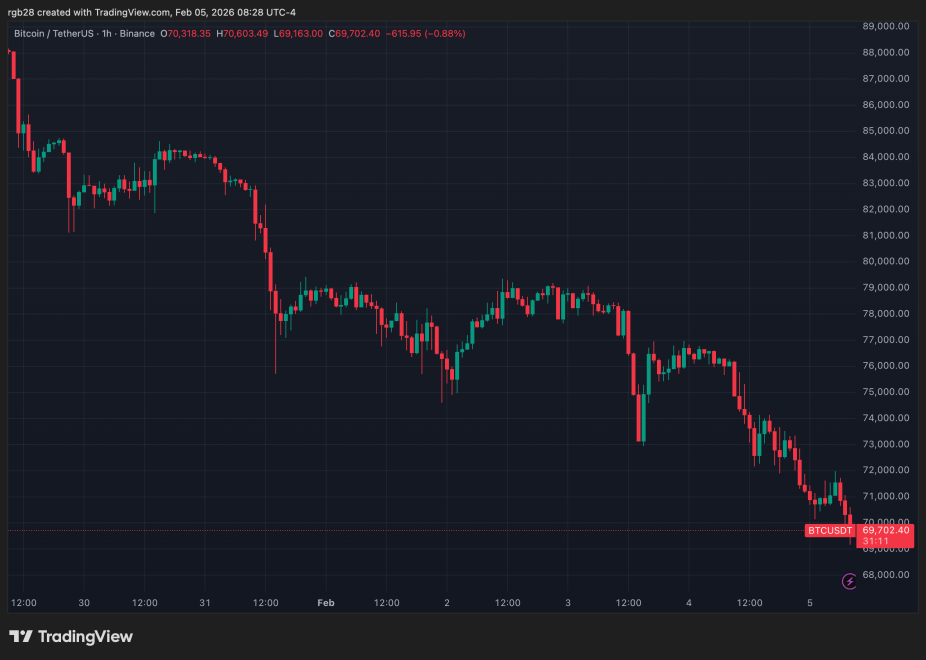
Bitcoin (BTC) trades at $69,702 on the one-week chart. Source: BTCUSDT on TradingView


Preguntas relacionadas

QWhat is the main purpose of the proposed concessions by crypto firms regarding the CLARITY Act?

AThe main purpose is to address the banking sector's concerns about stablecoins, particularly regarding interest payments, in order to advance the stalled crypto market structure bill and win over banks' support.

QWhat specific compromise did crypto firms propose to involve community banks in the stablecoin system?

ACrypto firms proposed giving community banks a larger role by allowing them to hold reserves or issue tokens through partnerships, and requiring stablecoin issuers to maintain a portion of their reserves at community banks.

QWhy have banks expressed concerns about stablecoin policies, according to Bank of America CEO Brian Moynihan?

ABanks are concerned that interest payments on stablecoins will distort market dynamics and affect credit creation, potentially posing significant challenges to the banking sector, especially small- and medium-sized businesses.

QWhat key restriction in the Senate Banking Committee's draft legislation has drawn criticism from crypto industry leaders like Coinbase's CEO?

AThe draft prohibits stablecoin issuers from providing interest payments to passive token holders, which critics argue would kill rewards on stablecoins and allow banks to ban their competition.

QWhat was the outcome of the recent White House meeting between crypto and banking groups regarding the stablecoin dispute?

AThe meeting ended without an agreement on how to address the dispute but led to a constructive discussion on the risks and opportunities of stablecoin yield and rewards.

Lecturas Relacionadas

Soaring Oil Prices No Longer Drive Up Interest Rates, What Is the Market Afraid Of?

Oil prices surged nearly 60% in March 2026—the steepest monthly rise since Brent crude's inception in 1988—after the Strait of Hormuz closed, cutting off 17.8 million barrels per day of oil flow. Historically, such spikes pushed inflation expectations and bond yields higher, but this time, the 10-year Treasury yield fell sharply from 4.44% to 3.92% in late March, signaling a decoupling. This divergence reflects a market shift: growth risks now outweigh inflation concerns. Bond markets are betting on recession rather than persistent inflation. Historical oil shocks—like those in 1973, 1979, 1990, and 2008—often preceded economic downturns. The sole exception was the 2022 spike, which triggered severe inflation instead. Market expectations pivoted rapidly. Earlier, traders anticipated rate cuts, but by late March, weak consumer confidence and manufacturing data drove bets toward Fed dovishness. Chair Powell emphasized monitoring whether the supply shock is temporary, but the bond market has already priced in recession risks. If stagflation emerges—as during 1973–1982—real assets like gold and commodities may outperform, while stocks and bonds could suffer. The 60/40 portfolio would be particularly vulnerable. Analysts project Brent could average $115–125 in April, with a peak of $150 possible if the Strait remains closed. The bond market’s verdict is clear: fear of recession dominates.

marsbitHace 27 min(s)

Soaring Oil Prices No Longer Drive Up Interest Rates, What Is the Market Afraid Of?

marsbitHace 27 min(s)

Odaily Interviews Aster: DEX Will Ultimately Devour the Entire Trading World, Optional Privacy is the Key Ladder

Odaily Interview with Aster: DEX Will Ultimately Devour the Trading World, Optional Privacy is the Key Ladder Aster has initiated key steps to build institutional-grade private DeFi infrastructure, marked by the launch of its Layer 1 mainnet, Aster Chain, on March 17. The mainnet offers traders fair ordering and optional privacy. This was followed by the launch of its native staking function on March 20. The project has rapidly evolved from an innovative Perp DEX into a complete infrastructure layer, achieving record-breaking trading volumes in late 2025 and a successful TGE. In an interview, CEO Leonard explained their core logic: launching a mainnet *after* securing users and revenue, not with a "cold start." This ensures every step is validated by real market demand. Aster's key differentiator is its unique "optional privacy" value proposition, implemented through a ZK + Stealth Address architecture. This allows for automatic privacy for each transaction while maintaining verifiability. The team believes this feature is a prerequisite for mass adoption and will be a primary driver for institutional use of DEXs, forming the core of their moat. Looking ahead, Aster predicts the DEX landscape will evolve into an oligopoly dominated by a few major players. The project is actively pursuing partnerships with both Web2 and Web3 entities, with significant interest from financial firms looking to build markets or list assets on its chain. For the immediate future, Aster's Q2 focus is on attracting privacy-seeking users and institutions, expanding assets and liquidity, growing its ecosystem via its developer program (Aster Code), and enhancing token utility.

Odaily星球日报Hace 59 min(s)

Odaily Interviews Aster: DEX Will Ultimately Devour the Entire Trading World, Optional Privacy is the Key Ladder

Odaily星球日报Hace 59 min(s)

Trading

Spot
Futuros
活动图片