Moody’s Backs Treasury Department Working Group Amid Quantum Technology Threats That Put Cryptocurrencies on High Alert

cryptonews.ruPublicado a 2026-08-27Actualizado a 2026-08-27

Resumen

The U.S. Treasury Department has established a new working group focused on quantum readiness, aimed at strengthening the cryptographic security of critical infrastructure and the digital economy, including digital assets. This initiative, referenced in relation to a Trump-era executive order, will collaborate with TradFi institutions, public and private sector leaders, and technology providers. Treasury Secretary Yellen emphasized the need for U.S. leadership in securing foundational economic technologies. In support, Moody's Ratings Vice President Cristiano Ventricelli highlighted that while digital assets are seen as strategically important for U.S. financial innovation, advances in quantum computing could eventually undermine the cryptographic security they rely on. A sufficiently powerful quantum computer could threaten transaction authorization, asset ownership, and storage mechanisms, potentially eroding market trust. Ventricelli stated that addressing this threat directly is crucial for the credibility of U.S. efforts to expand digital asset markets. Deborah Guild of the Financial Services Sector Coordinating Council and PNC Financial Services echoed this urgency, asserting that Post-Quantum Cryptography (PQC) readiness is no longer a future concern but a present-day risk management imperative.

In the financial technology sector, active discussions are underway to prepare the market for the advent of super quantum computers and theoretical attacks. Bitcoin and digital assets have long been part of this discussion, and the new Treasury Department working group will address not only traditional finance (TradFi) but also "risks associated with digital assets and new technologies."

The Treasury Department directly references President Trump's Executive Order No. 14412, and the press release states that the new working group is intended to facilitate the implementation of this order, which introduces measures to "strengthen the cryptographic protection of sensitive data, critical infrastructure, and the digital economy of the United States." The federal agency reported that the working group will collaborate with a large number of officials, traditional financial sector (TradFi) institutions, public and private sector leaders, as well as technology providers.

"The United States must play a leading role in ensuring the security of the technologies underlying our economy," Treasury Secretary Bessent explained in the press release. "This working group will help ensure that our financial system remains strong, secure, and competitive as new technologies reshape the global landscape."

Moody’s Agrees: Quantum Technology Readiness Must Become a Priority

In a note provided to Bitcoin.com News, Cristiano Ventricelli, Vice President of the Digital Economy Group at the rating agency Moody’s, emphasized that the U.S. needs to prepare its financial system for the future of quantum computing.

"The Quantum-Readiness Task Force adds a security dimension to the U.S. digital asset agenda, which includes White House, Securities and Exchange Commission (SEC), and Commodity Futures Trading Commission (CFTC) initiatives to support their use on regulated financial markets," wrote Ventricelli.

The Moody’s Ratings head added:

"Digital assets are increasingly viewed as strategically important for U.S. financial innovation and competitiveness; however, advances in quantum computing could ultimately weaken the cryptographic protections on which they are based. A sufficiently powerful quantum computer could compromise transaction authorization, asset ownership rights, and storage mechanisms, potentially undermining market confidence."

Quantum-Readiness: From a Future Threat to a Present Risk

Ventricelli's note states that directly addressing this issue within the working group "is essential for the credibility of U.S. efforts to expand digital asset markets." In the Treasury Department's statement, Deborah Guild, Chair of the Financial Services Sector Coordinating Council and Head of Technology at PNC Financial Services Group, Inc., expressed a similar viewpoint.

Guild stated that quantum-readiness (PQC) is no longer a measure needed for future preparation and insists that "it is a risk control in the present."


Criptos en tendencia

Preguntas relacionadas

QWhat is the main purpose of the new U.S. Treasury Department working group mentioned in the article?

AThe main purpose of the new working group is to promote the implementation of President Trump's Executive Order No. 14412, focusing on measures to 'strengthen the cryptographic protection of sensitive data, critical infrastructure, and the U.S. digital economy' against threats like quantum computing.

QAccording to Cristiano Ventricelli of Moody's, why is preparing the financial system for quantum computing a priority for the U.S.?

ACristiano Ventricelli states that while digital assets are seen as strategically important for U.S. financial innovation and competitiveness, advances in quantum computing could eventually break the cryptographic security they rely on, threatening transaction authorization, asset ownership, and storage mechanisms, which would undermine market trust.

QWhat specific area does Deborah Guild of the Treasury Department say Post-Quantum Cryptography (PQC) readiness belongs to now?

ADeborah Guild states that Post-Quantum Cryptography (PQC) readiness is no longer just a future preparation measure, but is a 'risk control in the present'.

QWhich sectors and stakeholders will the Treasury's new working group collaborate with, according to the article?

AThe working group will collaborate with a wide range of officials, traditional finance (TradFi) institutions, public and private sector leaders, and technology providers.

QHow could a sufficiently powerful quantum computer threaten digital assets like Bitcoin?

AA sufficiently powerful quantum computer could compromise the cryptographic protection that secures digital assets, potentially threatening the authorization of transactions, ownership of assets, and storage mechanisms, thereby undermining overall market confidence.

Lecturas Relacionadas

Stripe Helps Revolut Issue a Euro Stablecoin

On August 26th, Revolut announced the rollout of EURR, a new euro-pegged stablecoin, to select users in Denmark, Poland, and Portugal, with plans to expand across the European Economic Area. The stablecoin, issued 1:1 against the euro on Ethereum and Polygon, is not issued by Revolut itself. Instead, it is issued by Bridge Building S.A., a Stripe-owned, Luxembourg-based electronic money institution licensed under the MiCA framework. This structure positions Revolut as the distribution channel for its over 80 million users, while Stripe/Bridge provides the compliant issuance infrastructure and reserve management. EURR's launch is essentially a cold start, with a circulating supply of only 374 tokens. It enters a euro stablecoin market dominated by Circle's EURC and Société Générale's EURCV, which itself is a tiny fraction of the massive dollar stablecoin market led by USDT and USDC. EURR's primary advantage is Revolut's vast user base, aiming to onboard retail banking customers to on-chain finance. However, its utility for the average Revolut user, who already enjoys fast euro transfers, remains tied to specific crypto-native use cases like DeFi. The launch coincides with Revolut's MiCA-driven phasing out of USDT for European users, positioning EURR as a compliant replacement. More broadly, the partnership highlights Stripe's strategy through its Bridge acquisition: building a "stablecoin-as-a-service" or "issuance-as-a-service" platform. Stripe aims to provide the compliant backend infrastructure—issuance, reserves, redemption—allowing other companies like Revolut to launch branded stablecoins easily, potentially reshaping the industry's competitive landscape from direct token competition to infrastructure services.

marsbitHace 5 min(s)

Stripe Helps Revolut Issue a Euro Stablecoin

marsbitHace 5 min(s)

U.S. Financial Risks Benefit Gold and Bitcoin! Record Capital Inflow Over the Last Five Trading Days! Here's All the Data

Concerns over U.S. fiscal prospects and growing government debt are driving investors towards both gold and Bitcoin. Over the last five trading days, a record $7 billion flowed into gold and Bitcoin ETFs. Approximately $3.4 billion entered the SPDR Gold Shares (GLD) fund, while BlackRock's spot Bitcoin ETF (IBIT) saw around $1.5 billion in inflows, placing both among the top ten U.S. ETFs by weekly capital inflow. Bloomberg notes the simultaneous strong inflows into both assets as particularly remarkable, a shift from past behavior where investors typically favored gold as a safe haven during market stress. Recent investor behavior has changed due to expectations of increased U.S. government borrowing, concerns about the dollar, and policies aimed at lowering long-term interest rates, boosting demand for assets with limited supply. The concurrent rise in the value of gold and Bitcoin indicates investors are turning to alternative assets to hedge against risks within the traditional financial system, especially amid heightened debates on U.S. debt sustainability. Experts suggest this strong ETF inflow may signal that institutional investors are increasingly viewing Bitcoin as a portfolio diversification tool similar to gold, though Bitcoin's high price volatility means the risk profiles of the two assets remain significantly different.

cryptonews.ruHace 6 min(s)

U.S. Financial Risks Benefit Gold and Bitcoin! Record Capital Inflow Over the Last Five Trading Days! Here's All the Data

cryptonews.ruHace 6 min(s)

Tokenized Deposits Could Raise US Lending Costs: Dallas Fed Economists

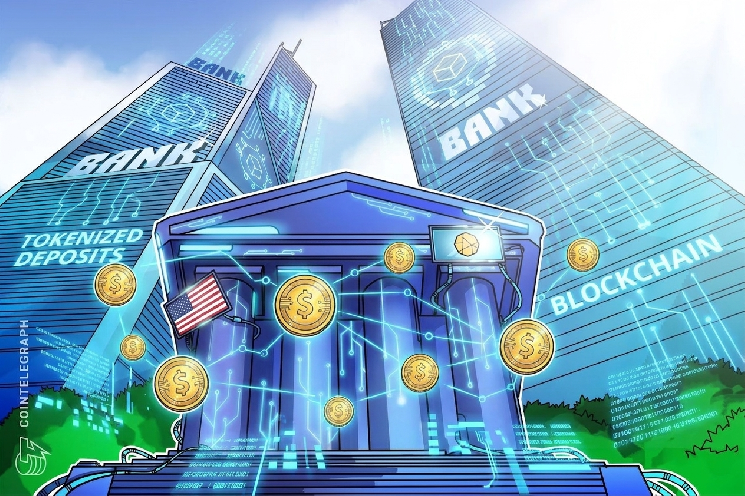
Tokenized deposits could increase U.S. lending costs and make bank funding less stable, according to an analysis by Dallas Fed economists. Rosy Leigh and Sreeni Ramaswamy note that instant settlement capabilities, programmable deposit tokens, and AI could allow depositors chasing higher yields to move funds faster between banks, reducing deposit tenures and increasing their sensitivity to interest rates. The economists estimate that a 10% increase in deposit rate sensitivity could reduce banks' capacity to hold long-term loans by around $700 billion over a ten‑year equivalent. A 10% reduction in deposit tenures could lower capacity by about $580 billion. These scenarios do not imply a direct, proportional cut in lending but highlight potential pressures. U.S. banks are developing blockchain networks for moving tokenized deposits around‑the‑clock while keeping funds within the regulated banking system. Thirty‑nine state banking associations recently formed the BankChain alliance to build a nationwide network, while The Clearing House is developing a separate network with major banks. Institutions like Standard Chartered and HSBC have also tested cross‑border tokenized deposit transactions via blockchain. Banks may respond to more volatile deposits by holding more liquid assets (like reserves and Treasuries) or relying more on wholesale debt—which would likely raise borrowing costs for consumers and businesses. The authors cite Brazil's Pix instant payment system as a comparative example, where increased use raised bank liquidity holdings and reduced credit intermediation.

cryptonews.ruHace 8 min(s)

Tokenized Deposits Could Raise US Lending Costs: Dallas Fed Economists

cryptonews.ruHace 8 min(s)

Trading

Spot

Artículos destacados

Cómo comprar T

¡Bienvenido a HTX.com! Hemos hecho que comprar Threshold Network Token (T) sea simple y conveniente. Sigue nuestra guía paso a paso para iniciar tu viaje de criptos.Paso 1: crea tu cuenta HTXUtiliza tu correo electrónico o número de teléfono para registrarte y obtener una cuenta gratuita en HTX. Experimenta un proceso de registro sin complicaciones y desbloquea todas las funciones.Obtener mi cuentaPaso 2: ve a Comprar cripto y elige tu método de pagoTarjeta de crédito/débito: usa tu Visa o Mastercard para comprar Threshold Network Token (T) al instante.Saldo: utiliza fondos del saldo de tu cuenta HTX para tradear sin problemas.Terceros: hemos agregado métodos de pago populares como Google Pay y Apple Pay para mejorar la comodidad.P2P: tradear directamente con otros usuarios en HTX.Over-the-Counter (OTC): ofrecemos servicios personalizados y tipos de cambio competitivos para los traders.Paso 3: guarda tu Threshold Network Token (T)Después de comprar tu Threshold Network Token (T), guárdalo en tu cuenta HTX. Alternativamente, puedes enviarlo a otro lugar mediante transferencia blockchain o utilizarlo para tradear otras criptomonedas.Paso 4: tradear Threshold Network Token (T)Tradear fácilmente con Threshold Network Token (T) en HTX's mercado spot. Simplemente accede a tu cuenta, selecciona tu par de trading, ejecuta tus trades y monitorea en tiempo real. Ofrecemos una experiencia fácil de usar tanto para principiantes como para traders experimentados.

938 Vistas totalesPublicado en 2024.12.10Actualizado en 2026.06.02

Cómo comprar T

Discusiones

Bienvenido a la comunidad de HTX. Aquí puedes mantenerte informado sobre los últimos desarrollos de la plataforma y acceder a análisis profesionales del mercado. A continuación se presentan las opiniones de los usuarios sobre el precio de T (T).

活动图片