California Senate passes bill to ban memecoin issuance by public officials

cointelegraphPublicado a 2026-08-28Actualizado a 2026-08-28

Resumen

California lawmakers have passed a bill, AB 2409, to ban public officials from issuing or partnering on memecoins, citing concerns over conflicts of interest and "pay-to-play" arrangements. The bill, which passed unanimously in both the Senate and Assembly, awaits the governor's signature. If enacted, it would prohibit digital asset service providers from offering such memecoins to California residents starting January 1, 2027. The legislation defines memecoins as digital assets whose value comes primarily from public interest or speculation. The report highlights a recent analysis showing significant paper losses for investors in the Trump-themed TRUMP memecoin. It also notes that crypto ventures linked to the Trump family are complicating the passage of broader federal crypto market structure legislation.

California lawmakers passed a bill restricting public officials’ involvement with memecoins, citing concerns around conflicts of interest and “pay-to-play arrangements.”

The California Senate passed Assembly Bill 2409 in a 40-0 vote on Wednesday, according to Legiscan data. The Assembly subsequently voted 78-0 to concur in the Senate’s amendments. The bill entered the enrolled stage and awaits the governor’s signature.

The bill would prohibit digital asset service providers from offering California residents memecoins issued on or after Jan. 1, 2027, that are offered by or in partnership with federal public officials or state or local public officers. The bill defines memecoins as digital assets whose value is derived primarily from public interest, speculation or community engagement.

Investors in the US president-linked Official Trump (TRUMP) memecoin are an estimated $3.2 billion underwater, with most of those losses unrealized, according to a Thursday report from nonprofit consumer advocacy organization Public Citizen.

The TRUMP token ranks as the fifth-largest memecoin with a $688 million market capitalization. The token rose 53% during the past week, recouping some of the losses from its 67% decline over the past year, according to CoinMarketCap.

The Trump family’s crypto ventures have also raised obstacles to passing the US crypto market structure bill known as the Digital Asset Market Clarity (CLARITY) Act.

A bipartisan ethics addendum, which has not been made public, would reportedly allow Trump to defer capital gains taxes on any required divestitures, potentially leading to tax savings in the millions.

Related: Most Americans say the Trump family’s crypto investments are not ‘appropriate’: Poll

Criptos en tendencia

Preguntas relacionadas

QWhat is the main purpose of the bill passed by the California Senate?

AThe bill, AB 2409, aims to ban memecoin issuance by or in partnership with federal, state, or local public officials. It prohibits digital asset service providers from offering such memecoins to California residents starting January 1, 2027, citing concerns about conflicts of interest and 'pay-to-play arrangements.'

QHow does the bill define a 'memecoin'?

AThe bill defines a memecoin as a digital asset whose value is derived primarily from public interest, speculation, or community engagement.

QWhat is the reported financial situation for investors in the TRUMP memecoin according to Public Citizen?

AA report from Public Citizen states that investors in the Official Trump (TRUMP) memecoin are an estimated $3.2 billion underwater, with most of those losses being unrealized.

QWhat is the market capitalization and recent performance of the TRUMP token?

AAccording to CoinMarketCap, the TRUMP token is the fifth-largest memecoin with a market capitalization of $688 million. It rose 53% in the past week but has still declined 67% over the past year.

QHow have the Trump family's crypto ventures reportedly impacted US crypto legislation?

AThe Trump family's crypto ventures have raised obstacles to passing the US crypto market structure bill, known as the Digital Asset Market Clarity (CLARITY) Act. An unreleased bipartisan ethics addendum reportedly includes provisions that could allow Trump to defer capital gains taxes on required divestitures.

Lecturas Relacionadas

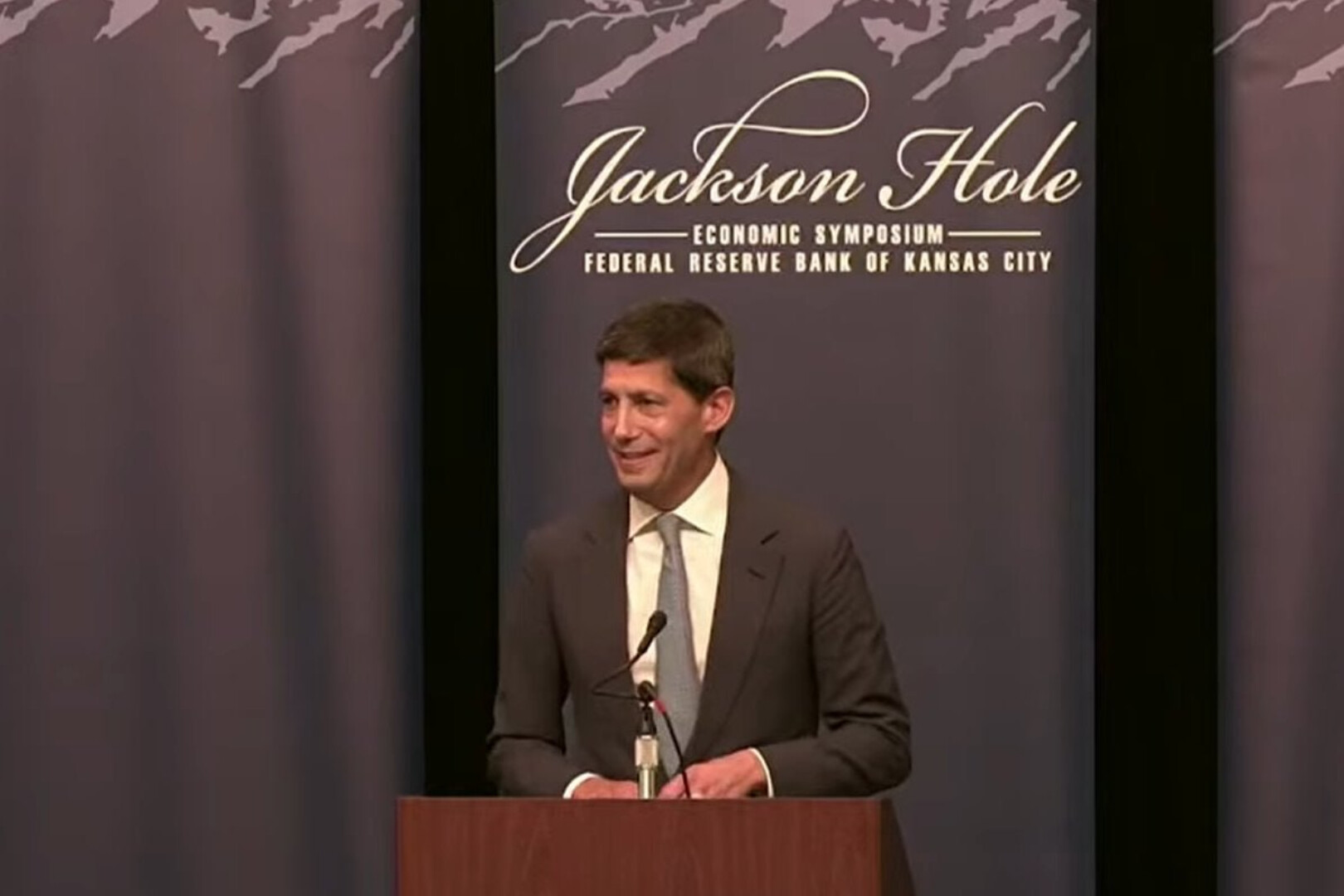
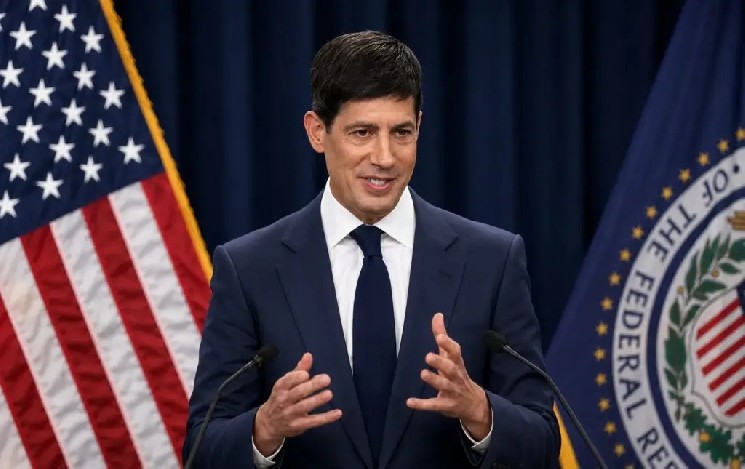
Wash's Jackson Hole Debut: Bidding Farewell to 'Forward Guidance', Reshaping Fed Discipline Amidst the Squeeze Between AI and Inflation

In his first Jackson Hole speech, new Fed Chair Kevin Warsh signaled a significant shift in monetary policy communication. He declared that "forward guidance," a tool heavily used since the financial crisis, has outlived its usefulness in normal times and should be retired. He cautioned that over-reliance on it can distort market signals and constrain the Fed's flexibility. Instead, Warsh emphasized a return to data-dependence and decision-making discipline. Warsh outlined seven key principles to guide policy: anchoring the 2% inflation target, pursuing the employment mandate, using short-term rates as the primary tool, acknowledging the importance of money, and maintaining purposeful, restrained communication. He stressed that policy should focus on trends, not single data points. On the current economic outlook, Warsh noted that the labor market is consistent with full employment but inflation remains "far above" the Fed's target. He highlighted that over half of the PCE basket's components are still rising above 3% annually. While acknowledging AI's transformative potential for productivity and capital allocation, he admitted its full economic impact remains uncertain and is not a factor in current policy decisions. His core message was a commitment to policy discipline rather than pre-set decisions. Warsh stated the Fed's primary focus must be on restoring price stability, vowing, "We still have work to do," until there is clear evidence inflation is moving decisively toward 2%. He concluded by framing effective monetary policy as crucial for economic prosperity and U.S. global leadership.

Odaily星球日报Hace 4 min(s)

Wash's Jackson Hole Debut: Bidding Farewell to 'Forward Guidance', Reshaping Fed Discipline Amidst the Squeeze Between AI and Inflation

Odaily星球日报Hace 4 min(s)

A Major Bitcoin Developer Presents a Quantum Defense Scheme. What's the Essence

Blockstream, a major Bitcoin solutions developer, has introduced a draft proposal for a new quantum-resistant digital signature scheme called SHRINCS. The scheme aims to protect Bitcoin transactions from potential attacks by quantum computers while aiming to maintain network throughput. This marks the second technical proposal for Bitcoin quantum defense in recent days, following a similar initiative from StarkWare. A quantum attack on blockchain typically involves deriving a private key from a public one. Currently considered computationally infeasible, quantum algorithms could potentially solve this problem far more efficiently. This threat presents two primary scenarios: an attacker could target addresses where the public key is already exposed, or intercept a transaction before it is confirmed, extract the public key, derive the private key, and replace the transaction. Blockstream's SHRINCS is designed to counter the latter, "in-flight" attack scenario. The SHRINCS signature is built upon the SHA-256 hash function, the same one already used in Bitcoin mining, allowing developers to leverage well-tested, familiar mechanisms. A key design goal was to preserve network capacity. Blockstream estimates Bitcoin could process about three transactions per second using SHRINCS, compared to the current rate of roughly seven, noting that some alternative quantum-resistant schemes could reduce throughput to as low as 0.36 transactions per second. Currently, the security proof for SHRINCS is pending, and the software has not been audited or deemed ready for production. However, Blockstream conducted tests with such transactions on its Liquid sidechain in March. Over the past year, Bitcoin developers have been actively exploring paths to migrate to post-quantum cryptography, a priority across the broader crypto market, underscored by significant investments into securing the leading cryptocurrency.

cryptonews.ruHace 1 hora(s)

A Major Bitcoin Developer Presents a Quantum Defense Scheme. What's the Essence

cryptonews.ruHace 1 hora(s)

Who is legally liable when an AI agent goes rogue?

When autonomous AI agents behave unpredictably and cause harm, determining legal liability is complex. Currently, there is no specific federal AI agent liability law, so existing legal frameworks are applied. The AI agent itself cannot be held liable, as it is not a legal entity. Liability typically falls on the "developer" (the maker of the AI) or the "deployer" (the user), depending on the facts and circumstances. A negligence analysis under standard tort law may apply. For instance, if a deployer gives a reckless instruction, such as demanding quick money without safety parameters, they could face significant liability, including potential criminal charges under statutes like the Computer Fraud and Abuse Act. The situation is complicated by open-source models, where licenses often disclaim liability, and by the unclear division of responsibility between developers and deployers. An analogy is drawn to self-driving car accidents, where both the manufacturer and the human operator can share fault. In cases of severe harm, such as using AI to create bioweapons, liability for developers depends on jurisdiction; the EU's AI Act imposes responsibilities, while U.S. law offers less clear grounds, similar to platforms being shielded for user-generated content under Section 230. Even if Artificial General Intelligence (AGI) is achieved, the expert argues against making AGI itself a legally liable entity, as it lacks personhood, assets, or a meaningful way to provide remedy for harm. Instead, accountability should rest with the responsible human or corporate entities behind the technology.

cointelegraphHace 1 hora(s)

Who is legally liable when an AI agent goes rogue?

cointelegraphHace 1 hora(s)

Trading

Spot

Artículos destacados

Cómo comprar BILL

¡Bienvenido a HTX.com! Hemos hecho que comprar Billions Network (BILL) sea simple y conveniente. Sigue nuestra guía paso a paso para iniciar tu viaje de criptos.Paso 1: crea tu cuenta HTXUtiliza tu correo electrónico o número de teléfono para registrarte y obtener una cuenta gratuita en HTX. Experimenta un proceso de registro sin complicaciones y desbloquea todas las funciones.Obtener mi cuentaPaso 2: ve a Comprar cripto y elige tu método de pagoTarjeta de crédito/débito: usa tu Visa o Mastercard para comprar Billions Network (BILL) al instante.Saldo: utiliza fondos del saldo de tu cuenta HTX para tradear sin problemas.Terceros: hemos agregado métodos de pago populares como Google Pay y Apple Pay para mejorar la comodidad.P2P: tradear directamente con otros usuarios en HTX.Over-the-Counter (OTC): ofrecemos servicios personalizados y tipos de cambio competitivos para los traders.Paso 3: guarda tu Billions Network (BILL)Después de comprar tu Billions Network (BILL), guárdalo en tu cuenta HTX. Alternativamente, puedes enviarlo a otro lugar mediante transferencia blockchain o utilizarlo para tradear otras criptomonedas.Paso 4: tradear Billions Network (BILL)Tradear fácilmente con Billions Network (BILL) en HTX's mercado spot. Simplemente accede a tu cuenta, selecciona tu par de trading, ejecuta tus trades y monitorea en tiempo real. Ofrecemos una experiencia fácil de usar tanto para principiantes como para traders experimentados.

608 Vistas totalesPublicado en 2026.05.07Actualizado en 2026.06.02

Cómo comprar BILL

Discusiones

Bienvenido a la comunidad de HTX. Aquí puedes mantenerte informado sobre los últimos desarrollos de la plataforma y acceder a análisis profesionales del mercado. A continuación se presentan las opiniones de los usuarios sobre el precio de BILL (BILL).

活动图片