「Workplace Bonus」(ID:ZhiChangHongLi)
Written by╱Fang Tingyu Cover Image╱ダモ リ(Unsplash)
Art Editor╱Fang Tingyu Text Editor╱Chen Tong
Geography, The Industrial Folding of Six Locations ·01
Nanshan: The Source & The Folding Belt -
Bao'an: Brand Headquarters & Manufacturing Hub -
Futian: Super Headquarters & Huaqiangbei -
Longgang District: Huawei Ecosystem & The Second Curve -
Longhua District: Finished Product Base & OEM Foundation -
Guangming District & Pingshan District: The Industrial Foundation for the Next Decade -
Capital, Three Levels & Three Destinies ·02
Unicorn Tier: Billion-Dollar Narratives & Long-term Vision -
Public Company Tier: Pioneers, Scalers & Transformers -
High-Potential Startups: Minimal Room for Error -
Choice, Life Coordinates in the Folded City ·03
On August 3, 2026, the patent infringement case filed by DJI against Insta360's Luna series opened at the Shenzhen Intermediate People's Court. Both parties presented evidence, cross-examined, and debated. The trial concluded without an immediate verdict; the judgment time is pending. Additionally, a dispute over the ownership of six patents, which DJI claims were inventions of former employees, is also under trial.
The dispute began in late March. Media reported that DJI had filed lawsuits at the Shenzhen Intermediate People's Court claiming ownership of six Insta360 patents. Two days later, Insta360's founder, Liu Jingkang, posted a message on social media, saying he would compile the competitive tactics encountered over the past year into a novel, with the protagonist hinting at DJI's founder, Wang Tao.
Over the following months, the patent war between the two spread from the Shenzhen court to the Eastern District of Texas court in the US, then back to China. During this period, Insta360's Luna Ultra gimbal camera and DJI's Pocket 4P were launched in the same month, with market feedback being neck and neck.
The headquarters of the two companies are only a 30-minute commute apart—from DJI's Sky City to Insta360's Qianhai Life Financial Center. Taking a taxi east along Liuxian Avenue, then turning south onto Nanping Expressway covers a distance of just over ten kilometers.
Courtrooms, store shelves, and social media are all battlegrounds, yet the warring parties share the same supply chain and the same pool of engineers.
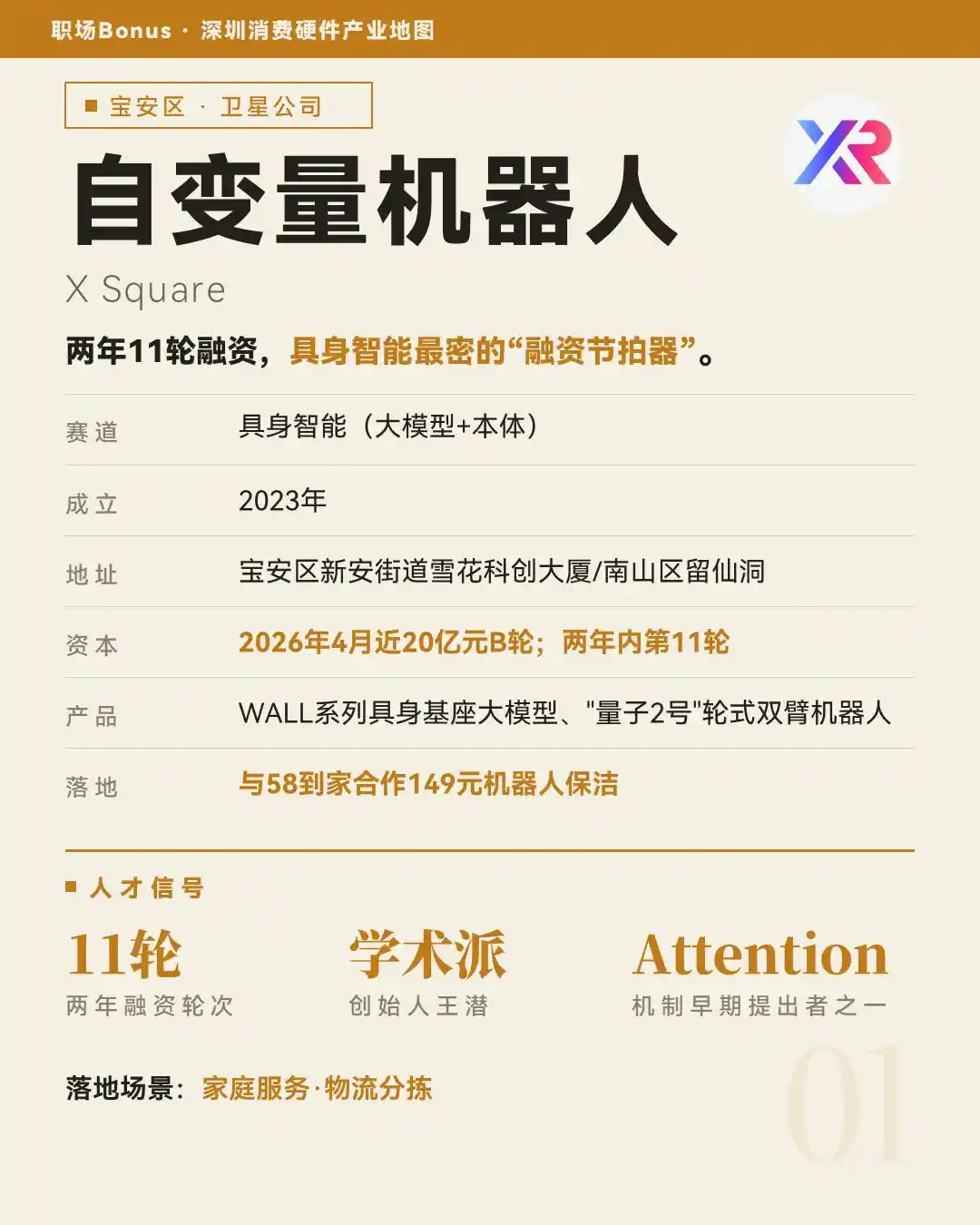
Geographical proximity is the norm in Shenzhen's hardware industry. In June, Zhilifang, after becoming Shenzhen's first hundred-billion-valued embodied AI unicorn in February, raised another nearly 5 billion yuan, doubling its valuation to over 20 billion yuan. On the same day, Zibianliang also announced its valuation exceeded 20 billion yuan. Zhilifang claimed to be "the first embodied AI enterprise in the Greater Bay Area to officially break through the 200 billion valuation mark," while the latter called itself "the first and only embodied AI enterprise in the Greater Bay Area with a valuation exceeding 200 billion." The two companies are only 5 kilometers apart.
Products, lawsuits, and financing all point to the same underlying structure: within a roughly 50-kilometer radius in Shenzhen, industrial chains, talent pools, and capital networks are highly folded. It has been jokingly said: To gauge how far a hardware company's competitor is, using a ride-hailing app is more direct than reading financial reports.
Shenzhen is arguably the only city in the world that can rapidly close the loop from idea to product to mass production. It has the most complete supply chains, factories, prototyping capabilities, and extremely fast product iteration speeds. Many ideas that elsewhere might remain just a PowerPoint presentation can become a prototype in Shenzhen within two weeks.
In 2025, Shenzhen's total output value of industrial enterprises above designated size and industrial added value remained among the top nationwide for four consecutive years; it had 1,333 national-level "little giant" enterprises specializing and innovating, ranking first in total number; the robot industry's total output value reached 242.6 billion yuan, a year-on-year increase of 20.56%, leading the nation in industry scale, number of enterprises, number of listed entities, and investment and financing events.
In November 2026, AP EC will once again focus global attention on Shenzhen. From November 18th to 19th, the 33rd AP EC Economic Leaders' Meeting will be held in Shenzhen, marking China's third time hosting after Shanghai in 2001 and Beijing in 2014. World leaders will discuss global trade rules at Xiangmihu.
Across Shenzhen's various districts, industry segments like cutting-edge R&D, brand decision-making, mass production manufacturing, global expansion, and future experimentation each have their role and are highly coordinated. Capital enthusiasm rapidly rotates with hot sectors, and corporate development characteristics are clearly stratified. What to make, how to make it, and how to scale—different districts in Shenzhen answer different industry questions.
Behind these different questions stand different people: job seekers evaluating opportunities, investors screening projects, industry chain partners looking for collaborators. As for which company's culture, which district's ethos, and which stage of capital correspond to which working style... Perhaps this article can help you align your preferences and decide where you want to stand.
Geography, The Industrial Folding of Six Locations
Spreading out the Shenzhen map, the locations of hardware companies are not random.
Six locations occupy six ecological niches—some nurture technology, some nurture brands, some nurture production capacity. What's worth observing is not just a single company, but their relative positions, and how these positions determine their ways of accessing resources.
● Nanshan: The Source & The Folding Belt
The 12-kilometer Liuxian Avenue connects the Xili Lake International Sci-Tech City, Liuxiandong Headquarters Base, and Tanglang Industrial Community. It is lined with hardware companies like DJI, Anker, EcoFlow, Shokz, Aqara, Zhilifang, and Zhuji Dynamics. This corridor is also an important part of the "Robot Valley."
As the core area for Shenzhen's robot industry, the "Robot Valley" has gathered over 200 robot industry chain enterprises, 32 "little giant" enterprises specializing and innovating, and 11 top-tier universities and research institutions like Southern University of Science and Technology, Harbin Institute of Technology (Shenzhen), and Tsinghua Shenzhen International Graduate School.
There's a simple way to classify companies within the corridor—whether they belong to the "DJI faction."
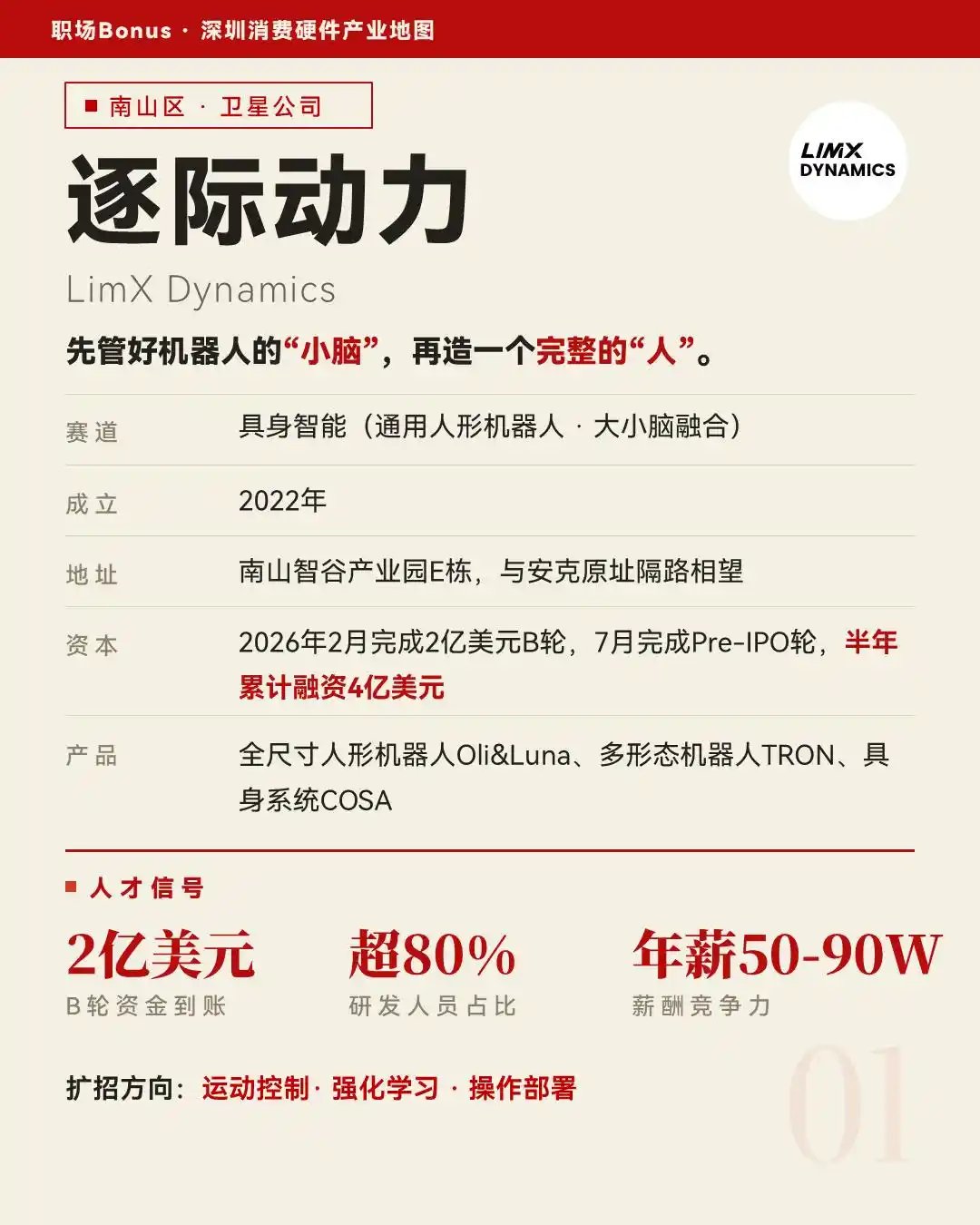
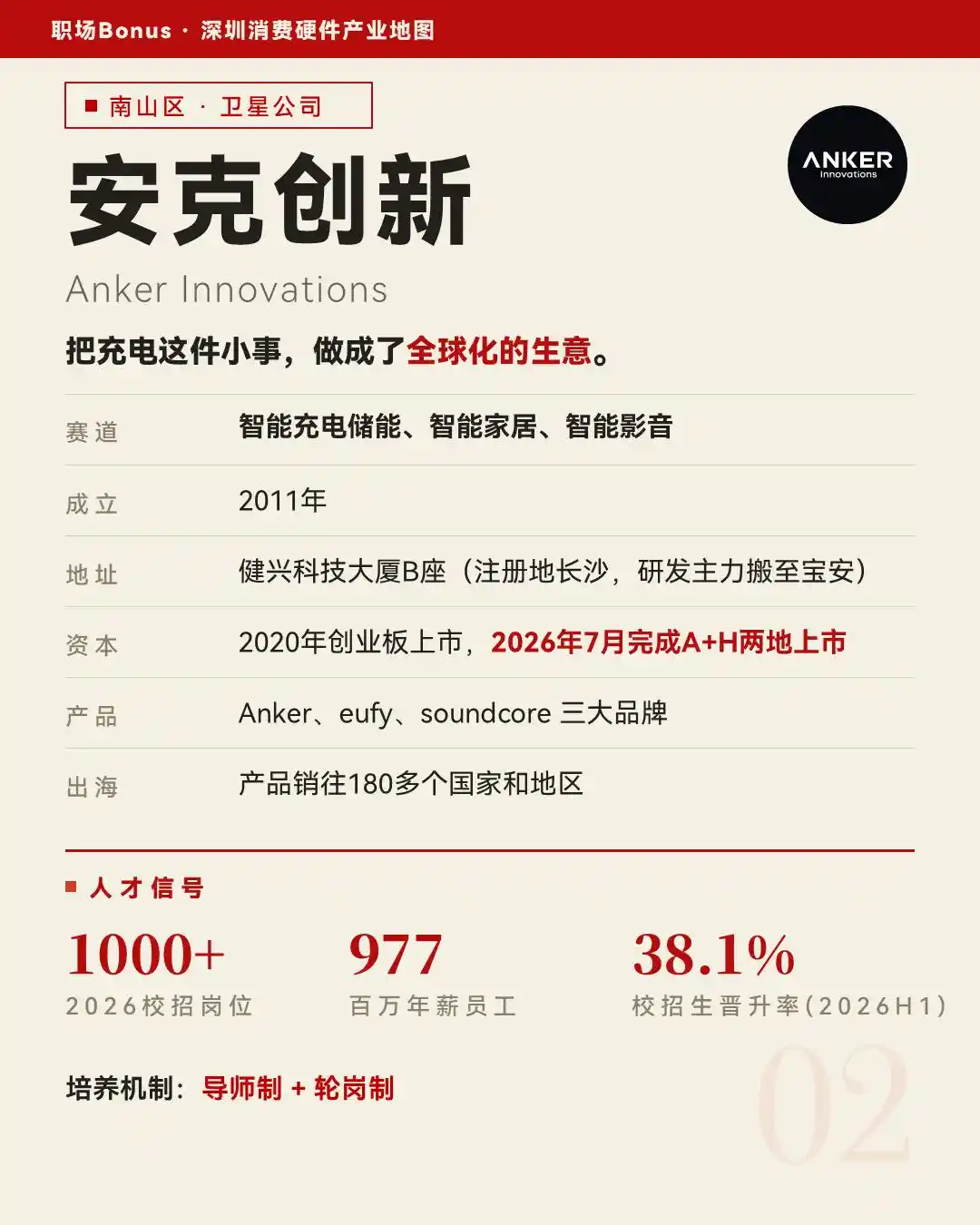
Anker and Zhuji Dynamics belong to the latter. Anker's main R&D force moved into a new building at the CR Snowflake Technology City in Xingdong, Bao'an in October 2025, with its old office located in Block B of Jianxing Technology Building. Zhuji Dynamics is just a few hundred meters across the street from Anker's old location, completing a Pre-IPO round of financing in July this year with a valuation of about 15 billion yuan. The location logic for both companies is similar: close to the talent pool of Xili University Town, while avoiding the rental competition in Liuxiandong.
The center of the gravitational field is in Liuxiandong, which is the territory of the "DJI faction."
「Workplace Bonus」(ID:ZhiChangHongLi)
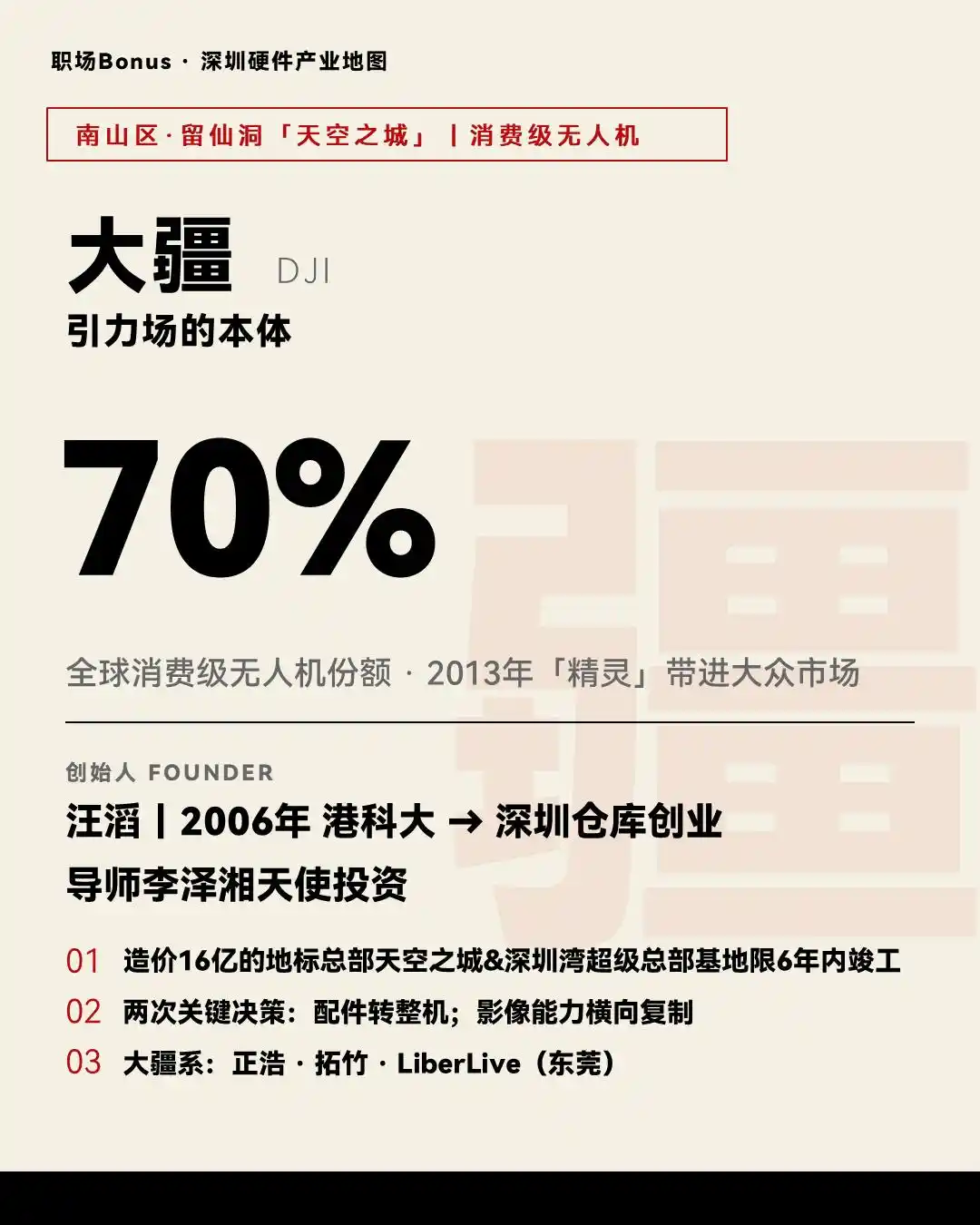
In 2006, Hong Kong University of Science and Technology student Wang Tao rented a warehouse less than 20 square meters in Shenzhen to tinker with flight control systems, and his professor, Li Zexiang, became his angel investor. Later, DJI shifted from selling flight control components to full self-development of complete drones. The 2013 "Phantom" series brought drones from the RC hobbyist circle into the mass consumer market, eventually capturing about 70% of the global consumer drone market share. Today, its headquarters, "Sky City," is a landmark in Liuxiandong, costing 1.6 billion yuan to build, with over 18,000 patent applications, over 60% of which are invention patents.
The most valuable asset DJI left for Nanshan is not its own revenue, but the talent system that continuously overflows outward.
In 2025, talent attrition at DJI was very frequent, with many core sales employees moving to competitors. Some sources stated that DJI did not have non-compete agreements for these key personnel, and some directly replicated DJI's strategies and tactics at competitors.
To quickly fill technical gaps in drone core technologies like flight control, image transmission, and obstacle avoidance, Insta360 began high-salary poaching. Its R&D headcount increased by 59% in 2025, including several core R&D personnel who had left DJI.
Li Zexiang once described tech entrepreneurship as walking in the dark: "You'd be scared alone, but with two or three or five people together, and then given a flashlight and a stick, you're not afraid anymore."
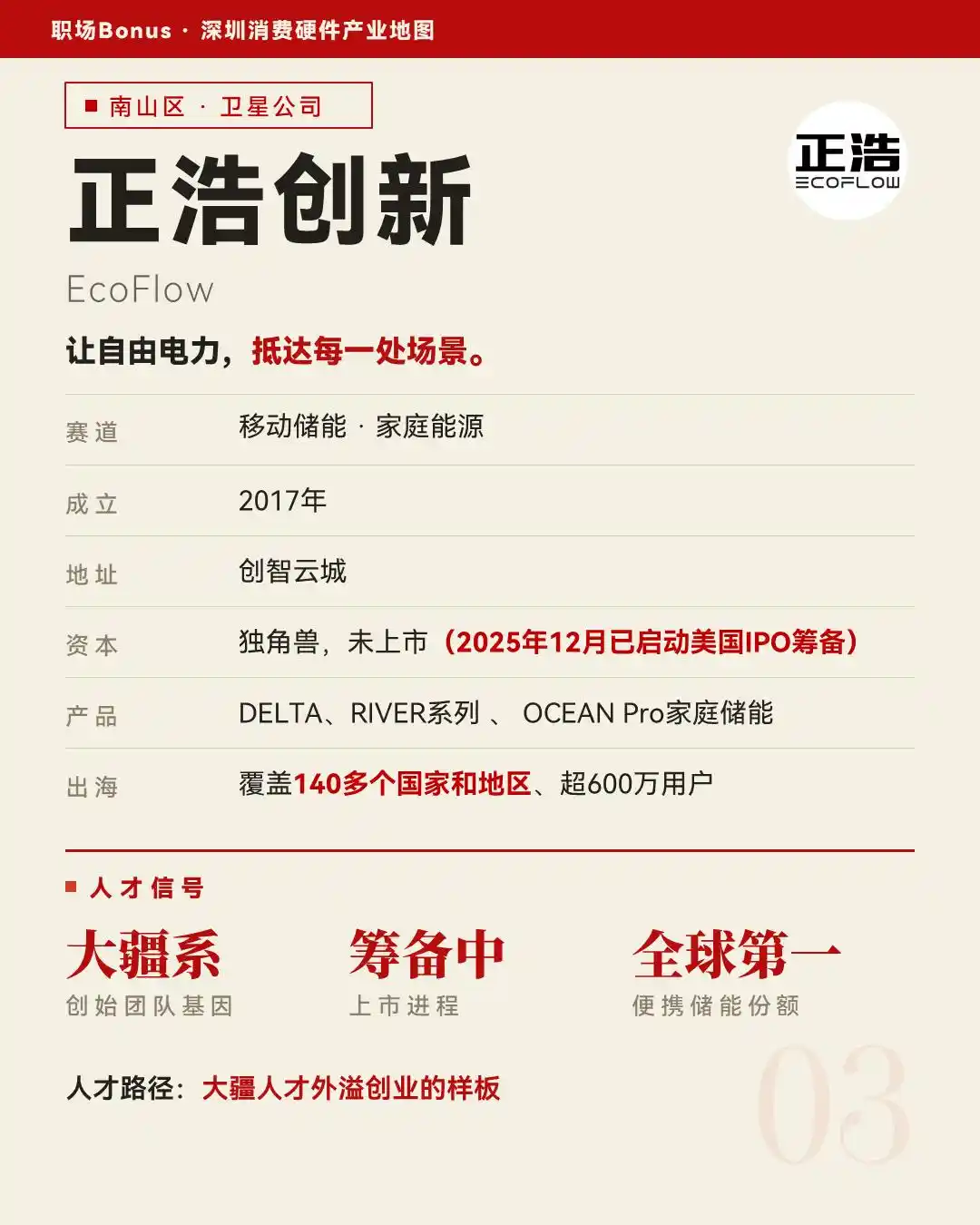
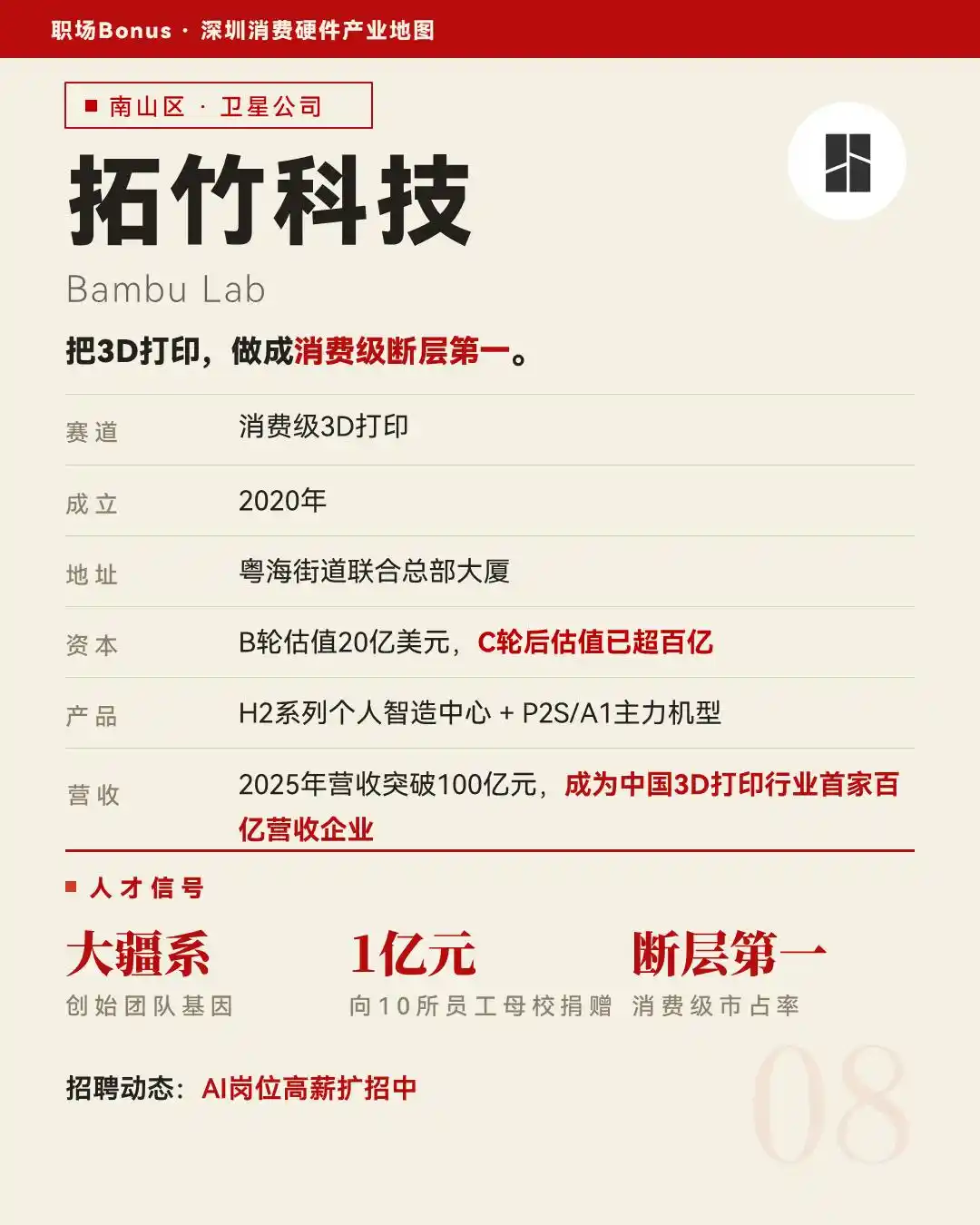
Now, this path is crowded with "DJI faction" talent. Across from Sky City in Chuangzhi Cloud City, EcoFlow founder Wang Lei left DJI's battery department in 2017, making portable power stations the global leader; the founding team of consumer 3D printing leader Bambu Lab originated from DJI's core consumer drone division; companies like Species Origin, Tashi Zhihang, AgileX Robotics, and Heqi Intelligent also bear the DJI gene. The Innovation College founded by Li Zexiang himself is also located in Chuangzhi Cloud City, and the XbotPark he operates incubated LiberLive Smart Guitar, whose founder was originally a DJI navigation algorithm engineer.
Working at DJI is essentially buying into a long-term belief in technology. The company insists on technology-first, willing to give engineers working on deep foundational R&D ample room for trial and error. However, frequent complaints about unclear promotion paths and high-intensity overtime appear on platforms like Maimai and Xiaohongshu. This creates an industry paradox: DJI continuously incubates billion-yuan valuation startups, yet what drives core talent to leave and start businesses is precisely this extreme R&D-focused corporate culture.
For VCs, to find the next DJI-faction startup, visiting within a 3-kilometer radius around Liuxiandong will likely capture the trail.
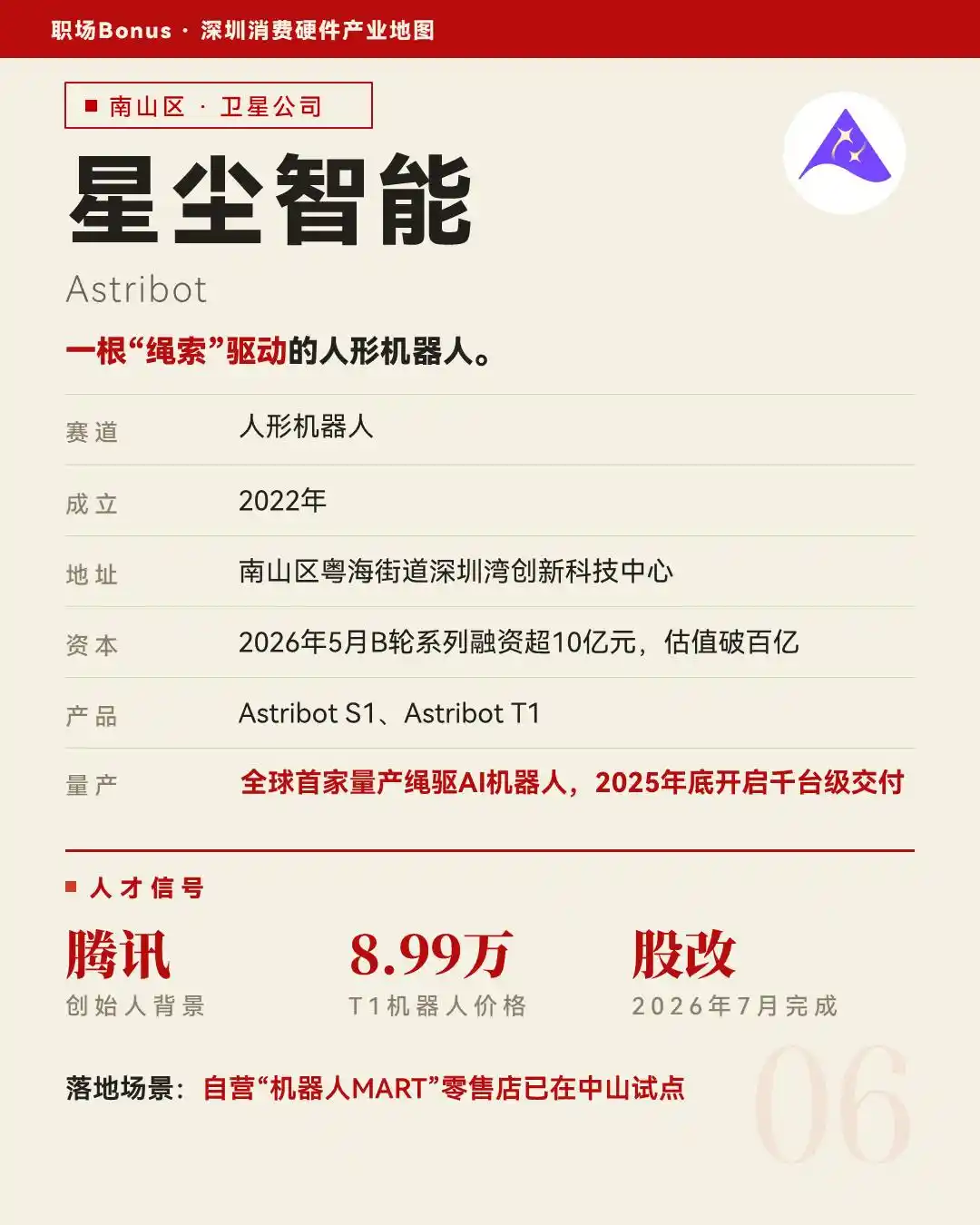
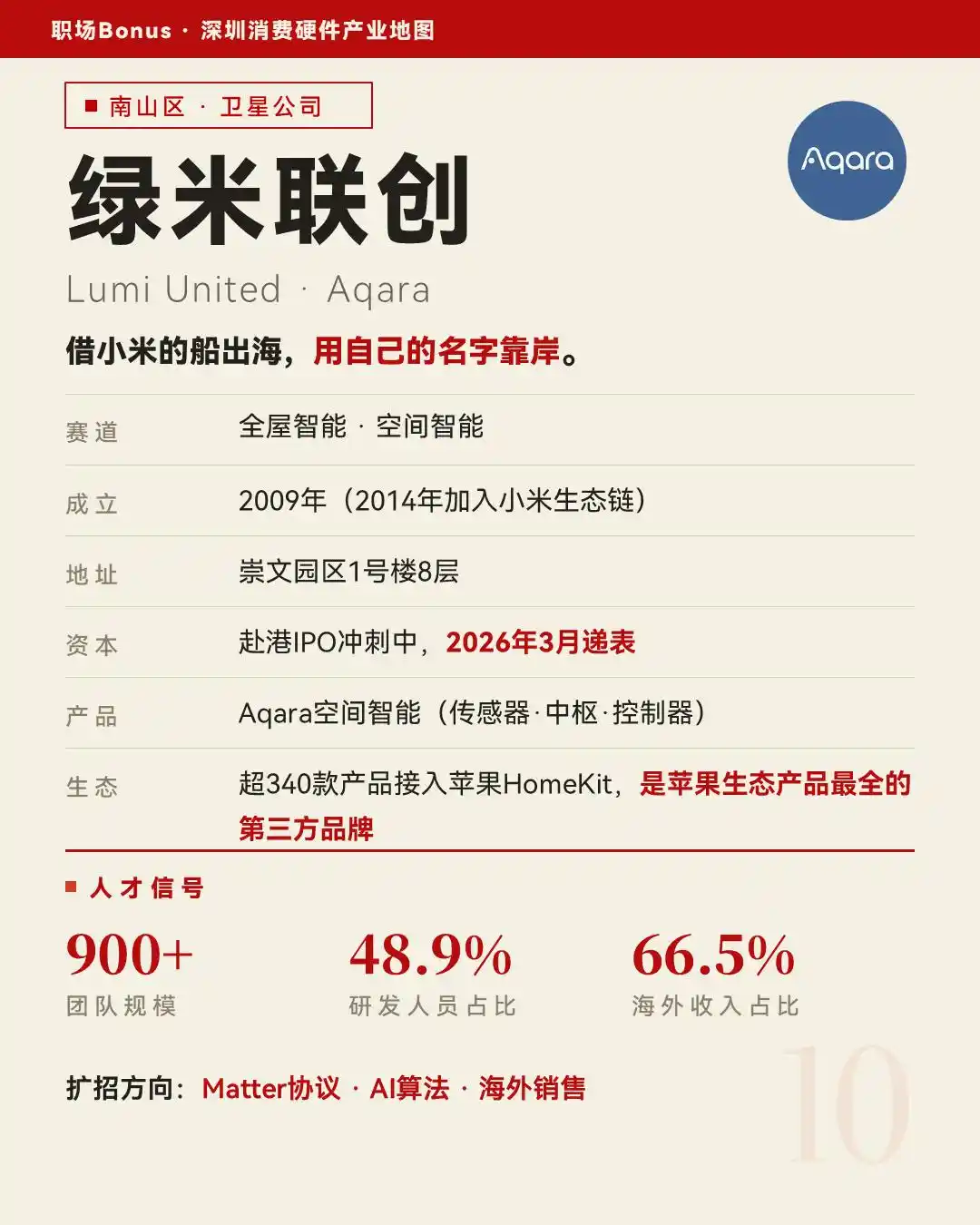
Five kilometers east of Shahe West Road, in the Chongwen Area of Tanglang Nanshan Zhiyuan Park, focused on attracting "key projects in integrated circuits, artificial intelligence, internet, universities, and research institutions," with a construction area of about 179,000 square meters. The same building, the same cafeteria, the same parking lot—the industrial ecosystem here is even folded into a single elevator. In Building 1, the 8th floor houses Aqara, a smart home company originating from the Xiaomi ecosystem chain, with 460 R&D personnel, accounting for 48.9% of staff; the 19th floor is Zhilifang—an embodied AI unicorn with the title "20 Billion Unicorn."
「Workplace Bonus」(ID:ZhiChangHongLi)
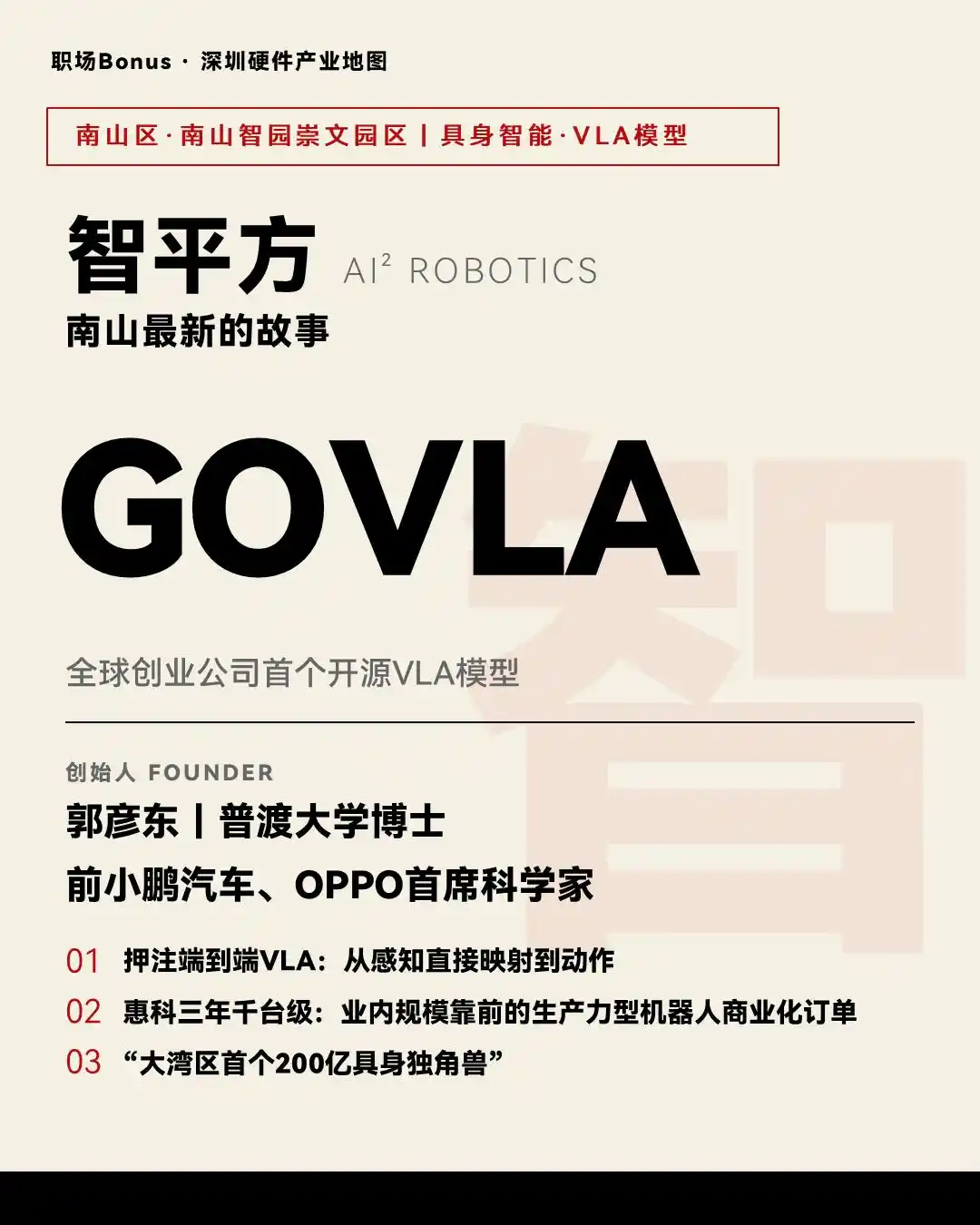
In April 2023, Dr. Guo Yandong from Purdue University founded Zhilifang. Guo Yandong has experienced the entire cycle of the smart terminal wave, having been a researcher at Microsoft's core US AI team, and chief scientist at Xpeng Motors and OPPO. In its early days, the company bet on a then non-mainstream technical route: end-to-end VLA models, achieving direct, unmediated mapping from robot perception to action.
In June 2024, Zhilifang open-sourced GOVLA0.0 (RoboMamba), the first VLA model from a global startup company; in September 2025, its self-built production line began operation, signing a three-year thousand-unit-level equipment order with HKC, the world's third-largest panel manufacturer, one of the industry's largest commercial contracts for productivity robots. Entering 2026, the company further upgraded and launched the NeuroVLA brain-like model, and open-sourced the AlphaBrain Platform, a one-stop embodied AI ecosystem platform.
At the recently held 2026 World Robot Conference, Zhilifang no longer focused on stage demonstrations, directly deploying AlphaBot2 into the official souvenir shop of the exhibition hall to perform real order-taking services. The same model could handle coffee and ice cream making as well as industrial tasks like PCB board picking, conveying the message that "robots don't just go on stage; they must go on duty."
If the GOVLA end-to-end route can achieve full-scene commercial validation, early employee stock options at Zhilifang will have considerable upside potential; however, if this technical path proves invalidated by the market, the company's substantial early R&D investment will face risks. The team combines both academic and engineering genes, with R&D benchmarked against top AI conference standards, supported by a self-built thousand-card computing cluster for model training. Campus recruitment is open for multiple directions including algorithms, motion control, multimodal, and hardware engineering.
「Workplace Bonus」(ID:ZhiChangHongLi)
「Workplace Bonus」(ID:ZhiChangHongLi)
「Workplace Bonus」(ID:ZhiChangHongLi)
「Workplace Bonus」(ID:ZhiChangHongLi)
「Workplace Bonus」(ID:ZhiChangHongLi)
「Workplace Bonus」(ID:ZhiChangHongLi)
「Workplace Bonus」(ID:ZhiChangHongLi)
「Workplace Bonus」(ID:ZhiChangHongLi)
「Workplace Bonus」(ID:ZhiChangHongLi)
「Workplace Bonus」(ID:ZhiChangHongLi)
「Workplace Bonus」(ID:ZhiChangHongLi)
「Workplace Bonus」(ID:ZhiChangHongLi)
「Workplace Bonus」(ID:ZhiChangHongLi)
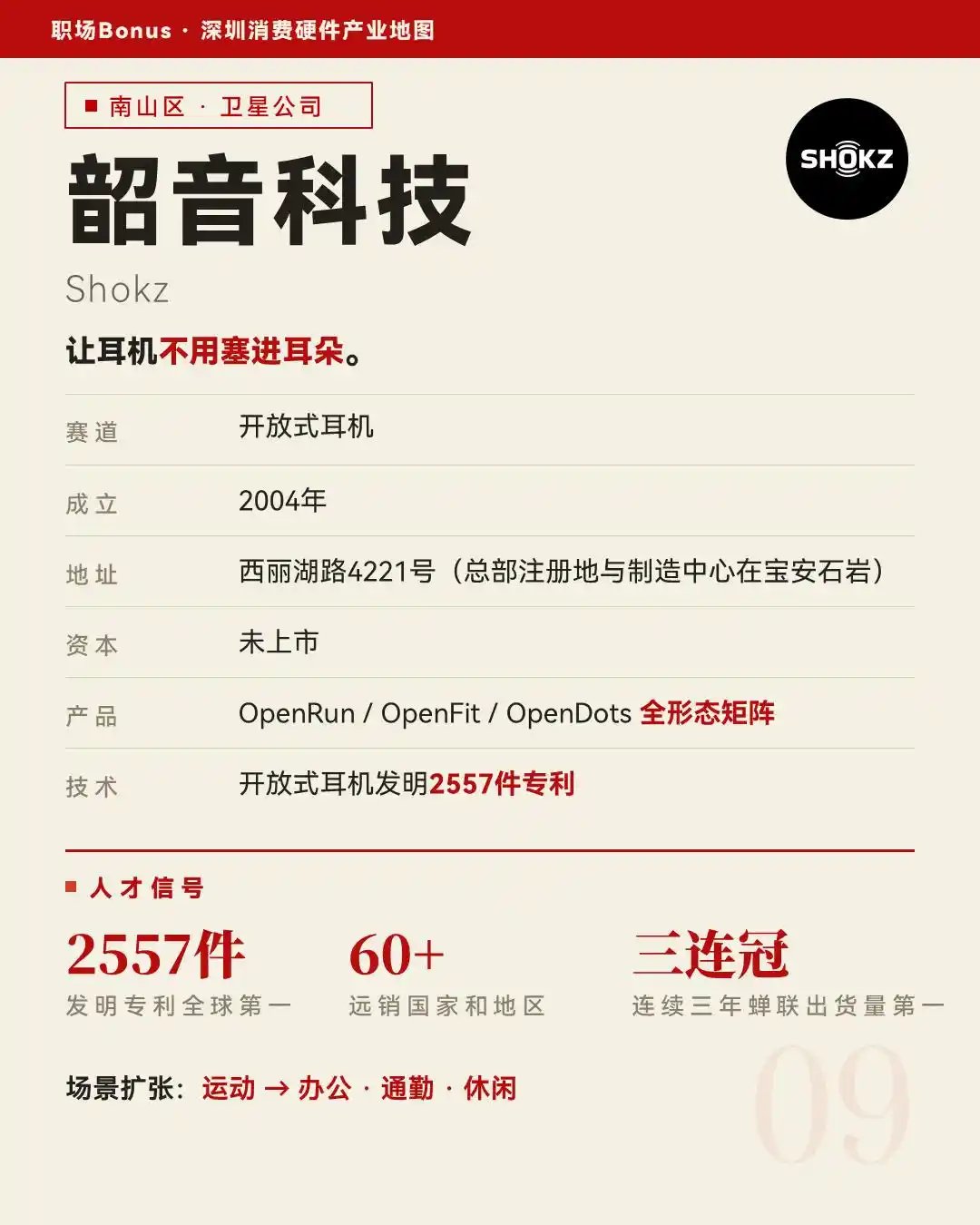
About 1 kilometer east of Shahe West Road, at No. 4221 Xili Lake Road, is the R&D center of Shokz Technology. Its registered headquarters and manufacturing center are in the Shancheng Industrial Zone, Shiyan Street, Bao'an District, but its R&D team is concentrated on Xili Lake Road in Nanshan. This "R&D in Nanshan, manufacturing in Bao'an" dual-district layout was a typical past model for Shenzhen hardware companies.
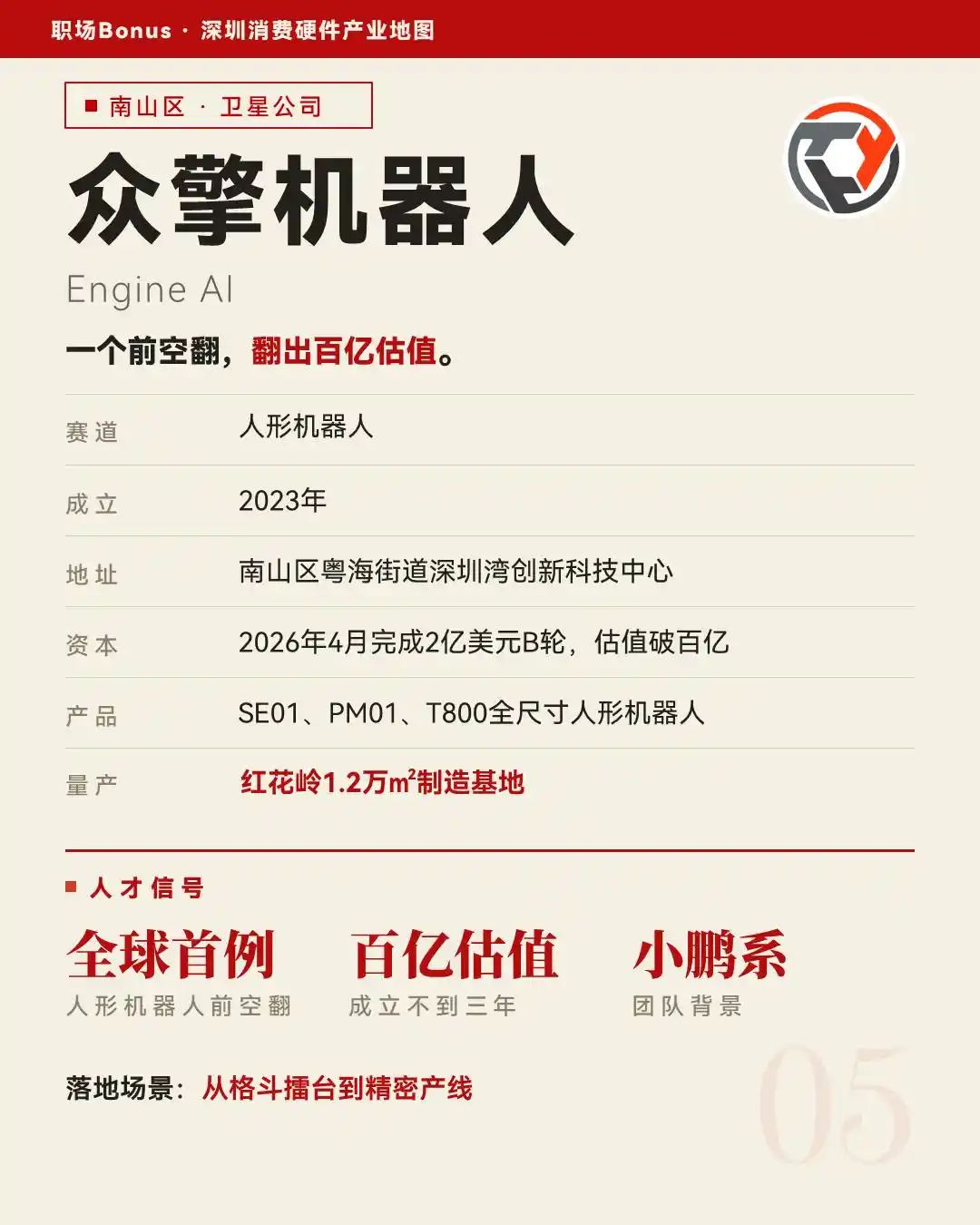
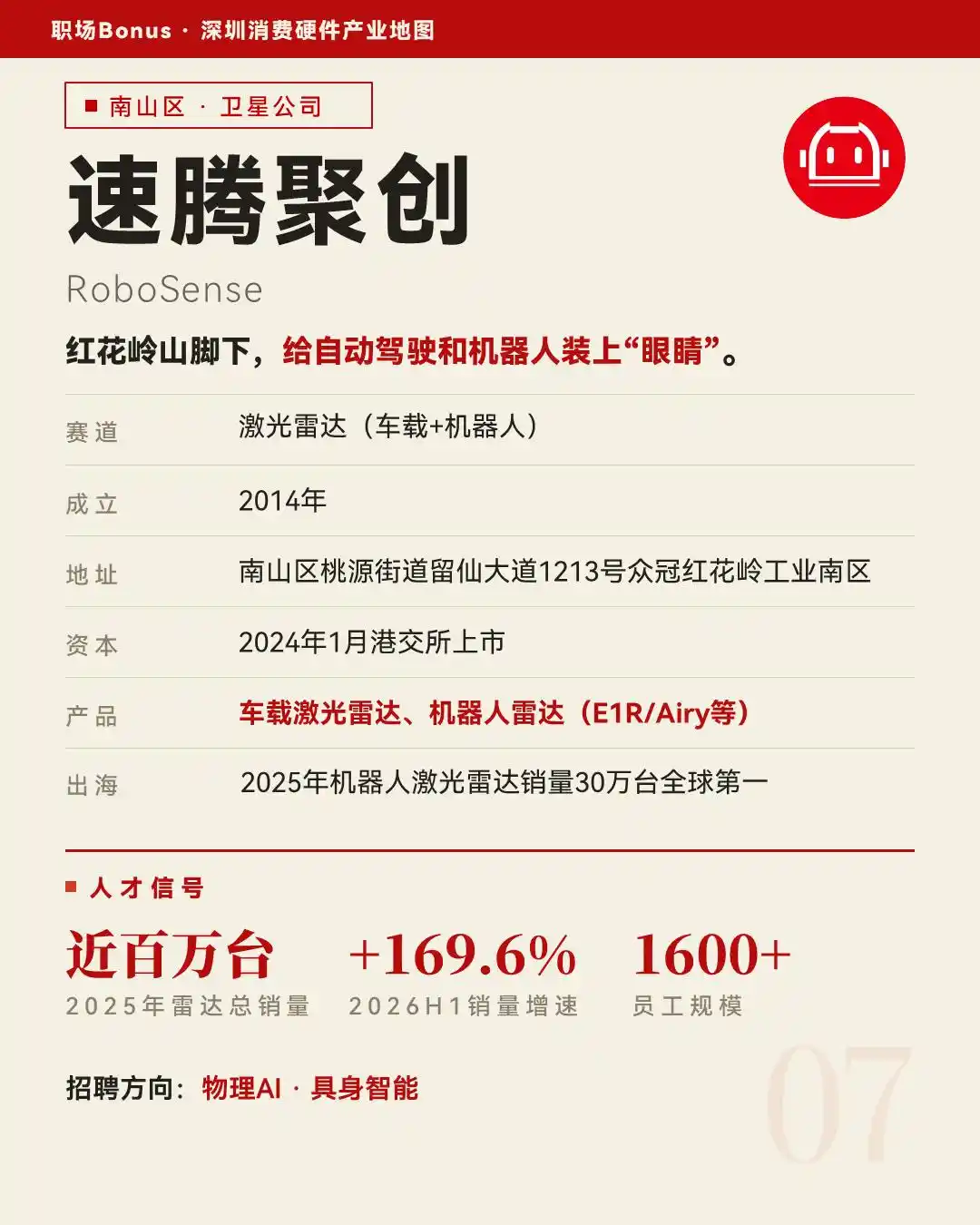
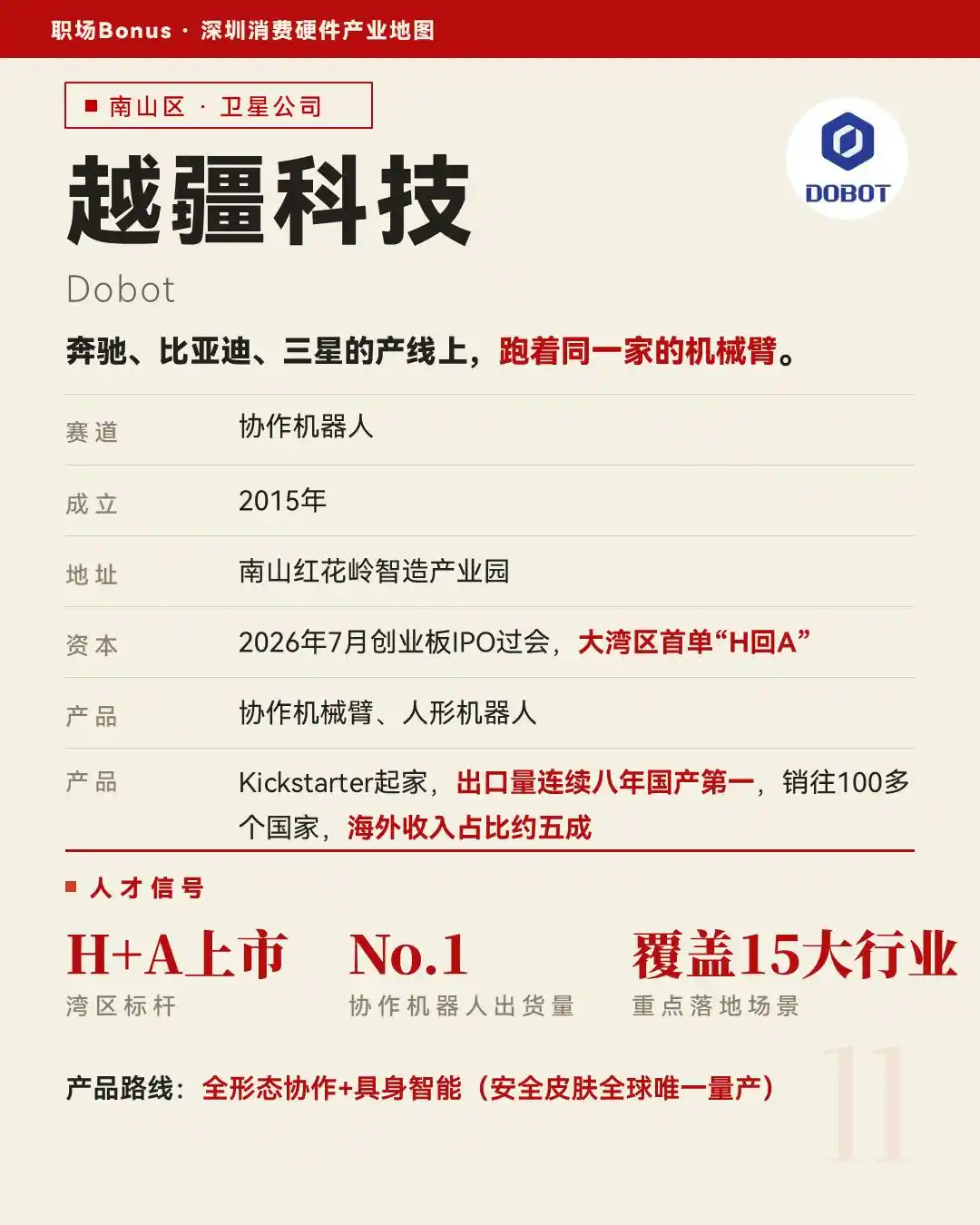
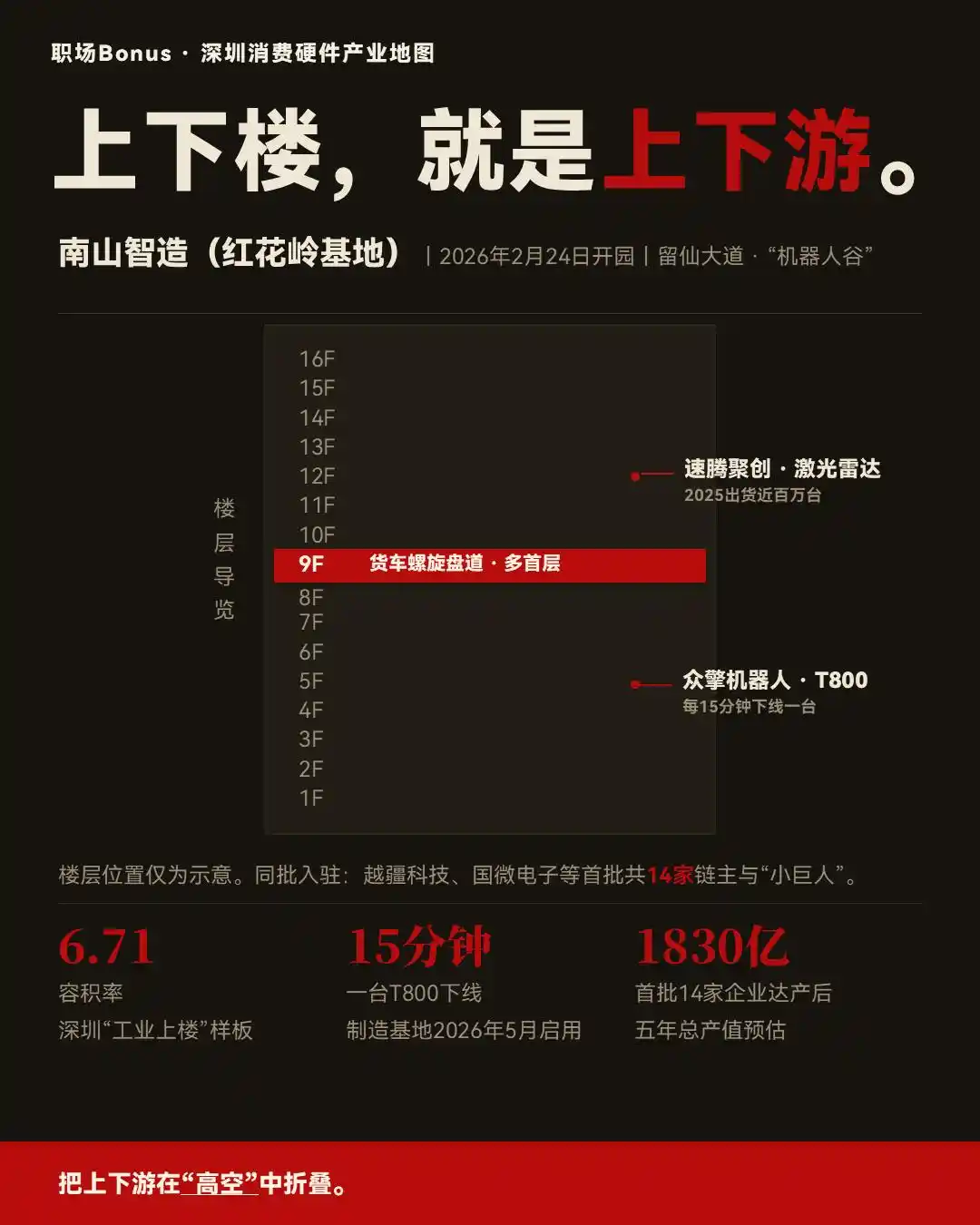
The Nanshan Zhizao Honghualing Base has broken this perception. Located northwest of the Liuxian Avenue corridor, the base officially opened on February 24, 2026, with the first batch including 14 anchor enterprises and "little giants" like RoboSense, Dobot, Zhongqing Robotics, and Guowei Electronics. This is a benchmark project for industrial vertical development in Shenzhen: 16-story high-standard factory buildings, with spiral ramps allowing trucks direct access to the 9th floor, achieving a plot ratio as high as 6.71.
「Workplace Bonus」(ID:ZhiChangHongLi)
In May 2026, Zhongqing's Honghualing production line went into operation, producing one T800 humanoid robot every 15 minutes; RoboSense's LiDAR shipments reached nearly a million units in 2025, with 330,000 units in Q1 2026 alone, a year-on-year increase of over 200%. Projections show that when all 14 initial enterprises reach full production capacity within five years, the total output value will exceed 183 billion yuan. R&D remains in Liuxiandong, mass production is compressed within a one-kilometer radius, and Nanshan's industry chain is gradually closing the loop.
Heading south along Shahe West Road to the coast is the so-called "Most Productive Street," Yuehai Street: on about 14 square kilometers of land, 103 listed companies are clustered, averaging over 7 per square kilometer. Tencent's Seafront Towers and Baidu International Building are neighbors, while Xiaomi's Shenzhen International Headquarters and ByteDance's building face each other across the street.
Hardware companies are also highly folded here. In the same building at Shenzhen Bay Innovation Technology Center, the 26th floor houses Zhongqing Robotics, and the 68th floor houses Xingchen Intelligent, two humanoid robot unicorns sharing an elevator; Bambu Lab's registered headquarters is also located in the United Headquarters Building here. The distance from Liuxiandong to here is only a 20-minute drive.
Zooming out, you'll discover a pattern: in Nanshan District, talent mobility radius is extremely short. Changing jobs within the same area doesn't require moving apartments or even changing cafeterias. A headhunter who worked in Liuxiandong for 5 years said that for engineers here, the default option for a new job is "within e-bike range." The 3-kilometer radius around Liuxiandong is a gold zone for headhunters; one afternoon tea can connect three unicorn HRDs.
Nanshan is the industrial brain of Shenzhen's hardware sector and one of the core innovation sources for domestic consumer hardware and embodied AI. Compared to other districts in Shenzhen, the industrial ethos here is more radical. Traditionally, the core discussions among enterprises have never been about yield rate, capacity, and delivery, but rather about technical routes, iteration boundaries, and industry standards.
● Bao'an: Brand Headquarters & Manufacturing Hub
There is a clear "contour line" on Bao'an's hardware industry map. The Bao'an Central Area near Qianhai is for brand headquarters. Heading north, as the terrain rises, factories become denser, entering Shiyan, which is the foundation of Shenzhen's traditional manufacturing industry.
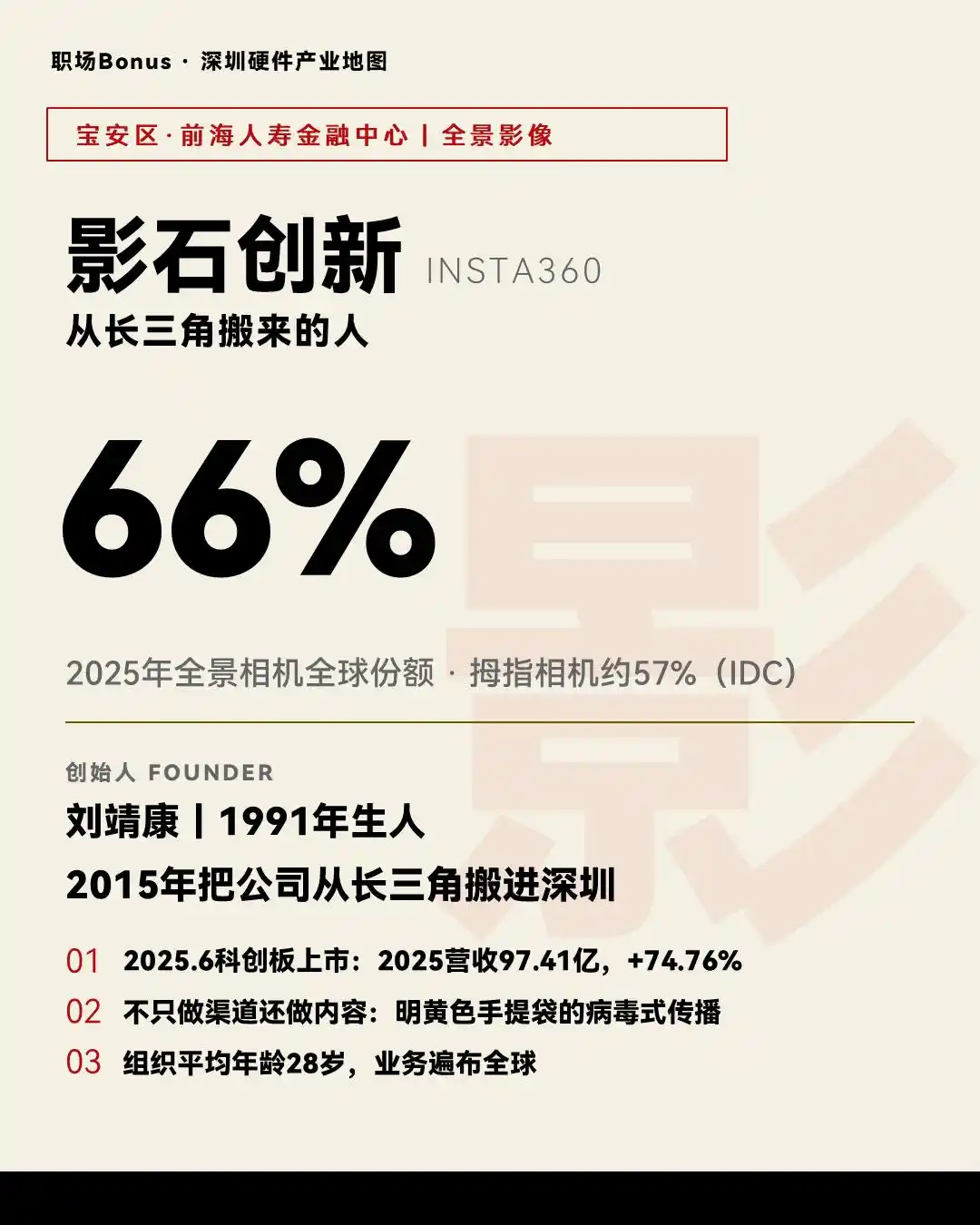
In Building T1, Qianhai Life Financial Center, Xingye Road, Xin'an Subdistrict, is the headquarters of Insta360. Founder Liu Jingkang moved the entire company from the Yangtze River Delta to Shenzhen in 2015, primarily due to bottlenecks in mass-producing panoramic camera optical modules. Shenzhen's complete supply chain provided a full-process solution from blueprint to mass production.
「Workplace Bonus」(ID:ZhiChangHongLi)
In June 2025, Insta360 listed on the STAR Market; annual revenue was 9.741 billion yuan, a year-on-year increase of 74.76%. According to IDC, its global market share for panoramic cameras was 66%, and for thumb-sized cameras 57%, with net profit attributable to shareholders of 929 million yuan. Insta360's core strategic distinction from traditional hardware companies: not limiting itself to heavy offline channel distribution, but simultaneously pursuing a content-driven global route. Relying on CES offline brand exposure, viral social media campaigns overseas, and training AI editing engines with millions of user data points, it cultivated the panoramic camera category from scratch to become the global leader.
Its long-term confrontation with DJI is, in a sense, an inevitable path as it moves from a niche category to full-platform competition.
Compared to the seriousness and orderliness of DJI's organizational culture, as a challenger, Insta360 chose a more "relaxed" route, thereby gaining growth momentum and talent attraction. According to *China Entrepreneur Magazine*, Insta360 has a very flat organizational structure, with high tolerance for daily work errors, and easy conditions for large cross-role transfers; "new graduates can independently lead a product line in less than two years, reporting directly to Liu Jingkang." Additionally, the company regularly holds internal competitions, supports brand incubation, and even encourages internal office romances.
Insta360's 2025 revenue was 9.741 billion yuan, but it fell into a pattern of increasing revenue without increasing profit—in Q3 2025, Insta360's revenue grew 92.64% year-on-year, but for the full year, it showed increased revenue without increased profit, with net profit attributable to shareholders decreasing by 6.62% year-on-year. By Q1 2026, revenue was 2.481 billion yuan, an 83.11% year-on-year increase, but net profit attributable to shareholders was only 84.62 million yuan, halved by 52.02% year-on-year.
Yuan Yue, head of Insta360 China, once stated in public reports that the company's priority order is employee development first, customer value second, and shareholder returns third. "Not that we aren't concerned, there is pressure, but we cannot let financial report data cause our actions to become distorted."
The Insta360 team's average age is 28, with extremely strong execution efficiency. Its business spans the globe, and the value of industry resumes continues to rise with brand expansion. The trade-off is that under rapid expansion, the training system and salary structure are imperfect, with a tight work pace and long-term high pressure. Whether the internal management system can keep up with scale expansion is both a core issue for practitioners to weigh and a long-term concern for the capital market.
「Workplace Bonus」(ID:ZhiChangHongLi)
「Workplace Bonus」(ID:ZhiChangHongLi)
「Workplace Bonus」(ID:ZhiChangHongLi)
「Workplace Bonus」(ID:ZhiChangHongLi)
「Workplace Bonus」(ID:ZhiChangHongLi)
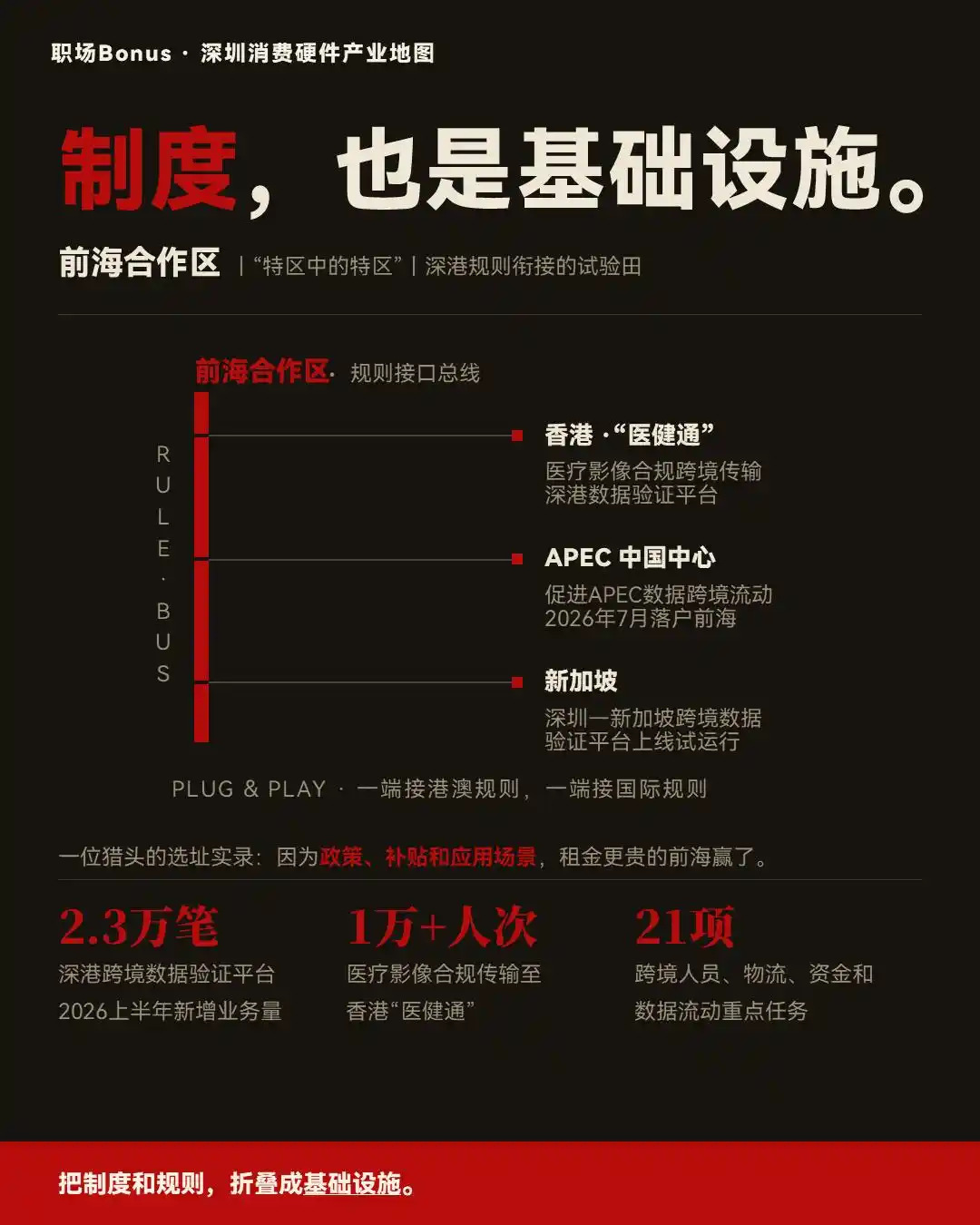
Insta360's home, Qianhai Life Financial Center, is within the radiation range of the Qianhai Cooperation Zone[1]. In the industry's early perception, robot companies often chose lower-rent Xili, but an industry source who visited the Qianhai Administrative Bureau told *Workplace Bonus* that many companies proactively move into higher-rent Qianhai, valuing one-stop government services, special industry subsidies, and early-mover application scenarios. Qianhai is advancing special planning for the robot sector, with details not yet publicly disclosed.
「Workplace Bonus」(ID:ZhiChangHongLi)
In July 2026, the China Center for AP EC Data Cross-Border Flow Cooperation was officially announced to be located in Qianhai. This means cross-border data flow has been upgraded from local pilot practices in Qianhai to a multilateral cooperation issue for APEC economies. This center is a landmark achievement of China's host year for AP EC 2026, jointly established by the Cyberspace Administration of China and the Shenzhen Municipal Government, responsible for functions like policy research, rule alignment, and industry services.
Leveraging its unique location adjacent to Hong Kong, Qianhai has already implemented pioneering cases like Shenzhen-Hong Kong cross-border data verification. The related DDTP verification model has also been submitted as a Chinese proposal for discussion within the AP EC Digital Economy mechanism, receiving responses from multiple parties.
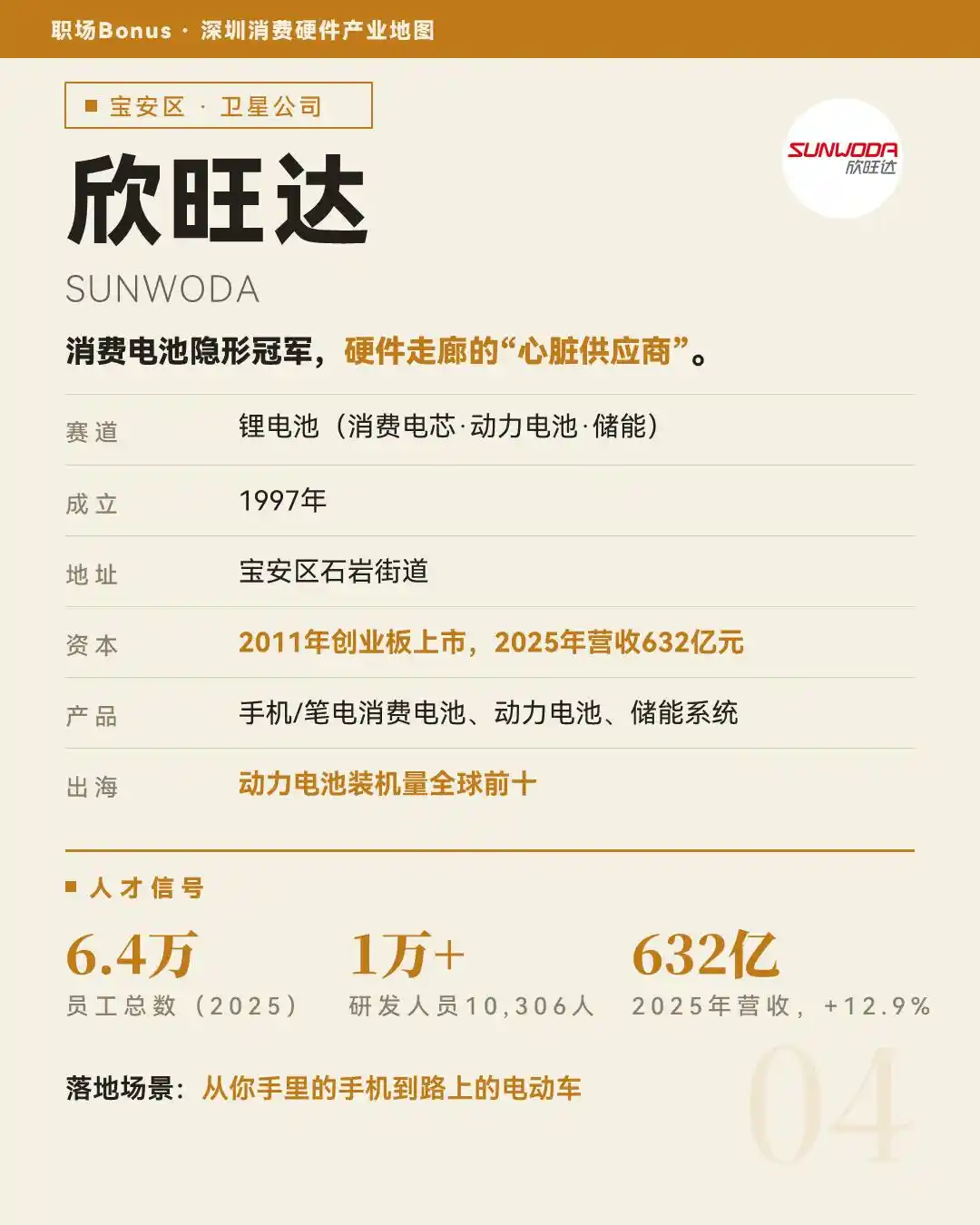
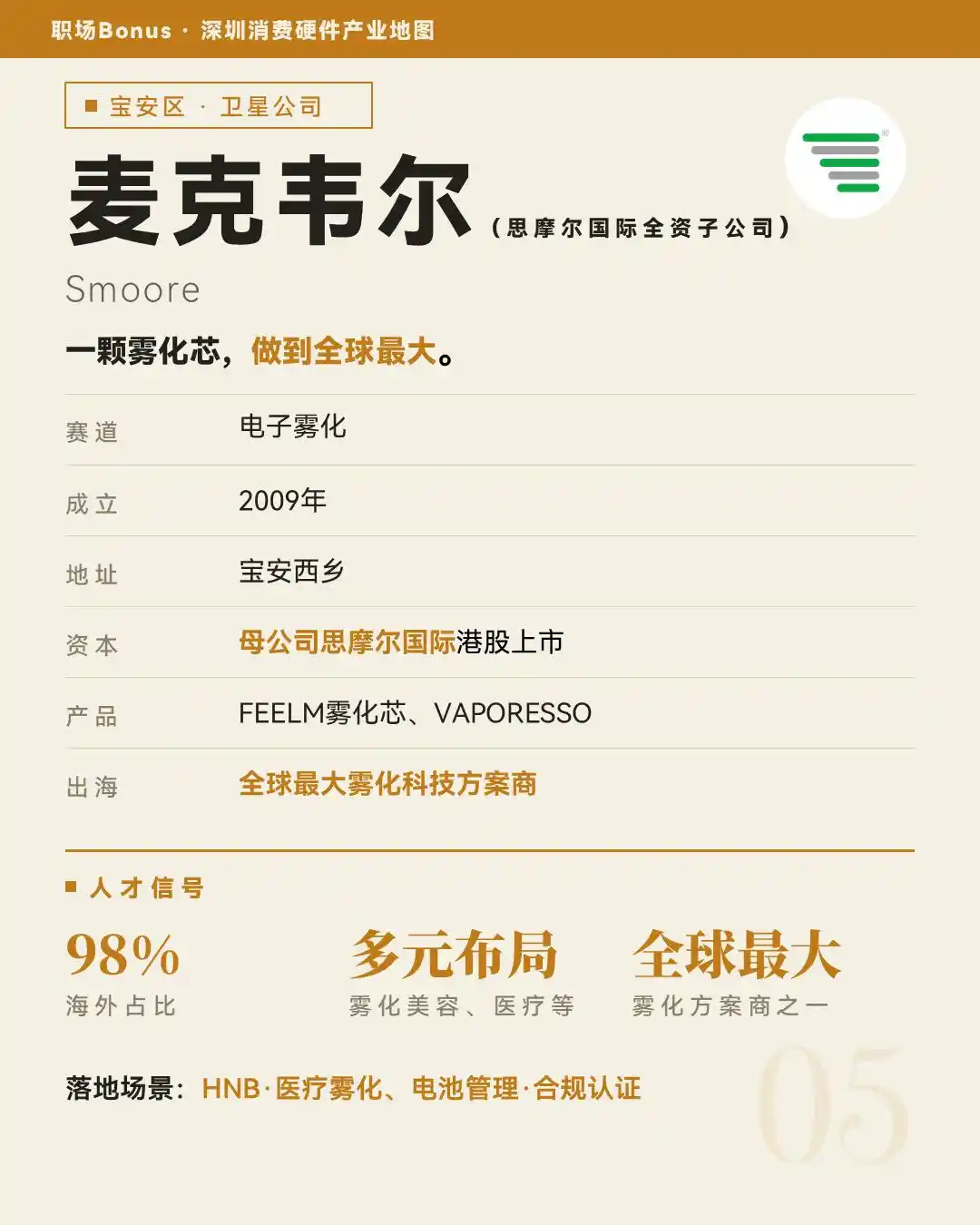
Extending north along the industry contour line, Bao'an gathers supply chain giants like Luxshare Precision and Pegatron, while Shokz's entire mass production plant is hidden in Building 26 of the Shancheng Industrial Zone in Shiyan. A consensus on collaboration has formed in Shenzhen's hardware circle: go to Nanshan for cutting-edge technology cooperation, head straight to Shiyan to verify capacity, yield rate, and delivery cycles. Shiyan doesn't participate in top-level strategy formulation but directly determines the delivery stability of end products. Additionally, streets like Xin'an and Fuyong also host a large amount of manufacturing capacity that receives R&D results from Nanshan.
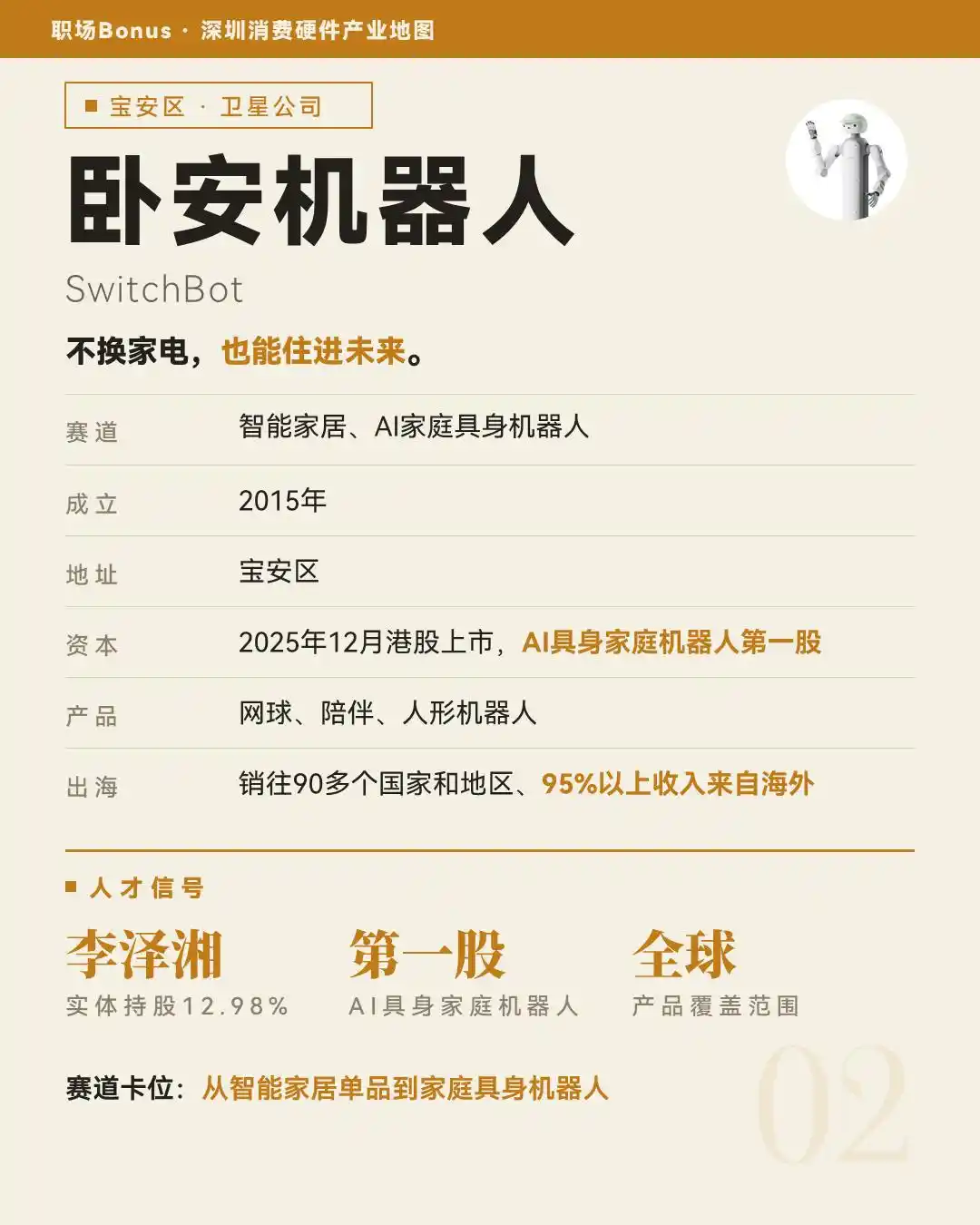
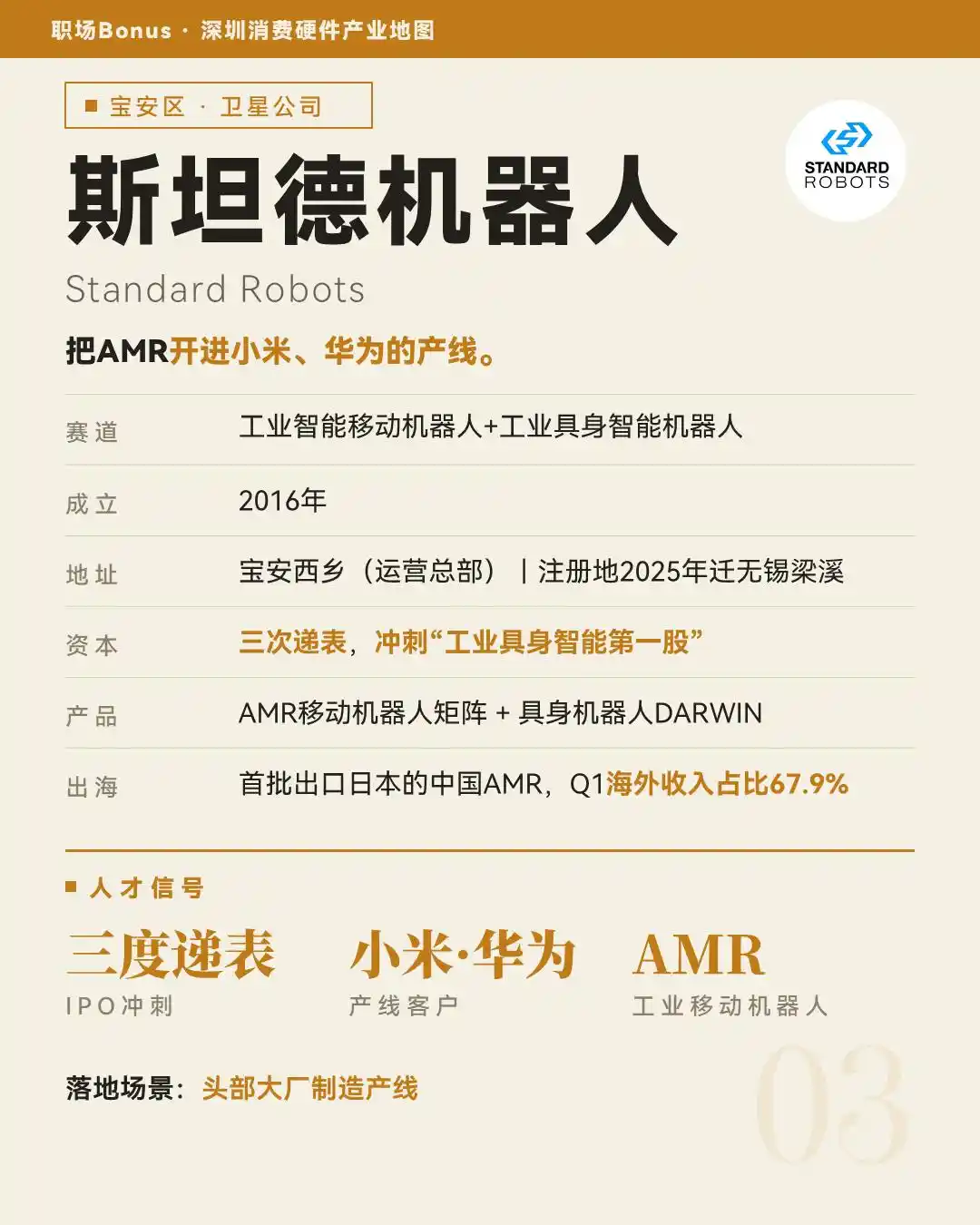
Compared to Nanshan's innovation-source ethos, Bao'an District is more like an overlay of brand headquarters base and manufacturing hub. Insta360 and Woan represent mature consumer brands that have passed technical validation, with core propositions being scale expansion and global operations; the Shiyan area handles mass production.
[1] Qianhai Cooperation Zone: Qianhai is an economic functional zone, with an independent statutory body, the Qianhai Authority (a dispatched agency of the Shenzhen Municipal Government), responsible for zone policy, investment attraction, and development; basic administrative matters like household registration, subdistricts, civil affairs, and public security still fall under the jurisdiction of Nanshan and Bao'an districts, representing a typical separation of administrative and economic zone management.
● Futian: Super Headquarters & Huaqiangbei
Futian District's hardware industry has two poles: at the pinnacle is Honor's super headquarters; at the foundation is Huaqiangbei's component market. The vertical distance between them is only 8 kilometers, spanning three industrial generations.
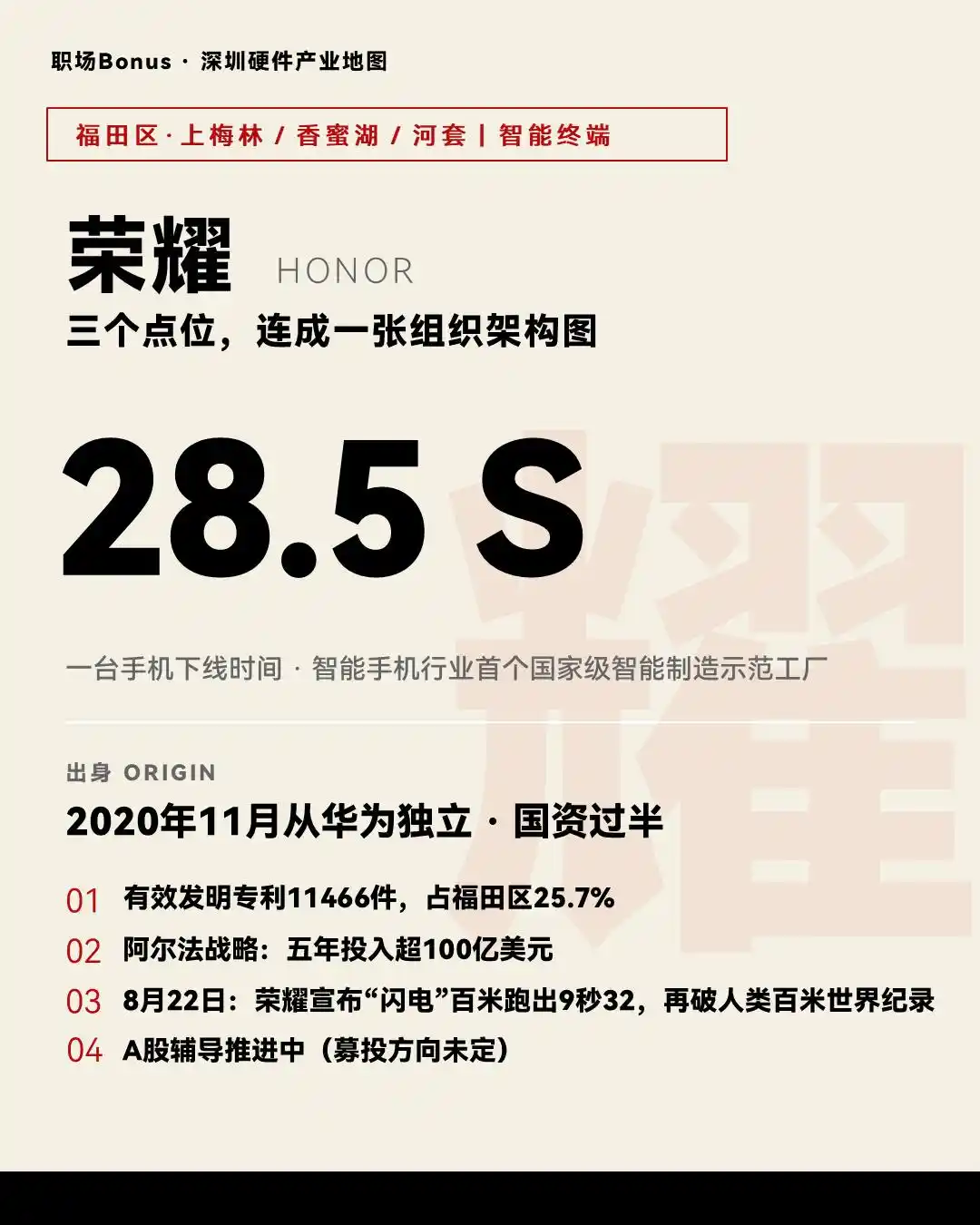
Honor's three office locations in Futian precisely piece together its complete organizational structure.
「Workplace Bonus」(ID:ZhiChangHongLi)
The northernmost point, Shenzhen New Generation Industrial Park in Shangmeilin, houses the core R&D system. As the first park settled after its independence from Huawei in November 2020, the asset handover to full staff move-in took two months, supported by a special task force from the Futian District Government throughout. Part of Buildings 1-4 accommodate R&D teams. In 2024, it held 11,466 valid invention patents, accounting for 25.7% of Futian's total patents.
Five kilometers south, at the 34th floor, Block A, Building 6, Shenye Zhongcheng, Xiangmihu, is Honor's global headquarters. Officially opened in August 2021, its registered address and global marketing and sales systems are all concentrated here. The underlying logic of this clear division: R&D stays close to talent and supply chain clusters, while the global headquarters is located downtown, establishing top-level brand positioning.
The easternmost area, the Hetao Shenzhen-Hong Kong Science and Technology Innovation Cooperation Zone, is responsible for frontier exploration and a key foothold for Honor's transformation into an AI terminal ecosystem. In 2023, Honor established a research lab here, which later became a core pillar of its "Alpha Strategy": investing over 100 billion USD over five years, covering products like phones, tablets, and robots.
At MWC Barcelona in March 2026, Honor released its first humanoid robot and robot phone Robot Phone; at the Beijing Robot Half Marathon in April, "Lightning" won the championship and "Yuanqizai" took best gait, bringing Honor's robot product matrix into public view. On August 22nd, at the second World Humanoid Robot Games, "Lightning" broke the human record in the 100-meter dash. Among them, the consumer-market-targeted "Yuanqizai" plans small-batch production in 2026, first entering Honor stores for promotion and customer guidance.
Honor's core team inherited Huawei's talent cultivation model and compensation framework. High state-ownership brings long-term strategic patience. Its 2026 IPO tutoring is ongoing, with fundraising scale undecided. However, the drawbacks of a scaled-up group are also prominent: a new robot business with 200 people has limited voice within a ten-thousand-person organization, with lengthy decision chains and internal resource bargaining becoming routine.
Geographically, the frontier R&D base is in the Hetao area, the decision-making hub remains in Xiangmihu, and the execution team is rooted in Shangmeilin. The commuting efficiency between these three points directly determines the cycle from project initiation to execution and also affects how effectively grassroots employee input is conveyed.
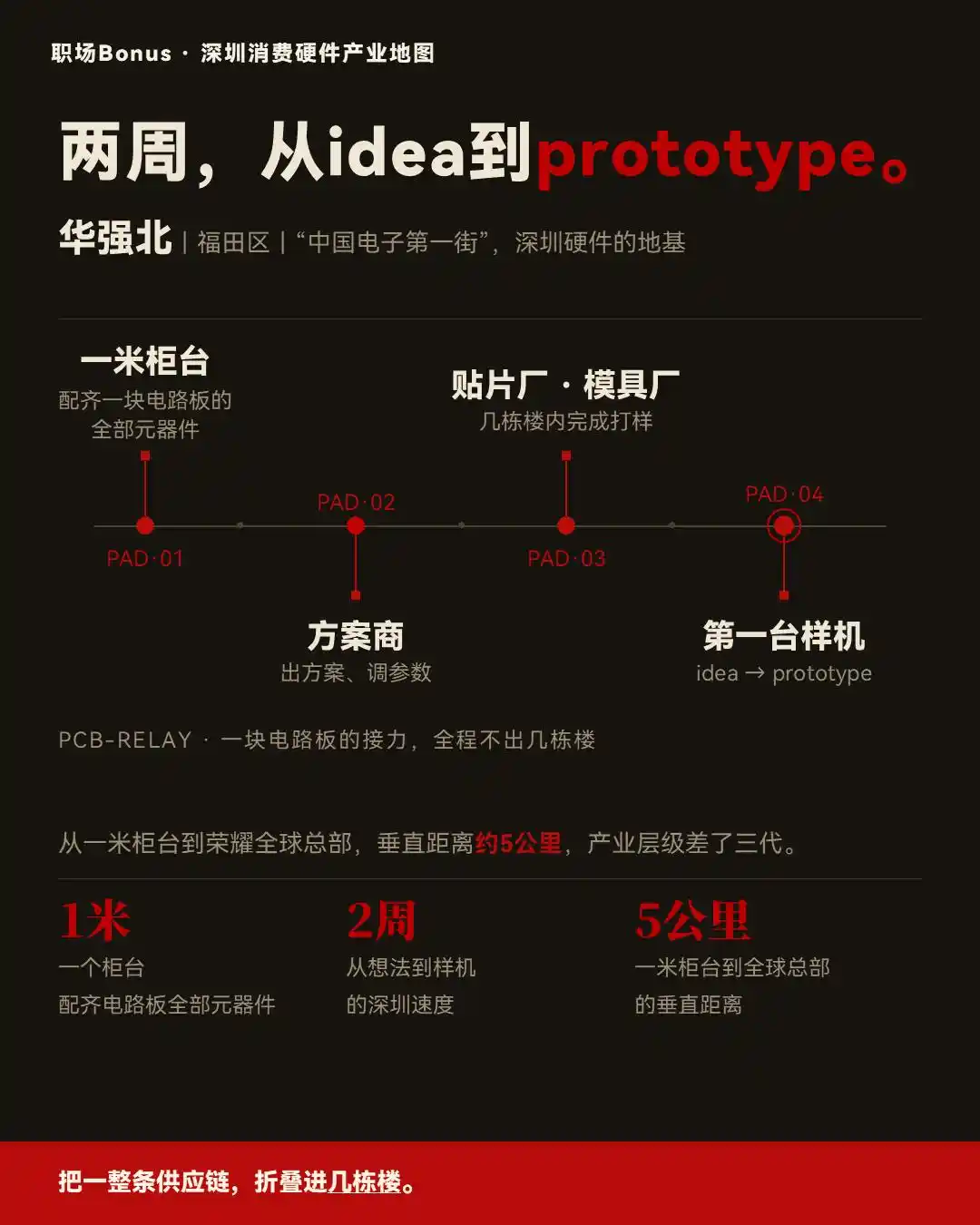
Eight kilometers east of Xiangmihu is the capillary network of Shenzhen's hardware ecosystem—Huaqiangbei. One-meter counters supply all components for a circuit board, with solution providers, assembly houses, and mold makers completing the entire process relay within a few buildings. Shenzhen's "two weeks from idea to prototype" iteration speed largely relies on Huaqiangbei's grassroots ecosystem.
「Workplace Bonus」(ID:ZhiChangHongLi)
Honor represents the pinnacle of Shenzhen's hardware, controlling top-level strategy and global brand voice; Huaqiangbei represents the foundational root, providing components, rapid prototyping, and lightweight, low-cost hardware solutions for all entrepreneurs. As Shenzhen's core CBD, Futian does not host large-scale mass production OEM bases. One pole determines where the industry is heading; the other determines how quickly an idea can take shape.
● Longgang District: Huawei Ecosystem & The Second Curve
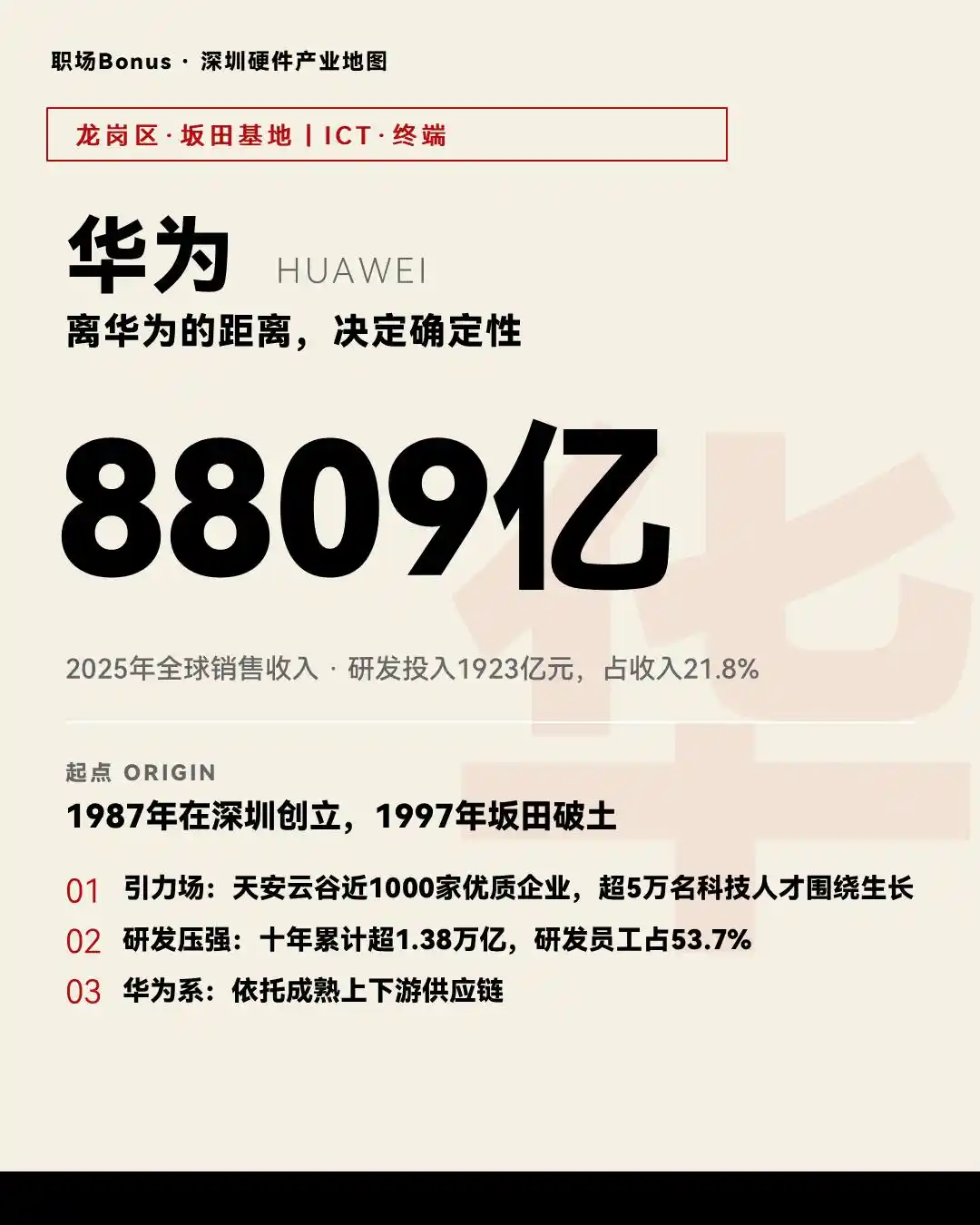
The largest gravitational core in Longgang's hardware map is Huawei.
「Workplace Bonus」(ID:ZhiChangHongLi)
The Bantian Science and Technology City, centered around Tian'an Cloud Valley, has grown entirely around Huawei. Since Huawei's Bantian base started construction in 1997, nearly 30 years later, Huawei is like a planet, pulling the entire Bantian area into its gravitational orbit. The career histories of entrepreneurs in this area are highly uniform: leaving the Huawei system to start businesses leveraging mature upstream and downstream supply chains is the most recognizable path in Longgang.
Tian'an Cloud Valley has gathered nearly 1,000 high-quality enterprises, with over 50,000 tech talents innovating and starting businesses here. Surrounding areas host Huawei's Consumer Business Group and Huawei Cloud's core network Bantian base. Its OPC Innovation Community, established in 2026, offers about 3,000 square meters of incubation space, with nearly a hundred OPC individuals and teams already settled. The entire Banshanggang area hosts 614 national high-tech enterprises and 287 "little giant" enterprises specializing and innovating, focusing on security, communications, electronics, and smart hardware.
Compared to Nanshan's radical "be first or be unique" innovation atmosphere, Longgang companies are overall more pragmatic. The industry consensus is "survive first, then talk about frontier innovation." Companies like Absen's LED displays, Sekorm's component distribution, and Chinasoft International's software services are often embedded in the Huawei ecosystem. Even consultancies like Accenture moving in have capturing Huawei's industrial agglomeration benefits as one of their core goals.
Of course, Bantian is now also growing a second industrial curve outside the Huawei system.
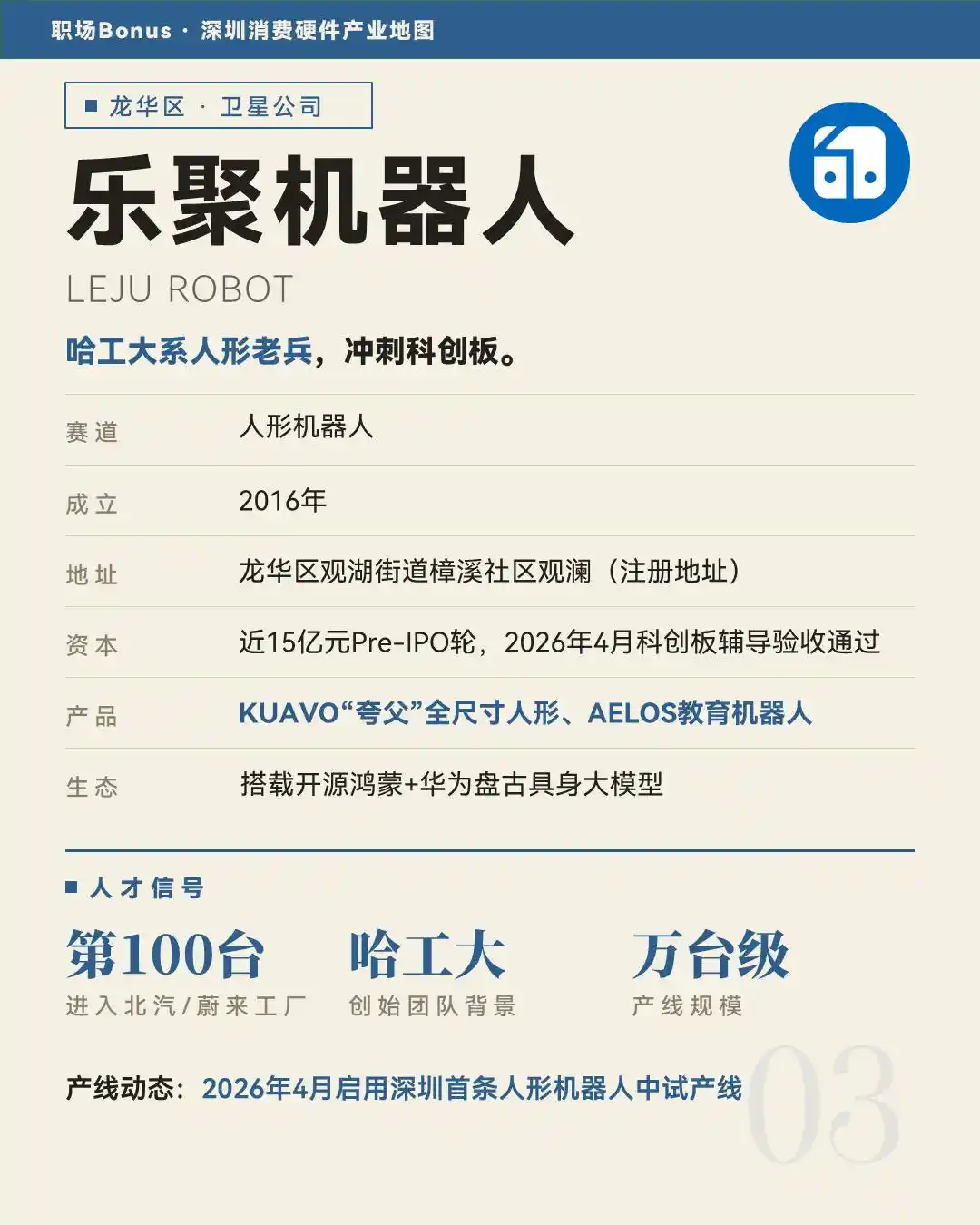
On July 28, 2025, the world's first robot 6S store landed in the Galaxy WORLD park in Bantian. Building on the traditional automobile 4S store's sales, spare parts, service, and survey functions, it added equipment leasing and personalized customization. Nearly 70 robot brands moved in at opening, with demos from Leju, Unitree, Zhuji Dynamics, Zhongqing, and others showcased together, achieving integrated demonstration and commercial testing. Centered around the 6S store, Longgang created an "Embodied Intelligent Robot Demonstration Street" within a surrounding one-square-kilometer area. Currently, Longgang has gathered over 12,700 AI and robot full-industry-chain enterprises, accounting for about one-fifth of Shenzhen's total robot cluster enterprises.
● Longhua District: Finished Product Base & OEM Foundation
Longhua's industrial logic is: Dalang handles finished product ODM/OEM, Guanlan hosts large smart manufacturing factories, Yousong accommodates both Foxconn's massive campus and office buildings for new consumer hardware brands. The daily discussion topics for Longhua enterprises fundamentally revolve around production scheduling cycles and monthly shipment volumes.
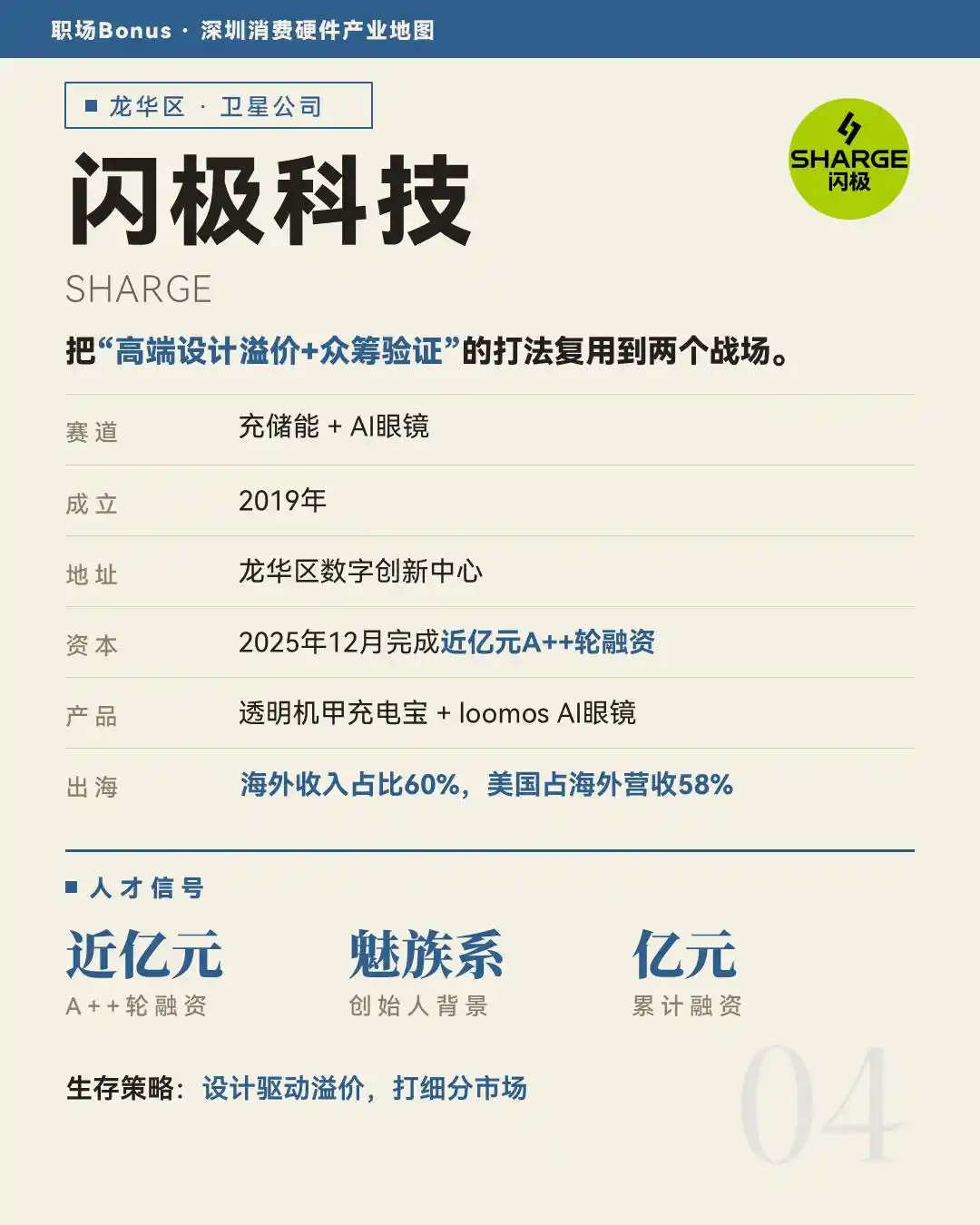
More specifically, Dalang is the global core production area for Mini PC finished products, with leaders like Minisforum, Chuanyingxin, and Gmktec concentrated here. Their products, however, reach global markets via cross-border e-commerce, often operating at full capacity. While they don't control end-brand pricing power, they directly influence global Mini PC price ranges. Guanlan gathers large smart manufacturing enterprises like Sunlord and Envicool, making it one of Shenzhen's manufacturing areas with the most complete supporting infrastructure and largest capacity scale. Yousong Community hosts two coexisting industrial forms: Foxconn's Longhua campus is an industrial town in itself, defining Longhua's OEM foundation; in office buildings within the same area, companies like Sharge pursue differentiated niche routes.
「Workplace Bonus」(ID:ZhiChangHongLi)
「Workplace Bonus」(ID:ZhiChangHongLi)
「Workplace Bonus」(ID:ZhiChangHongLi)
「Workplace Bonus」(ID:ZhiChangHongLi)
「Workplace Bonus」(ID:ZhiChangHongLi)
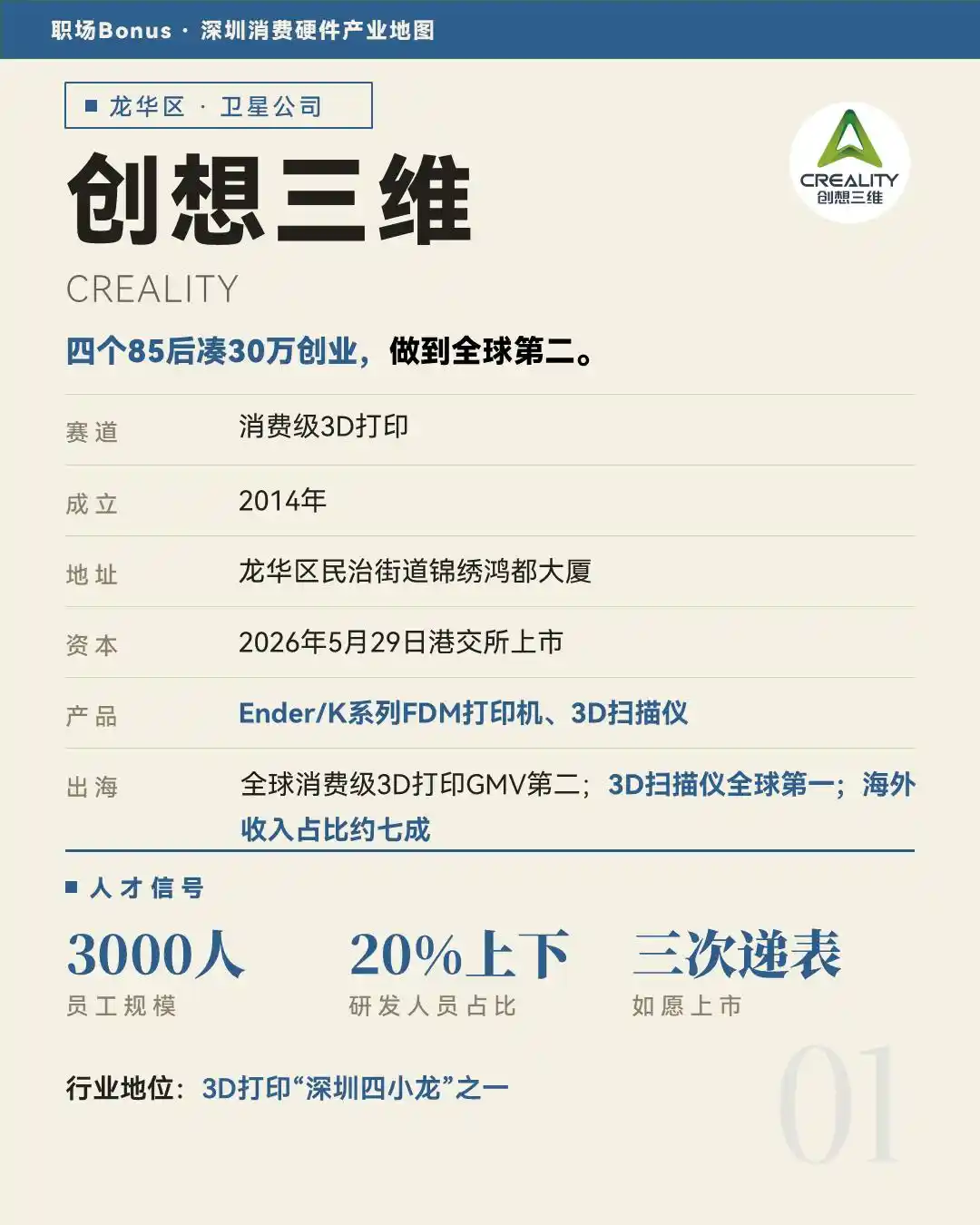
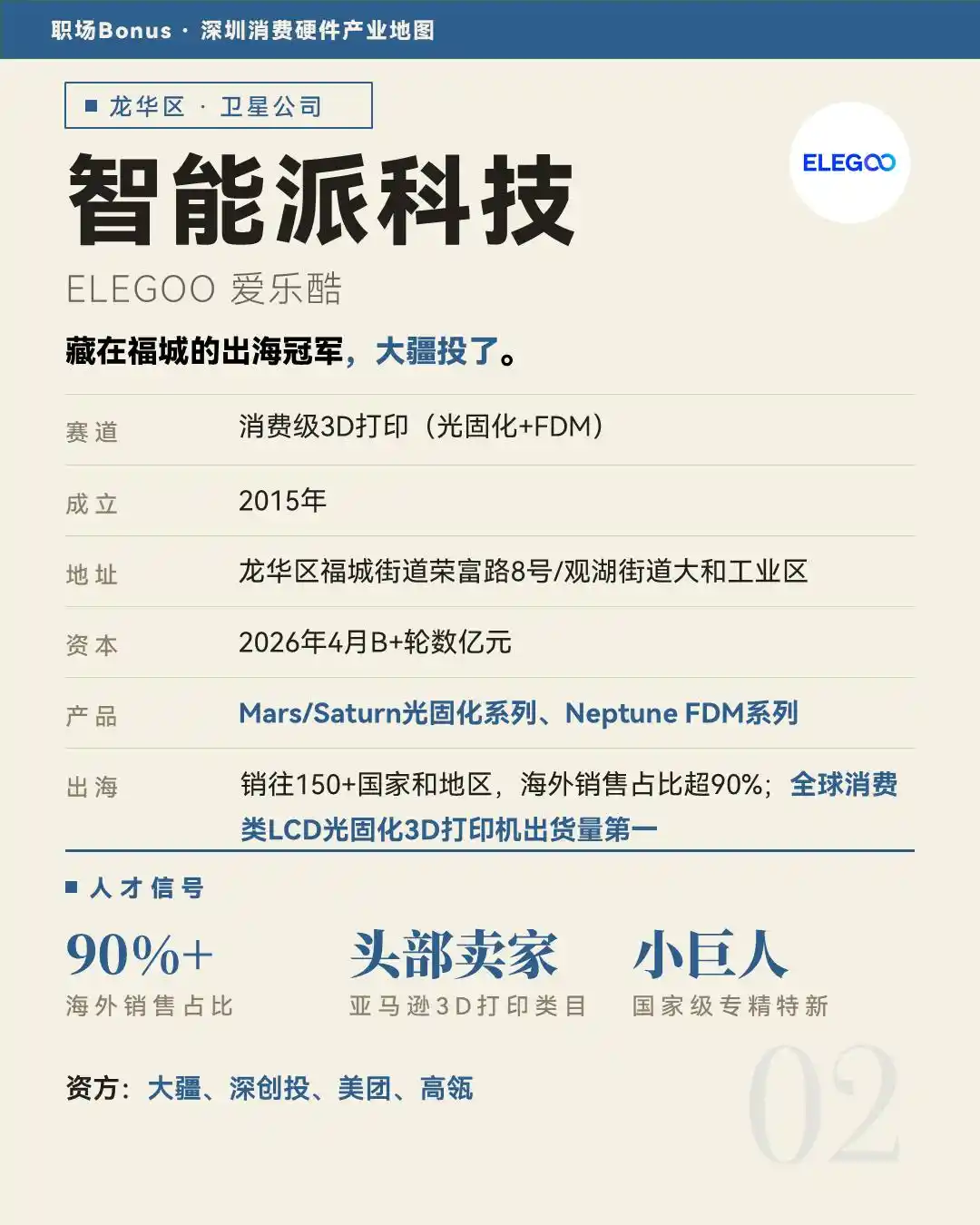
Longhua is also a key component of Shenzhen's "3D Printing Valley." Creality's headquarters is rooted in Minzhi Subdistrict, while Sovol's is located in the Dahe Industrial Zone, Guanhu Subdistrict. The latter, founded in 2015, sells products directly to end-users overseas via independent websites and Amazon, reaching over 150 countries, with overseas revenue exceeding 90%. Combined with Nanshan's Bambu Lab and Longgang's Anycubic, these four Shenzhen companies collectively hold about 90% of the global consumer 3D printing market share, with the farthest two headquarters less than an hour's drive apart.
● Guangming District & Pingshan District: The Industrial Foundation for the Next Decade
Guangming in the north and Pingshan in the east of Shenzhen jointly undertake long-term development functions: Guangming reserves foundational frontier science and technology, Pingshan hones high-end automated manufacturing capabilities. These two districts represent the next decade of Shenzhen's hardware industry.
Guangming Science City is Shenzhen's core carrier for future industries, hosting major scientific facilities for synthetic biology and brain analysis. It has over 140 synthetic biology companies with a total valuation close to 42 billion yuan. In terms of consumer hardware, Guangming's keywords are brain-computer interfaces and elderly care hardware.
Another core advantage of Guangming is its university cluster: the first phase of Sun Yat-sen University's Shenzhen campus is completed and operational, Shenzhen University of Technology has been officially approved for establishment, facilitating a complete talent cycle of local study, local entrepreneurship, and global product export.
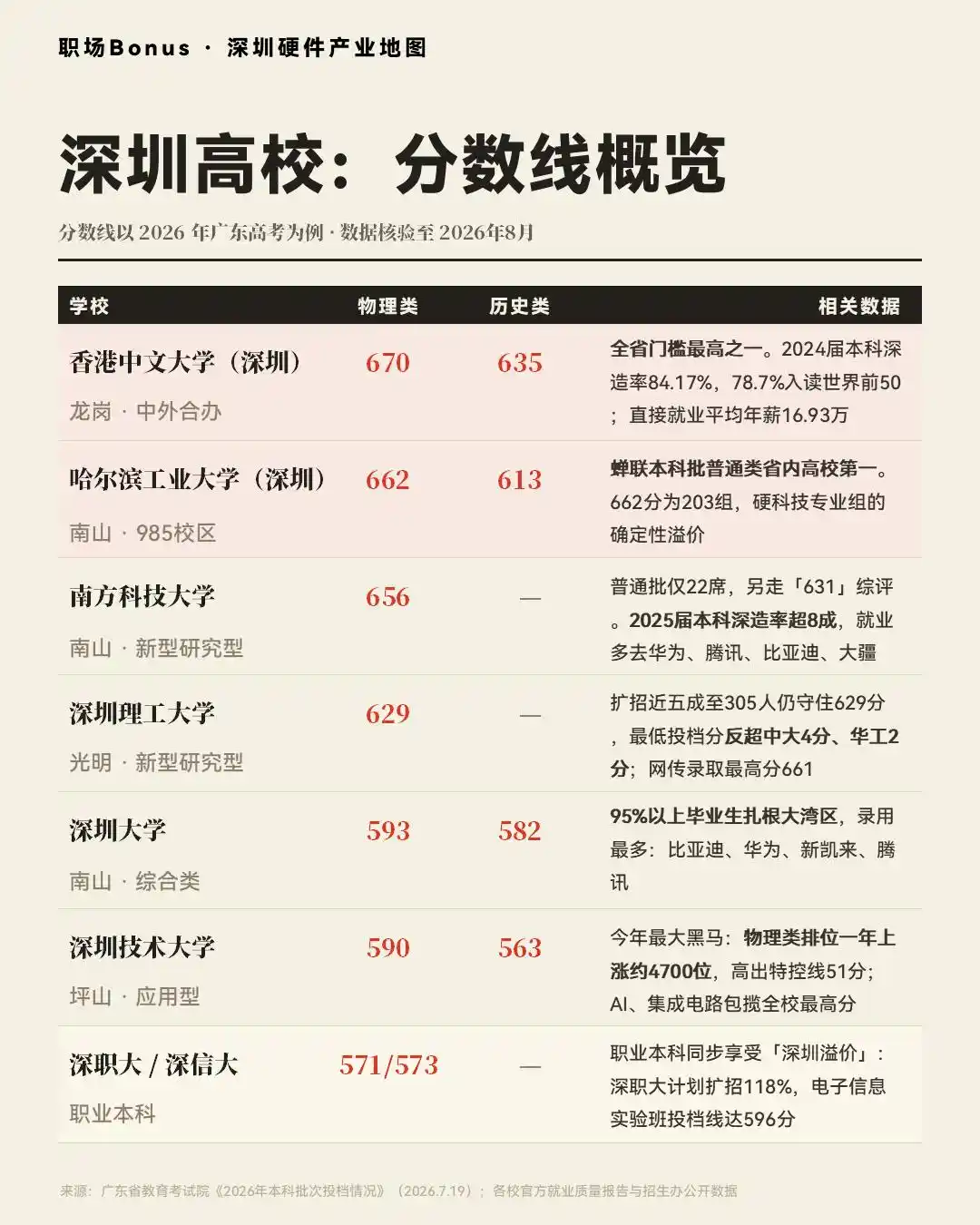
For the 2026 Guangdong college entrance exam score lines, Harbin Institute of Technology (Shenzhen)'s minimum admission score for physics was 662, Southern University of Science and Technology's AI major group was 656, and the newly established Shenzhen University of Technology's admission line reached 629. Shenzhen universities' attractiveness to high-scoring students continuously feeds back into Shenzhen's frontier education and research capabilities.
「Workplace Bonus」(ID:ZhiChangHongLi)
Pingshan District is a model for high-end smart manufacturing in Shenzhen. Honor's self-owned smart manufacturing industrial park is located at No. 9 Lanzhu West Road, covering 135,000 square meters. It's the industry's first national-level smart demonstration factory, producing one phone every 28.5 seconds on average, with 85% of processes automated, and over 60% of equipment self-developed by Honor. For the hardware industry, Pingshan doesn't pursue pure capacity scale but validates the upper limits of automated manufacturing technology. High-precision, high-automation mass production needs are tested and realized in Pingshan. Pingshan simultaneously develops its four leading industries: "Vehicle, Medicine, Chip, Intelligence", with the total output value of industrial enterprises above designated size exceeding 600 billion yuan.
Guangming and Pingshan currently serve as observation windows for long-term sectors. Related industries generally require time to reach commercial maturity.
Thus, the six districts form a complete Shenzhen hardware relay chain: Huaqiangbei rapidly prototypes, Shiyan reliably ensures yield and delivery, Longhua supports global shipment volume, Pingshan defines the upper limit of smart manufacturing; technological roots are in Nanshan, brand and top-level decisions are in Bao'an and Futian; future industry possibilities are stored in Guangming.
From a design blueprint to global mass sales, a complete closed-loop supporting the entire chain forms within a 50-kilometer radius.
Capital, Three Levels & Three Destinies
As mentioned earlier, geographical division of labor determines how companies access resources—capital is the most obvious resource.
Nanshan is closer to technology, making companies more likely to achieve high valuations for not-yet-fully-validated technical routes; Bao'an and Longhua are closer to production, with companies often gaining capital recognition based on shipment volume certainty. When investors screen projects in cafes in Xili, besides comparing teams and products, they are essentially judging: does this company's location conditions match its current capital proposition?
What truly determines a company's fate and its cooperation boundaries is not just which building it's in, but which phase of the capital cycle it's in. The public company tier needs to solve second-curve transformation; the unicorn tier needs to achieve scale and commercial landing; the high-potential startup tier needs to build differentiated niche barriers; the early seed tier needs to validate if the underlying technical route is viable.
There's no absolute superiority among stages. Different financing positions simultaneously hold opportunities and risks.
● Unicorn Tier: Billion-Dollar Narratives & Long-term Vision
Similarly being sought-after targets by capital, Zhilifang and Zhuji Dynamics receive two completely different evaluation methods.
Theoretically, Zhilifang's GOVLA model can integrate industrial and household full-scene applications. But behind its high valuation lies an obvious weakness: this model heavily relies on real-scenario data. Currently, the company's revenue and data accumulation are still mainly industrial, though expanded to public service and new retail scenarios, but not yet into household C-end. After its B+ round financing in February 2026, its valuation exceeded 10 billion yuan. By the end of June 2026, after raising nearly 5 billion yuan in a new round, its valuation exceeded 20 billion yuan. It has completed share reform and initiated the process for a Hong Kong IPO. The reason capital is willing to give a >20 billion valuation is not current performance, but whether it can sustain through the long cash-burning cycle before its data flywheel forms.
Zhuji Dynamics takes another route. It excels in motion control, moving towards a "big brain-small brain fusion" full-stack architecture; application scenarios have also expanded from early industrial inspection to scientific research & education, commercial services, all-terrain inspection, and other diverse scenes, with total product line orders in the thousands, over half from overseas. Its capital pace is also tight: completing a $200 million Series B in February 2026, and another nearly $200 million Pre-IPO round in July 2026, with a post-investment valuation of about 15 billion yuan. The market is willing to pay for it because it grew full-stack capabilities step-by-step starting from the single point of motion control.
Neither path is superior, but they point to different survival rules. Zhilifang needs to continuously prove the generalization capability of its technical route, while Zhuji Dynamics needs to prove that the full-stack grown from a single point remains reliable and deliverable as scenarios keep expanding.
Bambu Lab, Creality, Anycubic, and Sovol, the four "Shenzhen Dragons," collectively hold about 90% of the global consumer 3D printing market, but three of them are still unlisted, with Bambu Lab being the largest.
Bambu Lab leveraged high-speed FDM and AMS multi-color feeding systems to transform 3D printers from niche geek toys into general household tools. The company remains unlisted, with no public record of filing for an IPO. Its last confirmed financing was Series C in April 2024, with a Series B valuation around $2 billion in 2023. Whether the inflection point for home 3D printing adoption is coming, and whether Bambu Lab will be its definer, remains uncertain.
Besides, there are unlisted companies with far larger scale than typical unicorns, like Honor Terminal. According to reports, Honor Terminal's Pre-IPO valuation is 200 billion yuan, listed at 180 billion yuan in the 2026 Hurun Global Unicorn List, one of the most watched unlisted assets in Shenzhen's hardware sector. This valuation accounts for both stable earnings from the existing smartphone business and long-term possibilities for humanoid robots, Robot Phone, and AI terminals.
Honor has already formed a 200-person dedicated robot team, but the humanoid hardware category faces high consumer education costs, and current technological maturity isn't sufficient for large-scale C-end adoption. How much of the 200 billion valuation attributable to new business imagination is ultimately worth depends on the capital market's judgment on the timeline for consumer adoption of humanoid robots. The listing process itself also lacks a clear timeline: the company completed A-share listing tutoring filing in June 2025, with the originally scheduled March 2026 tutoring review overdue, with no clear listing date yet.
On the edge of the unicorn tier is Aqara, which has filed and has one foot over the listing threshold. On March 29, 2026, the company officially filed with the Hong Kong Stock Exchange, yet to list; its post-Series D valuation is $850 million. Over the past few years, its gross margin increased by 9 percentage points over three years, and the Aqara brand has partially completed independent operation from the Mi ecosystem. Before filing, the company fully repurchased its Series D preferred shares in three installments, spending $51.3 million, allowing early institutional investors to exit early.
● Public Company Tier: Pioneers, Scalers & Transformers
After entering the capital market, companies face no fewer problems, only shifting from "can we survive" to "how to transform old advantages into next-phase growth."
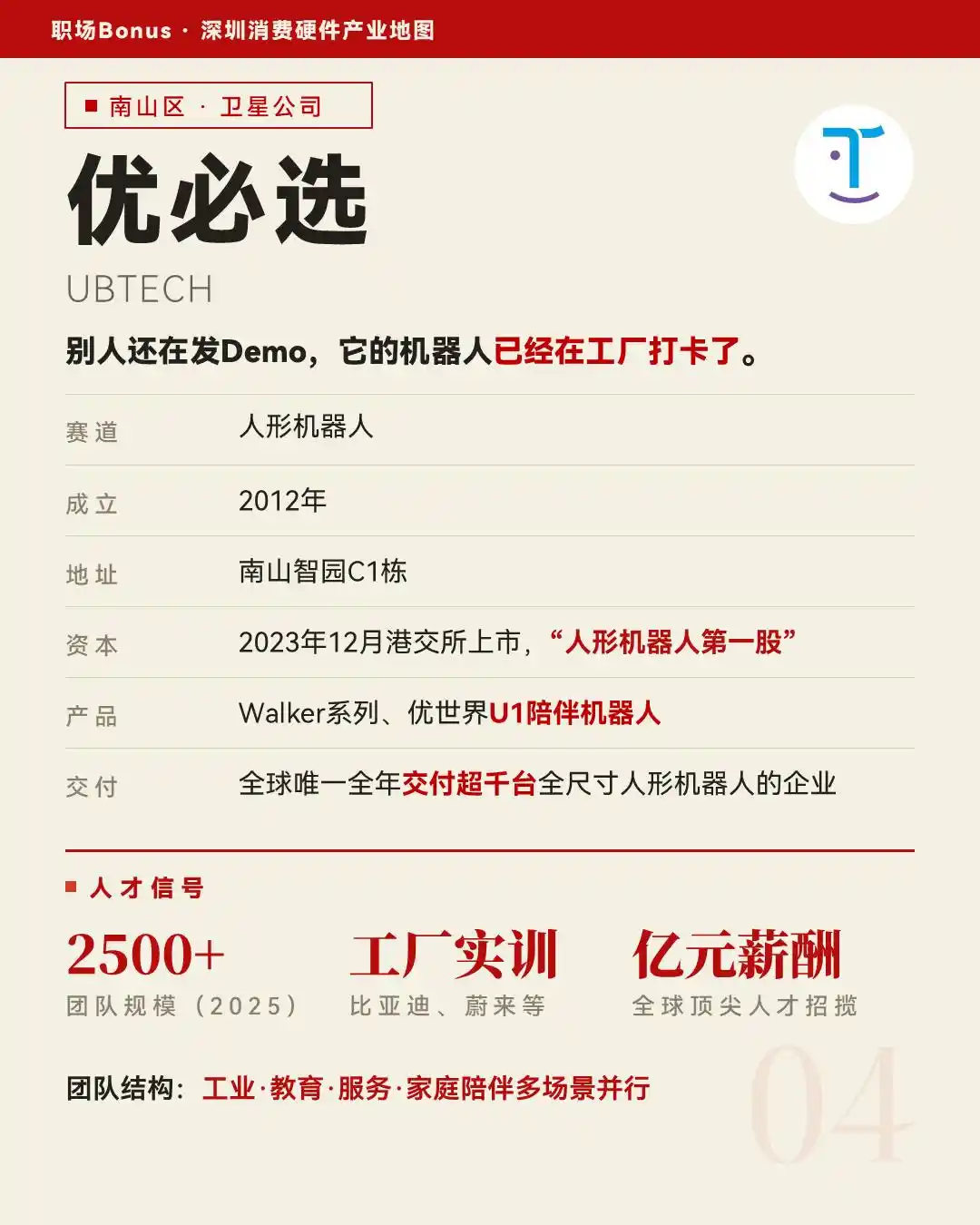
UBTECH represents the capital dilemma of humanoid robot pioneers: early advantages from traditional big brain-small brain layered architecture captured sector红利, but in 2025 its global humanoid robot installed base share was only about 5%-6%, continuously squeezed by new players like Unitree and Zhiyuan in shipments and mindshare. In late June 2026, it launched the U1 biomimetic companion robot, with pre-orders exceeding ten thousand, attempting to open C-end增量, but transforming old technical architectures requires massive effort, and dual-track R&D for industrial and home use continuously consumes cash flow. The market still acknowledges first-mover advantage, but capital market观望情绪 persists.
The competition in the 3D printing sector is a classic business story of new technology disrupting traditional scale.
Creality chose the scale defense route. The company listed on the Hong Kong Stock Exchange on May 29, 2026, becoming the first consumer 3D printing stock on HKEx. Its share price surged over 80% at opening on the first day but fell back by market close. Its 2026 mid-year report showed a shift from profit to loss. The Ender series has cumulatively shipped millions of units, later launching the K1 series to directly face competition from Bambu Lab.
Unlike Creality, which faces public market scrutiny after listing, its rival Bambu Lab remains off-market, valued under different private valuation logic. The胜负手 for the two companies is not current shipment volume, but when the niche hobby transforms into a mass necessity—this is the time window the market truly awaits.
Also transforming, Anker Innovations and Insta360 Innovations face challenges in channels and branding respectively. Both companies prioritize overseas markets and global brands, but the capital market's question is no longer whether they can go global, but whether their existing models can solidify into sustainable operational capabilities.
Anker Innovations' story has long been simplified by the market as "escaping Amazon dependency, building a global multi-channel brand." In July 2026, the company completed dual A+H listing, bringing its transformation narrative under the joint scrutiny of two markets. However, financial reports show years of transformation only slightly reduced dependency, and the channel anti-fragility capability anticipated by the capital market has not fully materialized into verifiable operating results.
Insta360 Innovations took a differentiated path: starting online with overseas social media content and self-developed AI editing tools, it has recently accelerated investment in offline channels—now over 300 global brand stores, entering over 500 Apple authorized stores in 2026, with online and offline revenue接近 half each. Its market capitalization peaked after listing above 100 billion yuan but fell below 50 billion by late August 2026, down about 70% from the peak; its 2026 mid-year report showed净利润 plummeting over 90% year-on-year. The market's core doubt is whether early流量 heat can solidify into long-term brand equity.
● High-Potential Startups: Minimal Room for Error
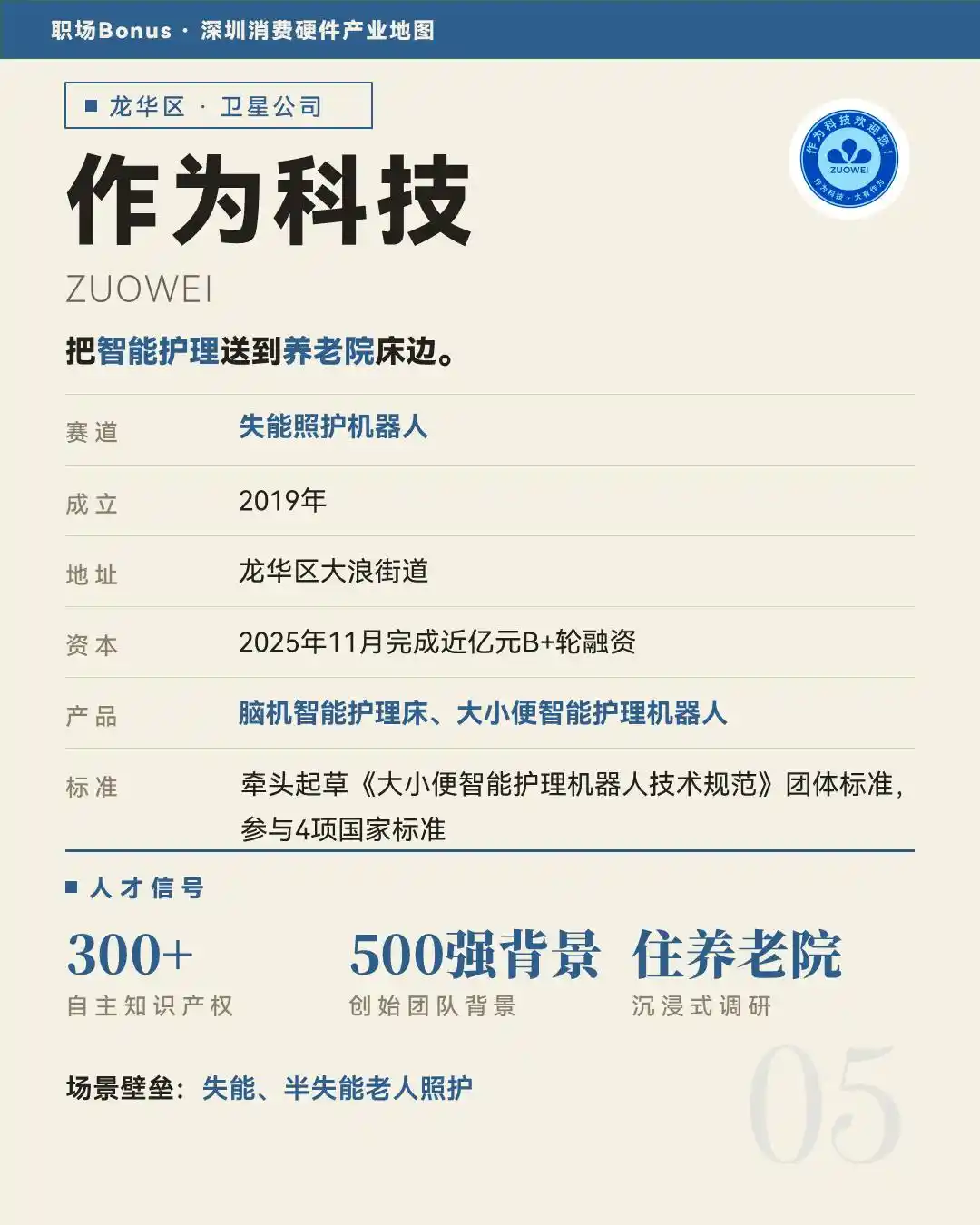
Sharge Tech and nursing robot company Zuowei Tech in Longhua are representatives. Both have not publicly disclosed valuations, with cumulative financing around the hundred-million-yuan level, but their situations differ: one continuously iterates and raises funds under the shadow of giants, while the other hasn't yet validated a replicable business model. For such companies, once commercialization lags, subsequent financing immediately becomes difficult, as they struggle to secure top-tier capital allocation.
The capital market exhibits extreme Matthew Effect: a few被认为 more certain targets are抢疯, while many mid-tier companies are stuck at commercialization bottlenecks, and early-stage teams still bear the costs of technical route choices. Meanwhile, overall industry financing levels are still rising—in the 2025 national unicorn list, Shenzhen ranked among the top cities for new additions.
Choice, Life Coordinates in the Folded City
The capital market never benefits all players equally. In the first half of 2026, the embodied AI赛道 in the Greater Bay Area collectively absorbed about 4 billion yuan in funding. But from the second half of 2026 to 2027, three门槛 will filter out the vast majority of mid-tier companies:
1 Off-track technical routes
2 Failure to meet real-market validated application scenarios
3 Cash flow pressure
Long-term surviving enterprises must simultaneously satisfy three points:
1 Clear, feasible technical route
2 Application scenarios validated by real markets
3 Sufficient cash reserves
At this moment in Shenzhen's hardware industry, public companies compete on operational efficiency and globalization resilience, unicorns on scene landing speed, high-growth companies on differentiated positioning, and startups on underlying technology judgment... Within the same Shenzhen industry belt, companies with different capital coordinates have embarked on completely different destiny trajectories.
But the fascinating aspect of Shenzhen is that these trajectories are highly concentrated geographically.
Tech geeks better fit the atmosphere of Nanshan's Liuxiandong corridor—here, discussions revolve around papers, computing clusters, and industry standards, but one must accept模糊 promotion paths and high-intensity overtime.
Those focused on going global can find content-driven brands like Insta360 in Qianhai but must weigh whether the personal growth system is完善 under rapid expansion.
Practitioners seeking stable, low volatility find higher容错空间 in the supply chain companies within Longgang's Huawei ecosystem.
Those willing to bet on远期赛道 find long-cycle opportunities in brain-computer interface and smart manufacturing projects in Guangming and Pingshan, requiring time and patience.
When you are within this 50-kilometer folded industrial belt, changing jobs can simultaneously mean changing sectors, changing company types, changing life paths, without needing to change cities. Whether you are a service provider, entrepreneur, investor, or employee, there is room to choose what matches your risk appetite. It is also in such close-quarters fierce competition that some ultimately find their long-term place in this "city of immigrants."
Partial References:
1. "Why Is It Always Shenzhen", Nanfengchuang
2. "Shenzhen Hard Tech Breaks into the Heart of Global Capital", Shenzhen Release
3. "3D Printing Erupts in Shenzhen", Yan Finance
4. "Chinese Hardware, Shenzhen Folded", Economic Observer
5. "How Did Liuxian Avenue Become a Global Hardware 'Intelligent Manufacturing Corridor'?", Shenzhen Release
6. "Half Is Water, Half Is Fire: 30 Answers About the Hardware Industry in 2026", Yingke
7. "Liu Jingkang Steps Out of Utopia", China Entrepreneur Magazine