Panic Over $1.8 Trillion Deficit Heats Up, Bond Yield Surge Could Trigger 30% Bitcoin Volatility

marsbitPublicado a 2026-08-19Actualizado a 2026-08-19

Resumen

The article discusses Bitcoin's current stagnation within a narrow trading range despite positive signals like BlackRock's ETF holdings and net inflows into U.S. spot Bitcoin ETFs. Market anxiety is growing due to conflicting macro forces. On one hand, the soaring U.S. budget deficit—projected at $1.8 trillion—fuels expectations of monetary expansion, which long-term proponents believe will benefit assets like Bitcoin. On the other hand, a sharp surge in global bond yields, with U.S. 30-year yields hitting multi-decade highs, poses a significant risk to high-valuation assets by raising real financing costs. Analysts note Bitcoin's 30-day realized volatility is at historic lows. Historical patterns suggest such periods are typically followed by a median absolute price swing of around 30% within 60 days, though the direction is uncertain. This could push Bitcoin to roughly $83,200 or down to about $44,800 from its current ~$64,000 level. The market's focus has shifted from Fed policy to the trajectory of long-term Treasury yields and geopolitical risks. While the fiscal deficit narrative supports long-term bullishness, the immediate threat of rising yields creates a precarious balance. Traders are warned to prepare for significant volatility and potential deep corrections, with some experts suggesting a washout of leveraged positions may be needed before a sustainable bottom forms.

Written by: Billy Bambrough, Forbes

Compiled by: AididiaoJP, Foresight News

Since June of this year, the Bitcoin market has been stuck in a rare sideways consolidation pattern, with prices fluctuating within a narrow range and volatility hitting historically low levels. Although market participants widely anticipate a so-called "ultimate catalyst" to break the deadlock, macro-level uncertainties are intensifying market anxiety.

Currently, the Bitcoin price is down about 50% from its all-time high recorded in October 2025. Even though BlackRock's digital asset head, Robert Mitchnick, recently expressed optimism, pointing to a "subtle but noticeable positive shift" in market sentiment and reiterating that Bitcoin has ended all five full bull-bear cycles at higher prices, the price has still failed to effectively break out of the current range.

Notably, BlackRock's Bitcoin ETF (IBIT) holdings are approaching 750,000 BTC, valued at approximately $50 billion, while US spot Bitcoin ETFs overall saw net inflows of over $850 million last week, the best weekly performance since mid-April. However, these positive signals have yet to translate into substantive upward momentum.

The core factor driving market sentiment from "calm" to "tense" lies in two sets of macro variables that are diverging in direction but heating up simultaneously.

First, the expanding US fiscal deficit, with a $1.8 trillion shortfall, is strengthening market expectations for "money printing."

Latest data from the US Treasury shows that the federal budget deficit in July alone reached $432 billion, the largest monthly shortfall since March 2021, pushing the cumulative deficit for fiscal year 2026 to $1.8 trillion, second only to the extreme highs seen during the 2020 pandemic. The total federal debt is approaching $40 trillion.

Against this backdrop, many crypto asset investors believe that government spending far exceeding revenue can only rely on debt issuance for financing; if the private sector's capacity to absorb it is limited, it may ultimately force the Federal Reserve to restart balance sheet expansion.

Prominent crypto investor Anthony Pompliano, in an interview with Fox Business, bluntly stated that government fiscal mismanagement will force continuous money printing, and assets like Bitcoin, gold, real estate, and stocks will benefit long-term from currency devaluation. He even predicted that Bitcoin's average annual gains could remain around 30% over the next two-plus decades.

BitMEX founder Arthur Hayes also noted in a recent analysis that the stronger the monetary expansion, the more solid the foundation for Bitcoin's valuation to rise, and stated he is increasing allocations to Bitcoin, physical gold, and gold mining stocks.

Second, however, the bond market is sending a completely opposite risk signal.

Global bond yields surged significantly this week, with the US 30-year Treasury yield climbing to its highest level since 2002, the 20-year yield reaching a new high since 2006, and the benchmark 10-year yield touching a peak since 2007.

Traders generally attribute this yield rise to a combination of multiple factors, including the continuously expanding fiscal deficit, financing demand growth from AI infrastructure development, sustained high international oil prices, and monetary policy path uncertainties triggered by the new Fed Chair, Kevin Warsh.

Sean Farrell, Head of Digital Asset Strategy at Fundstrat, pointed out that Bitcoin's 30-day realized volatility has fallen to one of its lowest historical ranges. He examined the past eight similar periods of extreme low volatility and found that the median absolute price movement for Bitcoin over the subsequent 60 days was 30.2%, with price increases and decreases each occurring four times, indicating this metric only predicts volatility intensity, not direction.

Based on the current price of approximately $64,000, a 30% increase could push the price near $83,200, while a decline of the same magnitude could see it fall back to around $44,800.

Farrell specifically emphasized that Bitcoin's recent rebound was partly driven by short covering, not large-scale influx of new capital; Bitcoin-denominated futures open interest has decreased by about 8% since Friday evening. He clearly identifies "a sustained rise in real bond yields" as a key variable that could break the current low-volatility pattern.

The strategy team at Yardeni Research also noted in a report that while it has not yet triggered a panic mechanism, they are closely monitoring whether bond market participants will take substantive action. They believe US Treasury yields remain within the normal range of 4% to 5% but are approaching the upper bound, warranting high vigilance.

The so-called "bond vigilantes," market forces that push up yields by selling bonds to force government or central bank policy adjustments, typically hit high-valuation risk assets first once they act.

The continued climb in bond yields has significantly reshaped the focus of the crypto market. Traders' attention to the Treasury market now exceeds their scrutiny of the Fed's short-term interest rate path.

Analysts from the crypto trading platform Bitunix point out that the market's core concern is no longer limited to whether the Fed will raise or lower rates, but increasingly focuses on whether long-term Treasury yields will continue their upward trend, whether geopolitical risks will evolve into sustained energy supply shocks, whether inflationary pressures will re-emerge, and whether the global risk premium will widen further.

If the 30-year Treasury yield remains persistently high while energy prices rise due to geopolitical tensions, stocks, cryptocurrencies, and other high-valuation assets could face systematic pressure.

Amidst this two-way risk landscape, market participants are gradually preparing psychologically for a potential deep correction.

Robin Singh, CEO of crypto tax services firm Koinly, stated that with US mid-term elections approaching, it's not unimaginable for Bitcoin to experience another sharp drop, and a price retreat to the $55,000 range is a plausible scenario. He believes historical experience shows markets often need a thorough washout—a sell-off that makes the final batch of bulls give up completely—before a cycle bottom can be confirmed.

In summary, on one hand, the monetary expansion narrative fueled by the huge fiscal deficit provides medium to long-term upward momentum for Bitcoin; on the other hand, rising actual funding costs reflected by surging bond yields are exerting substantive pressure on risk assets.

The current Bitcoin market exhibits a pattern of "exhausted sellers and观望buyers," while leveraged funds have already bet on a rebound in advance, creating inherent instability in the market's internal structure. Historical data indicates the probability of an absolute price movement of around 30% within the next 60 days has significantly increased. Regardless of the final direction, market participants need to be highly vigilant and make corresponding risk management preparations.


Criptos en tendencia

Preguntas relacionadas

QAccording to the article, what are the two opposing macro factors currently tightening market sentiment around Bitcoin?

AThe two opposing macro factors are: 1) The expectation of monetary expansion due to the persistently large US fiscal deficit (reaching $1.8 trillion), which could be a long-term tailwind for Bitcoin. 2) The sharp rise in global bond yields (e.g., US 30-year yield at a 2002 high), which increases the cost of capital and puts pressure on risk assets like Bitcoin.

QWhat historical pattern does Fundstrat's Sean Farrell highlight regarding Bitcoin's low 30-day realized volatility, and what magnitude of price move does it suggest?

ASean Farrell highlights that historically, when Bitcoin's 30-day realized volatility fell to extreme lows like the current period, the median absolute price movement in the following 60 days was 30.2%. This pattern occurred eight times previously, with price moving up four times and down four times, indicating it signals volatility intensity but not direction.

QWhat specific price levels for Bitcoin does the article mention as potential targets if a 30% move occurs from the current ~$64k price?

AFrom the current price of approximately $64,000, a 30% increase would push Bitcoin to around $83,200. A 30% decrease would bring it down to around $44,800.

QWhy are cryptocurrency investors focusing more on the bond market than on the Federal Reserve's short-term rate path, according to the Bitunix analyst cited?

AAccording to the Bitunix analyst, the market's core concern has shifted. It is no longer just about whether the Fed will hike or cut rates, but more about whether long-term Treasury yields will continue to rise, if geopolitical risks will turn into sustained energy supply shocks, if inflationary pressures will re-emerge, and if the global risk premium will widen further.

QWhat does Anthony Pompliano predict about Bitcoin's long-term performance, and what is his reasoning?

AAnthony Pompliano predicts that Bitcoin could see average annual gains of around 30% over the next couple of decades. His reasoning is that disorderly government fiscal management will force continued money printing, and assets like Bitcoin, gold, real estate, and stocks will benefit in the long term from the devaluation of fiat currency.

Lecturas Relacionadas

Why Didn't Oil Prices Stabilize Above $100 as Traffic Through the Strait of Hormuz Plunged Again?

Despite a significant drop in daily oil tanker traffic through the critical Strait of Hormuz in August, Brent crude oil prices have failed to stabilize above $100 per barrel, instead hovering around $90. This contrasts with traditional market logic, where a threat to a chokepoint handling roughly 20 million barrels per day (27% of global seaborne oil) should trigger a sustained supply risk premium. The article explains that the market is pricing in increased transit costs rather than an imminent, complete supply cutoff. Investors currently believe multiple buffers can absorb the shock: strategic and commercial inventories, the potential for coordinated stock releases, available OPEC+ spare capacity, and alternative export routes from the Gulf. Furthermore, workarounds like ship-to-ship transfers outside the Strait and route adjustments by buyers and shippers add resilience, though at a higher cost for insurance, financing, and longer voyages. The underlying U.S.-Iran tensions frame this reassessment as a problem of cost allocation across the supply chain. The price action suggests traders are awaiting clearer signals—such as a military escalation, sustained Iranian attacks, or stricter enforcement of secondary sanctions on buyers—before pricing in a worst-case, long-term disruption scenario. In the longer term, the episode is accelerating investments to reduce dependency on the Strait, such as expanded storage and pipeline infrastructure, which will embed higher costs into the energy system. While Brent may remain range-bound for now, the real-time impact of the Hormuz risk is likely appearing first in freight rates, insurance premiums, and regional product spreads like diesel crack margins. The stability of current prices depends on how much longer these existing buffers can effectively absorb the mounting transit costs and logistical friction.

marsbitHace 36 min(s)

Why Didn't Oil Prices Stabilize Above $100 as Traffic Through the Strait of Hormuz Plunged Again?

marsbitHace 36 min(s)

BONK Crypto Treasury Company Has Only $2.14 Million Cash Left, 70% of Revenue Comes from Founder's Own Platform

BONK Inc. (BNKK), the NASDAQ-listed company associated with the Solana meme coin BONK, reported stark financials for the first half of the year. While revenue skyrocketed 6,218% year-over-year to $5.5 million, the company posted a net loss of $7.88 million and its cash reserves plummeted to just $214,000. Its auditors issued a "going concern" warning, citing cumulative losses of $191.4 million, negative operating cash flow, and critically low liquidity. A critical detail is that $3.92 million, or 71%, of its revenue came from an "affiliate revenue share" with LetsBonk.fun, a meme coin launchpad. This platform is linked to founder Mitchell Rudy, whose entity, Lucky Dog Holdings, beneficially owns approximately 40.2% of common stock and all C Series preferred shares. These preferred shares grant the holder the right to elect half of the company's board. The company's financial structure is further intertwined with Rudy; it sold $50 million worth of stock to his entities, accepting payment in BONK tokens. Fluctuations in the value of these and other held digital assets led to an $8.17 million unrealized loss, the primary driver of the net loss. With operating cash outflows of $4.17 million for the half-year, the remaining cash covers roughly nine days of operations at the current burn rate, highlighting severe financial strain despite top-line growth.

marsbitHace 1 hora(s)

BONK Crypto Treasury Company Has Only $2.14 Million Cash Left, 70% of Revenue Comes from Founder's Own Platform

marsbitHace 1 hora(s)

CryptoQuant Noted a Signal of a Bitcoin Reversal

CryptoQuant has highlighted a potential reversal signal for Bitcoin, suggesting the bearish phase might be nearing its end as on-chain metrics show initial signs of spot demand recovery. Their analysis indicates that the 30-day spot demand metric has recovered from -206,000 BTC in late July to approximately -5,000, close to turning positive for the first time since February 2026. Historically, such a reversal has been followed by a median 60-day price gain of 18.1%, with a win rate of 78% (increasing to 87% when valuations are depressed). However, they caution that this is a favorable sign, not a guarantee. Analysts from Bitfinex Alpha note that two of three conditions for a sustainable Bitcoin recovery are already met: improved Federal Reserve rate expectations and relatively accommodative financial conditions, thanks to easing inflation and reduced odds of a near-term rate hike. The missing third catalyst is a capital rotation from traditional markets (like stocks and AI infrastructure) into cryptocurrencies. If this occurs, Bitcoin could reclaim $70,000. Conversely, continued negative flows might see support tested around $57,000. Current headwinds include significant weekly outflows from US spot Bitcoin ETFs (roughly $385 million) and reduced stablecoin supply. Wintermute offers a more cautious outlook, pointing to the same large ETF outflows and ongoing miner selling pressure. They note that Bitcoin has failed to rally despite the improved Fed outlook, which is typically bullish for risk assets. As an example, they cite miner Riot Platforms, which sold a substantial portion of its Bitcoin reserves in Q2 as its mining cost (~$91,000 per BTC) remains far above the current market price, forcing sales for liquidity. This combination of ETF outflows and miner selling is suppressing new demand.

cryptonews.ruHace 1 hora(s)

CryptoQuant Noted a Signal of a Bitcoin Reversal

cryptonews.ruHace 1 hora(s)

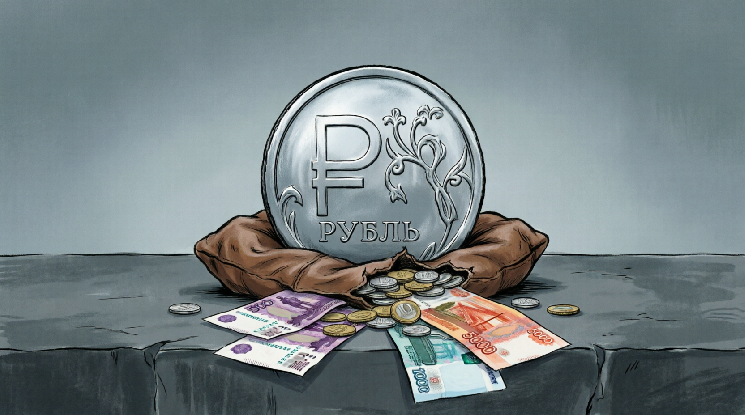
Is a Strong Ruble Good? Not for the Budget: Treasury Already Short 1.5 Trillion

The Russian budget has lost about 1.5 trillion rubles in revenue since the start of 2026 due to the ruble being stronger than the government's planned exchange rate. The budget was based on an average annual rate of 92.2 rubles per US dollar, but the actual average for the first seven and a half months was just 76.9 rubles. This discrepancy creates a significant shortfall, as every ruble of appreciation against the dollar reduces annual budget revenues by 140–160 billion rubles. When accounting for oil and gas revenues, the sensitivity is even higher, with potential annual losses reaching up to 2.5 trillion rubles. So far this year, the budget has already missed out on roughly 1.7 trillion rubles. The ruble's exchange rate has shown considerable volatility in 2026, ranging from a low near 71 rubles per dollar in May to over 85 rubles by mid-August. Despite this recent weakening, the year's average remains well below the budget target, creating a structural deficit in oil and gas revenues. Forecasts suggest the final average rate for 2026 will be around 80–82 rubles, which would result in a budget shortfall of about 1.6 trillion rubles. A strong ruble reduces import costs and inflation but also cuts the ruble earnings of exporters and threatens the funding of social obligations. The gap between the planned and actual rate is attributed not only to oil price dynamics but also to the fiscal rule mechanism, which can influence the currency's direction. The Ministry of Finance recently halted foreign currency sales under this rule, removing dollar supply from the market and contributing to pressure on the exchange rate. The budget policy is now forced to adapt to a stronger ruble than originally planned.

cryptonews.ruHace 1 hora(s)

Is a Strong Ruble Good? Not for the Budget: Treasury Already Short 1.5 Trillion

cryptonews.ruHace 1 hora(s)

Trading

Spot

Artículos destacados

Qué es BITCOIN

Entendiendo HarryPotterObamaSonic10Inu (ERC-20) y Su Posición en el Espacio Cripto En los últimos años, el mercado de criptomonedas ha sido testigo de un aumento en la popularidad de las monedas meme, capturando el interés no solo de los comerciantes, sino también de aquellos que buscan compromiso comunitario y valor de entretenimiento. Entre estos tokens únicos se encuentra HarryPotterObamaSonic10Inu (ERC-20), un proyecto intrigante que mezcla referencias culturales en el tejido de las criptomonedas. Este artículo profundiza en los aspectos clave de HarryPotterObamaSonic10Inu, explorando sus mecanismos, ethos impulsado por la comunidad y su relación con el paisaje cripto más amplio. ¿Qué es HarryPotterObamaSonic10Inu (ERC-20)? Como su nombre sugiere, HarryPotterObamaSonic10Inu es una moneda meme construida sobre la blockchain de Ethereum, clasificada bajo el estándar ERC-20. A diferencia de las criptomonedas tradicionales que pueden enfatizar la utilidad práctica o el potencial de inversión, este token prospera en el valor de entretenimiento y la fuerza de su comunidad. El proyecto tiene como objetivo fomentar un entorno donde los usuarios comprometidos puedan reunirse, compartir ideas y participar en actividades inspiradas por diversos fenómenos culturales. Una característica notable de HarryPotterObamaSonic10Inu es su cero impuestos en las transacciones. Este atractivo elemento tiene como objetivo incentivar el comercio y la participación comunitaria, sin cargos adicionales que puedan disuadir a los comerciantes de pequeña escala. El suministro total de la moneda está establecido en mil millones de tokens, una cifra que marca su intención de mantener una circulación sustancial dentro de la comunidad. Creador de HarryPotterObamaSonic10Inu (ERC-20) Los orígenes de HarryPotterObamaSonic10Inu están algo envueltos en misterio; los detalles sobre el creador siguen siendo desconocidos. El desarrollo de este token carece de un equipo identificable o de un plan explícito, lo cual no es inusual dentro del sector de monedas meme. En cambio, el proyecto ha surgido de manera orgánica, con su progreso muy dependiente del entusiasmo y la participación de su comunidad. Inversores de HarryPotterObamaSonic10Inu (ERC-20) En cuanto a inversiones externas y respaldo, HarryPotterObamaSonic10Inu también sigue siendo ambiguo. El token no lista ninguna fundación de inversión conocida o apoyo organizacional significativo. En cambio, la savia del proyecto es su comunidad de base, que informa su crecimiento y sostenibilidad a través de la acción colectiva y el compromiso en el espacio cripto. ¿Cómo Funciona HarryPotterObamaSonic10Inu (ERC-20)? Como una moneda meme, HarryPotterObamaSonic10Inu opera principalmente fuera de los marcos tradicionales que a menudo rigen el valor de los activos. Hay varios aspectos distintivos que definen cómo funciona el proyecto: Transacciones Sin Impuestos: Sin tarifas impositivas en las transacciones, los usuarios pueden comprar y vender el token libremente sin preocuparse por costos ocultos. Compromiso Comunitario: El proyecto prospera en la interacción comunitaria, aprovechando plataformas de redes sociales para crear entusiasmo y facilitar la participación. Las discusiones, el intercambio de contenido y el compromiso son elementos cruciales que ayudan a expandir su alcance y fomentar la lealtad entre los seguidores. Sin Utilidad Práctica: Cabe señalar que HarryPotterObamaSonic10Inu no ofrece utilidad concreta dentro del ecosistema financiero. Más bien, se clasifica como un token principalmente para actividades de entretenimiento y comunitarias. Referencia Cultural: El token incorpora astutamente elementos de la cultura popular para atraer interés, conectando con entusiastas de los memes y seguidores de las criptomonedas por igual. HarryPotterObamaSonic10Inu ejemplifica cómo las monedas meme operan de manera diferente a los proyectos de criptomonedas más tradicionales, ingresando al mercado como construcciones sociales innovadoras en lugar de activos utilitarios. Cronología de HarryPotterObamaSonic10Inu (ERC-20) La historia de HarryPotterObamaSonic10Inu está marcada por varios hitos notables: Creación: El token surgió de un meme viral, capturando la imaginación de muchos entusiastas de las criptomonedas. Las fechas específicas de creación no están disponibles, subrayando su ascenso orgánico. Listado en Exchanges: HarryPotterObamaSonic10Inu ha llegado a varios exchanges, permitiendo un acceso y comercio más fácil por parte de la comunidad. Iniciativas de Compromiso Comunitario: Actividades continuas destinadas a mejorar la interacción comunitaria, incluyendo concursos, campañas en redes sociales y generación de contenido por parte de fanáticos y defensores. Planes de Expansión Futuros: La hoja de ruta del proyecto incluye el lanzamiento de una colección de NFT, mercancía y un sitio de comercio electrónico relacionado con sus temas culturales, involucrando aún más a la comunidad e intentando añadir más dimensiones a su ecosistema. Puntos Clave Sobre HarryPotterObamaSonic10Inu (ERC-20) Naturaleza Impulsada por la Comunidad: El proyecto prioriza la participación colectiva y la creatividad, asegurando que la involucración de los usuarios esté a la vanguardia de su desarrollo. Clasificación como Moneda Meme: Representa la epítome de las criptomonedas basadas en el entretenimiento, diferenciándose de los vehículos de inversión tradicionales. Sin Afiliación Directa con Bitcoin: A pesar de la similitud en el nombre del ticker, HarryPotterObamaSonic10Inu es distinto y no tiene relación con Bitcoin u otras criptomonedas establecidas. Enfoque en la Colaboración: HarryPotterObamaSonic10Inu está diseñado para crear un espacio para la colaboración y el intercambio de historias entre sus poseedores, proporcionando una vía para la creatividad y el vínculo comunitario. Perspectivas Futuras: La ambición de expandirse más allá de su premisa inicial hacia NFTs y mercancías describe un camino para que el proyecto potencialmente ingrese a avenidas más tradicionales dentro de la cultura digital. A medida que las monedas meme continúan capturando la imaginación de la comunidad de criptomonedas, HarryPotterObamaSonic10Inu (ERC-20) se destaca debido a sus lazos culturales y su enfoque centrado en la comunidad. Si bien puede no encajar en el molde típico de un token impulsado por la utilidad, su esencia radica en la alegría y la camaradería fomentadas entre sus seguidores, destacando la naturaleza en evolución de las criptomonedas en una era cada vez más digital. A medida que el proyecto continúa desarrollándose, será importante observar cómo las dinámicas comunitarias influyen en su trayectoria en el cambiante paisaje de la tecnología blockchain.

2.9k Vistas totalesPublicado en 2024.04.01Actualizado en 2024.12.03

Qué es BITCOIN

Cómo comprar BTC

¡Bienvenido a HTX.com! Hemos hecho que comprar Bitcoin (BTC) sea simple y conveniente. Sigue nuestra guía paso a paso para iniciar tu viaje de criptos.Paso 1: crea tu cuenta HTXUtiliza tu correo electrónico o número de teléfono para registrarte y obtener una cuenta gratuita en HTX. Experimenta un proceso de registro sin complicaciones y desbloquea todas las funciones.Obtener mi cuentaPaso 2: ve a Comprar cripto y elige tu método de pagoTarjeta de crédito/débito: usa tu Visa o Mastercard para comprar Bitcoin (BTC) al instante.Saldo: utiliza fondos del saldo de tu cuenta HTX para tradear sin problemas.Terceros: hemos agregado métodos de pago populares como Google Pay y Apple Pay para mejorar la comodidad.P2P: tradear directamente con otros usuarios en HTX.Over-the-Counter (OTC): ofrecemos servicios personalizados y tipos de cambio competitivos para los traders.Paso 3: guarda tu Bitcoin (BTC)Después de comprar tu Bitcoin (BTC), guárdalo en tu cuenta HTX. Alternativamente, puedes enviarlo a otro lugar mediante transferencia blockchain o utilizarlo para tradear otras criptomonedas.Paso 4: tradear Bitcoin (BTC)Tradear fácilmente con Bitcoin (BTC) en HTX's mercado spot. Simplemente accede a tu cuenta, selecciona tu par de trading, ejecuta tus trades y monitorea en tiempo real. Ofrecemos una experiencia fácil de usar tanto para principiantes como para traders experimentados.

6.1k Vistas totalesPublicado en 2024.12.12Actualizado en 2026.06.02

Cómo comprar BTC

Qué es $BITCOIN

ORO DIGITAL ($BITCOIN): Un Análisis Integral Introducción al ORO DIGITAL ($BITCOIN) ORO DIGITAL ($BITCOIN) es un proyecto basado en blockchain que opera en la red Solana, cuyo objetivo es combinar las características de los metales preciosos tradicionales con la innovación de las tecnologías descentralizadas. Aunque comparte un nombre con Bitcoin, a menudo referido como “oro digital” debido a su percepción como un refugio de valor, ORO DIGITAL es un token separado diseñado para crear un ecosistema único dentro del paisaje Web3. Su meta es posicionarse como un activo digital alternativo viable, aunque los detalles sobre sus aplicaciones y funcionalidades aún están en desarrollo. ¿Qué es ORO DIGITAL ($BITCOIN)? ORO DIGITAL ($BITCOIN) es un token de criptomoneda diseñado explícitamente para su uso en la blockchain de Solana. A diferencia de Bitcoin, que proporciona un papel de almacenamiento de valor ampliamente reconocido, este token parece centrarse en aplicaciones y características más amplias. Aspectos notables incluyen: Infraestructura Blockchain: El token está construido sobre la blockchain de Solana, conocida por su capacidad para manejar transacciones de alta velocidad y bajo costo. Dinámicas de Suministro: ORO DIGITAL tiene un suministro máximo limitado a 100 cuatrillones de tokens (100P $BITCOIN), aunque los detalles sobre su suministro circulante no se han divulgado actualmente. Utilidad: Si bien las funcionalidades precisas no están delineadas explícitamente, hay indicios de que el token podría ser utilizado para diversas aplicaciones, potencialmente involucrando aplicaciones descentralizadas (dApps) o estrategias de tokenización de activos. ¿Quién es el Creador de ORO DIGITAL ($BITCOIN)? En la actualidad, la identidad de los creadores y el equipo de desarrollo detrás de ORO DIGITAL ($BITCOIN) sigue siendo desconocida. Esta situación es típica entre muchos proyectos innovadores dentro del espacio blockchain, particularmente aquellos alineados con las finanzas descentralizadas y fenómenos de monedas meme. Si bien tal anonimato puede fomentar una cultura impulsada por la comunidad, intensifica las preocupaciones sobre la gobernanza y la responsabilidad. ¿Quiénes son los Inversores de ORO DIGITAL ($BITCOIN)? La información disponible indica que ORO DIGITAL ($BITCOIN) no tiene patrocinadores institucionales conocidos ni inversiones destacadas de capital de riesgo. El proyecto parece operar en un modelo de peer-to-peer centrado en el apoyo y la adopción de la comunidad en lugar de rutas de financiamiento tradicionales. Su actividad y liquidez se sitúan principalmente en intercambios descentralizados (DEX), como PumpSwap, en lugar de plataformas de trading centralizadas establecidas, lo que resalta aún más su enfoque de base. Cómo Funciona ORO DIGITAL ($BITCOIN) Los mecanismos operativos de ORO DIGITAL ($BITCOIN) pueden elaborarse en función de su diseño blockchain y atributos de red: Mecanismo de Consenso: Al aprovechar el único proof-of-history (PoH) de Solana combinado con un modelo de proof-of-stake (PoS), el proyecto asegura una validación de transacciones eficiente que contribuye al alto rendimiento de la red. Tokenómica: Si bien los mecanismos deflacionarios específicos no se han detallado extensamente, el vasto suministro máximo de tokens implica que podría atender microtransacciones o casos de uso nicho que aún están por definirse. Interoperabilidad: Existe el potencial de integración con el ecosistema más amplio de Solana, incluyendo varias plataformas de finanzas descentralizadas (DeFi). Sin embargo, los detalles sobre integraciones específicas permanecen no especificados. Cronología de Eventos Clave Aquí hay una cronología que destaca hitos significativos relacionados con ORO DIGITAL ($BITCOIN): 2023: El despliegue inicial del token ocurre en la blockchain de Solana, marcado por su dirección de contrato. 2024: ORO DIGITAL gana visibilidad al estar disponible para trading en intercambios descentralizados como PumpSwap, permitiendo a los usuarios comerciar contra SOL. 2025: El proyecto presencia actividad de trading esporádica y potencial interés en compromisos liderados por la comunidad, aunque no se han documentado asociaciones notables o avances técnicos hasta el momento. Análisis Crítico Fortalezas Escalabilidad: La infraestructura subyacente de Solana soporta altos volúmenes de transacciones, lo que podría mejorar la utilidad de $BITCOIN en varios escenarios de transacción. Accesibilidad: El potencial bajo precio de trading por token podría atraer a inversores minoristas, facilitando una participación más amplia debido a oportunidades de propiedad fraccionada. Riesgos Falta de Transparencia: La ausencia de patrocinadores, desarrolladores o un proceso de auditoría conocidos públicamente puede generar escepticismo sobre la sostenibilidad y confiabilidad del proyecto. Volatilidad del Mercado: La actividad de trading depende en gran medida del comportamiento especulativo, lo que puede resultar en una volatilidad de precios significativa y en incertidumbre para los inversores. Conclusión ORO DIGITAL ($BITCOIN) surge como un proyecto intrigante pero ambiguo dentro del ecosistema de Solana en rápida evolución. Si bien intenta aprovechar la narrativa del “oro digital”, su alejamiento del papel establecido de Bitcoin como refugio de valor subraya la necesidad de una diferenciación más clara de su utilidad y estructura de gobernanza previstas. La aceptación y adopción futura dependerán probablemente de abordar la actual opacidad y de definir sus estrategias operativas y económicas de manera más explícita. Nota: Este informe abarca información sintetizada disponible hasta octubre de 2023, y pueden haber ocurrido desarrollos más allá del período de investigación.

572 Vistas totalesPublicado en 2025.05.13Actualizado en 2025.05.13

Qué es $BITCOIN

Discusiones

Bienvenido a la comunidad de HTX. Aquí puedes mantenerte informado sobre los últimos desarrollos de la plataforma y acceder a análisis profesionales del mercado. A continuación se presentan las opiniones de los usuarios sobre el precio de BTC (BTC).

活动图片