Written by: Ma He, Foresight News
On August 7, 2026, local Paraguayan media La Tribuna reported that the body of a Chinese man was discovered outside the luxury apartment building Jade Park in the Trinidad district of Asunción. The preliminary identity was confirmed as Harry Chun Tak Yeh (social media account @ harryyeh), founder and managing partner of Quantum Fintech Group.

According to the local police bulletin, his fall was initially estimated to have occurred in the early hours of last Tuesday local time, from the 30th floor of the building, one of the tallest in the neighborhood. His body was completely naked and covered by a black plastic bag. Investigators later examined his associated 30th-floor apartment, finding the door open and the interior in severe disarray. Another apartment on the 27th floor of the same building, also linked to him, was secured for forensic evidence. Harry Yeh's 29-year-old Brazilian girlfriend, who lived on a lower floor, told authorities she knew nothing about the incident.
Paraguay's homicide unit and forensic department have collected evidence and transferred it to the prosecutor's office. The prosecutor's office is currently investigating multiple possibilities including accident, suspected suicide, and homicide. The body has been sent to the judicial morgue for an autopsy. As of now, there is no official final conclusion.
Investor in Multiple Projects
His official website harryyeh . com introduced Harry Yeh as Managing Director of Quantum Fintech Group, a company focused on investment management in the cryptocurrency, blockchain, and digital asset space, seeking excess returns for clients and partners. The website explicitly states that during his tenure running the company, he founded and became the seed investor of LIF3 and L3 Reserve. LIF3 is a full-chain DeFi ecosystem, while L3 Reserve is the issuer of L3 USD, positioned as a variably collateralized stable asset.
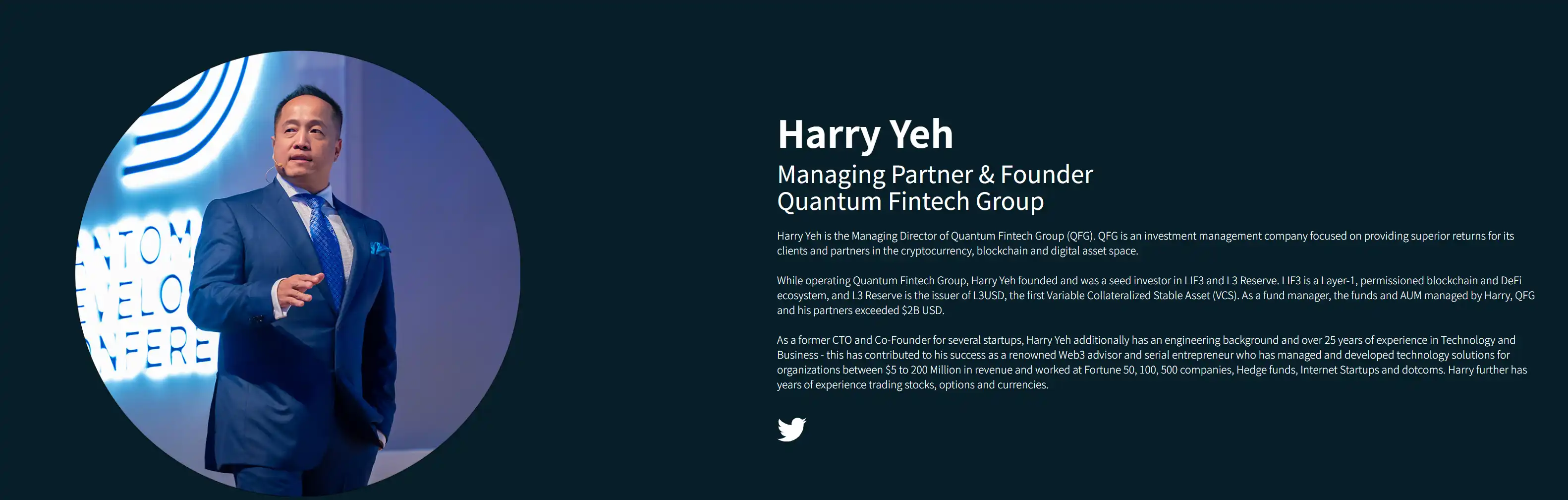
The website shows that Harry Yeh had over 25 years of experience in technology and business, having served as CTO and co-founder of several startups, and had years of experience trading stocks, options, and foreign exchange. Public records indicate he was born in Hong Kong and moved to Canada as a child.
In 2013, when the Bitcoin price was around $60, he entered the market and launched his first fund with approximately $250,000. He initially conducted OTC trading, market-making, and related fund management through Binary Fintech Group.
2021 was a key turning point. In September of that year, Tomb Finance (an algorithmic stablecoin-like project deployed on Fantom, involving tokens like TOMB, TSHARE, TBOND) suffered a liquidation panic due to social engineering exploiting the 'Gatekeeper Tax'—a selling tax established to prevent whale withdrawals. Harry Yeh announced that he and his team would take over, and detailed a plan on September 11. Subsequently, through leverage and aggressive PR, he pushed Tomb Finance's TVL to a historical peak of $1.6 billion in January 2022. However, the project's tokens have since approached zero, and its last X post was in February 2025.
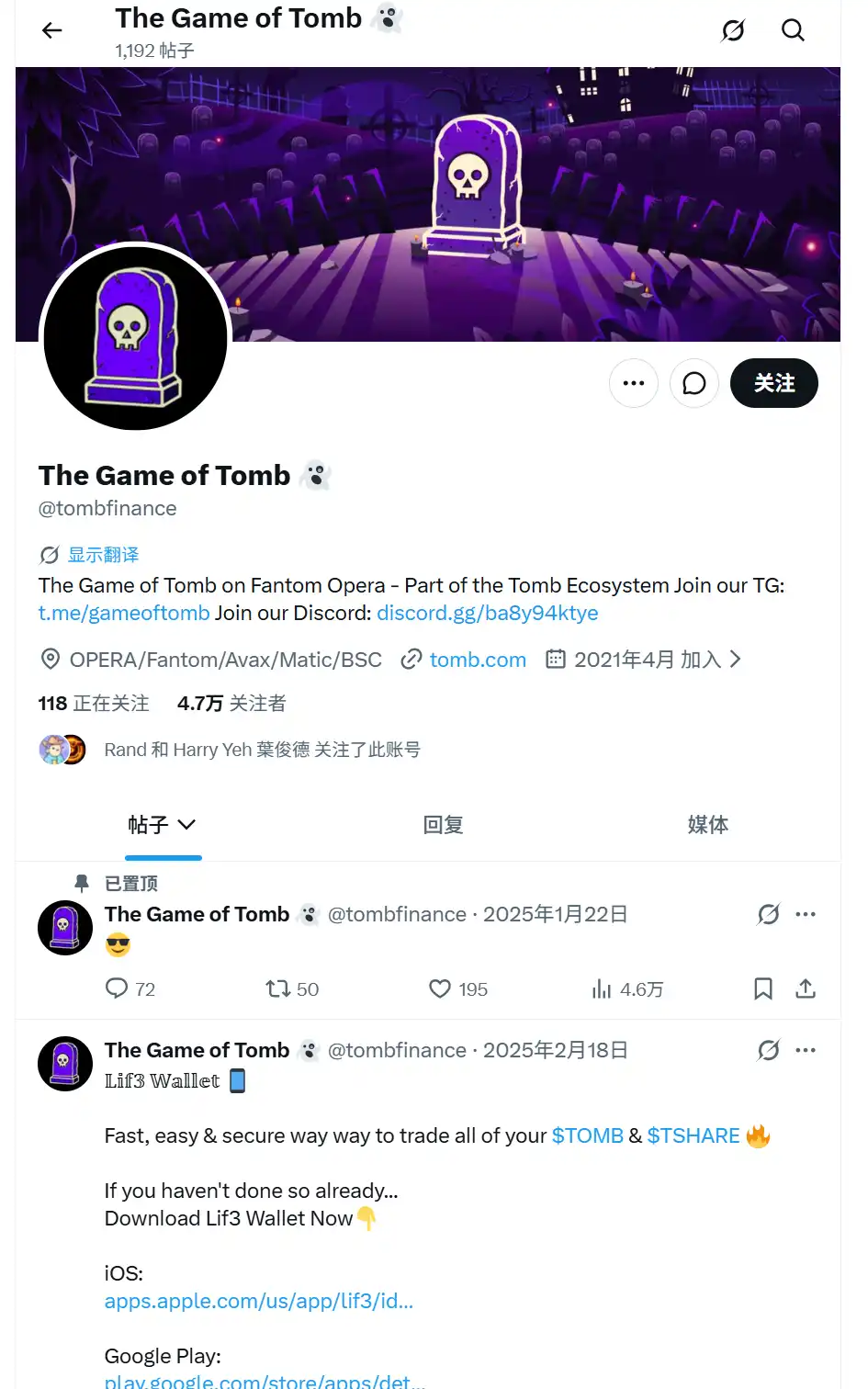
Concurrently, he was a significant early supporter and promoter of the Fantom ecosystem, frequently expressing public optimism for FTM and sharing views at related conferences.
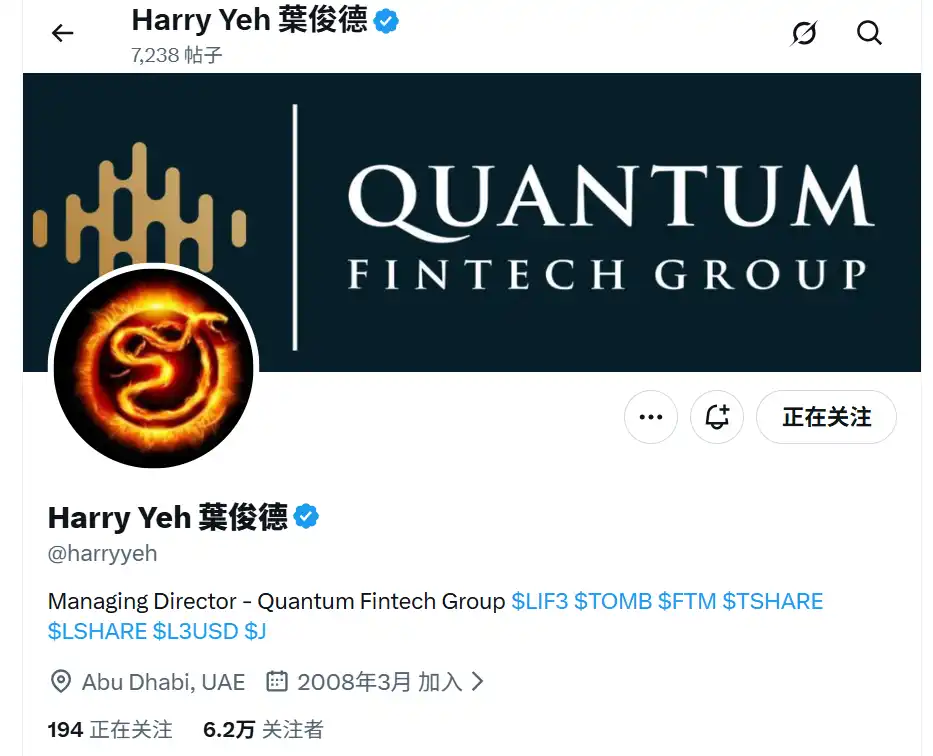
From 2022 onward, he began promoting LIF3. The project was positioned as an improvement and extension of Tomb, emphasizing accessibility and security, offering functions like trading, yield farming, liquidity provision, and derivatives. His X social media account was long tagged with identifiers for tokens like LIF3, TOMB, FTM, TSHARE, and L3 USD.
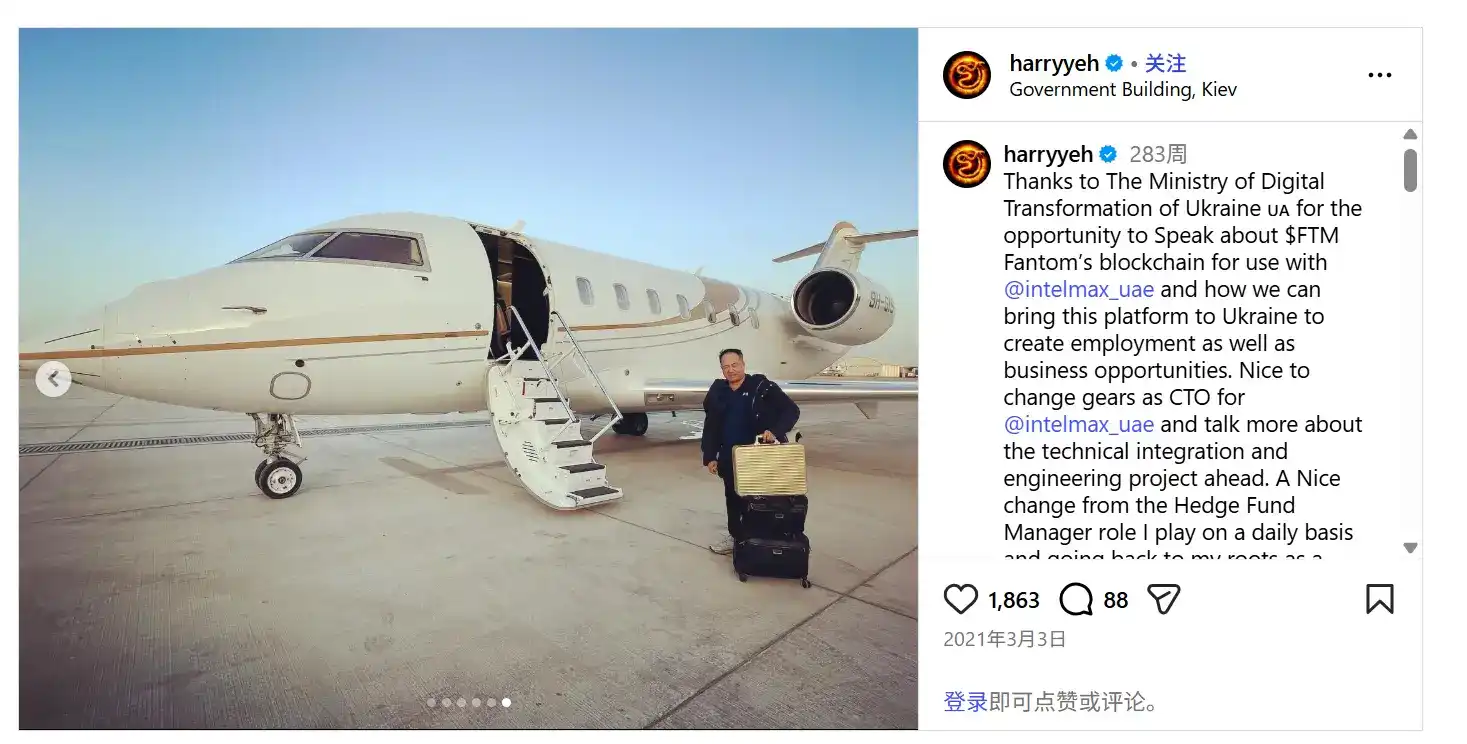
His public persona was relatively high-profile. While he didn't flaunt a lavish lifestyle on X, on Instagram, he frequently showcased private jets and luxury yachts. His reputation in the crypto community was divided. Early on, some saw him as an OG helping the ecosystem expand rapidly, while later, many voices questioned the sustainability and team transparency of his projects.
The crypto industry is no stranger to high-net-worth participants meeting unnatural deaths.
In 2025, Faruk Fatih Özer, founder of the defunct Turkish exchange Thodex, died in prison. His lawyer stated he had recently isolated himself and refused to see family, with preliminary judicial findings leaning towards suicide. The same year, Ukrainian crypto-related figure Konstantin Galish (Kostya Kudo) was found shot to death in his own car in Kyiv. Police mentioned suicidal tendencies and a farewell message, coinciding with a major market downturn. In early 2026, a Hong Kong man fell from his residence after reportedly losing about $1.2 million in crypto investments, with police classifying it as a fall from height.
In these cases, official conclusions and community speculation often coexist. The Harry Yeh incident remains in its early investigative stages. The scene details (naked, plastic bag, apartment in disarray) indeed raise questions about a simple accident or straightforward suicide, but any definitive characterization is premature before autopsy results and more evidence are released.
On-chain wealth can accumulate quickly, but off-chain security, privacy, and mental health are matters requiring greater attention from every crypto participant.