An Undercurrent of Bitcoin Civil War: BIP-110 Raises Fork Concerns

Foresight NewsPublicado a 2026-07-27Actualizado a 2026-07-27

Resumen

**A Summary of the Bitcoin Governance Crisis: The BIP-110 Showdown and Forking Risks** Bitcoin is facing internal division alongside a market downturn. The core of the conflict is BIP-110, the "Reduced Data Carriage Soft Fork" proposal introduced in December 2025. It aims to restrict non-financial data (like inscriptions) in future transactions, citing concerns over node costs and Bitcoin's original purpose. The controversy lies in its activation mechanism. BIP-110 requires 55% miner support within a difficulty period. However, its voting signal has remained below 1% since monitoring began. If this threshold isn't met by the August 7, 2026 deadline (block height 961,632), compatible nodes (primarily running Bitcoin Knots) are programmed to *enforce* the new rules, rejecting non-compliant blocks. Critics warn this minority-enforced activation could split the chain. Major figures like Michael Saylor, Adam Back, and Jameson Lopp strongly oppose BIP-110. Saylor argues it sets a dangerous precedent for defining "valid" transactions and could stifle future innovations. Opponents view the enforcement strategy as a risky governance overreach, contrasting it with past upgrades that achieved over 90% consensus. BIP-110 was partly a reaction to Bitcoin Core's v30 update in October 2025, which significantly increased the default data relay limit. Core developers called this a policy change, not a consensus rule, but it prompted the creation of the Bitcoin Knots branch and, subsequent...


Authored by: Ashrith Rao

Compiled by: Chopper, Foresight News


Bitcoin didn't need to face both a price decline and internal ideological disputes simultaneously. Yet now, both troubles have arrived at its doorstep.


Since the release of version v30 of the Bitcoin Core client in October 2025, a divergence in philosophy has been brewing; meanwhile, the crypto market is trying to find a price bottom amidst this turmoil.


BIP-110: Countdown to Bitcoin Fork Standoff Begins


The key deadline for this struggle is set for August 7, 2026, corresponding to block height 961632. What unfolds at that time may determine whether Bitcoin's next cycle will continue on a single main chain or split into two.


In December 2025, developer Dathon Ohm proposed BIP-110 (Note: BIP stands for Bitcoin Improvement Proposal), the "Reduced Data Ephemeral Soft Fork." This is a planned one-year soft fork proposal.


The proposal focuses on data management within blocks and carries no inherent political agenda: within approximately one year, it would limit OP_RETURN (Note: OP_RETURN is a script used to write additional data in Bitcoin transactions) output data to 83 bytes; set a maximum of 34 bytes for the vast majority of new output scripts; and impose constraints on various technologies carrying external data, including large data pushes, witness items, and certain unspecified witness versions.


Historical data already on the blockchain would not be purged; the rules would only constrain future new transactions. The focal point of controversy centers on inscriptions and various non-financial data continuously occupying Bitcoin block space since 2022.


Proponents of the proposal argue that such applications deviate from Bitcoin's original purpose as a payment and settlement system, increase the operational costs of running full nodes, and persistently expand the Unspent Transaction Output (UTXO) set.


What has truly sparked significant controversy is the proposal's activation mechanism. Relying on the bit-4 signaling mechanism, BIP-110 designs a market-led, smooth lock-in activation path: within a 2016-block difficulty period, it requires 55% of the hashrate to vote in favor.


Since monitoring went live on December 1, 2025, the proposal's hashrate voting share has remained persistently low, staying within the 0.3%~0.4% range. The latest observation data shows a minimum of 0% and a maximum of only 0.86%. If the conventional voting channel fails to meet the threshold, the proposal will initiate an enforcement plan: mandatory activation at block height 961632.


By this time point, regardless of the stance of the majority of the network's hashrate, nodes running clients compatible with BIP-110 (primarily Bitcoin Knots) will begin rejecting blocks that do not comply with this rule.


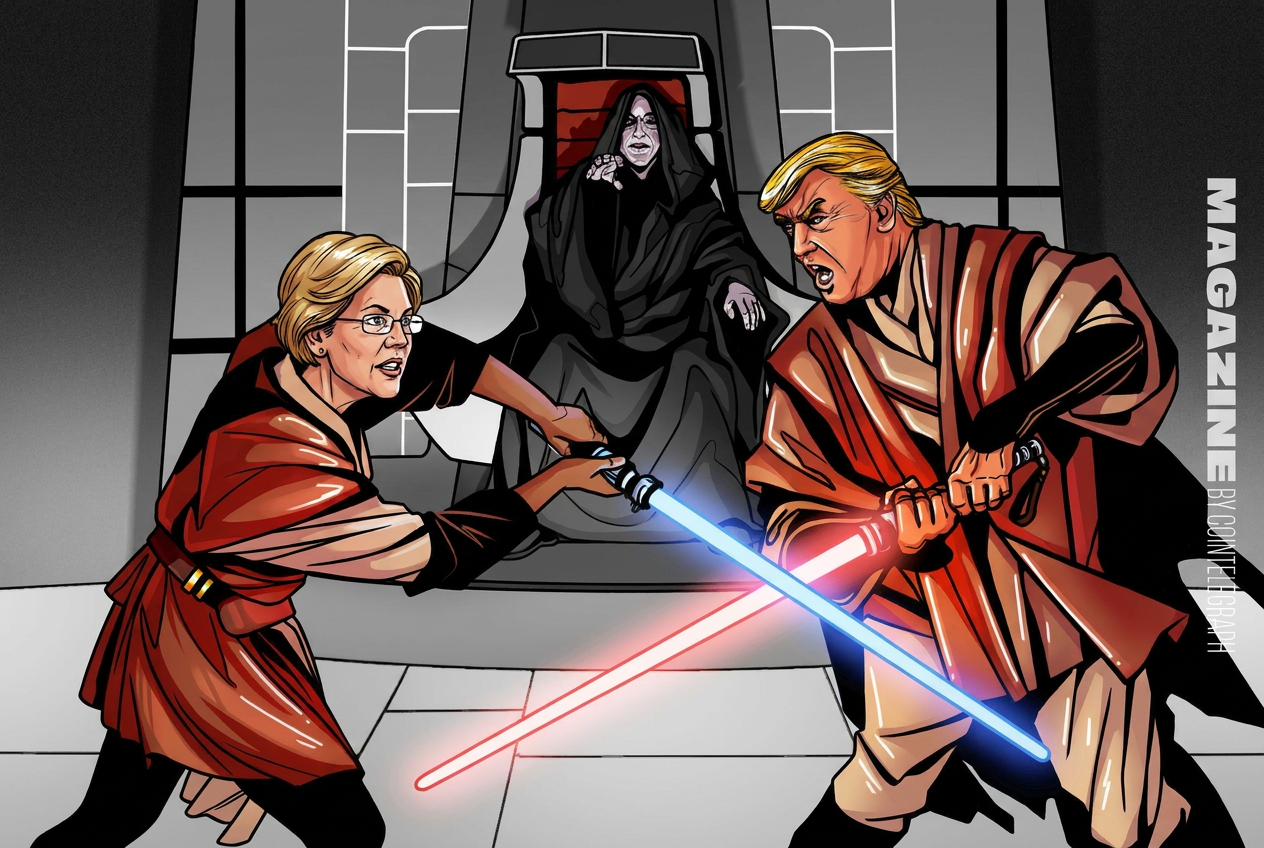
Critics argue that this strategy, modeled after the 2017 UASF (User Activated Soft Fork), escalates what seemed like a minor technical discussion into a major governance dispute.


Current Hashrate Data


The current Bitcoin network hashrate is approximately 940 EH/s, while BIP-110's voting hashrate is less than 1%, roughly only 5 EH/s. Currently, the vast majority of observable voting blocks come from the mining pool Ocean, an entity linked to Jack Mallers and Adam Back.


The majority of Bitcoin hashrate controllers either remain indifferent or explicitly oppose the proposal. The vast chasm in hashrate support highlights the significant potential consequences should BIP-110 initiate its forced path.


When a minority of nodes forcibly imposes a rule that the vast majority of hashrate and nodes refuse to recognize, the ultimate outcome is not the implementation of the rule but rather the creation of two independently valid blockchains. Both chains would accept blocks that comply with BIP-110's strict rules; however, non-BIP-110 nodes can accept blocks that do not meet the restrictive conditions, while BIP-110 nodes would outright reject them.


The fact that BCH's current price is merely a fraction of BTC's is the most direct illustration of how the market views a forked chain lacking sufficient hashrate support.


Positions of Various Parties Gradually Clarify


As the deadline approaches, the strength of the opposing camp is not diminishing but increasing.


On July 18th, Michael Saylor published a lengthy article titled "110 Reasons to Oppose BIP-110," launching a fierce critique. He argued that Bitcoin's consensus layer should not define the "legitimate use" of fee-paying transactions. Compared to whether spam transactions proliferate, he is more wary of the risk of setting a precedent. Once consensus rules start distinguishing between "compliant transactions" and "non-compliant transactions," this paradigm could become permanently entrenched and potentially abused by those manipulating future rule iterations.


He also pointed out that BIP-110 would limit future upgrade potential. Solutions like BitVM, which rely on data flexibility for contracts, would be constrained by the proposal.


Adam Back and Jameson Lopp have also raised similar but independent points: this activation mechanism itself is highly risky. Past successful Bitcoin upgrades, such as Segregated Witness (SegWit) and Taproot, all garnered over 90% hashrate support before formal implementation. In comparison, a 55% threshold is already low. And with the current natural voting support rate below 1%, forcing activation would only create division, not consensus.


Many practitioners have chosen neutrality. Jimmy Song publicly stated, "I don't know enough about this mechanism to judge the consequences of either path," a remark that drew considerable criticism. In this heated debate, a neutral stance is seen by many as avoiding taking a position.


On the other side, Bitcoin Knots developers and BIP-110 supporters point to the changes in the Core v30 release from October 2025: the client increased the default relay policy limit for OP_RETURN from 83 bytes to approximately 100,000 bytes—an increase of over 1200 times.


The Core team defines this as a relay policy adjustment, not a consensus rule change, arguing that relying on relay filtering cannot completely eliminate spam data, as external data can be embedded in ordinary transaction outputs in forms like hashes, making it difficult to distinguish and block.


Technically, this viewpoint holds true; relying on the relay layer cannot completely prohibit arbitrary data storage. This is precisely the core argument of BIP-110 opponents—the proposal treats the symptoms, not the root cause. It not only struggles to eradicate the problem but may directly cause a blockchain split in the attempt to fix it.


It was Core's release of the v30 update in October 2025 without broad community communication that led to the Bitcoin Knots fork; months later, BIP-110 emerged as a countermeasure.


The Second Risk Point: Sztorc Proposes eCash Hard Fork


Aside from BIP-110, the market faces another variable in August. Concurrently with BIP-110, Paul Sztorc, the proposer of the Drivechain proposal (BIP 300/301), announced plans to initiate an independent hard fork targeting block height 964,000.


This plan would create a brand new SHA-256d public chain with an initial state identical to Bitcoin's. After the fork launches, the network difficulty resets; at the fork block, all BTC holders would receive the new forked asset in equal amounts.


Unlike BIP-110, this fork does not impose data limits. Its core goal is to advance scaling and sidechains, implementing sidechain scaling solutions that have been delayed for years from mainnet deployment.


The two fork events have independent origins but will create a compounding risk effect. Around the time the mandatory signaling period begins, exchanges, custodians, wallet service providers, and institutional holders all need to simultaneously decide whether to support BIP-110 while also handling the 1:1 distribution of forked tokens. The two are not coordinated; they are merely coincidental in timing, yet will place immense pressure on the entire industry within a three-week span.


Market Impact


Since reaching a high in October 2025, Bitcoin is currently in a phase of building a market bottom. Although some institutions continue to accumulate during the decline, BlackRock's IBIT Bitcoin ETF saw significant outflows in June.


The market is already digesting macro-level pricing reassessments, and governance disputes with potential forking tail risks have arrived one after another; had this occurred at a bull market peak, such risks might have been easily overlooked by the market, but the current environment amplifies panic.


Prediction markets have not yet treated BIP-110 as an independent, highly liquid, binary major event. Bitcoin price contracts on Polymarket in mid-to-late July show traders generally expect Bitcoin prices to remain within the $50,000 to $60,000 range in early August.


This also aligns with hashrate data: if hashrate voting remains below 1% three weeks in advance, BIP-110 is highly unlikely to lock in activation through the conventional channel.


The most direct suspense is whether the Bitcoin Knots camp's nodes will still insist on the enforcement strategy after the conventional activation path fails. The final decision-making power is not controlled by market forces but lies in the hands of a small group of client maintainers.


If the forced path is implemented, the market might react in a predictable way: the original chain, supported by the vast majority of miners and exchanges, will most likely become the core for liquidity, hashrate, and price discovery.


"The market will ultimately resolve the dispute" and "The market can resolve the dispute without cost" are two entirely different propositions.


A chain fork would create numerous short-term troubles: risks of replay attacks, confusion over exchange listing rules, uncertainty regarding custodial asset ownership, and risk premiums (manifested as widening bid-ask spreads and shrinking order book depth). In an environment where market confidence is already weak, the impact would be more pronounced.


On August 7th, the market faces a severe test, determining whether Bitcoin can truly shake off the shadow of the 2017 governance crisis.


Criptos en tendencia

Preguntas relacionadas

QWhat is the BIP-110 proposal and what is its primary objective according to the article?

AThe BIP-110 proposal, or the 'Reduce Data Ephemeral Soft Fork', is a one-year planned soft fork proposal focusing on data management within blocks. Its primary objective is to impose limits on future data: restricting OP_RETURN outputs to 83 bytes, capping most new output scripts at 34 bytes, and placing constraints on technologies used for external data, such as large data pushes and certain witness versions. It aims to address concerns about non-financial data, like inscriptions, which are seen as deviating from Bitcoin's original purpose as a payment system and increasing costs for full nodes.

QWhat is the activation mechanism for BIP-110, and why is it controversial?

AThe BIP-110 proposal relies on a bit-4 signaling mechanism with a market-led, smooth activation path: it requires approval from 55% of the hashrate over a 2016-block difficulty period. If this threshold is not met through regular voting by August 7, 2026 (block height 961632), the proposal includes a 'force-activation' scheme where nodes running BIP-110 compatible clients (mainly Bitcoin Knots) will begin rejecting blocks that do not follow the new rules. This mechanism is controversial because critics view it as a UASF-like strategy that could force a rule change without broad consensus, potentially leading to a chain split if a majority of miners and nodes reject it.

QAccording to the article, what is the current level of hashrate support for BIP-110, and what does this indicate about its likely outcome through the regular voting path?

AAccording to the article, the current hashrate support for BIP-110 is extremely low, ranging from 0% to a maximum of 0.86%, which is significantly less than 1% of the total network hashrate. The vast majority of Bitcoin's hashrate is either indifferent or explicitly opposed. This data indicates that it is highly unlikely for BIP-110 to achieve the required 55% approval through its regular voting channel before the deadline.

QWho are some notable figures opposing BIP-110, and what are their main arguments against it?

ANotable figures opposing BIP-110 include Michael Saylor, Adam Back, and Jameson Lopp. Michael Saylor argues that Bitcoin's consensus layer should not define 'reasonable use' for fee-paying transactions, as setting a precedent for distinguishing 'compliant' from 'non-compliant' transactions could be abused in the future. He also states it would limit future upgrades like BitVM. Adam Back and Jameson Lopp criticize the activation mechanism itself, noting that past successful upgrades like SegWit and Taproot had over 90% hashrate support before activation. They argue that forcing activation with minimal support creates division rather than consensus.

QBesides BIP-110, what is the other significant fork-related event mentioned in the article for August 2026, and how does it differ from BIP-110?

AThe other significant event is a planned independent hard fork proposed by Paul Sztorc, the author of the Drivechain proposal (BIP 300/301), targeting block height 964000. This fork aims to create a new SHA-256d public chain with an initial state identical to Bitcoin, where all BTC holders will receive an equal amount of the new forked asset. Unlike BIP-110, this fork does not impose data limits. Its core goal is to advance scaling and sidechain solutions, specifically to implement sidechain scaling proposals that have long been delayed on the main Bitcoin network.

Lecturas Relacionadas

The 800x Golden Dog, "Gacha" Saves NFT Trading

Title: 800x Golden Dog: How 'Gacha' Mechanics Are Rescuing NFT Trading In the past month, the on-chain TCG (Trading Card Game) narrative, centered around "gacha" or loot box mechanics, has emerged as a major crypto-native revenue generator, second only to platforms like Hyperliquid and pump.fun. Recently, this trend hit Ethereum with Fake World Assets (FWA). Within just over a week, FWA generated approximately $1.3 million in revenue, ranking 15th in the past week's crypto app earnings. Its token, $FWA, surged from an initial market cap of ~$47,550 to a peak of ~$38.8 million—an 800x gain. Meanwhile, Collector Cards' token $CARDS declined significantly from its previous highs. FWA, developed by the team behind "PunkStrategy," operates as an NFT gacha system with a built-in token flywheel. Users deposit NFTs paired with ETH as liquidity into pools. Each deposit creates a personal pool; more ETH deposited lowers the chance of the NFT being "won" in a draw. Players spend ETH to "draw" (gacha). If they get an undesirable NFT, they can instantly sell it back to the original depositor at an 85% discount, generating income for the depositor. A 1% fee is taken on each draw and on depositor earnings when an NFT is kept. The key to FWA's momentum is its token $FWA. It cannot be bought directly externally. The primary way to acquire it is by playing the gacha and choosing to receive $FWA (instead of ETH) when selling back an unwanted NFT. This mechanism creates constant buy pressure for $FWA as players engage, especially during its price ascent. Early participants who held $FWA benefited massively from subsequent inflows. This contrasts with projects like Collector Cards, which, despite strong revenues, suffer from perceived low token utility beyond buybacks. In conclusion, while FWA's flywheel design—linking speculative token gains directly to NFT trading activity—has driven rapid growth, its sustainability is questionable. The model relies heavily on continuous $FWA price appreciation to offset the inherent negative expectancy of each draw. When price momentum stalls, activity will likely decline. The case highlights that in crypto markets, pure profitability narratives can be fleeting; understanding the relationship between attention, token buy pressure, and sustainable mechanics is crucial to avoid speculative pitfalls.

marsbitHace 20 min(s)

The 800x Golden Dog, "Gacha" Saves NFT Trading

marsbitHace 20 min(s)

The Quantum Computing Threat Approaches, Cryptocurrency May Be Exposed to Risks Before Banks

Quantum computing poses a significant threat to all cryptographic systems, including banks and governments, but decentralized cryptocurrencies with public ledgers like Bitcoin are likely the first practical target. Experts warn that a cryptographically relevant quantum computer (CRQC), capable of running Shor's algorithm to break the elliptic curve cryptography securing most crypto wallets, could emerge around 2029. Recent research shows the required quantum resources for such attacks are shrinking dramatically, potentially enabling key extraction in minutes. The core vulnerability for cryptocurrencies is not the cryptography itself—post-quantum standards are being developed—but the slow, decentralized governance required to implement upgrades. Unlike centralized banks that can swiftly transition, Bitcoin needs near-unanimous consensus among its global network, a historically difficult process as seen in past upgrades. Estimates suggest migrating all vulnerable Bitcoin funds could take at least 76 days of dedicated network time, and it must be completed before a CRQC exists to prevent "now-or-never" attacks on exposed keys. The threat is not binary; it begins when a quantum computer can decrypt data before it loses value, not necessarily in real-time. A significant portion of Bitcoin (estimated at millions of coins) already has public keys permanently exposed on-chain, making them vulnerable to eventual "static attacks." While technical solutions exist, the race is against time for decentralized networks to coordinate a defensive transition, serving as an early warning for the broader financial system.

marsbitHace 31 min(s)

The Quantum Computing Threat Approaches, Cryptocurrency May Be Exposed to Risks Before Banks

marsbitHace 31 min(s)

On the First Day of Listing, Changxin Technology's Market Value Exceeds 3 Trillion Yuan, Which Securities Firm Has the Largest Floating Profit?

On July 27th, Changxin Technology, the largest-ever IPO on China's STAR Market, debuted with its share price soaring 465.82% to close at 49 yuan. Its market capitalization reached 3.28 trillion yuan, instantly making it the most valuable A-share company. The stellar performance delivered substantial gains for involved securities firms, primarily through equity investments rather than underwriting fees. China Merchants Securities emerged as the biggest winner. Its direct investment subsidiary, Zhaozheng Investment, alone holds a 0.54% pre-issue stake, translating to a paper profit exceeding 155 billion yuan based on the first-day closing price—surpassing the firm's entire 2025 net profit of 123.5 billion yuan. Other major beneficiaries include Huaan Securities, with an estimated profit of around 123 billion yuan from its 0.44% stake, and the lead underwriters, CICC and CITIC Securities, which each gained approximately 46 billion yuan from mandatory follow-on investments. Firms like Founder Securities, Haitong Securities, and GF Securities also reported significant holdings valued in the billions. Despite these paper gains, shares of some brokerages like Huaan and China Merchants fell on the listing day, reflecting broader market pressures. Analysts remain bullish on Changxin's long-term prospects, citing the AI-driven demand surge for DRAM (Dynamic Random-Access Memory) and a supportive supply-demand dynamic with projected shortages through 2028. As China's largest and most advanced integrated DRAM designer and manufacturer, Changxin is poised to capture growth from domestic substitution and global market shifts, potentially challenging the current "big three" oligopoly (Samsung, SK Hynix, Micron). The IPO proceeds, focused on capacity upgrades and R&D, are expected to accelerate China's semiconductor self-sufficiency.

marsbitHace 1 hora(s)

On the First Day of Listing, Changxin Technology's Market Value Exceeds 3 Trillion Yuan, Which Securities Firm Has the Largest Floating Profit?

marsbitHace 1 hora(s)

Will Changxin Technology Continue to Rise Today?

Changxin Technology made a historic debut on the stock market, with its share price soaring 465.82% to close at 49 yuan. Its market capitalization reached 3.28 trillion yuan, surpassing Industrial and Commercial Bank of China to become the largest company by market cap on the A-share market. Daily trading volume exceeded 140 billion yuan, a first in A-share history. This created a moment of realization for 7.7 million investors who won the lottery for its shares. On the first day, investor strategies varied: some sold immediately and later regretted missing intraday highs, others secured profits to avoid future volatility, while a third group held or even bought more shares, betting on long-term growth. The staggering IPO, massive public enthusiasm, and debut during a peak industry cycle led some to compare Changxin to PetroChina's 2007 listing, which was followed by a long decline. Key similarities noted include comparable fundraising scales (approx. 666 billion yuan for Changxin vs. 668 billion for PetroChina) and both companies listing at a perceived high point in their respective commodity cycles (oil then, memory chips now). However, analysts caution against over-simplifying the comparison. They highlight core differences: Changxin operates in the high-growth semiconductor sector with strong "domestic substitution" tailwinds. Brokerages like Huaxi Securities project significant revenue and profit growth from 2026 to 2028, driven by DDR5 adoption, product mix optimization, and economies of scale. Nomura Securities issued a "buy" rating with a 116 yuan target price, citing AI-driven demand for DRAM, tight supply as major players shift to HBM production, and Changxin's vast room for market share growth. Some analysts position the current memory cycle, fueled by AI, as just beginning, contrasting with the mature energy cycle PetroChina entered. The article concludes that for investors, monitoring the memory cycle's progression and Changxin's breakthroughs in high-end technologies like HBM will be crucial, rather than relying on superficial historical parallels.

marsbitHace 1 hora(s)

Will Changxin Technology Continue to Rise Today?

marsbitHace 1 hora(s)

Trading

Spot

Artículos destacados

Cómo comprar WAR

¡Bienvenido a HTX.com! Hemos hecho que comprar WAR (WAR) sea simple y conveniente. Sigue nuestra guía paso a paso para iniciar tu viaje de criptos.Paso 1: crea tu cuenta HTXUtiliza tu correo electrónico o número de teléfono para registrarte y obtener una cuenta gratuita en HTX. Experimenta un proceso de registro sin complicaciones y desbloquea todas las funciones.Obtener mi cuentaPaso 2: ve a Comprar cripto y elige tu método de pagoTarjeta de crédito/débito: usa tu Visa o Mastercard para comprar WAR (WAR) al instante.Saldo: utiliza fondos del saldo de tu cuenta HTX para tradear sin problemas.Terceros: hemos agregado métodos de pago populares como Google Pay y Apple Pay para mejorar la comodidad.P2P: tradear directamente con otros usuarios en HTX.Over-the-Counter (OTC): ofrecemos servicios personalizados y tipos de cambio competitivos para los traders.Paso 3: guarda tu WAR (WAR)Después de comprar tu WAR (WAR), guárdalo en tu cuenta HTX. Alternativamente, puedes enviarlo a otro lugar mediante transferencia blockchain o utilizarlo para tradear otras criptomonedas.Paso 4: tradear WAR (WAR)Tradear fácilmente con WAR (WAR) en HTX's mercado spot. Simplemente accede a tu cuenta, selecciona tu par de trading, ejecuta tus trades y monitorea en tiempo real. Ofrecemos una experiencia fácil de usar tanto para principiantes como para traders experimentados.

223 Vistas totalesPublicado en 2024.12.11Actualizado en 2026.06.02

Cómo comprar WAR

Discusiones

Bienvenido a la comunidad de HTX. Aquí puedes mantenerte informado sobre los últimos desarrollos de la plataforma y acceder a análisis profesionales del mercado. A continuación se presentan las opiniones de los usuarios sobre el precio de WAR (WAR).

活动图片