Liberland Fires Tech Secretary After Alleged Blockchain And Website Takeover Attempt

bitcoinistPublicado a 2026-06-15Actualizado a 2026-06-15

Resumen

Liberland's congress has voted to remove Technology Secretary Dorian Stern Vukotić, following a resolution accusing him of attempting to hijack the Liberland.org domain, removing administrative multisig protections, blocking the president from voting, and launching unauthorized tokens. The incident serves as a case study in blockchain governance, highlighting risks that go beyond smart contracts to include control over domains, admin keys, and off-chain authority. For the crypto industry, it underscores the need to scrutinize decentralization claims against operational realities, where a small group can still compromise governance. The story reflects a broader market shift where infrastructure security and governance are becoming as critical as price action. Editorial framing should treat the development as a verified information signal about governance risks, avoiding overstatement of Liberland's legal status and leaving room for follow-up evidence.

Liberland’s congress has voted to remove Secretary of Technology Dorian Stern Vukotić, according to an official congressional resolution published by the micronation project.

The resolution accuses Vukotić of removing multisig protections on the administrative Sudo account, attempting to hijack the Liberland.org domain, blocking President Vít Jedlička from voting, and launching unauthorized tokens.

The allegations make the story a useful case study in blockchain governance, administrative control, and the risks that arise when technical infrastructure becomes part of a political dispute.

Governance Risk Goes Beyond Code

The Liberland dispute shows that governance failures are not always clean smart-contract exploits. They can also involve permissions, domains, voting rights, multisig design, admin accounts, and disputes over who has legitimate authority.

That makes the story relevant beyond Liberland itself. Many crypto projects rely on a mix of on-chain governance and off-chain control points, including websites, admin keys, social accounts, and multisig signers.

Why This Matters

For crypto users, the key lesson is that decentralization claims need to be tested against operational reality. If a small number of actors can control admin functions, domains, or voting access, governance can still become fragile.

The article should frame Liberland accurately as a micronation project, not as a universally recognized sovereign state.

What To Watch Next

Watch for blockchain explorer records, follow-up votes, and any legal or domain registry updates tied to the dispute.

The article should avoid overstating Liberland’s international legal status.

Market Context

For Bitcoinist, the story sits inside a wider shift in crypto where infrastructure, security, governance, and token utility are becoming just as important as short-term price action. Traders still care about momentum, but they also need to understand the systems, risks, and product changes behind the headlines.

The useful angle is not to overstate the development, but to explain why it belongs in the daily market conversation. Strong crypto stories increasingly come from protocol updates, official notices, security reports, court records, and on-chain data rather than recycled commentary alone.

The editorial takeaway should stay grounded: the source confirms a meaningful crypto development, but the implications depend on adoption, follow-up disclosures, or further on-chain evidence. That balance keeps the piece useful without leaning on hype or unsupported claims.

From an editorial standpoint, this makes the story worth covering as part of the day’s broader crypto operating environment rather than as a standalone hype cycle. The strongest version of the piece should stay close to the verified source, explain the practical risk or opportunity, and leave room for follow-up once more official data, filings, or project statements are available.

For now, the safest editorial framing is to treat the development as an information signal, not a final judgment. That keeps the article useful for traders and industry readers while avoiding claims that go beyond the primary source.

This report is based on information from Liberland’s official congressional resolution.

Preguntas relacionadas

QWhat is the main reason given by Liberland's congress for removing Technology Secretary Dorian Stern Vukotić?

AThe main reason is that he is accused of attempting to take control of key technical infrastructure, including removing multisig protections on an administrative account, trying to hijack the Liberland.org domain, blocking the President from voting, and launching unauthorized tokens.

QWhat broader lesson for crypto users does the article highlight based on the Liberland dispute?

AThe key lesson is that decentralization claims must be tested against operational reality. If a small group can control administrative functions, domains, or voting access, governance can remain fragile, even if the project claims to be decentralized.

QAccording to the article, how should Liberland be accurately framed?

ALiberland should be accurately framed as a micronation project, not as a universally recognized sovereign state.

QWhat does the article say makes the Liberland story relevant beyond its own context?

AIt's relevant because many crypto projects rely on a mix of on-chain governance and off-chain control points like websites, admin keys, social media accounts, and multisig signers. The dispute shows governance failures can involve these real-world administrative elements, not just code exploits.

QWhat editorial framing does the article recommend for covering this development?

AIt recommends treating the development as an information signal or a meaningful crypto governance event, not as a final judgment. The piece should stay close to verified sources, explain the practical risk, and avoid hype or unsupported claims.

Lecturas Relacionadas

Oil Prices Fall Below $80, Bitcoin Yet to Rise: Liquidity Becomes Key Market Driver

Oil prices fell below $80 as a US-Iran peace framework eased tensions, but Bitcoin failed to rally, remaining around $64,900. The article argues that while lower oil removes a key bearish factor for BTC, the primary market drivers have shifted to liquidity conditions, Federal Reserve policy, ETF fund flows, and overall risk appetite. Historically, high oil prices threatened inflation, delaying Fed rate cuts and hurting risk assets like Bitcoin. Now, with oil prices down, Bitcoin's path hinges on whether this translates into lower inflation expectations, softer Treasury yields, and a more dovish Fed stance. Recent FOMC minutes still show concern over energy-driven inflation, keeping financial conditions restrictive. Bitcoin ETF flows showed a slight positive inflow recently, but sustained demand is needed for a meaningful shift. The market requires consistent signals: stable ETF inflows, declining yields, and improving risk sentiment alongside lower oil prices. Without this combination, lower oil alone may not boost BTC. The outlook presents two paths: a recovery if lower oil eases inflation, the Fed turns less hawkish, and ETF demand stabilizes, allowing BTC to reclaim the $66,900-$70,000 range. Conversely, Bitcoin could remain pressured if the peace deal stalls, the Fed remains restrictive, yields stay high, or ETF flows reverse. In summary, for the remainder of 2026, liquidity factors—Fed policy, ETF activity, and investor risk appetite—have surpassed oil prices as the critical determinants of Bitcoin's price trajectory.

marsbitHace 18 min(s)

Oil Prices Fall Below $80, Bitcoin Yet to Rise: Liquidity Becomes Key Market Driver

marsbitHace 18 min(s)

Full Debut Q&A! Fed Chair Wash: Firmly Adhering to 2% Inflation Target, Establishing Five Special Task Forces, Personally Did Not Submit Dot Plot

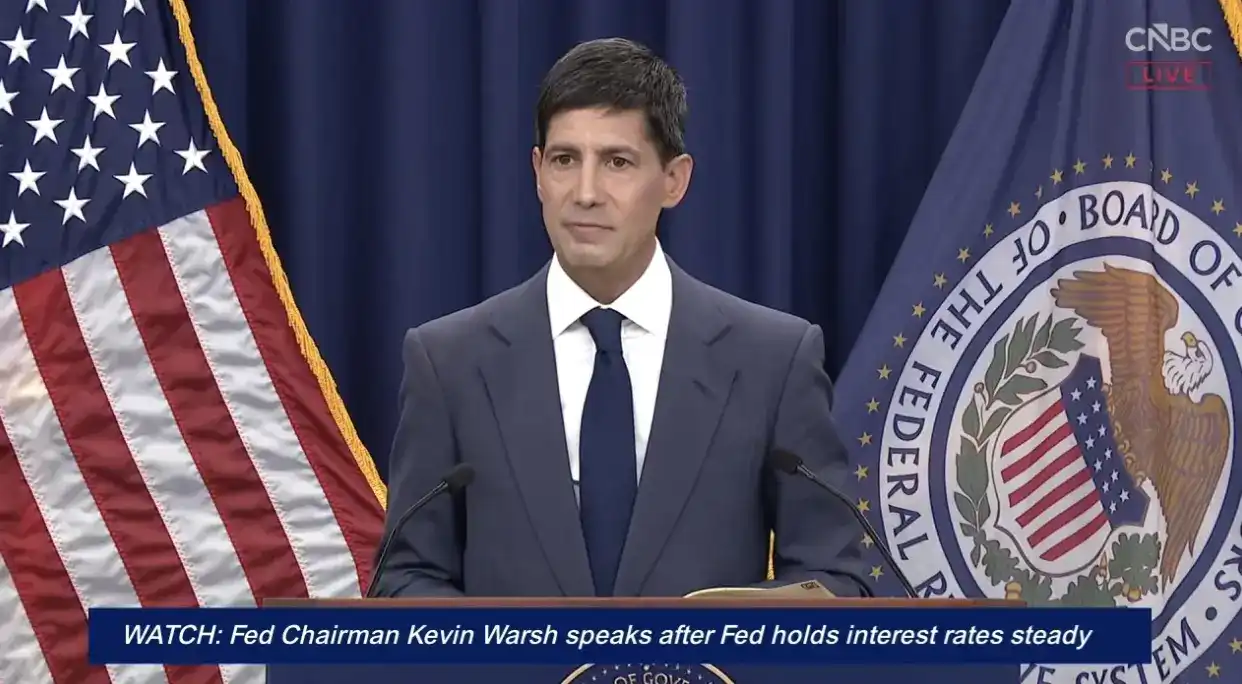
Federal Reserve Chair Kevin Warsh delivered his first FOMC press conference, maintaining the federal funds rate at 3.5%-3.75% and emphasizing the Committee's unanimous and explicit commitment to achieving its 2% inflation target. Key announcements included significant changes to Fed communication and operations. The policy statement was significantly shortened and, notably, forward guidance was removed. Chair Warsh broke from precedent by declining to submit his own economic forecasts and "dot plot." He announced the immediate formation of five special working groups focusing on: Fed communication, the balance sheet, data sources, productivity and employment (including AI's impact), and the inflation framework. These groups, which will include external experts, are tasked with recommending improvements by year-end. One key group will review the Fed's $6.7 trillion balance sheet to assess the roles of interest rates versus balance sheet tools in monetary policy. Warsh characterized the current restrictive stance of policy as "uneven," noting its effect on housing but questioning its impact on financial markets where conditions appear less restrictive. He expressed a desire to move away from a "Fed-speak" driven market, arguing that markets should react to economic data rather than Fed commentary to provide better informational signals. On inflation, he stated there is no need to reconsider the 2% target until the Fed re-establishes its commitment and capability to achieve it. Economic projections (SEP) from other officials showed a split on the rate outlook for 2024, with half expecting at least one hike and half forecasting unchanged or lower rates. The median projection saw the federal funds rate at 3.8% by year-end 2024. Following the announcements, risk assets sold off sharply, Treasury yields rose, and the dollar strengthened.

marsbitHace 49 min(s)

Full Debut Q&A! Fed Chair Wash: Firmly Adhering to 2% Inflation Target, Establishing Five Special Task Forces, Personally Did Not Submit Dot Plot

marsbitHace 49 min(s)

Trading

Spot
Futuros
活动图片