Written by: Mippo
Compiled by: Chopper, Foresight News
The core responsibility of the Investor Relations (IR) department is to help the market understand an asset, its strategy, and its potential value. It serves as the bridge between the project and the market.
When I first entered the crypto industry, what was considered "good IR" was actually that great. Over the years, while we have made progress in some areas, we are far from where we should be in terms of how we communicate with investors.
Good IR can broaden your buyer base and improve the quality of your holder structure. Doing it poorly, or not doing it at all, will cause your token to decline relentlessly, no matter how good the product is.
Over the past year, we have communicated with almost all the top projects in the crypto space about building investor relations systems and have now provided services for over 20 projects. This article is a practical, actionable guide to investor communication.
Distribution is King
If you want to maximize token value, you only need to look at two factors:
- How many target investors are aware of your token's existence
- How many of these investors convert into buyers
A great IR strategy must optimize both points simultaneously.
Potential token buyers essentially fall into only two categories:
The first category is crypto liquidity funds. They are actively managed institutions that already hold your token or are tracking it continuously. For them, the core is value re-rating: getting an institution that values your token at $1 to see a path to $5. You need to achieve this with precise data, a clear narrative, and consistent progress proof. This is the work of narrative building and data presentation.
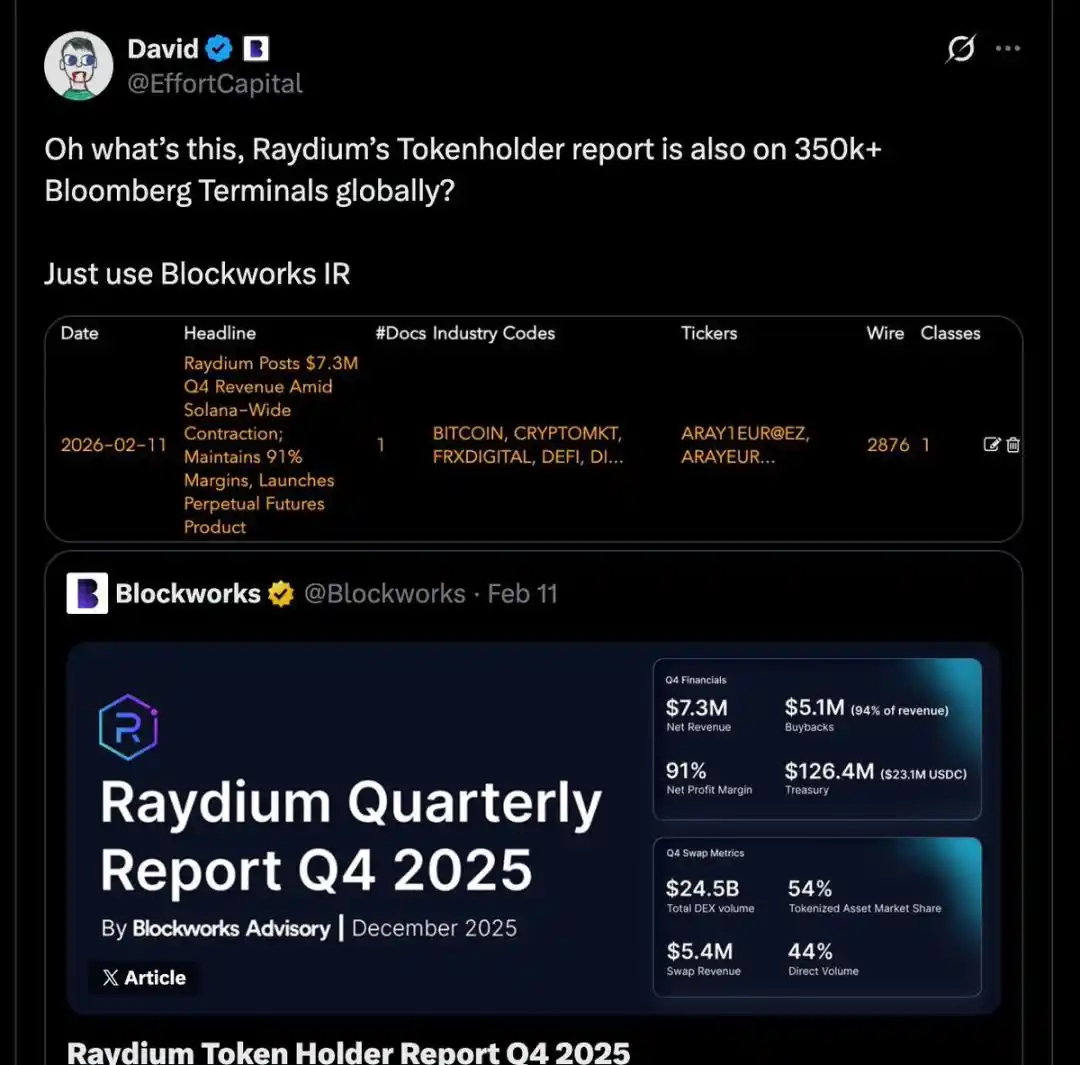
The second category is large strategic investors or institutions. Think of recent collaborations like Morpho & Apollo, or BlackRock & Uniswap. This operates on a completely different logic: longer sales cycles, stricter due diligence, and you need a mature product. If you are in the early stages or need capital in the short term, frankly, these institutions are not for you. But if you are ready, you should be where they are: on Bloomberg Terminals, at institutional summits, and building networks offline. Apply B2B sales thinking, not marketing thinking.
Control Your Narrative
If you don't proactively tell your story well, the market will tell it for you.
The reality is that the data for most protocols cannot be perfect, and that's okay. The real problem is: trying to hide it, or remaining silent for months. The excuse I hear most often is: "I don't want to get roasted on Twitter."
Projects don't die from being mocked on Twitter; they die from being forgotten by investors. The longer you go without communicating with the market, the angrier and more disappointed investors become.
You don't need perfect data; you need honesty, context, and a coherent explanation of what matters, what is improving, and what still needs work.
This is the key to building trust. Silence directly destroys it.
Token Unlocks
Token issuers must respect supply and demand.
If you want to understand price action, you only need to understand this core factor of supply and demand. Often, price management is more about the tactical operation of matching supply and demand than anything else.
The biggest mistake I see is teams starting to think about a response plan only 1-2 months before an unlock. In just 30 days, you have no time to fix a huge supply-demand imbalance.
Start planning at least 30 weeks in advance; 40-50 weeks is optimal. You need time to connect with buyers, find demand to absorb the supply, and communicate with investors if an unlock needs to be postponed.
This is the tedious, unglamorous, but critical part of IR. Give yourself enough of a time window to handle it.
Data is Your Best Ally
Narrative is important. But by 2026, a narrative unsupported by data is meaningless.
The best IR systems use data to make a token easier to understand, compare, and evaluate. The data itself should tell a complete story.
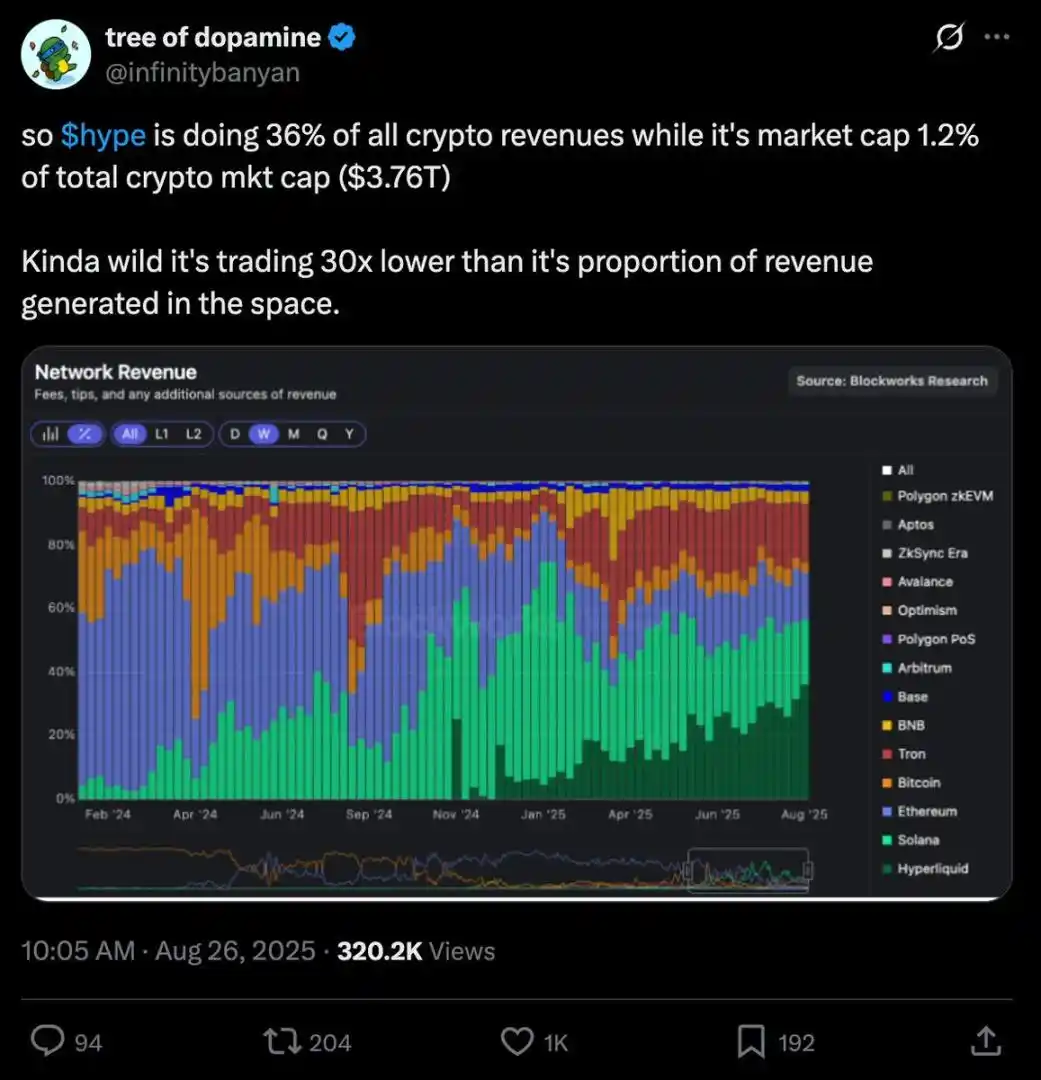
Data can come from multiple sources:
- Proprietary data from your own protocol
- On-chain market structure data
- Competitive benchmarking data
- Real-world analogies that help traditional investors understand crypto behavior
The last category is severely underestimated today. Truly excellent investor communication isn't just about showing an internal dashboard; it's about helping investors understand the role your protocol plays in the bigger picture.
For example: You operate a perpetual futures DEX, and your dashboard shows $75 million in trading volume last month. Is that good? Is it bad? Who should it be compared to? Should investors buy or run?
I see a crypto industry today with vast amounts of data but almost no context. Great teams don't just report numbers; they use numbers to tell a story.
IR is Not a Procedural Compliance Task
Most people assume investor relations in crypto is the same as in the stock market. The only problem is: IR in the stock market is incredibly boring.
Don't believe me? Listen to Vlad Tenev's perspective.
Vlad envisions a future where earnings calls are not dry Zoom presentations by a CFO to 60 sell-side analysts, but have the live feel, interaction, and emotion of an NBA post-game interview.
I completely agree. We have 8 years of experience in goal-oriented, data-driven marketing that blends offline and social media. IR should operate the same way. The goal isn't just to "inform the market"; it's to engage existing investors, deepen their conviction, and expand the pool of potential future token holders.
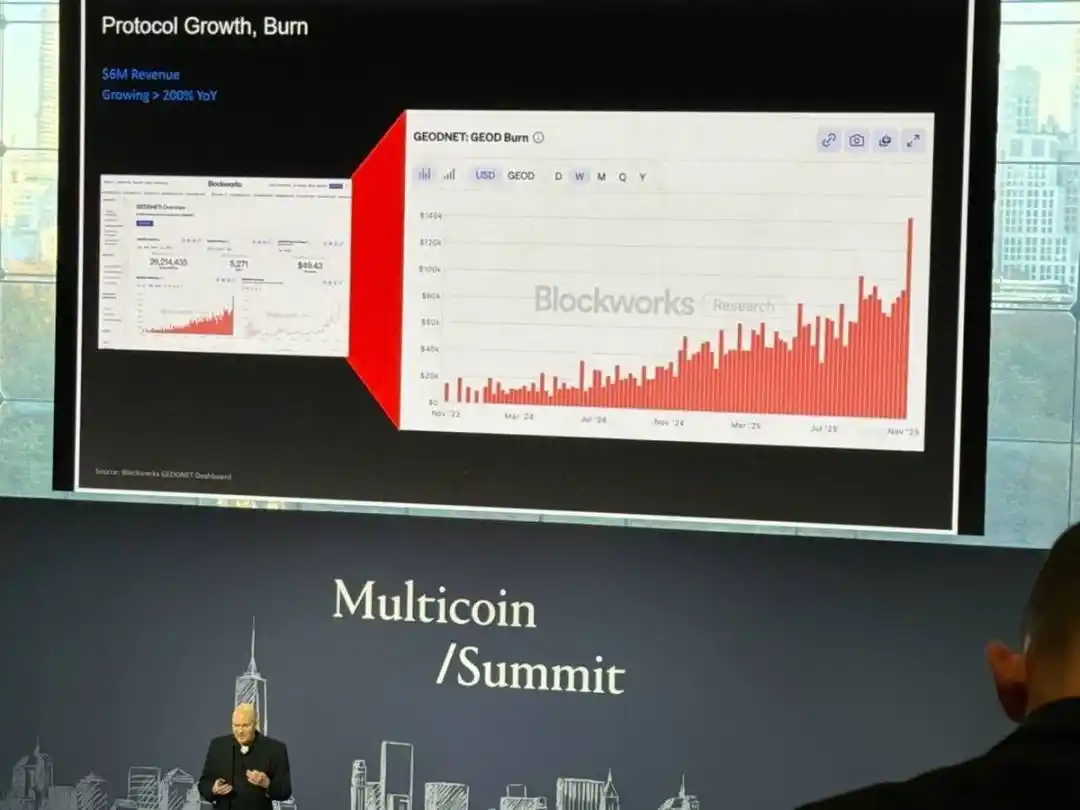
What will the future look like? Live streams on earnings day, CEOs connecting with industry guests, inviting major holders to share their insights on camera... truly interacting with investors and acquiring new holders.
Lower the Entry Cost for Potential Investors
Today, all liquidity funds must justify their holdings to their LPs. This means due diligence. This means investment memos.
If your protocol lacks public data, research reports, and contextual information, you are forcing every potential investor to build an analytical framework from scratch.
You are artificially raising the cost of investing in you. The result: fewer people will be willing to invest.
Lower the barrier for them. Continuously output high-quality information: research reports, protocol data analysis, ecosystem progress, third-party analysis. Make it easy for fund analysts to write a report and include your token in their portfolio.
Without Data Analysis, You're Flying Blind
Even the top protocols in crypto have a surprisingly weak understanding of their investor structure. Basic behavioral analysis is almost non-existent: How long do investors hold on average? Do they open perpetual hedges at token launch?
And on-chain data makes the kind of deep analysis that stock market IR teams dream of possible.
If an investor claims to be a long-term believer, the truth is already permanently recorded on-chain. Protocols that embed this analytical capability into their IR function will have a huge advantage: understanding not only existing holders but also precisely targeting the next wave of investors.
Transparency Expands Market Size
Most teams instinctively think that less disclosure is safer, but the opposite is true.
Investors are already bearing uncertainty for your token: unlocks, treasury spending, market making agreements, non-standardized terms, etc. If you don't provide answers, the market won't ignore these issues; it will fill in the blanks in the most pessimistic way possible.
The cost of insufficient transparency is incalculable. You will never know how many investors passed on your token because the information was incomplete or difficult to verify. This cost is real.
Success Metrics
It's easy to measure IR success by token price. The problem is, price is too noisy, influenced by a multitude of factors outside IR's control: macroeconomics, liquidity, market sentiment, geopolitical conflicts, etc.
A more reasonable approach is to measure whether IR has improved the quality and breadth of the investor structure.
Here are some metrics worth tracking:
- Growth in the number of target investors actively following the token
- Growth of quality holders across segments, especially liquidity funds and strategic institutions
- Changes in holder concentration
- Number of investor conversions from initial contact → active due diligence → holding a position
- Proportion of core holders aligned with the target holding period
- Frequency and quality of investor outreach throughout the year
- Growth in proactive investor inquiries
- Increased exposure in target buyer channels
- Measured through direct communication and feedback: improvement in investors' understanding of your core thesis
For liquidity funds, a practical gauge is: compared to a year ago, do more investors have a clear valuation framework for your token?
Not everyone has to buy now, but if more people understand how to look at your token, know which milestones are important, and what price is attractive, that is real progress.
IR success isn't just "did the price go up," but "did we expand the potential holder base."
The Road Ahead
We are building in this direction because the current state of tokens is an existential challenge for the entire industry. A regrettable truth is: most tokens today do not have investment value. Jason and I genuinely want to solve this problem, and years of experience have shown us the way forward.
Tokens should be more transparent and investor-friendly than stocks because they are built on crypto infrastructure. Projects have a strong incentive to move in this direction because it vastly expands the addressable market.
More importantly, the field of investor relations hasn't seen innovation in a long time. In our view, the future of IR is绝对不是枯燥的流程任务 (definitely not a boring procedural task), but vibrant, multimedia, highly interactive, and proactive. It requires actively engaging offline, sparking discussions on social media, and telling compelling stories to attract new investors. This is the direction the industry must take.