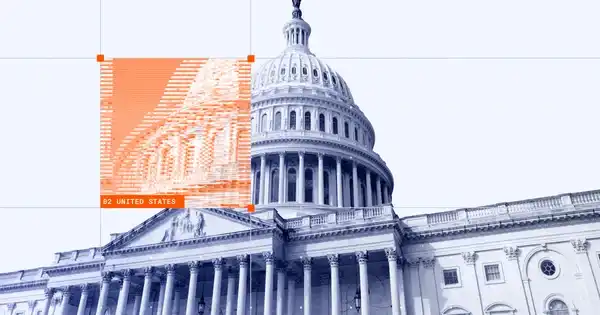
Vote on CLARITY Act in US Senate Scheduled for September 15

cryptonews.ruPublicado a 2026-08-08Actualizado a 2026-08-08

Resumen

The U.S. Senate is scheduled to hold a key procedural cloture vote on the Digital Asset Market Clarity Act (CLARITY Act) on September 15. The motion was filed by Senate Majority Leader John Thune, aiming to advance the bill for floor consideration after lawmakers failed to reach an agreement before the August recess. The vote requires 60 votes to proceed, meaning Republican support from Democrats is necessary. The landmark crypto regulatory bill aims to establish a federal market structure for digital assets, clarify whether crypto assets qualify as securities or commodities, and delineate regulatory authority between the SEC and CFTC. However, negotiations have been stalled by disagreements over proposed ethics provisions, which would restrict government officials and their families from profiting from digital assets while in office, and rules governing stablecoin yields. To break the impasse, lawmakers are reportedly working on a bipartisan ethics amendment, partly addressing Democratic concerns about former President Trump's crypto-related financial interests. The outcome of the September 15 vote and the ability to resolve disputes over ethics and stablecoin rules before then will determine the bill's future. Passage would significantly shape U.S. digital asset regulation for years to come, though aligning SEC and CFTC operational standards post-enactment is expected to be a lengthy process.

US Senate Majority Leader John Thune has filed a cloture motion on the question of bringing the Digital Asset Market Clarity Act, known as the CLARITY Act, to the floor — a procedural vote on the digital asset market structure bill is scheduled for September 15.

The vote will take place after the Senate reconvenes on September 15: lawmakers still have a few weeks left to resolve the remaining disagreements on the document.

Senate Daily Press confirmed that Thune filed a motion to bring the CLARITY Act to the Senate floor. Overcoming the procedural hurdle requires 60 votes, so Republicans will need Democratic support.

What is Hindering the Law's Passage

Thune's move puts the CLARITY Act on track for consideration in the Senate after lawmakers failed to reach agreement before the August recess. Negotiations are complicated by disagreements over ethics provisions and rules governing stablecoin rewards, among other issues.

This was reported by journalist Eleanor Terrett on social media platform X.

Advancing the bill does not guarantee that the CLARITY Act will receive a final vote or be passed by the Senate: the cloture vote pertains only to bringing the document to the floor, not to its passage.

The CLARITY Act is considered a landmark crypto regulation bill in the US. It is intended to establish a federal market structure for digital assets, define when crypto assets fall under securities or commodities legislation, and delineate authority between the Securities and Exchange Commission (SEC) and the Commodity Futures Trading Commission (CFTC).

Ethical Question as a Stumbling Block

So far, negotiations have stalled over proposed ethics provisions that would restrict government officials and their families from issuing digital assets or profiting from them while in public service.

To overcome this impasse, lawmakers are working on a bipartisan ethics amendment aimed at addressing Democrats' concerns about President Trump's cryptocurrency-related financial interests. According to Bloomberg, the amendment would require the President to divest from a number of cryptocurrency businesses.

Thus, the future of the CLARITY Act will depend on the outcome of the September 15 vote and whether the parties manage to reconcile the contentious provisions on ethics and stablecoins before that date.

The bill remains a key element in shaping the federal digital asset regulatory system in the US, and its passage will affect the division of authority between the SEC and the CFTC for years to come.

AI Opinion

From the perspective of machine data analysis, the situation around the CLARITY Act resembles the path already taken by the GENIUS Act: the stablecoin bill also got stuck on procedural hurdles before receiving Senate approval 68 to 30 in June 2025. The historical parallel shows: even contentious crypto-regulatory initiatives can overcome partisan differences if market pressure and business lobbying become strong enough.

The technical aspect that remains behind the scenes: delineating authority between the SEC and the CFTC will require not only the passage of the law but also the development of joint operational standards between the two agencies — a process that could stretch for years even after the act is signed. Should the market price in the September vote as a guarantee of imminent clarity, or is this just another stage in a long procedural marathon?

end-content
Preguntas relacionadas

QWhat procedural vote is scheduled for September 15th regarding the CLARITY Act?

AA cloture vote is scheduled for September 15th. This is a procedural vote to end debate and bring the CLARITY Act to the floor of the U.S. Senate for consideration.

QWhat are two of the main sticking points causing negotiations on the CLARITY Act to stall?

ATwo main sticking points are disagreements over proposed ethics provisions that would restrict officials and their families from profiting from digital assets, and rules governing rewards for stablecoins.

QWhy does the September 15th cloture vote require significant bipartisan support?

AThe cloture vote requires 60 votes to overcome the procedural hurdle. Given the closely divided Senate, this means Republicans will need support from Democrats to advance the bill.

QWhat is the primary regulatory goal of the CLARITY Act according to the article?

AThe primary goal is to establish a federal market structure for digital assets. This includes defining when crypto assets are securities or commodities and clarifying the jurisdictional divide between the SEC and the CFTC.

QWhat does the article's 'AI Opinion' section suggest about the bill's potential passage, drawing a historical parallel?

AIt suggests that passage is possible despite partisan disputes, drawing a parallel to the GENIUS Act which passed after overcoming procedural barriers. However, it also cautions that even if passed, implementing jurisdictional clarity between the SEC and CFTC could be a multi-year process.

Lecturas Relacionadas

US Treasury Survey Fails to Signal Debt Issuance Cuts, Treasury Yields Rise, 10-Year Back Above 5.12%

The U.S. Treasury's latest primary dealer survey did not signal an imminent reduction in long-term bond auction sizes, disappointing investors who bet the government would act to push down long-term rates. Treasury yields rose broadly, with the 10-year benchmark yield重回 above 5.12%, up 6.5 basis points intraday, while 20-year and 30-year yields also climbed. The survey was part of preparations for the quarterly refunding announcement on November 4. Markets had hoped for clues that Treasury Secretary Bessent might adjust long-term issuance, particularly the possibility of cutting or halting 20-year bond sales. Instead, Treasury only asked broadly what auction size adjustments should be considered, without clearly hinting at reduced long-term supply. Dealers were also asked about the long-term buyback program, improving buyback efficiency, timing of T-bill and floating-rate note issuance around FOMC meetings, and economic and financing outlooks. Analysts including RBC's Blake Gwinn and TD Securities' Molly Brooks said the questions were too broad and sent no substantive signal, with long-term auction changes unlikely before February 2027. Citi, however, maintained its forecast that Treasury would cut 20-year and 30-year auction sizes by $3 billion each in November. Rising oil prices also added upward pressure on yields. The market reaction was concentrated in long-dated Treasuries, which are especially sensitive to supply expectations. The November 4 refunding announcement is the next key focal point.

marsbitHace 9 min(s)

US Treasury Survey Fails to Signal Debt Issuance Cuts, Treasury Yields Rise, 10-Year Back Above 5.12%

marsbitHace 9 min(s)

Chainalysis Report: The $3 Trillion North American Crypto Landscape, AI and Stablecoins Reshaping Global Finance

Chainalysis’s 2026 North America report shows the region remains the world’s dominant crypto market, with $3.02 trillion in on-chain economic value over the year ending July 1, 2026. The U.S. accounts for $2.78 trillion, down 2.2% in a cyclical adjustment, while Canada grew 2.3% to over $247.7 billion. Three shifts stand out: AI agent commerce, dollar stablecoin exports, and tokenized real-world assets. The U.S. leads AI agent payments, with Base’s x402 protocol surpassing 138 million transactions and 88.1% of model-inference share. Micro-payments between machines are becoming viable, with most x402 transactions between $0.01 and $0.10. Wallet behavior shows rising stickiness: 89.3% of new wallets received a second funding within 30 days in Q2 2026, and the median time from funding to first payment fell from 73 days to 18 minutes. China-linked wallets dominate security and code analysis at 90%, while the U.S. leads inference and agent frameworks. Capital flows show the U.S. importing bitcoin and exporting digital dollars: large institutional bitcoin inflows totaled 53,200 BTC, while USDC circulation reached $73.3 billion and quarterly on-chain settlement hit $14.8 trillion. Tokenized U.S. Treasuries dominate RWA at $15.42 billion, 42.8% of the total, with overseas retail buyers prominent. Canada emerges as the G7’s top P2P market, driven by immigrants; stablecoin remittances to India, China, and the Philippines reached $2.36 billion, up 141%. Overall, the U.S. builds infrastructure while the world adopts it.

marsbitHace 1 hora(s)

Chainalysis Report: The $3 Trillion North American Crypto Landscape, AI and Stablecoins Reshaping Global Finance

marsbitHace 1 hora(s)

Trading

Spot
活动图片