IOSG Founder: The Most Dangerous Prisoner's Dilemma in DeFi History

marsbitPublicado a 2026-04-22Actualizado a 2026-04-22

Resumen

IOSG Founder: DeFi's Most Dangerous Prisoner's Dilemma A $230M bad debt remains unresolved, with Aave Collector holding over $200M in liquid assets and LayerZero recently raising $120M—both fully capable of covering the losses. Aave has lost $8.45B in TVL in under two days, while the entire DeFi ecosystem has bled $13.2B. The silence from all parties involved is exacerbating the crisis. The author recalls the DeFi spirit of 2020, when MakerDAO faced collapse during the March 12 crash but took responsibility by auctioning MKR to cover bad debt. Today, in contrast, there is only silence. Users are withdrawing funds not just from Aave but from Spark and other DeFi protocols, voting with their feet. This loss of trust threatens the entire ecosystem. This is not just Aave’s problem. Spark, MakerDAO, and all Ethereum DeFi protocols must coordinate. Trust, once broken, affects everyone. Time is critical—every hour of silence leads to more capital leaving permanently. The author urges Aave’s Stani Kulechov, Vitalik Buterin, AaveDAO, KelpDAO, LayerZero, and RuneKek to communicate publicly and reassure the market. Silence is the worst option.

Author: Jocy, IOSG Founder

$230 million USD bad debt remains unresolved. Aave Collector holds over $200 million in liquid assets, LayerZero just completed a $120 million funding round—both are fully capable of covering the losses. Aave has lost $8.45 billion in TVL in less than two days, while the entire DeFi space has evaporated $13.2 billion. With each passing day, these numbers continue to grow.

But no party has responded to who should be responsible for the stolen assets, and no one has made a statement. They are playing a game of mutual博弈, while the entire DeFi space is suffering.

Where has the DeFi spirit of 2020 gone?

On March 12, 2020, ETH dropped to $80, on-chain liquidation auctions failed due to no bids, and prices一度归零, pushing MakerDAO to the brink of systemic collapse. At that time, the MKR Foundation stepped forward, proposing to auction MKR to buy back ETH and cover the bad debt, with major community participants actively engaging in the bidding.

Back then, the Ethereum community and the DeFi spirit made everyone proud—in the face of crisis, someone took responsibility, someone acted. Today? Silence. Many of my friends are not just withdrawing funds from Aave—they are pulling out from Spark and even other DeFi protocols. They are not panicking; they are voting with their feet: if this ecosystem cannot even resolve a $260 million issue with anyone willing to solve it, why should we keep our money here?

Once these funds leave, they will never return.

Aave has faced many governance crises in the past, with many in the community holding different opinions and disagreements never ceasing. But today is not the time for debating governance philosophy. Looking back at the prosperity of DeFi Summer, looking back at the decentralized financial world we built together—we have come a long way. The future of DeFi should not be destroyed by silence.

This is not just Aave's problem. Spark, MakerDAO, and all DeFi protocols on Ethereum should participate in coordination. Trust collapse does not distinguish between protocols; if this is not handled well, the entire DeFi TVL will be repriced, and everyone will suffer.

Time is extremely precious.

Aave could first commit to covering the losses, then take time to coordinate specific solutions, which would stop the bank run. If the projects remain silent, @VitalikButerin should step in to coordinate—no need to掏钱, just a statement saying "this matter will be properly resolved" would suffice.

Every additional hour of silence means more funds permanently流失.

Calling on @StaniKulechov, @VitalikButerin, @AaveDAO, @KelpDAO, @LayerZero_Core, @RuneKek to communicate publicly and give the market a clear signal.

Silence is the worst option.

Preguntas relacionadas

QWhat is the core issue described in the article regarding the DeFi ecosystem?

AThe core issue is a $230 million bad debt situation resulting from an exploit, where major entities like Aave and LayerZero have the capacity to cover the losses but remain silent, creating a dangerous prisoner's dilemma that is causing massive capital outflows and eroding trust across the entire DeFi ecosystem.

QHow does the author contrast the current situation with the DeFi community's response during the March 12, 2020 (Black Thursday) crisis?

AThe author contrasts the current silence and inaction with the March 2020 crisis, where the MKR Foundation and community members proactively took responsibility by auctioning MKR to buy back ETH and cover bad debts, showcasing the 'DeFi spirit' of accountability and collective action that is now absent.

QWhat broader consequence does the article suggest if the current crisis is not resolved promptly and transparently?

AThe article suggests that if the crisis is not resolved, it will lead to a permanent loss of user trust and capital, causing a broader re-pricing of Total Value Locked (TVL) across all DeFi protocols, not just Aave, as investors withdraw funds due to a lack of confidence in the ecosystem's security and accountability.

QWhat specific action does the author propose to immediately stop the capital outflow and restore confidence?

AThe author proposes that Aave should immediately commit to covering the losses to halt the bank run, even if the specific reimbursement plan is coordinated later, and suggests that influential figures like Vitalik Buterin could help restore confidence by publicly stating that the situation will be resolved.

QWhich key entities and individuals does the author explicitly call upon to break their silence and communicate publicly?

AThe author explicitly calls upon StaniKulechov (Aave founder), Vitalik Buterin (Ethereum co-founder), AaveDAO, KelpDAO, LayerZero, and RuneKek (founder of MakerDAO) to provide public communication and a clear signal to the market.

Lecturas Relacionadas

Hong Kong Web3 Carnival: The Watershed Moment for Web3 Entering the Execution Phase

The 2026 Hong Kong Web3 Carnival marked a significant shift from previous industry discussions, signaling that Web3 has moved beyond theoretical validation into a phase of institutional and structural implementation. Hong Kong is not merely building a "Web3 industry cluster" but developing an operating system for the next-generation financial infrastructure. Key developments include the expansion of asset tokenization beyond cryptocurrencies to encompass bonds, real estate, and future income rights. This transition represents a fundamental restructuring of financial logic—shifting from institution-dominated asset control to rule-driven, programmable asset流动性 and distribution. Tokenization enables lower-friction participation and broader access to financial resources. Concurrently, AI is evolving from a tool into an autonomous economic agent. The proposed Decentralized Agentic Economy (DAE) framework suggests AI agents, empowered by blockchain-based identity and programmable money, will independently execute transactions and strategies—redefining market dynamics and reducing intermediation. Regulatory progress has been systematic: Hong Kong has expanded oversight to include exchanges, custody, staking, and derivatives, while gradually approving products like tokenized funds and stablecoins. The "same risk, same regulation" principle, combined with sandbox mechanisms, provides stability and transparency—key advantages in a globally fragmented regulatory landscape. Hong Kong’s approach integrates three core elements: real-world asset (RWA) tokenization, stablecoin settlement networks, and AI-driven economic agents. This systemic build-up positions Hong Kong not just as a participant but as a potential rule-maker in the next-era financial system, where asset flow, rules, and participants are simultaneously transformed.

marsbitHace 40 min(s)

Hong Kong Web3 Carnival: The Watershed Moment for Web3 Entering the Execution Phase

marsbitHace 40 min(s)

ENI Officially Announces Completion of Strategic Brand Upgrade: Evolving from Underlying Protocol to Global Institutional-Grade Financial Infrastructure

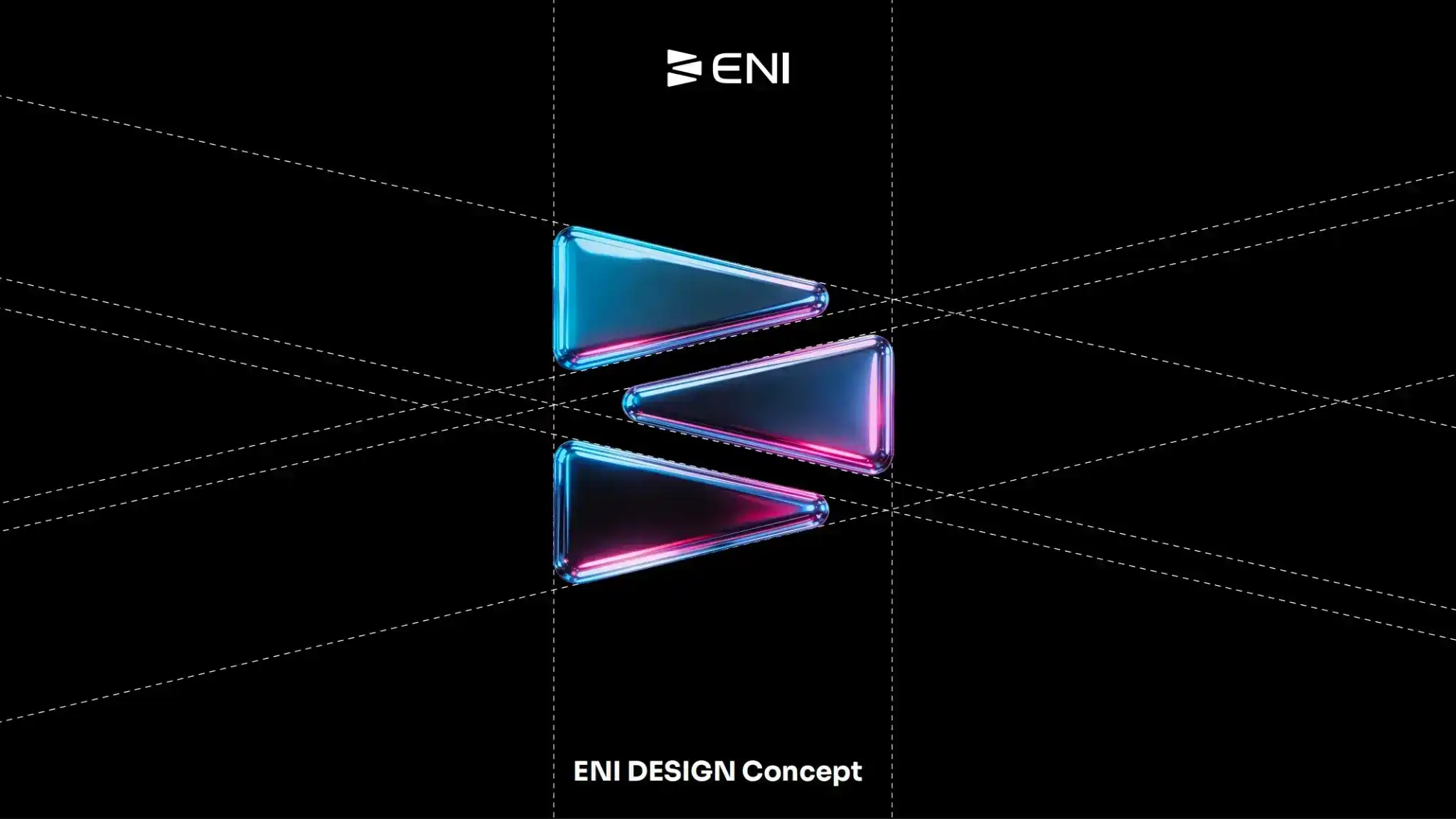
ENI Announces Strategic Brand Upgrade: Evolving from Underlying Protocol to Global Institutional-Grade Financial Infrastructure At the Hong Kong Web3 Festival on April 20, 2026, ENI founder and CEO Arion Ho announced the completion of a comprehensive brand, website, and visual system upgrade. This marks a significant shift from being an "underlying public chain" to an enterprise-grade Blockchain-as-a-Service (BaaS) platform, positioning ENI as a key infrastructure provider bridging traditional finance (TradFi) and Web3. The rebranding emphasizes precision and professionalism, reflected in a refined visual identity featuring a 25-degree tilt and a 1:4 golden ratio in its design elements. This aesthetic upgrade, led by a top-tier design team with experience from Hermès and ByteDance, underscores ENI’s commitment to institutional-grade trust and global sophistication. ENI now functions as a bridge between technological innovation and real-world business applications. It offers tailored architecture solutions for large institutions and standardized, low-friction BaaS tools for SMEs, enabling seamless integration of Web3 capabilities into existing business models. The announcement in Hong Kong, a global financial hub, signals ENI’s matured, global-ready approach to supporting the commercial adoption of Web3. By providing a stable, standardized platform, ENI aims to facilitate the secure migration of real-world assets and operations into the digital economy.

marsbitHace 1 hora(s)

ENI Officially Announces Completion of Strategic Brand Upgrade: Evolving from Underlying Protocol to Global Institutional-Grade Financial Infrastructure

marsbitHace 1 hora(s)

Trading

Spot
Futuros
活动图片