Crypto fund flows are becoming increasingly sensitive to changes in the US interest-rate outlook, with CoinShares arguing that Federal Reserve policy remains a key barrier to Bitcoin (BTC) breaking above $80,000 despite continued investor demand for crypto.
In his latest market update, CoinShares head of research James Butterfil argued that “Bitcoin is trading like gold again, but the Fed still sets the ceiling” at around $80,000.
That sensitivity was evident after Fed Chair Kevin Warsh’s speech at Jackson Hole. Warsh said progress on inflation had been modest and that price pressures were not easing quickly enough to give the central bank’s policy makers the confidence inflation was returning to its 2% target. Roughly $100 million exited digital asset investment products immediately after the speech, as markets sharply increased the probability of a September rate hike.
Flows reversed over the following week, reaching $1 billion by Sept. 4. The turnaround coincided with comments from Fed Governor Christopher Waller, who pointed to recent signs of “disinflation” and said he was inclined to keep rates steady in September if upcoming inflation data showed further progress.
“Investors are not exiting the asset class,” Butterfill wrote. “They are trading the rate path.”
As of Monday, Fed Funds futures prices implied a roughly 60% chance of a rate hike following next week’s Federal Open Market Committee (FOMC) meeting, according to CME Group.
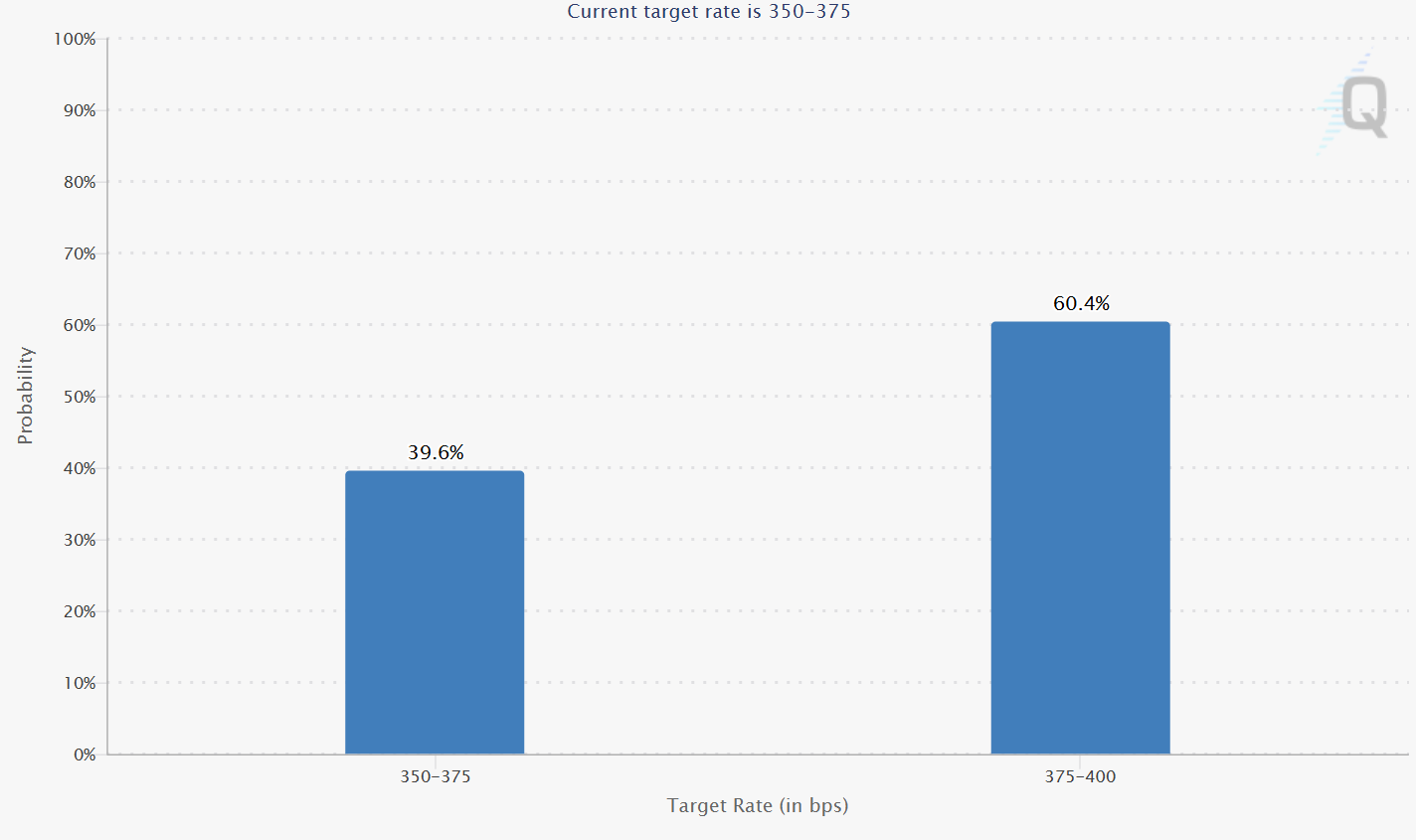
Markets are now pricing in a 25 basis-point rate hike on Sept. 16. Source: CME Group
The movements suggest that Bitcoin and broader digital asset markets remain highly sensitive to shifts in liquidity and monetary policy. Easier financial conditions have historically supported crypto and other risk assets.
Related: Crypto Biz: AI took a back seat when Bitcoin started climbing
Treasury buybacks add to liquidity backdrop
CoinShares’ assessment comes against the backdrop of a strong rebound in Bitcoin and the broader digital asset market last month, when the US Treasury announced plans to double certain long-dated bond buybacks from $2 billion to $4 billion per operation. Bitcoin climbed from the low $60,000s to above $80,000 during the month.
The expanded buyback program is expected to run from Sept. 9 through Nov. 4.
“Around the Treasury announcement we also saw equity sell-offs and shifts across the yield curve, layered on top of the ongoing noise from the Iran war — oil and equities swinging depending on whether or not people are feeling optimistic about diplomacy on any given day,” wrote 21shares co-founder Ophelia Snyder in her Substack newsletter last week.
“Taken together, these factors suggest to me that the current Bitcoin rally may have less to do with crypto-specific catalysts and more to do with growing interest in de-risking exposure to the US specifically,” she added.
The move reinforced the market’s focus on liquidity conditions and prompted Standard Chartered to forecast that Bitcoin could reach $100,000 before the end of the year.
Related: Strategy’s $66B Bitcoin machine hinges on capital markets, not BTC price: Report