Magic Labs Sells Its Electronic Wallet Business to Payward

cryptonews.ruPublicado a 2026-07-28Actualizado a 2026-07-28

Resumen

Magic Labs has agreed to sell its embedded crypto wallet business to Payward, the parent company of Kraken, in an asset sale deal expected to close in the coming weeks. The financial terms were not disclosed. Magic Labs, whose wallet technology is used by brands like Polymarket and has been deployed over 60 million times, will now focus exclusively on developing its Newton protocol, an authorization layer for blockchain finance. The company will be renamed Newton Labs. Following the sale, client support for the wallet business will be handled by Payward from August 1st, as Payward plans to integrate the wallet tech to expand its product suite. This acquisition continues Payward's 2026 buying spree, which includes the recent purchases of payment company Reap for $600 million and derivatives platform Bitnomial for up to $550 million. Despite this aggressive expansion, Kraken's planned IPO in the U.S. remains on hold due to unfavorable market conditions.

Magic Labs has agreed to sell its embedded wallet business to Payward, the parent company of Kraken.

The deal is set to close in the coming weeks, subject to standard closing conditions. The financial terms were not disclosed; however, Magic Labs CEO Sean Li stated that the acquisition will be completed via an asset sale.

Magic Labs, whose electronic wallet business has been a point of contention, has released over 60 million such wallets, used by notable brands like Polymarket and WalletConnect.

According to Li, the company will operate independently from Payward, although customer service will be handled through Payward starting August 1.

Payward plans to integrate the electronic wallet technology to expand its Payward Services product line.

Magic Labs stated it is exiting the wallet development business to focus on the Newton protocol, its authorization layer for blockchain financial operations.

"This transition allows us to fully focus our efforts on Newton, the authorization layer for blockchain financial operations, while the wallet development business moves to a team committed to serving our customers," Li said.

As part of the transition, the company will be renamed Newton Labs.

Today we announced two decisions: 1) we sold our electronic wallet business to Payward, the developer behind Kraken. And 2) Magic Labs becomes Newton Labs.

Bringing customers from around the world was the first part of our mission. Bringing capital is the second.

Here's a video explaining why. 👇 https://t.co/UhU7GLErKC pic.twitter.com/4ezZfcoVkX

— Sean Li (@seanli) July 27, 2026

Payward's Acquisitions Continue

The Magic Labs deal extends the series of acquisitions made by Kraken's parent company in 2026.

Payward completed the acquisition of Reap Technologies Holdings Limited ("Reap"), a Hong Kong-based stablecoin payments and card issuance company, as first announced on May 7.

That deal was structured as a cash and stock sale valued at $600 million.

In April, Payward also agreed to pay up to $550 million in cash and stock for Bitnomial, a U.S. derivatives platform that holds all three licenses required to operate a full-fledged derivatives business, as Cryptopolitan reported.

The deal reportedly valued Payward at $20 billion.

While Payward continues to seek acquisition opportunities for crypto companies, Kraken's previously planned public listing remains on hold.

In November, the company filed a draft S-1 registration statement with the U.S. Securities and Exchange Commission for a potential listing on a U.S. market. However, in March, this move was paused as Kraken cited challenging market conditions.

end-content
Criptos en tendencia

Preguntas relacionadas

QWhat is the main announcement in the article regarding Magic Labs?

AMagic Labs has sold its embedded wallet business to Payward, the parent company of Kraken.

QWhat will Magic Labs focus on after selling its wallet business?

AMagic Labs will focus on its Newton protocol, an authorization layer for blockchain financial operations, and will be renamed Newton Labs.

QWhich company did Payward acquire earlier in 2026, and for how much?

APayward acquired Reap Technologies Holdings Limited for a deal structured as $600 million in cash and stock.

QAccording to the article, why has Kraken's planned U.S. stock market listing been paused?

AKraken's planned U.S. stock market listing has been paused, with the company citing difficult market conditions.

QWhat was the reported valuation of Payward following one of its 2026 acquisition deals?

AFollowing its acquisition deal, Payward was reportedly valued at $20 billion.

Lecturas Relacionadas

Why P2P and Exchangers Are Becoming Obsolete, and What Will Replace Them

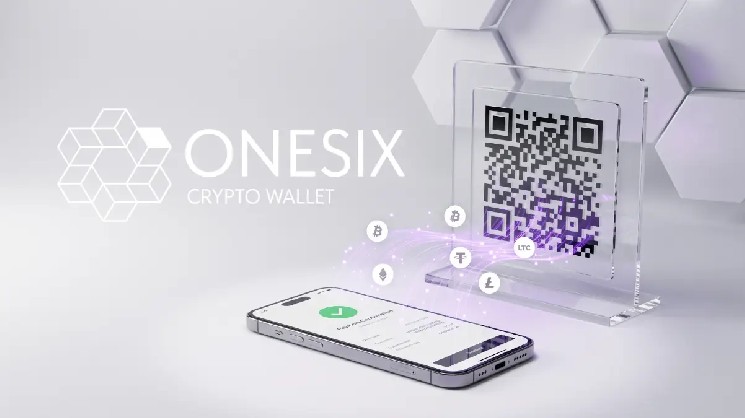
Titled "Why P2P and Exchanges Are Becoming Obsolete, and What Will Replace Them," this article discusses the evolution of stablecoins, particularly USDT, from a trading tool to a global payment method. However, converting crypto back to fiat for daily expenses remains a challenge. The process of using P2P platforms or crypto exchanges has become increasingly risky and complex due to stricter banking anti-fraud measures, new legislation in Russia, and rampant fraud schemes like "triangles," where sellers can inadvertently receive stolen funds. The article highlights that while P2P was convenient, banks now scrutinize frequent peer-to-peer transfers, often freezing accounts. Exchanges also pose risks like unfavorable rates and unclear compliance. The market is therefore shifting towards integrated services that eliminate the manual conversion step. It cites OneSix as an example—a crypto wallet accessible via Telegram and web that embeds currency conversion directly into payment and withdrawal scenarios. Users can pay bills or send money as if using a bank app, with the crypto-to-fiat exchange happening seamlessly in the background. It also offers invoicing for freelancers and conducts AML checks, returning suspicious transactions instantly instead of freezing them. In conclusion, as crypto integrates into everyday finance, the demand for manual, risky exchange methods is declining. The future lies in unified platforms that combine storage, compliance, conversion, and payments into a single, secure user experience.

cryptonews.ruHace 40 min(s)

Why P2P and Exchangers Are Becoming Obsolete, and What Will Replace Them

cryptonews.ruHace 40 min(s)

The CEO of MARA Holdings Compares AI Operations to Bitcoin Mining! Which is More Profitable?

Fred Thiel, CEO of MARA Holdings (a major Bitcoin mining company), states that the rapid growth of the artificial intelligence (AI) sector is transforming mining companies' business models. He claims that powering data centers for AI is significantly more profitable than Bitcoin mining. In a recent interview, Thiel explained why many mining firms are diversifying into AI infrastructure. According to Thiel, the energy demands of data centers are surging, especially due to the spread of generative AI applications. This creates new revenue opportunities for Bitcoin mining companies with robust power infrastructure. MARA Holdings is among those monitoring this shift and aims to develop its energy and infrastructure services for AI data centers. Thiel emphasized that this move toward AI does not mean the end of Bitcoin mining. He stated that Bitcoin mining remains a sustainable business model, especially for miners in regions with low electricity costs, and it is still a crucial field for utilizing excess or idle power capacity. In recent years, many Bitcoin mining companies have begun using their energy-intensive infrastructure not just for block production but also for high-performance computing (HPC) and AI applications. This strategy aims to diversify revenue sources and increase resilience against cryptocurrency market volatility. Analysts note that the growing energy demand in the AI sector presents significant transformation opportunities for mining companies. The need for high-power, uninterrupted electricity supply, particularly for large data centers, gives Bitcoin miners with existing energy infrastructure expertise a considerable advantage.

cryptonews.ruHace 50 min(s)

The CEO of MARA Holdings Compares AI Operations to Bitcoin Mining! Which is More Profitable?

cryptonews.ruHace 50 min(s)

Ratio's CEO Says Multi-Currency Stablecoins Could Eliminate Costly FX Conversions in Asia

The CEO of Ratio, John Cho, argues that multi-currency stablecoins could save Asia billions by eliminating costly foreign exchange conversions in regional trade. While USD stablecoins like USDT and USDC work for global settlements, local Asian trade is conducted in local currencies like the Korean won or Singapore dollar. Forcing these transactions through USD intermediaries creates unnecessary costs and currency risk. Cho envisions a complementary ecosystem where local-currency stablecoins work alongside USD stablecoins, enabling seamless cross-border settlements without conversion friction. A key pain point in traditional banking is the need for pre-funded Nostro and Vostro accounts, which lock up vast amounts of working capital. Blockchain-based settlement layers like Ratio offer a 24/7 alternative, using on-chain liquidity to enable instant execution even when traditional channels are closed. Modern Web3 infrastructure providers are focusing on pragmatic integration with existing corporate systems like ERPs, allowing businesses to gradually shift volumes to digital channels for better speed, cost, and reduced slippage. Clear regulation is cited as the critical catalyst for widespread institutional adoption. As jurisdictions like the U.S. advance legislation (e.g., the CLARITY Act) and Asian countries are expected to pass their own stablecoin laws within 12-24 months, regulatory uncertainty is receding. The ultimate vision is for regulated stablecoins to become an invisible settlement layer integrated into national payment systems, where payments simply happen on-chain, erasing the boundary between traditional banking and digital assets.

cryptonews.ruHace 1 hora(s)

Ratio's CEO Says Multi-Currency Stablecoins Could Eliminate Costly FX Conversions in Asia

cryptonews.ruHace 1 hora(s)

Huang Xiaoming, Li Bin, Lei Jun, Liang Wenfeng... Who Are the Biggest Winners in the CXMT IPO Feast?

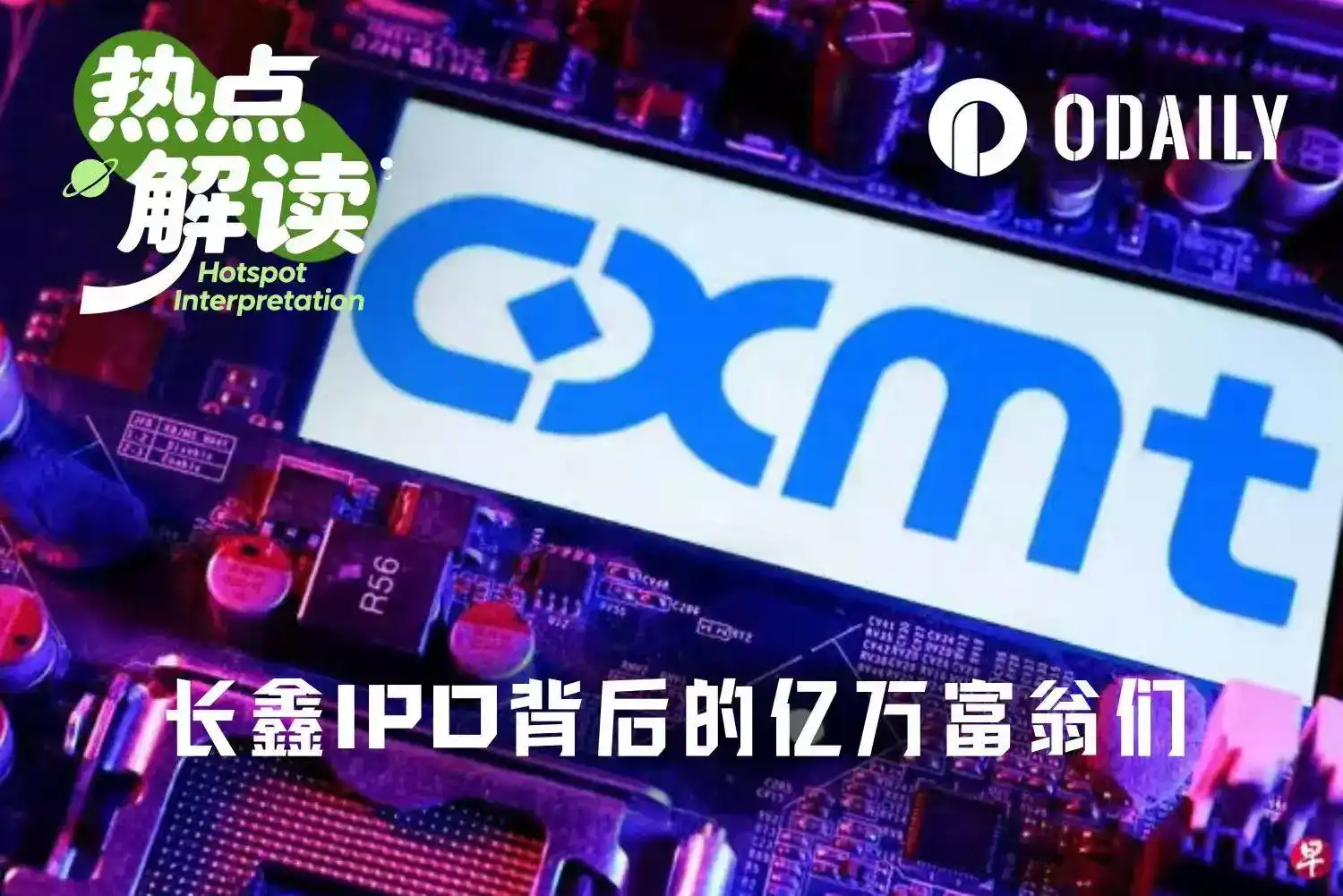
Changxin Technology, a leading Chinese memory chip manufacturer, successfully listed on the Shanghai Stock Exchange's STAR Market (科创板) on July 8, 2026. Its share price surged from the IPO price of 8.66 yuan to close at 49 yuan on the first day, catapulting its market capitalization to 3.28 trillion yuan, making it the most valuable A-share company and triggering a massive wealth creation event. The biggest winners were the company's founder, Zhu Yiming, and its employees. Zhu Yiming's family wealth skyrocketed nearly 300% to approximately $13.9 billion, with his direct stake in Changxin valued at around 80 billion yuan. Additionally, over 6700 employees benefited from stock ownership plans, creating at least 237 new millionaires (in CNY). Zhu also pledged to donate 768 million shares, worth over 37.6 billion yuan, for future employee incentives over a ten-year period. Several prominent investors and corporate clients also reaped significant paper gains from the IPO. Notable figures include: * **Liang Wenfeng**, founder of DeepSeek, whose funds netted a paper profit of approximately 827 million yuan. * **Kong Jianping**, founder of Nano Labs, saw his indirect holdings valued at roughly 940 million yuan. * **Li Bin**, founder of Nio, whose company's strategic investment of 158 million yuan is now worth about 740 million yuan. * **Lei Jun**, founder of Xiaomi, whose subsidiary holds shares currently showing a paper gain of over 736 million yuan. Xiaomi clarified this is a corporate investment, not direct personal wealth. The article notes that while this IPO created immense wealth for insiders and large investors, retail investors who were lucky enough to win an allotment in the lottery typically profited by around 20,000 yuan. The listing solidifies Changxin's position as China's premier domestic memory chipmaker.

marsbitHace 1 hora(s)

Huang Xiaoming, Li Bin, Lei Jun, Liang Wenfeng... Who Are the Biggest Winners in the CXMT IPO Feast?

marsbitHace 1 hora(s)

Trading

Spot

Artículos destacados

Cómo comprar MAGIC

¡Bienvenido a HTX.com! Hemos hecho que comprar MAGIC (MAGIC) sea simple y conveniente. Sigue nuestra guía paso a paso para iniciar tu viaje de criptos.Paso 1: crea tu cuenta HTXUtiliza tu correo electrónico o número de teléfono para registrarte y obtener una cuenta gratuita en HTX. Experimenta un proceso de registro sin complicaciones y desbloquea todas las funciones.Obtener mi cuentaPaso 2: ve a Comprar cripto y elige tu método de pagoTarjeta de crédito/débito: usa tu Visa o Mastercard para comprar MAGIC (MAGIC) al instante.Saldo: utiliza fondos del saldo de tu cuenta HTX para tradear sin problemas.Terceros: hemos agregado métodos de pago populares como Google Pay y Apple Pay para mejorar la comodidad.P2P: tradear directamente con otros usuarios en HTX.Over-the-Counter (OTC): ofrecemos servicios personalizados y tipos de cambio competitivos para los traders.Paso 3: guarda tu MAGIC (MAGIC)Después de comprar tu MAGIC (MAGIC), guárdalo en tu cuenta HTX. Alternativamente, puedes enviarlo a otro lugar mediante transferencia blockchain o utilizarlo para tradear otras criptomonedas.Paso 4: tradear MAGIC (MAGIC)Tradear fácilmente con MAGIC (MAGIC) en HTX's mercado spot. Simplemente accede a tu cuenta, selecciona tu par de trading, ejecuta tus trades y monitorea en tiempo real. Ofrecemos una experiencia fácil de usar tanto para principiantes como para traders experimentados.

358 Vistas totalesPublicado en 2024.12.18Actualizado en 2026.06.02

Cómo comprar MAGIC

Discusiones

Bienvenido a la comunidad de HTX. Aquí puedes mantenerte informado sobre los últimos desarrollos de la plataforma y acceder a análisis profesionales del mercado. A continuación se presentan las opiniones de los usuarios sobre el precio de MAGIC (MAGIC).

活动图片