Author: danny
Did you know? There are 33 direct flights from South Korea to Macau every week, compared to about 21 direct flights from Incheon Airport to London Heathrow. The frequency of flights connecting Seoul to Macau is higher than to London.
Why do you think that is?
Macau doesn't have universities South Koreans aspire to attend, nor does it have Samsung's headquarters. A four-hour flight from Seoul, and South Korean citizens can enter casinos that are restricted by their own country's laws.
But Korea's gambling tables aren't just in Macau.
They are also hidden in the mortgages of Seoul apartments, in the credit financing of brokerage accounts. And in the leveraged products on cryptocurrency exchanges, and in the 2x leverage products for Samsung Electronics and SK Hynix.
II. What Kind of Life Do South Koreans Want?
Some say South Koreans have a strong "gambling nature"? Is it true? Before discussing Koreans' "gambling nature," let's see how they evaluate their own lives.
The "World Happiness Report 2026" ranks South Korea 67th globally with a score of 6.040, based on life evaluations from 2023 to 2025. South Korea's per capita income and healthy life expectancy rank at the forefront of developed economies, but its sense of "freedom to make life choices" ranks 101st—interestingly, this indicator measures whether respondents feel they have the space to choose their own life path (aka, whether my destiny is up to me).
It's worth noting that South Koreans do not live in a poor country, nor do they lack education or healthcare. The problem is that many have a good social foundation but feel the paths they can choose are limited.
The 2025 Social Survey by Statistics Korea shows that only 15.6% of household heads believe their family income is sufficient compared to the minimum living needs. 27% believe their family finances will improve next year. Wage workers' overall job satisfaction is 38.3%. When choosing a career, 40% prioritize income. Among those aged 13 to 34, the most desired workplace is a large corporation (28.7%); public enterprises and government agencies follow.
Their aspirations for life are not unusual. South Koreans want to travel and also have time to cultivate hobbies. In the survey, 65.7% listed travel as a leisure activity they want to engage in, and 41.7% want to develop interests or pursue self-improvement. Among those dissatisfied with their leisure life, 48.7% cited economic burden as the reason.
People want a stable job, a home in a suitable location, and the leeway to arrange their lives. South Korea's problem lies in:
The price of these ordinary desires is increasingly determined by asset markets.
Entering a large corporation can secure a stable salary, but positions are limited. Those who don't enter the chaebol system can buy chaebol stocks. Those who can't afford a Seoul apartment can increase their loan-to-value ratio. With insufficient principal but wanting to participate in the semiconductor cycle, brokers offer credit financing and 2x ETFs.
When life goals need to be achieved through asset prices, investment becomes a mandatory question.
III. Death, Taxes, and Samsung
Franklin said that in life, one cannot escape death and taxes. In Korea, you have to add Samsung. (Now we have to add 2x ETFs too.)
A Korean may not use a Samsung phone, but it's hard to escape the economic structure represented by the chaebols. Large corporations occupy the center of exports, R&D, and quality employment. The weight of Samsung Electronics and SK Hynix in the index links pensions, funds, and personal accounts to the stock prices of these two companies.
This structure and development path come from Korea's developmental trajectory.
During industrialization, South Korea lacked capital. The government supported export industries through the banking system and foreign debt. Companies used loans to build steel mills, shipyards, and semiconductor factories, then repaid the debt with future export earnings. Leverage shortened the time needed for industrialization and also drove chaebol expansion.
By the end of 1997, the debt-to-equity ratio of Korea's top 30 chaebols reached 509%. The overall manufacturing sector's debt-to-equity ratio rose from about 300% in 1996 to about 400% in 1997. After foreign currency financing was cut off, companies collapsed one after another. (Don't laugh, this is similar to the situation after foreign capital withdrew from the Kospi in the past two weeks.)

The nation once used future export earnings to build factories. Ordinary families later used future wages to buy apartments. This method created growth in Korean history and also shaped a social perception: waiting for accumulation takes time, borrowing funds is necessary to catch up with cycles—over time, South Korea gradually formed a path dependency.
IV. What Policies Encourage is Using Loans to Enter the Future
The South Korean government strictly controls gambling and certainly never issued policies encouraging it. But for clever Koreans, is there really a difference?
What the South Korean government encourages is home buying, capital market development, and financial product localization. The goals in policy documents all have legitimate justifications, but in implementation, they lower the threshold for using leverage.
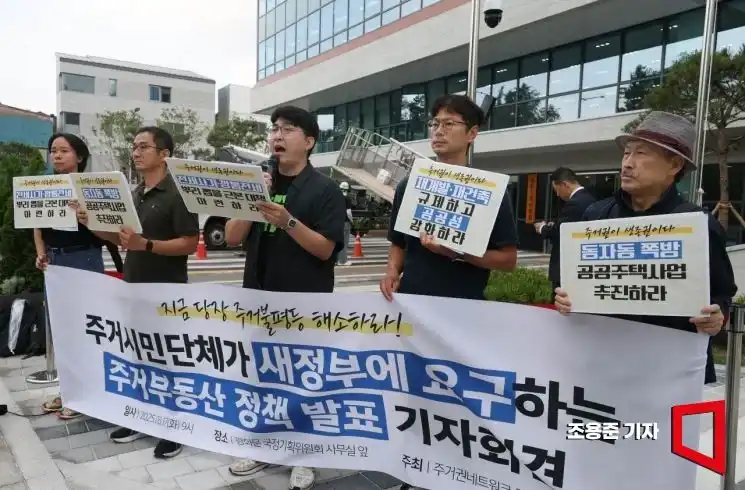
In 2022, the Financial Services Commission increased the maximum loan-to-value (LTV) ratio for first-time home buyers to 80%, no longer distinguishing by region or price of the property. The policy also extended the maximum term for government-supported mortgage loans from 40 to 50 years and designed repayment plans with lower initial payments and higher later payments for young people and newlywed families. Officials explained these measures as reducing the initial burden of home purchase and helping residents get onto the "housing ladder."
The 2023 Special Policy Mortgage allowed eligible first-time buyers to borrow up to 80% of the property price, with loan terms up to 50 years, and some loans exempt from usual debt service ratio rules. Extending loan terms can lower monthly payments but also means families commit more future income to the purchase contract.
The target of these policies is to help families with genuine housing needs. The results, however, are not limited to that level. With increased borrowing capacity, families can accept higher housing prices. Sellers, knowing buyers can borrow more money, see the new credit potentially feed into housing prices.
The government later began tightening loans in the Seoul area, limiting mortgage amounts, and lowering LTV ratios in some regions. This policy back-and-forth shows that Korean authorities have been grappling with the conflict between two goals: they want families to be able to afford homes, but they also can't let credit push up housing prices.
The problem isn't with any single relaxation or tightening. Korea's housing policy has long used loans as a solution to housing affordability. When housing is too expensive, the answer given by policy is often to extend repayment periods or allow buyers to increase their loan ratios.
V. Housing Brought Leverage into Households
As of the end of March 2026, South Korean household credit balance reached 1,993.1 trillion won, of which household loans accounted for 1,865.8 trillion won. In one quarter, household loans increased by 12.9 trillion won.
Korea's housing leverage also includes the Jeonse system. A tenant pays the landlord a deposit equivalent to 50% to 70% of the property value in exchange for low monthly rent. The tenant may take out a bank loan to raise the deposit, while the landlord uses the deposit to repay the mortgage or buy another property.
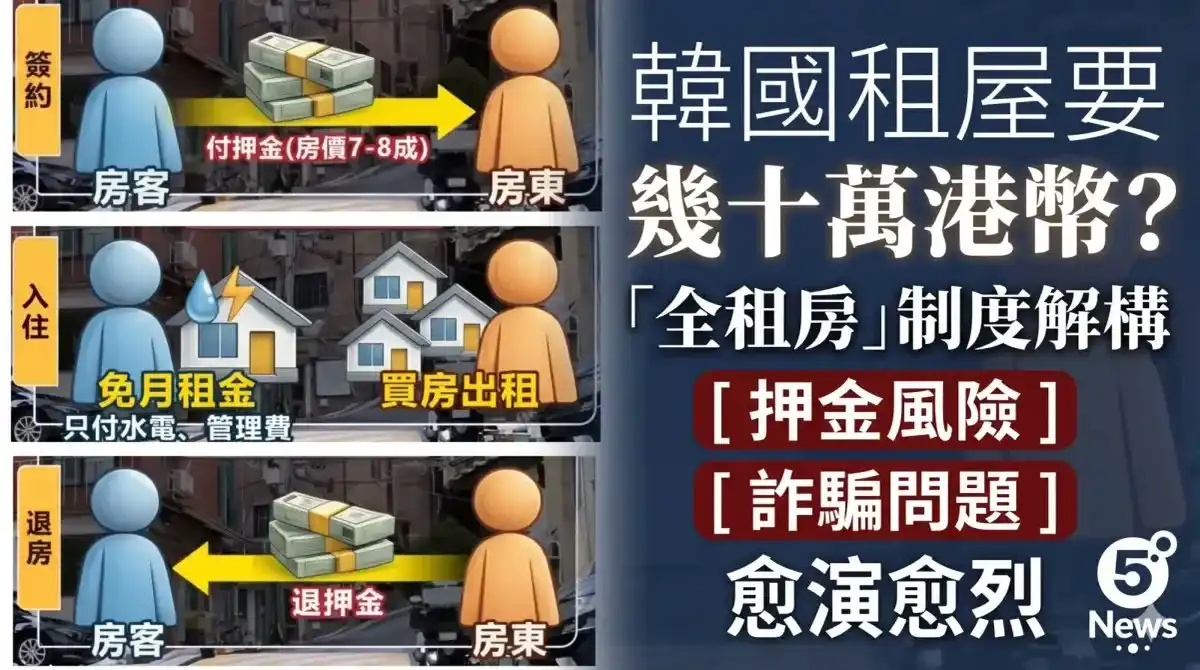
If the housing price rises 10%, the asset appreciates by 100 million won, equal to the original investment. If the price falls 10%, the landlord's equity goes to zero. If the next tenant is only willing to pay a 400 million won deposit, the landlord has to find an extra 100 million won to return to the old tenant.
During housing price increases, this structure is called an asset appreciation path; when prices fall, the oil drums hidden under the apartments explode. Especially when landlords take tenants' deposits to speculate in stocks or cryptocurrencies and lose everything, and the bank repossesses the property.
Interestingly, in Korea, taking on a "mortgage" is a socially recognized act. If someone borrows money to buy stocks, family members ask about the risk; but if they borrow to buy a house, it's often understood as starting a family. Korean society links property ownership with marriage, education, and retirement planning, so leverage also gains life meaning.
VI. A Mobile Phone Puts 2x Products in Everyone's Hands
In the past, leveraged products belonged to trading floors and professional investors. Korean mobile brokerages changed how they are accessed.
In April 2026, the Financial Services Commission approved single-stock ETFs and ETNs into the domestic market, offering up to 2x daily exposure. The regulator's reasons included meeting investor demand, preventing capital outflow overseas, and increasing trading convenience. Policy documents also noted that Korean investors could already purchase similar products listed in the US and Hong Kong through domestic brokerages' mobile apps.
Investors only need to complete a course, add one hour of intensive learning, and maintain a base margin of 10 million won in their account to trade single-stock leveraged products. 2x Samsung Electronics and 2x SK Hynix thus entered thousands of households.
Risk warnings did mention many things, but they didn't tell investors one thing: this position could affect marriage and housing.
When the first success comes from borrowing, people easily see leverage as part of their ability. The profits from increased positions are interpreted as correct judgment, and the amplifying effect of debt fades from memory.
VII. Hynix Became National Wealth News
Faith needs a figure; leveraged products need a target. In 2026 Korea, SK Hynix took on this role.
On April 23, SK Hynix announced Q1 operating profit of 37.61 trillion won, a 405% year-on-year increase. This performance made it into TV news and prompted brokerages to raise target prices. A prominent investment bank raised its target price from 1.6 million won to 2 million won.
In May, SK Hynix's stock price broke 2 million won intraday, "2 Million Hynix" became a news headline. Later the price touched 2.5 million won. When a stock price repeatedly breaks through integer milestones, its contagiousness and spread are no less than Faker winning the LOL World Championship.
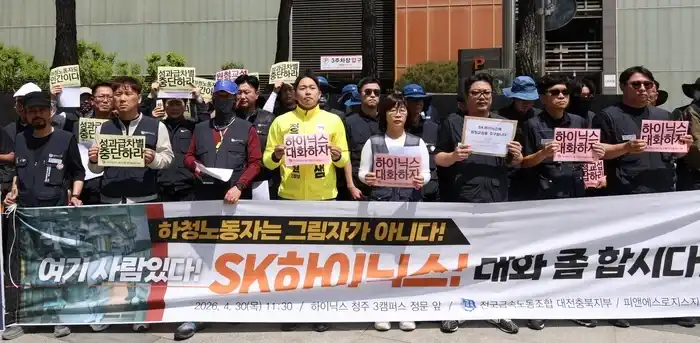
Company employee incomes also became social news. SBS estimated based on annual profit forecasts from 17 securities firms that if relevant profits and bonus distribution formulas were realized, average SK Hynix employee performance bonuses could exceed 600 million won. Various memes erupted. There were also negotiations between Hynix and employees over compensation issues, which only subsided after government intervention.
These social events are not advertisements, but they are better than advertisements.
What an ordinary family sees is direct: Hynix profits quadrupled, the stock price crossed milestone after milestone, employee bonuses reached scales equivalent to years of an average person's income. Corporate performance turned from financial news into a demonstration of wealth.
For those not holding the stock, what they feel is not just a stock rising. They suspect they've missed South Korea's next round of industrial upgrade.
This sentiment enters family chat groups and lunch discussions. A friend holds Hynix, you only have a salary; a colleague bought 2x products, your ordinary stocks seem too slow. Leverage no longer seems like a dangerous tool; it becomes a method to catch up with others.
VIII. Policy Brought Products Home, Then Started Hitting the Brakes
Single-stock leveraged products entered the Korean market at the end of May. Regulators hoped to bring overseas demand back home. After funds flowed in, 2x products for Samsung Electronics and SK Hynix became the center of retail trading.
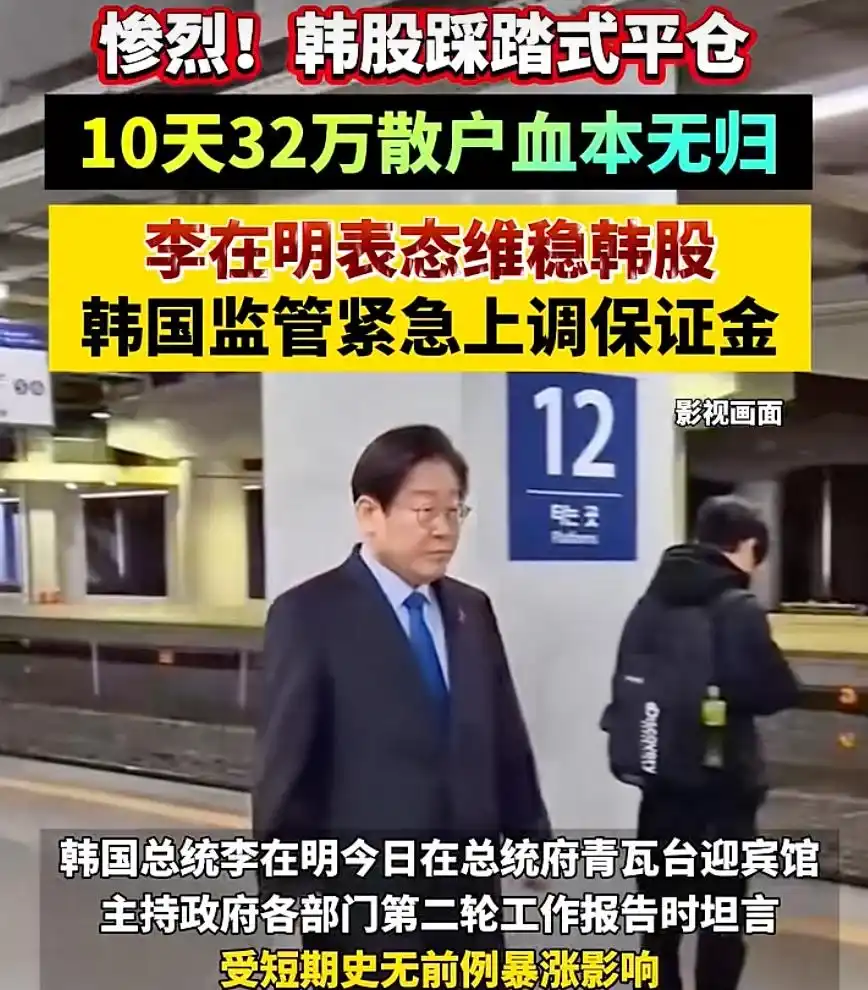
By the end of May, the scale of stock borrowing formed by Korean investors through margin and leveraged products reached about 60 trillion won. In July, regulators announced a suspension of new single-stock leveraged ETF listings and raised the minimum cash margin from 10 million won to 30 million won.
On July 28, the KOSPI closed down 10.84%, with Samsung Electronics and SK Hynix both falling about 14%. The next day, the index fell another 12.6% intraday. Leveraged ETFs needed to adjust positions, margin accounts faced margin calls, and selling behavior triggered the next round of selling.
On July 29, the South Korean Finance Minister and the Chairman of the Financial Services Commission publicly apologized for approving single-stock leveraged ETFs. They acknowledged that policy design had not fully considered the risks such products could bring.
From opening the products to public apology, less than three months had passed.
IX. Cryptocurrency, Gold, and the Dollar
The leveraged life didn't stop with Korean stocks.
In the second half of 2025, despite declines in daily trading volume and total market capitalization in the Korean crypto market, the number of tradable users increased by 360,000, and won deposits on exchanges grew by 31%. After the market weakened, accounts and funds didn't leave. Participants were waiting for the next opportunity.
Cryptocurrency suits this waiting. It trades 24/7, requires no down payment, and has no chaebol hiring thresholds. Small principal can buy a highly volatile outcome. Most people won't change their lives with tokens, but every market cycle produces a few success stories that can be spread.
Gold also entered the same phone. The Korea Exchange allows investors to trade gold in one-gram units through computer or mobile securities systems. An asset that originally required a trip to a gold shop became a real-time price in an account.
South Korean residents' purchases of overseas securities reached $140.3 billion in 2025, up from $67 billion in 2024. Overseas securities investment as a percentage of GDP rose from 3.6% to 7.5%. Buying US stocks is both investing in companies and holding dollars.
After the won depreciated, those holding US stocks and gold gained from the exchange rate. Those without overseas assets saw their purchasing power decline and joined the currency exchange. Personal self-protection formed fund flows, and fund flows influenced exchange rate expectations.
A Korean's salary is settled in won, and their mortgage is also repaid in won. Yet their imagination of wealth is determined collectively by Seoul housing prices, Hynix stock prices, and the dollar exchange rate.
X. Gambling Nature, or System?
Are South Koreans truly "hardened gamblers"?!
Flights, gambling, and leveraged accounts can prove the level of participation, but this is just the tip of the iceberg. South Koreans face an institutional environment with its own history. The nation relied on credit to complete industrialization, housing policy used loans to help families enter the market, and capital market policy used leveraged products to retain funds.
Each policy has its reasons. Combined, they convey a signal: insufficient principal is not a problem; future income can be used.
The happiness index gives the other side. South Koreans' life evaluation doesn't match its economic scale, and the ranking for "freedom to make life choices" is even lower. In household surveys, less than one-sixth feel their income is sufficient, and less than 40% are satisfied with their jobs. Many want travel and personal life but must first solve housing and retirement.
When people believe wages cannot achieve these goals, the asset market takes on the task of social mobility. Policy provides loans and products, news provides success stories, and mobile apps complete the transactions.
Therefore, Korea's leverage culture cannot be explained by a simple phrase like "loves to gamble." It is the result of a system and individual choices reinforcing each other.
For those with sufficient capital, leverage is a financing tool. When ordinary households use leverage, they mortgage wages not yet earned. Both appear to be buying the same asset, but the waiting time they possess is different.
Korea's industrialization proved that leverage can compress the time needed to build industries. The limitation households and retail investors face is that they don't have the state's power of taxation or the chaebols' banking connections. When prices fall, debt does not get deferred because of long-term prospects.
The 33 flights to Macau are just the entry point of the article. Korea's gambling tables are not only set in casinos; they exist in the life plans of ordinary people. When housing, retirement, and social position all need to be achieved through asset price increases, refusing to place a bet is also understood as a risk.
Leverage can let you enter early, but it cannot make value materialize ahead of time.
But if you blame it all on leverage, Archimedes would be a hundred times unconvinced.
Afterword
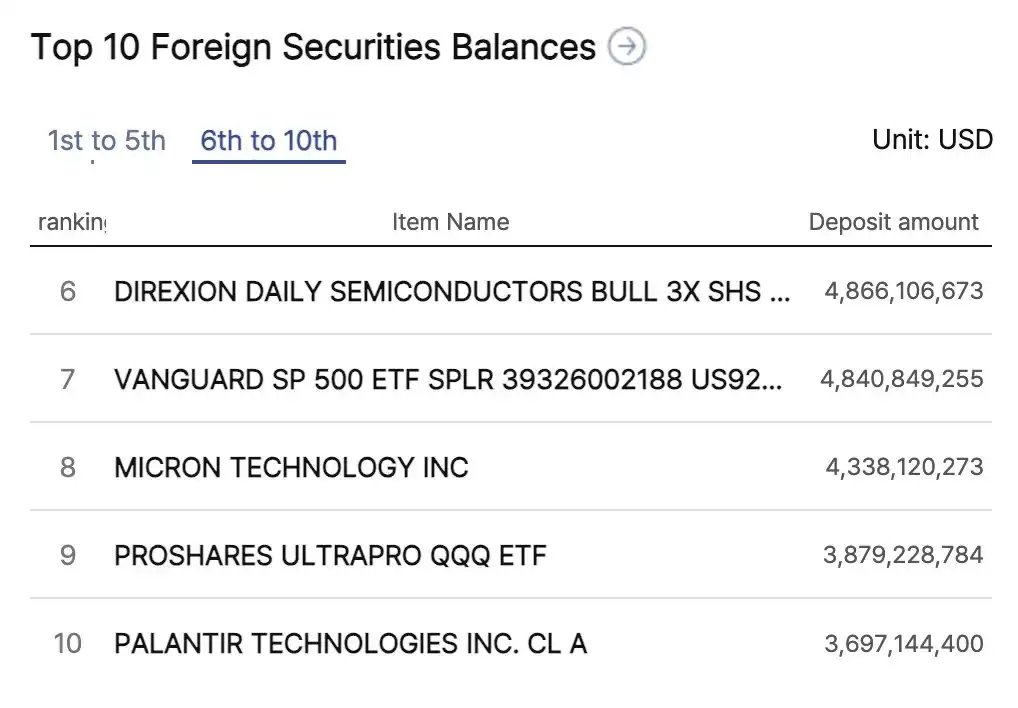
Even today, with nationwide lamentation, (US) leveraged ETF products remain beloved by Korean stock investors.