Every six months, delete your Claude.md, delete your skills, delete your hooks.
This is the advice Boris Cherny—the father of Claude Code—gives to product users.
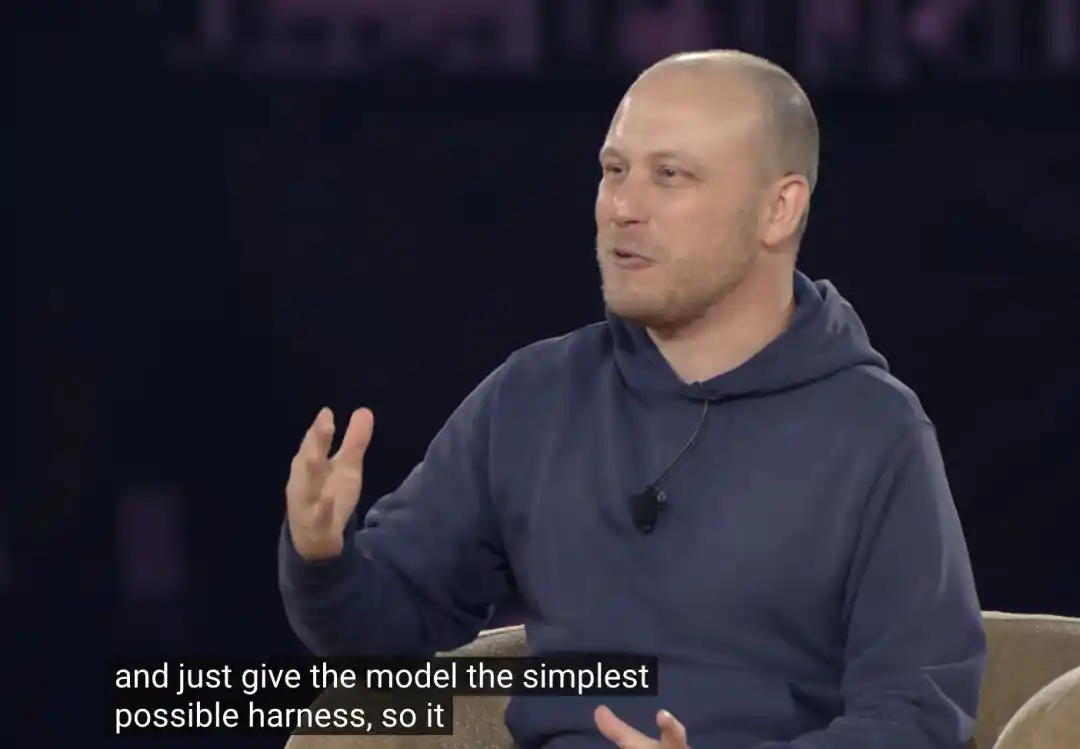
In the new interview video "Boris Cherny: We Cut 80% of Claude Code’s Prompt" released by YC on July 28, Boris passionately called on everyone building AI products to bravely press the delete key on their new products, boldly deleting system prompts, tools, and harness code.
△
"You should delete the entire system prompt, then add it back line by line to see what effect each line actually has."
The concept behind this view is ablation study, a theme that runs through Boris Cherny's latest interview. It aims to remove, replace, or disable a module while keeping other conditions constant, in order to compare changes in performance, stability, efficiency, or cost.
In the interview, Boris proudly stated: "For Opus 5, we genuinely suggest everyone try deleting all that stuff because the model no longer needs it."
Despite recent turmoil... users could also claim, "Actually, for Claude, we sincerely suggest deleting it because we no longer need it." (x)

Apart from "bold deletion," Boris shared more of his valuable thoughts on product design, model usage, and learning to program in the interview—
Key points from this article based on the interview video:1. Boris's product iteration strategy: Less prediction, more testing2. "Product Overhang": Model capabilities always exceed product boundaries within the same period3. "Unhobbling": Let the model handle harder tasks and work independently for longer periods4. How do top Claude users use AI?5. Three suggestions for programming learners
"A model is a living creature; it has its own personality"
"Today, the code in Claude Code's harness almost only consists of security, permissions, and static analysis parts."
On July 24, Anthropic released the latest rules on Claude 5 context engineering. For new models like Opus 5 and Fable 5, Claude Code's system prompt was significantly streamlined, with over 80% of the original instructions deleted.
For details, refer to the QbitAI article "Claude Code slashes 80% of prompts, Opus 5 adds them back in."
Regarding this change, Boris shared his product iteration strategy in the interview: Don't try to guess what instructions the model needs because you simply can't guess correctly. All you can do is delete line by line, test, and find where the model repeatedly gets stuck.
"You have to think of the model as a living being, something more organic. Each generation of models behaves differently, their personalities are slightly different. You need to spend time understanding it, and then adjust the harness accordingly."

△
Therefore, for Boris, this is more "empirical"—it needs to be approached scientifically: try without preconceptions, check results, iterate, repeat.
In a world of constant demolition and rebuilding, Eval may not be stable either. While it's indeed more durable than harnesses and prompts, models evolve so fast nowadays that often an evaluation suite gets maxed out quickly. So you need to observe where the model struggles repeatedly and then design new Evals.
A Mindset: Overhang, Unhobbling
In the interview, Boris shared a concept called "Product Overhang," which he finds a helpful way of thinking for his product work.
Overhang, what does it mean? Overhang.
Large models evolve at a discontinuous, leapfrogging pace, while product integration progresses at a continuous, incremental pace. This leads to a situation where the capabilities possessed by the model always exceed the boundaries that existing products can unleash.
Boris gave an example: When Sonnet 3.5 was first released at the end of 2024, the model could already write code for entire files at once. But programming products like Copilot and early versions of Cursor at that time were still doing small things like code completion.
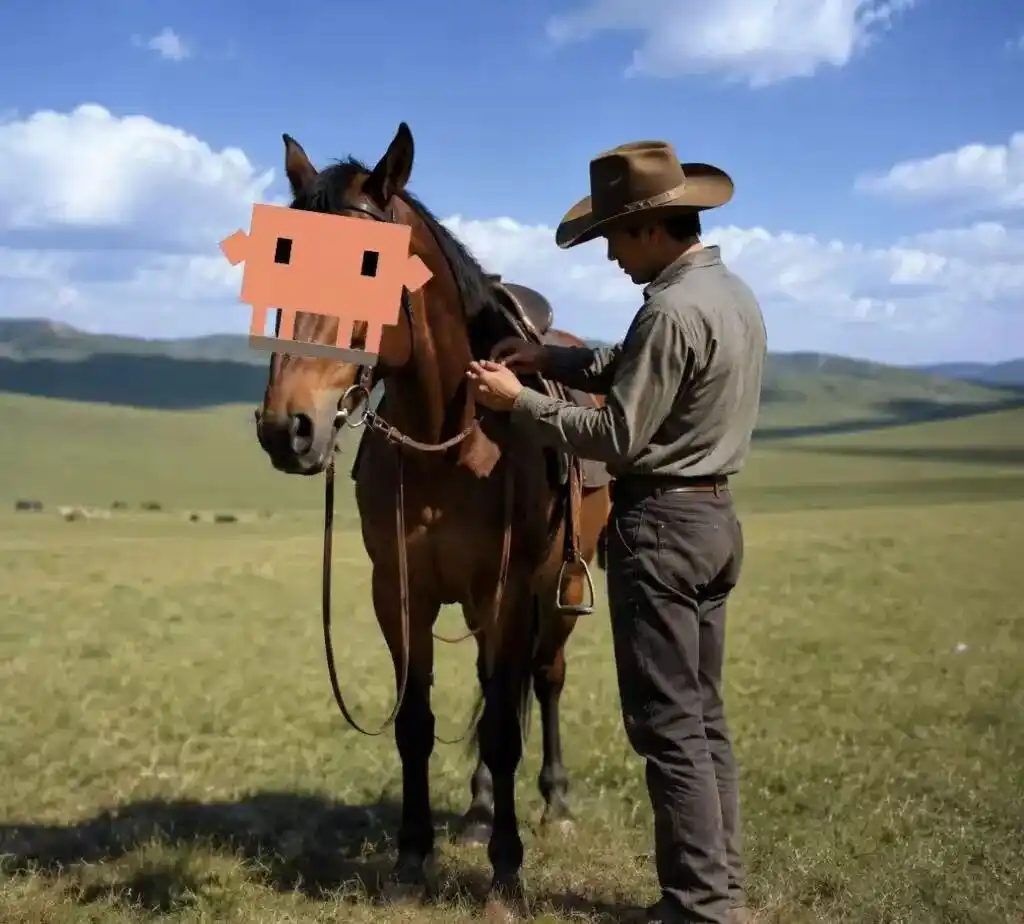
Claude Code, with full terminal access, to some extent bridged this gap. This is also related to Boris's second concept "Unhobbling"—removing constraints.
△
He shared an internal Anthropic example: Someone tried giving Opus 5 access to OpenCV (the world's largest open-source computer vision library) and found that the model could draw portraits, animals, and landscapes by itself, even though they had never trained the model to draw before.
This is "model elicitation"—without changing the model's weights, by designing prompts, context, tools, or product forms, causing the model to exhibit capabilities it already possesses but which weren't previously invoked.
Although questions may remain here: How to attribute? Did the model elicit an existing capability, or did it learn a new skill because of the "scaffolding" design?
But perhaps that doesn't matter. Regardless, Boris has no doubt that there are huge business opportunities here:
I'm not saying all startups can catch it. But I know some people are thinking about these questions, there are truly huge opportunities here to elicit those amazing, interesting, and commercially valuable behaviors from models.
For this, Boris proposed three of his own methods for "unhobbling" models.
First, give the model harder tasks than you think. Describe the goal, boundaries, and exit conditions clearly, then let go.
Second, experiment more. Allow the model to do playful, non-commercially-focused experiments. "Give yourself the freedom to play with the model, to do creative things."
Third, let the model verify its own results. The focus today is no longer on "prompt engineering." The question is, "When you assign Claude a very difficult task, how do you make it verify the work it's doing along the way?"
Boris believes this third point is probably what everyone does least satisfactorily now. Because if a model can't self-verify tasks, it can't run independently for long periods.

△
His own example might offer inspiration:
Boris: "Okay, what I want you to do is—rewrite this Electron app into Swift. I want you to run the Electron app in a Mac VM, take screenshots, then compare pixel by pixel against the Swift version, and don't stop until you're done."Host: That's your prompt?Boris: That's my prompt.Host: How long did it run?Boris: It's still running.Host: When did it start?Boris: It's been running for over two weeks now, about 14, 15 days... Claude even decided to live-stream; what it did was create an internal Slack channel and post a progress screenshot every few minutes.
Boris's Practical Advice for AI Users and Entrepreneurs
At the end of the interview, the host posed a question:
So, Boris, how can we use Claude as well as you do?

Boris said the most important thing is not to listen to what influencers on LinkedIn say, don't scroll Twitter.
Regarding using AI, "Everyone is looking for that 'magic trick.' But that thing doesn't exist. There's no such thing."
He advises treating models empirically, forgetting past experiences with old models and computer science theories learned in class. Directly observe where the model gets stuck, then adjust accordingly.
So it's no longer a theoretical science; it has become an empirical science. I think those who are particularly good at letting go of their priors, letting go of those ideas of 'it didn't work before,' and are willing to try again—they'll be very, very successful.
More importantly, maintain a mindset of letting go of the desire to "control" the model. Treat the model like a colleague, don't over-specify, don't make overly detailed demands, don't try to make the model do tasks exactly the way you would. Because "models don't work that way."
For those still learning to program, Boris calls for not only learning pure computer science theory but learning how to apply it. For example, his initial motivation for learning programming was to cheat on math exams.
Often it's about entrepreneurship, about making products, about cultivating your own sense of design, business sense, learning how to do data science, learning how to talk to users... When you combine those with computer science and engineering, they become truly valuable.
In short, "First make what you want, then upgrade to make what others want."
This article comes from the WeChat public account "QbitAI" (ID: QbitAI), author: Focus on Frontier Technology