Semiconductor Stock Rebound: Is the Technical Correction Over or a Trend Reversal?

marsbitPublicado a 2026-06-24Actualizado a 2026-06-24

Resumen

The core of recent semiconductor stock volatility is not about daily price swings, but rather the market questioning whether AI-driven semiconductor pricing has entered a new phase. Following a sharp sell-off in Korean stocks on June 23rd, led by Samsung and SK Hynix, a subsequent rebound is seen more as a technical positioning adjustment rather than a confirmed trend reversal. The key variable is HBM (High Bandwidth Memory), essential for AI chips. Its supply-demand imbalance granted memory makers significant pricing power. The current market focus is on whether this dynamic remains strong enough to justify elevated valuations. All eyes are on Micron's upcoming earnings report. The critical factor is not whether results meet already high expectations, but whether the company's guidance confirms that AI memory pricing power, order visibility, and future margins are still expanding. Micron's outlook will serve as a crucial test for the broader AI semiconductor chain, including Samsung, SK Hynix, and other infrastructure players. The recent bounce appears to be a pre-earnings positioning repair. For it to evolve into a sustained uptrend, concrete evidence is needed that the AI infrastructure expansion cycle's fundamentals—particularly for high-end memory—remain robust and can continue to surpass elevated market expectations. The risk is that strong demand alone may not be sufficient if future guidance hints at peaking momentum or increasing supply-side pressures.

TL;DR

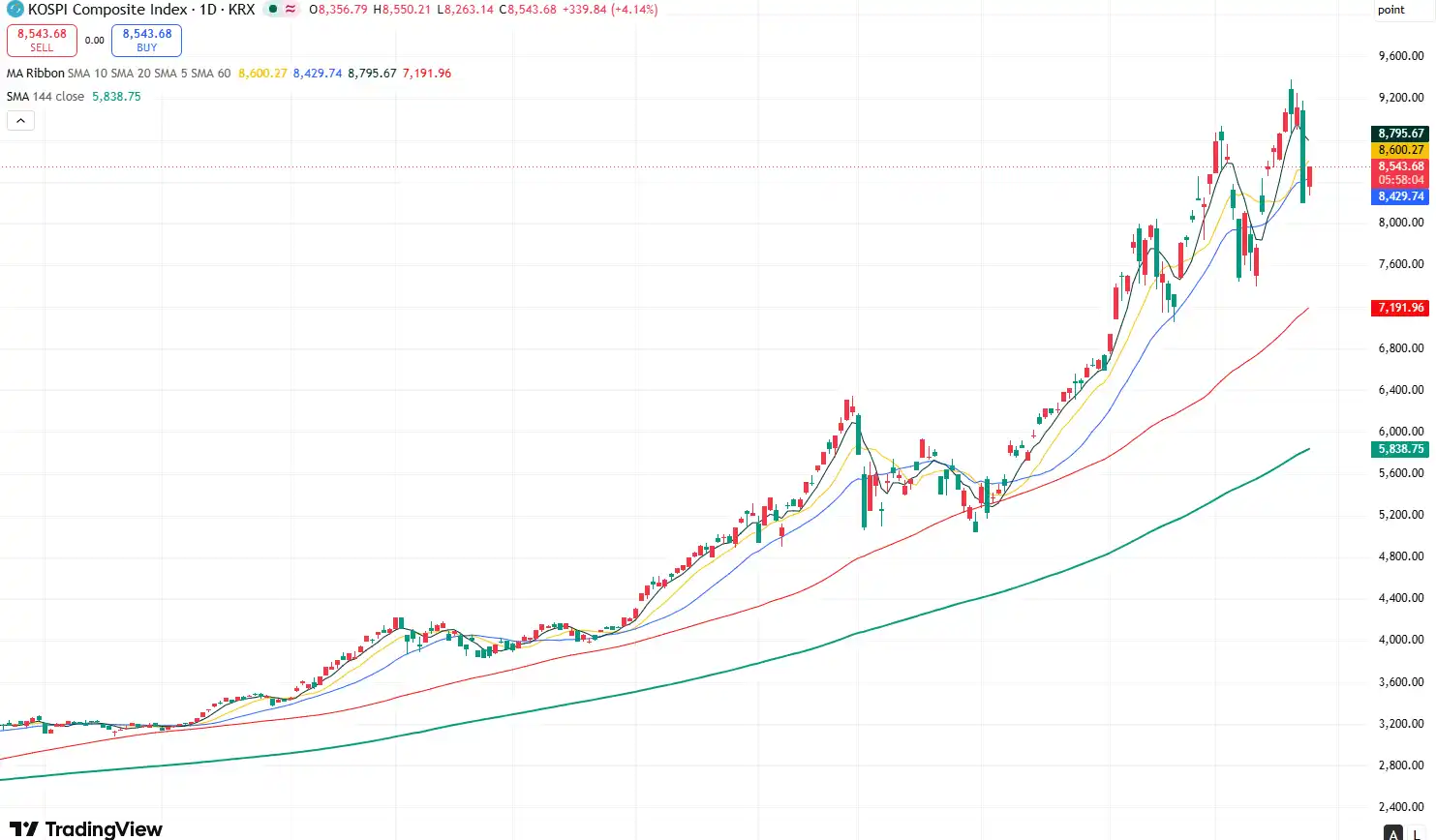
On June 23, the South Korean stock market experienced severe selling, with the Kospi closing down about 10%, trading suspended for 20 minutes at one point, and Samsung Electronics and SK Hynix both falling over 12%. A day later, according to media reports, Samsung Electronics rebounded by about 8.5% during intraday trading, and sentiment in Asian tech stocks showed some recovery.
The core of this round of volatility is not the single-day rise and fall, but that semiconductor stocks have entered a new pricing phase after the crowding of AI trades. Over the past year, the expansion of AI infrastructure has linked South Korean memory stocks, U.S. stocks like Micron, NVIDIA, and TSMC on the same chain. As long as AI server expansion continues, high-end memory will remain tight, memory manufacturers' profit expectations will continue to be revised upward, and related semiconductor stocks will still be seen as beneficiaries of the same wave of AI capital expenditure cycle.

What the market now needs to confirm is whether this round of correction is merely a technical release or an early signal of a trend reversal. Samsung's potential shareholder return expectations have provided emotional repair for the Korean market, but a more direct stress test comes from the earnings season, especially from Micron. The company will announce its FY2026 Q3 financial results after the U.S. market closes on June 24, with the conference call scheduled for 14:30 Mountain Time. What investors are looking at is not whether the last quarter was good, but whether the pricing power of AI memory can continue to expand, thereby supporting the valuation of the entire semiconductor chain.

HBM (AI chip high-bandwidth memory) is the core variable in this round of market activity. AI chips need to process massive amounts of data in an extremely short time, regular memory isn't fast enough, making HBM a critical component for high-end GPUs and AI servers. Over the past two years, the supply shortage of HBM has given Micron, Samsung Electronics, and SK Hynix rare pricing power again, making memory stocks one of the most elastic segments in the AI semiconductor trade.

Strong demand has already been heavily traded by the market. Whether the rebound after the plunge can continue does not depend on "whether the AI story is still there," but on whether the semiconductor chain can continue to prove that order visibility, memory prices, subsequent guidance, and profit margins remain sufficiently strong. Micron is one verification point, but what the market truly cares about is whether this AI semiconductor theme can continue to bear the high expectations.

Post-Crash Rebound, More Like Position Repair

This round of volatility first reflects positioning, not a sudden disappearance of demand. Korean tech stocks performed strongly from 2025 to 2026, with AI memory becoming one of the market's most crowded themes. When heavyweight stocks like Samsung Electronics and SK Hynix come under simultaneous pressure, index-level declines can be amplified, and the entire Asian tech sector can easily be repriced in sync.

The selling on June 23 was precisely the concentrated release of this structure. Media reports indicated the Kospi closed down about 10%, with Samsung Electronics and SK Hynix both falling over 12%. For investors, this kind of drop already indicates one problem: AI semiconductor trading is no longer just about fundamentals; it has also become a positioning trade with high concentration and high expectations.

The rebound the next day cannot be directly interpreted as a bottom confirmation either. Samsung Electronics' rise partly stemmed from market expectations for potential shareholder returns. Samsung's previously announced shareholder return policy for 2024-2026 is to return 50% of its three-year free cash flow and maintain a fixed annual dividend of 9.8 trillion Korean Won. If 50% of the three-year free cash flow exceeds the total regular dividend amount, the company will return the balance.

Based on this, the market and media have estimated that if the chip super-cycle significantly boosts free cash flow, Samsung's potential total return or buyback capacity could reach about 90 trillion Korean Won. However, this is not a new buyback plan already announced by the company, merely a projection based on the existing policy framework. It can improve short-term risk appetite but cannot alone prove that AI semiconductor demand has not cooled.

Therefore, the rebound in Korean tech stocks looks more like positioning repair after a plunge, not confirmation that the trend has already turned upward again. For semiconductor stocks, the real issue isn't whether they can rebound, but whether they can find new fundamental support after rebounding. If it's only about shareholder return expectations, short covering, and sentiment repair, the rally may remain at the level of a technical rebound; if earnings reports continue to prove that AI server demand, HBM prices, and the capital expenditure chain are still strengthening, the market will reprice it as a continuation of the trend.

What can cut through the noise of sentiment are the upcoming earnings reports and conference calls. Micron is one of the more direct validators in this round of AI memory trading. It doesn't have Samsung's vast consumer electronics business, and its stock price more centrally reflects the memory cycle and AI server demand. Its earnings and guidance can answer the market's most pressing questions: Are AI server customers still scrambling for memory? Can prices still rise? Will capacity expansion begin to pressure future profit margins?

These questions don't belong only to Micron; they will also affect Samsung Electronics, SK Hynix, and broader AI infrastructure stocks. For the semiconductor stock rebound to upgrade from "technical covering" to "trend continuation," it requires the most sensitive link in the chain to continue providing strong signals.

Micron Needs to Prove Pricing Power Remains

The easiest numbers to see in the earnings report are revenue and EPS, but what's more important this time is whether the pricing logic behind these numbers can continue. For the entire semiconductor sector, Micron's significance lies not in the profitability of a single company, but in its ability to prove that AI memory supply and demand remain in a seller-favorable phase.

Micron's FY2026 Q2 revenue was $23.860 billion, with non-GAAP EPS at $12.20. The company's capital expenditure net for the quarter was $5.0 billion, and adjusted free cash flow was $6.9 billion. The company previously provided FY2026 Q3 guidance of revenue $33.5 billion, plus or minus $750 million, gross margin approximately 81%, non-GAAP EPS of $19.15, plus or minus $0.40.

This set of data explains why the market is willing to assign higher valuations to memory stocks. If HBM is pre-locked by customers and visibility is increased through long-term supply arrangements, memory manufacturers are no longer just traditional cyclical stocks but more like scarce suppliers in the expansion of AI infrastructure. Micron management and market reports have emphasized that HBM supply visibility is high, and high-end memory is transitioning from a common component to a strategic resource in AI capital expenditure.

For average investors, this can be understood as a supply-demand mismatch model. AI companies and cloud providers need to expand data centers, requiring more GPUs. GPUs need more HBM to perform. But HBM capacity expansion is slow, customer qualification cycles are long, and suppliers are concentrated, leading buyers to pre-commit volumes and sellers to gain stronger pricing power.

This is also why memory stocks affect broader semiconductor sentiment. NVIDIA represents AI computing demand, TSMC represents advanced process supply, while Samsung Electronics, SK Hynix, and Micron represent high-end memory constraints. When any of these links show changes in price, orders, or guidance, the market reassesses the pace of AI infrastructure expansion and profit distribution.

The key to Micron's earnings is not "whether this quarter remains strong," as the market already expects it to be strong. The incremental information lies in three areas: whether the Q3 results beat the company's previously high guidance, whether forward-quarter guidance continues to exceed the already elevated market expectations, and whether the shipment schedule for new products like HBM4 proceeds smoothly.

This is also why a good earnings report may not be enough. Over the past few quarters, the basis for AI memory stock gains has been consecutive beats. If Micron only meets expectations, or if the tone of the conference call shifts from supply tightness toward supply-demand balancing, the market may deem that valuation anchors need to be lowered. At that point, pressure wouldn't stay on MU stock alone but could spread to Samsung Electronics, SK Hynix, and other stocks traded as beneficiaries of the AI semiconductor cycle.

Strong Demand Also Brings Low Error Tolerance

Current evidence supports that demand has not yet been disproven, not that the cycle has ended. Micron's HBM supply visibility, strong performance last quarter, and continued expansion of AI infrastructure by cloud providers still point to the memory chain being in a high-activity phase. The rapid rebound in semiconductor stocks also indicates the market hasn't abandoned the AI demand theme.

But investors need to be wary of another layer of risk: strong fundamentals do not mean stock prices have no downside. Especially when valuations have baked in continued beats as the default assumption, the market's definition of bad news becomes harsher. In other words, semiconductor stocks might adjust not because demand disappears, but potentially because demand "doesn't get stronger."

In the past, the core risk for memory stocks was a downward price cycle. Now the risk is more complex. Customers are still ordering, but growth is no longer being revised upward—the stock may adjust first. HBM is still in short supply, but new capacity in 2027 cools price expectations—valuations may also drop first. Micron is still profitable, but rising capital expenditures compress future free cash flow—the market will similarly recalculate cycle quality.

This is precisely the key to judging whether it's a "technical correction ending" or a "trend reversal." A technical correction usually corresponds to release after positioning becomes crowded; as long as earnings and guidance continue to support the original logic, funds may return to the main theme. A trend reversal is different; it means the market begins to doubt future profit revision potential or believes the supply-demand relationship has shifted from extreme tightness toward balance.

The warning from the June 23 plunge lies here. It may not indicate that AI demand has peaked, but it shows the error tolerance of this trade chain has lowered. Foreign capital profit-taking in the Korean market, concentrated index weights, and crowded AI themes mean any signal not strong enough could be amplified into sector-wide volatility.

Samsung's potential shareholder returns should also be understood within this framework. Returning free cash flow benefits shareholders, but only if free cash flow can be sustainably generated. If chip profits continue to be revised upward, large dividends and buybacks will strengthen stock price support. If future capital expenditures intensify and cyclical profits are discounted anew, shareholder return expectations could also be downgraded.

So, this rebound looks more like a verification repair ahead of earnings. What investors are buying back is not certainty, but an option to wait for Micron and other semiconductor companies to provide stronger evidence. Only when fundamentals continue to exceed already high expectations does the rebound have a chance to shift from sentiment repair to trend continuation.

Valuation Anchor Lies in Guidance and 2027 Supply-Demand

After Micron's earnings release, the market's immediate reaction may still be to revenue, EPS, and gross margin, but what determines whether the AI semiconductor trade can continue expanding is management's tone regarding subsequent quarters.

If Q3 results beat guidance and forward guidance is revised upward again, it indicates customer orders, prices, and product mix are still improving, making the Korean tech stock plunge look more like a positioning clearance. Especially the HBM4 shipment schedule—if it proves Micron is increasing its share of high-end products—the market will continue to see it as a beneficiary of tight AI memory supply and also reinforce risk appetite for memory stocks like Samsung Electronics and SK Hynix.

Conversely, if management becomes cautious about 2027 supply-demand or capital expenditure rises faster than profit revisions, investors will reassess the quality of this cycle. The dangerous moment for the memory industry often isn't when demand disappears immediately, but when supply expansion begins to change future price expectations.

The current market's contradiction lies here: AI memory hasn't been disproven, but valuations have begun to demand higher-frequency, clearer evidence. Micron doesn't need to prove AI demand exists; the market already believes that. It needs to prove that demand intensity, supply constraints, and price elasticity are still sufficient to support the already high pricing.

This is also a common problem facing the entire semiconductor sector. NVIDIA, TSMC, memory manufacturers, and Asian tech stocks are all traded on the same AI infrastructure chain. As long as key links in the chain continue to beat expectations, the sector rebound can be interpreted as the correction ending; but if guidance starts turning cautious, or the market finds profit revisions can't keep up with valuations, the rebound may just be a technical repair before a trend weakens.

Until this answer emerges, the rebound in Asian tech stocks can only be seen as repair. For investors holding MU, Samsung Electronics, SK Hynix, and broader AI infrastructure stocks, daily ups and downs are not the main theme. Whether Micron can translate high supply visibility into higher guidance and strong demand into higher profit margins is the validation point for whether this semiconductor trade can continue.

Criptos en tendencia

Preguntas relacionadas

QWhat is the core issue behind the recent volatility in semiconductor stocks, according to the article?

AThe core issue is not a single day's price movement, but that semiconductor stocks, after becoming a crowded AI trade, have entered a new pricing phase. The market is trying to determine if the recent correction is just a technical release of pressure or an early signal of a trend reversal.

QWhy is Micron's upcoming earnings report considered a crucial test for the AI semiconductor trade?

AMicron's report is a key test because it can validate whether the pricing power for AI memory (especially HBM) can continue to expand, thereby supporting the valuation of the entire semiconductor chain. The market needs to see strong order visibility, memory prices, future guidance, and margins to confirm the trend.

QWhat is HBM, and why is it a central variable in the current semiconductor market rally?

AHBM (High Bandwidth Memory) is high-speed memory for AI chips. It's crucial because AI chips need to process massive data quickly, and regular memory isn't fast enough. HBM's supply shortage over the past two years has given memory makers like Micron, Samsung, and SK Hynix significant pricing power, making them high-leverage plays in the AI semiconductor trade.

QWhy does the article describe the post-crash rebound in South Korean tech stocks as more of a 'positioning repair' rather than a confirmed trend reversal?

AThe rebound is seen as positioning repair because the initial sell-off reflected high concentration and crowded positioning in the AI memory trade. The subsequent bounce was partly driven by expectations of potential shareholder returns from Samsung and short-covering, not necessarily new fundamental evidence of sustained AI demand strength.

QWhat are the two main scenarios the article presents for interpreting the semiconductor stock rebound, and what determines which scenario is correct?

AThe two scenarios are: 1) A technical correction ending, where strong earnings and guidance continue to support the original AI logic. 2) A trend reversal, where the market starts doubting future profit growth or sees the supply-demand balance shifting from extreme tightness towards equilibrium. The key determinant is whether upcoming reports (like Micron's) provide stronger-than-expected evidence on order visibility, pricing, and future guidance.

Lecturas Relacionadas

Report Analysis: What Is Coherent Planning as CPO Booms?

Title: Report Interpretation: What Moves Is Coherent Making Amid the CPO Boom? Summary: JP Morgan analyst Samik Chatterjee reiterates an Overweight rating on Coherent (COHR), citing undervalued growth potential across three core areas: data center optical transceivers, co-packaged optics (CPO) chips, and industrial lasers/thermal management. COHR's 1.6T data center transceivers are in high demand, with pricing remaining firm. The rise of CPO is seen not as a threat but as a catalyst, creating higher demand for sophisticated optical components, an area where COHR holds a competitive edge with its comprehensive portfolio (lasers, isolators, VCSELs, thermoelectric coolers). Each CPO chip offers significantly greater revenue potential than traditional transceivers. Furthermore, its Optical Circuit Switch (OCS) technology targets a potential $4B market with reliability and power advantages. The company is expanding its InP (Indium Phosphide) device capacity fourfold within two years, securing substrate supply and transitioning to more cost-effective 6-inch wafers. As one of only two major suppliers of high-quality pump lasers—currently in severe shortage—COHR can now move up the value chain from components to complete line cards/systems, boosting ASP over tenfold. Gross margin targets (>42%) may be revised upward due to high-end product premiums, cost improvements from the wafer transition, and contributions from new high-margin products like CPO and OCS. Its efficient thermadite thermal material also offers long-term growth. Industrial segment revenue grows at a steady 5-10%, supported by semiconductor equipment orders. Changes in Apple's Face ID protocol present a re-competition opportunity for 3D sensing. Overall, Coherent is positioned as a key infrastructure provider, with AI-driven compute demand fueling the need for high-speed optical interconnectivity. Growth from CPO/OCS, stable industrial performance, and margin improvement support the bullish thesis. *Disclaimer: This summary interprets a third-party analyst report from JP Morgan. It does not constitute investment advice.*

marsbitHace 3 min(s)

Report Analysis: What Is Coherent Planning as CPO Booms?

marsbitHace 3 min(s)

Dan Koe's New Article: Escape the Fate of the Wage Slave, How to Survive in the Tide of AI Replacement?

Dan Koe's article argues that the real threat in the AI era is not technology itself, but financial dependency on employers. He critiques the "wage slavery" of unfulfilling work and identifies five core skills for resilience: agency, taste, persuasion, persistence, and iteration. These are developed not by consuming content, but by starting your own venture. The key to escaping the "employee mindset" is a radical identity shift. This requires: 1) Drastically changing your environment and daily inputs, 2) Choosing a creative medium (like content or code) that provides real-world feedback through trial and error, and 3) Using that feedback to learn and adapt. Koe strongly advocates for content creation over coding for beginners, as it builds irreplaceable subjective taste and audience connection. The practical starting point is a 15-minute self-inquiry to define your "life's work." Answer: What do you know deeply? What innate abilities do you have? What childhood interests were suppressed? Then, identify your contrarian beliefs—what does the mainstream get wrong in your area? The overlap is your unique direction. The final, non-negotiable step is to publish your first piece of content tomorrow. Embrace that it will be bad; the goal is to enter the feedback loop of creation, learning, and iteration, which is the true path to independence.

marsbitHace 13 min(s)

Dan Koe's New Article: Escape the Fate of the Wage Slave, How to Survive in the Tide of AI Replacement?

marsbitHace 13 min(s)

After Laying Off 20% of Staff, What Are the Key Points of EF's New Structure?

Following the completion of a months-long organizational restructuring, the Ethereum Foundation (EF) announced a 20% workforce reduction (approximately 54 employees) on June 23rd. It reorganized its teams into five new core clusters: Protocol, Access, User, Community, and Institutional (plus Operations/Management support units). Officially, this move implements the EF's 2026 Mandate and 2025 Treasury Management Policy, aiming to create a more focused and "self-sovereign" organization. The restructuring prioritizes the CROPS principles—Censorship Resistance, Openness & Freedom, Privacy, and Security—as foundational organizational tenets. The Protocol cluster will focus on core protocol R&D, including MEV reduction and zkEVM. The Access cluster emphasizes preserving user "zero option" for non-custodial, permissionless interaction. The User, Community, and Institutional clusters will manage external engagement, with the latter handling institutional and regulatory matters. While offering enhanced severance and transition support for affected employees, the EF did not disclose budget allocations or specific KPIs for the new clusters. This has led to market uncertainty about the impact on project funding and development priorities. Analysts note the announcement's positive tone of mission focus contrasts with a backdrop of recent EF leadership changes and broader ecosystem pressures. The true impact—whether this signifies strategic realignment or reactive contraction—will become clearer as the new structure's resource allocation and project prioritization are revealed in the coming months.

marsbitHace 13 min(s)

After Laying Off 20% of Staff, What Are the Key Points of EF's New Structure?

marsbitHace 13 min(s)

Top-Tier MEV Bot Loses $7.5 Million: Is 'Approval' the Most Overlooked Fatal Risk On-Chain?

The article discusses a sophisticated attack on a prominent Ethereum MEV (Miner Extractable Value) bot, Jaredfromsubway.eth, resulting in a loss exceeding $7.5 million. Unlike typical exploits involving key leaks or smart contract bugs, this attack was a carefully orchestrated "reverse hunt." The attacker spent weeks deploying fake tokens and liquidity pools that mimicked legitimate assets like WETH and USDC. These pools were designed to appear as profitable arbitrage opportunities, tricking the automated bot's trading logic. During its normal operation, the bot was induced to grant ERC-20 token approvals to the malicious contracts. Once sufficient permissions were accumulated, the attacker drained the bot's funds by calling these pre-approved allowances. This incident highlights the often-underestimated risks associated with token approvals in Web3. The article explains that approvals are a fundamental mechanism, allowing smart contracts (like DEXs) to move a user's tokens on their behalf. However, risks arise from practices like granting infinite approvals, the persistence of approvals even after disconnecting from a dApp, and the potential for a once-trusted contract to become compromised later. The piece concludes with advice for managing approval risks: users should adopt the principle of least privilege (approving only the needed amount), use separate wallets for storage versus interactions, and regularly audit and revoke unnecessary approvals using tools like Revoke.cash. It also emphasizes the role of wallets like imToken in providing proactive defenses, such as risk warnings and clear, readable transaction signing interfaces, to help users make informed decisions. Ultimately, wallet security must extend beyond private key protection to include active management of token approvals.

marsbitHace 18 min(s)

Top-Tier MEV Bot Loses $7.5 Million: Is 'Approval' the Most Overlooked Fatal Risk On-Chain?

marsbitHace 18 min(s)

Precious Metals Decline Alongside, What Signal is Gold Sending to the Market?

Gold and silver prices have declined recently, moving in tandem with a sell-off in risk assets like South Korean semiconductor stocks. This is unusual, as gold typically rises when equities fall due to its safe-haven status. The synchronized drop signals a shift in market focus: it's not about finding safety, but about the rising cost of holding assets that do not yield interest. This cost is the real interest rate. The key driver is a change in Federal Reserve policy expectations under new Chair Kevin Warsh. Despite holding rates steady, the Fed's rhetoric has turned more hawkish, emphasizing persistent inflation risks. This has led markets to price in a "higher for longer" rate environment, increasing the appeal of cash and bonds while pressuring zero-yield assets like gold and tech stocks with high future cash flow valuations. Technically, gold breached the $4,100/oz support level, approaching the critical $4,000 psychological and technical zone. A break below could trigger accelerated selling from momentum traders and ETFs. While long-term supportive factors like central bank buying and geopolitical risks remain, short-term price action is dominated by liquidity and opportunity cost dynamics. The South Korean market meltdown, driven by crowded AI-trade unwinding, is a symptom—not the cause—of this broader macro repricing. Both markets are reacting to the same pressures: higher real rates and a stronger US dollar. In summary, the concurrent decline in equities and precious metals highlights that diverse assets can share exposure to a common macro variable—the price of money. The near-term path for gold and silver depends primarily on the persistence of Fed hawkishness, dollar strength, and real yields, which currently override their traditional safe-haven narratives.

marsbitHace 28 min(s)

Precious Metals Decline Alongside, What Signal is Gold Sending to the Market?

marsbitHace 28 min(s)

Trading

Spot
Futuros

Artículos destacados

Qué es USDC(WORMHOLE)

USD Coin (Wormhole): Un Resumen Completo Introducción En el mundo en rápida evolución de las criptomonedas, USD Coin (Wormhole), conocido como $USDC(Wormhole), se destaca como una solución pionera dentro del paisaje de las finanzas descentralizadas (DeFi). Operando en varias plataformas blockchain, incluido Solana, USD Coin (Wormhole) es más que solo una representación digital del dólar estadounidense. Encapsula el espíritu innovador de las finanzas modernas, habilitando transacciones cruzadas sin problemas y mejorando la interoperabilidad entre diversos ecosistemas blockchain a través del avanzado protocolo Wormhole. ¿Qué es USD Coin (Wormhole)? USD Coin (Wormhole) es una versión tokenizada del dólar estadounidense diseñada para facilitar transacciones sin fricciones a través de diferentes redes blockchain. Su objetivo principal es aumentar la liquidez y mejorar la funcionalidad del ecosistema DeFi. Al aprovechar el protocolo Wormhole, que establece una robusta red de comunicación entre cadenas, los usuarios pueden transferir tokens USDC sin esfuerzo a través de varias plataformas. Esta capacidad entre cadenas marca un avance significativo en el uso de criptomonedas, promoviendo un ecosistema más interconectado y eficiente donde los activos pueden fluir libremente entre diferentes blockchains. La propuesta de valor de USD Coin (Wormhole) radica no solo en su estabilidad, al estar vinculado al dólar estadounidense, sino también en su capacidad para conectar ambientes blockchain dispares. Este enfoque innovador fomenta un mayor nivel de participación entre usuarios y desarrolladores, allanando el camino para nuevas y emocionantes aplicaciones dentro de las finanzas descentralizadas. ¿Quién es el creador de USD Coin (Wormhole)? Los orígenes de USD Coin (Wormhole) están intrínsecamente ligados a la red Wormhole, que fue desarrollada por Jump Crypto. Si bien no se documentan de manera prominente creadores individuales específicos, Jump Crypto es notable por su participación en el avance de la tecnología blockchain y en el apoyo de sus aplicaciones en finanzas. Al crear la red Wormhole, Jump Crypto ha desempeñado un papel vital en la promoción de transferencias de activos inter cadenas, mejorando la eficiencia y diversidad en el uso de criptomonedas. ¿Quiénes son los inversores de USD Coin (Wormhole)? El éxito de USD Coin (Wormhole) cuenta con el apoyo de inversiones de varios fondos y organizaciones notables dentro del ámbito de las criptomonedas. Los inversores clave incluyen: Coinbase Ventures: Un prominente brazo de capital de riesgo respaldado por uno de los intercambios de criptomonedas líderes en la industria, Coinbase Ventures proporciona capital esencial y apoyo estratégico a proyectos blockchain prometedores. Arrington XRP Capital: Especializándose en activos digitales, Arrington XRP Capital reconoce el potencial de proyectos innovadores como USD Coin (Wormhole) y ha invertido en consecuencia para respaldar su desarrollo. Jump Trading: Como la organización matriz de Jump Crypto, Jump Trading aporta no solo inversión, sino también una gran experiencia en tecnología de trading y dinámicas de mercado para fortalecer el proyecto Wormhole. ¿Cómo funciona USD Coin (Wormhole)? El marco operativo de USD Coin (Wormhole) está intrincadamente diseñado para facilitar transacciones efectivas entre cadenas, maximizando la seguridad y eficiencia. Aquí hay un resumen simplificado de cómo funciona: Bloqueo de Activos: Cuando un usuario desea transferir USDC de una blockchain a otra, primero bloquea sus tokens en la blockchain de origen. Este proceso asegura que los activos estén seguros y se preparen para ser quemados o movidos más tarde. Acabado de Tokens: Después de que los tokens se bloquean, se acuña una cantidad equivalente de USDC en la blockchain de destino. Esto proporciona al usuario acceso a sus fondos en una nueva plataforma, reflejando la flexibilidad que permite el protocolo Wormhole. Transferencia entre Cadenas: El protocolo Wormhole facilita eficientemente todo el proceso de transferencia. Asegura que, una vez que se acuñan los USDC en la cadena de destino, los tokens equivalentes se quemen en la cadena de origen. El resultado es una transferencia fluida de valor entre dos entornos blockchain distintos. Esta metodología entre cadenas asegura que las transacciones permanezcan seguras y transparentes, mejorando significativamente la liquidez dentro de los diferentes ecosistemas DeFi. Línea de Tiempo de USD Coin (Wormhole) Comprender la evolución de USD Coin (Wormhole) proporciona un contexto vital para su importancia en el ámbito de las criptomonedas. Aquí hay una línea de tiempo que destaca hitos importantes en la historia del proyecto: 2021: Se lanza el proyecto Wormhole, estableciendo un marco para las transferencias de activos entre cadenas y sentando las bases para el desarrollo de USD Coin (Wormhole). 2022: La red Wormhole experimenta un desafío significativo con una violación de seguridad que resulta en un robo de $325 millones. Sin embargo, el incidente es posteriormente abordado y reembolsado por Jump Crypto, mostrando el compromiso del proyecto con la seguridad y la transparencia. 2023: USD Coin (Wormhole) se integra con el Protocolo de Transferencia entre Cadenas de Circle (CCTP), mejorando sus capacidades para transferencias entre cadenas y solidificando aún más su lugar dentro del ecosistema DeFi. 2024: El desarrollo y expansión continuos de la red Wormhole prosiguen, con el objetivo de aumentar la utilidad y el alcance de USD Coin (Wormhole) así como mejorar su marco operativo. Características Clave El éxito de USD Coin (Wormhole) se puede atribuir a varias características clave que lo diferencian de otras ofertas de criptomonedas: Interoperabilidad entre Cadenas En el núcleo de USD Coin (Wormhole) está su capacidad para facilitar transferencias sin problemas a través de múltiples redes blockchain. Esta interoperabilidad sirve como una piedra angular para las finanzas descentralizadas, permitiendo que varias plataformas interactúen entre sí, acelerando así la evolución de los servicios financieros. Seguridad Wormhole emplea una Red de Guardianes bien diseñada compuesta por validadores de nodos que aseguran transacciones seguras entre cadenas. Esta supervisión colectiva minimiza el riesgo de fraude y proporciona a los usuarios la confianza de que sus activos están protegidos durante las transferencias entre cadenas. Mejora de Liquidez Al permitir que el USDC circule libremente a través de diferentes blockchains, USD Coin (Wormhole) mejora la liquidez en el ecosistema DeFi. Esta mayor liquidez puede fomentar un comercio más eficiente, contribuir a mejores estrategias de precios y mejorar la dinámica del mercado general que abarca varios activos digitales. Conclusión USD Coin (Wormhole) es una innovación pivotal en el espacio blockchain, reforzando las capacidades de las finanzas descentralizadas (DeFi) y estableciendo un ecosistema financiero más conectado. Con su robusto marco para transacciones entre cadenas, características de seguridad y fuerte respaldo de inversores reputados, USD Coin (Wormhole) está posicionado para desempeñar un papel clave en el futuro de las criptomonedas. Conforme el panorama de las finanzas digitales continúa evolucionando, USD Coin (Wormhole) no solo abraza el futuro de la interconectividad entre redes blockchain, sino que también reafirma el poder de la tokenización y la tecnología blockchain en transformar cómo percibimos y utilizamos el valor en un mundo digital. Al navegar las complejidades de la funcionalidad entre cadenas, demuestra un enfoque sofisticado para habilitar la inclusividad financiera y la innovación en el mundo de las criptomonedas.

168 Vistas totalesPublicado en 2024.04.03Actualizado en 2024.12.03

Qué es USDC(WORMHOLE)

Qué es W$C

World$tateCoin ($W$C): Una Exploración Integral del Proyecto de Criptomoneda Emergente Introducción En el panorama en constante evolución de las criptomonedas, World$tateCoin ($W$C) ha surgido como un proyecto que busca aprovechar el poder de las tecnologías web3 para crear un ecosistema digital distintivo. A medida que los modelos tradicionales de interacción en línea sufren una transformación significativa, World$tateCoin busca establecerse en esta incipiente tercera generación de internet. Este artículo profundizará en las complejidades de World$tateCoin, proporcionando una visión general del proyecto, sus objetivos y su potencial impacto en el espacio web3. ¿Qué es World$tateCoin ($W$C)? World$tateCoin ($W$C) está diseñado como una criptomoneda que facilita transacciones sin interrupciones dentro de un entorno web3. Con el objetivo de crear una plataforma descentralizada donde los usuarios puedan interactuar con diversas aplicaciones web3, $W$C pretende optimizar la experiencia del usuario y mejorar la accesibilidad a los servicios digitales. Si bien el proyecto aspira a convertirse en una parte integral del panorama web3, las perspectivas detalladas sobre sus objetivos específicos y casos de uso siguen siendo limitadas, lo que plantea preguntas sobre su posible papel y utilidad en un contexto digital que avanza rápidamente. La esencia de web3 gira en torno a la descentralización y a empoderar a los usuarios con un mayor control sobre sus interacciones en línea. World$tateCoin pretende alinearse con estos principios, aunque aún se están discutiendo dentro de la comunidad aplicaciones y funcionalidades específicas de la moneda. ¿Quién es el Creador de World$tateCoin ($W$C)? Al explorar los orígenes de World$tateCoin, la información sobre su creador sigue siendo elusiva. Hasta ahora, no hay datos disponibles públicamente que identifiquen a las personas u organizaciones detrás del proyecto. Esta oscuridad podría arrojar una sombra de incertidumbre sobre la credibilidad del proyecto, pero el compromiso con la innovación dentro del marco de criptomonedas podría ser una fuerza impulsora para su adopción en el futuro. La falta de liderazgo identificable puede resultar en obstáculos relacionados con la confianza y la transparencia—elementos que son cruciales para establecer una comunidad sólida en el espacio cripto. ¿Quiénes son los Inversores de World$tateCoin ($W$C)? La investigación actual no revela inversores o organizaciones de respaldo específicos involucrados con World$tateCoin. No es infrecuente que los proyectos emergentes de criptomonedas atraigan inversiones discretas o funcionen con una estructura financiera minimalista durante su fase inicial. La ambigüedad en torno a los apoyos de inversión y metodologías de financiación podría afectar la sostenibilidad y las perspectivas de crecimiento del proyecto. Al evaluar nuevos proyectos dentro del dominio de las criptomonedas, los inversores generalmente buscan transparencia respecto a los respaldos financieros y el apoyo de entidades establecidas. La ausencia de esta información podría requerir un enfoque cauteloso por parte de posibles usuarios y partes interesadas interesadas en el futuro de World$tateCoin. ¿Cómo Funciona World$tateCoin ($W$C)? Los mecanismos operativos de World$tateCoin están fundamentados en los principios de descentralización, un sello distintivo de las tecnologías web3. Al facilitar transacciones directamente entre usuarios sin la intervención de intermediarios, $W$C está diseñado para mejorar la confianza y la eficiencia. Sin embargo, la documentación integral que detalla las características únicas y el marco operativo que distinguen a World$tateCoin de otras criptomonedas es notablemente escasa. Esta falta de información complica la comprensión de cómo $W$C funciona dentro del ecosistema web3 más amplio y qué proposiciones únicas ofrece a usuarios y desarrolladores por igual. No obstante, el objetivo fundamental de permitir transacciones descentralizadas promete un paisaje financiero más liberado, si el proyecto cumple con sus aspiraciones de implementar mecanismos robustos e interfaces amigables para el usuario. Cronograma de World$tateCoin ($W$C) Construir un cronograma que encapsule la progresión histórica de World$tateCoin presenta desafíos debido a la ausencia de documentación significativa sobre eventos y hitos clave. Sin embargo, se puede imaginar una secuencia aproximada de fases hipotéticas, constituyendo un camino a seguir para el proyecto: Concepto Inicial (Fecha Desconocida): Conceptualización del marco de World$tateCoin en el contexto más amplio de las tecnologías web3. Fase de Desarrollo (Fecha Desconocida): Inicio de procesos de desarrollo técnico y codificación. Compromiso Comunitario (Fecha Desconocida): Alcance a posibles usuarios y partes interesadas para fomentar el interés comunitario en el proyecto. Meta de Lanzamiento (Fecha Desconocida): Anuncio de una fecha de lanzamiento esperada, condicionada al progreso de las fases de desarrollo y pruebas. Debido a la falta de fechas y detalles comprobables que rodean estas fases, las partes interesadas deberán permanecer atentas y comprometidas con las comunicaciones del proyecto para recibir actualizaciones sobre su trayectoria. Temas Clave sobre World$tateCoin ($W$C) Conforme avanza el proyecto, surgen ciertos temas clave que encarnan el potencial y las aspiraciones de World$tateCoin: Descentralización: La filosofía central que impulsa el proyecto, dirigida a fomentar interacciones directas entre usuarios. Integración Web3: El objetivo de reflejar principios web3 y permitir el acceso fluido del usuario a una variedad de servicios digitales. Criptomoneda Digital: Posicionada como una moneda para facilitar transacciones basadas en internet, World$tateCoin busca inyectar liquidez adicional en el mercado web3. Desafío de la Escasez de Información: La notable ausencia de información detallada sobre los fundamentos del proyecto, sus creadores y métodos operativos, lo que requiere mayor transparencia por parte de los desarrolladores para construir la confianza de la comunidad. Conclusión World$tateCoin ($W$C) se encuentra posicionado en un terreno emocionante pero incierto de la criptomoneda y la integración web3. Si bien aspira a cultivar un entorno descentralizado, la limitada disponibilidad de información respecto a sus creadores, inversores y funcionalidades específicas presenta desafíos para posibles partes interesadas y usuarios. En el dinámico mundo de las criptomonedas, la transparencia, el compromiso y la comunicación bien estructurada son vitales para el éxito de proyectos como World$tateCoin. A medida que el panorama sigue evolucionando, las partes interesadas estarán ansiosas por ver cómo el proyecto puede solidificar su posición dentro de la narrativa web3 y contribuir a la transformación continua del ecosistema digital.

100 Vistas totalesPublicado en 2024.04.05Actualizado en 2024.12.03

Qué es W$C

Cómo comprar W

¡Bienvenido a HTX.com! Hemos hecho que comprar Wormhole (W) sea simple y conveniente. Sigue nuestra guía paso a paso para iniciar tu viaje de criptos.Paso 1: crea tu cuenta HTXUtiliza tu correo electrónico o número de teléfono para registrarte y obtener una cuenta gratuita en HTX. Experimenta un proceso de registro sin complicaciones y desbloquea todas las funciones.Obtener mi cuentaPaso 2: ve a Comprar cripto y elige tu método de pagoTarjeta de crédito/débito: usa tu Visa o Mastercard para comprar Wormhole (W) al instante.Saldo: utiliza fondos del saldo de tu cuenta HTX para tradear sin problemas.Terceros: hemos agregado métodos de pago populares como Google Pay y Apple Pay para mejorar la comodidad.P2P: tradear directamente con otros usuarios en HTX.Over-the-Counter (OTC): ofrecemos servicios personalizados y tipos de cambio competitivos para los traders.Paso 3: guarda tu Wormhole (W)Después de comprar tu Wormhole (W), guárdalo en tu cuenta HTX. Alternativamente, puedes enviarlo a otro lugar mediante transferencia blockchain o utilizarlo para tradear otras criptomonedas.Paso 4: tradear Wormhole (W)Tradear fácilmente con Wormhole (W) en HTX's mercado spot. Simplemente accede a tu cuenta, selecciona tu par de trading, ejecuta tus trades y monitorea en tiempo real. Ofrecemos una experiencia fácil de usar tanto para principiantes como para traders experimentados.

328 Vistas totalesPublicado en 2024.12.10Actualizado en 2026.06.02

Cómo comprar W

Discusiones

Bienvenido a la comunidad de HTX. Aquí puedes mantenerte informado sobre los últimos desarrollos de la plataforma y acceder a análisis profesionales del mercado. A continuación se presentan las opiniones de los usuarios sobre el precio de W (W).

活动图片