Author: BibiNews
Messari was once the data platform in the crypto industry closest to Bloomberg, with a peak valuation of $300 million USD.
Its founder, Ryan Selkis, was one of the first to expose Mt. Gox's insolvency, establishing his reputation with this feat before founding Messari with the goal of consolidating the crypto world's data, research, and disclosures into a professional platform. It covers over 40,000 crypto assets, and its annual Mainnet conference in New York is one of the industry's most important summits.
In September 2022, the crypto arm of hedge fund giant Brevan Howard led its Series B funding round, with Point72 and Coinbase Ventures participating, valuing the company at approximately $300 million.
On June 12, 2026, Messari was acquired by competitor Blockworks for a price just over ten million dollars.
This is not the situation of just one company. When primary market valuations and the tokens in your wallet are both shrinking significantly, has the collective repricing of the entire crypto industry finally hit bottom?
Collective Contraction of Crypto Companies
In July 2024, Messari founder Selkis resigned as CEO following a series of controversial statements, with co-founder Eric Turner taking over. In March 2026, Turner also left, CTO Diran Li took the helm, and the company underwent significant layoffs, pivoting towards AI and announcing it would become an AI-first company.

But for Messari, AI is not just a pivot direction; it's also a reason for its decline. Messari's core product was selling research reports and data curation. An industry report that once took an analyst a week to write can now be completed in a few hours with AI tools. When research costs approach zero, the business of selling research reports becomes hard to monetize. This is not a cyclical difficulty but a structural threat.
Ultimately, Messari's data platform and API were merged into Blockworks, ending an eight-year entrepreneurial journey.
But Messari is not an isolated case.
From 2025 to 2026, a quieter, deeper change is underway: those companies that don't issue tokens and rely on selling products and services are also struggling to survive.
Data platforms are shutting down. DappRadar, after seven years of operation, tracking over 18,000 decentralized applications across 93 blockchains with 500,000 monthly active users, announced its closure in November 2025, citing "financial unsustainability." On-chain analytics platform Parsec, operational for five years, shut down in February 2026. CoinGecko is currently in talks for an outright sale and has hired investment bank Moelis as an advisor.
Media outlets are being sold for cheap or laying off staff. CoinDesk, the benchmark for crypto media, once rumored to be worth $300 million, cut 45% of its editorial team in August 2023 and was acquired by Bullish for approximately $75 million in November of the same year. Bankless, one of the most influential brands in crypto podcasts with over 1,300 episodes and a $35 million VC fund, quietly laid off most of its team in May of this year.
Blockworks, which acquired Messari, itself shut down its entire news department in October 2025, shifting all resources to its data business. Its founder stated bluntly: users increasingly use data as their primary source of information, not news.
On-chain data company Dune laid off 25% of its staff in May 2026.
VCs Have Stopped Investing
Since 2017, over 800 crypto-focused investment funds have been established globally. Today, only about half remain operational. In 2025, 63% of crypto hedge funds were unprofitable.
New funds are also unable to raise money. In Q1 2026, only 8 new crypto VC funds were established, the lowest number since Q3 2020, with fundraising volume at just 12% of the peak in 2022. From October 2025 to April 2026, monthly crypto VC investment plummeted from $3.85 billion to $660 million, a drop of over 80% in six months.
Where has the money gone? To AI. In 2025, VC funding in the AI sector reached $192.7 billion, surpassing half of the global VC total for the first time. A partner at Robot Ventures, a crypto fund founded by the Compound founder, made a direct statement: "AI is sucking out the oxygen; both talent and LPs' attention are being diverted. Many who should have been doing crypto startups are now starting AI companies."
People are leaving too. Kyle Samani, co-founder of Multicoin Capital, managing $5.9 billion in assets and one of Solana's earliest and most steadfast institutional investors, announced his departure in February of this year to focus on AI and robotics.
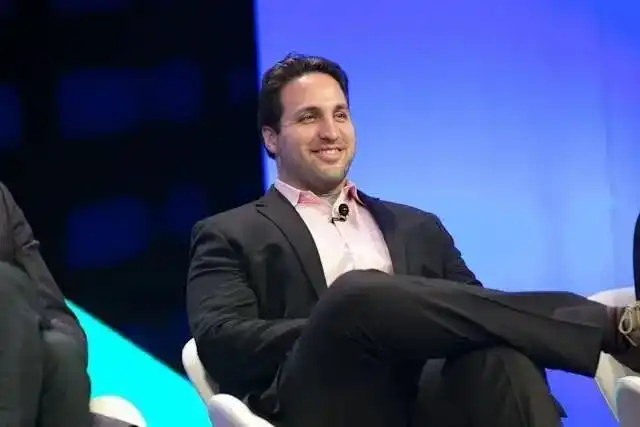
He wrote in a later-deleted tweet: "Crypto isn't as interesting as many people (including myself) once thought." Even Paradigm, once one of the purest crypto VCs, has begun expanding its investment scope to include AI and robotics.
Those crypto VC funds from 2020 to 2022 invested heavily during periods of high valuations and have yet to return capital to their LPs. LPs are not re-upping, funds cannot raise new capital, startups cannot secure financing, products fail to materialize, leading to closures or fire sales. This is a complete transmission chain currently playing out the final steps in the crypto primary market.
A partner at Dragonfly Capital used a term to describe the current environment: the great extinction.
Perhaps, This is a Good Signal
Bitcoin has fallen from its high of $126,000 last October to around $65,000 currently, a drop of nearly 48%. Altcoin bubbles are rapidly clearing. Starknet, once valued at $8 billion, saw its market cap drop to $200 million, a 95% decline. Scroll, Wormhole, Magic Eden have all fallen over 95%. Over 70% of tokens issued between 2021 and 2022 are either worthless today or have fallen below one-tenth of their peak value.
The Crypto Fear & Greed Index dropped to as low as 5 in February this year, 11 in March, and 13 in early June, remaining in the "Extreme Fear" zone for over 50 consecutive days.
Historically, this index has only fallen below 10 three times: December 2018, the March 2020 Covid crash, and November 2022 FTX collapse. Each time, Bitcoin subsequently surged over 500% within three years, with the most extreme being the 2018 case which saw a 2050% increase.
Another quieter signal comes from on-chain data: Bitcoin long-term holders currently control nearly 80% of the circulating supply. Although this proportion has been on a slow upward trend long-term, it has remained at elevated levels and continued to rise during the nearly 50% price correction from the $126,000 high, forming a clear divergence from price action. This means the remaining market mainly consists of long-term holders unwilling to sell.
Historically, when this proportion approaches or exceeds 75-80% accompanied by a deep price adjustment, it often corresponds to a bear market bottom area.
Looking at the primary market. The last time crypto VC deal count was this low was in 2020, just before DeFi Summer. The last time new fund formation was this low was also in 2020.
And Dragonfly Capital, which used the term "great extinction," raised a $650 million new crypto fund against the trend in February this year, exceeding its target by 30%. Its managing partner said: "Morale is low, fear is extreme, the gloom of the bear market has descended." But his action was to keep investing. The last time Dragonfly raised funds during peak market panic was in 2022; that fund invested in Polymarket and Ethena, becoming its best-performing fund historically.
Blockworks, which acquired Messari, just completed a funding round at a $192 million valuation on April 29, stating its purpose clearly: to consolidate the crypto data industry. It is not expanding its business but acquiring peers on the cheap.
Token prices halved, the fear index drops to single digits, long-term holder proportion nears extreme levels, VC deal count returns to five-year lows, infrastructure companies collectively shut down or sell for cheap. Viewed individually, each of these signals is pessimistic. But when they appear simultaneously, it has only happened three times in history, each followed by a new major cycle.
A fall from $300 million to $10 million looks like the end of an era. But every true bottom never looks like an opportunity.